


7432 Résultats
Classification:
événements
événements

Actions:
Description:
Tamar Zinguer, chercheure au Programme d’accueil 2014 et professeure associée à la Cooper Union, analyse la propension dans la discipline architecturale pour un terme littéraire « degré zéro ». Cliquez ici pour lévénement Facebook.
Tamar Zinguer, chercheure au Programme d’accueil 2014 et professeure associée à la Cooper Union, analyse la propension dans la discipline architecturale pour un terme littéraire « degré zéro ». Cliquez ici pour lévénement Facebook.
Localisation:
Maison Shaughnessy
Maison Shaughnessy
Date:
10 juillet 2014, 18h
10 juillet 2014, 18h
Titre:
Séminaire de chercheur en résidence : Tamar Zinguer
Actions:
Description:
Tamar Zinguer, chercheure au Programme d’accueil 2014 et professeure associée à la Cooper Union, analyse la propension dans la discipline architecturale pour un terme littéraire « degré zéro ». Cliquez ici pour lévénement Facebook.
Séminaire de chercheur en résidence : Tamar Zinguer
Actions:
Description:
Tamar Zinguer, chercheure au Programme d’accueil 2014 et professeure associée à la Cooper Union, analyse la propension dans la discipline architecturale pour un terme littéraire « degré zéro ». Cliquez ici pour lévénement Facebook.
Classification:
événements
événements
Date:
10 juillet 2014
18h
10 juillet 2014
18h
Localisation:
Maison Shaughnessy
Maison Shaughnessy
Classification:
événements
événements
Actions:
Description:
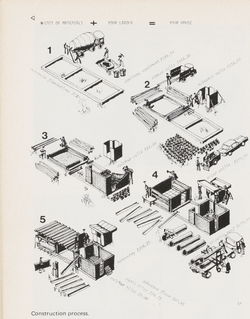
Les trois lauréates du prix Power Corporation du Canada, Lisa Chow (McGill University), Michèle Curtis (Carleton University) et Geneviève Depelteau (University of British Columbia), présentent les résultats de leur résidence de recherche de trois mois au CCA. Au cours de cette résidence, elles ont étudié l’émergence d’une conscience environnementale en architecture et en(...)
Les trois lauréates du prix Power Corporation du Canada, Lisa Chow (McGill University), Michèle Curtis (Carleton University) et Geneviève Depelteau (University of British Columbia), présentent les résultats de leur résidence de recherche de trois mois au CCA. Au cours de cette résidence, elles ont étudié l’émergence d’une conscience environnementale en architecture et en(...)
Localisation:
Maison Shaughnessy
Maison Shaughnessy
Date:
1 septembre 2016, 18h
1 septembre 2016, 18h
Titre:
Le problème est-il… encore l’environnement?
Actions:
Description:
Les trois lauréates du prix Power Corporation du Canada, Lisa Chow (McGill University), Michèle Curtis (Carleton University) et Geneviève Depelteau (University of British Columbia), présentent les résultats de leur résidence de recherche de trois mois au CCA. Au cours de cette résidence, elles ont étudié l’émergence d’une conscience environnementale en architecture et en(...)
Le problème est-il… encore l’environnement?
Actions:
Description:
Les trois lauréates du prix Power Corporation du Canada, Lisa Chow (McGill University), Michèle Curtis (Carleton University) et Geneviève Depelteau (University of British Columbia), présentent les résultats de leur résidence de recherche de trois mois au CCA. Au cours de cette résidence, elles ont étudié l’émergence d’une conscience environnementale en architecture et en(...)
Classification:
événements
événements
Date:
1 septembre 2016
18h
1 septembre 2016
18h
Localisation:
Maison Shaughnessy
Maison Shaughnessy
Classification:
recherche
recherche
Titre:
Chercheurs en résidence 2011
Chercheurs en résidence 2011
Actions:
Description:
Pedro Ignacio Alonso, Pontificia Universidad Católica de Chile, Santiago, Chili Sujet : The Soviet I-464 Building System in Cuba and Chile, 1963-1973 Gaia Caramellino, Politecnico di Torino, Turin, Italie Sujet: Architecture for Public Housing in the United States, 1930s-1940s Penelope Dean, University of Illinois, Chicago, États-Unis Sujet : Choice by Design,(...)
Pedro Ignacio Alonso, Pontificia Universidad Católica de Chile, Santiago, Chili Sujet : The Soviet I-464 Building System in Cuba and Chile, 1963-1973 Gaia Caramellino, Politecnico di Torino, Turin, Italie Sujet: Architecture for Public Housing in the United States, 1930s-1940s Penelope Dean, University of Illinois, Chicago, États-Unis Sujet : Choice by Design,(...)
Date:
avril 2011 au octobre 2011
avril 2011 au octobre 2011
Titre:
Chercheurs en résidence 2011
Actions:
Description:
Pedro Ignacio Alonso, Pontificia Universidad Católica de Chile, Santiago, Chili Sujet : The Soviet I-464 Building System in Cuba and Chile, 1963-1973 Gaia Caramellino, Politecnico di Torino, Turin, Italie Sujet: Architecture for Public Housing in the United States, 1930s-1940s Penelope Dean, University of Illinois, Chicago, États-Unis Sujet : Choice by Design,(...)
Chercheurs en résidence 2011
Actions:
Description:
Pedro Ignacio Alonso, Pontificia Universidad Católica de Chile, Santiago, Chili Sujet : The Soviet I-464 Building System in Cuba and Chile, 1963-1973 Gaia Caramellino, Politecnico di Torino, Turin, Italie Sujet: Architecture for Public Housing in the United States, 1930s-1940s Penelope Dean, University of Illinois, Chicago, États-Unis Sujet : Choice by Design,(...)
Classification:
recherche
recherche
Date:
avril 2011 au
octobre 2011
avril 2011 au
octobre 2011
Niveau de description archivistique:
Série(s)
Série(s)
Numéro de référence:
AP181.S1
Description:
Series 1, BMW Welt development and construction records, 1994-2015, documents the design development and construction phases of COOP HIMMELB(L)AU BMW Welt building, located nearby the BMW headquarters in Munich. This series also contains some materials from the competition phase, corresponding to less than 2000 digital files, and models from the third phase of the competition. More than half of the records were created from 2003 to 2006. Records show how COOP HIMMELB(L)AU, and the numerous consultants on the project, materialized the original concept, from Wolf Prix sketch, of this cloud-like roof emerging from a double cone suggesting an hurricane eye. To achieve this, extensive digital structural testing was done with engineers Bollinger + Grohmann. Consultants list also include: - Hans Lechner ZT GmbH for in-house project management; - Schmitt, Stumpf, Frühauf + Partner for construction documents of concrete works, interior fittings, tender and construction administration; - Emmer Pfenninger + Partner AG for the facade; - Transsolar, Klima Engineering for the photovoltaic plant on the roof; - PRO, Elektroplan for electrical systems and lifts; - AG-Licht for lighting; - Büro Dr. Pfeiler for structural physics or building physics; - Theater Projekte Daberto+Kollegen for the stage and auditorium; - PBB Planungsbüro Balke for kitchen technology - realgruen Landschaftsarchitekten for lansdcape design; - Kersken & Kirchner for fire protection; - TAW Weisse for height accessibility planning, in consideration for maintenance access; - Lang & Brukhardt for traffic engineering; - Ingenieurbüro Schoenenberg for civil engineering and road construction; - Büro für Gestaltung / Wangler & Abele for signage; - And Zilch, Müller, Henneke as inspection engineers. The approximately 52,400 digital files include raster images, CAD drawings and 3D digital models, plotter files, standard office documents, databases, and scripts. Design files are predominantly in AutoCAD, but the archive also includes over 1,100 Rhinoceros files (primarily in Rhino version 2, with some files in versions 3 and 4) and a smaller number of files in Maya, 3D Studio, Microstation, form*Z, and Revit formats. Because the firm’s computing environment included Macs, the archive also includes a few AppleDouble resource forks. Often, CAD drawings were also saved as PDF files. Photographs and screen captures were most times saved as JPEG files. Finally, design files also include wireframes and renderings. Most often, design files are plans of a designated area, a complete level of the building for example, but they also often show very specific and technical details, such as a few millimetres to be corrected on a panel or a structural element. These types of corrections are frequently shown in PDF files where annotations were either made digitally, or they were handwritten on a printed version which would then be digitized. Design files document all parts of the building including the facade, the roof, the double cone (Doppelkegel), the restaurants, the shops, the exhibition areas, the auditorium, etc. Accompanying textual records are at times quite technical in their content, such as lists of construction elements required in a given room, or analysis reports from consulting engineers. They also take into account the organization and planning of the work, for example including documentation’s exchange or meeting agendas. Finally, they show the design development through presentations, either PDF or Powerpoint files, and through a portfolio of the project and the preparation of the book Dynamic Forces. The archive’s physical component includes 52 physical study models, which were used in combination with digital modeling tools to iteratively refine the building’s design. These are a selection made by the firm of study models from the later stages of the competition and the early stages of the design development. Source: Feireiss, Kristin, editor. “Dynamic Forces, BMW WELT Munich”. Munich: Prestel Verlag, 2007.
AP181.S1
Description:
Series 1, BMW Welt development and construction records, 1994-2015, documents the design development and construction phases of COOP HIMMELB(L)AU BMW Welt building, located nearby the BMW headquarters in Munich. This series also contains some materials from the competition phase, corresponding to less than 2000 digital files, and models from the third phase of the competition. More than half of the records were created from 2003 to 2006. Records show how COOP HIMMELB(L)AU, and the numerous consultants on the project, materialized the original concept, from Wolf Prix sketch, of this cloud-like roof emerging from a double cone suggesting an hurricane eye. To achieve this, extensive digital structural testing was done with engineers Bollinger + Grohmann. Consultants list also include: - Hans Lechner ZT GmbH for in-house project management; - Schmitt, Stumpf, Frühauf + Partner for construction documents of concrete works, interior fittings, tender and construction administration; - Emmer Pfenninger + Partner AG for the facade; - Transsolar, Klima Engineering for the photovoltaic plant on the roof; - PRO, Elektroplan for electrical systems and lifts; - AG-Licht for lighting; - Büro Dr. Pfeiler for structural physics or building physics; - Theater Projekte Daberto+Kollegen for the stage and auditorium; - PBB Planungsbüro Balke for kitchen technology - realgruen Landschaftsarchitekten for lansdcape design; - Kersken & Kirchner for fire protection; - TAW Weisse for height accessibility planning, in consideration for maintenance access; - Lang & Brukhardt for traffic engineering; - Ingenieurbüro Schoenenberg for civil engineering and road construction; - Büro für Gestaltung / Wangler & Abele for signage; - And Zilch, Müller, Henneke as inspection engineers. The approximately 52,400 digital files include raster images, CAD drawings and 3D digital models, plotter files, standard office documents, databases, and scripts. Design files are predominantly in AutoCAD, but the archive also includes over 1,100 Rhinoceros files (primarily in Rhino version 2, with some files in versions 3 and 4) and a smaller number of files in Maya, 3D Studio, Microstation, form*Z, and Revit formats. Because the firm’s computing environment included Macs, the archive also includes a few AppleDouble resource forks. Often, CAD drawings were also saved as PDF files. Photographs and screen captures were most times saved as JPEG files. Finally, design files also include wireframes and renderings. Most often, design files are plans of a designated area, a complete level of the building for example, but they also often show very specific and technical details, such as a few millimetres to be corrected on a panel or a structural element. These types of corrections are frequently shown in PDF files where annotations were either made digitally, or they were handwritten on a printed version which would then be digitized. Design files document all parts of the building including the facade, the roof, the double cone (Doppelkegel), the restaurants, the shops, the exhibition areas, the auditorium, etc. Accompanying textual records are at times quite technical in their content, such as lists of construction elements required in a given room, or analysis reports from consulting engineers. They also take into account the organization and planning of the work, for example including documentation’s exchange or meeting agendas. Finally, they show the design development through presentations, either PDF or Powerpoint files, and through a portfolio of the project and the preparation of the book Dynamic Forces. The archive’s physical component includes 52 physical study models, which were used in combination with digital modeling tools to iteratively refine the building’s design. These are a selection made by the firm of study models from the later stages of the competition and the early stages of the design development. Source: Feireiss, Kristin, editor. “Dynamic Forces, BMW WELT Munich”. Munich: Prestel Verlag, 2007.
Personnes et institutions:
Date:
1994-2015
1994-2015
Titre:
BMW Welt development and construction records
Actions:
AP181.S1
Description:
Series 1, BMW Welt development and construction records, 1994-2015, documents the design development and construction phases of COOP HIMMELB(L)AU BMW Welt building, located nearby the BMW headquarters in Munich. This series also contains some materials from the competition phase, corresponding to less than 2000 digital files, and models from the third phase of the competition. More than half of the records were created from 2003 to 2006. Records show how COOP HIMMELB(L)AU, and the numerous consultants on the project, materialized the original concept, from Wolf Prix sketch, of this cloud-like roof emerging from a double cone suggesting an hurricane eye. To achieve this, extensive digital structural testing was done with engineers Bollinger + Grohmann. Consultants list also include: - Hans Lechner ZT GmbH for in-house project management; - Schmitt, Stumpf, Frühauf + Partner for construction documents of concrete works, interior fittings, tender and construction administration; - Emmer Pfenninger + Partner AG for the facade; - Transsolar, Klima Engineering for the photovoltaic plant on the roof; - PRO, Elektroplan for electrical systems and lifts; - AG-Licht for lighting; - Büro Dr. Pfeiler for structural physics or building physics; - Theater Projekte Daberto+Kollegen for the stage and auditorium; - PBB Planungsbüro Balke for kitchen technology - realgruen Landschaftsarchitekten for lansdcape design; - Kersken & Kirchner for fire protection; - TAW Weisse for height accessibility planning, in consideration for maintenance access; - Lang & Brukhardt for traffic engineering; - Ingenieurbüro Schoenenberg for civil engineering and road construction; - Büro für Gestaltung / Wangler & Abele for signage; - And Zilch, Müller, Henneke as inspection engineers. The approximately 52,400 digital files include raster images, CAD drawings and 3D digital models, plotter files, standard office documents, databases, and scripts. Design files are predominantly in AutoCAD, but the archive also includes over 1,100 Rhinoceros files (primarily in Rhino version 2, with some files in versions 3 and 4) and a smaller number of files in Maya, 3D Studio, Microstation, form*Z, and Revit formats. Because the firm’s computing environment included Macs, the archive also includes a few AppleDouble resource forks. Often, CAD drawings were also saved as PDF files. Photographs and screen captures were most times saved as JPEG files. Finally, design files also include wireframes and renderings. Most often, design files are plans of a designated area, a complete level of the building for example, but they also often show very specific and technical details, such as a few millimetres to be corrected on a panel or a structural element. These types of corrections are frequently shown in PDF files where annotations were either made digitally, or they were handwritten on a printed version which would then be digitized. Design files document all parts of the building including the facade, the roof, the double cone (Doppelkegel), the restaurants, the shops, the exhibition areas, the auditorium, etc. Accompanying textual records are at times quite technical in their content, such as lists of construction elements required in a given room, or analysis reports from consulting engineers. They also take into account the organization and planning of the work, for example including documentation’s exchange or meeting agendas. Finally, they show the design development through presentations, either PDF or Powerpoint files, and through a portfolio of the project and the preparation of the book Dynamic Forces. The archive’s physical component includes 52 physical study models, which were used in combination with digital modeling tools to iteratively refine the building’s design. These are a selection made by the firm of study models from the later stages of the competition and the early stages of the design development. Source: Feireiss, Kristin, editor. “Dynamic Forces, BMW WELT Munich”. Munich: Prestel Verlag, 2007.
BMW Welt development and construction records
Actions:
AP181.S1
Description:
Series 1, BMW Welt development and construction records, 1994-2015, documents the design development and construction phases of COOP HIMMELB(L)AU BMW Welt building, located nearby the BMW headquarters in Munich. This series also contains some materials from the competition phase, corresponding to less than 2000 digital files, and models from the third phase of the competition. More than half of the records were created from 2003 to 2006. Records show how COOP HIMMELB(L)AU, and the numerous consultants on the project, materialized the original concept, from Wolf Prix sketch, of this cloud-like roof emerging from a double cone suggesting an hurricane eye. To achieve this, extensive digital structural testing was done with engineers Bollinger + Grohmann. Consultants list also include: - Hans Lechner ZT GmbH for in-house project management; - Schmitt, Stumpf, Frühauf + Partner for construction documents of concrete works, interior fittings, tender and construction administration; - Emmer Pfenninger + Partner AG for the facade; - Transsolar, Klima Engineering for the photovoltaic plant on the roof; - PRO, Elektroplan for electrical systems and lifts; - AG-Licht for lighting; - Büro Dr. Pfeiler for structural physics or building physics; - Theater Projekte Daberto+Kollegen for the stage and auditorium; - PBB Planungsbüro Balke for kitchen technology - realgruen Landschaftsarchitekten for lansdcape design; - Kersken & Kirchner for fire protection; - TAW Weisse for height accessibility planning, in consideration for maintenance access; - Lang & Brukhardt for traffic engineering; - Ingenieurbüro Schoenenberg for civil engineering and road construction; - Büro für Gestaltung / Wangler & Abele for signage; - And Zilch, Müller, Henneke as inspection engineers. The approximately 52,400 digital files include raster images, CAD drawings and 3D digital models, plotter files, standard office documents, databases, and scripts. Design files are predominantly in AutoCAD, but the archive also includes over 1,100 Rhinoceros files (primarily in Rhino version 2, with some files in versions 3 and 4) and a smaller number of files in Maya, 3D Studio, Microstation, form*Z, and Revit formats. Because the firm’s computing environment included Macs, the archive also includes a few AppleDouble resource forks. Often, CAD drawings were also saved as PDF files. Photographs and screen captures were most times saved as JPEG files. Finally, design files also include wireframes and renderings. Most often, design files are plans of a designated area, a complete level of the building for example, but they also often show very specific and technical details, such as a few millimetres to be corrected on a panel or a structural element. These types of corrections are frequently shown in PDF files where annotations were either made digitally, or they were handwritten on a printed version which would then be digitized. Design files document all parts of the building including the facade, the roof, the double cone (Doppelkegel), the restaurants, the shops, the exhibition areas, the auditorium, etc. Accompanying textual records are at times quite technical in their content, such as lists of construction elements required in a given room, or analysis reports from consulting engineers. They also take into account the organization and planning of the work, for example including documentation’s exchange or meeting agendas. Finally, they show the design development through presentations, either PDF or Powerpoint files, and through a portfolio of the project and the preparation of the book Dynamic Forces. The archive’s physical component includes 52 physical study models, which were used in combination with digital modeling tools to iteratively refine the building’s design. These are a selection made by the firm of study models from the later stages of the competition and the early stages of the design development. Source: Feireiss, Kristin, editor. “Dynamic Forces, BMW WELT Munich”. Munich: Prestel Verlag, 2007.
Niveau de description archivistique:
Series
Series
Date:
1994-2015
1994-2015
Personnes et institutions:
Classification:
événements
événements
Actions:
Description:
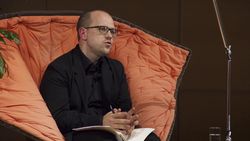
Les individus agissent comme leurs propres historiens, en masquant certaines histoires et en mettant l’accent sur d’autres. Mais à l’échelle des nations et des cultures, et surtout dans cette époque de la mémoire numérique omniprésente, il est devenu plus difficile d’oublier. S’appuyant sur la question de l’histoire et de ses usages, soulevée par des expositions comme(...)
Les individus agissent comme leurs propres historiens, en masquant certaines histoires et en mettant l’accent sur d’autres. Mais à l’échelle des nations et des cultures, et surtout dans cette époque de la mémoire numérique omniprésente, il est devenu plus difficile d’oublier. S’appuyant sur la question de l’histoire et de ses usages, soulevée par des expositions comme(...)
Date:
7 décembre 2017
7 décembre 2017
Titre:
Venez oublier l’Internet, avec Evgueny Morozov
Actions:
Description:
Les individus agissent comme leurs propres historiens, en masquant certaines histoires et en mettant l’accent sur d’autres. Mais à l’échelle des nations et des cultures, et surtout dans cette époque de la mémoire numérique omniprésente, il est devenu plus difficile d’oublier. S’appuyant sur la question de l’histoire et de ses usages, soulevée par des expositions comme(...)
Venez oublier l’Internet, avec Evgueny Morozov
Actions:
Description:
Les individus agissent comme leurs propres historiens, en masquant certaines histoires et en mettant l’accent sur d’autres. Mais à l’échelle des nations et des cultures, et surtout dans cette époque de la mémoire numérique omniprésente, il est devenu plus difficile d’oublier. S’appuyant sur la question de l’histoire et de ses usages, soulevée par des expositions comme(...)
Classification:
événements
événements
Date:
7 décembre 2017
7 décembre 2017
Classification:
événements
événements
Actions:
Description:
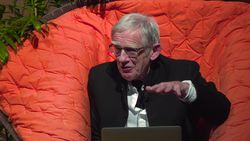
Les individus agissent comme leurs propres historiens, en masquant certaines histoires et en mettant l’accent sur d’autres. Mais à l’échelle des nations et des cultures, et surtout dans cette époque de la mémoire numérique omniprésente, il est devenu plus difficile d’oublier. S’appuyant sur la question de l’histoire et de ses usages, soulevée par des expositions comme(...)
Les individus agissent comme leurs propres historiens, en masquant certaines histoires et en mettant l’accent sur d’autres. Mais à l’échelle des nations et des cultures, et surtout dans cette époque de la mémoire numérique omniprésente, il est devenu plus difficile d’oublier. S’appuyant sur la question de l’histoire et de ses usages, soulevée par des expositions comme(...)
Mot(s)-clé(s):
Craig Hodgetts
Craig Hodgetts
Date:
29 mars 2018
29 mars 2018
Titre:
Venez oublier la grille, avec Craig Hodgetts
Actions:
Description:
Les individus agissent comme leurs propres historiens, en masquant certaines histoires et en mettant l’accent sur d’autres. Mais à l’échelle des nations et des cultures, et surtout dans cette époque de la mémoire numérique omniprésente, il est devenu plus difficile d’oublier. S’appuyant sur la question de l’histoire et de ses usages, soulevée par des expositions comme(...)
Venez oublier la grille, avec Craig Hodgetts
Actions:
Description:
Les individus agissent comme leurs propres historiens, en masquant certaines histoires et en mettant l’accent sur d’autres. Mais à l’échelle des nations et des cultures, et surtout dans cette époque de la mémoire numérique omniprésente, il est devenu plus difficile d’oublier. S’appuyant sur la question de l’histoire et de ses usages, soulevée par des expositions comme(...)
Classification:
événements
événements
Date:
29 mars 2018
29 mars 2018
Mot(s)-clé(s):
Craig Hodgetts
Craig Hodgetts
Classification:
événements
événements
Description:
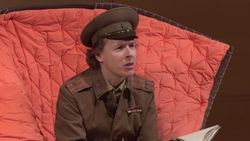
Les individus agissent comme leurs propres historiens, en masquant certaines histoires et en mettant l’accent sur d’autres. Mais à l’échelle des nations et des cultures, et surtout dans cette époque de la mémoire numérique omniprésente, il est devenu plus difficile d’oublier. S’appuyant sur la question de l’histoire et de ses usages, soulevée par des expositions comme(...)
Les individus agissent comme leurs propres historiens, en masquant certaines histoires et en mettant l’accent sur d’autres. Mais à l’échelle des nations et des cultures, et surtout dans cette époque de la mémoire numérique omniprésente, il est devenu plus difficile d’oublier. S’appuyant sur la question de l’histoire et de ses usages, soulevée par des expositions comme(...)
Mot(s)-clé(s):
Johannes Grenzfurthner
Johannes Grenzfurthner
Date:
12 avril 2018
12 avril 2018
Titre:
Venez oublier la contre-culture, avec Johannes Grenzfurthner
Actions:
Description:
Les individus agissent comme leurs propres historiens, en masquant certaines histoires et en mettant l’accent sur d’autres. Mais à l’échelle des nations et des cultures, et surtout dans cette époque de la mémoire numérique omniprésente, il est devenu plus difficile d’oublier. S’appuyant sur la question de l’histoire et de ses usages, soulevée par des expositions comme(...)
Venez oublier la contre-culture, avec Johannes Grenzfurthner
Actions:
Description:
Les individus agissent comme leurs propres historiens, en masquant certaines histoires et en mettant l’accent sur d’autres. Mais à l’échelle des nations et des cultures, et surtout dans cette époque de la mémoire numérique omniprésente, il est devenu plus difficile d’oublier. S’appuyant sur la question de l’histoire et de ses usages, soulevée par des expositions comme(...)
Classification:
événements
événements
Date:
12 avril 2018
12 avril 2018
Mot(s)-clé(s):
Johannes Grenzfurthner
Johannes Grenzfurthner
Classification:
documents textuels
documents textuels
Numéro de référence:
AP197.S3.006
Description:
The box is comprised of correspondence for the years of 1995-1997, organized in chronological order. The box documents Frampton’s career as Ware professor at the Graduate School of Architecture, Planning and Preservation, Columbia University and his related professional activities. Correspondence in this box includes: offers of teaching positions; requests to write articles, reviews, books and recommendation letters; invitations to teach, present, or attend at lectures/symposiums/conferences; and requests to serve on juries. Throughout this period, Frampton corresponded with various architects, professors, publishers, and editors of various publications such as: Thames and Hudson Ltd.; the Berlage Institute; the Italian Cultural Institute; Yukio Futagawa of GA/ADA Edita Tokyo Co CD; and the MIT Press. Correspondence relates to his participation/involvement in: the Michael Blackwood Production “In search of Louis Kahn: Six Buildings;” the Japanese and German translations for the Studies in Tectonic Culture publication; organizing lectures on Studies in tectonic Culture; the Jerusalem Seminar in Architecture “Technology, Place & and Architecture;” teaching at the École polytechnique fédérale de Lausanne; the Aga Khan Program for Islamic Architecture; and the Architectural Society of China. Correspondence concerning the following publications and lectures is included: “the Megaform as City in Miniature;” “Critical regionalism revisited,” a lecture at the Berlage Institute; the Le Corbusier publication; “Tradition and Innovation in the Work of Christoph Mackler;” and the forward for Vittorio Gregotti`s Inside Architecture.
AP197.S3.006
Description:
The box is comprised of correspondence for the years of 1995-1997, organized in chronological order. The box documents Frampton’s career as Ware professor at the Graduate School of Architecture, Planning and Preservation, Columbia University and his related professional activities. Correspondence in this box includes: offers of teaching positions; requests to write articles, reviews, books and recommendation letters; invitations to teach, present, or attend at lectures/symposiums/conferences; and requests to serve on juries. Throughout this period, Frampton corresponded with various architects, professors, publishers, and editors of various publications such as: Thames and Hudson Ltd.; the Berlage Institute; the Italian Cultural Institute; Yukio Futagawa of GA/ADA Edita Tokyo Co CD; and the MIT Press. Correspondence relates to his participation/involvement in: the Michael Blackwood Production “In search of Louis Kahn: Six Buildings;” the Japanese and German translations for the Studies in Tectonic Culture publication; organizing lectures on Studies in tectonic Culture; the Jerusalem Seminar in Architecture “Technology, Place & and Architecture;” teaching at the École polytechnique fédérale de Lausanne; the Aga Khan Program for Islamic Architecture; and the Architectural Society of China. Correspondence concerning the following publications and lectures is included: “the Megaform as City in Miniature;” “Critical regionalism revisited,” a lecture at the Berlage Institute; the Le Corbusier publication; “Tradition and Innovation in the Work of Christoph Mackler;” and the forward for Vittorio Gregotti`s Inside Architecture.
Personnes et institutions:
Date:
1995-1997
1995-1997
Titre:
Personal and professional correspondence from 1995-1997
Actions:
AP197.S3.006
Description:
The box is comprised of correspondence for the years of 1995-1997, organized in chronological order. The box documents Frampton’s career as Ware professor at the Graduate School of Architecture, Planning and Preservation, Columbia University and his related professional activities. Correspondence in this box includes: offers of teaching positions; requests to write articles, reviews, books and recommendation letters; invitations to teach, present, or attend at lectures/symposiums/conferences; and requests to serve on juries. Throughout this period, Frampton corresponded with various architects, professors, publishers, and editors of various publications such as: Thames and Hudson Ltd.; the Berlage Institute; the Italian Cultural Institute; Yukio Futagawa of GA/ADA Edita Tokyo Co CD; and the MIT Press. Correspondence relates to his participation/involvement in: the Michael Blackwood Production “In search of Louis Kahn: Six Buildings;” the Japanese and German translations for the Studies in Tectonic Culture publication; organizing lectures on Studies in tectonic Culture; the Jerusalem Seminar in Architecture “Technology, Place & and Architecture;” teaching at the École polytechnique fédérale de Lausanne; the Aga Khan Program for Islamic Architecture; and the Architectural Society of China. Correspondence concerning the following publications and lectures is included: “the Megaform as City in Miniature;” “Critical regionalism revisited,” a lecture at the Berlage Institute; the Le Corbusier publication; “Tradition and Innovation in the Work of Christoph Mackler;” and the forward for Vittorio Gregotti`s Inside Architecture.
Personal and professional correspondence from 1995-1997
Actions:
AP197.S3.006
Description:
The box is comprised of correspondence for the years of 1995-1997, organized in chronological order. The box documents Frampton’s career as Ware professor at the Graduate School of Architecture, Planning and Preservation, Columbia University and his related professional activities. Correspondence in this box includes: offers of teaching positions; requests to write articles, reviews, books and recommendation letters; invitations to teach, present, or attend at lectures/symposiums/conferences; and requests to serve on juries. Throughout this period, Frampton corresponded with various architects, professors, publishers, and editors of various publications such as: Thames and Hudson Ltd.; the Berlage Institute; the Italian Cultural Institute; Yukio Futagawa of GA/ADA Edita Tokyo Co CD; and the MIT Press. Correspondence relates to his participation/involvement in: the Michael Blackwood Production “In search of Louis Kahn: Six Buildings;” the Japanese and German translations for the Studies in Tectonic Culture publication; organizing lectures on Studies in tectonic Culture; the Jerusalem Seminar in Architecture “Technology, Place & and Architecture;” teaching at the École polytechnique fédérale de Lausanne; the Aga Khan Program for Islamic Architecture; and the Architectural Society of China. Correspondence concerning the following publications and lectures is included: “the Megaform as City in Miniature;” “Critical regionalism revisited,” a lecture at the Berlage Institute; the Le Corbusier publication; “Tradition and Innovation in the Work of Christoph Mackler;” and the forward for Vittorio Gregotti`s Inside Architecture.
Classification:
documents textuels
documents textuels
Date:
1995-1997
1995-1997
Personnes et institutions:
Classification:
expositions
expositions
Actions:
Description:
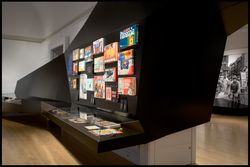
1973 : Désolé, plus d’essence analyse l’innovation architecturale à laquelle a donné naissance la crise énergétique de 1973, alors que la valeur du baril de pétrole augmentait de façon exponentielle, donnant lieu à des bouleversements économiques, politiques et sociaux dans de nombreux pays. Présentant plus de 350 objets – dessins d’architecture, photographies,(...)
1973 : Désolé, plus d’essence analyse l’innovation architecturale à laquelle a donné naissance la crise énergétique de 1973, alors que la valeur du baril de pétrole augmentait de façon exponentielle, donnant lieu à des bouleversements économiques, politiques et sociaux dans de nombreux pays. Présentant plus de 350 objets – dessins d’architecture, photographies,(...)
Localisation:
Salles principales Mot(s)-clé(s):
1973, désolé plus d'essence, crise du pétrole, énergie, environnement
Salles principales Mot(s)-clé(s):
1973, désolé plus d'essence, crise du pétrole, énergie, environnement
Date:
7 novembre 2007 au 20 avril 2008
7 novembre 2007 au 20 avril 2008
Titre:
1973 : désolé, plus d’essence
Actions:
Description:
1973 : Désolé, plus d’essence analyse l’innovation architecturale à laquelle a donné naissance la crise énergétique de 1973, alors que la valeur du baril de pétrole augmentait de façon exponentielle, donnant lieu à des bouleversements économiques, politiques et sociaux dans de nombreux pays. Présentant plus de 350 objets – dessins d’architecture, photographies,(...)
1973 : désolé, plus d’essence
Actions:
Description:
1973 : Désolé, plus d’essence analyse l’innovation architecturale à laquelle a donné naissance la crise énergétique de 1973, alors que la valeur du baril de pétrole augmentait de façon exponentielle, donnant lieu à des bouleversements économiques, politiques et sociaux dans de nombreux pays. Présentant plus de 350 objets – dessins d’architecture, photographies,(...)
Classification:
expositions
expositions
Date:
7 novembre 2007 au
20 avril 2008
7 novembre 2007 au
20 avril 2008
Localisation:
Salles principales Mot(s)-clé(s):
1973, désolé plus d'essence, crise du pétrole, énergie, environnement
Salles principales Mot(s)-clé(s):
1973, désolé plus d'essence, crise du pétrole, énergie, environnement
Classification:
événements
événements
Titre:
Images parlantes, un circuit
Images parlantes, un circuit
Actions:
Description:
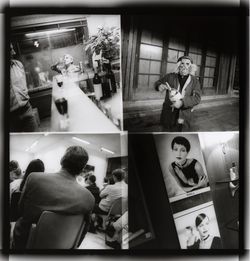
Tout au long d’un parcours d’interventions et d’installations en neuf segments à travers les espaces du CCA, Francesca Ammon, Davide Deriu, Reto Geiser, Sara Goldsmith, Catalina Mejía Moreno, Bas Princen, Mika Savela et Peter Sealy nous proposent de réfléchir aux relations essentielles et créatives qui unissent photographie et architecture. Au cours des dix huit(...)
Tout au long d’un parcours d’interventions et d’installations en neuf segments à travers les espaces du CCA, Francesca Ammon, Davide Deriu, Reto Geiser, Sara Goldsmith, Catalina Mejía Moreno, Bas Princen, Mika Savela et Peter Sealy nous proposent de réfléchir aux relations essentielles et créatives qui unissent photographie et architecture. Au cours des dix huit(...)
Mot(s)-clé(s):
Andrew W. Mellon Foundation, photographie, photographies, Francesca Ammon, Davide Deriu, Reto Geiser, Sara Goldsmith, Catalina Mejía Moreno, Bas Princen, Mika Savela, Peter Sealy
Andrew W. Mellon Foundation, photographie, photographies, Francesca Ammon, Davide Deriu, Reto Geiser, Sara Goldsmith, Catalina Mejía Moreno, Bas Princen, Mika Savela, Peter Sealy
Date:
14 octobre 2017, 16h
14 octobre 2017, 16h
Titre:
Images parlantes, un circuit
Actions:
Description:
Tout au long d’un parcours d’interventions et d’installations en neuf segments à travers les espaces du CCA, Francesca Ammon, Davide Deriu, Reto Geiser, Sara Goldsmith, Catalina Mejía Moreno, Bas Princen, Mika Savela et Peter Sealy nous proposent de réfléchir aux relations essentielles et créatives qui unissent photographie et architecture. Au cours des dix huit(...)
Images parlantes, un circuit
Actions:
Description:
Tout au long d’un parcours d’interventions et d’installations en neuf segments à travers les espaces du CCA, Francesca Ammon, Davide Deriu, Reto Geiser, Sara Goldsmith, Catalina Mejía Moreno, Bas Princen, Mika Savela et Peter Sealy nous proposent de réfléchir aux relations essentielles et créatives qui unissent photographie et architecture. Au cours des dix huit(...)
Classification:
événements
événements
Date:
14 octobre 2017
16h
14 octobre 2017
16h


