


1124 Résultats
Classification:
livres
livres
Actions:
Prix:
$68.95
(disponible sur commande)
Résumé:
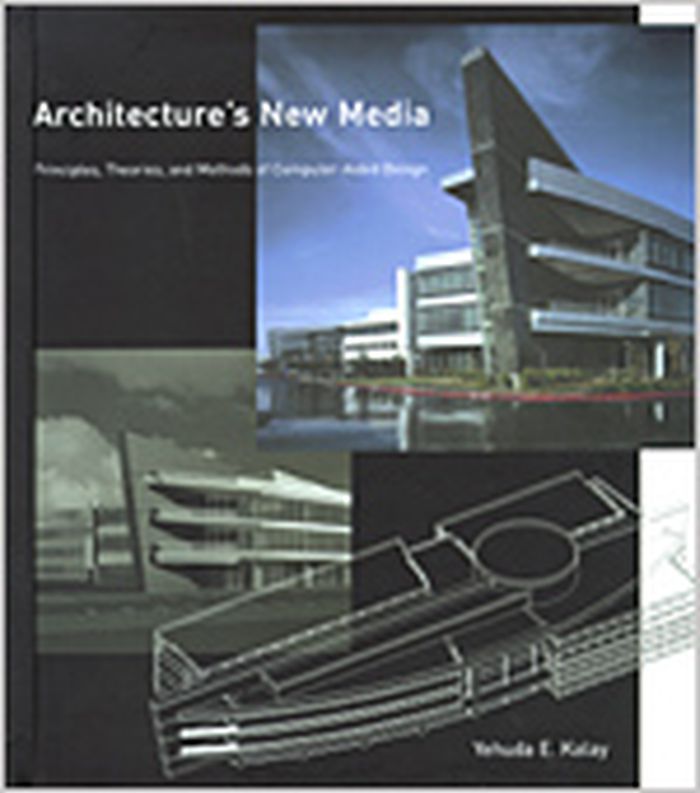
Computer-aided design (CAD) technology has already changed the practice of architecture, and it has the potential to change it even more radically. With Architecture's New Media, Yehuda Kalay offers a comprehensive exposition of the principles, methods, and practices that underlie architectural computing. He discusses the aspects of information technology that are(...)
$68.95
(disponible sur commande)
Résumé:
Computer-aided design (CAD) technology has already changed the practice of architecture, and it has the potential to change it even more radically. With Architecture's New Media, Yehuda Kalay offers a comprehensive exposition of the principles, methods, and practices that underlie architectural computing. He discusses the aspects of information technology that are(...)
Publication:
juin 2004, Cambridge
juin 2004, Cambridge
Titre:
Architecture's new media : principles, theories and methods of computer-aided design
Actions:
Prix:
$68.95
(disponible sur commande)
Résumé:
Computer-aided design (CAD) technology has already changed the practice of architecture, and it has the potential to change it even more radically. With Architecture's New Media, Yehuda Kalay offers a comprehensive exposition of the principles, methods, and practices that underlie architectural computing. He discusses the aspects of information technology that are pertinent to architectural design, analyzes the benefits and drawbacks of particular computational methods, and looks at the potential of emerging computational techniques to affect the future of architectural design.
Architecture's new media : principles, theories and methods of computer-aided design
Actions:
Prix:
$68.95
(disponible sur commande)
Résumé:
Computer-aided design (CAD) technology has already changed the practice of architecture, and it has the potential to change it even more radically. With Architecture's New Media, Yehuda Kalay offers a comprehensive exposition of the principles, methods, and practices that underlie architectural computing. He discusses the aspects of information technology that are pertinent to architectural design, analyzes the benefits and drawbacks of particular computational methods, and looks at the potential of emerging computational techniques to affect the future of architectural design.
Classification:
livres
livres
Publication:
juin 2004, Cambridge
juin 2004, Cambridge
Classification:
livres
livres

Titre:
Jeff Liao: Coney Island
Jeff Liao: Coney Island
Actions:
Prix:
$149.00
(disponible sur commande)
Résumé:
In 2010, Liao began photographing Coney Island during a period of transition, for both the place and the artist. A new incarnation of Luna Park opened to the public, the municipal government actively engaged in redevelopment, and the area visibly transformed. At the same time, Liao’s approach to picture making changed as he experimented with new strategies and techniques.(...)
$149.00
(disponible sur commande)
Résumé:
In 2010, Liao began photographing Coney Island during a period of transition, for both the place and the artist. A new incarnation of Luna Park opened to the public, the municipal government actively engaged in redevelopment, and the area visibly transformed. At the same time, Liao’s approach to picture making changed as he experimented with new strategies and techniques.(...)
Titre:
Jeff Liao: Coney Island
Actions:
Prix:
$149.00
(disponible sur commande)
Résumé:
In 2010, Liao began photographing Coney Island during a period of transition, for both the place and the artist. A new incarnation of Luna Park opened to the public, the municipal government actively engaged in redevelopment, and the area visibly transformed. At the same time, Liao’s approach to picture making changed as he experimented with new strategies and techniques. He started the project working with traditional transparency film. Although he had always used digital technology to transform the film images into a finished image, he slowly introduced digital picture-making technology to the process of recording the scenes. The resulting large-scale prints have a visual sweep often associated with cinema, encompassing the viewer and providing a strong sense of place. Edition of 500 copies
Jeff Liao: Coney Island
Actions:
Prix:
$149.00
(disponible sur commande)
Résumé:
In 2010, Liao began photographing Coney Island during a period of transition, for both the place and the artist. A new incarnation of Luna Park opened to the public, the municipal government actively engaged in redevelopment, and the area visibly transformed. At the same time, Liao’s approach to picture making changed as he experimented with new strategies and techniques. He started the project working with traditional transparency film. Although he had always used digital technology to transform the film images into a finished image, he slowly introduced digital picture-making technology to the process of recording the scenes. The resulting large-scale prints have a visual sweep often associated with cinema, encompassing the viewer and providing a strong sense of place. Edition of 500 copies
Classification:
livres
livres
Publication:
août 2013
août 2013
Sujet:
Monographies photo
Monographies photo
Classification:
livres
livres
Actions:
Prix:
$47.95
(disponible sur commande)
Résumé:
The influential Presence Project brought together an international group of collaborators in 2001 to investigate how technology can be used to increase the presence of older people in their local communities. This became a groundbreaking project for practice-based design research, exploring approaches and methods that have resonated since. The design team rejected a(...)
$47.95
(disponible sur commande)
Résumé:
The influential Presence Project brought together an international group of collaborators in 2001 to investigate how technology can be used to increase the presence of older people in their local communities. This became a groundbreaking project for practice-based design research, exploring approaches and methods that have resonated since. The design team rejected a(...)
Titre:
The presence project, 2nd edition
Actions:
Prix:
$47.95
(disponible sur commande)
Résumé:
The influential Presence Project brought together an international group of collaborators in 2001 to investigate how technology can be used to increase the presence of older people in their local communities. This became a groundbreaking project for practice-based design research, exploring approaches and methods that have resonated since. The design team rejected a problem-solving approach, focusing instead on creating new and unusual situations for communication and insight. They introduced cutting-edge methods and developed challenging designs that they tested in the communities themselves. This book documents the Presence Project's development of key concepts in contemporary technology design, including cultural probes, design workbooks, and speculative design. Original Presence Project participants may have been surprised that the methods they invented became standard practice; the theme of the project was to break out of conventional approaches and try something radically new. With a new preface by Bill Gaver and an introduction by Phoebe Sengers, this reissue of The Presence Project gives readers a glimpse into the thinking behind this influential project and ideas about how to bring it to bear on today's design problems.
The presence project, 2nd edition
Actions:
Prix:
$47.95
(disponible sur commande)
Résumé:
The influential Presence Project brought together an international group of collaborators in 2001 to investigate how technology can be used to increase the presence of older people in their local communities. This became a groundbreaking project for practice-based design research, exploring approaches and methods that have resonated since. The design team rejected a problem-solving approach, focusing instead on creating new and unusual situations for communication and insight. They introduced cutting-edge methods and developed challenging designs that they tested in the communities themselves. This book documents the Presence Project's development of key concepts in contemporary technology design, including cultural probes, design workbooks, and speculative design. Original Presence Project participants may have been surprised that the methods they invented became standard practice; the theme of the project was to break out of conventional approaches and try something radically new. With a new preface by Bill Gaver and an introduction by Phoebe Sengers, this reissue of The Presence Project gives readers a glimpse into the thinking behind this influential project and ideas about how to bring it to bear on today's design problems.
Classification:
livres
livres
Publication:
mai 2020
mai 2020
Classification:
livres
livres
Titre:
Programmed inequality: how Britain discarded women technologists and lost its edge in computing
Programmed inequality: how Britain discarded women technologists and lost its edge in computing
Actions:
Prix:
$51.95
(disponible sur commande)
Résumé:
In 1944, Britain led the world in electronic computing. By 1974, the British computer industry was all but extinct. What happened in the intervening thirty years holds lessons for all postindustrial superpowers. As Britain struggled to use technology to retain its global power, the nation’s inability to manage its technical labor force hobbled its transition into the(...)
$51.95
(disponible sur commande)
Résumé:
In 1944, Britain led the world in electronic computing. By 1974, the British computer industry was all but extinct. What happened in the intervening thirty years holds lessons for all postindustrial superpowers. As Britain struggled to use technology to retain its global power, the nation’s inability to manage its technical labor force hobbled its transition into the(...)
Titre:
Programmed inequality: how Britain discarded women technologists and lost its edge in computing
Actions:
Prix:
$51.95
(disponible sur commande)
Résumé:
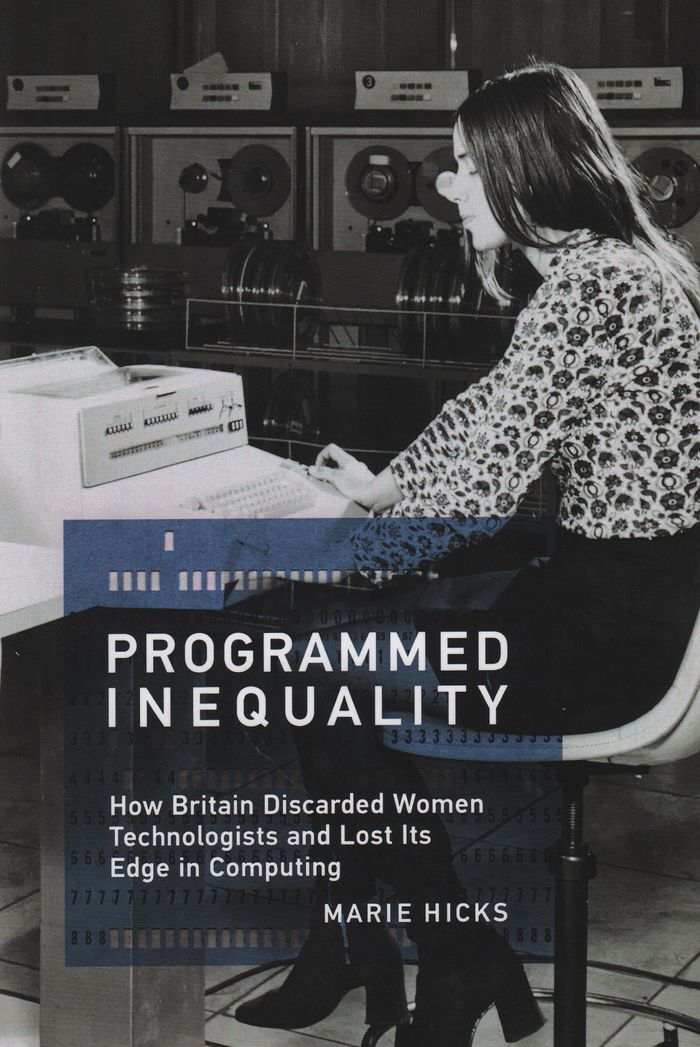
In 1944, Britain led the world in electronic computing. By 1974, the British computer industry was all but extinct. What happened in the intervening thirty years holds lessons for all postindustrial superpowers. As Britain struggled to use technology to retain its global power, the nation’s inability to manage its technical labor force hobbled its transition into the information age. In "Programmed inequality", Marie Hicks explores the story of labor feminization and gendered technocracy that undercut British efforts to computerize. That failure sprang from the government’s systematic neglect of its largest trained technical workforce simply because they were women. Women were a hidden engine of growth in high technology from World War II to the 1960s. As computing experienced a gender flip, becoming male-identified in the 1960s and 1970s, labor problems grew into structural ones and gender discrimination caused the nation’s largest computer user—the civil service and sprawling public sector—to make decisions that were disastrous for the British computer industry and the nation as a whole.
Programmed inequality: how Britain discarded women technologists and lost its edge in computing
Actions:
Prix:
$51.95
(disponible sur commande)
Résumé:
In 1944, Britain led the world in electronic computing. By 1974, the British computer industry was all but extinct. What happened in the intervening thirty years holds lessons for all postindustrial superpowers. As Britain struggled to use technology to retain its global power, the nation’s inability to manage its technical labor force hobbled its transition into the information age. In "Programmed inequality", Marie Hicks explores the story of labor feminization and gendered technocracy that undercut British efforts to computerize. That failure sprang from the government’s systematic neglect of its largest trained technical workforce simply because they were women. Women were a hidden engine of growth in high technology from World War II to the 1960s. As computing experienced a gender flip, becoming male-identified in the 1960s and 1970s, labor problems grew into structural ones and gender discrimination caused the nation’s largest computer user—the civil service and sprawling public sector—to make decisions that were disastrous for the British computer industry and the nation as a whole.
Classification:
livres
livres
Publication:
février 2017
février 2017
Classification:
livres
livres
Titre:
Hansjörg Mayer: foto
Hansjörg Mayer: foto
Actions:
Prix:
$50.00
(disponible sur commande)
Résumé:
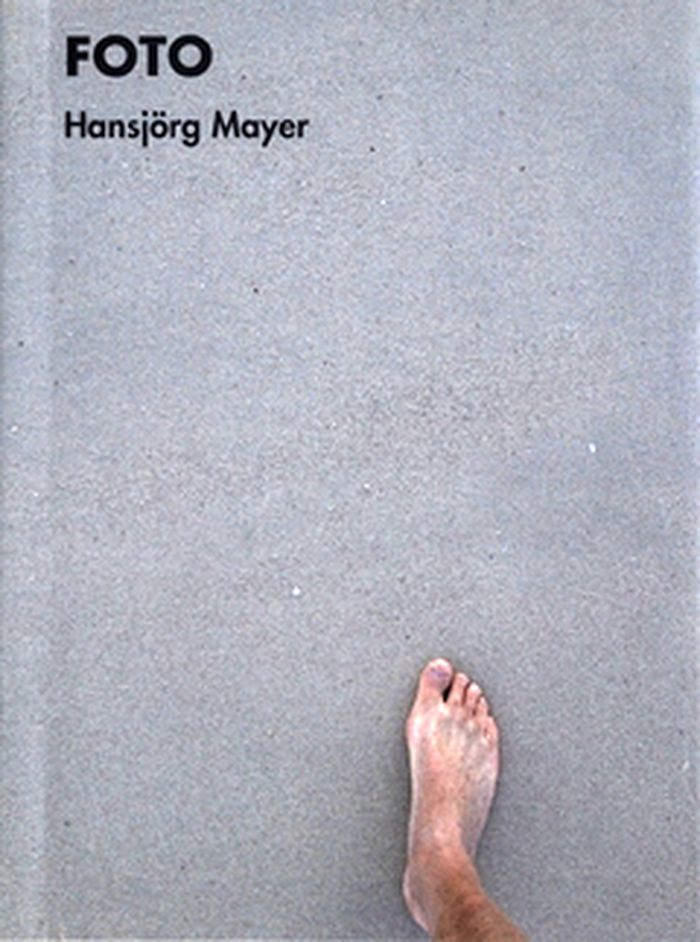
German publisher, author and artist Hansjörg Mayer (born 1943) has been taking photographs of structures and strange surfaces since the late 1950s. This publication highlights these works, which emphasize the fleeting and the ephemeral (a quality intensified by the advances of camera technology—digital cameras and smart phones).
$50.00
(disponible sur commande)
Résumé:
German publisher, author and artist Hansjörg Mayer (born 1943) has been taking photographs of structures and strange surfaces since the late 1950s. This publication highlights these works, which emphasize the fleeting and the ephemeral (a quality intensified by the advances of camera technology—digital cameras and smart phones).
Titre:
Hansjörg Mayer: foto
Actions:
Prix:
$50.00
(disponible sur commande)
Résumé:
German publisher, author and artist Hansjörg Mayer (born 1943) has been taking photographs of structures and strange surfaces since the late 1950s. This publication highlights these works, which emphasize the fleeting and the ephemeral (a quality intensified by the advances of camera technology—digital cameras and smart phones).
Hansjörg Mayer: foto
Actions:
Prix:
$50.00
(disponible sur commande)
Résumé:
German publisher, author and artist Hansjörg Mayer (born 1943) has been taking photographs of structures and strange surfaces since the late 1950s. This publication highlights these works, which emphasize the fleeting and the ephemeral (a quality intensified by the advances of camera technology—digital cameras and smart phones).
Classification:
livres
livres
Publication:
février 2015
février 2015
Classification:
livres
livres

Titre:
The smartness mandate
The smartness mandate
Actions:
Prix:
$47.00
(disponible sur commande)
Résumé:
In this book, the authors suggest that "smartness" is not primarily a technology, but rather an epistemology. Through this lens, they offer a critical exploration of the practices, technologies, and subjects that such an understanding relies upon—above all, artificial intelligence and machine learning. They approach these not simply as techniques for solving problems of(...)
$47.00
(disponible sur commande)
Résumé:
In this book, the authors suggest that "smartness" is not primarily a technology, but rather an epistemology. Through this lens, they offer a critical exploration of the practices, technologies, and subjects that such an understanding relies upon—above all, artificial intelligence and machine learning. They approach these not simply as techniques for solving problems of(...)
Publication:
décembre 2022
décembre 2022
Titre:
The smartness mandate
Actions:
Prix:
$47.00
(disponible sur commande)
Résumé:
In this book, the authors suggest that "smartness" is not primarily a technology, but rather an epistemology. Through this lens, they offer a critical exploration of the practices, technologies, and subjects that such an understanding relies upon—above all, artificial intelligence and machine learning. They approach these not simply as techniques for solving problems of calculations, but rather as modes of managing life (human and other) in terms of neo-Darwinian evolution, distributed intelligences, and "resilience," all of which have serious implications for society, politics, and the environment.
The smartness mandate
Actions:
Prix:
$47.00
(disponible sur commande)
Résumé:
In this book, the authors suggest that "smartness" is not primarily a technology, but rather an epistemology. Through this lens, they offer a critical exploration of the practices, technologies, and subjects that such an understanding relies upon—above all, artificial intelligence and machine learning. They approach these not simply as techniques for solving problems of calculations, but rather as modes of managing life (human and other) in terms of neo-Darwinian evolution, distributed intelligences, and "resilience," all of which have serious implications for society, politics, and the environment.
Classification:
livres
livres
Publication:
décembre 2022
décembre 2022
Classification:
livres
livres
Actions:
Exemplaires:
Description:
x, 309 pages ; 25 cm
Description:
x, 309 pages ; 25 cm
Auteur:
Sujet:
Publication:
Chicester, West Sussex ; New York : Academy Editions, 1998.
Chicester, West Sussex ; New York : Academy Editions, 1998.
Titre:
The Fluxus reader / edited by Ken Friedman.
Actions:
Exemplaires:
Description:
x, 309 pages ; 25 cm
The Fluxus reader / edited by Ken Friedman.
Actions:
Exemplaires:
Description:
x, 309 pages ; 25 cm
Classification:
livres
livres
Publication:
Chicester, West Sussex ; New York : Academy Editions, 1998.
Chicester, West Sussex ; New York : Academy Editions, 1998.
Auteur:
Sujet:
Classification:
livres
livres

Actions:
Prix:
$31.00
(disponible sur commande)
Résumé:
Today on almost every desk in every office sits a computer. Eighty years ago, desktops were equipped with a nonelectronic data processing machine: a card file. In this publication, Markus Krajewski traces the evolution of this proto-computer of rearrangeable parts (file cards) that became ubiquitous in offices between the world wars. The story begins with Konrad(...)
$31.00
(disponible sur commande)
Résumé:
Today on almost every desk in every office sits a computer. Eighty years ago, desktops were equipped with a nonelectronic data processing machine: a card file. In this publication, Markus Krajewski traces the evolution of this proto-computer of rearrangeable parts (file cards) that became ubiquitous in offices between the world wars. The story begins with Konrad(...)
Titre:
Paper machines : about cards & catalogs, 1548-1929
Actions:
Prix:
$31.00
(disponible sur commande)
Résumé:
Today on almost every desk in every office sits a computer. Eighty years ago, desktops were equipped with a nonelectronic data processing machine: a card file. In this publication, Markus Krajewski traces the evolution of this proto-computer of rearrangeable parts (file cards) that became ubiquitous in offices between the world wars. The story begins with Konrad Gessner, a sixteenth-century Swiss polymath who described a new method of processing data: to cut up a sheet of handwritten notes into slips of paper, with one fact or topic per slip, and arrange as desired. In the late eighteenth century, the card catalog became the librarian's answer to the threat of information overload. Then, at the turn of the twentieth century, business adopted the technology of the card catalog as a bookkeeping tool. Krajewski explores this conceptual development and casts the card file as a "universal paper machine" that accomplishes the basic operations of Turing's universal discrete machine: storing, processing, and transferring data. In telling his story, Krajewski takes the reader on a number of illuminating detours, telling us, for example, that the card catalog and the numbered street address emerged at the same time in the same city (Vienna), and that Harvard University's home-grown cataloging system grew out of a librarian's laziness; and that Melvil Dewey (originator of the Dewey Decimal System) helped bring about the technology transfer of card files to business.
Paper machines : about cards & catalogs, 1548-1929
Actions:
Prix:
$31.00
(disponible sur commande)
Résumé:
Today on almost every desk in every office sits a computer. Eighty years ago, desktops were equipped with a nonelectronic data processing machine: a card file. In this publication, Markus Krajewski traces the evolution of this proto-computer of rearrangeable parts (file cards) that became ubiquitous in offices between the world wars. The story begins with Konrad Gessner, a sixteenth-century Swiss polymath who described a new method of processing data: to cut up a sheet of handwritten notes into slips of paper, with one fact or topic per slip, and arrange as desired. In the late eighteenth century, the card catalog became the librarian's answer to the threat of information overload. Then, at the turn of the twentieth century, business adopted the technology of the card catalog as a bookkeeping tool. Krajewski explores this conceptual development and casts the card file as a "universal paper machine" that accomplishes the basic operations of Turing's universal discrete machine: storing, processing, and transferring data. In telling his story, Krajewski takes the reader on a number of illuminating detours, telling us, for example, that the card catalog and the numbered street address emerged at the same time in the same city (Vienna), and that Harvard University's home-grown cataloging system grew out of a librarian's laziness; and that Melvil Dewey (originator of the Dewey Decimal System) helped bring about the technology transfer of card files to business.
Classification:
livres
livres
Publication:
octobre 2011
octobre 2011
Classification:
livres
livres
Actions:
Prix:
$82.95
(disponible en magasin)
Résumé:
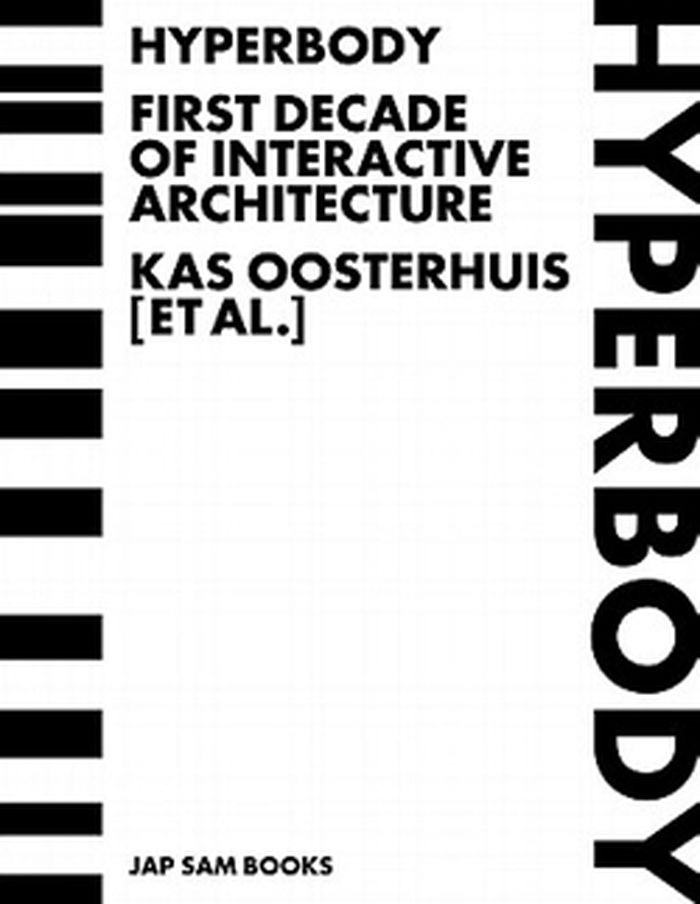
Hyperbody, initiated by Kas Oosterhuis and headquartered at the Delft University of Technology, is a think tank on new ways of designing and creating non standard and interactive architecture. This huge book is the first time Hyperbody has published it collaborative projects and experiments within the real world of design and construction. The designers of the paradigm(...)
$82.95
(disponible en magasin)
Résumé:
Hyperbody, initiated by Kas Oosterhuis and headquartered at the Delft University of Technology, is a think tank on new ways of designing and creating non standard and interactive architecture. This huge book is the first time Hyperbody has published it collaborative projects and experiments within the real world of design and construction. The designers of the paradigm(...)
Publication:
octobre 2011
octobre 2011
Titre:
Hyperbody : first decade of interactive architecture
Actions:
Prix:
$82.95
(disponible en magasin)
Résumé:
Hyperbody, initiated by Kas Oosterhuis and headquartered at the Delft University of Technology, is a think tank on new ways of designing and creating non standard and interactive architecture. This huge book is the first time Hyperbody has published it collaborative projects and experiments within the real world of design and construction. The designers of the paradigm changing MCAT system of architectural software, Hyperbody continues to play with software design and futurism, creating a broad and influential new dialog. This collection of writings looks at new software tools for real time interaction and parametric design and application of new production techniques file to factory production and mass customization, among other projects, applying cutting edge design methods and theories.
Hyperbody : first decade of interactive architecture
Actions:
Prix:
$82.95
(disponible en magasin)
Résumé:
Hyperbody, initiated by Kas Oosterhuis and headquartered at the Delft University of Technology, is a think tank on new ways of designing and creating non standard and interactive architecture. This huge book is the first time Hyperbody has published it collaborative projects and experiments within the real world of design and construction. The designers of the paradigm changing MCAT system of architectural software, Hyperbody continues to play with software design and futurism, creating a broad and influential new dialog. This collection of writings looks at new software tools for real time interaction and parametric design and application of new production techniques file to factory production and mass customization, among other projects, applying cutting edge design methods and theories.
Classification:
livres
livres
Publication:
octobre 2011
octobre 2011
Classification:
audio
audio
Titre:
Pulsar Threads.
Pulsar Threads.
Actions:
Description:
1 online resource.
Auteur:
Sujet:
Publication:
[Place of publication not identified] : Lateral Addition, 2024.
[Place of publication not identified] : Lateral Addition, 2024.
Classification:
audio
audio
Publication:
[Place of publication not identified] : Lateral Addition, 2024.
[Place of publication not identified] : Lateral Addition, 2024.
Auteur:
Sujet:


