


1118 Résultats
Classification:
livres
livres
Prix:
$25.95
(disponible en magasin)
Résumé:
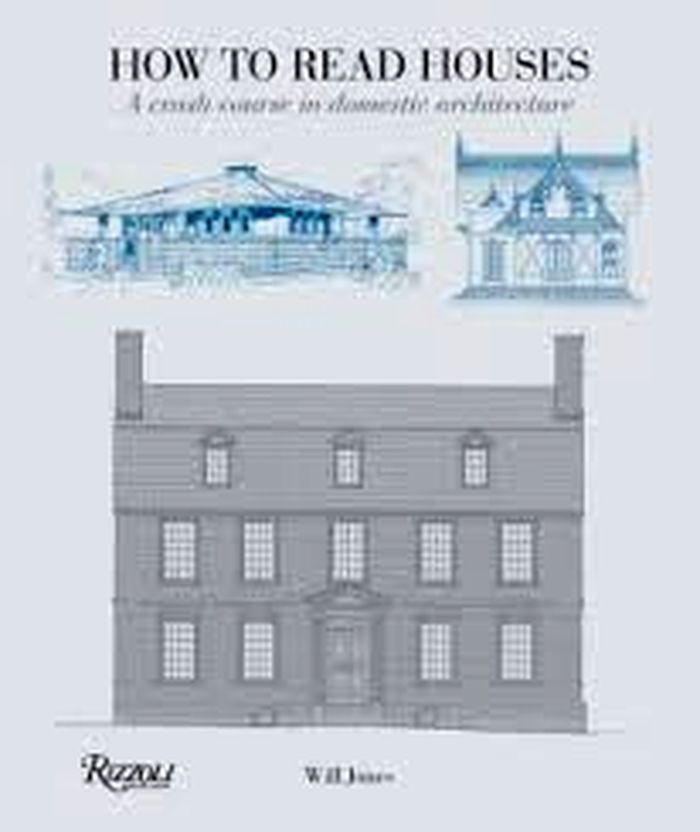
The book explains the aesthetics of house forms ranging from elaborately decorated Arts & Crafts architecture to the purity of modernist homes. How to Read Houses is the perfect companion for anyone interested in the buildings we live in and who desires a detailed field guide to the houses around us.
$25.95
(disponible en magasin)
Résumé:
The book explains the aesthetics of house forms ranging from elaborately decorated Arts & Crafts architecture to the purity of modernist homes. How to Read Houses is the perfect companion for anyone interested in the buildings we live in and who desires a detailed field guide to the houses around us.
Titre:
How to read houses: a crash course in domestic architecture
Actions:
Prix:
$25.95
(disponible en magasin)
Résumé:
The book explains the aesthetics of house forms ranging from elaborately decorated Arts & Crafts architecture to the purity of modernist homes. How to Read Houses is the perfect companion for anyone interested in the buildings we live in and who desires a detailed field guide to the houses around us.
How to read houses: a crash course in domestic architecture
Actions:
Prix:
$25.95
(disponible en magasin)
Résumé:
The book explains the aesthetics of house forms ranging from elaborately decorated Arts & Crafts architecture to the purity of modernist homes. How to Read Houses is the perfect companion for anyone interested in the buildings we live in and who desires a detailed field guide to the houses around us.
Classification:
livres
livres
Publication:
mars 2014
mars 2014
Sujet:
Dictionnaires
Dictionnaires
Classification:
livres
livres
Actions:
Prix:
$52.00
(disponible sur commande)
Résumé:
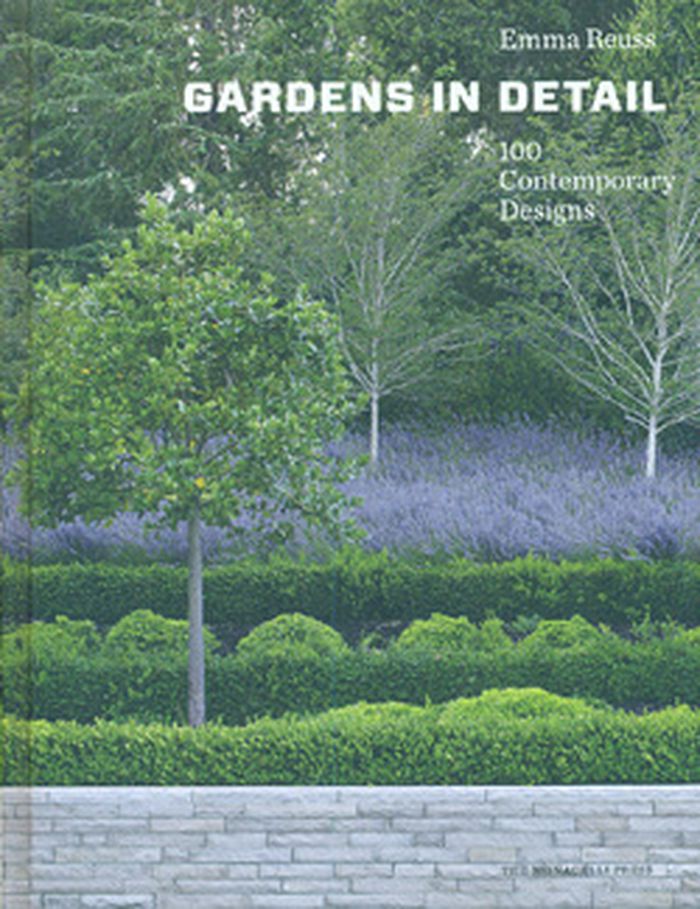
This comprehensive reference offers gardens from many periods of history—Islamic, Renaissance, English Landscape, Arts & Crafts, and more—and geographically diverse environments—from a nighttime sculpture garden on the Oregon coast, to a sustainable water garden in the mountains of Vermont, and the Mughal garden at the Indian president’s palace in New Delhi.
$52.00
(disponible sur commande)
Résumé:
This comprehensive reference offers gardens from many periods of history—Islamic, Renaissance, English Landscape, Arts & Crafts, and more—and geographically diverse environments—from a nighttime sculpture garden on the Oregon coast, to a sustainable water garden in the mountains of Vermont, and the Mughal garden at the Indian president’s palace in New Delhi.
Titre:
Gardens in details: 100 contemporary designs
Actions:
Prix:
$52.00
(disponible sur commande)
Résumé:
This comprehensive reference offers gardens from many periods of history—Islamic, Renaissance, English Landscape, Arts & Crafts, and more—and geographically diverse environments—from a nighttime sculpture garden on the Oregon coast, to a sustainable water garden in the mountains of Vermont, and the Mughal garden at the Indian president’s palace in New Delhi.
Gardens in details: 100 contemporary designs
Actions:
Prix:
$52.00
(disponible sur commande)
Résumé:
This comprehensive reference offers gardens from many periods of history—Islamic, Renaissance, English Landscape, Arts & Crafts, and more—and geographically diverse environments—from a nighttime sculpture garden on the Oregon coast, to a sustainable water garden in the mountains of Vermont, and the Mughal garden at the Indian president’s palace in New Delhi.
Classification:
livres
livres
Publication:
septembre 2014
septembre 2014
Sujet:
Jardins
Jardins
Classification:
livres
livres
Titre:
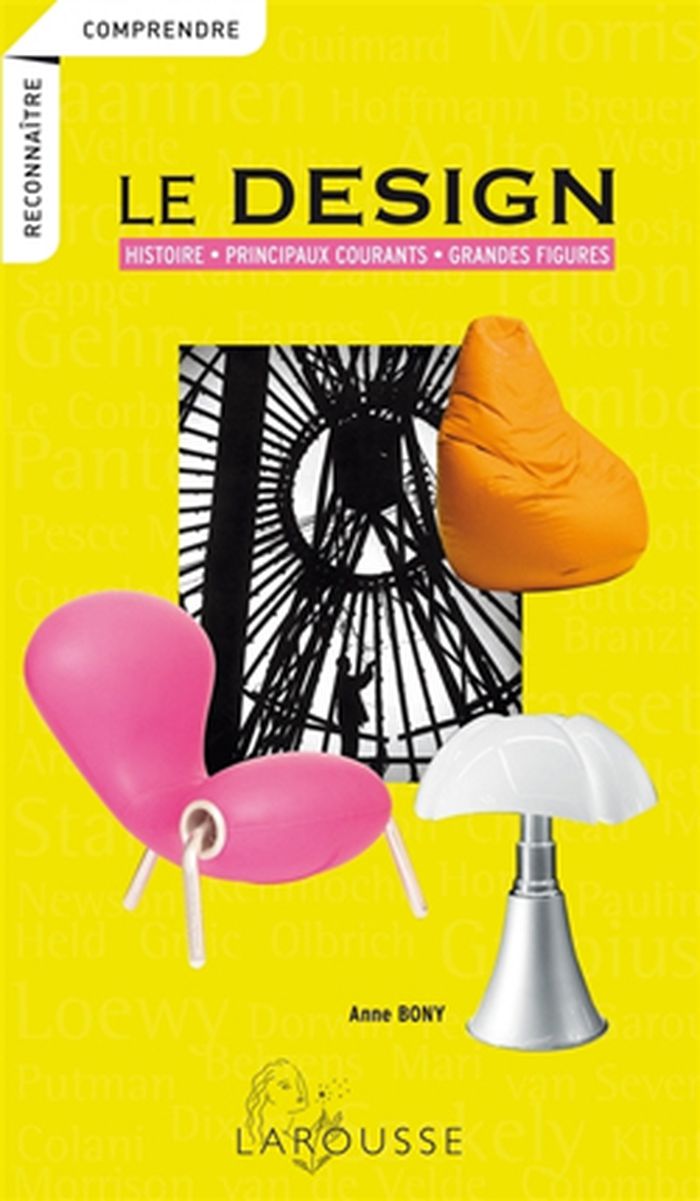
Le design
Le design
Actions:
Prix:
$29.95
(disponible sur commande)
Résumé:
Cet ouvrage retrace 150 ans d'une fresque historique aux mouvement contrariés, animée d'une réflexion théorique sans cesse renouvelée : du mouvement anglais du XIXe siècle Arts and Crafts et du Bauhaus allemand, en passant par l'esthétique industrielle en France, au "tout-plasique des années pop et le design virtuel des années 2000...
$29.95
(disponible sur commande)
Résumé:
Cet ouvrage retrace 150 ans d'une fresque historique aux mouvement contrariés, animée d'une réflexion théorique sans cesse renouvelée : du mouvement anglais du XIXe siècle Arts and Crafts et du Bauhaus allemand, en passant par l'esthétique industrielle en France, au "tout-plasique des années pop et le design virtuel des années 2000...
Titre:
Le design
Actions:
Prix:
$29.95
(disponible sur commande)
Résumé:
Cet ouvrage retrace 150 ans d'une fresque historique aux mouvement contrariés, animée d'une réflexion théorique sans cesse renouvelée : du mouvement anglais du XIXe siècle Arts and Crafts et du Bauhaus allemand, en passant par l'esthétique industrielle en France, au "tout-plasique des années pop et le design virtuel des années 2000...
Le design
Actions:
Prix:
$29.95
(disponible sur commande)
Résumé:
Cet ouvrage retrace 150 ans d'une fresque historique aux mouvement contrariés, animée d'une réflexion théorique sans cesse renouvelée : du mouvement anglais du XIXe siècle Arts and Crafts et du Bauhaus allemand, en passant par l'esthétique industrielle en France, au "tout-plasique des années pop et le design virtuel des années 2000...
Classification:
livres
livres
Publication:
octobre 2015
octobre 2015
Classification:
livres
livres
Actions:
Exemplaires:
Description:
255 pages : some color illustrations ; 31 cm
Description:
255 pages : some color illustrations ; 31 cm
Auteur:
Sujet:
Publication:
New York, New York : Princeton Architectural Press, [2012]
New York, New York : Princeton Architectural Press, [2012]
Titre:
Contemporary classical : the architecture of Andrew Skurman / Andrew Skurman.
Actions:
Exemplaires:
Description:
255 pages : some color illustrations ; 31 cm
Contemporary classical : the architecture of Andrew Skurman / Andrew Skurman.
Actions:
Exemplaires:
Description:
255 pages : some color illustrations ; 31 cm
Classification:
livres
livres
Publication:
New York, New York : Princeton Architectural Press, [2012]
New York, New York : Princeton Architectural Press, [2012]
Auteur:
Sujet:
Classification:
livres
livres
Prix:
$105.00
(disponible sur commande)
Résumé:
This two-volume work presents life and work of the English typographer Anthony Froshaug. "Typography & texts" concerns Froshaug's work. An introduction by Robin Kinross outlines the nature and achievement of Froshaug. Then a selection of his printed products is shown with extended critical captions, followed by layouts(...)
$105.00
(disponible sur commande)
Résumé:
This two-volume work presents life and work of the English typographer Anthony Froshaug. "Typography & texts" concerns Froshaug's work. An introduction by Robin Kinross outlines the nature and achievement of Froshaug. Then a selection of his printed products is shown with extended critical captions, followed by layouts(...)
Publication:
octobre 2000, London
octobre 2000, London
Titre:
Anthony Froshaug : typography and texts / documents of a life
Actions:
Prix:
$105.00
(disponible sur commande)
Résumé:
This two-volume work presents life and work of the English typographer Anthony Froshaug. "Typography & texts" concerns Froshaug's work. An introduction by Robin Kinross outlines the nature and achievement of Froshaug. Then a selection of his printed products is shown with extended critical captions, followed by layouts that he made as instructions. At the centre of this book is the section of 'texts' all the writings that Froshaug published in his lifetime or which exist in manuscript in some adequately finished state. This volume concludes with a catalogue of work, bibliographies, index (to both volumes). The second volume, "Documents of a life" is not a biography, but rather a sequence of documents, mostly drawn from hitherto private sources, interspersed with explanation by the editor. Among these documents are autobiographical memories by Froshaug, as well as correspondence between him and a range of contemporaries. Notable correspondences represent his attempt in the 1940s to publish texts by Jan Tschichold, and his friendship with the writer Stefan Themerson. Memories by his friend Wolfgang Hildesheimer are preseted here for the first time in English. Froshaug’s periods as a one-man printer in Cornwall, adjacent to the artists at St Ives, are documented. The book also represents his seminal teaching work at the Central School of Arts & Crafts, the Hochschule für Gestaltung Ulm, the Royal College of Art, and Watford School of Art.
Anthony Froshaug : typography and texts / documents of a life
Actions:
Prix:
$105.00
(disponible sur commande)
Résumé:
This two-volume work presents life and work of the English typographer Anthony Froshaug. "Typography & texts" concerns Froshaug's work. An introduction by Robin Kinross outlines the nature and achievement of Froshaug. Then a selection of his printed products is shown with extended critical captions, followed by layouts that he made as instructions. At the centre of this book is the section of 'texts' all the writings that Froshaug published in his lifetime or which exist in manuscript in some adequately finished state. This volume concludes with a catalogue of work, bibliographies, index (to both volumes). The second volume, "Documents of a life" is not a biography, but rather a sequence of documents, mostly drawn from hitherto private sources, interspersed with explanation by the editor. Among these documents are autobiographical memories by Froshaug, as well as correspondence between him and a range of contemporaries. Notable correspondences represent his attempt in the 1940s to publish texts by Jan Tschichold, and his friendship with the writer Stefan Themerson. Memories by his friend Wolfgang Hildesheimer are preseted here for the first time in English. Froshaug’s periods as a one-man printer in Cornwall, adjacent to the artists at St Ives, are documented. The book also represents his seminal teaching work at the Central School of Arts & Crafts, the Hochschule für Gestaltung Ulm, the Royal College of Art, and Watford School of Art.
Classification:
livres
livres
Publication:
octobre 2000, London
octobre 2000, London
Classification:
livres
livres
Titre:
Invention of art
Invention of art
Actions:
Prix:
$52.50
(disponible sur commande)
Résumé:
In The Invention of Art, Larry Shiner argues that the category of fine art is a modern invention, and that the line drawn between art and craft resulted from key social transformations in Europe during the eighteenth century. He looks at works by Hogarth, Rousseau, Woolstonecraft, Emerson, Marx, Dewey and Benjamin to show how the modern system maintains its dominance(...)
$52.50
(disponible sur commande)
Résumé:
In The Invention of Art, Larry Shiner argues that the category of fine art is a modern invention, and that the line drawn between art and craft resulted from key social transformations in Europe during the eighteenth century. He looks at works by Hogarth, Rousseau, Woolstonecraft, Emerson, Marx, Dewey and Benjamin to show how the modern system maintains its dominance(...)
Titre:
Invention of art
Actions:
Prix:
$52.50
(disponible sur commande)
Résumé:
In The Invention of Art, Larry Shiner argues that the category of fine art is a modern invention, and that the line drawn between art and craft resulted from key social transformations in Europe during the eighteenth century. He looks at works by Hogarth, Rousseau, Woolstonecraft, Emerson, Marx, Dewey and Benjamin to show how the modern system maintains its dominance through the assimilation of artists and musicians who resist it, and the distinctions it draws between artists and artisans, and high art and the crafts.
Invention of art
Actions:
Prix:
$52.50
(disponible sur commande)
Résumé:
In The Invention of Art, Larry Shiner argues that the category of fine art is a modern invention, and that the line drawn between art and craft resulted from key social transformations in Europe during the eighteenth century. He looks at works by Hogarth, Rousseau, Woolstonecraft, Emerson, Marx, Dewey and Benjamin to show how the modern system maintains its dominance through the assimilation of artists and musicians who resist it, and the distinctions it draws between artists and artisans, and high art and the crafts.
Classification:
livres
livres
Publication:
septembre 2001, Chicago
septembre 2001, Chicago
Sujet:
Théorie de l’art
Théorie de l’art
Classification:
livres
livres
Titre:
Gustav Stickley
Gustav Stickley
Actions:
Prix:
$99.95
(disponible en magasin)
Résumé:
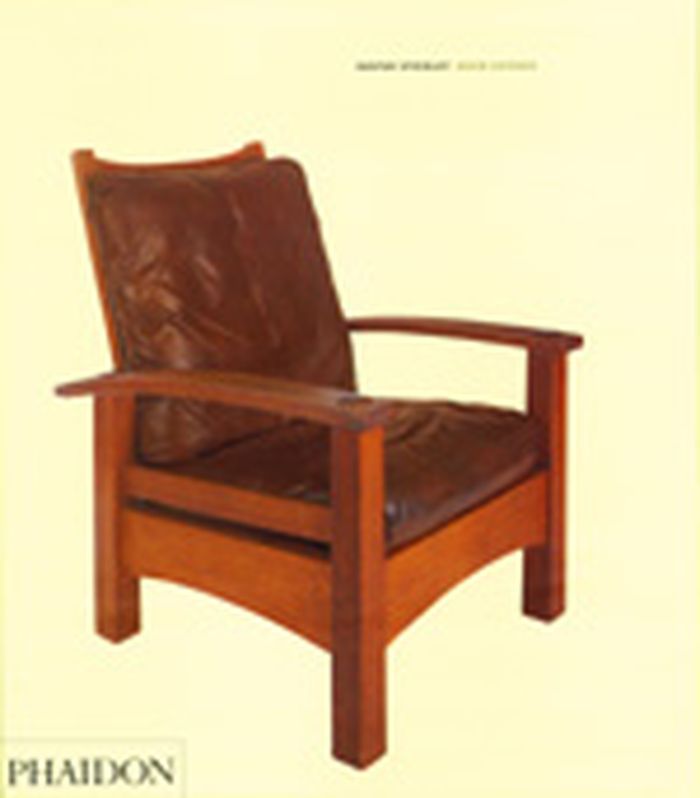
Gustav Stickley (1858-1942) is one of the most influential figures of the American Arts Crafts movement. A self-made man whose furniture company, Craftsman Workshops, and the magazine he founded in 1901, "The Craftsman," held wide-ranging influence over American interior design and decorative arts for decades. Although best-known as a designer of functional yet(...)
$99.95
(disponible en magasin)
Résumé:
Gustav Stickley (1858-1942) is one of the most influential figures of the American Arts Crafts movement. A self-made man whose furniture company, Craftsman Workshops, and the magazine he founded in 1901, "The Craftsman," held wide-ranging influence over American interior design and decorative arts for decades. Although best-known as a designer of functional yet(...)
Titre:
Gustav Stickley
Actions:
Prix:
$99.95
(disponible en magasin)
Résumé:
Gustav Stickley (1858-1942) is one of the most influential figures of the American Arts Crafts movement. A self-made man whose furniture company, Craftsman Workshops, and the magazine he founded in 1901, "The Craftsman," held wide-ranging influence over American interior design and decorative arts for decades. Although best-known as a designer of functional yet beautifully crafted wood furniture, Stickley was also an entrepreneur and brilliant manager who assembled a talented team of collaborators to produce lamps, metalwork, textiles, plans for houses, and interiors.
Gustav Stickley
Actions:
Prix:
$99.95
(disponible en magasin)
Résumé:
Gustav Stickley (1858-1942) is one of the most influential figures of the American Arts Crafts movement. A self-made man whose furniture company, Craftsman Workshops, and the magazine he founded in 1901, "The Craftsman," held wide-ranging influence over American interior design and decorative arts for decades. Although best-known as a designer of functional yet beautifully crafted wood furniture, Stickley was also an entrepreneur and brilliant manager who assembled a talented team of collaborators to produce lamps, metalwork, textiles, plans for houses, and interiors.
Classification:
livres
livres
Publication:
octobre 2003, London / New York
octobre 2003, London / New York
Sujet:
Design, monographies
Design, monographies
Classification:
livres
livres
Exemplaires:
Description:
480 pages : illustrations (some color) ; 34 cm
Description:
480 pages : illustrations (some color) ; 34 cm
Auteur:
Sujet:
Publication:
New York : Museum of Modern Art, ©2005.
New York : Museum of Modern Art, ©2005.
Titre:
Friedlander / Peter Galassi ; with an essay by Richard Benson.
Actions:
Exemplaires:
Description:
480 pages : illustrations (some color) ; 34 cm
Friedlander / Peter Galassi ; with an essay by Richard Benson.
Actions:
Exemplaires:
Description:
480 pages : illustrations (some color) ; 34 cm
Classification:
livres
livres
Publication:
New York : Museum of Modern Art, ©2005.
New York : Museum of Modern Art, ©2005.
Auteur:
Sujet:
Classification:
livres
livres
Titre:
Greene & Greene
Greene & Greene
Actions:
Prix:
$49.95
(disponible sur commande)
Résumé:
Charles and Henry Greene created the definitive houses of the American Arts and Crafts Movement. Raised to be architects, the Greene brothers were educated together at MIT, where their natural artistic skills blossomed in concert with an excellent practical education. While they practised architecture jointly in Southern California from 1906 to 1922 they achieved a(...)
$49.95
(disponible sur commande)
Résumé:
Charles and Henry Greene created the definitive houses of the American Arts and Crafts Movement. Raised to be architects, the Greene brothers were educated together at MIT, where their natural artistic skills blossomed in concert with an excellent practical education. While they practised architecture jointly in Southern California from 1906 to 1922 they achieved a(...)
Sujet:
Architecture, monographies
Architecture, monographies
Publication:
octobre 2003, London / New York
octobre 2003, London / New York
Titre:
Greene & Greene
Actions:
Prix:
$49.95
(disponible sur commande)
Résumé:
Charles and Henry Greene created the definitive houses of the American Arts and Crafts Movement. Raised to be architects, the Greene brothers were educated together at MIT, where their natural artistic skills blossomed in concert with an excellent practical education. While they practised architecture jointly in Southern California from 1906 to 1922 they achieved a powerful symbiosis, resulting in some of the most beautifully crafted houses in America. The elegant works of their peak period, such as the Gamble, Blacker and Thorsen houses, are masterful in their design and execution. No detail was overlooked: every element of the interior, including furniture, fittings and glasswork, as well as the building structure (down to pegs, air-vents and bracing) was conceived as an organic whole, and finished exquisitely. No hint of conflict was ever recorded between the gentlemanly brothers, yet their intertwined professional lives ultimately diverged into a physical separation and distinct design vocabularies. Even so, the automatic bond between the brothers was never completely severed, and they continued to consult each other on projects for the rest of their lives. This critical monograph, which charts the brothers’ careers (together and apart), is illustrated with superb new photography and draws on a wealth of previously unpublished archival material.
Greene & Greene
Actions:
Prix:
$49.95
(disponible sur commande)
Résumé:
Charles and Henry Greene created the definitive houses of the American Arts and Crafts Movement. Raised to be architects, the Greene brothers were educated together at MIT, where their natural artistic skills blossomed in concert with an excellent practical education. While they practised architecture jointly in Southern California from 1906 to 1922 they achieved a powerful symbiosis, resulting in some of the most beautifully crafted houses in America. The elegant works of their peak period, such as the Gamble, Blacker and Thorsen houses, are masterful in their design and execution. No detail was overlooked: every element of the interior, including furniture, fittings and glasswork, as well as the building structure (down to pegs, air-vents and bracing) was conceived as an organic whole, and finished exquisitely. No hint of conflict was ever recorded between the gentlemanly brothers, yet their intertwined professional lives ultimately diverged into a physical separation and distinct design vocabularies. Even so, the automatic bond between the brothers was never completely severed, and they continued to consult each other on projects for the rest of their lives. This critical monograph, which charts the brothers’ careers (together and apart), is illustrated with superb new photography and draws on a wealth of previously unpublished archival material.
Classification:
livres
livres
Publication:
octobre 2003, London / New York
octobre 2003, London / New York
Sujet:
Architecture, monographies
Architecture, monographies
Classification:
livres
livres
Actions:
Prix:
$25.95
(disponible en magasin)
Résumé:
This volume takes the reader on a tour of modern architecture through its most iconic and significant buildings, showing how to read the hallmarks of each architectural style and how to recognize them in the buildings. From Art Deco and Arts and Crafts through Bauhaus, the International Style, and Modernism to today’s environmental architecture and the rise and fall of(...)
$25.95
(disponible en magasin)
Résumé:
This volume takes the reader on a tour of modern architecture through its most iconic and significant buildings, showing how to read the hallmarks of each architectural style and how to recognize them in the buildings. From Art Deco and Arts and Crafts through Bauhaus, the International Style, and Modernism to today’s environmental architecture and the rise and fall of(...)
Titre:
How to read modern buildings: a crash course in architecture of the modern era
Actions:
Prix:
$25.95
(disponible en magasin)
Résumé:
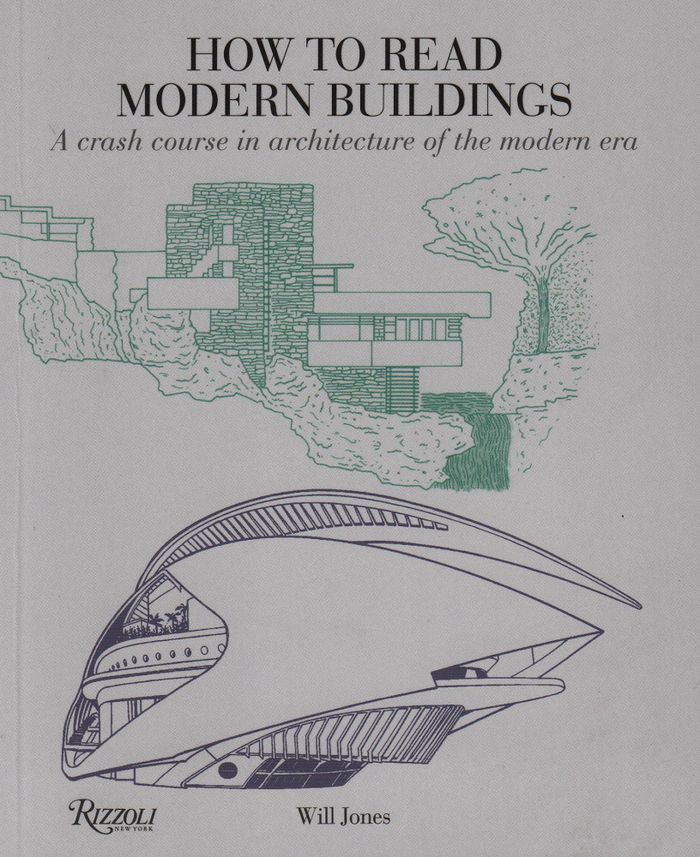
This volume takes the reader on a tour of modern architecture through its most iconic and significant buildings, showing how to read the hallmarks of each architectural style and how to recognize them in the buildings. From Art Deco and Arts and Crafts through Bauhaus, the International Style, and Modernism to today’s environmental architecture and the rise and fall of the “starchitect”, all the major architectural movements from the 1900s to the present day are traced through their classic buildings. Examining the key architectural elements and hidden details of each style, we learn what to look for and where to look for it.
How to read modern buildings: a crash course in architecture of the modern era
Actions:
Prix:
$25.95
(disponible en magasin)
Résumé:
This volume takes the reader on a tour of modern architecture through its most iconic and significant buildings, showing how to read the hallmarks of each architectural style and how to recognize them in the buildings. From Art Deco and Arts and Crafts through Bauhaus, the International Style, and Modernism to today’s environmental architecture and the rise and fall of the “starchitect”, all the major architectural movements from the 1900s to the present day are traced through their classic buildings. Examining the key architectural elements and hidden details of each style, we learn what to look for and where to look for it.
Classification:
livres
livres
Publication:
mars 2017
mars 2017


