


1071 Résultats
Classification:
livres
livres
Titre:
Aki-wayn-zih
Aki-wayn-zih
Actions:
Prix:
$27.95
(disponible sur commande)
Résumé:
Members of Eli Baxter’s generation are the last of the hunting and gathering societies living on Turtle Island. They are also among the last fluent speakers of the Anishinaabay language known as Anishinaabaymowin. 'Aki-wayn-zih' is a story about the land and its spiritual relationship with the Anishinaabayg, from the beginning of their life on Miss-koh-tay-sih Minis(...)
$27.95
(disponible sur commande)
Résumé:
Members of Eli Baxter’s generation are the last of the hunting and gathering societies living on Turtle Island. They are also among the last fluent speakers of the Anishinaabay language known as Anishinaabaymowin. 'Aki-wayn-zih' is a story about the land and its spiritual relationship with the Anishinaabayg, from the beginning of their life on Miss-koh-tay-sih Minis(...)
Titre:
Aki-wayn-zih
Actions:
Prix:
$27.95
(disponible sur commande)
Résumé:
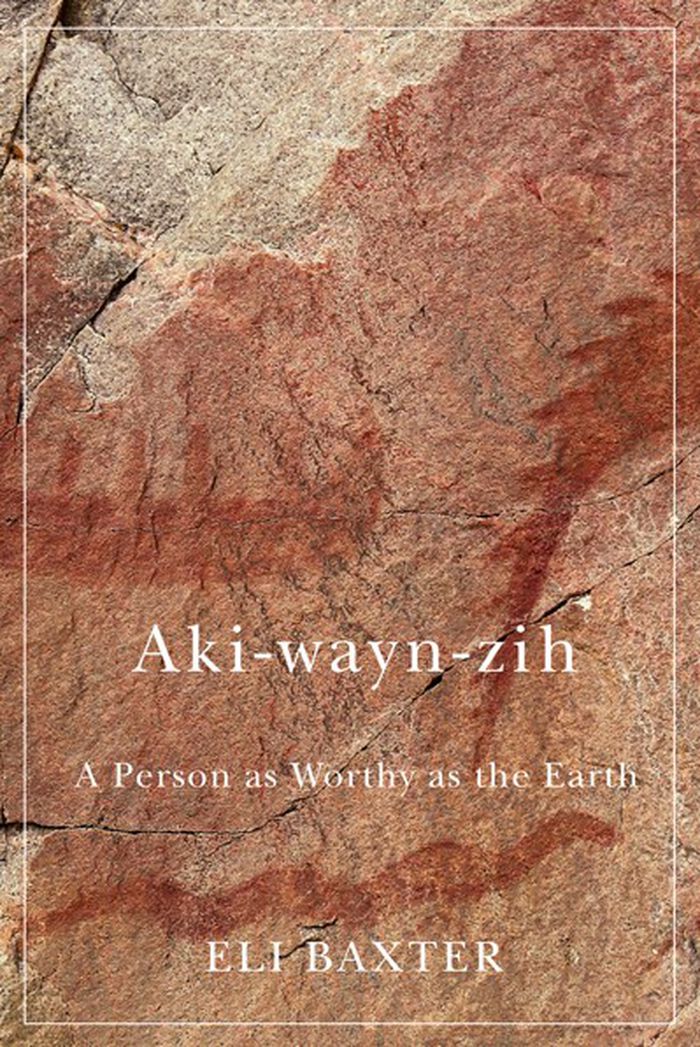
Members of Eli Baxter’s generation are the last of the hunting and gathering societies living on Turtle Island. They are also among the last fluent speakers of the Anishinaabay language known as Anishinaabaymowin. 'Aki-wayn-zih' is a story about the land and its spiritual relationship with the Anishinaabayg, from the beginning of their life on Miss-koh-tay-sih Minis (Turtle Island) to the present day. Baxter writes about Anishinaabay life before European contact, his childhood memories of trapping, hunting, and fishing with his family on traditional lands in Treaty 9 territory, and his personal experience surviving the residential school system. Examining how Anishinaabay Kih-kayn-daa-soh-win (knowledge) is an elemental concept embedded in the Anishinaabay language, 'Aki-wayn-zih' explores history, science, math, education, philosophy, law, and spiritual teachings, outlining the cultural significance of language to Anishinaabay identity. Recounting traditional Ojibway legends in their original language, fables in which moral virtues double as survival techniques, and detailed guidelines for expertly trapping or ensnaring animals, Baxter reveals how the residential school system shaped him as an individual, transformed his family, and forever disrupted his reserve community and those like it. Through spiritual teachings, historical accounts, and autobiographical anecdotes, 'Aki-wayn-zih' offers a new form of storytelling from the Anishinaabay point of view.
Aki-wayn-zih
Actions:
Prix:
$27.95
(disponible sur commande)
Résumé:
Members of Eli Baxter’s generation are the last of the hunting and gathering societies living on Turtle Island. They are also among the last fluent speakers of the Anishinaabay language known as Anishinaabaymowin. 'Aki-wayn-zih' is a story about the land and its spiritual relationship with the Anishinaabayg, from the beginning of their life on Miss-koh-tay-sih Minis (Turtle Island) to the present day. Baxter writes about Anishinaabay life before European contact, his childhood memories of trapping, hunting, and fishing with his family on traditional lands in Treaty 9 territory, and his personal experience surviving the residential school system. Examining how Anishinaabay Kih-kayn-daa-soh-win (knowledge) is an elemental concept embedded in the Anishinaabay language, 'Aki-wayn-zih' explores history, science, math, education, philosophy, law, and spiritual teachings, outlining the cultural significance of language to Anishinaabay identity. Recounting traditional Ojibway legends in their original language, fables in which moral virtues double as survival techniques, and detailed guidelines for expertly trapping or ensnaring animals, Baxter reveals how the residential school system shaped him as an individual, transformed his family, and forever disrupted his reserve community and those like it. Through spiritual teachings, historical accounts, and autobiographical anecdotes, 'Aki-wayn-zih' offers a new form of storytelling from the Anishinaabay point of view.
Classification:
livres
livres
Publication:
septembre 2021
septembre 2021
Classification:
livres
livres

Actions:
Prix:
$31.95
(disponible sur commande)
Résumé:
Combining formal argument with informal conversations and design proposals, this title offers creative ideas for "thinking and acting architecture differently." What makes the book unique is the freshness of its voices — young architects and emerging practitioners who for the most part have not published before. Interwoven with their proposals are conversations among(...)
$31.95
(disponible sur commande)
Résumé:
Combining formal argument with informal conversations and design proposals, this title offers creative ideas for "thinking and acting architecture differently." What makes the book unique is the freshness of its voices — young architects and emerging practitioners who for the most part have not published before. Interwoven with their proposals are conversations among(...)
Titre:
Architecture at the edge of everything else
Actions:
Prix:
$31.95
(disponible sur commande)
Résumé:
Combining formal argument with informal conversations and design proposals, this title offers creative ideas for "thinking and acting architecture differently." What makes the book unique is the freshness of its voices — young architects and emerging practitioners who for the most part have not published before. Interwoven with their proposals are conversations among these new voices and more established authors and practitioners, including Sanford Kwinter, Sylvia Lavin, K. Michael Hays, Philippe Rahm, Liam Gillick, Teddy Cruz, and Michael Meredith. This publication investigates the inner contradictions tangling and obscuring architectural discourse. It locates architecture in a cultural, social, political, and situational landscape — the space it actually occupies in the contemporary world. Examining architecture as it comes into contact with other disciplines — including art, art history, cultural studies, curating, landscape architecture, neuroaesthetics, pedagogy, philosophy, political science, and urbanism — the book considers architecture's precarious position at the edge : at the edge of its own dilemmas and at the edge of "everything else." In different ways, all the contributors suggest how to understand the innovative possibilities and pitfalls of spatial practices—teasing, analyzing, and celebrating architecture's disciplinary ambiguity — with proposals that range from a "lo-res" architecture to one controlled by the curatorial impulse, from customizable "skins" on residential buildings to the collection of residual space for new uses. Their investigations encompass how to interpret, how to intervene, and how to imagine.
Architecture at the edge of everything else
Actions:
Prix:
$31.95
(disponible sur commande)
Résumé:
Combining formal argument with informal conversations and design proposals, this title offers creative ideas for "thinking and acting architecture differently." What makes the book unique is the freshness of its voices — young architects and emerging practitioners who for the most part have not published before. Interwoven with their proposals are conversations among these new voices and more established authors and practitioners, including Sanford Kwinter, Sylvia Lavin, K. Michael Hays, Philippe Rahm, Liam Gillick, Teddy Cruz, and Michael Meredith. This publication investigates the inner contradictions tangling and obscuring architectural discourse. It locates architecture in a cultural, social, political, and situational landscape — the space it actually occupies in the contemporary world. Examining architecture as it comes into contact with other disciplines — including art, art history, cultural studies, curating, landscape architecture, neuroaesthetics, pedagogy, philosophy, political science, and urbanism — the book considers architecture's precarious position at the edge : at the edge of its own dilemmas and at the edge of "everything else." In different ways, all the contributors suggest how to understand the innovative possibilities and pitfalls of spatial practices—teasing, analyzing, and celebrating architecture's disciplinary ambiguity — with proposals that range from a "lo-res" architecture to one controlled by the curatorial impulse, from customizable "skins" on residential buildings to the collection of residual space for new uses. Their investigations encompass how to interpret, how to intervene, and how to imagine.
Classification:
livres
livres
Publication:
juin 2010
juin 2010
Sujet:
Théorie de l’architecture
Théorie de l’architecture
Classification:
livres
livres

Titre:
The case for open borders
The case for open borders
Actions:
Prix:
$30.95
(disponible sur commande)
Résumé:
Because of restrictive borders, human beings suffer and die. Closed borders force migrants seeking safety and dignity to journey across seas, trudge through deserts, and clamber over barbed wire. In the last five years alone, at least 60,000 people have died or gone missing while attempting to cross a border. As we deny, cast out, and crack down, we have stripped borders(...)
$30.95
(disponible sur commande)
Résumé:
Because of restrictive borders, human beings suffer and die. Closed borders force migrants seeking safety and dignity to journey across seas, trudge through deserts, and clamber over barbed wire. In the last five years alone, at least 60,000 people have died or gone missing while attempting to cross a border. As we deny, cast out, and crack down, we have stripped borders(...)
Titre:
The case for open borders
Actions:
Prix:
$30.95
(disponible sur commande)
Résumé:
Because of restrictive borders, human beings suffer and die. Closed borders force migrants seeking safety and dignity to journey across seas, trudge through deserts, and clamber over barbed wire. In the last five years alone, at least 60,000 people have died or gone missing while attempting to cross a border. As we deny, cast out, and crack down, we have stripped borders of their creative potential — as lines of contact, catalyst, and blend — turning our thresholds into barricades. Brilliant and provocative, ''The Case for Open Borders'' deflates the mythology of national security through border lockdowns by revisiting their historical origins; it counters the conspiracies of immigration’s economic consequences; it urgently considers the challenges of climate change beyond the boundaries of narrow national identities. This book grounds its argument in the experiences and thinking of those on the frontlines of the crisis, spanning the world to do so. In each chapter, through detailed reporting, journalist and translator John Washington profiles a character impacted by borders. He adds to those portraits provocative analyses of the economics and ethics of bordering, concluding that if we are to seek justice or sustainability we must fight for open borders. In recent years, important thinkers have begun to urge a profoundly different approach to migration, but no book has made the argument as accessible or as compelling. Washington’s case shines with the multitudinous voices of people on the move, a portrait in miniature of what a world with open borders will give to our common future.
The case for open borders
Actions:
Prix:
$30.95
(disponible sur commande)
Résumé:
Because of restrictive borders, human beings suffer and die. Closed borders force migrants seeking safety and dignity to journey across seas, trudge through deserts, and clamber over barbed wire. In the last five years alone, at least 60,000 people have died or gone missing while attempting to cross a border. As we deny, cast out, and crack down, we have stripped borders of their creative potential — as lines of contact, catalyst, and blend — turning our thresholds into barricades. Brilliant and provocative, ''The Case for Open Borders'' deflates the mythology of national security through border lockdowns by revisiting their historical origins; it counters the conspiracies of immigration’s economic consequences; it urgently considers the challenges of climate change beyond the boundaries of narrow national identities. This book grounds its argument in the experiences and thinking of those on the frontlines of the crisis, spanning the world to do so. In each chapter, through detailed reporting, journalist and translator John Washington profiles a character impacted by borders. He adds to those portraits provocative analyses of the economics and ethics of bordering, concluding that if we are to seek justice or sustainability we must fight for open borders. In recent years, important thinkers have begun to urge a profoundly different approach to migration, but no book has made the argument as accessible or as compelling. Washington’s case shines with the multitudinous voices of people on the move, a portrait in miniature of what a world with open borders will give to our common future.
Classification:
livres
livres
Publication:
février 2024
février 2024
Sujet:
Social
Social
Classification:
livres
livres
Actions:
Prix:
$30.00
(disponible sur commande)
Résumé:
Amidst city concrete and suburban sprawl, Americans are discovering new ways to reconnect with the natural world. From community gardens in New York's Lower East Side to homeless shelters in California, the search for a more sustainable future has led grassroots groups to a profound reconnection to place and to the natural world. Studies of the health consequences of(...)
$30.00
(disponible sur commande)
Résumé:
Amidst city concrete and suburban sprawl, Americans are discovering new ways to reconnect with the natural world. From community gardens in New York's Lower East Side to homeless shelters in California, the search for a more sustainable future has led grassroots groups to a profound reconnection to place and to the natural world. Studies of the health consequences of(...)
Titre:
Urban place : reconnecting with the natural world
Actions:
Prix:
$30.00
(disponible sur commande)
Résumé:
Amidst city concrete and suburban sprawl, Americans are discovering new ways to reconnect with the natural world. From community gardens in New York's Lower East Side to homeless shelters in California, the search for a more sustainable future has led grassroots groups to a profound reconnection to place and to the natural world. Studies of the health consequences of renewing a connection with nature support the urgency of providing green surroundings as cities expand and the majority of the earth's population lives in urban areas. Medical research results, from groups as diverse as healthy volunteers, surgery patients, and heart attack survivors, suggest that contact with nature may improve health and well-being. Engagement with nearby natural places also provides restoration from mental fatigue and support for more resilient and cooperative behavior. Aspects of stronger community life are fostered by access to nature, suggesting that there are significant social as well as physical and psychological benefits from connection with the natural world. This volume brings together research from anthropology, sociology, public health, psychology, and landscape architecture to highlight how awareness of locale and a meaningful renewal of attachment with the earth are connected to delight in learning about nature as well as to civic action and new forms of community. Community garden coalitions, organic market advocates, and greenspace preservationists resist the power of global forces, enacting visions of a different future. Their creative efforts tell a story of a constructive and dynamic middle ground between private plots and public action, between human health and ecosystem health, between individual attachment and urban sustainability.
Urban place : reconnecting with the natural world
Actions:
Prix:
$30.00
(disponible sur commande)
Résumé:
Amidst city concrete and suburban sprawl, Americans are discovering new ways to reconnect with the natural world. From community gardens in New York's Lower East Side to homeless shelters in California, the search for a more sustainable future has led grassroots groups to a profound reconnection to place and to the natural world. Studies of the health consequences of renewing a connection with nature support the urgency of providing green surroundings as cities expand and the majority of the earth's population lives in urban areas. Medical research results, from groups as diverse as healthy volunteers, surgery patients, and heart attack survivors, suggest that contact with nature may improve health and well-being. Engagement with nearby natural places also provides restoration from mental fatigue and support for more resilient and cooperative behavior. Aspects of stronger community life are fostered by access to nature, suggesting that there are significant social as well as physical and psychological benefits from connection with the natural world. This volume brings together research from anthropology, sociology, public health, psychology, and landscape architecture to highlight how awareness of locale and a meaningful renewal of attachment with the earth are connected to delight in learning about nature as well as to civic action and new forms of community. Community garden coalitions, organic market advocates, and greenspace preservationists resist the power of global forces, enacting visions of a different future. Their creative efforts tell a story of a constructive and dynamic middle ground between private plots and public action, between human health and ecosystem health, between individual attachment and urban sustainability.
Classification:
livres
livres
Publication:
janvier 1900, Cambridge, London
janvier 1900, Cambridge, London
Sujet:
Théorie de l’urbanisme
Théorie de l’urbanisme
Classification:
livres
livres

Titre:
Dafydd Jones: Screen time
Dafydd Jones: Screen time
Actions:
Prix:
$26.95
(disponible sur commande)
Résumé:
Dafydd Jones is recognized as one of the world's leading social photographers, which over the years has given him unique access to an extraordinary range of social events - from exclusive parties, to the races, to fashion shows, film festivals and debutantes balls• His keen eye, and an instinct for the absurd, has allowed him to capture the behaviour of people who are(...)
$26.95
(disponible sur commande)
Résumé:
Dafydd Jones is recognized as one of the world's leading social photographers, which over the years has given him unique access to an extraordinary range of social events - from exclusive parties, to the races, to fashion shows, film festivals and debutantes balls• His keen eye, and an instinct for the absurd, has allowed him to capture the behaviour of people who are(...)
Titre:
Dafydd Jones: Screen time
Actions:
Prix:
$26.95
(disponible sur commande)
Résumé:
Dafydd Jones is recognized as one of the world's leading social photographers, which over the years has given him unique access to an extraordinary range of social events - from exclusive parties, to the races, to fashion shows, film festivals and debutantes balls• His keen eye, and an instinct for the absurd, has allowed him to capture the behaviour of people who are either unaware of or indifferent to the camera. ''Screen time'' explores a variety of social situations, from the mundane to the exalted, and features celebrities, actors, models and even the occasional princess - all glued to their phonesAlmost everyone uses a smartphone, and most of us are addicted. In this book, photographer Dafydd Jones shows us just how pervasive our screen addiction has become. In almost every social situation, he shows how the smartphone has killed conversation and changed the way we look at the world. ''In the eighties and nineties,'' says Jones, ''when I photographed young people at parties or balls, I'd find them chatting each other up, or smooching in corners. Now I see them sneaking looks on their iPhones, checking on their Instagram feeds, or whatever it is they're hooked on. They hardly talk to each other, or make eye contact at all. And it's not just a generational thing - it afflicts the oldies too. Who knows what impact it's having in the bedroom. It's probably a race to see what will wipe out humanity first - global climate change or screen-induced sexual indifference.''
Dafydd Jones: Screen time
Actions:
Prix:
$26.95
(disponible sur commande)
Résumé:
Dafydd Jones is recognized as one of the world's leading social photographers, which over the years has given him unique access to an extraordinary range of social events - from exclusive parties, to the races, to fashion shows, film festivals and debutantes balls• His keen eye, and an instinct for the absurd, has allowed him to capture the behaviour of people who are either unaware of or indifferent to the camera. ''Screen time'' explores a variety of social situations, from the mundane to the exalted, and features celebrities, actors, models and even the occasional princess - all glued to their phonesAlmost everyone uses a smartphone, and most of us are addicted. In this book, photographer Dafydd Jones shows us just how pervasive our screen addiction has become. In almost every social situation, he shows how the smartphone has killed conversation and changed the way we look at the world. ''In the eighties and nineties,'' says Jones, ''when I photographed young people at parties or balls, I'd find them chatting each other up, or smooching in corners. Now I see them sneaking looks on their iPhones, checking on their Instagram feeds, or whatever it is they're hooked on. They hardly talk to each other, or make eye contact at all. And it's not just a generational thing - it afflicts the oldies too. Who knows what impact it's having in the bedroom. It's probably a race to see what will wipe out humanity first - global climate change or screen-induced sexual indifference.''
Classification:
livres
livres
Publication:
octobre 2019
octobre 2019
Sujet:
Monographies photo
Monographies photo
Classification:
livres
livres
Titre:
Humans / Mike Mills
Humans / Mike Mills
Actions:
Prix:
$20.00
(disponible en magasin)
Résumé:
'Humans Manifesto. No plan survives first contact with the enemy. Sometimes being dumb is the only smart alternative. Shy people are secretly egoists. Nothing is real. Everything you see is a dream you project onto the world. Children live out their parents unconscious. The only animals that suffer from anxiety are the ones that associate with humans. I don’t(...)
$20.00
(disponible en magasin)
Résumé:
'Humans Manifesto. No plan survives first contact with the enemy. Sometimes being dumb is the only smart alternative. Shy people are secretly egoists. Nothing is real. Everything you see is a dream you project onto the world. Children live out their parents unconscious. The only animals that suffer from anxiety are the ones that associate with humans. I don’t(...)
Titre:
Humans / Mike Mills
Actions:
Prix:
$20.00
(disponible en magasin)
Résumé:
'Humans Manifesto. No plan survives first contact with the enemy. Sometimes being dumb is the only smart alternative. Shy people are secretly egoists. Nothing is real. Everything you see is a dream you project onto the world. Children live out their parents unconscious. The only animals that suffer from anxiety are the ones that associate with humans. I don’t trust people who are very articulate. The only way to be sane is to embrace your insanity. When you feel guilty about being sad, remember Walt Disney was a manic depressive. Everything I said could be totally wrong.' Mills’ intent is not to make a statement but to ask questions, to make people more curious: “I hope the things I make can grow on people over time. At first it is just a drawing of cracks, then later, after living with the design you have more personal associations with it, it means more things, it becomes more emotional.” Mike Mills is widely renown as a graphic artist and filmmaker. He has been defined as one of the creative visionaries of our times, responsible for album covers and music videos for bands such as the Beastie Boys, Sonic Youth, Beck and Air. Mills has directed various commercials, music videos, and short films and his first feature film, Thumbsucker, adapted by Mills from the homonymous novel by Walter Kirn will be released this fall. As a graphic designer, Mills designed the famous X-Girl logo and shirts graphics, Kim Gordon and Daisy Von Furth’s clothing company, as well as skateboard graphics for Supreme, Stereo and Subliminal. For Marc Jacobs he designed scarves and fabrics, and other fashion related graphics for Esprit and The Gap
Humans / Mike Mills
Actions:
Prix:
$20.00
(disponible en magasin)
Résumé:
'Humans Manifesto. No plan survives first contact with the enemy. Sometimes being dumb is the only smart alternative. Shy people are secretly egoists. Nothing is real. Everything you see is a dream you project onto the world. Children live out their parents unconscious. The only animals that suffer from anxiety are the ones that associate with humans. I don’t trust people who are very articulate. The only way to be sane is to embrace your insanity. When you feel guilty about being sad, remember Walt Disney was a manic depressive. Everything I said could be totally wrong.' Mills’ intent is not to make a statement but to ask questions, to make people more curious: “I hope the things I make can grow on people over time. At first it is just a drawing of cracks, then later, after living with the design you have more personal associations with it, it means more things, it becomes more emotional.” Mike Mills is widely renown as a graphic artist and filmmaker. He has been defined as one of the creative visionaries of our times, responsible for album covers and music videos for bands such as the Beastie Boys, Sonic Youth, Beck and Air. Mills has directed various commercials, music videos, and short films and his first feature film, Thumbsucker, adapted by Mills from the homonymous novel by Walter Kirn will be released this fall. As a graphic designer, Mills designed the famous X-Girl logo and shirts graphics, Kim Gordon and Daisy Von Furth’s clothing company, as well as skateboard graphics for Supreme, Stereo and Subliminal. For Marc Jacobs he designed scarves and fabrics, and other fashion related graphics for Esprit and The Gap
Classification:
livres
livres
Publication:
janvier 2003, Zürich
janvier 2003, Zürich
Classification:
livres
livres

Actions:
Prix:
$48.00
(disponible sur commande)
Résumé:
The forced polarity between form and function in considerations of architecture - opposing art to social interests, ethics to poetic expression - obscures the deep connections between ethical and poetical values in architectural tradition. Architecture has been, and must continue to be, writes Alberto Pérez-Gómez, built upon love. Modernity has rightly rejected past(...)
$48.00
(disponible sur commande)
Résumé:
The forced polarity between form and function in considerations of architecture - opposing art to social interests, ethics to poetic expression - obscures the deep connections between ethical and poetical values in architectural tradition. Architecture has been, and must continue to be, writes Alberto Pérez-Gómez, built upon love. Modernity has rightly rejected past(...)
Sujet:
Théorie de l’architecture
Théorie de l’architecture
Publication:
janvier 2006, Cambridge, Mass.
janvier 2006, Cambridge, Mass.
Titre:
Built upon love : architectural longing after ethics and aesthetics
Actions:
Prix:
$48.00
(disponible sur commande)
Résumé:
The forced polarity between form and function in considerations of architecture - opposing art to social interests, ethics to poetic expression - obscures the deep connections between ethical and poetical values in architectural tradition. Architecture has been, and must continue to be, writes Alberto Pérez-Gómez, built upon love. Modernity has rightly rejected past architectural excesses, but, Pérez-Gómez argues, the materialistic and technological alternatives it proposes do not answer satisfactorily the complex desire that defines humanity. True architecture is concerned with far more than fashionable form, affordable homes, and sustainable development; it responds to a desire for an eloquent place to dwell- one that lovingly provides a sense of order resonant with our dreams. In "Built upon love" Pérez-Gómez uncovers the relationship between love and architecture in order to find the points of contact between poetics and ethics - between the architect's wish to design a beautiful world and architecture's imperative to provide a better place for society. Eros, as first imagined by the early lyric poets of classical Greece, is the invisible force at the root of our capacity to create and comprehend the poetic image. Pérez-Gómez examines the nature of architectural form in the light of eros, seduction, and the tradition of the poetic image in Western architecture. He charts the ethical dimension of architecture, tracing the connections between philia - the love of friends that entails mutual responsibility among equals - and architectural program. He explores the position of architecture at the limits of language and discusses the analogical language of philia in modernist architectural theory. Finally, he uncovers connections between ethics and poetics, describing a contemporary practice of architecture under the sign of love, incorporating both eros and philia.
Built upon love : architectural longing after ethics and aesthetics
Actions:
Prix:
$48.00
(disponible sur commande)
Résumé:
The forced polarity between form and function in considerations of architecture - opposing art to social interests, ethics to poetic expression - obscures the deep connections between ethical and poetical values in architectural tradition. Architecture has been, and must continue to be, writes Alberto Pérez-Gómez, built upon love. Modernity has rightly rejected past architectural excesses, but, Pérez-Gómez argues, the materialistic and technological alternatives it proposes do not answer satisfactorily the complex desire that defines humanity. True architecture is concerned with far more than fashionable form, affordable homes, and sustainable development; it responds to a desire for an eloquent place to dwell- one that lovingly provides a sense of order resonant with our dreams. In "Built upon love" Pérez-Gómez uncovers the relationship between love and architecture in order to find the points of contact between poetics and ethics - between the architect's wish to design a beautiful world and architecture's imperative to provide a better place for society. Eros, as first imagined by the early lyric poets of classical Greece, is the invisible force at the root of our capacity to create and comprehend the poetic image. Pérez-Gómez examines the nature of architectural form in the light of eros, seduction, and the tradition of the poetic image in Western architecture. He charts the ethical dimension of architecture, tracing the connections between philia - the love of friends that entails mutual responsibility among equals - and architectural program. He explores the position of architecture at the limits of language and discusses the analogical language of philia in modernist architectural theory. Finally, he uncovers connections between ethics and poetics, describing a contemporary practice of architecture under the sign of love, incorporating both eros and philia.
Classification:
livres
livres
Publication:
janvier 2006, Cambridge, Mass.
janvier 2006, Cambridge, Mass.
Sujet:
Théorie de l’architecture
Théorie de l’architecture
Classification:
livres
livres

Actions:
Prix:
$45.95
(disponible sur commande)
Résumé:
Members of the Frankfurt School have had an enormous effect on Western thought, beginning soon after Max Horkheimer became the director of the Institute for Social Research at the University of Frankfurt am Main in 1930. Also known as the Horkheimer Circle, the group included such eminent intellectuals as Theodor Adorno, Herbert Marcuse, Erich Fromm, Leo Lowenthal, and(...)
$45.95
(disponible sur commande)
Résumé:
Members of the Frankfurt School have had an enormous effect on Western thought, beginning soon after Max Horkheimer became the director of the Institute for Social Research at the University of Frankfurt am Main in 1930. Also known as the Horkheimer Circle, the group included such eminent intellectuals as Theodor Adorno, Herbert Marcuse, Erich Fromm, Leo Lowenthal, and(...)
Titre:
The Frankfurt school in exile
Actions:
Prix:
$45.95
(disponible sur commande)
Résumé:
Members of the Frankfurt School have had an enormous effect on Western thought, beginning soon after Max Horkheimer became the director of the Institute for Social Research at the University of Frankfurt am Main in 1930. Also known as the Horkheimer Circle, the group included such eminent intellectuals as Theodor Adorno, Herbert Marcuse, Erich Fromm, Leo Lowenthal, and Friedrich Pollock. Fleeing Nazi oppression, Horkheimer moved the Institute and many of its affiliated scholars to Columbia University in 1934, where it remained until 1950. Until now, the conventional portrayal of the Institute has held that its members found refuge by relocating to Columbia but that they had little contact with, or impact on, American intellectual life. With insight and clarity, Thomas Wheatland demonstrates that the standard account is wrong. Based on deep archival research in Germany and in the United States, and on interviews conducted with luminaries such as Daniel Bell, Bernadine Dohrn, Peter Gay, Todd Gitlin, Nathan Glazer, Tom Hayden, Robert Merton, and others, Wheatland skillfully traces the profound connections between the Horkheimer Circle’s members and the intellectual life of the era. Reassessing the group’s involvement with the American New Left in the 1960s, he argues that Herbert Marcuse’s role was misunderstood in shaping the radical student movement’s agenda. More broadly, he illustrates how the Circle influenced American social thought and made an even more dramatic impression on German postwar sociology. Although much has been written about the Frankfurt School, this is the first book to closely examine the relationship between its members and their American contemporaries. The Frankfurt School in Exile uncovers an important but neglected dimension of the history of the Frankfurt School and adds immeasurably to our understanding of the contributions made by its émigrés to postwar intellectual life.
The Frankfurt school in exile
Actions:
Prix:
$45.95
(disponible sur commande)
Résumé:
Members of the Frankfurt School have had an enormous effect on Western thought, beginning soon after Max Horkheimer became the director of the Institute for Social Research at the University of Frankfurt am Main in 1930. Also known as the Horkheimer Circle, the group included such eminent intellectuals as Theodor Adorno, Herbert Marcuse, Erich Fromm, Leo Lowenthal, and Friedrich Pollock. Fleeing Nazi oppression, Horkheimer moved the Institute and many of its affiliated scholars to Columbia University in 1934, where it remained until 1950. Until now, the conventional portrayal of the Institute has held that its members found refuge by relocating to Columbia but that they had little contact with, or impact on, American intellectual life. With insight and clarity, Thomas Wheatland demonstrates that the standard account is wrong. Based on deep archival research in Germany and in the United States, and on interviews conducted with luminaries such as Daniel Bell, Bernadine Dohrn, Peter Gay, Todd Gitlin, Nathan Glazer, Tom Hayden, Robert Merton, and others, Wheatland skillfully traces the profound connections between the Horkheimer Circle’s members and the intellectual life of the era. Reassessing the group’s involvement with the American New Left in the 1960s, he argues that Herbert Marcuse’s role was misunderstood in shaping the radical student movement’s agenda. More broadly, he illustrates how the Circle influenced American social thought and made an even more dramatic impression on German postwar sociology. Although much has been written about the Frankfurt School, this is the first book to closely examine the relationship between its members and their American contemporaries. The Frankfurt School in Exile uncovers an important but neglected dimension of the history of the Frankfurt School and adds immeasurably to our understanding of the contributions made by its émigrés to postwar intellectual life.
Classification:
livres
livres
Publication:
avril 2009
avril 2009
Sujet:
Théorie/ philosophie
Théorie/ philosophie
Classification:
livres
livres
Actions:
Prix:
$31.25
(disponible sur commande)
Résumé:
"Sowing Empire" identifies the cultivation and landscaping of colonies as one of the primary ways imperial nations justified their empires. Planting and transplanting, seeding and reshaping - the landscaping practices that emerged in the eighteenth century - are inextricable from the contested terrain of empire within which they operated. From the plantations of the(...)
$31.25
(disponible sur commande)
Résumé:
"Sowing Empire" identifies the cultivation and landscaping of colonies as one of the primary ways imperial nations justified their empires. Planting and transplanting, seeding and reshaping - the landscaping practices that emerged in the eighteenth century - are inextricable from the contested terrain of empire within which they operated. From the plantations of the(...)
Titre:
Sowing empire : landscape and colonization
Actions:
Prix:
$31.25
(disponible sur commande)
Résumé:
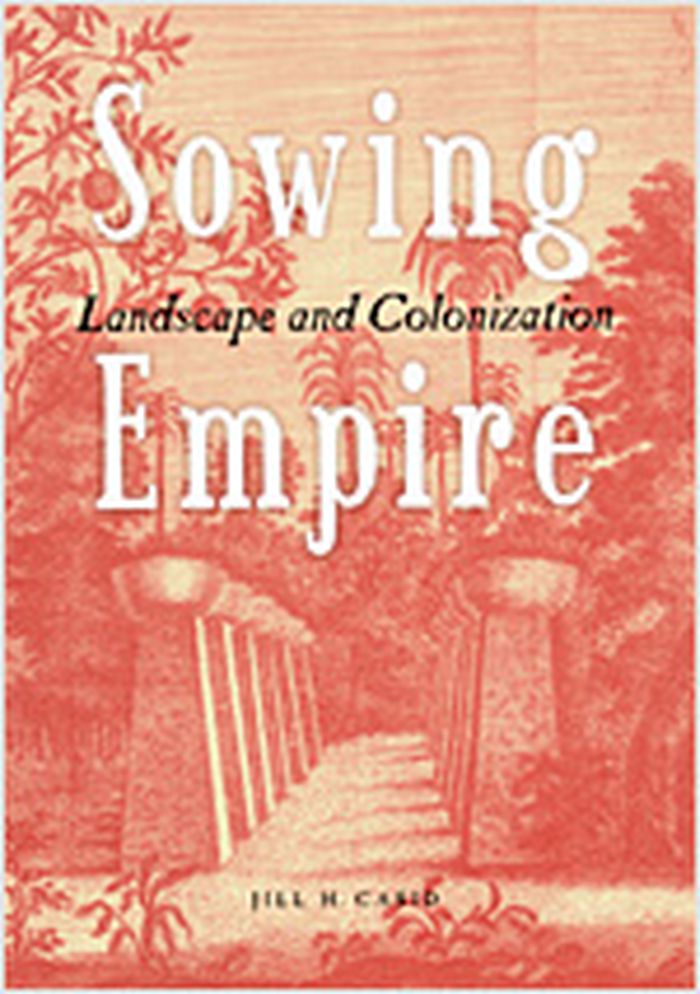
"Sowing Empire" identifies the cultivation and landscaping of colonies as one of the primary ways imperial nations justified their empires. Planting and transplanting, seeding and reshaping - the landscaping practices that emerged in the eighteenth century - are inextricable from the contested terrain of empire within which they operated. From the plantations of the “nabobs” to the island gardens of narrative fiction, from William Beckford’s estate at Fonthill to Marie Antoinette’s ornamented farm, "Sowing Empire" considers imperial relandscaping - its patriarchal organization, heterosexual reproduction, and slavery - and how it contributed to the construction of imperial power. At the same time, the book shows how these picturesque landscapes and sugar plantations contained within them the seeds of resistance - how, for instance, slave gardens and the Afro-Caribbean practice of Vodou threatened authority and created new possibilities for once again transforming the landscape. In an ambitious work of wide-ranging literary, visual, and historical allusion, Jill H. Casid examines how landscaping functioned in an imperial mode that defined and remade the “heartlands” of nations as well as the contact zones and colonial peripheries in the West and East Indies. Revealing the colonial landscape as far more than an agricultural system - as a means of regulating national, sexual, and gender identities - Casid also traces how the circulation of plants and hybridity influenced agriculture and landscaping on European soil and how colonial contacts materially shaped what we take as “European.” Utilizing a wide range of both visual and written sources - maps, literature, and travel writing - this book is interdisciplinary in its methodology and in its scope. Sowing Empire explores how postcolonial and queer studies can alter art history and visual studies and, in turn, what close attention to the visual may offer to both postcolonial theorizing and historically and materially based colonial cultural studies.
Sowing empire : landscape and colonization
Actions:
Prix:
$31.25
(disponible sur commande)
Résumé:
"Sowing Empire" identifies the cultivation and landscaping of colonies as one of the primary ways imperial nations justified their empires. Planting and transplanting, seeding and reshaping - the landscaping practices that emerged in the eighteenth century - are inextricable from the contested terrain of empire within which they operated. From the plantations of the “nabobs” to the island gardens of narrative fiction, from William Beckford’s estate at Fonthill to Marie Antoinette’s ornamented farm, "Sowing Empire" considers imperial relandscaping - its patriarchal organization, heterosexual reproduction, and slavery - and how it contributed to the construction of imperial power. At the same time, the book shows how these picturesque landscapes and sugar plantations contained within them the seeds of resistance - how, for instance, slave gardens and the Afro-Caribbean practice of Vodou threatened authority and created new possibilities for once again transforming the landscape. In an ambitious work of wide-ranging literary, visual, and historical allusion, Jill H. Casid examines how landscaping functioned in an imperial mode that defined and remade the “heartlands” of nations as well as the contact zones and colonial peripheries in the West and East Indies. Revealing the colonial landscape as far more than an agricultural system - as a means of regulating national, sexual, and gender identities - Casid also traces how the circulation of plants and hybridity influenced agriculture and landscaping on European soil and how colonial contacts materially shaped what we take as “European.” Utilizing a wide range of both visual and written sources - maps, literature, and travel writing - this book is interdisciplinary in its methodology and in its scope. Sowing Empire explores how postcolonial and queer studies can alter art history and visual studies and, in turn, what close attention to the visual may offer to both postcolonial theorizing and historically and materially based colonial cultural studies.
Classification:
livres
livres
Publication:
janvier 2005, Minneapolis
janvier 2005, Minneapolis
Sujet:
Théorie du paysage
Théorie du paysage
Classification:
livres
livres
Prix:
$19.95
(disponible sur commande)
Résumé:
Depuis plusieurs années, il ne se passe guère de mois sans qu’un étudiant ou une étudiante ne vienne à la Fabrique pour nous poser des questions sur l’édition indépendante, « engagée » comme ils disent. Ils sont en fin de licence ou en maîtrise, souvent dans la filière « métiers du livre » ou bien en science politique ou en histoire. Le projet de ce livre, c’est d’elles(...)
$19.95
(disponible sur commande)
Résumé:
Depuis plusieurs années, il ne se passe guère de mois sans qu’un étudiant ou une étudiante ne vienne à la Fabrique pour nous poser des questions sur l’édition indépendante, « engagée » comme ils disent. Ils sont en fin de licence ou en maîtrise, souvent dans la filière « métiers du livre » ou bien en science politique ou en histoire. Le projet de ce livre, c’est d’elles(...)
Titre:
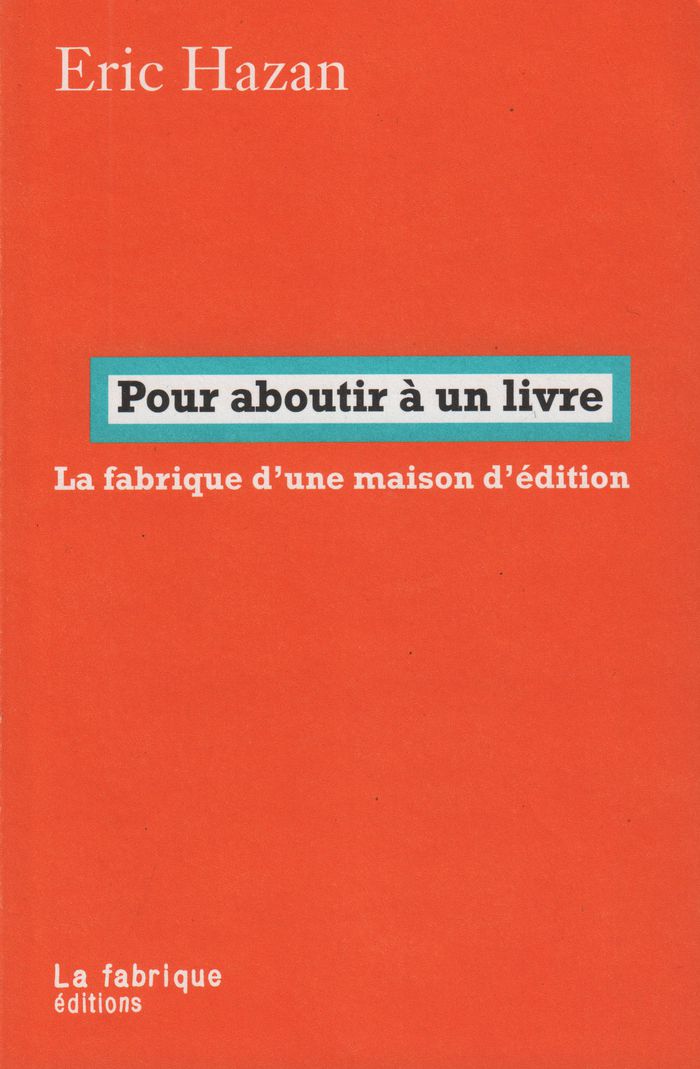
Pour aboutir à un livre : la fabrique d’une maison d’édition
Actions:
Prix:
$19.95
(disponible sur commande)
Résumé:
Depuis plusieurs années, il ne se passe guère de mois sans qu’un étudiant ou une étudiante ne vienne à la Fabrique pour nous poser des questions sur l’édition indépendante, « engagée » comme ils disent. Ils sont en fin de licence ou en maîtrise, souvent dans la filière « métiers du livre » ou bien en science politique ou en histoire. Le projet de ce livre, c’est d’elles et eux qu’il vient, de leur intérêt, leur questionnement et leurs doutes.– Comment fonder une maison d’édition à partir de rien – combien d’argent faut-il, dans quel local, avec quel imprimeur, quel banquier, quel distributeur ?– Ensuite, comment s’y prendre pour ébaucher un catalogue, pour le développer, quelle relation avec quels auteurs, quel travail sur les textes ?– Sans négliger les questions matérielles : établir le budget des livres, tenir un plan de trésorerie, un budget annuel… L’éditeur doit marcher sur ses deux jambes, mener de front la partie intellectuelle et la partie matérielle du métier, qui se complètent et se renforcent mutuellement.– Les livres une fois imprimés, il faut les faire connaître – à la fois aux médias, aux libraires, dont le soutien est décisif, et pour finir aux lecteurs, en utilisant les moyens les plus traditionnels (contact direct et par les représentants) et les autres (site internet, newsletters, etc.). Et puis il faut les vendre ! Ce livre est mené sous forme d’un dialogue avec Ernest Moret, étudiant en philosophie qui connaît bien la Fabrique où il a été stagiaire. Cette forme a permis de mêler des notions d’ordre général et des idées et des anecdotes tirées de l’expérience personnelle d’Eric Hazan, dans l’édition d’art puis à la Fabrique. Sans compter les suggestions et critiques issues de l’équipe même de la Fabrique – car ce qui ressort clairement de ce livre, c’est que l’édition est avant tout un travail collectif.
Pour aboutir à un livre : la fabrique d’une maison d’édition
Actions:
Prix:
$19.95
(disponible sur commande)
Résumé:
Depuis plusieurs années, il ne se passe guère de mois sans qu’un étudiant ou une étudiante ne vienne à la Fabrique pour nous poser des questions sur l’édition indépendante, « engagée » comme ils disent. Ils sont en fin de licence ou en maîtrise, souvent dans la filière « métiers du livre » ou bien en science politique ou en histoire. Le projet de ce livre, c’est d’elles et eux qu’il vient, de leur intérêt, leur questionnement et leurs doutes.– Comment fonder une maison d’édition à partir de rien – combien d’argent faut-il, dans quel local, avec quel imprimeur, quel banquier, quel distributeur ?– Ensuite, comment s’y prendre pour ébaucher un catalogue, pour le développer, quelle relation avec quels auteurs, quel travail sur les textes ?– Sans négliger les questions matérielles : établir le budget des livres, tenir un plan de trésorerie, un budget annuel… L’éditeur doit marcher sur ses deux jambes, mener de front la partie intellectuelle et la partie matérielle du métier, qui se complètent et se renforcent mutuellement.– Les livres une fois imprimés, il faut les faire connaître – à la fois aux médias, aux libraires, dont le soutien est décisif, et pour finir aux lecteurs, en utilisant les moyens les plus traditionnels (contact direct et par les représentants) et les autres (site internet, newsletters, etc.). Et puis il faut les vendre ! Ce livre est mené sous forme d’un dialogue avec Ernest Moret, étudiant en philosophie qui connaît bien la Fabrique où il a été stagiaire. Cette forme a permis de mêler des notions d’ordre général et des idées et des anecdotes tirées de l’expérience personnelle d’Eric Hazan, dans l’édition d’art puis à la Fabrique. Sans compter les suggestions et critiques issues de l’équipe même de la Fabrique – car ce qui ressort clairement de ce livre, c’est que l’édition est avant tout un travail collectif.
Classification:
livres
livres
Publication:
octobre 2016
octobre 2016


