


1274 Résultats
Actions:
Exemplaires:
Description:
pages 23-28 : illustrations (some color), portrait ; 34 cm
Description:
pages 23-28 : illustrations (some color), portrait ; 34 cm
Auteur:
Sujet:
Publication:
Montréal : Magazine Maclean, 1967.
Montréal : Magazine Maclean, 1967.
Titre:
L'Expo racontée par Pierre Dupuy / une interview de Louis Martin. Dix et une façons de visiter l'Expo / par Michel Lapalme.
Actions:
Exemplaires:
Description:
pages 23-28 : illustrations (some color), portrait ; 34 cm
L'Expo racontée par Pierre Dupuy / une interview de Louis Martin. Dix et une façons de visiter l'Expo / par Michel Lapalme.
Actions:
Exemplaires:
Description:
pages 23-28 : illustrations (some color), portrait ; 34 cm
Publication:
Montréal : Magazine Maclean, 1967.
Montréal : Magazine Maclean, 1967.
Auteur:
Sujet:
Classification:
livres
livres
Actions:
Prix:
$57.00
(disponible sur commande)
Résumé:
Focusing on the golden era of world's fairs, from the 1930s to the 1970s, this book offers a nostalgic glimpse of the future in vintage photographs, postcards, previously unpublished memorabilia, and drawings of pavilions, created by such designers and architects as Buckminster Fuller, Norman Bel Geddes, Kisho Kurokawa, and Le Corbusier. Innovative, informative, and(...)
$57.00
(disponible sur commande)
Résumé:
Focusing on the golden era of world's fairs, from the 1930s to the 1970s, this book offers a nostalgic glimpse of the future in vintage photographs, postcards, previously unpublished memorabilia, and drawings of pavilions, created by such designers and architects as Buckminster Fuller, Norman Bel Geddes, Kisho Kurokawa, and Le Corbusier. Innovative, informative, and(...)
Titre:
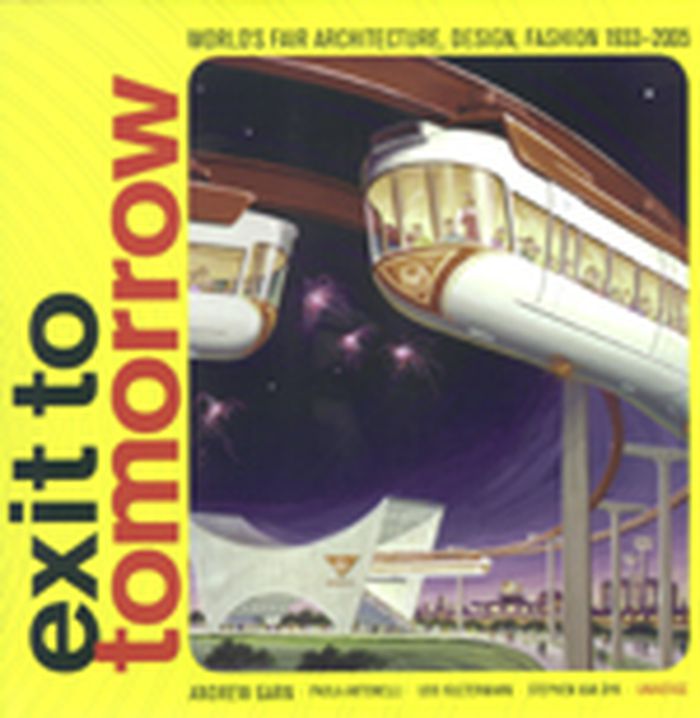
Exit to tomorrow : world's fair architecture, design, fashion, 1933-2005
Actions:
Prix:
$57.00
(disponible sur commande)
Résumé:
Focusing on the golden era of world's fairs, from the 1930s to the 1970s, this book offers a nostalgic glimpse of the future in vintage photographs, postcards, previously unpublished memorabilia, and drawings of pavilions, created by such designers and architects as Buckminster Fuller, Norman Bel Geddes, Kisho Kurokawa, and Le Corbusier. Innovative, informative, and entertaining, this souvenir of yesterday's tomorrow is a tour of the achievements of avant-garde architecture and design.
Exit to tomorrow : world's fair architecture, design, fashion, 1933-2005
Actions:
Prix:
$57.00
(disponible sur commande)
Résumé:
Focusing on the golden era of world's fairs, from the 1930s to the 1970s, this book offers a nostalgic glimpse of the future in vintage photographs, postcards, previously unpublished memorabilia, and drawings of pavilions, created by such designers and architects as Buckminster Fuller, Norman Bel Geddes, Kisho Kurokawa, and Le Corbusier. Innovative, informative, and entertaining, this souvenir of yesterday's tomorrow is a tour of the achievements of avant-garde architecture and design.
Classification:
livres
livres
Publication:
octobre 2007, New York
octobre 2007, New York
Classification:
périodiques
périodiques
Titre:
The illustrated London news.
The illustrated London news.
Actions:
Exemplaires:
Description:
volumes : illustrations ; 30-43 cm
Description:
volumes : illustrations ; 30-43 cm
Sujet:
Publication:
London : William Little, 1842-
London : William Little, 1842-
Titre:
The illustrated London news.
Actions:
Exemplaires:
Description:
volumes : illustrations ; 30-43 cm
The illustrated London news.
Actions:
Exemplaires:
Description:
volumes : illustrations ; 30-43 cm
Classification:
périodiques
périodiques
Publication:
London : William Little, 1842-
London : William Little, 1842-
Sujet:
Classification:
livres
livres
Actions:
Exemplaires:
Description:
xx, 46 pages : illustrations ; 34 cm
Description:
xx, 46 pages : illustrations ; 34 cm
Auteur:
Sujet:
Publication:
London : Virtue ; Paris : Stassin & Xavier, 1855.
London : Virtue ; Paris : Stassin & Xavier, 1855.
Titre:
The exhibition of art-industry in Paris, 1855.
Actions:
Exemplaires:
Description:
xx, 46 pages : illustrations ; 34 cm
The exhibition of art-industry in Paris, 1855.
Actions:
Exemplaires:
Description:
xx, 46 pages : illustrations ; 34 cm
Classification:
livres
livres
Publication:
London : Virtue ; Paris : Stassin & Xavier, 1855.
London : Virtue ; Paris : Stassin & Xavier, 1855.
Auteur:
Sujet:
Classification:
artéfacts
artéfacts
Actions:
Exemplaires:
Description:
2 pencils : wood, rubber, metal, fabric ; 27 cm, 1 pen : plastic ; 19 cm, 1 key : plastic ; 6 cm, 2 keychains : metal ; 10 cm, 2 lapel pins : metal ; 4 cm (diam.), 1 lapel...
Description:
2 pencils : wood, rubber, metal, fabric ; 27 cm, 1 pen : plastic ; 19 cm, 1 key : plastic ; 6 cm, 2 keychains : metal ; 10 cm, 2 lapel pins : metal ; 4 cm (diam.), 1 lapel...
Auteur:
Sujet:
Publication:
[1963-1969] ([various places : various manufacturers])
[1963-1969] ([various places : various manufacturers])
Titre:
Expo 67 and Terre des hommes : collectibles.
Actions:
Exemplaires:
Description:
2 pencils : wood, rubber, metal, fabric ; 27 cm, 1 pen : plastic ; 19 cm, 1 key : plastic ; 6 cm, 2 keychains : metal ; 10 cm, 2 lapel pins : metal ; 4 cm (diam.), 1 lapel...
Expo 67 and Terre des hommes : collectibles.
Actions:
Exemplaires:
Description:
2 pencils : wood, rubber, metal, fabric ; 27 cm, 1 pen : plastic ; 19 cm, 1 key : plastic ; 6 cm, 2 keychains : metal ; 10 cm, 2 lapel pins : metal ; 4 cm (diam.), 1 lapel...
Classification:
artéfacts
artéfacts
Publication:
[1963-1969] ([various places : various manufacturers])
[1963-1969] ([various places : various manufacturers])
Auteur:
Sujet:
Classification:
archives
archives
Description:
still image
Sujet:
Publication:
[1889?]
[1889?]
Classification:
archives
archives
Publication:
[1889?]
[1889?]
Sujet:
Classification:
livres
livres
Actions:
Exemplaires:
Description:
1 unnumbered leaf of plate, xii, 331 pages illustrations 33 cm
Description:
1 unnumbered leaf of plate, xii, 331 pages illustrations 33 cm
Auteur:
Sujet:
Publication:
London, New York, Virtue and Co. [1868]
London, New York, Virtue and Co. [1868]
Titre:
The illustrated catalogue of the Universal Exhibition, published with the Art journal.
Actions:
Exemplaires:
Description:
1 unnumbered leaf of plate, xii, 331 pages illustrations 33 cm
The illustrated catalogue of the Universal Exhibition, published with the Art journal.
Actions:
Exemplaires:
Description:
1 unnumbered leaf of plate, xii, 331 pages illustrations 33 cm
Classification:
livres
livres
Publication:
London, New York, Virtue and Co. [1868]
London, New York, Virtue and Co. [1868]
Auteur:
Sujet:
Classification:
livres
livres
Actions:
Prix:
$45.00
(disponible sur commande)
Résumé:
From the summer of 1933 to the fall of 1934, more than 38 million fairgoers visited a 3-mile stretch along Lake Michigan, home to Chicago’s second World’s Fair. Millions more experienced the Century of Progress International Exposition through newspaper and magazine articles, newsreels, and souvenirs. Together, all marveled at the industrial, scientific, consumer, and(...)
$45.00
(disponible sur commande)
Résumé:
From the summer of 1933 to the fall of 1934, more than 38 million fairgoers visited a 3-mile stretch along Lake Michigan, home to Chicago’s second World’s Fair. Millions more experienced the Century of Progress International Exposition through newspaper and magazine articles, newsreels, and souvenirs. Together, all marveled at the industrial, scientific, consumer, and(...)
Publication:
août 2007, Minneapolis, London
août 2007, Minneapolis, London
Titre:
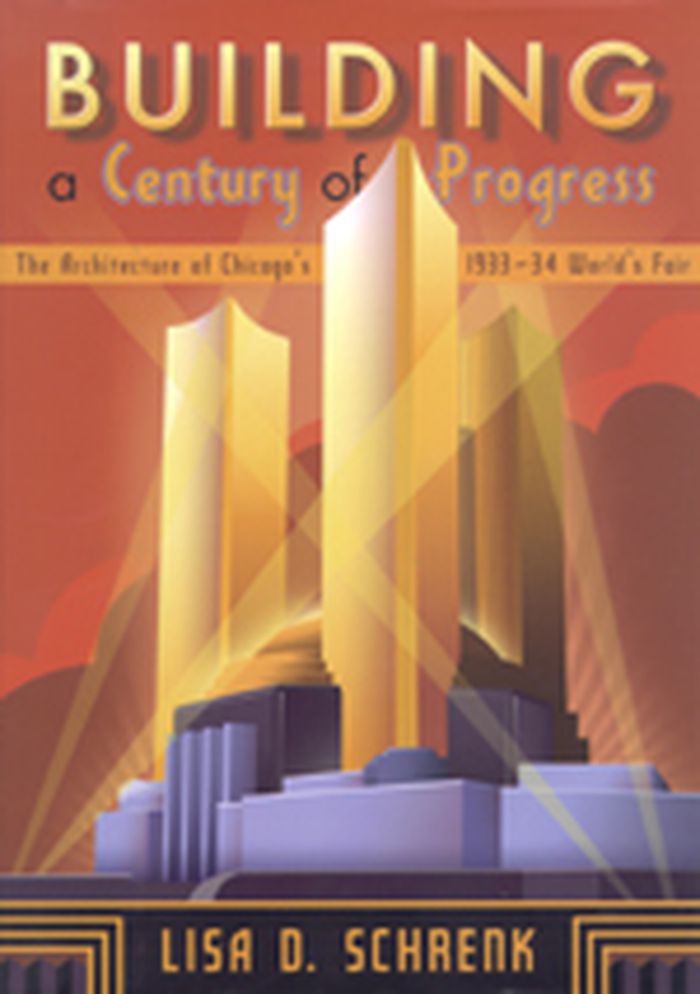
Building a century of progress : the architecture of Chicago's 1933-34 World's Fair
Actions:
Prix:
$45.00
(disponible sur commande)
Résumé:
From the summer of 1933 to the fall of 1934, more than 38 million fairgoers visited a 3-mile stretch along Lake Michigan, home to Chicago’s second World’s Fair. Millions more experienced the Century of Progress International Exposition through newspaper and magazine articles, newsreels, and souvenirs. Together, all marveled at the industrial, scientific, consumer, and cultural displays, many of which were housed in fifty massive and colorful exhibition halls, the largest architectural project realized in the United States during the Great Depression. In the richly illustrated "Building a century of progress", Lisa D. Schrenk explores the pivotal role of the 1933 Chicago World’s Fair in modern American architecture. She recounts how the exposition’s architectural commission promoted a broad definition of modern architecture, not relying on purely aesthetic characteristics but instead focusing on new design solutions. The fair’s pavilions incorporated recently introduced building materials such as masonite and gypsum board; structural innovations (for example, the first thin-shell concrete roof and the first suspended roof structures built in the United States); and new construction processes, most notably the use of prefabrication. They also featured curiosities like the giant, constantly operating mayonnaise maker and the glass-walled House of Tomorrow, which had no operable windows. Schrenk shows how the halls’ designs reflected cultural and political developments of the period, including the expanding relationships between science, industry, and government; the rise of a corporate consumer culture; and the impact of the Great Depression. Many of the designs provoked intense responses from critics and other prominent architects, including Frank Lloyd Wright and Ralph Adams Cram, fueling heated debates over the appropriate direction for architecture in the United States. Demonstrating the rich diversity of progressive American building design seen at the fair, this book captures a crucial moment in American modernism.
Building a century of progress : the architecture of Chicago's 1933-34 World's Fair
Actions:
Prix:
$45.00
(disponible sur commande)
Résumé:
From the summer of 1933 to the fall of 1934, more than 38 million fairgoers visited a 3-mile stretch along Lake Michigan, home to Chicago’s second World’s Fair. Millions more experienced the Century of Progress International Exposition through newspaper and magazine articles, newsreels, and souvenirs. Together, all marveled at the industrial, scientific, consumer, and cultural displays, many of which were housed in fifty massive and colorful exhibition halls, the largest architectural project realized in the United States during the Great Depression. In the richly illustrated "Building a century of progress", Lisa D. Schrenk explores the pivotal role of the 1933 Chicago World’s Fair in modern American architecture. She recounts how the exposition’s architectural commission promoted a broad definition of modern architecture, not relying on purely aesthetic characteristics but instead focusing on new design solutions. The fair’s pavilions incorporated recently introduced building materials such as masonite and gypsum board; structural innovations (for example, the first thin-shell concrete roof and the first suspended roof structures built in the United States); and new construction processes, most notably the use of prefabrication. They also featured curiosities like the giant, constantly operating mayonnaise maker and the glass-walled House of Tomorrow, which had no operable windows. Schrenk shows how the halls’ designs reflected cultural and political developments of the period, including the expanding relationships between science, industry, and government; the rise of a corporate consumer culture; and the impact of the Great Depression. Many of the designs provoked intense responses from critics and other prominent architects, including Frank Lloyd Wright and Ralph Adams Cram, fueling heated debates over the appropriate direction for architecture in the United States. Demonstrating the rich diversity of progressive American building design seen at the fair, this book captures a crucial moment in American modernism.
Classification:
livres
livres
Publication:
août 2007, Minneapolis, London
août 2007, Minneapolis, London
Classification:
livres
livres
Actions:
Exemplaires:
Description:
1 volume (unpaged) : illustrations ; 22 x 28 cm
Description:
1 volume (unpaged) : illustrations ; 22 x 28 cm
Sujet:
Publication:
[Place of publication not identified] : Union News Company, [1926]
[Place of publication not identified] : Union News Company, [1926]
Titre:
Sesqui-Centennial International Exposition Philadelphia, Pa. : 1776-1926.
Actions:
Exemplaires:
Description:
1 volume (unpaged) : illustrations ; 22 x 28 cm
Sesqui-Centennial International Exposition Philadelphia, Pa. : 1776-1926.
Actions:
Exemplaires:
Description:
1 volume (unpaged) : illustrations ; 22 x 28 cm
Classification:
livres
livres
Publication:
[Place of publication not identified] : Union News Company, [1926]
[Place of publication not identified] : Union News Company, [1926]
Sujet:
Classification:
livres
livres
Actions:
Exemplaires:
Description:
15 pages : illustrations ; 26 cm
Description:
15 pages : illustrations ; 26 cm
Auteur:
Sujet:
Publication:
Longueuil (Québec) : Plein sud, centre d'exposition en art actuel à Longueuil, [2012]
Longueuil (Québec) : Plein sud, centre d'exposition en art actuel à Longueuil, [2012]
Titre:
Le studio et l'anti-studio de Joseph Beuys et Buckminster Fuller : un essai photographique de Robert Duchesnay / [coordination, Hélène Poirier ; texte, Céline Mayrand ; photographies, Robert Duchesnay].
Actions:
Exemplaires:
Description:
15 pages : illustrations ; 26 cm
Le studio et l'anti-studio de Joseph Beuys et Buckminster Fuller : un essai photographique de Robert Duchesnay / [coordination, Hélène Poirier ; texte, Céline Mayrand ; photographies, Robert Duchesnay].
Actions:
Exemplaires:
Description:
15 pages : illustrations ; 26 cm
Classification:
livres
livres
Publication:
Longueuil (Québec) : Plein sud, centre d'exposition en art actuel à Longueuil, [2012]
Longueuil (Québec) : Plein sud, centre d'exposition en art actuel à Longueuil, [2012]
Auteur:
Sujet:


