


1083 Résultats
Classification:
livres
livres
Actions:
Prix:
$32.95
(disponible sur commande)
Résumé:
Public toilets provide a unique opportunity for interrogating how conventional assumptions about the body, sexuality, privacy, and technology are formed in public spaces and inscribed through design across cultures. This collection of original essays from international scholars is the first to explore the cultural meanings, histories, and ideologies of public toilets as(...)
$32.95
(disponible sur commande)
Résumé:
Public toilets provide a unique opportunity for interrogating how conventional assumptions about the body, sexuality, privacy, and technology are formed in public spaces and inscribed through design across cultures. This collection of original essays from international scholars is the first to explore the cultural meanings, histories, and ideologies of public toilets as(...)
Titre:
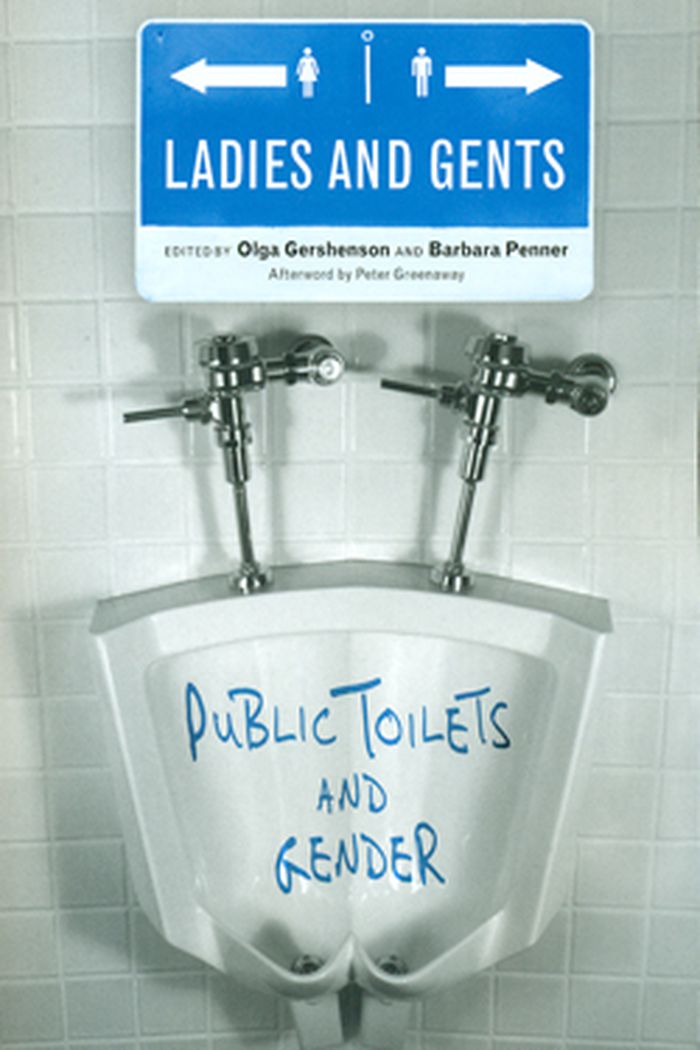
Ladies and gents ; public toilets and gender
Actions:
Prix:
$32.95
(disponible sur commande)
Résumé:
Public toilets provide a unique opportunity for interrogating how conventional assumptions about the body, sexuality, privacy, and technology are formed in public spaces and inscribed through design across cultures. This collection of original essays from international scholars is the first to explore the cultural meanings, histories, and ideologies of public toilets as gendered spaces. The publication consists of two sets of essays. The first, "Potty Politics: Toilets, Gender and Identity," establishes the importance of accessible, secure public toilets to the creation of inclusive cities, work, and learning environments. The second set of essays, "Toilet Art : Design and Cultural Representations," discusses public toilets as spaces of representation and representational spaces, with reference to architectural design, humor, film, theater, art, and popular culture. Visual materials and original artwork are included throughout, depicting subjects as varied as female urinals, art installations sited in public restrooms, and the toilet in contemporary art. Taken together, these seventeen essays demonstrate that public toilets are often sites where gendered bodies compete for resources and recognition — and the stakes are high. Contributors include: Nathan Abrams, Jami L. Anderson, Johan Andersson, Kathryn H. Anthony, Kathy Battista, Andrew Brown-May, Ben Campkin, Meghan Dufresne, Peg Fraser, Deborah Gans, Clara Greed, Robin Lydenberg, Claudia Mitchell, Alison Moore, Frances Pheasant-Kelly, Bushra Rehman, Alex Schweder, Naomi Stead, and the editors.
Ladies and gents ; public toilets and gender
Actions:
Prix:
$32.95
(disponible sur commande)
Résumé:
Public toilets provide a unique opportunity for interrogating how conventional assumptions about the body, sexuality, privacy, and technology are formed in public spaces and inscribed through design across cultures. This collection of original essays from international scholars is the first to explore the cultural meanings, histories, and ideologies of public toilets as gendered spaces. The publication consists of two sets of essays. The first, "Potty Politics: Toilets, Gender and Identity," establishes the importance of accessible, secure public toilets to the creation of inclusive cities, work, and learning environments. The second set of essays, "Toilet Art : Design and Cultural Representations," discusses public toilets as spaces of representation and representational spaces, with reference to architectural design, humor, film, theater, art, and popular culture. Visual materials and original artwork are included throughout, depicting subjects as varied as female urinals, art installations sited in public restrooms, and the toilet in contemporary art. Taken together, these seventeen essays demonstrate that public toilets are often sites where gendered bodies compete for resources and recognition — and the stakes are high. Contributors include: Nathan Abrams, Jami L. Anderson, Johan Andersson, Kathryn H. Anthony, Kathy Battista, Andrew Brown-May, Ben Campkin, Meghan Dufresne, Peg Fraser, Deborah Gans, Clara Greed, Robin Lydenberg, Claudia Mitchell, Alison Moore, Frances Pheasant-Kelly, Bushra Rehman, Alex Schweder, Naomi Stead, and the editors.
Classification:
livres
livres
Publication:
juillet 2009
juillet 2009
Sujet:
Théorie de l’urbanisme
Théorie de l’urbanisme
Classification:
livres
livres

Actions:
Prix:
$80.00
(disponible sur commande)
Résumé:
"Sleeping by the Mississippi" by Alec Soth is one of the defining publications in the photobook era. First published by Steidl in 2004, it was Soth’s first book, sold through three editions, and established him as one of the leading lights of contemporary photographic practice. This MACK edition launches to coincide with the first exhibition in London dedicated to the(...)
$80.00
(disponible sur commande)
Résumé:
"Sleeping by the Mississippi" by Alec Soth is one of the defining publications in the photobook era. First published by Steidl in 2004, it was Soth’s first book, sold through three editions, and established him as one of the leading lights of contemporary photographic practice. This MACK edition launches to coincide with the first exhibition in London dedicated to the(...)
Titre:
Alec Soth : sleeping by the Mississippi
Actions:
Prix:
$80.00
(disponible sur commande)
Résumé:
"Sleeping by the Mississippi" by Alec Soth is one of the defining publications in the photobook era. First published by Steidl in 2004, it was Soth’s first book, sold through three editions, and established him as one of the leading lights of contemporary photographic practice. This MACK edition launches to coincide with the first exhibition in London dedicated to the series at Beetles+Huxley gallery, and includes two new photographs that were not included in the previous versions of the book. Evolving from a series of road trips along the Mississippi River, "Sleeping by the Mississippi" captures America’s iconic yet oft-neglected ‘third coast’. Soth’s richly descriptive, large-format colour photographs present an eclectic mix of individuals, landscapes, and interiors. Sensuous in detail and raw in subject, Sleeping by the Mississippi elicits a consistent mood of loneliness, longing, and reverie. ‘In the book’s 46 ruthlessly edited pictures’, writes Anne Wilkes Tucker in the original essay published in the book, ‘Soth alludes to illness, procreation, race, crime, learning, art, music, death, religion, redemption, politics, and cheap sex.’ Like Robert Frank’s classic "The Americans", "Sleeping by the Mississippi" merges a documentary style with poetic sensibility. The Mississippi is less the subject of the book than its organizing structure. Not bound by a rigid concept or ideology, the series is created out of a quintessentially American spirit of wanderlust. Thirteen years since the book was first published, the artist’s lyrical view has undoubtedly acquired a nuanced significance – one in which hope, fear, desire and regret coalesce in the evocative journey along this mythic river.
Alec Soth : sleeping by the Mississippi
Actions:
Prix:
$80.00
(disponible sur commande)
Résumé:
"Sleeping by the Mississippi" by Alec Soth is one of the defining publications in the photobook era. First published by Steidl in 2004, it was Soth’s first book, sold through three editions, and established him as one of the leading lights of contemporary photographic practice. This MACK edition launches to coincide with the first exhibition in London dedicated to the series at Beetles+Huxley gallery, and includes two new photographs that were not included in the previous versions of the book. Evolving from a series of road trips along the Mississippi River, "Sleeping by the Mississippi" captures America’s iconic yet oft-neglected ‘third coast’. Soth’s richly descriptive, large-format colour photographs present an eclectic mix of individuals, landscapes, and interiors. Sensuous in detail and raw in subject, Sleeping by the Mississippi elicits a consistent mood of loneliness, longing, and reverie. ‘In the book’s 46 ruthlessly edited pictures’, writes Anne Wilkes Tucker in the original essay published in the book, ‘Soth alludes to illness, procreation, race, crime, learning, art, music, death, religion, redemption, politics, and cheap sex.’ Like Robert Frank’s classic "The Americans", "Sleeping by the Mississippi" merges a documentary style with poetic sensibility. The Mississippi is less the subject of the book than its organizing structure. Not bound by a rigid concept or ideology, the series is created out of a quintessentially American spirit of wanderlust. Thirteen years since the book was first published, the artist’s lyrical view has undoubtedly acquired a nuanced significance – one in which hope, fear, desire and regret coalesce in the evocative journey along this mythic river.
Classification:
livres
livres
Publication:
septembre 2017
septembre 2017
Sujet:
Monographies photo
Monographies photo
Classification:
livres
livres

Titre:
The second digital turn
The second digital turn
Actions:
Prix:
$33.95
(disponible sur commande)
Résumé:
Almost a generation ago, the early software for computer aided design and manufacturing (CAD/CAM) spawned a style of smooth and curving lines and surfaces that gave visible form to the first digital age, and left an indelible mark on contemporary architecture. But today's digitally intelligent architecture no longer looks that way. In The Second Digital Turn, Mario Carpo(...)
$33.95
(disponible sur commande)
Résumé:
Almost a generation ago, the early software for computer aided design and manufacturing (CAD/CAM) spawned a style of smooth and curving lines and surfaces that gave visible form to the first digital age, and left an indelible mark on contemporary architecture. But today's digitally intelligent architecture no longer looks that way. In The Second Digital Turn, Mario Carpo(...)
Titre:
The second digital turn
Actions:
Prix:
$33.95
(disponible sur commande)
Résumé:
Almost a generation ago, the early software for computer aided design and manufacturing (CAD/CAM) spawned a style of smooth and curving lines and surfaces that gave visible form to the first digital age, and left an indelible mark on contemporary architecture. But today's digitally intelligent architecture no longer looks that way. In The Second Digital Turn, Mario Carpo explains that this is because the design professions are now coming to terms with a new kind of digital tools they have adopted—no longer tools for making but tools for thinking. In the early 1990s the design professions were the first to intuit and interpret the new technical logic of the digital age: digital mass-customization (the use of digital tools to mass-produce variations at no extra cost) has already changed the way we produce and consume almost everything, and the same technology applied to commerce at large is now heralding a new society without scale—a flat marginal cost society where bigger markets will not make anything cheaper. But today, the unprecedented power of computation also favors a new kind of science where prediction can be based on sheer information retrieval, and form finding by simulation and optimization can replace deduction from mathematical formulas. Designers have been toying with machine thinking and machine learning for some time, and the apparently unfathomable complexity of the physical shapes they are now creating already expresses a new form of artificial intelligence, outside the tradition of modern science and alien to the organic logic of our mind.
The second digital turn
Actions:
Prix:
$33.95
(disponible sur commande)
Résumé:
Almost a generation ago, the early software for computer aided design and manufacturing (CAD/CAM) spawned a style of smooth and curving lines and surfaces that gave visible form to the first digital age, and left an indelible mark on contemporary architecture. But today's digitally intelligent architecture no longer looks that way. In The Second Digital Turn, Mario Carpo explains that this is because the design professions are now coming to terms with a new kind of digital tools they have adopted—no longer tools for making but tools for thinking. In the early 1990s the design professions were the first to intuit and interpret the new technical logic of the digital age: digital mass-customization (the use of digital tools to mass-produce variations at no extra cost) has already changed the way we produce and consume almost everything, and the same technology applied to commerce at large is now heralding a new society without scale—a flat marginal cost society where bigger markets will not make anything cheaper. But today, the unprecedented power of computation also favors a new kind of science where prediction can be based on sheer information retrieval, and form finding by simulation and optimization can replace deduction from mathematical formulas. Designers have been toying with machine thinking and machine learning for some time, and the apparently unfathomable complexity of the physical shapes they are now creating already expresses a new form of artificial intelligence, outside the tradition of modern science and alien to the organic logic of our mind.
Classification:
livres
livres
Publication:
octobre 2017
octobre 2017
Sujet:
Architecture numérique
Architecture numérique


