


1221 Résultats
Classification:
livres
livres
Actions:
Prix:
$49.95
(disponible sur commande)
Résumé:
This book is the first concerted effort to examine together the linked philosophies of the different arts of preserving and uncovering the past: the restoration of buildings, conservation of works of art, and editing of literary works to retrieve their original or intended texts. By investigating a series of recent crises in each of these areas, Securing the Past shows(...)
Publication:
décembre 2008, Cambridge
décembre 2008, Cambridge
Titre:
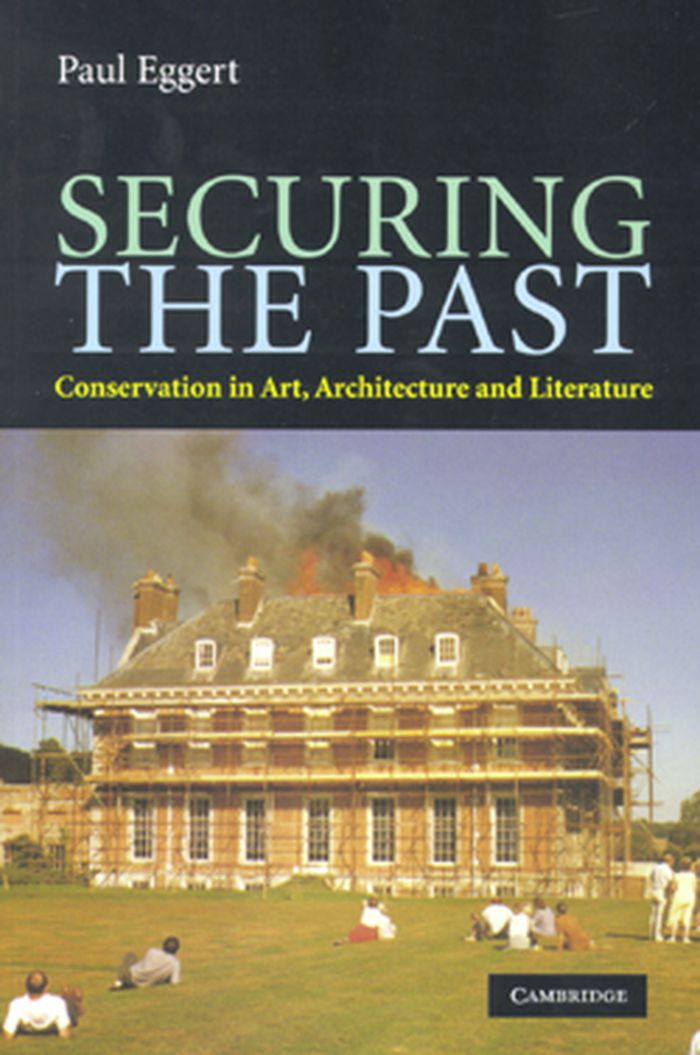
Securing the past: conservation in art, architecture and literature
Actions:
Prix:
$49.95
(disponible sur commande)
Résumé:
This book is the first concerted effort to examine together the linked philosophies of the different arts of preserving and uncovering the past: the restoration of buildings, conservation of works of art, and editing of literary works to retrieve their original or intended texts. By investigating a series of recent crises in each of these areas, Securing the Past shows how their underlying justifications relate closely to one another. Paul Eggert shows how they have been philosophically undermined by postmodern theories and charts another, richer way forward to a new future for the past.
Classification:
livres
livres
Publication:
décembre 2008, Cambridge
décembre 2008, Cambridge
Classification:
livres
livres
Titre:
Infinity and perspective
Infinity and perspective
Actions:
Prix:
$36.95
(disponible sur commande)
Résumé:
Much postmodern rhetoric, suggests Karsten Harries, can be understood as a symptom of our civilization's discontent, born of regret that we are no longer able to experience our world as a cosmos that assigns us our place. But dissatisfaction with the modern world may also spring from a conviction that modernism has failed to confront the challenge of an inevitably open(...)
Sujet:
Théorie de l’architecture
Théorie de l’architecture
Publication:
octobre 2002, Cambridge, Mass.
octobre 2002, Cambridge, Mass.
Titre:
Infinity and perspective
Actions:
Prix:
$36.95
(disponible sur commande)
Résumé:
Much postmodern rhetoric, suggests Karsten Harries, can be understood as a symptom of our civilization's discontent, born of regret that we are no longer able to experience our world as a cosmos that assigns us our place. But dissatisfaction with the modern world may also spring from a conviction that modernism has failed to confront the challenge of an inevitably open future. Such conviction has frequently led to a critique of modernity's founding heroes. Challenging that critique, Harries insists that modernity is supported by nothing other than human freedom. But more important to Harries is to show how modernist self-assertion is shadowed by nihilism and what it might mean to step out of that shadow. Looking at a small number of medieval and Renaissance texts, as well as some paintings, he uncovers the threshold that separates the modern from the premodern world. At the same time, he illuminates that other, more questionable threshold, between the modern and the postmodern. Two spirits preside over the book: Alberti, the Renaissance author on art and architecture, whose passionate interest in perspective and point of view offers a key to modernity; and Nicolaus Cusanus, the fifteenth-century cardinal, whose work shows that such interest cannot be divorced from speculations on the infinity of God. The title Infinity and Perspective connects the two to each other and to the shape of modernity.
Classification:
livres
livres
Publication:
octobre 2002, Cambridge, Mass.
octobre 2002, Cambridge, Mass.
Sujet:
Théorie de l’architecture
Théorie de l’architecture
Classification:
livres
livres
Actions:
Exemplaires:
Description:
xx, 730 pages : illustrations (some color) ; 25 cm.
Description:
xx, 730 pages : illustrations (some color) ; 25 cm.
Auteur:
Sujet:
Publication:
Québec (Québec) : Presses de l'Université du Québec, [2016]
Québec (Québec) : Presses de l'Université du Québec, [2016]
Titre:
Montréal en évolution : quatre siècles d'architecture et d'aménagement / Jean-Claude Marsan.
Actions:
Exemplaires:
Description:
xx, 730 pages : illustrations (some color) ; 25 cm.
Montréal en évolution : quatre siècles d'architecture et d'aménagement / Jean-Claude Marsan.
Actions:
Exemplaires:
Description:
xx, 730 pages : illustrations (some color) ; 25 cm.
Classification:
livres
livres
Publication:
Québec (Québec) : Presses de l'Université du Québec, [2016]
Québec (Québec) : Presses de l'Université du Québec, [2016]
Auteur:
Sujet:
Classification:
livres
livres
Actions:
Prix:
$94.00
(disponible sur commande)
Résumé:
"Building Institution" chronicles the expansion of architecture as a profession and discipline in the postmodern era. Kim Förster traces the compelling history of the Institute for Architecture and Urban Studies, which was active in New York from 1967 to 1985. Drawing on extensive archival research and oral histories, he constructs a collective biography that details the(...)
Titre:
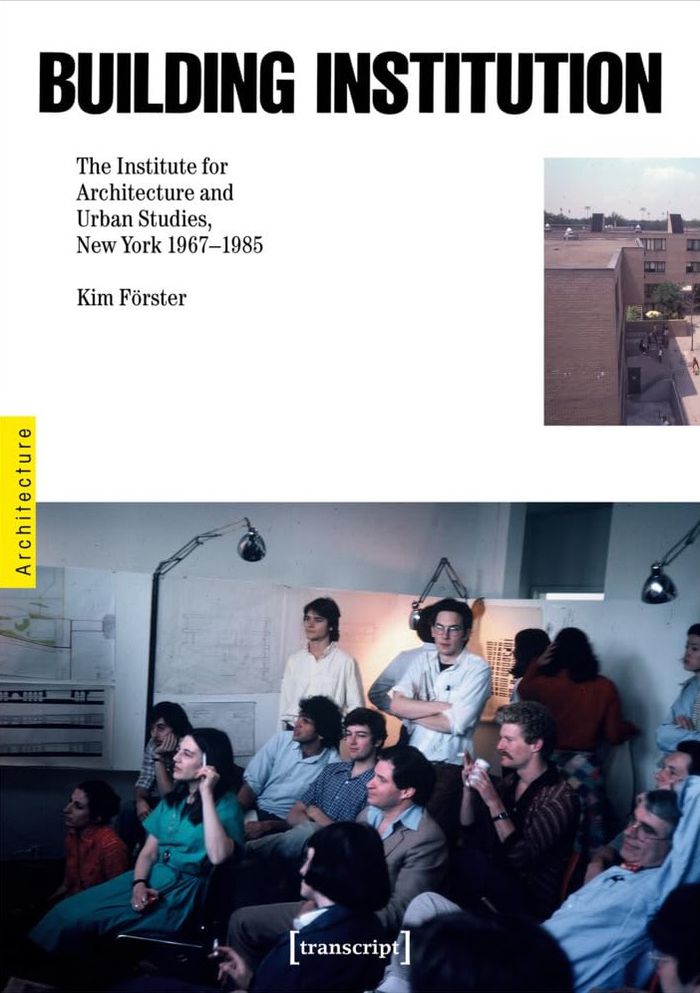
Building institution: the Institute for Architecture and Urban Studies, New York 1967-1985
Actions:
Prix:
$94.00
(disponible sur commande)
Résumé:
"Building Institution" chronicles the expansion of architecture as a profession and discipline in the postmodern era. Kim Förster traces the compelling history of the Institute for Architecture and Urban Studies, which was active in New York from 1967 to 1985. Drawing on extensive archival research and oral histories, he constructs a collective biography that details the Institute's diverse roles and the dynamic interplay between research and design, education, culture, and publishing. By exploring the transformation of cultural production into a practice as well as the culturalization and global postmodernization of architecture, the volume contributes significantly to the institutional history of architecture.
Classification:
livres
livres
Publication:
octobre 2024
octobre 2024
Sujet:
Théorie de l’architecture
Théorie de l’architecture
Classification:
livres
livres
Actions:
Exemplaires:
Description:
xiii, 153 pages ; 24 cm
Description:
xiii, 153 pages ; 24 cm
Auteur:
Sujet:
Publication:
Westport, Conn. : Greenwood Press, 1997.
Westport, Conn. : Greenwood Press, 1997.
Titre:
Artwords : a glossary of contemporary art theory / Thomas Patin and Jennifer McLerran.
Actions:
Exemplaires:
Description:
xiii, 153 pages ; 24 cm
Artwords : a glossary of contemporary art theory / Thomas Patin and Jennifer McLerran.
Actions:
Exemplaires:
Description:
xiii, 153 pages ; 24 cm
Classification:
livres
livres
Publication:
Westport, Conn. : Greenwood Press, 1997.
Westport, Conn. : Greenwood Press, 1997.
Auteur:
Sujet:
Classification:
livres
livres
Exemplaires:
Description:
104 pages : illustrations (some color), plans ; 30 cm
Description:
104 pages : illustrations (some color), plans ; 30 cm
Auteur:
Sujet:
Publication:
London : Academy Editions, 1977.
London : Academy Editions, 1977.
Titre:
The language of post-modern architecture / Charles A. Jencks.
Actions:
Exemplaires:
Description:
104 pages : illustrations (some color), plans ; 30 cm
The language of post-modern architecture / Charles A. Jencks.
Actions:
Exemplaires:
Description:
104 pages : illustrations (some color), plans ; 30 cm
Classification:
livres
livres
Publication:
London : Academy Editions, 1977.
London : Academy Editions, 1977.
Auteur:
Sujet:
Classification:
livres
livres
Actions:
Exemplaires:
Description:
236 pages : illustrations, black and white photographs ; 22 cm
Description:
236 pages : illustrations, black and white photographs ; 22 cm
Auteur:
Sujet:
Publication:
Cambridge, Mass. : Blackwell Publishers, [1996], ©1996.
Cambridge, Mass. : Blackwell Publishers, [1996], ©1996.
Titre:
Theorizing museums : representing identity and diversity in a changing world / edited by Sharon Macdonald and Gordon Fyfe.
Actions:
Exemplaires:
Description:
236 pages : illustrations, black and white photographs ; 22 cm
Theorizing museums : representing identity and diversity in a changing world / edited by Sharon Macdonald and Gordon Fyfe.
Actions:
Exemplaires:
Description:
236 pages : illustrations, black and white photographs ; 22 cm
Classification:
livres
livres
Publication:
Cambridge, Mass. : Blackwell Publishers, [1996], ©1996.
Cambridge, Mass. : Blackwell Publishers, [1996], ©1996.
Auteur:
Sujet:
Classification:
livres
livres
Actions:
Exemplaires:
Description:
220 pages ; 19 cm.
Description:
220 pages ; 19 cm.
Auteur:
Sujet:
Publication:
Braunschweig : Vieweg, ©1995.
Braunschweig : Vieweg, ©1995.
Titre:
Einfach schwierig : eine deutsche Architekturdebatte : ausgewählte Beiträge 1993-1995 / Gert Kähler (Hrsg.).
Actions:
Exemplaires:
Description:
220 pages ; 19 cm.
Einfach schwierig : eine deutsche Architekturdebatte : ausgewählte Beiträge 1993-1995 / Gert Kähler (Hrsg.).
Actions:
Exemplaires:
Description:
220 pages ; 19 cm.
Classification:
livres
livres
Publication:
Braunschweig : Vieweg, ©1995.
Braunschweig : Vieweg, ©1995.
Auteur:
Sujet:
Classification:
livres
livres
Prix:
$45.95
(disponible sur commande)
Résumé:
This publication presents a critical history of architectural theory over the last forty years. Mallgrave employs the words theory and architecture in a broad sense - the latter encompassing aspects of urban planning, structural, and landscape design, while theory too is often indistinguishable from practice. The text surveys the intellectual history of architecture(...)
Titre:
An introduction to architectural theory: 1968 to the present
Actions:
Prix:
$45.95
(disponible sur commande)
Résumé:
This publication presents a critical history of architectural theory over the last forty years. Mallgrave employs the words theory and architecture in a broad sense - the latter encompassing aspects of urban planning, structural, and landscape design, while theory too is often indistinguishable from practice. The text surveys the intellectual history of architecture since 1968, including criticisms of high modernism, the rise of postmodern and poststructural theory, critical regionalism and tectonics, and the significant changes that architectural thinking has undergone in the past fifteen years, concluding with an analysis of where architecture stands and where it will likely move in the coming years.
Classification:
livres
livres
Publication:
mai 2011
mai 2011
Sujet:
Théorie de l’architecture
Théorie de l’architecture
Classification:
livres
livres
Prix:
$49.99
(disponible sur commande)
Résumé:
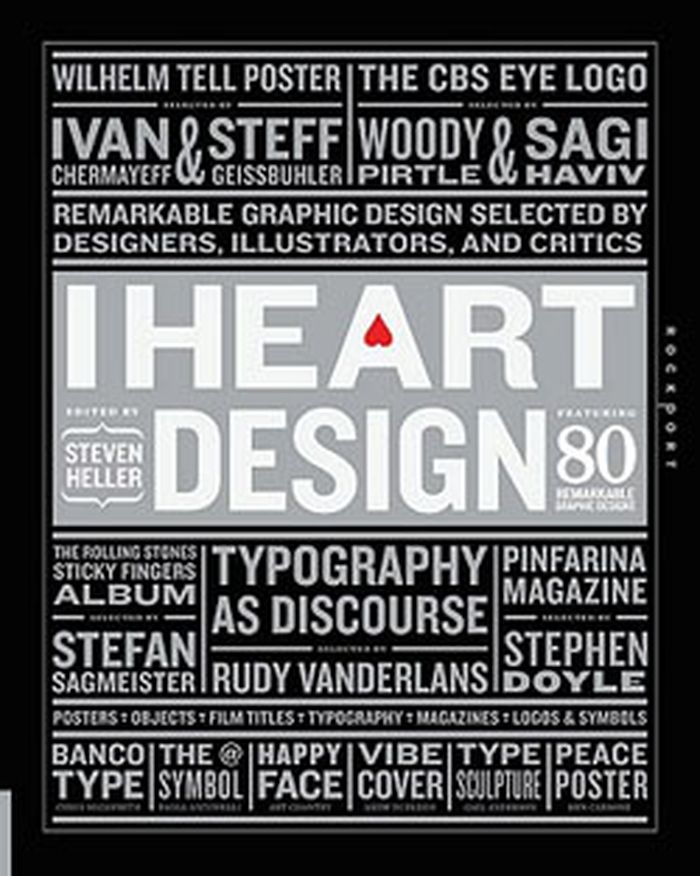
This publication is a collection of “favorite” designs as selected by 80 graphic designers, typographers, teachers, scholars, writers and design impresarios. Designers have preferences, like modern over postmodern, serif over sans serif, decorative over minimal, but designers could not be engaged in design practice if they did not love design. The reasons for such a(...)
Titre:
I heart design, featuring 80 remarkable graphic designs
Actions:
Prix:
$49.99
(disponible sur commande)
Résumé:
This publication is a collection of “favorite” designs as selected by 80 graphic designers, typographers, teachers, scholars, writers and design impresarios. Designers have preferences, like modern over postmodern, serif over sans serif, decorative over minimal, but designers could not be engaged in design practice if they did not love design. The reasons for such a charged emotion varies from individual to individual, but there are certain commonalities regarding form, function, outcome, and more. Design triggers something in all of us that may be solely aesthetic or decidedly content-driven, but in the final analysis, we are drawn to it through the heart.
Classification:
livres
livres
Publication:
mars 2011
mars 2011


