


1128 Résultats
Classification:
livres
livres
Actions:
Prix:
$58.00
(disponible sur commande)
Résumé:
280 mostly full page color illustrations. Text by Ann Temkin, Briony Fer. Melissa Ho, Nora Lawrence. Published to accompany a major exhibition at The Museum of Modern Art, New York, this volume begins with Marcel Duchamp’s Tu m’, the artist’s final painting, made in 1918, with its long array of color samples looming across the canvas. This early recognition of color’s(...)
Titre:
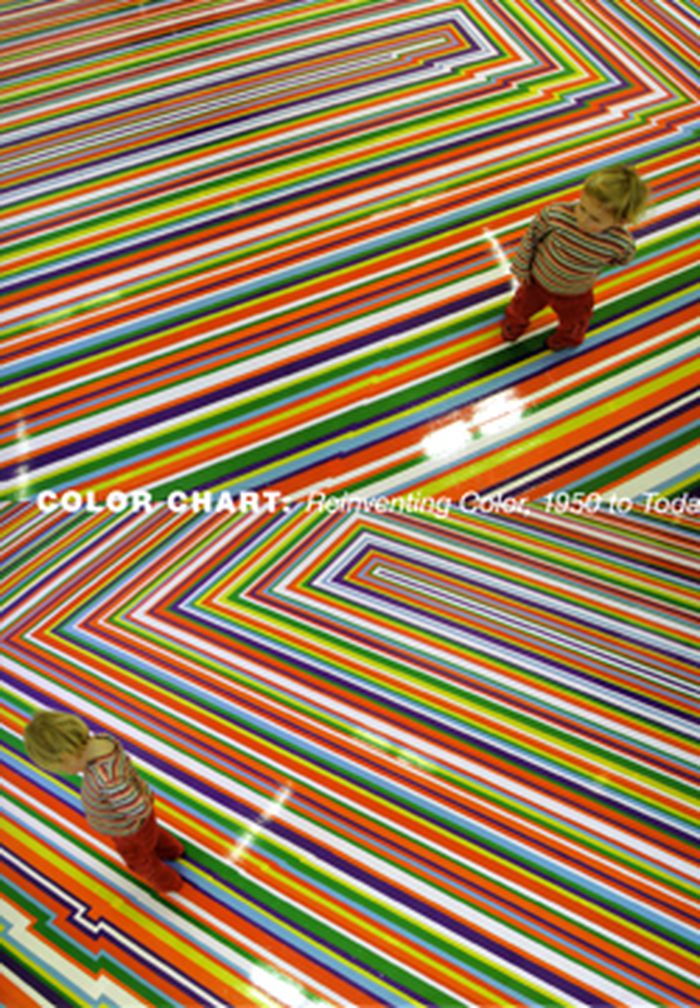
Color Chart: Reinventing Color, 1950 to Today
Actions:
Prix:
$58.00
(disponible sur commande)
Résumé:
280 mostly full page color illustrations. Text by Ann Temkin, Briony Fer. Melissa Ho, Nora Lawrence. Published to accompany a major exhibition at The Museum of Modern Art, New York, this volume begins with Marcel Duchamp’s Tu m’, the artist’s final painting, made in 1918, with its long array of color samples looming across the canvas. This early recognition of color’s commercial nature was fully explored more than three decades later by artists such as Robert Rauschenberg, Andy Warhol, Gerhard Richter and Alighiero Boetti, who in the 1950s to the 1970s, with a host of others, redefined the parameters of color from a matter of personal expression to one of arbitrary systems and random processes. The repercussions of this transformation continue to be felt into the twenty-first century, in work by artists including Sherrie Levine, Mike Kelley and Damien Hirst, as well as others who explore color in digital technology This volume traces the lineage of the questions provoked by color’s new status, and the variety of answers that have resulted.
Classification:
livres
livres
Publication:
mars 2008, New York
mars 2008, New York
Classification:
livres
livres
Titre:
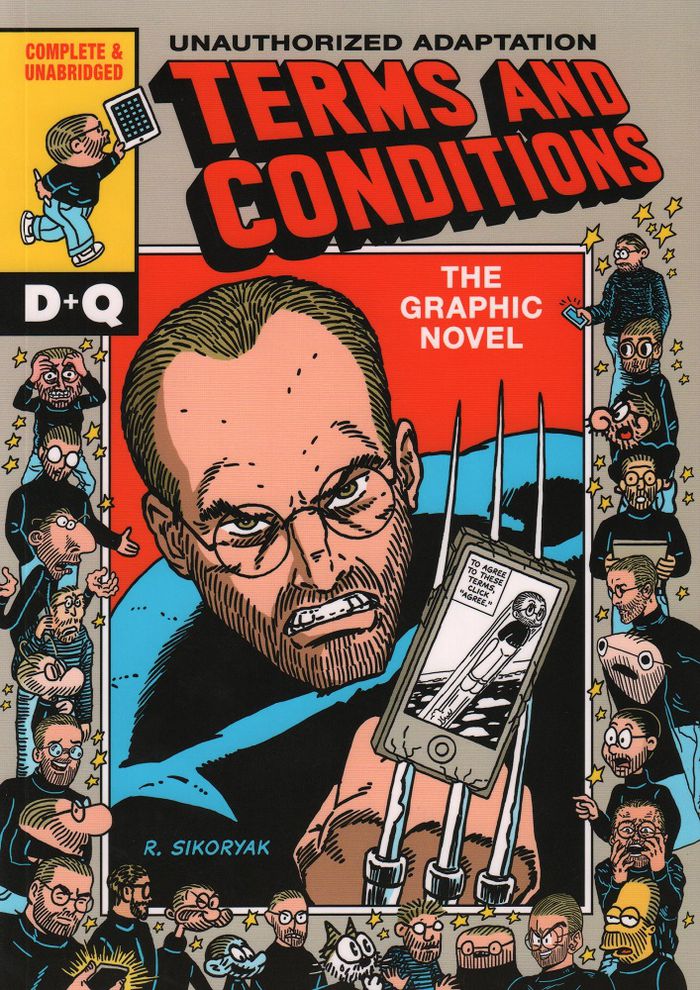
Terms and conditions
Terms and conditions
Actions:
Prix:
$16.95
(disponible sur commande)
Résumé:
For his newest project, R. Sikoryak tackles the monstrously and infamously dense legal document, iTunes Terms and Conditions, the contract everyone agrees to but no one reads. In a word for word 94-page adaptation, Sikoryak hilariously turns the agreement on its head—each page features an avatar of Apple cofounder and legendary visionary Steve Jobs juxtaposed with a(...)
Titre:
Terms and conditions
Actions:
Prix:
$16.95
(disponible sur commande)
Résumé:
For his newest project, R. Sikoryak tackles the monstrously and infamously dense legal document, iTunes Terms and Conditions, the contract everyone agrees to but no one reads. In a word for word 94-page adaptation, Sikoryak hilariously turns the agreement on its head—each page features an avatar of Apple cofounder and legendary visionary Steve Jobs juxtaposed with a different classic strip such as Mort Walker’s Beetle Bailey, or a contemporary graphic novel such as Craig Thompson’s Blankets or Marjane Satrapi’s Persepolis . Adapting the legalese of the iTunes Terms and Conditions into another medium seems like an unfathomable undertaking, yet Sikoryak creates a surprisingly readable document, far different from its original, purely textual incarnation and thus proving the accessibility and flexibility of comics. When Sikoryak parodies Kate Beaton’s Hark A Vagrant peasant comics with Steve Jobs discussing objectionable material or Homer Simpson as Steve Jobs warning of the penalties of copyright infringement, Terms and Conditions serves as a surreal record of our modern digital age where technology competes with enduringly ironclad mediums.
Classification:
livres
livres
Publication:
mars 2017
mars 2017
Sujet:
Illustration
Illustration
Classification:
livres
livres
Titre:
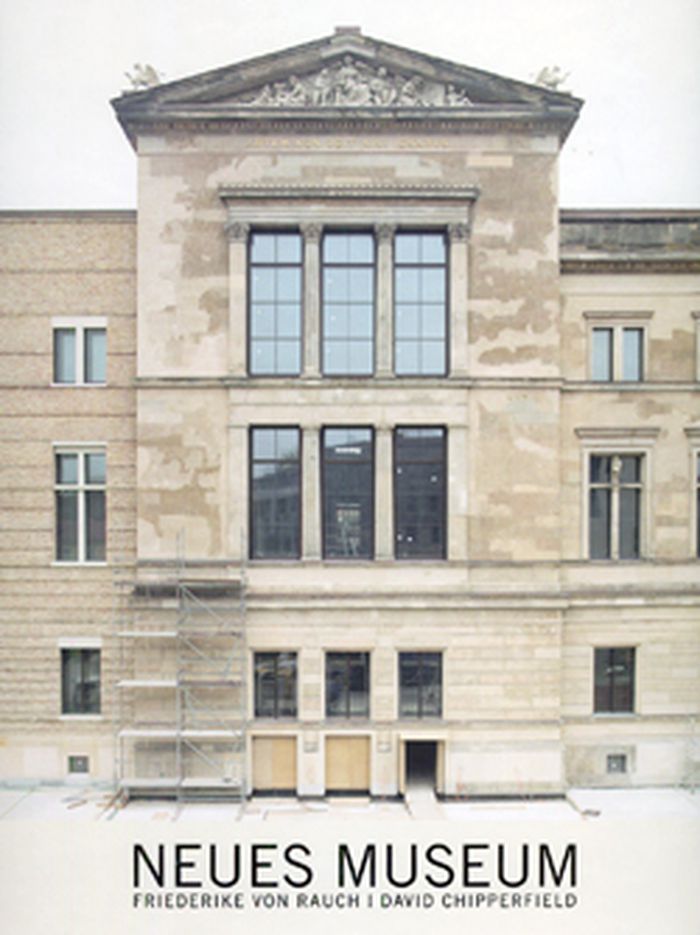
Neues Museum
Neues Museum
Actions:
Prix:
$50.00
(disponible sur commande)
Résumé:
The Neues Museum - an important mid-nineteenth century example of Neoclassical architecture and the centerpiece of Berlin's Museum Island - was badly damaged during World War II. From 1997-2009, British architect David Chipperfield worked to restore the structure - which was originally completed by Friedrich August Stueler in 1859 - to its pre-war function. Located behind(...)
Sujet:
Architecture, monographies
Architecture, monographies
Publication:
septembre 2009
septembre 2009
Titre:
Neues Museum
Actions:
Prix:
$50.00
(disponible sur commande)
Résumé:
The Neues Museum - an important mid-nineteenth century example of Neoclassical architecture and the centerpiece of Berlin's Museum Island - was badly damaged during World War II. From 1997-2009, British architect David Chipperfield worked to restore the structure - which was originally completed by Friedrich August Stueler in 1859 - to its pre-war function. Located behind the Altes Museum, the space housed the Egyptian Collection. Chipperfield's controversial plans followed a principle of conservation (or amalgamation) rather than reconstruction; he preserved the skeleton of the original building, with its elaborate finishes, attractive brickwork, frescoes and ornamentation, merging and contrasting these characteristics with his own subtle interpolations of clean white lines and quiet geometrical structures. The results are astounding, setting new standards in the field and opening up exciting possibilities for museum conversions. This volume celebrates Chipperfield's work in a series of images by the Berlin-based architectural photographer Friederike von Rauch. Von Rauch is well known for her unusual and exacting approach to architectural photography : eschewing digital technology and only using natural light, she presents a crisp and vibrant series of images that eloquently tell the story of Chipperfield's unorthodox but successful restoration.
Classification:
livres
livres
Publication:
septembre 2009
septembre 2009
Sujet:
Architecture, monographies
Architecture, monographies
Classification:
livres
livres
Actions:
Prix:
$30.00
(disponible sur commande)
Résumé:
Michiel Schwarz and Joost Elffers declare the dawn of a new cultural era, as we transition from modernity to sustainity - towards a world that is more connected, more localist, more digital and more sustainable. As the authors of this manifesto argue, "sustainism marks a shift not only in thinking and doing but in collective perception - of how we live, do business, feed(...)
Titre:
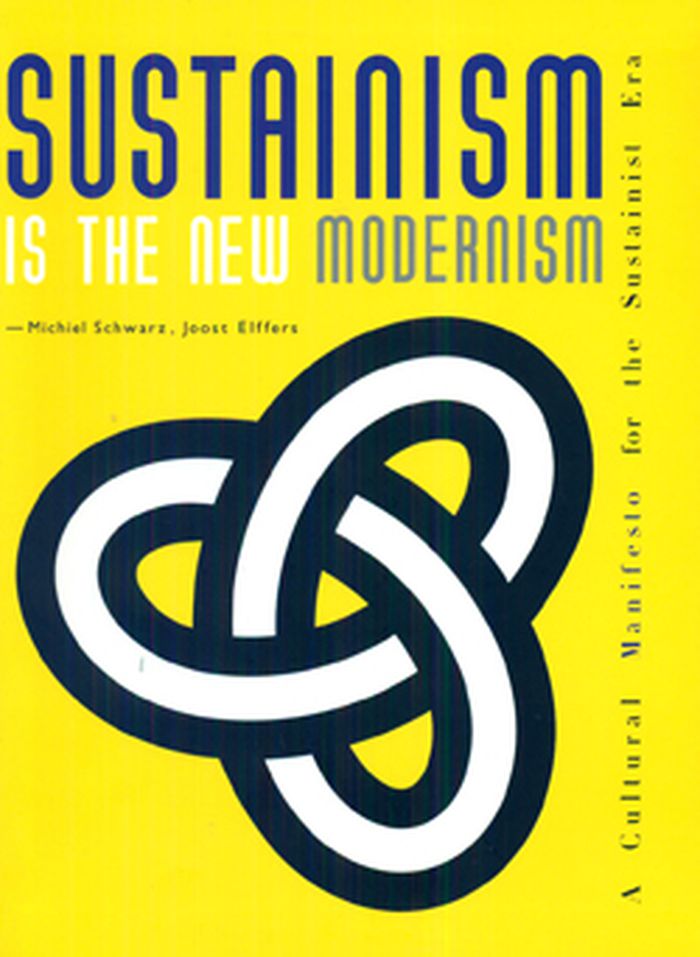
Sustainism is the new modernism : a cultural manifesto for the sustainist era
Actions:
Prix:
$30.00
(disponible sur commande)
Résumé:
Michiel Schwarz and Joost Elffers declare the dawn of a new cultural era, as we transition from modernity to sustainity - towards a world that is more connected, more localist, more digital and more sustainable. As the authors of this manifesto argue, "sustainism marks a shift not only in thinking and doing but in collective perception - of how we live, do business, feed ourselves, design, travel and communicate, as much as how we deal with nature." In the twentieth century, whether we knew it or not, our world was shaped by modernist values, from the design of our cities to our homes, technologies and our conceptions of progress. Sustainism recasts our relationship to all of these things, binding ecological issues to a larger picture of our world. Through a series of graphically dynamic aphorisms, quotes and symbols designed for worldwide use by businesses, individuals and institutions, to signal support for sustainism, Michiel Schwarz and Joost Elffers show how the movement is already reshaping global culture, technology, food and media. With this concise manifesto, they launch the term sustainism into the public consciousness. The sustainist era has begun.
Classification:
livres
livres
Publication:
août 2010
août 2010
Sujet:
Architecture écologique
Architecture écologique
Classification:
livres
livres
Actions:
Prix:
$22.95
(disponible sur commande)
Résumé:
In response to the contentious process surrounding the selection of a design for the World Trade Center site, the use of spectacular buildings to brand cities and institutions, and the dizzying transformations of the skylines of Shanghai and Dubai, public awareness of architecture and design has perhaps never been higher. At the same time, architecture itself is(...)
Sujet:
Théorie de l’architecture
Théorie de l’architecture
Publication:
novembre 2007, Minneapolis
novembre 2007, Minneapolis
Titre:
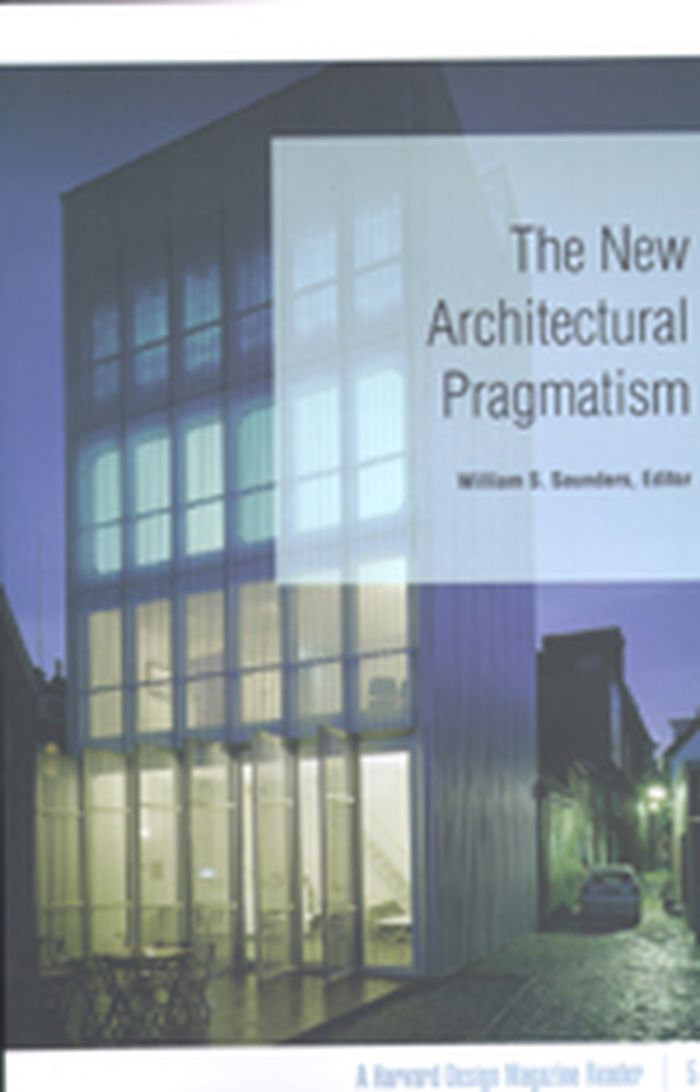
The new architectural pragmatism
Actions:
Prix:
$22.95
(disponible sur commande)
Résumé:
In response to the contentious process surrounding the selection of a design for the World Trade Center site, the use of spectacular buildings to brand cities and institutions, and the dizzying transformations of the skylines of Shanghai and Dubai, public awareness of architecture and design has perhaps never been higher. At the same time, architecture itself is undergoing an identity crisis as it confronts fundamental issues: the effect of digital technology on design, the pervasive impact of global capitalism, and whether to embrace or resist popular media and taste. The New Architectural Pragmatism collects the most provocative, penetrating, and influential attempts by leading theorists and practitioners in the field to define what architectural practice should be at the beginning of the twenty-first century. Written in the aftermath of modernism’s utopian impulse and postmodernism’s detached playfulness, the essays gathered here express and critique a new spirit of cultural and political engagement with contemporary society. Interrogating the architect’s social responsibility, the contributors deliberate about how much we should ask of architecture and suggest that in the coming century, architecture must be at once flexible and robust, responsive and self-directed.
Classification:
livres
livres
Publication:
novembre 2007, Minneapolis
novembre 2007, Minneapolis
Sujet:
Théorie de l’architecture
Théorie de l’architecture
Classification:
livres
livres
Actions:
Prix:
$47.50
(disponible sur commande)
Résumé:
The discipline of architecture depends on the transmission in space and time of accumulated experiences, concepts, rules, and models. From the invention of the alphabet to the development of ASCII code for electronic communication, the process of recording and transmitting this body of knowledge has reflected the dominant information technologies of each period. In this(...)
Titre:
Architecture in the age of printing : orality, writing, typography, and printed images in the history of architectural theory
Actions:
Prix:
$47.50
(disponible sur commande)
Résumé:
The discipline of architecture depends on the transmission in space and time of accumulated experiences, concepts, rules, and models. From the invention of the alphabet to the development of ASCII code for electronic communication, the process of recording and transmitting this body of knowledge has reflected the dominant information technologies of each period. In this book Mario Carpo discusses the communications media used by Western architects, from classical antiquity to modern classicism, showing how each medium related to specific forms of architectural thinking. Carpo highlights the significance of the invention of movable type and mechanically reproduced images. He argues that Renaissance architectural theory, particularly the system of the five architectural orders, was consciously developed in response to the formats and potential of the new printed media. Carpo contrasts architecture in the age of printing with what preceded it: Vitruvian theory and the manuscript format, oral transmission in the Middle Ages, and the fifteenth-century transition from script to print. He also suggests that the basic principles of "typographic" architecture thrived in the Western world as long as print remained our main information technology. The shift from printed to digital representations, he points out, will again alter the course of architecture.
Classification:
livres
livres
Publication:
septembre 2001, Cambridge, Mass.
septembre 2001, Cambridge, Mass.
Sujet:
Théorie de l’architecture
Théorie de l’architecture
Classification:
livres
livres
Titre:
Robbert Flick : trajectories
Robbert Flick : trajectories
Actions:
Prix:
$110.50
(disponible sur commande)
Résumé:
Robbert Flick's work extends the same visual, philosophical, and theoretically fertile tradition set by the highly influential and iconoclastic Robert Heinecken. But while Heinecken's emphasis can be said to rely on the manner in which images function within the intersection of popular culture and the fine arts, Flick has characteristically concentrated more intently on(...)
Titre:
Robbert Flick : trajectories
Actions:
Prix:
$110.50
(disponible sur commande)
Résumé:
Robbert Flick's work extends the same visual, philosophical, and theoretically fertile tradition set by the highly influential and iconoclastic Robert Heinecken. But while Heinecken's emphasis can be said to rely on the manner in which images function within the intersection of popular culture and the fine arts, Flick has characteristically concentrated more intently on the artifactual, conceptual, and receptive properties of photography--specifically landscape photography. The distinctive retinal and conceptual strength of Flick's work has been evident since his early essay-format images of the 1960s. In his more recent digital work, he extends his participation in the critical discourse established around the interpretation, evaluation, and assessment of visual constructs related to the landscape. And yet, this movement has only become possible through a conceptual transition from a position of creating unique objects to an emphasis on interactivity and multiple access using still and moving images that allow for the work's insertion into the broader socio-political arena where the application defines the discourse. Trajectories traces the artist's career from the 1970s to the present, providing the opportunity to examine his visual development while also charting the conceptual and philosophical impact of contemporary culture on landscape, cultural geography, and technology. Edited by Tim B. Wride with essays by Michael Dear and David L. Ulin
Classification:
livres
livres
Publication:
janvier 1900, Los Angeles
janvier 1900, Los Angeles
Sujet:
Monographies photo
Monographies photo
Classification:
livres
livres

Actions:
Prix:
$33.95
(disponible sur commande)
Résumé:
Contemporary engagements with documentary are multifaceted and complex, reaching across disciplines to explore the intersections of politics and aesthetics, representation and reality, truth and illusion. Discarding the old notions of “fly on the wall” immediacy or quasi-scientific aspirations to objectivity, critics now understand documentary not as the neutral picturing(...)
Publication:
février 2016
février 2016
Titre:
Documentary Across Disciplines
Actions:
Prix:
$33.95
(disponible sur commande)
Résumé:
Contemporary engagements with documentary are multifaceted and complex, reaching across disciplines to explore the intersections of politics and aesthetics, representation and reality, truth and illusion. Discarding the old notions of “fly on the wall” immediacy or quasi-scientific aspirations to objectivity, critics now understand documentary not as the neutral picturing of reality but as a way of coming to terms with reality through images and narrative. This book collects writings by artists, filmmakers, art historians, poets, literary critics, anthropologists, theorists, and others, to investigate one of the most vital areas of cultural practice: documentary. Their investigations take many forms—essays, personal memoirs, interviews, poetry. Contemporary art turned away from the medium and toward the world, using photography and the moving image to take up global perspectives. Documentary filmmakers, meanwhile, began to work in the gallery context. The contributors consider the hybridization of art and film, and the “documentary turn” of contemporary art. They discuss digital technology and the “crisis of faith” caused by manipulation and generation of images, and the fading of the progressive social mandate that has historically characterized documentary. They consider invisible data and visible evidence; problems of archiving; and surveillance and biometric control, forms of documentation that call for “informatic opacity” as a means of evasion.
Classification:
livres
livres
Publication:
février 2016
février 2016
Classification:
livres
livres
Actions:
Prix:
$63.95
(disponible sur commande)
Résumé:
This book investigates the state of panoptic art at a time when issues of security and civil liberties are on many people’s minds. Traditional imaging and tracking systems have given way to infinitely more powerful “dataveillance” technologies, as an evolving arsenal of surrogate eyes and ears in our society shifts its focus from military to domestic space. Taking as its(...)
Publication:
mars 2002, Karlsruhe, Germany / Cambridge, Massachusett
mars 2002, Karlsruhe, Germany / Cambridge, Massachusett
Titre:
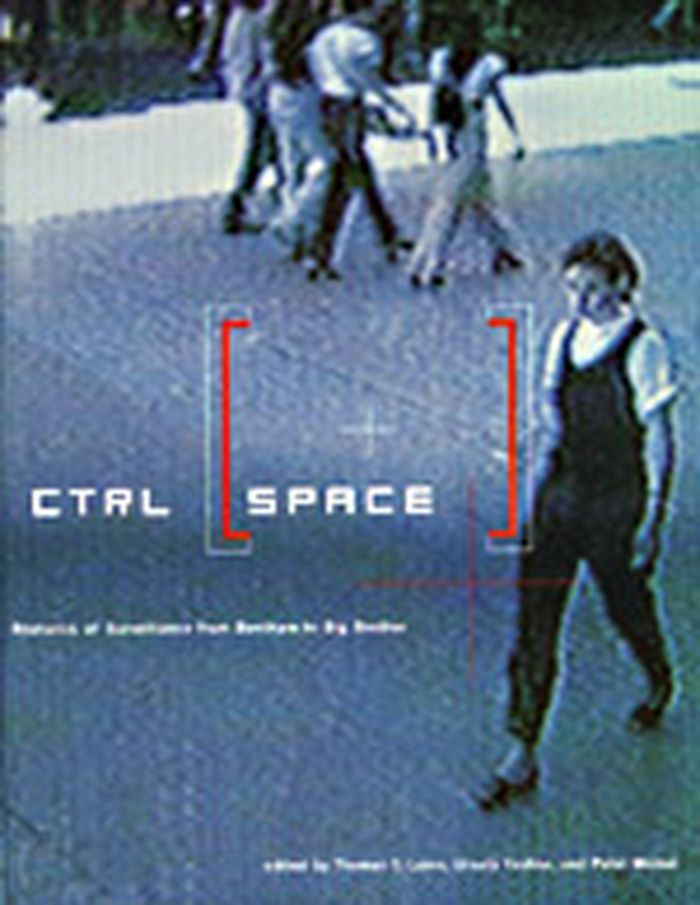
CTRL (space) : rhetorics of surveillance from Bentham to big brother
Actions:
Prix:
$63.95
(disponible sur commande)
Résumé:
This book investigates the state of panoptic art at a time when issues of security and civil liberties are on many people’s minds. Traditional imaging and tracking systems have given way to infinitely more powerful “dataveillance” technologies, as an evolving arsenal of surrogate eyes and ears in our society shifts its focus from military to domestic space. Taking as its point of departure an architectural drawing by Jeremy Bentham that became the model for an entire social regime, CTRL [SPACE] looks at the shifting relationships between design and power, imaging and oppression, from the eighteenth to the twenty-first centuries. From the photographs taken with hidden cameras by Walker Evans and Paul Strand in the early twentieth century to the appropriation of military satellite technology by Marko Peljhan a hundred years later, the works of a wide range of artists have explored the dynamics of watching and being watched. The artists whose panoptical preoccupations are featured include, among others, Sophie Calle, Diller + Scofidio, Dan Graham, Pierre Huyghe, Michael Klier, Rem Koolhaas, Bruce Nauman, Yoko Ono, Thomas Ruff, Julia Scher, Andy Warhol, and Peter Weibel. This book, along with the exhibition it accompanies, is the first state-of-the-art survey of panopticism--in digital culture, architecture, television, video, cinema, painting, photography, conceptual art, installation work, robotics, and satellite imaging.
Classification:
livres
livres
Publication:
mars 2002, Karlsruhe, Germany / Cambridge, Massachusett
mars 2002, Karlsruhe, Germany / Cambridge, Massachusett
Classification:
livres
livres
Actions:
Prix:
$79.00
(disponible sur commande)
Résumé:
The art of producing color in movies is a fascinating process with a long history. Many people don’t realize that, as early as the 1890s, much of silent cinema was in color. They also may not know that women were the main workforce behind the techniques that first produced these effects, a tradition that continued as the practice evolved. Breakthroughs in color technology(...)
Publication:
octobre 2024
octobre 2024
Titre:
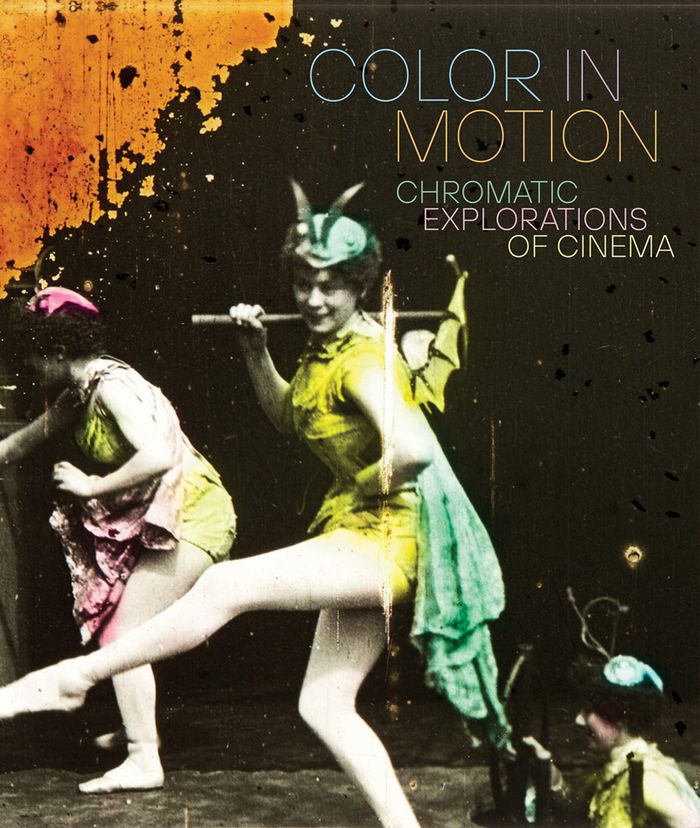
Color in motion: Chromatic explorations of cinema
Actions:
Prix:
$79.00
(disponible sur commande)
Résumé:
The art of producing color in movies is a fascinating process with a long history. Many people don’t realize that, as early as the 1890s, much of silent cinema was in color. They also may not know that women were the main workforce behind the techniques that first produced these effects, a tradition that continued as the practice evolved. Breakthroughs in color technology have created ongoing opportunities for filmmakers to experiment with new forms of narrative and emotional storytelling. Spectacular, psychological and sensory, color has become an integral part of the cinematic experience. From the earliest hand-painted films to Technicolor and today’s digital cinema, Color in Motion takes readers on a journey through the evolution and significance of color in film. Presenting insightful analysis, engaging case studies and inspiring conversations with scholars and experts in the field, with topics ranging from animation to the intersections of color and race in cinema, it traces the historical development of color technologies and their impact onscreen. Incorporating vivid images of color films throughout history—Serpentine Dance, The Cabinet of Dr. Caligari, Fantasia, The Red Shoes, Vertigo, West Side Story, 2001: A Space Odyssey, Moonlight and more, as well as new multispectral scans of rare silent-era film prints—this essential volume celebrates color’s enduring influence on the medium of film.
Classification:
livres
livres
Publication:
octobre 2024
octobre 2024


