


1125 Résultats
Classification:
livres
livres
Actions:
Prix:
$49.00
(disponible sur commande)
Résumé:
The installations of the conceptual artist Barbara Bloom (b. 1951) have captivated audiences for decades. Since the 1970s, her work has consistently redefined the way in which viewers understand objects. Bloom siphons meaning from the things with which we surround ourselves, and crafts an experience that is at once personal and universal. In this artist’s book, Bloom(...)
Titre:
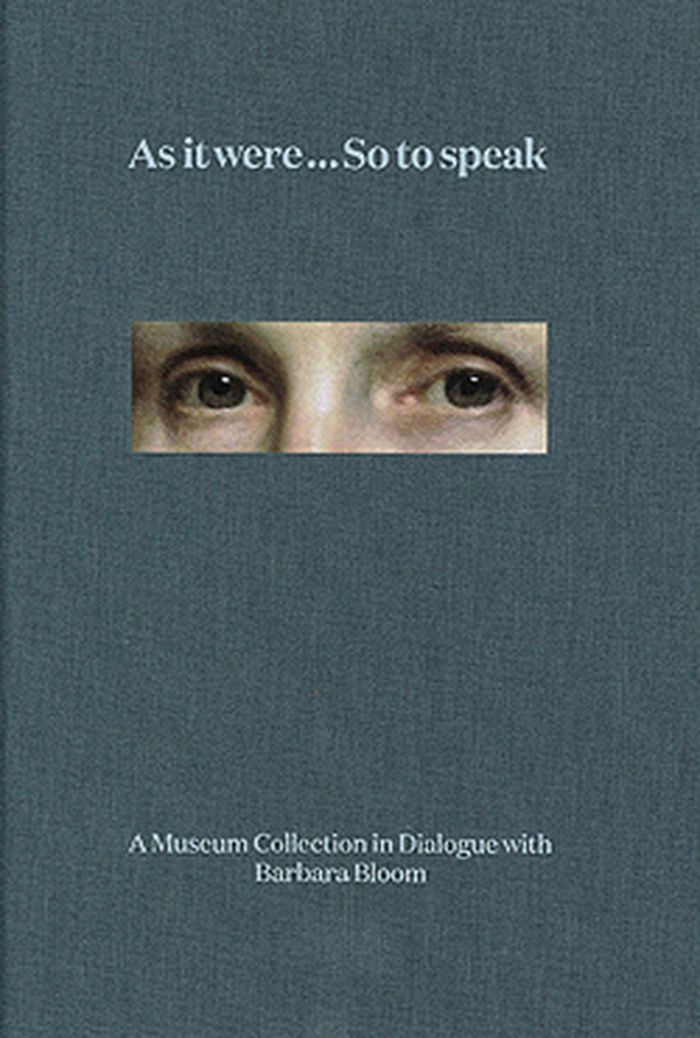
As it were... so to speak: a museum collection in dialogue with Barbara Bloom
Actions:
Prix:
$49.00
(disponible sur commande)
Résumé:
The installations of the conceptual artist Barbara Bloom (b. 1951) have captivated audiences for decades. Since the 1970s, her work has consistently redefined the way in which viewers understand objects. Bloom siphons meaning from the things with which we surround ourselves, and crafts an experience that is at once personal and universal. In this artist’s book, Bloom revisits her landmark 2013 solo exhibition at the Jewish Museum, New York. The book features images of the museum’s galleries reconstructed as rooms in a fictive house—the music room, the boudoir, the analyst’s office—formed of objects from the permanent collection. These staged spaces are intertwined with fragments of text and images drawn from intellectuals, artists, and authors, both historical and contemporary. Ranging from the charming (Torah pointers tipped with tiny hands, poised above a piano keyboard; silver spice containers shaped like peaches and pears) to the poignant (an empty, worn velvet case for a shofar horn; a Nazi playing card created from a defaced Torah), each object is infused with profound significance.
Classification:
livres
livres
Publication:
octobre 2015
octobre 2015
Classification:
livres
livres
Prix:
$48.00
(disponible en magasin)
Résumé:
Centering on a notion of nomadic space, this publication offers the first in-depth overview of the projects, photo archives, and architectural investigations of Sámi architect and artist Joar Nango, and includes a series of essays and conversations with long-time collaborators and discussion partners. Conceived as platforms that consciously create autonomous spaces in(...)
Publication:
avril 2024
avril 2024
Titre:
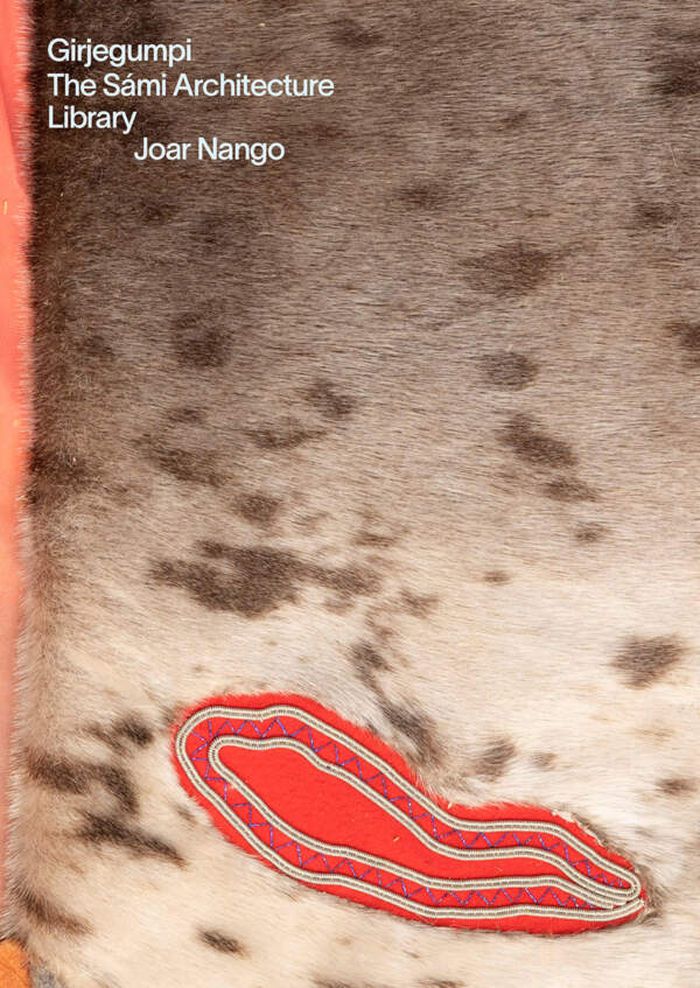
Joar Nango: Girjegumpi, The Sámi Architectural Library
Actions:
Prix:
$48.00
(disponible en magasin)
Résumé:
Centering on a notion of nomadic space, this publication offers the first in-depth overview of the projects, photo archives, and architectural investigations of Sámi architect and artist Joar Nango, and includes a series of essays and conversations with long-time collaborators and discussion partners. Conceived as platforms that consciously create autonomous spaces in which Sámi and indigenous cultures can grow, Nango's projects seek encounters and open processes, developing new forms of expression and alliance with non-Sámi contexts. Often developed in collaboration with practitioners from a range of fields including architecture, art, theory, and crafts, Nango's practice operates between institutional and public spaces. Featured projects include ongoing discursive social platforms such as the mobile Sámi architecture library Girjegumpi, a series of films and conversations titled ''Post-Capitalist Architecture TV'', image archives documenting contemporary expressions of Sámi architectural principles in Northern Scandinavia and beyond, and European Everything, first presented at documenta 14, for which Nango traveled by van along the borders of Europe from his home in Tromsø, Northern Norway to Athens in Greece, mapping the fringe and the excluded of this political and cultural terrain.
Classification:
livres
livres
Publication:
avril 2024
avril 2024
Classification:
livres
livres
Titre:
Phil Frost
Phil Frost
Actions:
Prix:
$52.00
(disponible sur commande)
Résumé:
Part of a whole gang of street artists--from Barry McGee to Swoon--who have broken into the art world in the last decade or so, Phil Frost's signature style is a funky tribalism--Hawaii by way of New York City--infused with a quirky sense of art history and design. In the 1990s, Frost honed his skills by painting walls, found objects and street detritus with his(...)
Publication:
mai 2008, Bologna
mai 2008, Bologna
Titre:
Phil Frost
Actions:
Prix:
$52.00
(disponible sur commande)
Résumé:
Part of a whole gang of street artists--from Barry McGee to Swoon--who have broken into the art world in the last decade or so, Phil Frost's signature style is a funky tribalism--Hawaii by way of New York City--infused with a quirky sense of art history and design. In the 1990s, Frost honed his skills by painting walls, found objects and street detritus with his intricate, compulsive and highly evolved form of tagging. Frost's gallery exhibitions are crowded affairs, filled with wildly patterned totemic objects and baseball bats while the walls are stacked with colorful mixed media paintings. He crafts his painstaking paintings by collaging layers of found imagery on grounds of symmetrical black-and-white patterning, which he paints with correction fluid, and that often morph into language-like glyphs or symbols. Frost states, "I believe [my work] is indigenous to myself. I believe that within every person there is an indigenous expression of themselves." Including an essay by New York journalist Carlo McCormick and notorious lowbrow artist Pusshead, this is Frost's first monograph, and an invaluable introduction to the evolution of his style.
Classification:
livres
livres
Publication:
mai 2008, Bologna
mai 2008, Bologna
Classification:
livres
livres

Titre:
Idée nationale et architecture en Europe, 1860 - 1919 : Finlande, Hongrie, Roumanie, Catalogne
Idée nationale et architecture en Europe, 1860 - 1919 : Finlande, Hongrie, Roumanie, Catalogne
Actions:
Prix:
$40.95
(disponible sur commande)
Résumé:
Ce livre traite de la question des identités nationales entre 1860 et 1919. Cette époque, riche et contrastée pour l'histoire de l'Europe, est en même temps prémonitoire de la situation du continent aujourd'hui, ainsi que des espoirs, des angoisses et des incertitudes qui en résultent. C'est en effet le temps où chaque peuple rassemblant en son sein les moyens(...)
Sujet:
Histoire jusqu’à 1900
Histoire jusqu’à 1900
Publication:
septembre 2006, Rennes
septembre 2006, Rennes
Titre:
Idée nationale et architecture en Europe, 1860 - 1919 : Finlande, Hongrie, Roumanie, Catalogne
Actions:
Prix:
$40.95
(disponible sur commande)
Résumé:
Ce livre traite de la question des identités nationales entre 1860 et 1919. Cette époque, riche et contrastée pour l'histoire de l'Europe, est en même temps prémonitoire de la situation du continent aujourd'hui, ainsi que des espoirs, des angoisses et des incertitudes qui en résultent. C'est en effet le temps où chaque peuple rassemblant en son sein les moyens irrésistibles de développer et de nourrir une passion pour l'histoire nationale, l'essor éclatant des identités constitue les antagonismes qui débouchent sur la Première guerre mondiale. Ceux-ci préfigurent la désintégration de la carte européenne postérieure au traité de Versailles. Cette passion, qui touche tous les champs de l'histoire sociale, s'appuie sur les accomplissements nationaux déjà acquis auparavant, lors du premier XIXe siècle (1815-1860). Mais, contrairement à ces prémices cultuelles, marquées par l'essor des langues et des littératures le " second " XIXe siècle se caractérise par la floraison des architectures nationales, plus ou moins liées aux recherches de l'Art nouveau occidental et à la diffusion des Arts and Crafts britanniques. Il voit aussi, dans l'ordre politique, la montée des impérialismes, l'achèvement de l'unification italienne et allemande et le succès obtenu par plusieurs nations dans leur quête d'indépendance. Premier d'une série consacrée à la carte très disparate des identités européennes, cet ouvrage étudie quatre jeunes nations qui, en 1860, ne constituent pas des Etats, mais qui déploient toute leur créativité spirituelle, politique, diplomatique et artistique pour affirmer leur avenir. La Hongrie fait alors partie de l'Empire austro-hongrois, tandis que le Grand-Duché de Finlande appartient à la Russie. La Moldavie et la Valachie, dont naîtra plus tard la Roumanie, sont des principautés tributaires des Empires russe et ottoman. Intégrée au Royaume d'Espagne, la Catalogne se souvient, quant à elle, avoir été une grande nation prospère au Moyen Âge. Tout se passe comme si les nations d'Europe avaient convoqué leur riche passé - historique, mythologique ou imaginaire - pour mieux bâtir leur destin au cœur du continent. L'architecture et les projets urbains sont les lieux d'application privilégiés de ces quêtes. S'ils font office d'étendards, c'est parce que ces deux " arts " s'imposent au plus grand nombre et qu'ils modèlent les repères allégoriques et politiques des peuples. En somme, le paysage d'hier est l'emblème de l'Europe d'aujourd'hui.
Classification:
livres
livres
Publication:
septembre 2006, Rennes
septembre 2006, Rennes
Sujet:
Histoire jusqu’à 1900
Histoire jusqu’à 1900
Classification:
livres
livres
Actions:
Prix:
$24.00
(disponible sur commande)
Résumé:
In recent years, Marcel Dzama (born 1974) has expanded his widely acclaimed drawing practice to incorporate theatrical realizations of his magical, myth-laden cosmology in three-dimensional dioramas and films. This publication provides a kind of sketchbook companion or dossier on the making of his latest film, A Game of Chess . This work draws on the importance of chess(...)
Titre:
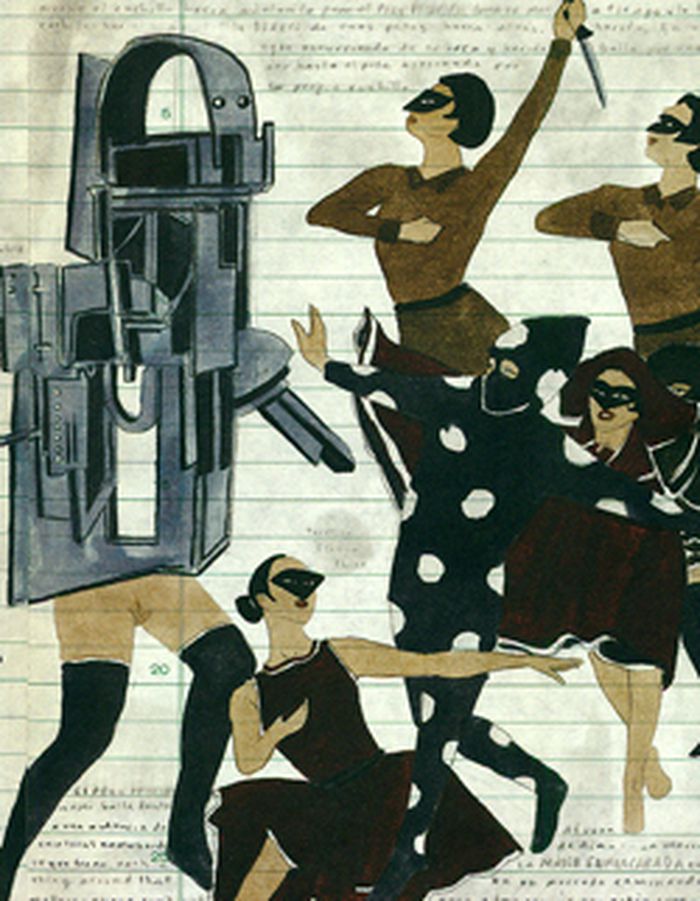
Marcel Dzama : behind every curtain
Actions:
Prix:
$24.00
(disponible sur commande)
Résumé:
In recent years, Marcel Dzama (born 1974) has expanded his widely acclaimed drawing practice to incorporate theatrical realizations of his magical, myth-laden cosmology in three-dimensional dioramas and films. This publication provides a kind of sketchbook companion or dossier on the making of his latest film, A Game of Chess . This work draws on the importance of chess for the early twentieth-century avant-garde (Man Ray, Duchamp, Picabia) and the game's curious overlap with dance, in films and ballets by René Clair and - of especial significance for Dzama - Oskar Schlemmer, whose 1922 Triadic Ballet included puppet-like masked figures performing on a checkered surface. In Dzama's film, characters based on chess pieces, clad in costumes made from papier-mâché, plaster and fiberglass and wearing elaborate masks, dance across a checkered board to engage their opponents in fatal skirmishes. Distinctions between reality and fiction collapse as both costumed and “real-life” characters in the film are killed. The filming and the creation of the costumes for A Game of Chess were carried out in Guadalajara, Mexico, and the influence of local crafts and religious traditions can also be felt throughout this body of work. Published on the occasion of Dzama's sixth solo exhibition at David Zwirner, this artist's book is packed with full-bleed drawings, sculptures, dioramas and film and production stills that give vivid testimony to the craft and thoroughness of his immensely popular art.
Classification:
livres
livres
Publication:
juillet 2011
juillet 2011


