


12622 Résultats
Niveau de description archivistique:
Projet
Projet
Numéro de référence:
AP075.S1.1983.PR05
Description:
Project series documents Cornelia Hahn Oberlander's landscape project for Canada Place, located in Vancouver's downton harbour front in the Burrad Inlet, British Columbia. She worked on this project from 1983-1986 with architectural firms Downs/Archambault, Musson Cattell and Partners, Zeldler Roberts Partnership. The project was completed in 1986. The project was intented as a way of creating a link between the sea and the city. The project included a cruise ship terminal and a convention centre. Oberlander landscape design included an installation of planter boxes along the promenade deck of the pier with plants indigeneous to Burrad Inlet and a dry garden. The project series contains Oberlander's concept notes, research and reference material, correspondence, including correspondence with architects and clients, financial documents, plant selection documents, specifications and press clippings of arcticles on the project. Also comprises in the project series are photographs and design development drawings, including planting plans, plans of the differents types of planters, planters details and sections, and plans for the dry garden.
AP075.S1.1983.PR05
Description:
Project series documents Cornelia Hahn Oberlander's landscape project for Canada Place, located in Vancouver's downton harbour front in the Burrad Inlet, British Columbia. She worked on this project from 1983-1986 with architectural firms Downs/Archambault, Musson Cattell and Partners, Zeldler Roberts Partnership. The project was completed in 1986. The project was intented as a way of creating a link between the sea and the city. The project included a cruise ship terminal and a convention centre. Oberlander landscape design included an installation of planter boxes along the promenade deck of the pier with plants indigeneous to Burrad Inlet and a dry garden. The project series contains Oberlander's concept notes, research and reference material, correspondence, including correspondence with architects and clients, financial documents, plant selection documents, specifications and press clippings of arcticles on the project. Also comprises in the project series are photographs and design development drawings, including planting plans, plans of the differents types of planters, planters details and sections, and plans for the dry garden.
Personnes et institutions:
Date:
1983-2003
1983-2003
Titre:
Canada Place, Vancouver, British Columbia (1983)
Actions:
AP075.S1.1983.PR05
Description:
Project series documents Cornelia Hahn Oberlander's landscape project for Canada Place, located in Vancouver's downton harbour front in the Burrad Inlet, British Columbia. She worked on this project from 1983-1986 with architectural firms Downs/Archambault, Musson Cattell and Partners, Zeldler Roberts Partnership. The project was completed in 1986. The project was intented as a way of creating a link between the sea and the city. The project included a cruise ship terminal and a convention centre. Oberlander landscape design included an installation of planter boxes along the promenade deck of the pier with plants indigeneous to Burrad Inlet and a dry garden. The project series contains Oberlander's concept notes, research and reference material, correspondence, including correspondence with architects and clients, financial documents, plant selection documents, specifications and press clippings of arcticles on the project. Also comprises in the project series are photographs and design development drawings, including planting plans, plans of the differents types of planters, planters details and sections, and plans for the dry garden.
Canada Place, Vancouver, British Columbia (1983)
Actions:
AP075.S1.1983.PR05
Description:
Project series documents Cornelia Hahn Oberlander's landscape project for Canada Place, located in Vancouver's downton harbour front in the Burrad Inlet, British Columbia. She worked on this project from 1983-1986 with architectural firms Downs/Archambault, Musson Cattell and Partners, Zeldler Roberts Partnership. The project was completed in 1986. The project was intented as a way of creating a link between the sea and the city. The project included a cruise ship terminal and a convention centre. Oberlander landscape design included an installation of planter boxes along the promenade deck of the pier with plants indigeneous to Burrad Inlet and a dry garden. The project series contains Oberlander's concept notes, research and reference material, correspondence, including correspondence with architects and clients, financial documents, plant selection documents, specifications and press clippings of arcticles on the project. Also comprises in the project series are photographs and design development drawings, including planting plans, plans of the differents types of planters, planters details and sections, and plans for the dry garden.
Niveau de description archivistique:
Project
Project
Date:
1983-2003
1983-2003
Personnes et institutions:
Classification:
archives
Niveau de description archivistique:
Fonds
archives
Niveau de description archivistique:
Fonds
Titre:
Fonds A.D. Thacker
Fonds A.D. Thacker
Numéro de référence:
AP004
Résumé:
The A.D. Thacker fonds is comprised of project proposals and documentation dating from around 1913-1938, depicting structures designed by Thacker. Much of Thacker's work was completed in Quebec, but he also completed projects in Halifax, Nova Scotia. Thacker designed many churches for religious institutions that were directly involved in the oppressive, colonial assimilation policies and systems of the Canadian government towards indigenous people. The fonds contains 33 drawings, 16 reprographic copies, 12 photographs and 8 textual documents.
AP004
Résumé:
The A.D. Thacker fonds is comprised of project proposals and documentation dating from around 1913-1938, depicting structures designed by Thacker. Much of Thacker's work was completed in Quebec, but he also completed projects in Halifax, Nova Scotia. Thacker designed many churches for religious institutions that were directly involved in the oppressive, colonial assimilation policies and systems of the Canadian government towards indigenous people. The fonds contains 33 drawings, 16 reprographic copies, 12 photographs and 8 textual documents.
Personnes et institutions:
Date:
1913-1944
1913-1944
Titre:
Fonds A.D. Thacker
Actions:
AP004
Résumé:
The A.D. Thacker fonds is comprised of project proposals and documentation dating from around 1913-1938, depicting structures designed by Thacker. Much of Thacker's work was completed in Quebec, but he also completed projects in Halifax, Nova Scotia. Thacker designed many churches for religious institutions that were directly involved in the oppressive, colonial assimilation policies and systems of the Canadian government towards indigenous people. The fonds contains 33 drawings, 16 reprographic copies, 12 photographs and 8 textual documents.
Fonds A.D. Thacker
Actions:
AP004
Résumé:
The A.D. Thacker fonds is comprised of project proposals and documentation dating from around 1913-1938, depicting structures designed by Thacker. Much of Thacker's work was completed in Quebec, but he also completed projects in Halifax, Nova Scotia. Thacker designed many churches for religious institutions that were directly involved in the oppressive, colonial assimilation policies and systems of the Canadian government towards indigenous people. The fonds contains 33 drawings, 16 reprographic copies, 12 photographs and 8 textual documents.
Classification:
archives
Niveau de description archivistique:
Fonds
archives
Niveau de description archivistique:
Fonds
Date:
1913-1944
1913-1944
Personnes et institutions:
Classification:
oeuvres d'art
oeuvres d'art
Numéro de référence:
DR1987:0113
Description:
- This lithograph, possibly printed at the Bauhaus, is based on one of seven axonometric drawings for the Maison Particulière first exhibited in Paris at Léonce Rosenburg's Galerie L'Effort Moderne in 1923 (Architecture & Its Image, p. 186, cat. no. 22, fig. 22).
DR1987:0113
Description:
- This lithograph, possibly printed at the Bauhaus, is based on one of seven axonometric drawings for the Maison Particulière first exhibited in Paris at Léonce Rosenburg's Galerie L'Effort Moderne in 1923 (Architecture & Its Image, p. 186, cat. no. 22, fig. 22).
Personnes et institutions:
Sujet:
architecture
architecture
Date:
printed after 1923
printed after 1923
Titre:
Bird's-eye axonometric for the Maison Particulière
Actions:
DR1987:0113
Description:
- This lithograph, possibly printed at the Bauhaus, is based on one of seven axonometric drawings for the Maison Particulière first exhibited in Paris at Léonce Rosenburg's Galerie L'Effort Moderne in 1923 (Architecture & Its Image, p. 186, cat. no. 22, fig. 22).
Bird's-eye axonometric for the Maison Particulière
Actions:
DR1987:0113
Description:
- This lithograph, possibly printed at the Bauhaus, is based on one of seven axonometric drawings for the Maison Particulière first exhibited in Paris at Léonce Rosenburg's Galerie L'Effort Moderne in 1923 (Architecture & Its Image, p. 186, cat. no. 22, fig. 22).
Classification:
oeuvres d'art
oeuvres d'art
Date:
printed after 1923
printed after 1923
Personnes et institutions:
Sujet:
architecture
architecture
Niveau de description archivistique:
Projet
Projet
Numéro de référence:
AP075.S1.1994.PR01
Description:
Project series documents Cornelia Hahn Oberlander's project of a roof garden for the New Canadian Embassy at Leipziger Platz in Berlin, Germany. Oberlander worked on this project in from 1999-2005 with architectural firm Kuwabara, Payne, McKenna, Blumberg Architects. Oberlander's work for the project included a terrace at the Ambassador's Level (6th floor) with mounded evergreen white flowering groundcover azaleas, cascading roses hanging along the Leipzigerstrasse facade, and a green roof on top of the building. The concept of the landscaping of the green roof was to represente Canada's land of the north in an abstract form, simulating the river system of the MacKenzie River in the Northwest Territories, linking Alberta to the Arctic Ocean. She used black-glass panels to represente the water. The drainage for the green roof was also connected the drainage infrastructure of the building to recycle the water collected from the roof. The project series includes sketches and design development drawings for the green roof landscaping, planting details and irrigation details, presentation drawings from KPMB and drawings of the building used as reference. The project is also documented through research material, concept notes by Oberlander, correspondence, including with architects, consultants, contractors and clients, proposal, specifications, and press clippings about the project. The project series also includes sample of glass tiles used for the landscaping.
AP075.S1.1994.PR01
Description:
Project series documents Cornelia Hahn Oberlander's project of a roof garden for the New Canadian Embassy at Leipziger Platz in Berlin, Germany. Oberlander worked on this project in from 1999-2005 with architectural firm Kuwabara, Payne, McKenna, Blumberg Architects. Oberlander's work for the project included a terrace at the Ambassador's Level (6th floor) with mounded evergreen white flowering groundcover azaleas, cascading roses hanging along the Leipzigerstrasse facade, and a green roof on top of the building. The concept of the landscaping of the green roof was to represente Canada's land of the north in an abstract form, simulating the river system of the MacKenzie River in the Northwest Territories, linking Alberta to the Arctic Ocean. She used black-glass panels to represente the water. The drainage for the green roof was also connected the drainage infrastructure of the building to recycle the water collected from the roof. The project series includes sketches and design development drawings for the green roof landscaping, planting details and irrigation details, presentation drawings from KPMB and drawings of the building used as reference. The project is also documented through research material, concept notes by Oberlander, correspondence, including with architects, consultants, contractors and clients, proposal, specifications, and press clippings about the project. The project series also includes sample of glass tiles used for the landscaping.
Personnes et institutions:
Date:
1994-2005
1994-2005
Titre:
New Canadian Embassy in Berlin, Germany (1994-2005)
Actions:
AP075.S1.1994.PR01
Description:
Project series documents Cornelia Hahn Oberlander's project of a roof garden for the New Canadian Embassy at Leipziger Platz in Berlin, Germany. Oberlander worked on this project in from 1999-2005 with architectural firm Kuwabara, Payne, McKenna, Blumberg Architects. Oberlander's work for the project included a terrace at the Ambassador's Level (6th floor) with mounded evergreen white flowering groundcover azaleas, cascading roses hanging along the Leipzigerstrasse facade, and a green roof on top of the building. The concept of the landscaping of the green roof was to represente Canada's land of the north in an abstract form, simulating the river system of the MacKenzie River in the Northwest Territories, linking Alberta to the Arctic Ocean. She used black-glass panels to represente the water. The drainage for the green roof was also connected the drainage infrastructure of the building to recycle the water collected from the roof. The project series includes sketches and design development drawings for the green roof landscaping, planting details and irrigation details, presentation drawings from KPMB and drawings of the building used as reference. The project is also documented through research material, concept notes by Oberlander, correspondence, including with architects, consultants, contractors and clients, proposal, specifications, and press clippings about the project. The project series also includes sample of glass tiles used for the landscaping.
New Canadian Embassy in Berlin, Germany (1994-2005)
Actions:
AP075.S1.1994.PR01
Description:
Project series documents Cornelia Hahn Oberlander's project of a roof garden for the New Canadian Embassy at Leipziger Platz in Berlin, Germany. Oberlander worked on this project in from 1999-2005 with architectural firm Kuwabara, Payne, McKenna, Blumberg Architects. Oberlander's work for the project included a terrace at the Ambassador's Level (6th floor) with mounded evergreen white flowering groundcover azaleas, cascading roses hanging along the Leipzigerstrasse facade, and a green roof on top of the building. The concept of the landscaping of the green roof was to represente Canada's land of the north in an abstract form, simulating the river system of the MacKenzie River in the Northwest Territories, linking Alberta to the Arctic Ocean. She used black-glass panels to represente the water. The drainage for the green roof was also connected the drainage infrastructure of the building to recycle the water collected from the roof. The project series includes sketches and design development drawings for the green roof landscaping, planting details and irrigation details, presentation drawings from KPMB and drawings of the building used as reference. The project is also documented through research material, concept notes by Oberlander, correspondence, including with architects, consultants, contractors and clients, proposal, specifications, and press clippings about the project. The project series also includes sample of glass tiles used for the landscaping.
Niveau de description archivistique:
Project
Project
Date:
1994-2005
1994-2005
Personnes et institutions:
Niveau de description archivistique:
Projet
Projet
Titre:
Potteries Thinkbelt
Potteries Thinkbelt
Numéro de référence:
AP144.S2.D56
Description:
File documents the unexecuted project, Potteries Thinkbelt, conceived for North Staffordshire, England, United Kingdom. The proposal called for a network of educational facilities for 20,000 students to be located over a 100 square mile area northwest of London. Moveable components, including fold-out lecture/demonstration units, rail-based teaching units, self-teach carrel units, faculty units, and housing units, were to be dispersed along the rail system. Existing conditions materials include regional aerial photographs with overlays of the rail system, and photographs, photo collages and panoramas of the region. Schematic sketches and drawings show the development of Price's design. Regional plans examine links between new and existing rail systems and national transportation networks and their projected use. Diagrammatic plans illustrate the relationships between recommended functions/activities attributed to specific areas. Detailed plans, sections, elevations, and axonometric drawings show housing types (sprawl, capsule, and crate), faculty and transfer areas in Madeley, Pitts Hill, and Meir. Other materials include regional land-use plans, photomontages with drawn perspectives, thumbnail sketches, life-span charts, conceptual sketches, aerial photographs and reprographic copies, some rendered and annotated. Many of the drawings were published in Price, Cedric. "PTB, Potteries Thinkbelt: A Plan for an Advanced Educational Industry in North Staffordshire." 'Architectural Design'. (October, 1966), 483-497; in Price, Cedric and Paul Barker, "The Potteries Thinkbelt", 'New Society' (June 1966) 14-17; and in Price, Cedric "Potteries Thinkbelt: Project for an Education Industry", 'Bauen & Wohnen', no. 9 (1967) 351-360. Material in this file was created between 1939 and 1987 but predominantly between 1963 and 1967. File contains conceptual drawings, design development drawings, presentation drawings, publication drawings, reference drawings, photographic material, and textual records.
AP144.S2.D56
Description:
File documents the unexecuted project, Potteries Thinkbelt, conceived for North Staffordshire, England, United Kingdom. The proposal called for a network of educational facilities for 20,000 students to be located over a 100 square mile area northwest of London. Moveable components, including fold-out lecture/demonstration units, rail-based teaching units, self-teach carrel units, faculty units, and housing units, were to be dispersed along the rail system. Existing conditions materials include regional aerial photographs with overlays of the rail system, and photographs, photo collages and panoramas of the region. Schematic sketches and drawings show the development of Price's design. Regional plans examine links between new and existing rail systems and national transportation networks and their projected use. Diagrammatic plans illustrate the relationships between recommended functions/activities attributed to specific areas. Detailed plans, sections, elevations, and axonometric drawings show housing types (sprawl, capsule, and crate), faculty and transfer areas in Madeley, Pitts Hill, and Meir. Other materials include regional land-use plans, photomontages with drawn perspectives, thumbnail sketches, life-span charts, conceptual sketches, aerial photographs and reprographic copies, some rendered and annotated. Many of the drawings were published in Price, Cedric. "PTB, Potteries Thinkbelt: A Plan for an Advanced Educational Industry in North Staffordshire." 'Architectural Design'. (October, 1966), 483-497; in Price, Cedric and Paul Barker, "The Potteries Thinkbelt", 'New Society' (June 1966) 14-17; and in Price, Cedric "Potteries Thinkbelt: Project for an Education Industry", 'Bauen & Wohnen', no. 9 (1967) 351-360. Material in this file was created between 1939 and 1987 but predominantly between 1963 and 1967. File contains conceptual drawings, design development drawings, presentation drawings, publication drawings, reference drawings, photographic material, and textual records.
Personnes et institutions:
Date:
1939-1987, predominant 1963-1967
1939-1987, predominant 1963-1967
Titre:
Potteries Thinkbelt
Actions:
AP144.S2.D56
Description:
File documents the unexecuted project, Potteries Thinkbelt, conceived for North Staffordshire, England, United Kingdom. The proposal called for a network of educational facilities for 20,000 students to be located over a 100 square mile area northwest of London. Moveable components, including fold-out lecture/demonstration units, rail-based teaching units, self-teach carrel units, faculty units, and housing units, were to be dispersed along the rail system. Existing conditions materials include regional aerial photographs with overlays of the rail system, and photographs, photo collages and panoramas of the region. Schematic sketches and drawings show the development of Price's design. Regional plans examine links between new and existing rail systems and national transportation networks and their projected use. Diagrammatic plans illustrate the relationships between recommended functions/activities attributed to specific areas. Detailed plans, sections, elevations, and axonometric drawings show housing types (sprawl, capsule, and crate), faculty and transfer areas in Madeley, Pitts Hill, and Meir. Other materials include regional land-use plans, photomontages with drawn perspectives, thumbnail sketches, life-span charts, conceptual sketches, aerial photographs and reprographic copies, some rendered and annotated. Many of the drawings were published in Price, Cedric. "PTB, Potteries Thinkbelt: A Plan for an Advanced Educational Industry in North Staffordshire." 'Architectural Design'. (October, 1966), 483-497; in Price, Cedric and Paul Barker, "The Potteries Thinkbelt", 'New Society' (June 1966) 14-17; and in Price, Cedric "Potteries Thinkbelt: Project for an Education Industry", 'Bauen & Wohnen', no. 9 (1967) 351-360. Material in this file was created between 1939 and 1987 but predominantly between 1963 and 1967. File contains conceptual drawings, design development drawings, presentation drawings, publication drawings, reference drawings, photographic material, and textual records.
Potteries Thinkbelt
Actions:
AP144.S2.D56
Description:
File documents the unexecuted project, Potteries Thinkbelt, conceived for North Staffordshire, England, United Kingdom. The proposal called for a network of educational facilities for 20,000 students to be located over a 100 square mile area northwest of London. Moveable components, including fold-out lecture/demonstration units, rail-based teaching units, self-teach carrel units, faculty units, and housing units, were to be dispersed along the rail system. Existing conditions materials include regional aerial photographs with overlays of the rail system, and photographs, photo collages and panoramas of the region. Schematic sketches and drawings show the development of Price's design. Regional plans examine links between new and existing rail systems and national transportation networks and their projected use. Diagrammatic plans illustrate the relationships between recommended functions/activities attributed to specific areas. Detailed plans, sections, elevations, and axonometric drawings show housing types (sprawl, capsule, and crate), faculty and transfer areas in Madeley, Pitts Hill, and Meir. Other materials include regional land-use plans, photomontages with drawn perspectives, thumbnail sketches, life-span charts, conceptual sketches, aerial photographs and reprographic copies, some rendered and annotated. Many of the drawings were published in Price, Cedric. "PTB, Potteries Thinkbelt: A Plan for an Advanced Educational Industry in North Staffordshire." 'Architectural Design'. (October, 1966), 483-497; in Price, Cedric and Paul Barker, "The Potteries Thinkbelt", 'New Society' (June 1966) 14-17; and in Price, Cedric "Potteries Thinkbelt: Project for an Education Industry", 'Bauen & Wohnen', no. 9 (1967) 351-360. Material in this file was created between 1939 and 1987 but predominantly between 1963 and 1967. File contains conceptual drawings, design development drawings, presentation drawings, publication drawings, reference drawings, photographic material, and textual records.
Niveau de description archivistique:
File 56
File 56
Date:
1939-1987, predominant 1963-1967
1939-1987, predominant 1963-1967
Personnes et institutions:
Classification:
expositions
expositions
Actions:
Description:
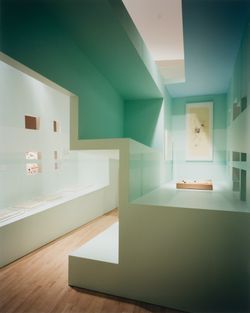
*Cités de l’archéologie fictive : oeuvres de Peter Eisenman, 1978-1988* examine la façon dont Eisenman a remis en question le concept de « site » et montre l’importance du dessin et de la fabrication de maquettes dans la genèse de ses idées. L’exposition révèle la richesse et la complexité des procédés de conception mis en œuvre par Einsenman en examinant attentivement(...)
*Cités de l’archéologie fictive : oeuvres de Peter Eisenman, 1978-1988* examine la façon dont Eisenman a remis en question le concept de « site » et montre l’importance du dessin et de la fabrication de maquettes dans la genèse de ses idées. L’exposition révèle la richesse et la complexité des procédés de conception mis en œuvre par Einsenman en examinant attentivement(...)
Localisation:
Salles principales
Salles principales
Date:
2 mars 1994 au 19 juin 1994
2 mars 1994 au 19 juin 1994
Titre:
Cités de l’archéologie fictive : oeuvres de Peter Eisenman, 1978-1988
Actions:
Description:
*Cités de l’archéologie fictive : oeuvres de Peter Eisenman, 1978-1988* examine la façon dont Eisenman a remis en question le concept de « site » et montre l’importance du dessin et de la fabrication de maquettes dans la genèse de ses idées. L’exposition révèle la richesse et la complexité des procédés de conception mis en œuvre par Einsenman en examinant attentivement(...)
Cités de l’archéologie fictive : oeuvres de Peter Eisenman, 1978-1988
Actions:
Description:
*Cités de l’archéologie fictive : oeuvres de Peter Eisenman, 1978-1988* examine la façon dont Eisenman a remis en question le concept de « site » et montre l’importance du dessin et de la fabrication de maquettes dans la genèse de ses idées. L’exposition révèle la richesse et la complexité des procédés de conception mis en œuvre par Einsenman en examinant attentivement(...)
Classification:
expositions
expositions
Date:
2 mars 1994 au
19 juin 1994
2 mars 1994 au
19 juin 1994
Localisation:
Salles principales
Salles principales
Classification:
expositions
expositions
Actions:
Description:
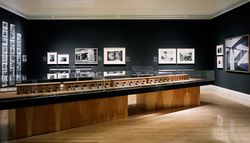
L’exposition, qui marque le 10e anniversaire de l’inauguration du CCA au public, met en valeur et en interaction les acquisitions dans ses dix premières années. En chantier propose plus de 350 estampes, dessins, photographies, livres rares, manuscrits, jouets et maquettes qui démontrent comment l’architecture a été imaginée, conçue, observée et perçue pendant cinq siècles(...)
L’exposition, qui marque le 10e anniversaire de l’inauguration du CCA au public, met en valeur et en interaction les acquisitions dans ses dix premières années. En chantier propose plus de 350 estampes, dessins, photographies, livres rares, manuscrits, jouets et maquettes qui démontrent comment l’architecture a été imaginée, conçue, observée et perçue pendant cinq siècles(...)
Localisation:
Salles principales et vitrines
Salles principales et vitrines
Date:
24 novembre 1999 au 30 avril 2000
24 novembre 1999 au 30 avril 2000
Titre:
En chantier : les collections du CCA, 1989-1999
Actions:
Description:
L’exposition, qui marque le 10e anniversaire de l’inauguration du CCA au public, met en valeur et en interaction les acquisitions dans ses dix premières années. En chantier propose plus de 350 estampes, dessins, photographies, livres rares, manuscrits, jouets et maquettes qui démontrent comment l’architecture a été imaginée, conçue, observée et perçue pendant cinq siècles(...)
En chantier : les collections du CCA, 1989-1999
Actions:
Description:
L’exposition, qui marque le 10e anniversaire de l’inauguration du CCA au public, met en valeur et en interaction les acquisitions dans ses dix premières années. En chantier propose plus de 350 estampes, dessins, photographies, livres rares, manuscrits, jouets et maquettes qui démontrent comment l’architecture a été imaginée, conçue, observée et perçue pendant cinq siècles(...)
Classification:
expositions
expositions
Date:
24 novembre 1999 au
30 avril 2000
24 novembre 1999 au
30 avril 2000
Localisation:
Salles principales et vitrines
Salles principales et vitrines
Niveau de description archivistique:
Projet
Projet
Titre:
Filberg House
Filberg House
Numéro de référence:
AP022.S1.1958.PR01
Description:
File documents a built residence near Comox, British Columbia on Vancouver Island. The Filberg House is a two bedroom 2,580 square foot pavilion. Originally designed for Robert Filberg Jr., the house was conceived of as a retreat and included elements of Andalusian Islamic architecture. File contains photographs, slides, textual records and a drawing.
AP022.S1.1958.PR01
Description:
File documents a built residence near Comox, British Columbia on Vancouver Island. The Filberg House is a two bedroom 2,580 square foot pavilion. Originally designed for Robert Filberg Jr., the house was conceived of as a retreat and included elements of Andalusian Islamic architecture. File contains photographs, slides, textual records and a drawing.
Personnes et institutions:
Date:
1958-1960
1958-1960
Titre:
Filberg House
Actions:
AP022.S1.1958.PR01
Description:
File documents a built residence near Comox, British Columbia on Vancouver Island. The Filberg House is a two bedroom 2,580 square foot pavilion. Originally designed for Robert Filberg Jr., the house was conceived of as a retreat and included elements of Andalusian Islamic architecture. File contains photographs, slides, textual records and a drawing.
Filberg House
Actions:
AP022.S1.1958.PR01
Description:
File documents a built residence near Comox, British Columbia on Vancouver Island. The Filberg House is a two bedroom 2,580 square foot pavilion. Originally designed for Robert Filberg Jr., the house was conceived of as a retreat and included elements of Andalusian Islamic architecture. File contains photographs, slides, textual records and a drawing.
Niveau de description archivistique:
Project
Project
Date:
1958-1960
1958-1960
Personnes et institutions:
Niveau de description archivistique:
Série(s)
Série(s)
Numéro de référence:
AP162.S2
Description:
Series documents the contribution of architect Paul Goesch to the correspondence circle of Die gläserne Kette. Goesch participated using the pseudonym Tancred. Born in Schwerin, Germany in 1985, Goesch studied architecture at the Technische Hochschule at Berlin-Charlottenburg. After his studies, he worked as a civil servant in Kulm and started producing his first drawings and watercolours between 1914 and 1916. He joined the Novembergruppe, an exhibiting group of painters, sculptors, architects and musicians that later merged with the Arbeitsrat für Kunst group led by Bruno Taut. He collaborated with Bruno Taut on the coloured-architecture program in Magdeburg, Germany in 1921, but was later hospitalized for mental illness, first in Göttingen, then in the Teupitz Hospital near Berlin in 1933 or 1934. In 1940, he was taken by the SS to Hartheim Euthanasia Centre where he was murdered on 6 September the same year. (Source: Ian Boyd Whyte, Bruno Taut and the Architecture of Activism. Cambridge: Cambridge University Press, 1982) The series comprises a letter of Paul Goesch to the Die gläserne Kette circle, as well as portraits, including a carte-de-visite, and a diploma.
AP162.S2
Description:
Series documents the contribution of architect Paul Goesch to the correspondence circle of Die gläserne Kette. Goesch participated using the pseudonym Tancred. Born in Schwerin, Germany in 1985, Goesch studied architecture at the Technische Hochschule at Berlin-Charlottenburg. After his studies, he worked as a civil servant in Kulm and started producing his first drawings and watercolours between 1914 and 1916. He joined the Novembergruppe, an exhibiting group of painters, sculptors, architects and musicians that later merged with the Arbeitsrat für Kunst group led by Bruno Taut. He collaborated with Bruno Taut on the coloured-architecture program in Magdeburg, Germany in 1921, but was later hospitalized for mental illness, first in Göttingen, then in the Teupitz Hospital near Berlin in 1933 or 1934. In 1940, he was taken by the SS to Hartheim Euthanasia Centre where he was murdered on 6 September the same year. (Source: Ian Boyd Whyte, Bruno Taut and the Architecture of Activism. Cambridge: Cambridge University Press, 1982) The series comprises a letter of Paul Goesch to the Die gläserne Kette circle, as well as portraits, including a carte-de-visite, and a diploma.
Personnes et institutions:
Date:
1890-1911
1890-1911
Titre:
Paul Goesch
Actions:
AP162.S2
Description:
Series documents the contribution of architect Paul Goesch to the correspondence circle of Die gläserne Kette. Goesch participated using the pseudonym Tancred. Born in Schwerin, Germany in 1985, Goesch studied architecture at the Technische Hochschule at Berlin-Charlottenburg. After his studies, he worked as a civil servant in Kulm and started producing his first drawings and watercolours between 1914 and 1916. He joined the Novembergruppe, an exhibiting group of painters, sculptors, architects and musicians that later merged with the Arbeitsrat für Kunst group led by Bruno Taut. He collaborated with Bruno Taut on the coloured-architecture program in Magdeburg, Germany in 1921, but was later hospitalized for mental illness, first in Göttingen, then in the Teupitz Hospital near Berlin in 1933 or 1934. In 1940, he was taken by the SS to Hartheim Euthanasia Centre where he was murdered on 6 September the same year. (Source: Ian Boyd Whyte, Bruno Taut and the Architecture of Activism. Cambridge: Cambridge University Press, 1982) The series comprises a letter of Paul Goesch to the Die gläserne Kette circle, as well as portraits, including a carte-de-visite, and a diploma.
Paul Goesch
Actions:
AP162.S2
Description:
Series documents the contribution of architect Paul Goesch to the correspondence circle of Die gläserne Kette. Goesch participated using the pseudonym Tancred. Born in Schwerin, Germany in 1985, Goesch studied architecture at the Technische Hochschule at Berlin-Charlottenburg. After his studies, he worked as a civil servant in Kulm and started producing his first drawings and watercolours between 1914 and 1916. He joined the Novembergruppe, an exhibiting group of painters, sculptors, architects and musicians that later merged with the Arbeitsrat für Kunst group led by Bruno Taut. He collaborated with Bruno Taut on the coloured-architecture program in Magdeburg, Germany in 1921, but was later hospitalized for mental illness, first in Göttingen, then in the Teupitz Hospital near Berlin in 1933 or 1934. In 1940, he was taken by the SS to Hartheim Euthanasia Centre where he was murdered on 6 September the same year. (Source: Ian Boyd Whyte, Bruno Taut and the Architecture of Activism. Cambridge: Cambridge University Press, 1982) The series comprises a letter of Paul Goesch to the Die gläserne Kette circle, as well as portraits, including a carte-de-visite, and a diploma.
Niveau de description archivistique:
series
series
Date:
1890-1911
1890-1911
Personnes et institutions:
Classification:
dessins
dessins
Numéro de référence:
AP018.S1.1979.PR04.001
Description:
One drawing was made by architecture firm Page and Steel.
AP018.S1.1979.PR04.001
Description:
One drawing was made by architecture firm Page and Steel.
Personnes et institutions:
Date:
1974-1979
1974-1979
Titre:
Plans and details, New Executive Offices of J.D. Crashley, Toronto
Actions:
AP018.S1.1979.PR04.001
Description:
One drawing was made by architecture firm Page and Steel.
Plans and details, New Executive Offices of J.D. Crashley, Toronto
Actions:
AP018.S1.1979.PR04.001
Description:
One drawing was made by architecture firm Page and Steel.
Classification:
dessins
dessins
Date:
1974-1979
1974-1979
Personnes et institutions:


