


10680 Résultats
Classification:
dessins
dessins
Numéro de référence:
AP178.S2.1978.001
Description:
This sketchbook includes sketches for the Banco Borges & Irmão in Vila do Conde, Portugal and for the Bouça housing complex in Porto, Portugal. It also contains notes regarding Berlin, Germany and some monuments as well as what appears to be studies of block apartments in Berlin.
AP178.S2.1978.001
Description:
This sketchbook includes sketches for the Banco Borges & Irmão in Vila do Conde, Portugal and for the Bouça housing complex in Porto, Portugal. It also contains notes regarding Berlin, Germany and some monuments as well as what appears to be studies of block apartments in Berlin.
Personnes et institutions:
Date:
February 1978
February 1978
Titre:
Sketchbook 17: A. Nobre - BB - Bouça - Berlim Fr.
Actions:
AP178.S2.1978.001
Description:
This sketchbook includes sketches for the Banco Borges & Irmão in Vila do Conde, Portugal and for the Bouça housing complex in Porto, Portugal. It also contains notes regarding Berlin, Germany and some monuments as well as what appears to be studies of block apartments in Berlin.
Sketchbook 17: A. Nobre - BB - Bouça - Berlim Fr.
Actions:
AP178.S2.1978.001
Description:
This sketchbook includes sketches for the Banco Borges & Irmão in Vila do Conde, Portugal and for the Bouça housing complex in Porto, Portugal. It also contains notes regarding Berlin, Germany and some monuments as well as what appears to be studies of block apartments in Berlin.
Classification:
dessins
dessins
Date:
February 1978
February 1978
Personnes et institutions:
Classification:
documents textuels
documents textuels
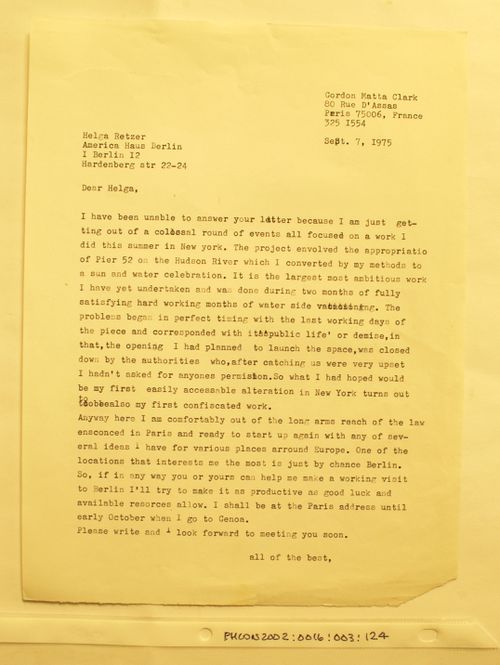
Numéro de référence:
PHCON2002:0016:003:124
PHCON2002:0016:003:124
Personnes et institutions:
Date:
7 September 1975
7 September 1975
Classification:
documents textuels
documents textuels
Date:
7 September 1975
7 September 1975
Personnes et institutions:
Classification:
documents textuels
documents textuels
Numéro de référence:
PHCON2002:0016:003:060
PHCON2002:0016:003:060
Personnes et institutions:
Date:
5 May 1975
5 May 1975
Classification:
documents textuels
documents textuels
Date:
5 May 1975
5 May 1975
Personnes et institutions:
Classification:
documents textuels
documents textuels
Numéro de référence:
PHCON2002:0016:003:100
PHCON2002:0016:003:100
Personnes et institutions:
Date:
after 5 May 1975
after 5 May 1975
Classification:
documents textuels
documents textuels
Date:
after 5 May 1975
after 5 May 1975
Personnes et institutions:
Classification:
documents textuels
documents textuels
Numéro de référence:
PHCON2002:0016:003:108.1
PHCON2002:0016:003:108.1
Personnes et institutions:
Date:
7 November 1975
7 November 1975
Classification:
documents textuels
documents textuels
Date:
7 November 1975
7 November 1975
Personnes et institutions:
Classification:
documents textuels
documents textuels
Numéro de référence:
PHCON2002:0016:003:108.2
PHCON2002:0016:003:108.2
Personnes et institutions:
Date:
7 November 1975
7 November 1975
Classification:
documents textuels
documents textuels
Date:
7 November 1975
7 November 1975
Personnes et institutions:
Classification:
dessins
dessins
Numéro de référence:
AP178.S2.1983.012
Description:
This sketchbook contains sketches for Blocke 121, Schlesisches Tor in Berlin, Germany, including Edifício de Apartamentos Bonjour Tristesse, and sketches for Piscina de "Görlitzer Bad" in Kreuzberg, Berlin, Germany. Also inclueded are notes about Évora and Lisbon in Portugal, and a sketch of a project by Fernando Távora.
AP178.S2.1983.012
Description:
This sketchbook contains sketches for Blocke 121, Schlesisches Tor in Berlin, Germany, including Edifício de Apartamentos Bonjour Tristesse, and sketches for Piscina de "Görlitzer Bad" in Kreuzberg, Berlin, Germany. Also inclueded are notes about Évora and Lisbon in Portugal, and a sketch of a project by Fernando Távora.
Personnes et institutions:
Date:
circa 1983
circa 1983
Titre:
Sketchbook 157: Prince Albrecht
Actions:
AP178.S2.1983.012
Description:
This sketchbook contains sketches for Blocke 121, Schlesisches Tor in Berlin, Germany, including Edifício de Apartamentos Bonjour Tristesse, and sketches for Piscina de "Görlitzer Bad" in Kreuzberg, Berlin, Germany. Also inclueded are notes about Évora and Lisbon in Portugal, and a sketch of a project by Fernando Távora.
Sketchbook 157: Prince Albrecht
Actions:
AP178.S2.1983.012
Description:
This sketchbook contains sketches for Blocke 121, Schlesisches Tor in Berlin, Germany, including Edifício de Apartamentos Bonjour Tristesse, and sketches for Piscina de "Görlitzer Bad" in Kreuzberg, Berlin, Germany. Also inclueded are notes about Évora and Lisbon in Portugal, and a sketch of a project by Fernando Távora.
Classification:
dessins
dessins
Date:
circa 1983
circa 1983
Personnes et institutions:
Classification:
expositions
expositions
Actions:
Description:
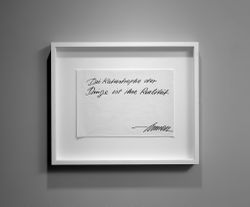
Dieter Appelt : la catastrophe des choses réunit des images du grenier de la Künstlerhaus Bethanien à Berlin. Fasciné par les lieux chargés d’histoire, l’artiste allemand Dieter Appelt explore le grenier pour faire ressortir les forces invisibles, mystérieuses et imprécises de la dégradation qui dépassent notre expérience. En se concentrant sur des détails de construction(...)
Dieter Appelt : la catastrophe des choses réunit des images du grenier de la Künstlerhaus Bethanien à Berlin. Fasciné par les lieux chargés d’histoire, l’artiste allemand Dieter Appelt explore le grenier pour faire ressortir les forces invisibles, mystérieuses et imprécises de la dégradation qui dépassent notre expérience. En se concentrant sur des détails de construction(...)
Localisation:
Salle octagonale
Salle octagonale
Date:
17 avril 1996 au 4 août 1996
17 avril 1996 au 4 août 1996
Titre:
Dieter Appelt : la catastrophe des choses
Actions:
Description:
Dieter Appelt : la catastrophe des choses réunit des images du grenier de la Künstlerhaus Bethanien à Berlin. Fasciné par les lieux chargés d’histoire, l’artiste allemand Dieter Appelt explore le grenier pour faire ressortir les forces invisibles, mystérieuses et imprécises de la dégradation qui dépassent notre expérience. En se concentrant sur des détails de construction(...)
Dieter Appelt : la catastrophe des choses
Actions:
Description:
Dieter Appelt : la catastrophe des choses réunit des images du grenier de la Künstlerhaus Bethanien à Berlin. Fasciné par les lieux chargés d’histoire, l’artiste allemand Dieter Appelt explore le grenier pour faire ressortir les forces invisibles, mystérieuses et imprécises de la dégradation qui dépassent notre expérience. En se concentrant sur des détails de construction(...)
Classification:
expositions
expositions
Date:
17 avril 1996 au
4 août 1996
17 avril 1996 au
4 août 1996
Localisation:
Salle octagonale
Salle octagonale
Niveau de description archivistique:
Série(s)
Série(s)
Numéro de référence:
AP162.S9
Description:
Series documents the contribution of architect Max Taut to the correspondence circle of Die gläserne Kette, with Max Taut writing under the pseudonym Kein Name. Born in 1884 in Königsberg, Germany, Max Taut trained in carpentry and building before working in an architectural firm in Karlsruhe, Germany. In 1911, he worked independently, and later shared a practice with his brother Bruno Taut and Franz Hoffman (who joined them after 1914). His first architectural projects consisted primarily of schools. After his military service from 1914 to 1918, Max Taut joined the Arbeisrat für Kunst and the Novembersgruppe. After the First World War, he undertook several architectural projects, both private and public commissions such as housing and office buildings (mainly in Berlin), and also worked on projects for exhibitions. Unable to pratice during the Nazi Regime and the Second World War, Max Taut return to his architectural practice after the war and taught as a professor of architecture at the Hochschule für bildende Kunst in Berlin from 1945 to 1954. He undertook mainly housing development projects during this period. He died in Berlin in 1967. (Source: Ian Boyd Whyte, Bruno Taut and the Architecture of Activism. Cambridge: Cambridge University Press, 1982) The series comprises part of the correspondence of Max Taut to the Die gläserne Kette circle and related drawings. The series also includes photographic materials of some of his architectural projects.
AP162.S9
Description:
Series documents the contribution of architect Max Taut to the correspondence circle of Die gläserne Kette, with Max Taut writing under the pseudonym Kein Name. Born in 1884 in Königsberg, Germany, Max Taut trained in carpentry and building before working in an architectural firm in Karlsruhe, Germany. In 1911, he worked independently, and later shared a practice with his brother Bruno Taut and Franz Hoffman (who joined them after 1914). His first architectural projects consisted primarily of schools. After his military service from 1914 to 1918, Max Taut joined the Arbeisrat für Kunst and the Novembersgruppe. After the First World War, he undertook several architectural projects, both private and public commissions such as housing and office buildings (mainly in Berlin), and also worked on projects for exhibitions. Unable to pratice during the Nazi Regime and the Second World War, Max Taut return to his architectural practice after the war and taught as a professor of architecture at the Hochschule für bildende Kunst in Berlin from 1945 to 1954. He undertook mainly housing development projects during this period. He died in Berlin in 1967. (Source: Ian Boyd Whyte, Bruno Taut and the Architecture of Activism. Cambridge: Cambridge University Press, 1982) The series comprises part of the correspondence of Max Taut to the Die gläserne Kette circle and related drawings. The series also includes photographic materials of some of his architectural projects.
Personnes et institutions:
Date:
circa 1919 -1920
circa 1919 -1920
Titre:
Max Taut
Actions:
AP162.S9
Description:
Series documents the contribution of architect Max Taut to the correspondence circle of Die gläserne Kette, with Max Taut writing under the pseudonym Kein Name. Born in 1884 in Königsberg, Germany, Max Taut trained in carpentry and building before working in an architectural firm in Karlsruhe, Germany. In 1911, he worked independently, and later shared a practice with his brother Bruno Taut and Franz Hoffman (who joined them after 1914). His first architectural projects consisted primarily of schools. After his military service from 1914 to 1918, Max Taut joined the Arbeisrat für Kunst and the Novembersgruppe. After the First World War, he undertook several architectural projects, both private and public commissions such as housing and office buildings (mainly in Berlin), and also worked on projects for exhibitions. Unable to pratice during the Nazi Regime and the Second World War, Max Taut return to his architectural practice after the war and taught as a professor of architecture at the Hochschule für bildende Kunst in Berlin from 1945 to 1954. He undertook mainly housing development projects during this period. He died in Berlin in 1967. (Source: Ian Boyd Whyte, Bruno Taut and the Architecture of Activism. Cambridge: Cambridge University Press, 1982) The series comprises part of the correspondence of Max Taut to the Die gläserne Kette circle and related drawings. The series also includes photographic materials of some of his architectural projects.
Max Taut
Actions:
AP162.S9
Description:
Series documents the contribution of architect Max Taut to the correspondence circle of Die gläserne Kette, with Max Taut writing under the pseudonym Kein Name. Born in 1884 in Königsberg, Germany, Max Taut trained in carpentry and building before working in an architectural firm in Karlsruhe, Germany. In 1911, he worked independently, and later shared a practice with his brother Bruno Taut and Franz Hoffman (who joined them after 1914). His first architectural projects consisted primarily of schools. After his military service from 1914 to 1918, Max Taut joined the Arbeisrat für Kunst and the Novembersgruppe. After the First World War, he undertook several architectural projects, both private and public commissions such as housing and office buildings (mainly in Berlin), and also worked on projects for exhibitions. Unable to pratice during the Nazi Regime and the Second World War, Max Taut return to his architectural practice after the war and taught as a professor of architecture at the Hochschule für bildende Kunst in Berlin from 1945 to 1954. He undertook mainly housing development projects during this period. He died in Berlin in 1967. (Source: Ian Boyd Whyte, Bruno Taut and the Architecture of Activism. Cambridge: Cambridge University Press, 1982) The series comprises part of the correspondence of Max Taut to the Die gläserne Kette circle and related drawings. The series also includes photographic materials of some of his architectural projects.
Niveau de description archivistique:
series
series
Date:
circa 1919 -1920
circa 1919 -1920
Personnes et institutions:
Classification:
dessins
dessins
Numéro de référence:
AP178.S2.1986.014
Description:
This sketchbook includes sketches of Bonjour Tristesse in Berlin, Germany and for Punt and Komma social housing, in The Hague, Netherlands.
AP178.S2.1986.014
Description:
This sketchbook includes sketches of Bonjour Tristesse in Berlin, Germany and for Punt and Komma social housing, in The Hague, Netherlands.
Personnes et institutions:
Date:
September 1986
September 1986
Titre:
Sketchbook 235: Levantamento Moledo - Pedro
Actions:
AP178.S2.1986.014
Description:
This sketchbook includes sketches of Bonjour Tristesse in Berlin, Germany and for Punt and Komma social housing, in The Hague, Netherlands.
Sketchbook 235: Levantamento Moledo - Pedro
Actions:
AP178.S2.1986.014
Description:
This sketchbook includes sketches of Bonjour Tristesse in Berlin, Germany and for Punt and Komma social housing, in The Hague, Netherlands.
Classification:
dessins
dessins
Date:
September 1986
September 1986
Personnes et institutions:


