


35831 Résultats
Classification:
documents textuels
documents textuels
Titre:
Air structures
Air structures
Numéro de référence:
ARCH219283
Description:
design draft, papers and publications
ARCH219283
Description:
design draft, papers and publications
Personnes et institutions:
Classification:
documents textuels
documents textuels
Personnes et institutions:
Classification:
documents textuels
documents textuels
Numéro de référence:
AP178.S1.2003.PR02.029
Description:
Original file title: Publication Madre
AP178.S1.2003.PR02.029
Description:
Original file title: Publication Madre
Personnes et institutions:
Date:
2005
2005
Titre:
Documentation for a publication, Recupero del Palazzo Donnaregina / Museu de Arte Contemporâneo, Naples
Actions:
AP178.S1.2003.PR02.029
Description:
Original file title: Publication Madre
Documentation for a publication, Recupero del Palazzo Donnaregina / Museu de Arte Contemporâneo, Naples
Actions:
AP178.S1.2003.PR02.029
Description:
Original file title: Publication Madre
Classification:
documents textuels
documents textuels
Date:
2005
2005
Personnes et institutions:
Classification:
expositions
expositions
Actions:
Description:
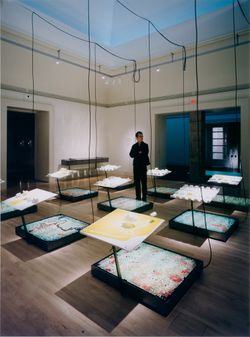
Surface du quotidien : La pelouse en Amérique montre la pelouse comme symbole de la vie domestique, espace public de représentation, agent économique et icône de l’Amérique. Les pavillons des lotissements de banlieue, les sièges d’entreprise établis en milieu suburbain et la Maison Blanche ont une chose en commun : tous ces bâtiments sont entourés d’une pelouse – une(...)
Surface du quotidien : La pelouse en Amérique montre la pelouse comme symbole de la vie domestique, espace public de représentation, agent économique et icône de l’Amérique. Les pavillons des lotissements de banlieue, les sièges d’entreprise établis en milieu suburbain et la Maison Blanche ont une chose en commun : tous ces bâtiments sont entourés d’une pelouse – une(...)
Localisation:
Salles principales, salle octogonale et vitrines
Salles principales, salle octogonale et vitrines
Date:
16 juin 1998 au 8 novembre 1998
16 juin 1998 au 8 novembre 1998
Titre:
Surface du quotidien : la pelouse en Amérique
Actions:
Description:
Surface du quotidien : La pelouse en Amérique montre la pelouse comme symbole de la vie domestique, espace public de représentation, agent économique et icône de l’Amérique. Les pavillons des lotissements de banlieue, les sièges d’entreprise établis en milieu suburbain et la Maison Blanche ont une chose en commun : tous ces bâtiments sont entourés d’une pelouse – une(...)
Surface du quotidien : la pelouse en Amérique
Actions:
Description:
Surface du quotidien : La pelouse en Amérique montre la pelouse comme symbole de la vie domestique, espace public de représentation, agent économique et icône de l’Amérique. Les pavillons des lotissements de banlieue, les sièges d’entreprise établis en milieu suburbain et la Maison Blanche ont une chose en commun : tous ces bâtiments sont entourés d’une pelouse – une(...)
Classification:
expositions
expositions
Date:
16 juin 1998 au
8 novembre 1998
16 juin 1998 au
8 novembre 1998
Localisation:
Salles principales, salle octogonale et vitrines
Salles principales, salle octogonale et vitrines
Classification:
documents textuels
documents textuels
Numéro de référence:
ARCH258437
Description:
Publications de National Research Council Canada: digests de la construction, listes des publications (Division des recherches sur le bâtiment), normes de constructions, ''Directory of Modular Building Components.''
ARCH258437
Description:
Publications de National Research Council Canada: digests de la construction, listes des publications (Division des recherches sur le bâtiment), normes de constructions, ''Directory of Modular Building Components.''
Personnes et institutions:
Date:
1965-1978
1965-1978
Titre:
Publications de National Research Council Canada: digests de la construction
Actions:
ARCH258437
Description:
Publications de National Research Council Canada: digests de la construction, listes des publications (Division des recherches sur le bâtiment), normes de constructions, ''Directory of Modular Building Components.''
Publications de National Research Council Canada: digests de la construction
Actions:
ARCH258437
Description:
Publications de National Research Council Canada: digests de la construction, listes des publications (Division des recherches sur le bâtiment), normes de constructions, ''Directory of Modular Building Components.''
Classification:
documents textuels
documents textuels
Date:
1965-1978
1965-1978
Personnes et institutions:
Classification:
documents textuels
documents textuels
Numéro de référence:
ARCH267579
Description:
This group consists of a folder on the finalist projects for the Palais des Congrès de Montréal competition, including the submission by Victor Prus. There is also a brochure presenting the winning project and plans (perspectives and floor plans). The group also includes notes and information about the architectural team PLLL (Prus; LeMoyne & Associates; Lebelle, Marchand, Geoffroy; Hébert & Lalonde) and about the client, the Ministrère des Travaux Publics et de l'Approvisionnement du Québec.
ARCH267579
Description:
This group consists of a folder on the finalist projects for the Palais des Congrès de Montréal competition, including the submission by Victor Prus. There is also a brochure presenting the winning project and plans (perspectives and floor plans). The group also includes notes and information about the architectural team PLLL (Prus; LeMoyne & Associates; Lebelle, Marchand, Geoffroy; Hébert & Lalonde) and about the client, the Ministrère des Travaux Publics et de l'Approvisionnement du Québec.
Personnes et institutions:
Date:
1978
1978
Titre:
CCM / General / 7803
Actions:
ARCH267579
Description:
This group consists of a folder on the finalist projects for the Palais des Congrès de Montréal competition, including the submission by Victor Prus. There is also a brochure presenting the winning project and plans (perspectives and floor plans). The group also includes notes and information about the architectural team PLLL (Prus; LeMoyne & Associates; Lebelle, Marchand, Geoffroy; Hébert & Lalonde) and about the client, the Ministrère des Travaux Publics et de l'Approvisionnement du Québec.
CCM / General / 7803
Actions:
ARCH267579
Description:
This group consists of a folder on the finalist projects for the Palais des Congrès de Montréal competition, including the submission by Victor Prus. There is also a brochure presenting the winning project and plans (perspectives and floor plans). The group also includes notes and information about the architectural team PLLL (Prus; LeMoyne & Associates; Lebelle, Marchand, Geoffroy; Hébert & Lalonde) and about the client, the Ministrère des Travaux Publics et de l'Approvisionnement du Québec.
Classification:
documents textuels
documents textuels
Date:
1978
1978
Personnes et institutions:
Classification:
expositions
expositions
Description:
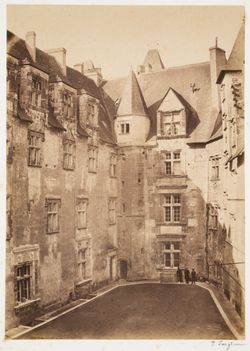
À l’aide d’objets tirés de la collection du CCA, Photographie et pratique de l’architecture en France, 1839-1870 montre comment la photographie est devenue, dans la seconde moitié du XIXe siècle, partie intégrante du processus de conception, de construction et de restauration architecturale, et élément de publication dans ce domaine. Commissaires : David Harris, CCA, et(...)
À l’aide d’objets tirés de la collection du CCA, Photographie et pratique de l’architecture en France, 1839-1870 montre comment la photographie est devenue, dans la seconde moitié du XIXe siècle, partie intégrante du processus de conception, de construction et de restauration architecturale, et élément de publication dans ce domaine. Commissaires : David Harris, CCA, et(...)
Localisation:
Vitrines
Vitrines
Date:
25 janvier 1995 au 4 juin 1995
25 janvier 1995 au 4 juin 1995
Titre:
Photographie et pratique de l'architecture en France, 1839-1870
Actions:
Description:
À l’aide d’objets tirés de la collection du CCA, Photographie et pratique de l’architecture en France, 1839-1870 montre comment la photographie est devenue, dans la seconde moitié du XIXe siècle, partie intégrante du processus de conception, de construction et de restauration architecturale, et élément de publication dans ce domaine. Commissaires : David Harris, CCA, et(...)
Photographie et pratique de l'architecture en France, 1839-1870
Actions:
Description:
À l’aide d’objets tirés de la collection du CCA, Photographie et pratique de l’architecture en France, 1839-1870 montre comment la photographie est devenue, dans la seconde moitié du XIXe siècle, partie intégrante du processus de conception, de construction et de restauration architecturale, et élément de publication dans ce domaine. Commissaires : David Harris, CCA, et(...)
Classification:
expositions
expositions
Date:
25 janvier 1995 au
4 juin 1995
25 janvier 1995 au
4 juin 1995
Localisation:
Vitrines
Vitrines
Classification:
archives
Niveau de description archivistique:
Fonds
archives
Niveau de description archivistique:
Fonds
Titre:
Fonds Álvaro Siza
Fonds Álvaro Siza
Numéro de référence:
AP178
Description:
The Álvaro Siza fonds documents the architectural work of Portuguese architect Álvaro Siza. Records in this fonds document Siza’s projects from 1958-2012, including built and unbuilt designs. A collaborative project was established between the Canadian Centre for Architecture (CCA), Fundação de Serralves, and Fundação Calouste Gulbenkian to allow for international research and access to the archive. The archive is shared by the three institutions with each institution holding different projects while collaborating on the descriptive work and increasing the visibility of the archive. The holdings at both the Fundação de Serralves and Fundação Calouste Gulbenkian focus on Siza’s Portuguese projects, while the portion of the archive held by the CCA mainly includes Siza’s projects abroad. All three institutions are committed to describing the archive and making it accessible for scholarly research. The processing of the Siza archive held by the CCA has been divided into four phases to allow for access to parts of the archive while still in process. For the first, second, and third phases, the processing archivist has described the projects from the fifties, sixties, and seventies, as well as projects for the IBA competition in Berlin, urban renewal projects in The Hague from the eighties, urban plans, museums, and individual houses between 1980 and 2000. The processing archivist has also described approximately 203 sketchbooks. Many of these sketchbooks include sketches related to architectural projects which were processed. The complete list of projects processed by the CCA to date can be found in series AP178.S1. The bulk of the Álvaro Siza fonds is arranged in Series AP178.S1, which contains documentation for over 200 of Siza’s architectural projects. Records in this archive are predominantly from 1970 to 2000. Series AP178.S1 mainly contains conceptual, design development, presentation, and working drawings. Also included are photographic materials, models, born digital records, and textual documentation, which include correspondence, project proposals, and notes. The architect’s creative process is captured in 282 sketchbooks arranged in Series AP178.S2. In all there are approximately 60 000 drawings, 3000 folders of textual documentation, 9.46 linear meters of photographs and negatives, 6,545 slides, 250 CD-ROMS, 101 floppy disks, and 371 models that document the architectural activities of Siza and his office. Among the drawings are sketches by Siza on various items, such as napkins, receipts, envelopes, or on the back of working drawings. The fonds contains several types of architectural projects including residential buildings, museums, universities, urban plans, offices, and city restorations. Of particular significance are the sketchbooks, comprised of sketches for architectural projects, Siza’s travels, people, and animals as well as notes and draft letters. The sketchbooks are organized in chronological order, starting in the late 1970’s to the beginning of the 2000’s. Locations, notes, and dates have also been identified on the front of each sketchbook along with the sketchbook number. The sketchbooks provide a unique perspective of Siza’s use of drawing as part of his work process.
AP178
Description:
The Álvaro Siza fonds documents the architectural work of Portuguese architect Álvaro Siza. Records in this fonds document Siza’s projects from 1958-2012, including built and unbuilt designs. A collaborative project was established between the Canadian Centre for Architecture (CCA), Fundação de Serralves, and Fundação Calouste Gulbenkian to allow for international research and access to the archive. The archive is shared by the three institutions with each institution holding different projects while collaborating on the descriptive work and increasing the visibility of the archive. The holdings at both the Fundação de Serralves and Fundação Calouste Gulbenkian focus on Siza’s Portuguese projects, while the portion of the archive held by the CCA mainly includes Siza’s projects abroad. All three institutions are committed to describing the archive and making it accessible for scholarly research. The processing of the Siza archive held by the CCA has been divided into four phases to allow for access to parts of the archive while still in process. For the first, second, and third phases, the processing archivist has described the projects from the fifties, sixties, and seventies, as well as projects for the IBA competition in Berlin, urban renewal projects in The Hague from the eighties, urban plans, museums, and individual houses between 1980 and 2000. The processing archivist has also described approximately 203 sketchbooks. Many of these sketchbooks include sketches related to architectural projects which were processed. The complete list of projects processed by the CCA to date can be found in series AP178.S1. The bulk of the Álvaro Siza fonds is arranged in Series AP178.S1, which contains documentation for over 200 of Siza’s architectural projects. Records in this archive are predominantly from 1970 to 2000. Series AP178.S1 mainly contains conceptual, design development, presentation, and working drawings. Also included are photographic materials, models, born digital records, and textual documentation, which include correspondence, project proposals, and notes. The architect’s creative process is captured in 282 sketchbooks arranged in Series AP178.S2. In all there are approximately 60 000 drawings, 3000 folders of textual documentation, 9.46 linear meters of photographs and negatives, 6,545 slides, 250 CD-ROMS, 101 floppy disks, and 371 models that document the architectural activities of Siza and his office. Among the drawings are sketches by Siza on various items, such as napkins, receipts, envelopes, or on the back of working drawings. The fonds contains several types of architectural projects including residential buildings, museums, universities, urban plans, offices, and city restorations. Of particular significance are the sketchbooks, comprised of sketches for architectural projects, Siza’s travels, people, and animals as well as notes and draft letters. The sketchbooks are organized in chronological order, starting in the late 1970’s to the beginning of the 2000’s. Locations, notes, and dates have also been identified on the front of each sketchbook along with the sketchbook number. The sketchbooks provide a unique perspective of Siza’s use of drawing as part of his work process.
Personnes et institutions:
Date:
1958-2002
1958-2002
Titre:
Fonds Álvaro Siza
Actions:
AP178
Description:
The Álvaro Siza fonds documents the architectural work of Portuguese architect Álvaro Siza. Records in this fonds document Siza’s projects from 1958-2012, including built and unbuilt designs. A collaborative project was established between the Canadian Centre for Architecture (CCA), Fundação de Serralves, and Fundação Calouste Gulbenkian to allow for international research and access to the archive. The archive is shared by the three institutions with each institution holding different projects while collaborating on the descriptive work and increasing the visibility of the archive. The holdings at both the Fundação de Serralves and Fundação Calouste Gulbenkian focus on Siza’s Portuguese projects, while the portion of the archive held by the CCA mainly includes Siza’s projects abroad. All three institutions are committed to describing the archive and making it accessible for scholarly research. The processing of the Siza archive held by the CCA has been divided into four phases to allow for access to parts of the archive while still in process. For the first, second, and third phases, the processing archivist has described the projects from the fifties, sixties, and seventies, as well as projects for the IBA competition in Berlin, urban renewal projects in The Hague from the eighties, urban plans, museums, and individual houses between 1980 and 2000. The processing archivist has also described approximately 203 sketchbooks. Many of these sketchbooks include sketches related to architectural projects which were processed. The complete list of projects processed by the CCA to date can be found in series AP178.S1. The bulk of the Álvaro Siza fonds is arranged in Series AP178.S1, which contains documentation for over 200 of Siza’s architectural projects. Records in this archive are predominantly from 1970 to 2000. Series AP178.S1 mainly contains conceptual, design development, presentation, and working drawings. Also included are photographic materials, models, born digital records, and textual documentation, which include correspondence, project proposals, and notes. The architect’s creative process is captured in 282 sketchbooks arranged in Series AP178.S2. In all there are approximately 60 000 drawings, 3000 folders of textual documentation, 9.46 linear meters of photographs and negatives, 6,545 slides, 250 CD-ROMS, 101 floppy disks, and 371 models that document the architectural activities of Siza and his office. Among the drawings are sketches by Siza on various items, such as napkins, receipts, envelopes, or on the back of working drawings. The fonds contains several types of architectural projects including residential buildings, museums, universities, urban plans, offices, and city restorations. Of particular significance are the sketchbooks, comprised of sketches for architectural projects, Siza’s travels, people, and animals as well as notes and draft letters. The sketchbooks are organized in chronological order, starting in the late 1970’s to the beginning of the 2000’s. Locations, notes, and dates have also been identified on the front of each sketchbook along with the sketchbook number. The sketchbooks provide a unique perspective of Siza’s use of drawing as part of his work process.
Fonds Álvaro Siza
Actions:
AP178
Description:
The Álvaro Siza fonds documents the architectural work of Portuguese architect Álvaro Siza. Records in this fonds document Siza’s projects from 1958-2012, including built and unbuilt designs. A collaborative project was established between the Canadian Centre for Architecture (CCA), Fundação de Serralves, and Fundação Calouste Gulbenkian to allow for international research and access to the archive. The archive is shared by the three institutions with each institution holding different projects while collaborating on the descriptive work and increasing the visibility of the archive. The holdings at both the Fundação de Serralves and Fundação Calouste Gulbenkian focus on Siza’s Portuguese projects, while the portion of the archive held by the CCA mainly includes Siza’s projects abroad. All three institutions are committed to describing the archive and making it accessible for scholarly research. The processing of the Siza archive held by the CCA has been divided into four phases to allow for access to parts of the archive while still in process. For the first, second, and third phases, the processing archivist has described the projects from the fifties, sixties, and seventies, as well as projects for the IBA competition in Berlin, urban renewal projects in The Hague from the eighties, urban plans, museums, and individual houses between 1980 and 2000. The processing archivist has also described approximately 203 sketchbooks. Many of these sketchbooks include sketches related to architectural projects which were processed. The complete list of projects processed by the CCA to date can be found in series AP178.S1. The bulk of the Álvaro Siza fonds is arranged in Series AP178.S1, which contains documentation for over 200 of Siza’s architectural projects. Records in this archive are predominantly from 1970 to 2000. Series AP178.S1 mainly contains conceptual, design development, presentation, and working drawings. Also included are photographic materials, models, born digital records, and textual documentation, which include correspondence, project proposals, and notes. The architect’s creative process is captured in 282 sketchbooks arranged in Series AP178.S2. In all there are approximately 60 000 drawings, 3000 folders of textual documentation, 9.46 linear meters of photographs and negatives, 6,545 slides, 250 CD-ROMS, 101 floppy disks, and 371 models that document the architectural activities of Siza and his office. Among the drawings are sketches by Siza on various items, such as napkins, receipts, envelopes, or on the back of working drawings. The fonds contains several types of architectural projects including residential buildings, museums, universities, urban plans, offices, and city restorations. Of particular significance are the sketchbooks, comprised of sketches for architectural projects, Siza’s travels, people, and animals as well as notes and draft letters. The sketchbooks are organized in chronological order, starting in the late 1970’s to the beginning of the 2000’s. Locations, notes, and dates have also been identified on the front of each sketchbook along with the sketchbook number. The sketchbooks provide a unique perspective of Siza’s use of drawing as part of his work process.
Classification:
archives
Niveau de description archivistique:
Fonds
archives
Niveau de description archivistique:
Fonds
Date:
1958-2002
1958-2002
Personnes et institutions:
Classification:
dessins
dessins
Numéro de référence:
DR1994:0132:073-119
Description:
Drawings were likely used for publication.
DR1994:0132:073-119
Description:
Drawings were likely used for publication.
Personnes et institutions:
Date:
circa 1970-1971
circa 1970-1971
Titre:
Set of axonometric drawings, House IV, Falls Village, Connecticut
Actions:
DR1994:0132:073-119
Description:
Drawings were likely used for publication.
Set of axonometric drawings, House IV, Falls Village, Connecticut
Actions:
DR1994:0132:073-119
Description:
Drawings were likely used for publication.
Classification:
dessins
dessins
Date:
circa 1970-1971
circa 1970-1971
Personnes et institutions:
Classification:
livres
livres
Numéro de référence:
ARCH221052
Description:
incomplete copy of an I.I.T. publication
ARCH221052
Description:
incomplete copy of an I.I.T. publication
Personnes et institutions:
Date:
1980
1980
Titre:
Architectural education at I.I.T. 1938-1978
Actions:
ARCH221052
Description:
incomplete copy of an I.I.T. publication
Architectural education at I.I.T. 1938-1978
Actions:
ARCH221052
Description:
incomplete copy of an I.I.T. publication
Classification:
livres
livres
Date:
1980
1980
Personnes et institutions:
Niveau de description archivistique:
Projet
Projet
Titre:
Inter-Action Centre
Inter-Action Centre
Numéro de référence:
AP144.S2.D82
Description:
File documents Inter-Action Centre, a completed project for a community centre commissioned by Ed Berman and the Inter-Action Trust, for a disused site at Talacre Public Open Space in Kentish Town, Camden, London. The construction was divided into two phases. Foundations, steel frame and trusses were constructed first and could be used for open-air community events while funds were being raised for the second phase. Phase II included cladding, fittings, finishes, services prefabricated units, and log cabins. The building was intended as a flexible short life-span building in which the interior spaces would be independent of the roof and exterior walls. Functional areas suggested by Cedric Price include: assembly halls, classrooms, rehearsal rooms, studios, areas for performance, media resources, lounging and dining, and a gym and a nursery. Cedric Price had been engaged by the concepts of flexible architecture, indeterminacy, impermanence, and the fusion of information technology, entertainment, and educational activities in earlier unrealized projects such as Fun Palace (AP144.S2.D46) and Oxford Corner House (AP144.S2.D59). Existing conditions drawings include photographs of the site; reprographic copies of electrical and drainage systems; ordinance surveys of Kentish Town; and landscape and playground layout. Conceptual drawings include sketches of overall massing; diagrammatic plans; drawings and diagrams of site conditions; notes for the structural framework; rendered interior elevations; plans showing impact of site context on building design; diagrammatic sketches of relationship between functional requirements and structural form. Schematic drawings include diagrammatic plans; sections of structural system and exterior wall; cladding details; and axonometric views of supports. Design development drawings and working drawings include plans, elevations, sections, details and axonometric views. Presentation drawings include watercolours and other renderings; reprographic copies, possibly for publication; and perspectives drawings. Some material from this file was published in "Inter-action Centre." 'RIBA Journal'. (November 1977), 458-465; "Intervista A Cedric Price: London Interaction Centre." 'Domus'. (April 1978), 17-21; "Kentish Town West Amalgam, London." 'Architectural Record'. (January 1973), 19; Lyall, Sutherland. 'The State of British Architecture'. (London: Architectural Press, 1980), 107-109; 130 and 'Cedric Price-Works II' (London: Architectural Press, 1984), 54, 62-63. Material in this file was produced between 1964 and 1992, but predominantly between 1970 and 1981. File contains technical drawings that are attributed to the following consultants, contractors, and manufacturers: Coseley Buildings Ltd; H.G. Deacon Ltd; Kayanson Engineers; H.J. Knights & Co. Ltd; Woodcemair; Metal Sections Ltd; Spaceway; Gascoigne, Gush & Dent (Engineering Ltd); UBM Engineering; J. Murphy & Sons Ltd; Maurice Pickering Associates, Architects & Landscape Consultants; David Lee Architect & Landscape Architect; J. Starkie Gardner Ltd; Dibben Structural Engineers; Zisman, Bowyer & Partners; Felix J. Samuely and Partners; Ruberoid Contracts Ltd; Whitbread London Limited; and Portakabin. Paul Hyett and Will Alsop were Cedric Price's main assistants for this project. 'Inter-Action Trust Limited', 'Inter-Action Centre', and 'Talacre Centre Limited' appear as the client(s) at various stages of this project. File contains cartographic materials, conceptual drawings, consultant drawings, design development drawings, models, panels, photographic materials, presentation drawings, an illustration, textual records, and working drawings.
AP144.S2.D82
Description:
File documents Inter-Action Centre, a completed project for a community centre commissioned by Ed Berman and the Inter-Action Trust, for a disused site at Talacre Public Open Space in Kentish Town, Camden, London. The construction was divided into two phases. Foundations, steel frame and trusses were constructed first and could be used for open-air community events while funds were being raised for the second phase. Phase II included cladding, fittings, finishes, services prefabricated units, and log cabins. The building was intended as a flexible short life-span building in which the interior spaces would be independent of the roof and exterior walls. Functional areas suggested by Cedric Price include: assembly halls, classrooms, rehearsal rooms, studios, areas for performance, media resources, lounging and dining, and a gym and a nursery. Cedric Price had been engaged by the concepts of flexible architecture, indeterminacy, impermanence, and the fusion of information technology, entertainment, and educational activities in earlier unrealized projects such as Fun Palace (AP144.S2.D46) and Oxford Corner House (AP144.S2.D59). Existing conditions drawings include photographs of the site; reprographic copies of electrical and drainage systems; ordinance surveys of Kentish Town; and landscape and playground layout. Conceptual drawings include sketches of overall massing; diagrammatic plans; drawings and diagrams of site conditions; notes for the structural framework; rendered interior elevations; plans showing impact of site context on building design; diagrammatic sketches of relationship between functional requirements and structural form. Schematic drawings include diagrammatic plans; sections of structural system and exterior wall; cladding details; and axonometric views of supports. Design development drawings and working drawings include plans, elevations, sections, details and axonometric views. Presentation drawings include watercolours and other renderings; reprographic copies, possibly for publication; and perspectives drawings. Some material from this file was published in "Inter-action Centre." 'RIBA Journal'. (November 1977), 458-465; "Intervista A Cedric Price: London Interaction Centre." 'Domus'. (April 1978), 17-21; "Kentish Town West Amalgam, London." 'Architectural Record'. (January 1973), 19; Lyall, Sutherland. 'The State of British Architecture'. (London: Architectural Press, 1980), 107-109; 130 and 'Cedric Price-Works II' (London: Architectural Press, 1984), 54, 62-63. Material in this file was produced between 1964 and 1992, but predominantly between 1970 and 1981. File contains technical drawings that are attributed to the following consultants, contractors, and manufacturers: Coseley Buildings Ltd; H.G. Deacon Ltd; Kayanson Engineers; H.J. Knights & Co. Ltd; Woodcemair; Metal Sections Ltd; Spaceway; Gascoigne, Gush & Dent (Engineering Ltd); UBM Engineering; J. Murphy & Sons Ltd; Maurice Pickering Associates, Architects & Landscape Consultants; David Lee Architect & Landscape Architect; J. Starkie Gardner Ltd; Dibben Structural Engineers; Zisman, Bowyer & Partners; Felix J. Samuely and Partners; Ruberoid Contracts Ltd; Whitbread London Limited; and Portakabin. Paul Hyett and Will Alsop were Cedric Price's main assistants for this project. 'Inter-Action Trust Limited', 'Inter-Action Centre', and 'Talacre Centre Limited' appear as the client(s) at various stages of this project. File contains cartographic materials, conceptual drawings, consultant drawings, design development drawings, models, panels, photographic materials, presentation drawings, an illustration, textual records, and working drawings.
Personnes et institutions:
Date:
1964-1992, predominant 1970-1981
1964-1992, predominant 1970-1981
Titre:
Inter-Action Centre
Actions:
AP144.S2.D82
Description:
File documents Inter-Action Centre, a completed project for a community centre commissioned by Ed Berman and the Inter-Action Trust, for a disused site at Talacre Public Open Space in Kentish Town, Camden, London. The construction was divided into two phases. Foundations, steel frame and trusses were constructed first and could be used for open-air community events while funds were being raised for the second phase. Phase II included cladding, fittings, finishes, services prefabricated units, and log cabins. The building was intended as a flexible short life-span building in which the interior spaces would be independent of the roof and exterior walls. Functional areas suggested by Cedric Price include: assembly halls, classrooms, rehearsal rooms, studios, areas for performance, media resources, lounging and dining, and a gym and a nursery. Cedric Price had been engaged by the concepts of flexible architecture, indeterminacy, impermanence, and the fusion of information technology, entertainment, and educational activities in earlier unrealized projects such as Fun Palace (AP144.S2.D46) and Oxford Corner House (AP144.S2.D59). Existing conditions drawings include photographs of the site; reprographic copies of electrical and drainage systems; ordinance surveys of Kentish Town; and landscape and playground layout. Conceptual drawings include sketches of overall massing; diagrammatic plans; drawings and diagrams of site conditions; notes for the structural framework; rendered interior elevations; plans showing impact of site context on building design; diagrammatic sketches of relationship between functional requirements and structural form. Schematic drawings include diagrammatic plans; sections of structural system and exterior wall; cladding details; and axonometric views of supports. Design development drawings and working drawings include plans, elevations, sections, details and axonometric views. Presentation drawings include watercolours and other renderings; reprographic copies, possibly for publication; and perspectives drawings. Some material from this file was published in "Inter-action Centre." 'RIBA Journal'. (November 1977), 458-465; "Intervista A Cedric Price: London Interaction Centre." 'Domus'. (April 1978), 17-21; "Kentish Town West Amalgam, London." 'Architectural Record'. (January 1973), 19; Lyall, Sutherland. 'The State of British Architecture'. (London: Architectural Press, 1980), 107-109; 130 and 'Cedric Price-Works II' (London: Architectural Press, 1984), 54, 62-63. Material in this file was produced between 1964 and 1992, but predominantly between 1970 and 1981. File contains technical drawings that are attributed to the following consultants, contractors, and manufacturers: Coseley Buildings Ltd; H.G. Deacon Ltd; Kayanson Engineers; H.J. Knights & Co. Ltd; Woodcemair; Metal Sections Ltd; Spaceway; Gascoigne, Gush & Dent (Engineering Ltd); UBM Engineering; J. Murphy & Sons Ltd; Maurice Pickering Associates, Architects & Landscape Consultants; David Lee Architect & Landscape Architect; J. Starkie Gardner Ltd; Dibben Structural Engineers; Zisman, Bowyer & Partners; Felix J. Samuely and Partners; Ruberoid Contracts Ltd; Whitbread London Limited; and Portakabin. Paul Hyett and Will Alsop were Cedric Price's main assistants for this project. 'Inter-Action Trust Limited', 'Inter-Action Centre', and 'Talacre Centre Limited' appear as the client(s) at various stages of this project. File contains cartographic materials, conceptual drawings, consultant drawings, design development drawings, models, panels, photographic materials, presentation drawings, an illustration, textual records, and working drawings.
Inter-Action Centre
Actions:
AP144.S2.D82
Description:
File documents Inter-Action Centre, a completed project for a community centre commissioned by Ed Berman and the Inter-Action Trust, for a disused site at Talacre Public Open Space in Kentish Town, Camden, London. The construction was divided into two phases. Foundations, steel frame and trusses were constructed first and could be used for open-air community events while funds were being raised for the second phase. Phase II included cladding, fittings, finishes, services prefabricated units, and log cabins. The building was intended as a flexible short life-span building in which the interior spaces would be independent of the roof and exterior walls. Functional areas suggested by Cedric Price include: assembly halls, classrooms, rehearsal rooms, studios, areas for performance, media resources, lounging and dining, and a gym and a nursery. Cedric Price had been engaged by the concepts of flexible architecture, indeterminacy, impermanence, and the fusion of information technology, entertainment, and educational activities in earlier unrealized projects such as Fun Palace (AP144.S2.D46) and Oxford Corner House (AP144.S2.D59). Existing conditions drawings include photographs of the site; reprographic copies of electrical and drainage systems; ordinance surveys of Kentish Town; and landscape and playground layout. Conceptual drawings include sketches of overall massing; diagrammatic plans; drawings and diagrams of site conditions; notes for the structural framework; rendered interior elevations; plans showing impact of site context on building design; diagrammatic sketches of relationship between functional requirements and structural form. Schematic drawings include diagrammatic plans; sections of structural system and exterior wall; cladding details; and axonometric views of supports. Design development drawings and working drawings include plans, elevations, sections, details and axonometric views. Presentation drawings include watercolours and other renderings; reprographic copies, possibly for publication; and perspectives drawings. Some material from this file was published in "Inter-action Centre." 'RIBA Journal'. (November 1977), 458-465; "Intervista A Cedric Price: London Interaction Centre." 'Domus'. (April 1978), 17-21; "Kentish Town West Amalgam, London." 'Architectural Record'. (January 1973), 19; Lyall, Sutherland. 'The State of British Architecture'. (London: Architectural Press, 1980), 107-109; 130 and 'Cedric Price-Works II' (London: Architectural Press, 1984), 54, 62-63. Material in this file was produced between 1964 and 1992, but predominantly between 1970 and 1981. File contains technical drawings that are attributed to the following consultants, contractors, and manufacturers: Coseley Buildings Ltd; H.G. Deacon Ltd; Kayanson Engineers; H.J. Knights & Co. Ltd; Woodcemair; Metal Sections Ltd; Spaceway; Gascoigne, Gush & Dent (Engineering Ltd); UBM Engineering; J. Murphy & Sons Ltd; Maurice Pickering Associates, Architects & Landscape Consultants; David Lee Architect & Landscape Architect; J. Starkie Gardner Ltd; Dibben Structural Engineers; Zisman, Bowyer & Partners; Felix J. Samuely and Partners; Ruberoid Contracts Ltd; Whitbread London Limited; and Portakabin. Paul Hyett and Will Alsop were Cedric Price's main assistants for this project. 'Inter-Action Trust Limited', 'Inter-Action Centre', and 'Talacre Centre Limited' appear as the client(s) at various stages of this project. File contains cartographic materials, conceptual drawings, consultant drawings, design development drawings, models, panels, photographic materials, presentation drawings, an illustration, textual records, and working drawings.
Niveau de description archivistique:
File 82
File 82
Date:
1964-1992, predominant 1970-1981
1964-1992, predominant 1970-1981
Personnes et institutions:


