


4975 Résultats
Classification:
événements
événements
Titre:
T pour Typographie
T pour Typographie
Actions:
Description:
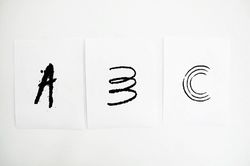
Feed est un studio de design graphique indépendant fondé en 1999 par Anouk Pennel et Raphaël Daudelin. Feed se spécialise dans le développement d’image de marque, la mise en livre et le dessin de polices de caractères. En lien avec les propositions graphiques faites pour l’exposition ABC : MTL, Feed propose un atelier de dessin typographique pour les étudiants(...)
Feed est un studio de design graphique indépendant fondé en 1999 par Anouk Pennel et Raphaël Daudelin. Feed se spécialise dans le développement d’image de marque, la mise en livre et le dessin de polices de caractères. En lien avec les propositions graphiques faites pour l’exposition ABC : MTL, Feed propose un atelier de dessin typographique pour les étudiants(...)
Localisation:
Maison Shaughnessy
Maison Shaughnessy
Date:
21 février 2013, 15h - 17h
21 février 2013, 15h - 17h
Titre:
T pour Typographie
Actions:
Description:
Feed est un studio de design graphique indépendant fondé en 1999 par Anouk Pennel et Raphaël Daudelin. Feed se spécialise dans le développement d’image de marque, la mise en livre et le dessin de polices de caractères. En lien avec les propositions graphiques faites pour l’exposition ABC : MTL, Feed propose un atelier de dessin typographique pour les étudiants(...)
T pour Typographie
Actions:
Description:
Feed est un studio de design graphique indépendant fondé en 1999 par Anouk Pennel et Raphaël Daudelin. Feed se spécialise dans le développement d’image de marque, la mise en livre et le dessin de polices de caractères. En lien avec les propositions graphiques faites pour l’exposition ABC : MTL, Feed propose un atelier de dessin typographique pour les étudiants(...)
Classification:
événements
événements
Date:
21 février 2013
15h - 17h
21 février 2013
15h - 17h
Localisation:
Maison Shaughnessy
Maison Shaughnessy
Niveau de description archivistique:
Projet
Projet
Titre:
Sheffield Festival
Sheffield Festival
Numéro de référence:
AP144.S2.D61
Description:
File documents an unrealized project for the Sheffield Festival which was organized by the University of Sheffield Union of Students, in Sheffield, England, United Kingdom. An early proposal by Feliks Topolski and Cedric Price called for lightweight and movable gem-shaped enclosures of metal tubing, and fibreglass panels to be illustrated by Topolski. Later proposals involved the participation of Richard Hamilton, Robyn Denny, Bernard Cohen, and Joe Tilson. Material in this file includes conceptual sketches, detail sketches of support system, reprographic copies from original drawings, and photographic views of a model. Some material in this file was published in Price, Cedric, with Peter Murray. 'The Second Instalment in the Cedric Price Supplement Series', 'Architectural Design', vol. 41, (January 1971), 38. Feliks Topolski and Cedric Price also collaborated on a later project (see Topolski/Waterloo AP144.S2.D88). Material in the file was produced between 1964 and 1968. File contains conceptual drawings, photographic materials, and textual records.
AP144.S2.D61
Description:
File documents an unrealized project for the Sheffield Festival which was organized by the University of Sheffield Union of Students, in Sheffield, England, United Kingdom. An early proposal by Feliks Topolski and Cedric Price called for lightweight and movable gem-shaped enclosures of metal tubing, and fibreglass panels to be illustrated by Topolski. Later proposals involved the participation of Richard Hamilton, Robyn Denny, Bernard Cohen, and Joe Tilson. Material in this file includes conceptual sketches, detail sketches of support system, reprographic copies from original drawings, and photographic views of a model. Some material in this file was published in Price, Cedric, with Peter Murray. 'The Second Instalment in the Cedric Price Supplement Series', 'Architectural Design', vol. 41, (January 1971), 38. Feliks Topolski and Cedric Price also collaborated on a later project (see Topolski/Waterloo AP144.S2.D88). Material in the file was produced between 1964 and 1968. File contains conceptual drawings, photographic materials, and textual records.
Personnes et institutions:
Date:
1964-1968
1964-1968
Titre:
Sheffield Festival
Actions:
AP144.S2.D61
Description:
File documents an unrealized project for the Sheffield Festival which was organized by the University of Sheffield Union of Students, in Sheffield, England, United Kingdom. An early proposal by Feliks Topolski and Cedric Price called for lightweight and movable gem-shaped enclosures of metal tubing, and fibreglass panels to be illustrated by Topolski. Later proposals involved the participation of Richard Hamilton, Robyn Denny, Bernard Cohen, and Joe Tilson. Material in this file includes conceptual sketches, detail sketches of support system, reprographic copies from original drawings, and photographic views of a model. Some material in this file was published in Price, Cedric, with Peter Murray. 'The Second Instalment in the Cedric Price Supplement Series', 'Architectural Design', vol. 41, (January 1971), 38. Feliks Topolski and Cedric Price also collaborated on a later project (see Topolski/Waterloo AP144.S2.D88). Material in the file was produced between 1964 and 1968. File contains conceptual drawings, photographic materials, and textual records.
Sheffield Festival
Actions:
AP144.S2.D61
Description:
File documents an unrealized project for the Sheffield Festival which was organized by the University of Sheffield Union of Students, in Sheffield, England, United Kingdom. An early proposal by Feliks Topolski and Cedric Price called for lightweight and movable gem-shaped enclosures of metal tubing, and fibreglass panels to be illustrated by Topolski. Later proposals involved the participation of Richard Hamilton, Robyn Denny, Bernard Cohen, and Joe Tilson. Material in this file includes conceptual sketches, detail sketches of support system, reprographic copies from original drawings, and photographic views of a model. Some material in this file was published in Price, Cedric, with Peter Murray. 'The Second Instalment in the Cedric Price Supplement Series', 'Architectural Design', vol. 41, (January 1971), 38. Feliks Topolski and Cedric Price also collaborated on a later project (see Topolski/Waterloo AP144.S2.D88). Material in the file was produced between 1964 and 1968. File contains conceptual drawings, photographic materials, and textual records.
Niveau de description archivistique:
File 61
File 61
Date:
1964-1968
1964-1968
Personnes et institutions:
Niveau de description archivistique:
Sous-série
Sous-série
Numéro de référence:
AP197.S1.SS3
Description:
This subseries documents Frampton's activities as Graham Foundation Fellow at the Institute for Architecture and Urban Studies (IAUS), including the development and design of IAUS’s only built project, the Low-Rise High-Density (LRHD) housing project in Brooklyn, New York. Also documented in this series are some of Frampton's other activities for IAUS. Frampton was not only co-founding editor of IAUS's magazine, "Oppositions" (1973), but also served as an editor for all of IAUS's publications; their journal, book series, and catalogue series. IAUS also served as a cultural space that held lectures for highschool and undergraduate students. Materials in this subseries consist of elevation and site drawings for the LRHD housing project and photographic materials for MoMA’s exhibition on the LRHD. Textual documentation is comprised of IAUS’s original application to the Ford Foundation and drafts of Frampton’s writings on the LRHD as well as IAUS meeting minutes, IAUS by-laws, announcement pamphlets, booklets, IAUS research programs and outlines of seminar sessions, correspondence, postcards, and posters. The subseries also includes an IAUS watch.
AP197.S1.SS3
Description:
This subseries documents Frampton's activities as Graham Foundation Fellow at the Institute for Architecture and Urban Studies (IAUS), including the development and design of IAUS’s only built project, the Low-Rise High-Density (LRHD) housing project in Brooklyn, New York. Also documented in this series are some of Frampton's other activities for IAUS. Frampton was not only co-founding editor of IAUS's magazine, "Oppositions" (1973), but also served as an editor for all of IAUS's publications; their journal, book series, and catalogue series. IAUS also served as a cultural space that held lectures for highschool and undergraduate students. Materials in this subseries consist of elevation and site drawings for the LRHD housing project and photographic materials for MoMA’s exhibition on the LRHD. Textual documentation is comprised of IAUS’s original application to the Ford Foundation and drafts of Frampton’s writings on the LRHD as well as IAUS meeting minutes, IAUS by-laws, announcement pamphlets, booklets, IAUS research programs and outlines of seminar sessions, correspondence, postcards, and posters. The subseries also includes an IAUS watch.
Personnes et institutions:
Date:
1970-2015
1970-2015
Titre:
Institute for Architecture and Urban Studies (IAUS) (1970-1982)
Actions:
AP197.S1.SS3
Description:
This subseries documents Frampton's activities as Graham Foundation Fellow at the Institute for Architecture and Urban Studies (IAUS), including the development and design of IAUS’s only built project, the Low-Rise High-Density (LRHD) housing project in Brooklyn, New York. Also documented in this series are some of Frampton's other activities for IAUS. Frampton was not only co-founding editor of IAUS's magazine, "Oppositions" (1973), but also served as an editor for all of IAUS's publications; their journal, book series, and catalogue series. IAUS also served as a cultural space that held lectures for highschool and undergraduate students. Materials in this subseries consist of elevation and site drawings for the LRHD housing project and photographic materials for MoMA’s exhibition on the LRHD. Textual documentation is comprised of IAUS’s original application to the Ford Foundation and drafts of Frampton’s writings on the LRHD as well as IAUS meeting minutes, IAUS by-laws, announcement pamphlets, booklets, IAUS research programs and outlines of seminar sessions, correspondence, postcards, and posters. The subseries also includes an IAUS watch.
Institute for Architecture and Urban Studies (IAUS) (1970-1982)
Actions:
AP197.S1.SS3
Description:
This subseries documents Frampton's activities as Graham Foundation Fellow at the Institute for Architecture and Urban Studies (IAUS), including the development and design of IAUS’s only built project, the Low-Rise High-Density (LRHD) housing project in Brooklyn, New York. Also documented in this series are some of Frampton's other activities for IAUS. Frampton was not only co-founding editor of IAUS's magazine, "Oppositions" (1973), but also served as an editor for all of IAUS's publications; their journal, book series, and catalogue series. IAUS also served as a cultural space that held lectures for highschool and undergraduate students. Materials in this subseries consist of elevation and site drawings for the LRHD housing project and photographic materials for MoMA’s exhibition on the LRHD. Textual documentation is comprised of IAUS’s original application to the Ford Foundation and drafts of Frampton’s writings on the LRHD as well as IAUS meeting minutes, IAUS by-laws, announcement pamphlets, booklets, IAUS research programs and outlines of seminar sessions, correspondence, postcards, and posters. The subseries also includes an IAUS watch.
Niveau de description archivistique:
Subseries
Subseries
Date:
1970-2015
1970-2015
Personnes et institutions:
Classification:
événements
événements
Titre:
La non-école
La non-école
Actions:
Description:
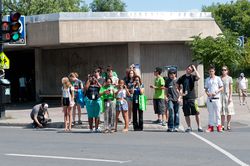
À quoi pourrait ressembler l’école? C’est la question qu’a posée aux étudiants notre conservatrice invitée, Monica Nouwens, au cours du cinquième Camp de jour. Pendant une semaine durant l’été de 2012, les étudiants de La non-école ont exploré les espaces intérieurs et environnants de quelques écoles, et ils ont repoussé les limites de l’appareil photo utilisé comme(...)
À quoi pourrait ressembler l’école? C’est la question qu’a posée aux étudiants notre conservatrice invitée, Monica Nouwens, au cours du cinquième Camp de jour. Pendant une semaine durant l’été de 2012, les étudiants de La non-école ont exploré les espaces intérieurs et environnants de quelques écoles, et ils ont repoussé les limites de l’appareil photo utilisé comme(...)
Date:
30 juillet 2012 au 3 août 2012
30 juillet 2012 au 3 août 2012
Titre:
La non-école
Actions:
Description:
À quoi pourrait ressembler l’école? C’est la question qu’a posée aux étudiants notre conservatrice invitée, Monica Nouwens, au cours du cinquième Camp de jour. Pendant une semaine durant l’été de 2012, les étudiants de La non-école ont exploré les espaces intérieurs et environnants de quelques écoles, et ils ont repoussé les limites de l’appareil photo utilisé comme(...)
La non-école
Actions:
Description:
À quoi pourrait ressembler l’école? C’est la question qu’a posée aux étudiants notre conservatrice invitée, Monica Nouwens, au cours du cinquième Camp de jour. Pendant une semaine durant l’été de 2012, les étudiants de La non-école ont exploré les espaces intérieurs et environnants de quelques écoles, et ils ont repoussé les limites de l’appareil photo utilisé comme(...)
Classification:
événements
événements
Date:
30 juillet 2012 au
3 août 2012
30 juillet 2012 au
3 août 2012
Classification:
photographies
Quantité:
9 photograph(s)
photographies
Quantité:
9 photograph(s)
Numéro de référence:
ARCH269657
Description:
Group consists of various photographs predominantly of Chandigarh, India, including: - Model of the Governor's House by Le Corbusier (unrealized) - High Court's cornice in the Capitol Complex (2 photographs) - The Assembly viewed from the Secretariat in the Capitol Complex - The Post Graduate Institute for Medical Research in sector 12 - Roof of the Secretariat in the Capitol Complex - Bhakra Dam workers' houses in Talwara - House Type 5-J in sector 16 - Students in a classroom of an unidentified Higher secondary school
ARCH269657
Description:
Group consists of various photographs predominantly of Chandigarh, India, including: - Model of the Governor's House by Le Corbusier (unrealized) - High Court's cornice in the Capitol Complex (2 photographs) - The Assembly viewed from the Secretariat in the Capitol Complex - The Post Graduate Institute for Medical Research in sector 12 - Roof of the Secretariat in the Capitol Complex - Bhakra Dam workers' houses in Talwara - House Type 5-J in sector 16 - Students in a classroom of an unidentified Higher secondary school
Personnes et institutions:
Date:
between 1951 and 1965
between 1951 and 1965
Titre:
Photographs predominantly of Chandigarh
Actions:
ARCH269657
Description:
Group consists of various photographs predominantly of Chandigarh, India, including: - Model of the Governor's House by Le Corbusier (unrealized) - High Court's cornice in the Capitol Complex (2 photographs) - The Assembly viewed from the Secretariat in the Capitol Complex - The Post Graduate Institute for Medical Research in sector 12 - Roof of the Secretariat in the Capitol Complex - Bhakra Dam workers' houses in Talwara - House Type 5-J in sector 16 - Students in a classroom of an unidentified Higher secondary school
Photographs predominantly of Chandigarh
Actions:
ARCH269657
Description:
Group consists of various photographs predominantly of Chandigarh, India, including: - Model of the Governor's House by Le Corbusier (unrealized) - High Court's cornice in the Capitol Complex (2 photographs) - The Assembly viewed from the Secretariat in the Capitol Complex - The Post Graduate Institute for Medical Research in sector 12 - Roof of the Secretariat in the Capitol Complex - Bhakra Dam workers' houses in Talwara - House Type 5-J in sector 16 - Students in a classroom of an unidentified Higher secondary school
Classification:
photographies
Quantité:
9 photograph(s)
photographies
Quantité:
9 photograph(s)
Date:
between 1951 and 1965
between 1951 and 1965
Personnes et institutions:
Niveau de description archivistique:
Projet
Projet
Numéro de référence:
CD035.S1.1979.PR01
Description:
This project series predominantly consists of material related to Coen Beeker's involvement in the restructuring of a spontaneous neighbourhood in Ouagadougou, between the 1980s and early 2000s. Beeker acted as principal technical advisor for the collaboration program between the Ministère des Infrastructures de l'habitat et de l'urbanisme of Burkina Faso, the Ambassy of The Netherlands in Burkina Faso, and the Vrije Universiteit Amsterdam (VU University Amsterdam). The project series consists predominantly of textual records, including project reports, correspondence, and a student thesis, as well as aerial photographs, maps of the Ouagadougou area, and a recording of a documentary on Ouagadougou.
CD035.S1.1979.PR01
Description:
This project series predominantly consists of material related to Coen Beeker's involvement in the restructuring of a spontaneous neighbourhood in Ouagadougou, between the 1980s and early 2000s. Beeker acted as principal technical advisor for the collaboration program between the Ministère des Infrastructures de l'habitat et de l'urbanisme of Burkina Faso, the Ambassy of The Netherlands in Burkina Faso, and the Vrije Universiteit Amsterdam (VU University Amsterdam). The project series consists predominantly of textual records, including project reports, correspondence, and a student thesis, as well as aerial photographs, maps of the Ouagadougou area, and a recording of a documentary on Ouagadougou.
Personnes et institutions:
Date:
1960-2005
1960-2005
Titre:
Restructuring of spontaneous neighbourhoods, Ouagadougou, Burkina Faso (1979-2005)
Actions:
CD035.S1.1979.PR01
Description:
This project series predominantly consists of material related to Coen Beeker's involvement in the restructuring of a spontaneous neighbourhood in Ouagadougou, between the 1980s and early 2000s. Beeker acted as principal technical advisor for the collaboration program between the Ministère des Infrastructures de l'habitat et de l'urbanisme of Burkina Faso, the Ambassy of The Netherlands in Burkina Faso, and the Vrije Universiteit Amsterdam (VU University Amsterdam). The project series consists predominantly of textual records, including project reports, correspondence, and a student thesis, as well as aerial photographs, maps of the Ouagadougou area, and a recording of a documentary on Ouagadougou.
Restructuring of spontaneous neighbourhoods, Ouagadougou, Burkina Faso (1979-2005)
Actions:
CD035.S1.1979.PR01
Description:
This project series predominantly consists of material related to Coen Beeker's involvement in the restructuring of a spontaneous neighbourhood in Ouagadougou, between the 1980s and early 2000s. Beeker acted as principal technical advisor for the collaboration program between the Ministère des Infrastructures de l'habitat et de l'urbanisme of Burkina Faso, the Ambassy of The Netherlands in Burkina Faso, and the Vrije Universiteit Amsterdam (VU University Amsterdam). The project series consists predominantly of textual records, including project reports, correspondence, and a student thesis, as well as aerial photographs, maps of the Ouagadougou area, and a recording of a documentary on Ouagadougou.
Niveau de description archivistique:
Project
Project
Date:
1960-2005
1960-2005
Personnes et institutions:
Classification:
articles
articles
Actions:
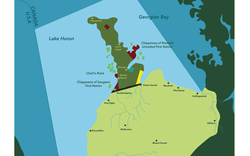
Aamirah Nakhuda, Aidan Qualizza et Sofia Munera Mora enquêtent le Traité 72
Titre:
Le territoire et le droit par design
Aamirah Nakhuda, Aidan Qualizza et Sofia Munera Mora enquêtent le Traité 72
Actions:
Le territoire et le droit par design
Aamirah Nakhuda, Aidan Qualizza et Sofia Munera Mora enquêtent le Traité 72
Actions:
Classification:
photographies
photographies
Numéro de référence:
ARCH280813
Description:
Group consists of photographs of models for the Panjab University's buildings in Chandigarh, India, including a student centre and a model of the university campus showing the library, the student centre and the convocation hall of Gandhi Bhawan.
ARCH280813
Description:
Group consists of photographs of models for the Panjab University's buildings in Chandigarh, India, including a student centre and a model of the university campus showing the library, the student centre and the convocation hall of Gandhi Bhawan.
Personnes et institutions:
Date:
1952-c.1970
1952-c.1970
Titre:
Photographs of models for Panjab University's buildings in Chandigarh, India
Actions:
ARCH280813
Description:
Group consists of photographs of models for the Panjab University's buildings in Chandigarh, India, including a student centre and a model of the university campus showing the library, the student centre and the convocation hall of Gandhi Bhawan.
Photographs of models for Panjab University's buildings in Chandigarh, India
Actions:
ARCH280813
Description:
Group consists of photographs of models for the Panjab University's buildings in Chandigarh, India, including a student centre and a model of the university campus showing the library, the student centre and the convocation hall of Gandhi Bhawan.
Classification:
photographies
photographies
Date:
1952-c.1970
1952-c.1970
Personnes et institutions:
Niveau de description archivistique:
Projet
Projet
Numéro de référence:
AP075.S1.2005.PR04
Description:
Project series documents Cornelia Hahn Oberlander's landscale project for the King David High School garden, on Willow Street, in Vancouver. The project consists in a biblical garden that features plants and trees mentionned in the the Torah to teach biblical heritage to the students of the school outdoors as well as indoors. It includes signage of individual species with quotations from the Torah in Hebrew, English & Latin. Oberlander worked in this project in the mid-2000s with architect firm Acton Ostry Architects Inc. The project series contains research and documentation, correspondence, including with client and contractors, landscape specifications, project description, financial documents, physical and digital document related to the plant selection, and a few photographs of the construction. The project is also documented through design development drawings, such as landscape plans, elevations, details for the signs, some presentation drawings, and a sample of the plan identification signs. The material for this project also comprises documents related to landscape maintenance of the garden, including maintenance history summary and contract with contractor for maintenance of trees.
AP075.S1.2005.PR04
Description:
Project series documents Cornelia Hahn Oberlander's landscale project for the King David High School garden, on Willow Street, in Vancouver. The project consists in a biblical garden that features plants and trees mentionned in the the Torah to teach biblical heritage to the students of the school outdoors as well as indoors. It includes signage of individual species with quotations from the Torah in Hebrew, English & Latin. Oberlander worked in this project in the mid-2000s with architect firm Acton Ostry Architects Inc. The project series contains research and documentation, correspondence, including with client and contractors, landscape specifications, project description, financial documents, physical and digital document related to the plant selection, and a few photographs of the construction. The project is also documented through design development drawings, such as landscape plans, elevations, details for the signs, some presentation drawings, and a sample of the plan identification signs. The material for this project also comprises documents related to landscape maintenance of the garden, including maintenance history summary and contract with contractor for maintenance of trees.
Personnes et institutions:
Date:
2005-2011
2005-2011
Titre:
King David High School Biblical Garden, Vancouver, British Columbia (2005-2008)
Actions:
AP075.S1.2005.PR04
Description:
Project series documents Cornelia Hahn Oberlander's landscale project for the King David High School garden, on Willow Street, in Vancouver. The project consists in a biblical garden that features plants and trees mentionned in the the Torah to teach biblical heritage to the students of the school outdoors as well as indoors. It includes signage of individual species with quotations from the Torah in Hebrew, English & Latin. Oberlander worked in this project in the mid-2000s with architect firm Acton Ostry Architects Inc. The project series contains research and documentation, correspondence, including with client and contractors, landscape specifications, project description, financial documents, physical and digital document related to the plant selection, and a few photographs of the construction. The project is also documented through design development drawings, such as landscape plans, elevations, details for the signs, some presentation drawings, and a sample of the plan identification signs. The material for this project also comprises documents related to landscape maintenance of the garden, including maintenance history summary and contract with contractor for maintenance of trees.
King David High School Biblical Garden, Vancouver, British Columbia (2005-2008)
Actions:
AP075.S1.2005.PR04
Description:
Project series documents Cornelia Hahn Oberlander's landscale project for the King David High School garden, on Willow Street, in Vancouver. The project consists in a biblical garden that features plants and trees mentionned in the the Torah to teach biblical heritage to the students of the school outdoors as well as indoors. It includes signage of individual species with quotations from the Torah in Hebrew, English & Latin. Oberlander worked in this project in the mid-2000s with architect firm Acton Ostry Architects Inc. The project series contains research and documentation, correspondence, including with client and contractors, landscape specifications, project description, financial documents, physical and digital document related to the plant selection, and a few photographs of the construction. The project is also documented through design development drawings, such as landscape plans, elevations, details for the signs, some presentation drawings, and a sample of the plan identification signs. The material for this project also comprises documents related to landscape maintenance of the garden, including maintenance history summary and contract with contractor for maintenance of trees.
Niveau de description archivistique:
Project
Project
Date:
2005-2011
2005-2011
Personnes et institutions:
Niveau de description archivistique:
Projet
Projet
Titre:
Clay House (1972)
Clay House (1972)
Numéro de référence:
AP207.S1.1972.PR02
Description:
The project series documents "Clay House", an installation undertaken by Pettena and a group of his students from the University of Utah, in Salt Lake City, in 1972. It consisted of covering an entire inhabited house with clay located in a middle-class neighbourhood of Salt Lake City. The installation "was another study on the “working” of material, or rather a statement on the re-naturalization of denatured places and materials [...]." It also transformed the house by changing its colour from the other houses in the area, "all devitalized by the anonymity as well as the uniformity of their coloring." [2] The project series contains photographs of the residence before being covered in clay, a photograph of Pettena's team working at covering the house with clay, photographs of the finished installation, and a photograph of the model. The project series also contains drawings for the installation, and a drawing showing four stages of the installation. Source: [1] [2] Gianni Pettena website, https://www.giannipettena.it/italiano/opere-1/nat-clay-house-1972-1/ (last accessed 11 November 2019)
AP207.S1.1972.PR02
Description:
The project series documents "Clay House", an installation undertaken by Pettena and a group of his students from the University of Utah, in Salt Lake City, in 1972. It consisted of covering an entire inhabited house with clay located in a middle-class neighbourhood of Salt Lake City. The installation "was another study on the “working” of material, or rather a statement on the re-naturalization of denatured places and materials [...]." It also transformed the house by changing its colour from the other houses in the area, "all devitalized by the anonymity as well as the uniformity of their coloring." [2] The project series contains photographs of the residence before being covered in clay, a photograph of Pettena's team working at covering the house with clay, photographs of the finished installation, and a photograph of the model. The project series also contains drawings for the installation, and a drawing showing four stages of the installation. Source: [1] [2] Gianni Pettena website, https://www.giannipettena.it/italiano/opere-1/nat-clay-house-1972-1/ (last accessed 11 November 2019)
Personnes et institutions:
Date:
circa 1972-2016
circa 1972-2016
Titre:
Clay House (1972)
Actions:
AP207.S1.1972.PR02
Description:
The project series documents "Clay House", an installation undertaken by Pettena and a group of his students from the University of Utah, in Salt Lake City, in 1972. It consisted of covering an entire inhabited house with clay located in a middle-class neighbourhood of Salt Lake City. The installation "was another study on the “working” of material, or rather a statement on the re-naturalization of denatured places and materials [...]." It also transformed the house by changing its colour from the other houses in the area, "all devitalized by the anonymity as well as the uniformity of their coloring." [2] The project series contains photographs of the residence before being covered in clay, a photograph of Pettena's team working at covering the house with clay, photographs of the finished installation, and a photograph of the model. The project series also contains drawings for the installation, and a drawing showing four stages of the installation. Source: [1] [2] Gianni Pettena website, https://www.giannipettena.it/italiano/opere-1/nat-clay-house-1972-1/ (last accessed 11 November 2019)
Clay House (1972)
Actions:
AP207.S1.1972.PR02
Description:
The project series documents "Clay House", an installation undertaken by Pettena and a group of his students from the University of Utah, in Salt Lake City, in 1972. It consisted of covering an entire inhabited house with clay located in a middle-class neighbourhood of Salt Lake City. The installation "was another study on the “working” of material, or rather a statement on the re-naturalization of denatured places and materials [...]." It also transformed the house by changing its colour from the other houses in the area, "all devitalized by the anonymity as well as the uniformity of their coloring." [2] The project series contains photographs of the residence before being covered in clay, a photograph of Pettena's team working at covering the house with clay, photographs of the finished installation, and a photograph of the model. The project series also contains drawings for the installation, and a drawing showing four stages of the installation. Source: [1] [2] Gianni Pettena website, https://www.giannipettena.it/italiano/opere-1/nat-clay-house-1972-1/ (last accessed 11 November 2019)
Niveau de description archivistique:
Project
Project
Date:
circa 1972-2016
circa 1972-2016
Personnes et institutions:


