


12622 Résultats
Classification:
dessins
dessins
Actions:
Numéro de référence:
DR1988:0374
Description:
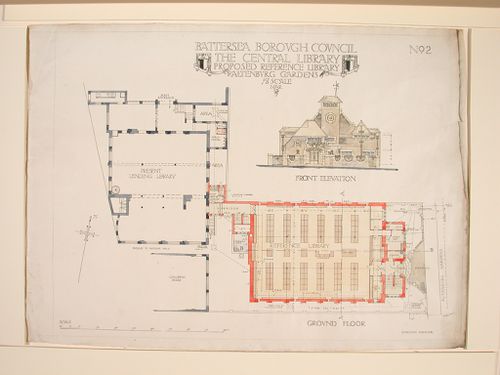
- The ground floor plan shows the existing structure as well as the proposal. - The style of many of these drawings and reprographic copies by Henry Hyams (DR1988:0332 - DR1988:0414) suggests that they were possibly for periodical illustrations. Hyams contributed articles to the periodicals 'The Builder' and 'The Architect'. Two objects in the CCA collections can be linked to the article "Music in Stone" published prior to 1926 in 'The Architect'; a reprographic copy (DR1988:0357) and a drawing (DR1988:0364) (Who's Who in Architecture, 161).
DR1988:0374
Description:
- The ground floor plan shows the existing structure as well as the proposal. - The style of many of these drawings and reprographic copies by Henry Hyams (DR1988:0332 - DR1988:0414) suggests that they were possibly for periodical illustrations. Hyams contributed articles to the periodicals 'The Builder' and 'The Architect'. Two objects in the CCA collections can be linked to the article "Music in Stone" published prior to 1926 in 'The Architect'; a reprographic copy (DR1988:0357) and a drawing (DR1988:0364) (Who's Who in Architecture, 161).
Personnes et institutions:
Sujet:
architecture
architecture
Date:
printed March 1924
printed March 1924
Titre:
Front elevation and ground floor plan for the proposed reference library, Battersea Borough
Actions:
DR1988:0374
Description:
- The ground floor plan shows the existing structure as well as the proposal. - The style of many of these drawings and reprographic copies by Henry Hyams (DR1988:0332 - DR1988:0414) suggests that they were possibly for periodical illustrations. Hyams contributed articles to the periodicals 'The Builder' and 'The Architect'. Two objects in the CCA collections can be linked to the article "Music in Stone" published prior to 1926 in 'The Architect'; a reprographic copy (DR1988:0357) and a drawing (DR1988:0364) (Who's Who in Architecture, 161).
Front elevation and ground floor plan for the proposed reference library, Battersea Borough
Actions:
DR1988:0374
Description:
- The ground floor plan shows the existing structure as well as the proposal. - The style of many of these drawings and reprographic copies by Henry Hyams (DR1988:0332 - DR1988:0414) suggests that they were possibly for periodical illustrations. Hyams contributed articles to the periodicals 'The Builder' and 'The Architect'. Two objects in the CCA collections can be linked to the article "Music in Stone" published prior to 1926 in 'The Architect'; a reprographic copy (DR1988:0357) and a drawing (DR1988:0364) (Who's Who in Architecture, 161).
Classification:
dessins
dessins
Date:
printed March 1924
printed March 1924
Personnes et institutions:
Sujet:
architecture
architecture
Niveau de description archivistique:
Projet
Projet
Titre:
Pliny on my mind
Pliny on my mind
Numéro de référence:
AP041.S1.1983.D2
Description:
This project series documents an executed project for an installation conceived for the exhibition "The Villas of Pliny and Classical Architecture in Montréal" (or entitled "Les villas de Pline et les éléments classiques dans l'architecture de Montréal" in French) at the Musée des Beaux-arts de Montréal, in 1983. The exhibition was curated by Pierre du Prey and realized in collaboration with the Canadian Centre for Architecture. The project series includes a conceptual sketch, a presentation drawing and two photographs by Brian Merrett of the completed installation. Material in this series is also identify this installation as "Villas de Pline".
AP041.S1.1983.D2
Description:
This project series documents an executed project for an installation conceived for the exhibition "The Villas of Pliny and Classical Architecture in Montréal" (or entitled "Les villas de Pline et les éléments classiques dans l'architecture de Montréal" in French) at the Musée des Beaux-arts de Montréal, in 1983. The exhibition was curated by Pierre du Prey and realized in collaboration with the Canadian Centre for Architecture. The project series includes a conceptual sketch, a presentation drawing and two photographs by Brian Merrett of the completed installation. Material in this series is also identify this installation as "Villas de Pline".
Personnes et institutions:
Date:
1983
1983
Titre:
Pliny on my mind
Actions:
AP041.S1.1983.D2
Description:
This project series documents an executed project for an installation conceived for the exhibition "The Villas of Pliny and Classical Architecture in Montréal" (or entitled "Les villas de Pline et les éléments classiques dans l'architecture de Montréal" in French) at the Musée des Beaux-arts de Montréal, in 1983. The exhibition was curated by Pierre du Prey and realized in collaboration with the Canadian Centre for Architecture. The project series includes a conceptual sketch, a presentation drawing and two photographs by Brian Merrett of the completed installation. Material in this series is also identify this installation as "Villas de Pline".
Pliny on my mind
Actions:
AP041.S1.1983.D2
Description:
This project series documents an executed project for an installation conceived for the exhibition "The Villas of Pliny and Classical Architecture in Montréal" (or entitled "Les villas de Pline et les éléments classiques dans l'architecture de Montréal" in French) at the Musée des Beaux-arts de Montréal, in 1983. The exhibition was curated by Pierre du Prey and realized in collaboration with the Canadian Centre for Architecture. The project series includes a conceptual sketch, a presentation drawing and two photographs by Brian Merrett of the completed installation. Material in this series is also identify this installation as "Villas de Pline".
Niveau de description archivistique:
Project
Project
Date:
1983
1983
Personnes et institutions:
Niveau de description archivistique:
Projet
Projet
Titre:
Castel
Castel
Numéro de référence:
AP144.S2.D109
Description:
File documents a project in which Cedric Price was invited to submit a design for a single house to an exhibition entitled "Architecture II: Houses for Sale" organized by the Leo Castelli Gallery, New York City, New York, United States. The four components of Price's submission entitled "Platforms, Pavilions, Pylons and Plants" could be regrouped and redistributed on the one-acre site if and when required. Conceptual, design development and schematic sketches include preliminary plans, sections, and elevations for the house as well as details for the arrangement of the four components. Trees are stamped in black ink on the site plans with a generic rubber "tree" stamp. Design development drawings include preliminary drawings for layouts done in graphite, and a complete sequence of design development drawings done in ink numbered 001 to 013. Several reprographic copies of design development drawings were coloured with adhesive film and pencil and annotated in order to develop preliminary versions for the final presentation drawings. Three panels for the "Houses for Sale" exhibition consist of text describing the project concept mounted on boards, and a photomechanical print enlarged from an original sketch perspective entitled "general view-pavilions and totems". Material in this file was produced between 1979 and 1982, and in 1987, but predominantly in 1980. File contains conceptual drawings, design development drawings, presentation panels, a presentation model, photographic materials, and textual records.
AP144.S2.D109
Description:
File documents a project in which Cedric Price was invited to submit a design for a single house to an exhibition entitled "Architecture II: Houses for Sale" organized by the Leo Castelli Gallery, New York City, New York, United States. The four components of Price's submission entitled "Platforms, Pavilions, Pylons and Plants" could be regrouped and redistributed on the one-acre site if and when required. Conceptual, design development and schematic sketches include preliminary plans, sections, and elevations for the house as well as details for the arrangement of the four components. Trees are stamped in black ink on the site plans with a generic rubber "tree" stamp. Design development drawings include preliminary drawings for layouts done in graphite, and a complete sequence of design development drawings done in ink numbered 001 to 013. Several reprographic copies of design development drawings were coloured with adhesive film and pencil and annotated in order to develop preliminary versions for the final presentation drawings. Three panels for the "Houses for Sale" exhibition consist of text describing the project concept mounted on boards, and a photomechanical print enlarged from an original sketch perspective entitled "general view-pavilions and totems". Material in this file was produced between 1979 and 1982, and in 1987, but predominantly in 1980. File contains conceptual drawings, design development drawings, presentation panels, a presentation model, photographic materials, and textual records.
Personnes et institutions:
Date:
1979-1982, 1987, predominant 1980
1979-1982, 1987, predominant 1980
Titre:
Castel
Actions:
AP144.S2.D109
Description:
File documents a project in which Cedric Price was invited to submit a design for a single house to an exhibition entitled "Architecture II: Houses for Sale" organized by the Leo Castelli Gallery, New York City, New York, United States. The four components of Price's submission entitled "Platforms, Pavilions, Pylons and Plants" could be regrouped and redistributed on the one-acre site if and when required. Conceptual, design development and schematic sketches include preliminary plans, sections, and elevations for the house as well as details for the arrangement of the four components. Trees are stamped in black ink on the site plans with a generic rubber "tree" stamp. Design development drawings include preliminary drawings for layouts done in graphite, and a complete sequence of design development drawings done in ink numbered 001 to 013. Several reprographic copies of design development drawings were coloured with adhesive film and pencil and annotated in order to develop preliminary versions for the final presentation drawings. Three panels for the "Houses for Sale" exhibition consist of text describing the project concept mounted on boards, and a photomechanical print enlarged from an original sketch perspective entitled "general view-pavilions and totems". Material in this file was produced between 1979 and 1982, and in 1987, but predominantly in 1980. File contains conceptual drawings, design development drawings, presentation panels, a presentation model, photographic materials, and textual records.
Castel
Actions:
AP144.S2.D109
Description:
File documents a project in which Cedric Price was invited to submit a design for a single house to an exhibition entitled "Architecture II: Houses for Sale" organized by the Leo Castelli Gallery, New York City, New York, United States. The four components of Price's submission entitled "Platforms, Pavilions, Pylons and Plants" could be regrouped and redistributed on the one-acre site if and when required. Conceptual, design development and schematic sketches include preliminary plans, sections, and elevations for the house as well as details for the arrangement of the four components. Trees are stamped in black ink on the site plans with a generic rubber "tree" stamp. Design development drawings include preliminary drawings for layouts done in graphite, and a complete sequence of design development drawings done in ink numbered 001 to 013. Several reprographic copies of design development drawings were coloured with adhesive film and pencil and annotated in order to develop preliminary versions for the final presentation drawings. Three panels for the "Houses for Sale" exhibition consist of text describing the project concept mounted on boards, and a photomechanical print enlarged from an original sketch perspective entitled "general view-pavilions and totems". Material in this file was produced between 1979 and 1982, and in 1987, but predominantly in 1980. File contains conceptual drawings, design development drawings, presentation panels, a presentation model, photographic materials, and textual records.
Niveau de description archivistique:
File 109
File 109
Date:
1979-1982, 1987, predominant 1980
1979-1982, 1987, predominant 1980
Personnes et institutions:
Classification:
dessins
dessins
Actions:
Numéro de référence:
DR1988:0365
Description:
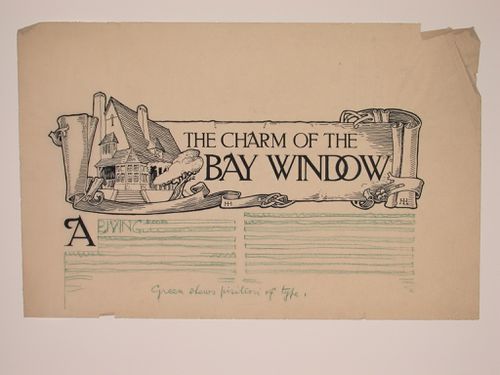
- This drawing shows a design for the layout of the top half of a page, with the heading executed in pen and black ink, and the text indicated with green pencil lines. The heading was written inside a scrolled border which incorporates a drawing of a house with a bay window. - The style of many of these drawings and reprographic copies by Henry Hyams (DR1988:0332 - DR1988:0414) suggests that they were possibly for periodical illustrations. Hyams contributed articles to the periodicals 'The Builder' and 'The Architect'. Two objects in the CCA collections can be linked to the article "Music in Stone" published prior to 1926 in 'The Architect'; a reprographic copy (DR1988:0357) and a drawing (DR1988:0364) (Who's Who in Architecture, 161).
DR1988:0365
Description:
- This drawing shows a design for the layout of the top half of a page, with the heading executed in pen and black ink, and the text indicated with green pencil lines. The heading was written inside a scrolled border which incorporates a drawing of a house with a bay window. - The style of many of these drawings and reprographic copies by Henry Hyams (DR1988:0332 - DR1988:0414) suggests that they were possibly for periodical illustrations. Hyams contributed articles to the periodicals 'The Builder' and 'The Architect'. Two objects in the CCA collections can be linked to the article "Music in Stone" published prior to 1926 in 'The Architect'; a reprographic copy (DR1988:0357) and a drawing (DR1988:0364) (Who's Who in Architecture, 161).
Personnes et institutions:
Sujet:
architecture
architecture
Date:
1920s or 1930s
1920s or 1930s
Titre:
Page layout with the head title for "The Charm of the Bay Window"
Actions:
DR1988:0365
Description:
- This drawing shows a design for the layout of the top half of a page, with the heading executed in pen and black ink, and the text indicated with green pencil lines. The heading was written inside a scrolled border which incorporates a drawing of a house with a bay window. - The style of many of these drawings and reprographic copies by Henry Hyams (DR1988:0332 - DR1988:0414) suggests that they were possibly for periodical illustrations. Hyams contributed articles to the periodicals 'The Builder' and 'The Architect'. Two objects in the CCA collections can be linked to the article "Music in Stone" published prior to 1926 in 'The Architect'; a reprographic copy (DR1988:0357) and a drawing (DR1988:0364) (Who's Who in Architecture, 161).
Page layout with the head title for "The Charm of the Bay Window"
Actions:
DR1988:0365
Description:
- This drawing shows a design for the layout of the top half of a page, with the heading executed in pen and black ink, and the text indicated with green pencil lines. The heading was written inside a scrolled border which incorporates a drawing of a house with a bay window. - The style of many of these drawings and reprographic copies by Henry Hyams (DR1988:0332 - DR1988:0414) suggests that they were possibly for periodical illustrations. Hyams contributed articles to the periodicals 'The Builder' and 'The Architect'. Two objects in the CCA collections can be linked to the article "Music in Stone" published prior to 1926 in 'The Architect'; a reprographic copy (DR1988:0357) and a drawing (DR1988:0364) (Who's Who in Architecture, 161).
Classification:
dessins
dessins
Date:
1920s or 1930s
1920s or 1930s
Personnes et institutions:
Sujet:
architecture
architecture
Classification:
dessins
dessins
Actions:
Numéro de référence:
DR1988:0364
Description:
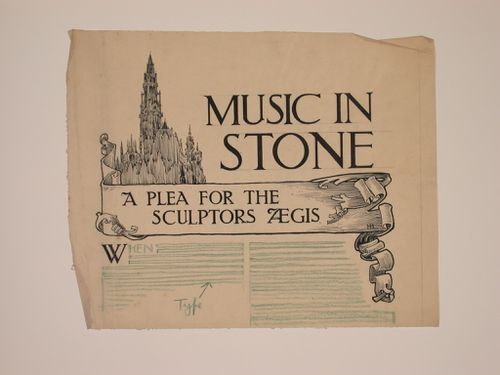
- This drawing shows a design for a page layout, with the heading executed in pen and black ink, and the text indicated with green pencil lines. The heading includes an impressionistic rendering of a gothic church. - The style of many of these drawings and reprographic copies by Henry Hyams (DR1988:0332 - DR1988:0414) suggests that they were possibly for periodical illustrations. Hyams contributed articles to the periodicals 'The Builder' and 'The Architect'. Two objects in the CCA collections can be linked to the article "Music in Stone" published prior to 1926 in 'The Architect'; a reprographic copy (DR1988:0357) and a drawing (DR1988:0364) (Who's Who in Architecture, 161).
DR1988:0364
Description:
- This drawing shows a design for a page layout, with the heading executed in pen and black ink, and the text indicated with green pencil lines. The heading includes an impressionistic rendering of a gothic church. - The style of many of these drawings and reprographic copies by Henry Hyams (DR1988:0332 - DR1988:0414) suggests that they were possibly for periodical illustrations. Hyams contributed articles to the periodicals 'The Builder' and 'The Architect'. Two objects in the CCA collections can be linked to the article "Music in Stone" published prior to 1926 in 'The Architect'; a reprographic copy (DR1988:0357) and a drawing (DR1988:0364) (Who's Who in Architecture, 161).
Personnes et institutions:
Sujet:
architecture
architecture
Date:
1920s or 1930s
1920s or 1930s
Titre:
Page layout with the head title for "Music in stone: A Plea for the sculptor's Ægis"
Actions:
DR1988:0364
Description:
- This drawing shows a design for a page layout, with the heading executed in pen and black ink, and the text indicated with green pencil lines. The heading includes an impressionistic rendering of a gothic church. - The style of many of these drawings and reprographic copies by Henry Hyams (DR1988:0332 - DR1988:0414) suggests that they were possibly for periodical illustrations. Hyams contributed articles to the periodicals 'The Builder' and 'The Architect'. Two objects in the CCA collections can be linked to the article "Music in Stone" published prior to 1926 in 'The Architect'; a reprographic copy (DR1988:0357) and a drawing (DR1988:0364) (Who's Who in Architecture, 161).
Page layout with the head title for "Music in stone: A Plea for the sculptor's Ægis"
Actions:
DR1988:0364
Description:
- This drawing shows a design for a page layout, with the heading executed in pen and black ink, and the text indicated with green pencil lines. The heading includes an impressionistic rendering of a gothic church. - The style of many of these drawings and reprographic copies by Henry Hyams (DR1988:0332 - DR1988:0414) suggests that they were possibly for periodical illustrations. Hyams contributed articles to the periodicals 'The Builder' and 'The Architect'. Two objects in the CCA collections can be linked to the article "Music in Stone" published prior to 1926 in 'The Architect'; a reprographic copy (DR1988:0357) and a drawing (DR1988:0364) (Who's Who in Architecture, 161).
Classification:
dessins
dessins
Date:
1920s or 1930s
1920s or 1930s
Personnes et institutions:
Sujet:
architecture
architecture
Classification:
dessins
dessins
Actions:
Numéro de référence:
DR1988:0414
Description:
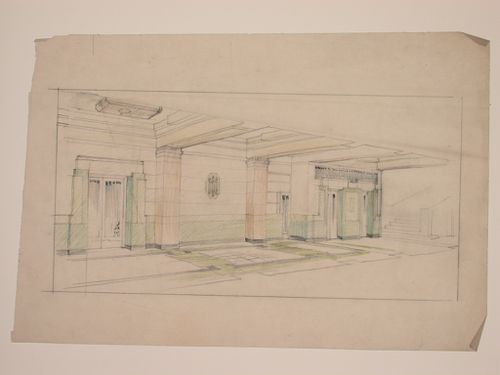
- This drawing shows a hall with two doorways along the back wall and a stairwell off to the left. Some of the elements, such as pillars, door frames, and tiles, are finished with coloured pencil. - The style of many of these drawings and reprographic copies by Henry Hyams (DR1988:0332 - DR1988:0414) suggests that they were possibly for periodical illustrations. Hyams contributed articles to the periodicals 'The Builder' and 'The Architect'. Two objects in the CCA collections can be linked to the article "Music in Stone" published prior to 1926 in 'The Architect'; a reprographic copy (DR1988:0357) and a drawing (DR1988:0364) (Who's Who in Architecture, 161).
DR1988:0414
Description:
- This drawing shows a hall with two doorways along the back wall and a stairwell off to the left. Some of the elements, such as pillars, door frames, and tiles, are finished with coloured pencil. - The style of many of these drawings and reprographic copies by Henry Hyams (DR1988:0332 - DR1988:0414) suggests that they were possibly for periodical illustrations. Hyams contributed articles to the periodicals 'The Builder' and 'The Architect'. Two objects in the CCA collections can be linked to the article "Music in Stone" published prior to 1926 in 'The Architect'; a reprographic copy (DR1988:0357) and a drawing (DR1988:0364) (Who's Who in Architecture, 161).
Personnes et institutions:
Sujet:
architecture, design d'intérieur
architecture, design d'intérieur
Date:
1920s or 1930s
1920s or 1930s
Titre:
Perspective view showing the interior of a hall
Actions:
DR1988:0414
Description:
- This drawing shows a hall with two doorways along the back wall and a stairwell off to the left. Some of the elements, such as pillars, door frames, and tiles, are finished with coloured pencil. - The style of many of these drawings and reprographic copies by Henry Hyams (DR1988:0332 - DR1988:0414) suggests that they were possibly for periodical illustrations. Hyams contributed articles to the periodicals 'The Builder' and 'The Architect'. Two objects in the CCA collections can be linked to the article "Music in Stone" published prior to 1926 in 'The Architect'; a reprographic copy (DR1988:0357) and a drawing (DR1988:0364) (Who's Who in Architecture, 161).
Perspective view showing the interior of a hall
Actions:
DR1988:0414
Description:
- This drawing shows a hall with two doorways along the back wall and a stairwell off to the left. Some of the elements, such as pillars, door frames, and tiles, are finished with coloured pencil. - The style of many of these drawings and reprographic copies by Henry Hyams (DR1988:0332 - DR1988:0414) suggests that they were possibly for periodical illustrations. Hyams contributed articles to the periodicals 'The Builder' and 'The Architect'. Two objects in the CCA collections can be linked to the article "Music in Stone" published prior to 1926 in 'The Architect'; a reprographic copy (DR1988:0357) and a drawing (DR1988:0364) (Who's Who in Architecture, 161).
Classification:
dessins
dessins
Date:
1920s or 1930s
1920s or 1930s
Personnes et institutions:
Sujet:
architecture, design d'intérieur
architecture, design d'intérieur
Classification:
dessins
dessins
Numéro de référence:
DR1988:0436:001-060
Description:
Hejduk was invited by the organizers of the XVII Triennale di Milano, under the direction of Pierluigi Nicolin, to submit a project for the Triennale's theme of 'Nine Projects for Nine Cities' (Shkapich, 12 Nov. 1992). This group of drawings and photocopies of preliminary sketches by Hejduk is based on the "MZ7" document, which was compiled under the direction of Giorgio Fiorese and Marsia Deimichei and includes site information and a series of photographs of the Bovisa district of Milan (Fiorese 1987, p. 41). Created by Hejduk in New York during the summer of 1986, the drawings are a combination of real and fictional architecture and figures based on the photographs of the "MZ7" document.
DR1988:0436:001-060
Description:
Hejduk was invited by the organizers of the XVII Triennale di Milano, under the direction of Pierluigi Nicolin, to submit a project for the Triennale's theme of 'Nine Projects for Nine Cities' (Shkapich, 12 Nov. 1992). This group of drawings and photocopies of preliminary sketches by Hejduk is based on the "MZ7" document, which was compiled under the direction of Giorgio Fiorese and Marsia Deimichei and includes site information and a series of photographs of the Bovisa district of Milan (Fiorese 1987, p. 41). Created by Hejduk in New York during the summer of 1986, the drawings are a combination of real and fictional architecture and figures based on the photographs of the "MZ7" document.
Personnes et institutions:
Sujet:
architecture, urbanisme
architecture, urbanisme
Date:
1986
1986
Titre:
Bovisa: A work by John Hejduk
Actions:
DR1988:0436:001-060
Description:
Hejduk was invited by the organizers of the XVII Triennale di Milano, under the direction of Pierluigi Nicolin, to submit a project for the Triennale's theme of 'Nine Projects for Nine Cities' (Shkapich, 12 Nov. 1992). This group of drawings and photocopies of preliminary sketches by Hejduk is based on the "MZ7" document, which was compiled under the direction of Giorgio Fiorese and Marsia Deimichei and includes site information and a series of photographs of the Bovisa district of Milan (Fiorese 1987, p. 41). Created by Hejduk in New York during the summer of 1986, the drawings are a combination of real and fictional architecture and figures based on the photographs of the "MZ7" document.
Bovisa: A work by John Hejduk
Actions:
DR1988:0436:001-060
Description:
Hejduk was invited by the organizers of the XVII Triennale di Milano, under the direction of Pierluigi Nicolin, to submit a project for the Triennale's theme of 'Nine Projects for Nine Cities' (Shkapich, 12 Nov. 1992). This group of drawings and photocopies of preliminary sketches by Hejduk is based on the "MZ7" document, which was compiled under the direction of Giorgio Fiorese and Marsia Deimichei and includes site information and a series of photographs of the Bovisa district of Milan (Fiorese 1987, p. 41). Created by Hejduk in New York during the summer of 1986, the drawings are a combination of real and fictional architecture and figures based on the photographs of the "MZ7" document.
Classification:
dessins
dessins
Date:
1986
1986
Personnes et institutions:
Sujet:
architecture, urbanisme
architecture, urbanisme
Classification:
expositions
expositions
Titre:
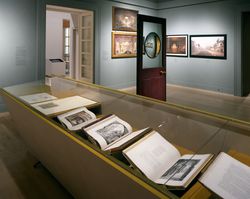
John Soane 1753-1837
John Soane 1753-1837
Actions:
Description:
Décrit par Henry James comme « l’une des choses les plus étonnantes de Londres », le Sir John Soane’s Museum a été conçu comme un lieu pittoresque et énigmatique, à la fois maison, cabinet de travail, galerie de collectionneur et vitrine personnelle de l’un des architectes les plus novateurs de l’histoire. L’exposition offre le premier réexamen majeur de la carrière de(...)
Décrit par Henry James comme « l’une des choses les plus étonnantes de Londres », le Sir John Soane’s Museum a été conçu comme un lieu pittoresque et énigmatique, à la fois maison, cabinet de travail, galerie de collectionneur et vitrine personnelle de l’un des architectes les plus novateurs de l’histoire. L’exposition offre le premier réexamen majeur de la carrière de(...)
Localisation:
Salles principales
Salles principales
Date:
16 mai 2001 au 3 septembre 2001
16 mai 2001 au 3 septembre 2001
Titre:
John Soane 1753-1837
Actions:
Description:
Décrit par Henry James comme « l’une des choses les plus étonnantes de Londres », le Sir John Soane’s Museum a été conçu comme un lieu pittoresque et énigmatique, à la fois maison, cabinet de travail, galerie de collectionneur et vitrine personnelle de l’un des architectes les plus novateurs de l’histoire. L’exposition offre le premier réexamen majeur de la carrière de(...)
John Soane 1753-1837
Actions:
Description:
Décrit par Henry James comme « l’une des choses les plus étonnantes de Londres », le Sir John Soane’s Museum a été conçu comme un lieu pittoresque et énigmatique, à la fois maison, cabinet de travail, galerie de collectionneur et vitrine personnelle de l’un des architectes les plus novateurs de l’histoire. L’exposition offre le premier réexamen majeur de la carrière de(...)
Classification:
expositions
expositions
Date:
16 mai 2001 au
3 septembre 2001
16 mai 2001 au
3 septembre 2001
Localisation:
Salles principales
Salles principales
Niveau de description archivistique:
Série(s)
Série(s)
Numéro de référence:
CD041.S3
Description:
This series documents two projects by the firm Eva Vecsei Architect. In 1973, Vecsei opened her own private practice after her departure from the Dimitri Dimakopoulos’ firm, where she worked from 1971 to 1973. In 1973, Vecsei was hired as an architect by Group Concordia Developers (GCD) to design La Cité, a high density mixed-use residential and commercial project in Milton Park, Montréal. The project was comprised of multifunctional complexes of residential units, offices, a shopping mall, and a hotel with a year-round outdoor pool. The project was realized by the architects Eva H. Vecsei and Dobush Stewart Longpré Marchand Goudreau. The project is also known as "Cité Concordia". The Place Bonaventure was also developed by GCD, where Vecsei was the head project designer from 1964 to 1967. Besides these projects Eva Vecsei Architect also designed concepts for the city centre (1976) and a mixed-use complex (1978) in Karachi, Pakistan. The bulk of the Eva Hollo Vecsei collection is arranged in this series and was produced between 1969 and 2008. Records are predominantly from 1974-1976, which correspond to the period of the La Cité project. Documenting La Cité are architectural records, such as presentation, design, and working drawings, as well as photographs, publications, slides, clippings, digital material (photographs), and a presentation document. This series also includes two clippings on the mixed-use complex in Karachi.
CD041.S3
Description:
This series documents two projects by the firm Eva Vecsei Architect. In 1973, Vecsei opened her own private practice after her departure from the Dimitri Dimakopoulos’ firm, where she worked from 1971 to 1973. In 1973, Vecsei was hired as an architect by Group Concordia Developers (GCD) to design La Cité, a high density mixed-use residential and commercial project in Milton Park, Montréal. The project was comprised of multifunctional complexes of residential units, offices, a shopping mall, and a hotel with a year-round outdoor pool. The project was realized by the architects Eva H. Vecsei and Dobush Stewart Longpré Marchand Goudreau. The project is also known as "Cité Concordia". The Place Bonaventure was also developed by GCD, where Vecsei was the head project designer from 1964 to 1967. Besides these projects Eva Vecsei Architect also designed concepts for the city centre (1976) and a mixed-use complex (1978) in Karachi, Pakistan. The bulk of the Eva Hollo Vecsei collection is arranged in this series and was produced between 1969 and 2008. Records are predominantly from 1974-1976, which correspond to the period of the La Cité project. Documenting La Cité are architectural records, such as presentation, design, and working drawings, as well as photographs, publications, slides, clippings, digital material (photographs), and a presentation document. This series also includes two clippings on the mixed-use complex in Karachi.
Personnes et institutions:
Date:
1969-2008
1969-2008
Titre:
Eva Vecsei Architect (1973-1980)
Actions:
CD041.S3
Description:
This series documents two projects by the firm Eva Vecsei Architect. In 1973, Vecsei opened her own private practice after her departure from the Dimitri Dimakopoulos’ firm, where she worked from 1971 to 1973. In 1973, Vecsei was hired as an architect by Group Concordia Developers (GCD) to design La Cité, a high density mixed-use residential and commercial project in Milton Park, Montréal. The project was comprised of multifunctional complexes of residential units, offices, a shopping mall, and a hotel with a year-round outdoor pool. The project was realized by the architects Eva H. Vecsei and Dobush Stewart Longpré Marchand Goudreau. The project is also known as "Cité Concordia". The Place Bonaventure was also developed by GCD, where Vecsei was the head project designer from 1964 to 1967. Besides these projects Eva Vecsei Architect also designed concepts for the city centre (1976) and a mixed-use complex (1978) in Karachi, Pakistan. The bulk of the Eva Hollo Vecsei collection is arranged in this series and was produced between 1969 and 2008. Records are predominantly from 1974-1976, which correspond to the period of the La Cité project. Documenting La Cité are architectural records, such as presentation, design, and working drawings, as well as photographs, publications, slides, clippings, digital material (photographs), and a presentation document. This series also includes two clippings on the mixed-use complex in Karachi.
Eva Vecsei Architect (1973-1980)
Actions:
CD041.S3
Description:
This series documents two projects by the firm Eva Vecsei Architect. In 1973, Vecsei opened her own private practice after her departure from the Dimitri Dimakopoulos’ firm, where she worked from 1971 to 1973. In 1973, Vecsei was hired as an architect by Group Concordia Developers (GCD) to design La Cité, a high density mixed-use residential and commercial project in Milton Park, Montréal. The project was comprised of multifunctional complexes of residential units, offices, a shopping mall, and a hotel with a year-round outdoor pool. The project was realized by the architects Eva H. Vecsei and Dobush Stewart Longpré Marchand Goudreau. The project is also known as "Cité Concordia". The Place Bonaventure was also developed by GCD, where Vecsei was the head project designer from 1964 to 1967. Besides these projects Eva Vecsei Architect also designed concepts for the city centre (1976) and a mixed-use complex (1978) in Karachi, Pakistan. The bulk of the Eva Hollo Vecsei collection is arranged in this series and was produced between 1969 and 2008. Records are predominantly from 1974-1976, which correspond to the period of the La Cité project. Documenting La Cité are architectural records, such as presentation, design, and working drawings, as well as photographs, publications, slides, clippings, digital material (photographs), and a presentation document. This series also includes two clippings on the mixed-use complex in Karachi.
Niveau de description archivistique:
Series
Series
Date:
1969-2008
1969-2008
Personnes et institutions:
Niveau de description archivistique:
Projet
Projet
Numéro de référence:
AP207.S1.1968.PR04
Description:
This project series documents Pettena's installation entitled "Grazia & Giustizia", named after the Ministry of Justice in Italy. This project is the third of a series of three installations created in 1968 which consisted of large three-dimensional letters, forming words, and made purposely of perishable materials. The "Grazia & Giustizia" was created and constructed in the context of the 6th Festival of Avant-Garde Music in Palermo, in 1968. Unlike the first two installations in this series, this one was destroyed intentionally and was more of a performance as each cardboard letter was taken and thrown in the sea after a funeral procession accompanied by music played by the group MEV (Musica Elettronica Viva). The installation was re-created in 2012, this time in Civitella del Tronto, at "a great fort dating from the 16th century, which was not only the dominant architectural feature in that context but in particular the place where 'justice' used to be dispensed (or not)." [1] The project series contains photographs of the procession and of the letters once in the sea, and two drawings, including one showing the letters floating in the water. The project series also contains photographs showing the installation at the fort of Civitella del Tronto in 2012 and project descriptions in English and Italian. Source: [1] Gianni Pettena website, https://www.giannipettena.it/italiano/opere-1/inst-grazia-ii-2012-1/ (last accessed 30 October 2019)
AP207.S1.1968.PR04
Description:
This project series documents Pettena's installation entitled "Grazia & Giustizia", named after the Ministry of Justice in Italy. This project is the third of a series of three installations created in 1968 which consisted of large three-dimensional letters, forming words, and made purposely of perishable materials. The "Grazia & Giustizia" was created and constructed in the context of the 6th Festival of Avant-Garde Music in Palermo, in 1968. Unlike the first two installations in this series, this one was destroyed intentionally and was more of a performance as each cardboard letter was taken and thrown in the sea after a funeral procession accompanied by music played by the group MEV (Musica Elettronica Viva). The installation was re-created in 2012, this time in Civitella del Tronto, at "a great fort dating from the 16th century, which was not only the dominant architectural feature in that context but in particular the place where 'justice' used to be dispensed (or not)." [1] The project series contains photographs of the procession and of the letters once in the sea, and two drawings, including one showing the letters floating in the water. The project series also contains photographs showing the installation at the fort of Civitella del Tronto in 2012 and project descriptions in English and Italian. Source: [1] Gianni Pettena website, https://www.giannipettena.it/italiano/opere-1/inst-grazia-ii-2012-1/ (last accessed 30 October 2019)
Personnes et institutions:
Date:
1968-2017
1968-2017
Titre:
Grazia & Giustizia [Grace & Justice] (1968)
Actions:
AP207.S1.1968.PR04
Description:
This project series documents Pettena's installation entitled "Grazia & Giustizia", named after the Ministry of Justice in Italy. This project is the third of a series of three installations created in 1968 which consisted of large three-dimensional letters, forming words, and made purposely of perishable materials. The "Grazia & Giustizia" was created and constructed in the context of the 6th Festival of Avant-Garde Music in Palermo, in 1968. Unlike the first two installations in this series, this one was destroyed intentionally and was more of a performance as each cardboard letter was taken and thrown in the sea after a funeral procession accompanied by music played by the group MEV (Musica Elettronica Viva). The installation was re-created in 2012, this time in Civitella del Tronto, at "a great fort dating from the 16th century, which was not only the dominant architectural feature in that context but in particular the place where 'justice' used to be dispensed (or not)." [1] The project series contains photographs of the procession and of the letters once in the sea, and two drawings, including one showing the letters floating in the water. The project series also contains photographs showing the installation at the fort of Civitella del Tronto in 2012 and project descriptions in English and Italian. Source: [1] Gianni Pettena website, https://www.giannipettena.it/italiano/opere-1/inst-grazia-ii-2012-1/ (last accessed 30 October 2019)
Grazia & Giustizia [Grace & Justice] (1968)
Actions:
AP207.S1.1968.PR04
Description:
This project series documents Pettena's installation entitled "Grazia & Giustizia", named after the Ministry of Justice in Italy. This project is the third of a series of three installations created in 1968 which consisted of large three-dimensional letters, forming words, and made purposely of perishable materials. The "Grazia & Giustizia" was created and constructed in the context of the 6th Festival of Avant-Garde Music in Palermo, in 1968. Unlike the first two installations in this series, this one was destroyed intentionally and was more of a performance as each cardboard letter was taken and thrown in the sea after a funeral procession accompanied by music played by the group MEV (Musica Elettronica Viva). The installation was re-created in 2012, this time in Civitella del Tronto, at "a great fort dating from the 16th century, which was not only the dominant architectural feature in that context but in particular the place where 'justice' used to be dispensed (or not)." [1] The project series contains photographs of the procession and of the letters once in the sea, and two drawings, including one showing the letters floating in the water. The project series also contains photographs showing the installation at the fort of Civitella del Tronto in 2012 and project descriptions in English and Italian. Source: [1] Gianni Pettena website, https://www.giannipettena.it/italiano/opere-1/inst-grazia-ii-2012-1/ (last accessed 30 October 2019)
Niveau de description archivistique:
Project
Project
Date:
1968-2017
1968-2017
Personnes et institutions:


