


12622 Résultats
Classification:
dessins, photographies
dessins, photographies
Numéro de référence:
DR2012:0011:032
Description:
Ring binder containing drawings, photographs, reprographic copies, stats of architectural, art, and graphic design work, and a watercolour related to Melvin Charney's activities as a student at McGill University, and include the following early projects: - Kitchen details for Mr. and Mrs. A. Zion (1 stat); - Design of vol. 2, no. 2 of YES: A Creative Quarterly (1 copy); - Small weekend house (3 stats); - Curb-service restaurant, for summer use only, on a Laurentian road (2 stat); - Studio-house in the Laurentian mountains (2 stats); - Apartment house to complete an existing pattern of older garden apartments (3 stats); - Community library for the Town of Mount Royal (6 stats); - Motel near the St. Lawrence River (2 stats); - Child centre (3 stats); - Building for the Province of Quebec Architects Association (4 stats); - Cloverdale shopping centre (1 stat); - Morse Jewellers (4 stats); - Steinberg's supermarket, Montreal North; - Reinforced concrete canopy, Molson Stadium (1 sketch, 1 photograph, 1 stat); - Town of Dorval subdivision proposal (1 stat); - Ottawa City Hall, study of lighting of areas in the building (1 stat); - Entrance vestibule, 1552 St. Matthew Street, Montreal (1 stat).
DR2012:0011:032
Description:
Ring binder containing drawings, photographs, reprographic copies, stats of architectural, art, and graphic design work, and a watercolour related to Melvin Charney's activities as a student at McGill University, and include the following early projects: - Kitchen details for Mr. and Mrs. A. Zion (1 stat); - Design of vol. 2, no. 2 of YES: A Creative Quarterly (1 copy); - Small weekend house (3 stats); - Curb-service restaurant, for summer use only, on a Laurentian road (2 stat); - Studio-house in the Laurentian mountains (2 stats); - Apartment house to complete an existing pattern of older garden apartments (3 stats); - Community library for the Town of Mount Royal (6 stats); - Motel near the St. Lawrence River (2 stats); - Child centre (3 stats); - Building for the Province of Quebec Architects Association (4 stats); - Cloverdale shopping centre (1 stat); - Morse Jewellers (4 stats); - Steinberg's supermarket, Montreal North; - Reinforced concrete canopy, Molson Stadium (1 sketch, 1 photograph, 1 stat); - Town of Dorval subdivision proposal (1 stat); - Ottawa City Hall, study of lighting of areas in the building (1 stat); - Entrance vestibule, 1552 St. Matthew Street, Montreal (1 stat).
Personnes et institutions:
Date:
1955-1957
1955-1957
Titre:
Portfolio for application to the graduate program at Yale University
Actions:
DR2012:0011:032
Description:
Ring binder containing drawings, photographs, reprographic copies, stats of architectural, art, and graphic design work, and a watercolour related to Melvin Charney's activities as a student at McGill University, and include the following early projects: - Kitchen details for Mr. and Mrs. A. Zion (1 stat); - Design of vol. 2, no. 2 of YES: A Creative Quarterly (1 copy); - Small weekend house (3 stats); - Curb-service restaurant, for summer use only, on a Laurentian road (2 stat); - Studio-house in the Laurentian mountains (2 stats); - Apartment house to complete an existing pattern of older garden apartments (3 stats); - Community library for the Town of Mount Royal (6 stats); - Motel near the St. Lawrence River (2 stats); - Child centre (3 stats); - Building for the Province of Quebec Architects Association (4 stats); - Cloverdale shopping centre (1 stat); - Morse Jewellers (4 stats); - Steinberg's supermarket, Montreal North; - Reinforced concrete canopy, Molson Stadium (1 sketch, 1 photograph, 1 stat); - Town of Dorval subdivision proposal (1 stat); - Ottawa City Hall, study of lighting of areas in the building (1 stat); - Entrance vestibule, 1552 St. Matthew Street, Montreal (1 stat).
Portfolio for application to the graduate program at Yale University
Actions:
DR2012:0011:032
Description:
Ring binder containing drawings, photographs, reprographic copies, stats of architectural, art, and graphic design work, and a watercolour related to Melvin Charney's activities as a student at McGill University, and include the following early projects: - Kitchen details for Mr. and Mrs. A. Zion (1 stat); - Design of vol. 2, no. 2 of YES: A Creative Quarterly (1 copy); - Small weekend house (3 stats); - Curb-service restaurant, for summer use only, on a Laurentian road (2 stat); - Studio-house in the Laurentian mountains (2 stats); - Apartment house to complete an existing pattern of older garden apartments (3 stats); - Community library for the Town of Mount Royal (6 stats); - Motel near the St. Lawrence River (2 stats); - Child centre (3 stats); - Building for the Province of Quebec Architects Association (4 stats); - Cloverdale shopping centre (1 stat); - Morse Jewellers (4 stats); - Steinberg's supermarket, Montreal North; - Reinforced concrete canopy, Molson Stadium (1 sketch, 1 photograph, 1 stat); - Town of Dorval subdivision proposal (1 stat); - Ottawa City Hall, study of lighting of areas in the building (1 stat); - Entrance vestibule, 1552 St. Matthew Street, Montreal (1 stat).
Classification:
dessins, photographies
dessins, photographies
Date:
1955-1957
1955-1957
Personnes et institutions:
Niveau de description archivistique:
Projet
Projet
Numéro de référence:
AP018.S1.1964.PR09
Description:
This project series documents a lecture hall building at York University in North York, Ontario from 1964-1965. The office identified the project number as 6413. This project, known as Lecture Hall No. 1, consisted of a two-storey building at York University, to be used for teaching. The basement included mechanical and electrical rooms, while the ground floor was made up of large, two-storey lecture halls, smaller classrooms, and projection rooms. This project was built by John B. Parkin Associates, in a joint venture with Gordon S. Adamson Associates and Shore & Moffat and Partners. These three architecture firms formed a joint venture known as UPACE (University Planners Architects And Consulting Engineer). This project was part of a larger master plan by UPACE, which built more than a dozen buildings for the university during this time. UPACE received a Special Mention Massey Medal in 1967 for the design of this project. The project is recorded through reprographic copies of drawings dating from 1965. These were a set of drawings issued for tender.
AP018.S1.1964.PR09
Description:
This project series documents a lecture hall building at York University in North York, Ontario from 1964-1965. The office identified the project number as 6413. This project, known as Lecture Hall No. 1, consisted of a two-storey building at York University, to be used for teaching. The basement included mechanical and electrical rooms, while the ground floor was made up of large, two-storey lecture halls, smaller classrooms, and projection rooms. This project was built by John B. Parkin Associates, in a joint venture with Gordon S. Adamson Associates and Shore & Moffat and Partners. These three architecture firms formed a joint venture known as UPACE (University Planners Architects And Consulting Engineer). This project was part of a larger master plan by UPACE, which built more than a dozen buildings for the university during this time. UPACE received a Special Mention Massey Medal in 1967 for the design of this project. The project is recorded through reprographic copies of drawings dating from 1965. These were a set of drawings issued for tender.
Personnes et institutions:
Date:
1965
1965
Titre:
York University, Lecture Hall No. 1, North York, Ontario (1964-1965)
Actions:
AP018.S1.1964.PR09
Description:
This project series documents a lecture hall building at York University in North York, Ontario from 1964-1965. The office identified the project number as 6413. This project, known as Lecture Hall No. 1, consisted of a two-storey building at York University, to be used for teaching. The basement included mechanical and electrical rooms, while the ground floor was made up of large, two-storey lecture halls, smaller classrooms, and projection rooms. This project was built by John B. Parkin Associates, in a joint venture with Gordon S. Adamson Associates and Shore & Moffat and Partners. These three architecture firms formed a joint venture known as UPACE (University Planners Architects And Consulting Engineer). This project was part of a larger master plan by UPACE, which built more than a dozen buildings for the university during this time. UPACE received a Special Mention Massey Medal in 1967 for the design of this project. The project is recorded through reprographic copies of drawings dating from 1965. These were a set of drawings issued for tender.
York University, Lecture Hall No. 1, North York, Ontario (1964-1965)
Actions:
AP018.S1.1964.PR09
Description:
This project series documents a lecture hall building at York University in North York, Ontario from 1964-1965. The office identified the project number as 6413. This project, known as Lecture Hall No. 1, consisted of a two-storey building at York University, to be used for teaching. The basement included mechanical and electrical rooms, while the ground floor was made up of large, two-storey lecture halls, smaller classrooms, and projection rooms. This project was built by John B. Parkin Associates, in a joint venture with Gordon S. Adamson Associates and Shore & Moffat and Partners. These three architecture firms formed a joint venture known as UPACE (University Planners Architects And Consulting Engineer). This project was part of a larger master plan by UPACE, which built more than a dozen buildings for the university during this time. UPACE received a Special Mention Massey Medal in 1967 for the design of this project. The project is recorded through reprographic copies of drawings dating from 1965. These were a set of drawings issued for tender.
Niveau de description archivistique:
Project
Project
Date:
1965
1965
Personnes et institutions:
Niveau de description archivistique:
Projet
Projet
Numéro de référence:
AP056.S1.2000.PR05
Description:
This project series documents the James Stewart Centre for Mathematics at McMaster University in Hamilton, Ontario from 2000-2003. The office identified the project number as 2000-22. This project consisted of the complete interior renovation of Hamilton Hall, originally built in 1929, for use as a mathematics school at the University. An insulated envelope was added to the historic building in order to preserve its gothic exteriors, which were juxtaposed against new modern and abstract interior spaces. Transparent blue glass was used throughout the four-storey building for walls, ceilings and railings to draw sunlight deep into its interiors. A mix of enclosed rooms and open, interactive spaces were created and slate chalkboards were added throughout the building to inspire spontaneous thought and collaborative work.[1] This project was awarded a Governor General's Medal in Architecture in 2004. The project is recorded through drawings dating from around 2000 to around 2002, which include sketches, plans, elevations, sections, perspectives, details, presentation drawings and digital renderings. A large part of the sketches are drawings for custom furniture. [1]"James Stewart Centre for Mathematics, McMaster University." KPMB. Accessed April 12, 2019. http://www.kpmb.com/project/james-stewart-centre-for-mathematics/
AP056.S1.2000.PR05
Description:
This project series documents the James Stewart Centre for Mathematics at McMaster University in Hamilton, Ontario from 2000-2003. The office identified the project number as 2000-22. This project consisted of the complete interior renovation of Hamilton Hall, originally built in 1929, for use as a mathematics school at the University. An insulated envelope was added to the historic building in order to preserve its gothic exteriors, which were juxtaposed against new modern and abstract interior spaces. Transparent blue glass was used throughout the four-storey building for walls, ceilings and railings to draw sunlight deep into its interiors. A mix of enclosed rooms and open, interactive spaces were created and slate chalkboards were added throughout the building to inspire spontaneous thought and collaborative work.[1] This project was awarded a Governor General's Medal in Architecture in 2004. The project is recorded through drawings dating from around 2000 to around 2002, which include sketches, plans, elevations, sections, perspectives, details, presentation drawings and digital renderings. A large part of the sketches are drawings for custom furniture. [1]"James Stewart Centre for Mathematics, McMaster University." KPMB. Accessed April 12, 2019. http://www.kpmb.com/project/james-stewart-centre-for-mathematics/
Personnes et institutions:
Date:
circa 2000-2002
circa 2000-2002
Titre:
James Stewart Centre for Mathematics, McMaster University, Hamilton, Ontario (2000-2003)
Actions:
AP056.S1.2000.PR05
Description:
This project series documents the James Stewart Centre for Mathematics at McMaster University in Hamilton, Ontario from 2000-2003. The office identified the project number as 2000-22. This project consisted of the complete interior renovation of Hamilton Hall, originally built in 1929, for use as a mathematics school at the University. An insulated envelope was added to the historic building in order to preserve its gothic exteriors, which were juxtaposed against new modern and abstract interior spaces. Transparent blue glass was used throughout the four-storey building for walls, ceilings and railings to draw sunlight deep into its interiors. A mix of enclosed rooms and open, interactive spaces were created and slate chalkboards were added throughout the building to inspire spontaneous thought and collaborative work.[1] This project was awarded a Governor General's Medal in Architecture in 2004. The project is recorded through drawings dating from around 2000 to around 2002, which include sketches, plans, elevations, sections, perspectives, details, presentation drawings and digital renderings. A large part of the sketches are drawings for custom furniture. [1]"James Stewart Centre for Mathematics, McMaster University." KPMB. Accessed April 12, 2019. http://www.kpmb.com/project/james-stewart-centre-for-mathematics/
James Stewart Centre for Mathematics, McMaster University, Hamilton, Ontario (2000-2003)
Actions:
AP056.S1.2000.PR05
Description:
This project series documents the James Stewart Centre for Mathematics at McMaster University in Hamilton, Ontario from 2000-2003. The office identified the project number as 2000-22. This project consisted of the complete interior renovation of Hamilton Hall, originally built in 1929, for use as a mathematics school at the University. An insulated envelope was added to the historic building in order to preserve its gothic exteriors, which were juxtaposed against new modern and abstract interior spaces. Transparent blue glass was used throughout the four-storey building for walls, ceilings and railings to draw sunlight deep into its interiors. A mix of enclosed rooms and open, interactive spaces were created and slate chalkboards were added throughout the building to inspire spontaneous thought and collaborative work.[1] This project was awarded a Governor General's Medal in Architecture in 2004. The project is recorded through drawings dating from around 2000 to around 2002, which include sketches, plans, elevations, sections, perspectives, details, presentation drawings and digital renderings. A large part of the sketches are drawings for custom furniture. [1]"James Stewart Centre for Mathematics, McMaster University." KPMB. Accessed April 12, 2019. http://www.kpmb.com/project/james-stewart-centre-for-mathematics/
Niveau de description archivistique:
project
project
Date:
circa 2000-2002
circa 2000-2002
Personnes et institutions:
Classification:
dessins
dessins
Actions:
Numéro de référence:
DR1988:0332
Description:
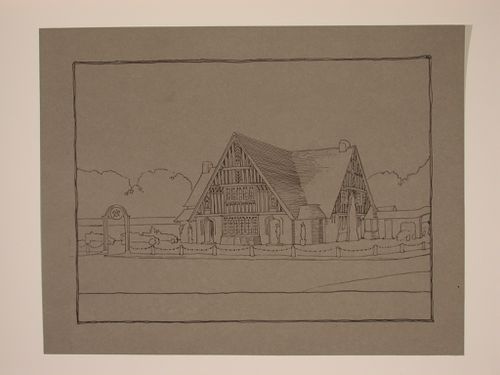
- This building is identified as the Mason's Arms by comparison with DR1988:0380, 'Elevations for the proposed rebuilding of the Mason's Arms, Donisthorpe', which includes the elevation shown in this view. - The style of many of these drawings and reprographic copies by Henry Hyams (DR1988:0332 - DR1988:0414) suggests that they were possibly for periodical illustrations. Hyams contributed articles to the periodicals 'The Builder' and 'The Architect'. Two objects in the CCA collections can be linked to the article "Music in Stone" published prior to 1926 in 'The Architect'; a reprographic copy (DR1988:0357) and a drawing (DR1988:0364) (Who's Who in Architecture, 161).
DR1988:0332
Description:
- This building is identified as the Mason's Arms by comparison with DR1988:0380, 'Elevations for the proposed rebuilding of the Mason's Arms, Donisthorpe', which includes the elevation shown in this view. - The style of many of these drawings and reprographic copies by Henry Hyams (DR1988:0332 - DR1988:0414) suggests that they were possibly for periodical illustrations. Hyams contributed articles to the periodicals 'The Builder' and 'The Architect'. Two objects in the CCA collections can be linked to the article "Music in Stone" published prior to 1926 in 'The Architect'; a reprographic copy (DR1988:0357) and a drawing (DR1988:0364) (Who's Who in Architecture, 161).
Personnes et institutions:
Sujet:
architecture
architecture
Date:
printed June 1937 ?
printed June 1937 ?
Titre:
Perspectival view showing the proposed rebuilding of the Mason's Arms, Donisthorpe
Actions:
DR1988:0332
Description:
- This building is identified as the Mason's Arms by comparison with DR1988:0380, 'Elevations for the proposed rebuilding of the Mason's Arms, Donisthorpe', which includes the elevation shown in this view. - The style of many of these drawings and reprographic copies by Henry Hyams (DR1988:0332 - DR1988:0414) suggests that they were possibly for periodical illustrations. Hyams contributed articles to the periodicals 'The Builder' and 'The Architect'. Two objects in the CCA collections can be linked to the article "Music in Stone" published prior to 1926 in 'The Architect'; a reprographic copy (DR1988:0357) and a drawing (DR1988:0364) (Who's Who in Architecture, 161).
Perspectival view showing the proposed rebuilding of the Mason's Arms, Donisthorpe
Actions:
DR1988:0332
Description:
- This building is identified as the Mason's Arms by comparison with DR1988:0380, 'Elevations for the proposed rebuilding of the Mason's Arms, Donisthorpe', which includes the elevation shown in this view. - The style of many of these drawings and reprographic copies by Henry Hyams (DR1988:0332 - DR1988:0414) suggests that they were possibly for periodical illustrations. Hyams contributed articles to the periodicals 'The Builder' and 'The Architect'. Two objects in the CCA collections can be linked to the article "Music in Stone" published prior to 1926 in 'The Architect'; a reprographic copy (DR1988:0357) and a drawing (DR1988:0364) (Who's Who in Architecture, 161).
Classification:
dessins
dessins
Date:
printed June 1937 ?
printed June 1937 ?
Personnes et institutions:
Sujet:
architecture
architecture
Classification:
dessins
dessins
Actions:
Numéro de référence:
DR1988:0333
Description:
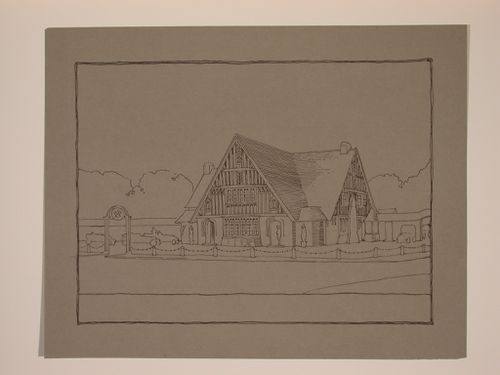
- This building is identified as the Mason's Arms by comparison with DR1988:0380, 'Elevations for the proposed rebuilding of the Mason's Arms, Donisthorpe', which includes the elevation shown in this view. - The style of many of these drawings and reprographic copies by Henry Hyams (DR1988:0332 - DR1988:0414) suggests that they were possibly for periodical illustrations. Hyams contributed articles to the periodicals 'The Builder' and 'The Architect'. Two objects in the CCA collections can be linked to the article "Music in Stone" published prior to 1926 in 'The Architect'; a reprographic copy (DR1988:0357) and a drawing (DR1988:0364) (Who's Who in Architecture, 161).
DR1988:0333
Description:
- This building is identified as the Mason's Arms by comparison with DR1988:0380, 'Elevations for the proposed rebuilding of the Mason's Arms, Donisthorpe', which includes the elevation shown in this view. - The style of many of these drawings and reprographic copies by Henry Hyams (DR1988:0332 - DR1988:0414) suggests that they were possibly for periodical illustrations. Hyams contributed articles to the periodicals 'The Builder' and 'The Architect'. Two objects in the CCA collections can be linked to the article "Music in Stone" published prior to 1926 in 'The Architect'; a reprographic copy (DR1988:0357) and a drawing (DR1988:0364) (Who's Who in Architecture, 161).
Personnes et institutions:
Sujet:
architecture
architecture
Date:
printed June 1937 ?
printed June 1937 ?
Titre:
Perspectival view showing the proposed rebuilding of the Mason's Arms, Donisthorpe
Actions:
DR1988:0333
Description:
- This building is identified as the Mason's Arms by comparison with DR1988:0380, 'Elevations for the proposed rebuilding of the Mason's Arms, Donisthorpe', which includes the elevation shown in this view. - The style of many of these drawings and reprographic copies by Henry Hyams (DR1988:0332 - DR1988:0414) suggests that they were possibly for periodical illustrations. Hyams contributed articles to the periodicals 'The Builder' and 'The Architect'. Two objects in the CCA collections can be linked to the article "Music in Stone" published prior to 1926 in 'The Architect'; a reprographic copy (DR1988:0357) and a drawing (DR1988:0364) (Who's Who in Architecture, 161).
Perspectival view showing the proposed rebuilding of the Mason's Arms, Donisthorpe
Actions:
DR1988:0333
Description:
- This building is identified as the Mason's Arms by comparison with DR1988:0380, 'Elevations for the proposed rebuilding of the Mason's Arms, Donisthorpe', which includes the elevation shown in this view. - The style of many of these drawings and reprographic copies by Henry Hyams (DR1988:0332 - DR1988:0414) suggests that they were possibly for periodical illustrations. Hyams contributed articles to the periodicals 'The Builder' and 'The Architect'. Two objects in the CCA collections can be linked to the article "Music in Stone" published prior to 1926 in 'The Architect'; a reprographic copy (DR1988:0357) and a drawing (DR1988:0364) (Who's Who in Architecture, 161).
Classification:
dessins
dessins
Date:
printed June 1937 ?
printed June 1937 ?
Personnes et institutions:
Sujet:
architecture
architecture
Classification:
dessins
dessins
Actions:
Numéro de référence:
DR1988:0334
Description:
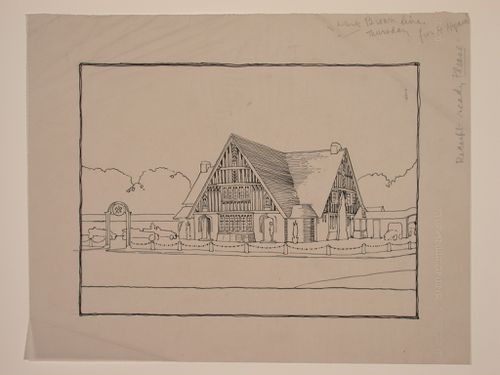
- This building is identified as the Mason's Arms by comparison with DR1988:0380, 'Elevations for the proposed rebuilding of the Mason's Arms, Donisthorpe', which includes the elevation shown in this view. - The style of many of these drawings and reprographic copies by Henry Hyams (DR1988:0332 - DR1988:0414) suggests that they were possibly for periodical illustrations. Hyams contributed articles to the periodicals 'The Builder' and 'The Architect'. Two objects in the CCA collections can be linked to the article "Music in Stone" published prior to 1926 in 'The Architect'; a reprographic copy (DR1988:0357) and a drawing (DR1988:0364) (Who's Who in Architecture, 161).
DR1988:0334
Description:
- This building is identified as the Mason's Arms by comparison with DR1988:0380, 'Elevations for the proposed rebuilding of the Mason's Arms, Donisthorpe', which includes the elevation shown in this view. - The style of many of these drawings and reprographic copies by Henry Hyams (DR1988:0332 - DR1988:0414) suggests that they were possibly for periodical illustrations. Hyams contributed articles to the periodicals 'The Builder' and 'The Architect'. Two objects in the CCA collections can be linked to the article "Music in Stone" published prior to 1926 in 'The Architect'; a reprographic copy (DR1988:0357) and a drawing (DR1988:0364) (Who's Who in Architecture, 161).
Personnes et institutions:
Sujet:
architecture
architecture
Date:
June 1937
June 1937
Titre:
Perspectival view showing the proposed rebuilding of the Mason's Arms, Donisthorpe
Actions:
DR1988:0334
Description:
- This building is identified as the Mason's Arms by comparison with DR1988:0380, 'Elevations for the proposed rebuilding of the Mason's Arms, Donisthorpe', which includes the elevation shown in this view. - The style of many of these drawings and reprographic copies by Henry Hyams (DR1988:0332 - DR1988:0414) suggests that they were possibly for periodical illustrations. Hyams contributed articles to the periodicals 'The Builder' and 'The Architect'. Two objects in the CCA collections can be linked to the article "Music in Stone" published prior to 1926 in 'The Architect'; a reprographic copy (DR1988:0357) and a drawing (DR1988:0364) (Who's Who in Architecture, 161).
Perspectival view showing the proposed rebuilding of the Mason's Arms, Donisthorpe
Actions:
DR1988:0334
Description:
- This building is identified as the Mason's Arms by comparison with DR1988:0380, 'Elevations for the proposed rebuilding of the Mason's Arms, Donisthorpe', which includes the elevation shown in this view. - The style of many of these drawings and reprographic copies by Henry Hyams (DR1988:0332 - DR1988:0414) suggests that they were possibly for periodical illustrations. Hyams contributed articles to the periodicals 'The Builder' and 'The Architect'. Two objects in the CCA collections can be linked to the article "Music in Stone" published prior to 1926 in 'The Architect'; a reprographic copy (DR1988:0357) and a drawing (DR1988:0364) (Who's Who in Architecture, 161).
Classification:
dessins
dessins
Date:
June 1937
June 1937
Personnes et institutions:
Sujet:
architecture
architecture
Classification:
expositions
expositions
Titre:
La vitesse et ses limites
La vitesse et ses limites
Actions:
Description:
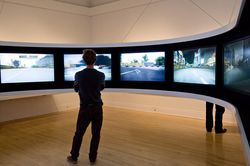
La vitesse et ses limite traite de la place prépondérante qu’occupe la vitesse dans la vie moderne, dans les domaines de l’art, l’architecture, l’urbanisme, en passant par celui des arts graphiques, de l’économie et de la culture matérielle de l’ère industrielle et de celle de l’information. Elle souligne le centième anniversaire du futurisme italien, mouvement à qui l’on(...)
La vitesse et ses limite traite de la place prépondérante qu’occupe la vitesse dans la vie moderne, dans les domaines de l’art, l’architecture, l’urbanisme, en passant par celui des arts graphiques, de l’économie et de la culture matérielle de l’ère industrielle et de celle de l’information. Elle souligne le centième anniversaire du futurisme italien, mouvement à qui l’on(...)
Localisation:
Salles principales
Salles principales
Date:
20 mai 2009 au 8 novembre 2009
20 mai 2009 au 8 novembre 2009
Titre:
La vitesse et ses limites
Actions:
Description:
La vitesse et ses limite traite de la place prépondérante qu’occupe la vitesse dans la vie moderne, dans les domaines de l’art, l’architecture, l’urbanisme, en passant par celui des arts graphiques, de l’économie et de la culture matérielle de l’ère industrielle et de celle de l’information. Elle souligne le centième anniversaire du futurisme italien, mouvement à qui l’on(...)
La vitesse et ses limites
Actions:
Description:
La vitesse et ses limite traite de la place prépondérante qu’occupe la vitesse dans la vie moderne, dans les domaines de l’art, l’architecture, l’urbanisme, en passant par celui des arts graphiques, de l’économie et de la culture matérielle de l’ère industrielle et de celle de l’information. Elle souligne le centième anniversaire du futurisme italien, mouvement à qui l’on(...)
Classification:
expositions
expositions
Date:
20 mai 2009 au
8 novembre 2009
20 mai 2009 au
8 novembre 2009
Localisation:
Salles principales
Salles principales
Niveau de description archivistique:
Projet
Projet
Numéro de référence:
AP056.S1.1990.PR03
Description:
This project series documents the Joseph Stauffer Library at Queen's University in Kingston, Ontario from 1990-1994. The office identified the project number as 9011. This project was the winning entry of a national design competition and was completed with Thomas Payne at its head and with the firm Moffat Kinoshita Associates acting as consulting architects. Located at the corner of Alfred and University Streets, the project consisted of a new 200,000 square foot library for the campus. Influenced by the surrounding gothic collegiate buildings, the library's exteriors focused on vertical, upward movement and had rich textures created by limestone, copper flashing and wood window frames and entrance screens. The library's main entrance at the Union Street and University Street corner was a rotunda that featured a fireplace-lined reading room on the second floor. Other reading rooms and a café lined the building's exterior, while the main library stacks were housed in the core of the building. Wood panelling was disbursed amongst the walls to add warmth to the buildings interior. This project also included plans to expand the library in the following decades. This project received a Governor General's Award in Architecture in 1997. This project is recorded through drawings, photographs, presentation paintings and textual records dating from 1990-1994. The drawings are mostly originals and include sketches, presentation drawings, plans, elevations, sections, perspectives, details and axonometric drawings. The photographs show the finished building, while the textual records consist of publicity on the building and the program description.
AP056.S1.1990.PR03
Description:
This project series documents the Joseph Stauffer Library at Queen's University in Kingston, Ontario from 1990-1994. The office identified the project number as 9011. This project was the winning entry of a national design competition and was completed with Thomas Payne at its head and with the firm Moffat Kinoshita Associates acting as consulting architects. Located at the corner of Alfred and University Streets, the project consisted of a new 200,000 square foot library for the campus. Influenced by the surrounding gothic collegiate buildings, the library's exteriors focused on vertical, upward movement and had rich textures created by limestone, copper flashing and wood window frames and entrance screens. The library's main entrance at the Union Street and University Street corner was a rotunda that featured a fireplace-lined reading room on the second floor. Other reading rooms and a café lined the building's exterior, while the main library stacks were housed in the core of the building. Wood panelling was disbursed amongst the walls to add warmth to the buildings interior. This project also included plans to expand the library in the following decades. This project received a Governor General's Award in Architecture in 1997. This project is recorded through drawings, photographs, presentation paintings and textual records dating from 1990-1994. The drawings are mostly originals and include sketches, presentation drawings, plans, elevations, sections, perspectives, details and axonometric drawings. The photographs show the finished building, while the textual records consist of publicity on the building and the program description.
Personnes et institutions:
Date:
1990-1994
1990-1994
Titre:
Joseph Stauffer Library, Queen's University, Kingston, Ontario (1990-1994)
Actions:
AP056.S1.1990.PR03
Description:
This project series documents the Joseph Stauffer Library at Queen's University in Kingston, Ontario from 1990-1994. The office identified the project number as 9011. This project was the winning entry of a national design competition and was completed with Thomas Payne at its head and with the firm Moffat Kinoshita Associates acting as consulting architects. Located at the corner of Alfred and University Streets, the project consisted of a new 200,000 square foot library for the campus. Influenced by the surrounding gothic collegiate buildings, the library's exteriors focused on vertical, upward movement and had rich textures created by limestone, copper flashing and wood window frames and entrance screens. The library's main entrance at the Union Street and University Street corner was a rotunda that featured a fireplace-lined reading room on the second floor. Other reading rooms and a café lined the building's exterior, while the main library stacks were housed in the core of the building. Wood panelling was disbursed amongst the walls to add warmth to the buildings interior. This project also included plans to expand the library in the following decades. This project received a Governor General's Award in Architecture in 1997. This project is recorded through drawings, photographs, presentation paintings and textual records dating from 1990-1994. The drawings are mostly originals and include sketches, presentation drawings, plans, elevations, sections, perspectives, details and axonometric drawings. The photographs show the finished building, while the textual records consist of publicity on the building and the program description.
Joseph Stauffer Library, Queen's University, Kingston, Ontario (1990-1994)
Actions:
AP056.S1.1990.PR03
Description:
This project series documents the Joseph Stauffer Library at Queen's University in Kingston, Ontario from 1990-1994. The office identified the project number as 9011. This project was the winning entry of a national design competition and was completed with Thomas Payne at its head and with the firm Moffat Kinoshita Associates acting as consulting architects. Located at the corner of Alfred and University Streets, the project consisted of a new 200,000 square foot library for the campus. Influenced by the surrounding gothic collegiate buildings, the library's exteriors focused on vertical, upward movement and had rich textures created by limestone, copper flashing and wood window frames and entrance screens. The library's main entrance at the Union Street and University Street corner was a rotunda that featured a fireplace-lined reading room on the second floor. Other reading rooms and a café lined the building's exterior, while the main library stacks were housed in the core of the building. Wood panelling was disbursed amongst the walls to add warmth to the buildings interior. This project also included plans to expand the library in the following decades. This project received a Governor General's Award in Architecture in 1997. This project is recorded through drawings, photographs, presentation paintings and textual records dating from 1990-1994. The drawings are mostly originals and include sketches, presentation drawings, plans, elevations, sections, perspectives, details and axonometric drawings. The photographs show the finished building, while the textual records consist of publicity on the building and the program description.
Niveau de description archivistique:
Project
Project
Date:
1990-1994
1990-1994
Personnes et institutions:
Classification:
dessins
dessins
Numéro de référence:
DR1988:0366
Description:
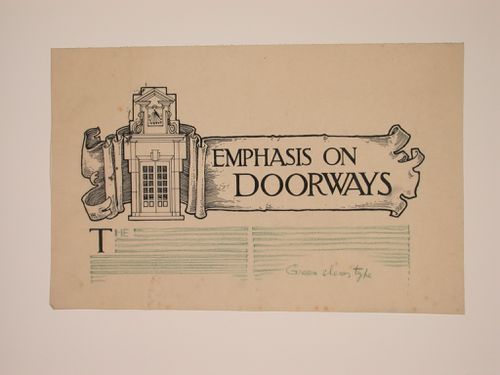
- This drawing shows a design for the layout of the top half of a page, with the heading executed in pen and black ink, and the text indicated with green pencil lines. The heading was written inside a scrolled border which also incorporates an elevation of a pair of french doors in a stone frame surmounted by a sundial. - The style of many of these drawings and reprographic copies by Henry Hyams (DR1988:0332 - DR1988:0414) suggests that they were possibly for periodical illustrations. Hyams contributed articles to the periodicals 'The Builder' and 'The Architect'. Two objects in the CCA collections can be linked to the article "Music in Stone" published prior to 1926 in 'The Architect'; a reprographic copy (DR1988:0357) and a drawing (DR1988:0364) (Who's Who in Architecture, 161).
DR1988:0366
Description:
- This drawing shows a design for the layout of the top half of a page, with the heading executed in pen and black ink, and the text indicated with green pencil lines. The heading was written inside a scrolled border which also incorporates an elevation of a pair of french doors in a stone frame surmounted by a sundial. - The style of many of these drawings and reprographic copies by Henry Hyams (DR1988:0332 - DR1988:0414) suggests that they were possibly for periodical illustrations. Hyams contributed articles to the periodicals 'The Builder' and 'The Architect'. Two objects in the CCA collections can be linked to the article "Music in Stone" published prior to 1926 in 'The Architect'; a reprographic copy (DR1988:0357) and a drawing (DR1988:0364) (Who's Who in Architecture, 161).
Personnes et institutions:
Sujet:
architecture
architecture
Date:
1920s or 1930s
1920s or 1930s
Titre:
Page layout with the head title for "Emphasis on Doorways"
Actions:
DR1988:0366
Description:
- This drawing shows a design for the layout of the top half of a page, with the heading executed in pen and black ink, and the text indicated with green pencil lines. The heading was written inside a scrolled border which also incorporates an elevation of a pair of french doors in a stone frame surmounted by a sundial. - The style of many of these drawings and reprographic copies by Henry Hyams (DR1988:0332 - DR1988:0414) suggests that they were possibly for periodical illustrations. Hyams contributed articles to the periodicals 'The Builder' and 'The Architect'. Two objects in the CCA collections can be linked to the article "Music in Stone" published prior to 1926 in 'The Architect'; a reprographic copy (DR1988:0357) and a drawing (DR1988:0364) (Who's Who in Architecture, 161).
Page layout with the head title for "Emphasis on Doorways"
Actions:
DR1988:0366
Description:
- This drawing shows a design for the layout of the top half of a page, with the heading executed in pen and black ink, and the text indicated with green pencil lines. The heading was written inside a scrolled border which also incorporates an elevation of a pair of french doors in a stone frame surmounted by a sundial. - The style of many of these drawings and reprographic copies by Henry Hyams (DR1988:0332 - DR1988:0414) suggests that they were possibly for periodical illustrations. Hyams contributed articles to the periodicals 'The Builder' and 'The Architect'. Two objects in the CCA collections can be linked to the article "Music in Stone" published prior to 1926 in 'The Architect'; a reprographic copy (DR1988:0357) and a drawing (DR1988:0364) (Who's Who in Architecture, 161).
Classification:
dessins
dessins
Date:
1920s or 1930s
1920s or 1930s
Personnes et institutions:
Sujet:
architecture
architecture
Niveau de description archivistique:
Projet
Projet
Numéro de référence:
AP207.S1.1966.PR01
Description:
This project series documents the sound performance "Tunnel Sonoro." It was created in 1966, when Pettena was experimenting with music and worked with musicians. "Tunnel Sonoro" was one of the results of his collaborations with musicians. This project consists of a sound performance during which a performer, entirely dressed in a metallic bodysuit, crosses a narrow tunnel "in which, by scrapping against the surfaces, their body 'played' the environment, imitating the sound of the wind [...]." [1] The performance was conceived for the (Musica Elettronica Viva), a live acoustic and electronic improvisational group from Rome. The project series contains a project description in Italian and in English, a reproduction of a publication from the Biennale di Firenze describing the project, and drawings of the tunnel and the metallic bodysuit. Source: [1] Marco Scotini, editor. Non-conscious architecture: Gianni Pettena, Sternberg Press, 2018, 235 pages. p. 98.
AP207.S1.1966.PR01
Description:
This project series documents the sound performance "Tunnel Sonoro." It was created in 1966, when Pettena was experimenting with music and worked with musicians. "Tunnel Sonoro" was one of the results of his collaborations with musicians. This project consists of a sound performance during which a performer, entirely dressed in a metallic bodysuit, crosses a narrow tunnel "in which, by scrapping against the surfaces, their body 'played' the environment, imitating the sound of the wind [...]." [1] The performance was conceived for the (Musica Elettronica Viva), a live acoustic and electronic improvisational group from Rome. The project series contains a project description in Italian and in English, a reproduction of a publication from the Biennale di Firenze describing the project, and drawings of the tunnel and the metallic bodysuit. Source: [1] Marco Scotini, editor. Non-conscious architecture: Gianni Pettena, Sternberg Press, 2018, 235 pages. p. 98.
Personnes et institutions:
Date:
circa 1966-2018
circa 1966-2018
Titre:
Tunnel Sonoro [Sound Tunnel] (1966)
Actions:
AP207.S1.1966.PR01
Description:
This project series documents the sound performance "Tunnel Sonoro." It was created in 1966, when Pettena was experimenting with music and worked with musicians. "Tunnel Sonoro" was one of the results of his collaborations with musicians. This project consists of a sound performance during which a performer, entirely dressed in a metallic bodysuit, crosses a narrow tunnel "in which, by scrapping against the surfaces, their body 'played' the environment, imitating the sound of the wind [...]." [1] The performance was conceived for the (Musica Elettronica Viva), a live acoustic and electronic improvisational group from Rome. The project series contains a project description in Italian and in English, a reproduction of a publication from the Biennale di Firenze describing the project, and drawings of the tunnel and the metallic bodysuit. Source: [1] Marco Scotini, editor. Non-conscious architecture: Gianni Pettena, Sternberg Press, 2018, 235 pages. p. 98.
Tunnel Sonoro [Sound Tunnel] (1966)
Actions:
AP207.S1.1966.PR01
Description:
This project series documents the sound performance "Tunnel Sonoro." It was created in 1966, when Pettena was experimenting with music and worked with musicians. "Tunnel Sonoro" was one of the results of his collaborations with musicians. This project consists of a sound performance during which a performer, entirely dressed in a metallic bodysuit, crosses a narrow tunnel "in which, by scrapping against the surfaces, their body 'played' the environment, imitating the sound of the wind [...]." [1] The performance was conceived for the (Musica Elettronica Viva), a live acoustic and electronic improvisational group from Rome. The project series contains a project description in Italian and in English, a reproduction of a publication from the Biennale di Firenze describing the project, and drawings of the tunnel and the metallic bodysuit. Source: [1] Marco Scotini, editor. Non-conscious architecture: Gianni Pettena, Sternberg Press, 2018, 235 pages. p. 98.
Niveau de description archivistique:
Project
Project
Date:
circa 1966-2018
circa 1966-2018
Personnes et institutions:


