


14909 Résultats
Classification:
archives
Niveau de description archivistique:
Fonds
archives
Niveau de description archivistique:
Fonds
Titre:
Fonds Lars Spuybroek
Fonds Lars Spuybroek
Numéro de référence:
AP173
Résumé:
The Lars Spuybroek fonds documents the professional practice of architect Lars Spuybroek from his early projects in the 1990s to projects undertaken with his firm NOX from 1995 to 2010. The majority of the documents in the fonds consist of photographic materials, drawings and textual records relating to over 70 projects, such as the H2Oexpo in Neeltje Jans Island, Netherlands (1997), the Maison Folie in Nantes, France (2001) and the D-Tower in Doetinchem, Netherlands (2004).
AP173
Résumé:
The Lars Spuybroek fonds documents the professional practice of architect Lars Spuybroek from his early projects in the 1990s to projects undertaken with his firm NOX from 1995 to 2010. The majority of the documents in the fonds consist of photographic materials, drawings and textual records relating to over 70 projects, such as the H2Oexpo in Neeltje Jans Island, Netherlands (1997), the Maison Folie in Nantes, France (2001) and the D-Tower in Doetinchem, Netherlands (2004).
Personnes et institutions:
Date:
1980s-2010
1980s-2010
Titre:
Fonds Lars Spuybroek
Actions:
AP173
Résumé:
The Lars Spuybroek fonds documents the professional practice of architect Lars Spuybroek from his early projects in the 1990s to projects undertaken with his firm NOX from 1995 to 2010. The majority of the documents in the fonds consist of photographic materials, drawings and textual records relating to over 70 projects, such as the H2Oexpo in Neeltje Jans Island, Netherlands (1997), the Maison Folie in Nantes, France (2001) and the D-Tower in Doetinchem, Netherlands (2004).
Fonds Lars Spuybroek
Actions:
AP173
Résumé:
The Lars Spuybroek fonds documents the professional practice of architect Lars Spuybroek from his early projects in the 1990s to projects undertaken with his firm NOX from 1995 to 2010. The majority of the documents in the fonds consist of photographic materials, drawings and textual records relating to over 70 projects, such as the H2Oexpo in Neeltje Jans Island, Netherlands (1997), the Maison Folie in Nantes, France (2001) and the D-Tower in Doetinchem, Netherlands (2004).
Classification:
archives
Niveau de description archivistique:
Fonds
archives
Niveau de description archivistique:
Fonds
Date:
1980s-2010
1980s-2010
Personnes et institutions:
Classification:
archives
Niveau de description archivistique:
Fonds
archives
Niveau de description archivistique:
Fonds
Titre:
Fonds Arthur Erickson
Fonds Arthur Erickson
Numéro de référence:
AP022
Résumé:
The Arthur Erickson fonds documents the work and activities of Canadian architect Arthur Erickson between 1947 and 2002 (predominant dates 1963-ca. 2000). It comprises architecture projects records with three hundred ninety-seven projects by Erickson / Massey, Arthur Erickson Architects and Arthur Erickson as a design consultant are documented with drawings, photographs, textual documents and other material. It also includes project administration records, records from Erickson's Toronto, Los Angeles and Vancouver offices, records related to Erickson's professional activities, material related to some of Erickson's student projects, and personal papers.
AP022
Résumé:
The Arthur Erickson fonds documents the work and activities of Canadian architect Arthur Erickson between 1947 and 2002 (predominant dates 1963-ca. 2000). It comprises architecture projects records with three hundred ninety-seven projects by Erickson / Massey, Arthur Erickson Architects and Arthur Erickson as a design consultant are documented with drawings, photographs, textual documents and other material. It also includes project administration records, records from Erickson's Toronto, Los Angeles and Vancouver offices, records related to Erickson's professional activities, material related to some of Erickson's student projects, and personal papers.
Personnes et institutions:
Date:
1947-2002 (predominant 1963-2000)
1947-2002 (predominant 1963-2000)
Titre:
Fonds Arthur Erickson
Actions:
AP022
Résumé:
The Arthur Erickson fonds documents the work and activities of Canadian architect Arthur Erickson between 1947 and 2002 (predominant dates 1963-ca. 2000). It comprises architecture projects records with three hundred ninety-seven projects by Erickson / Massey, Arthur Erickson Architects and Arthur Erickson as a design consultant are documented with drawings, photographs, textual documents and other material. It also includes project administration records, records from Erickson's Toronto, Los Angeles and Vancouver offices, records related to Erickson's professional activities, material related to some of Erickson's student projects, and personal papers.
Fonds Arthur Erickson
Actions:
AP022
Résumé:
The Arthur Erickson fonds documents the work and activities of Canadian architect Arthur Erickson between 1947 and 2002 (predominant dates 1963-ca. 2000). It comprises architecture projects records with three hundred ninety-seven projects by Erickson / Massey, Arthur Erickson Architects and Arthur Erickson as a design consultant are documented with drawings, photographs, textual documents and other material. It also includes project administration records, records from Erickson's Toronto, Los Angeles and Vancouver offices, records related to Erickson's professional activities, material related to some of Erickson's student projects, and personal papers.
Classification:
archives
Niveau de description archivistique:
Fonds
archives
Niveau de description archivistique:
Fonds
Date:
1947-2002 (predominant 1963-2000)
1947-2002 (predominant 1963-2000)
Personnes et institutions:
Classification:
événements
événements
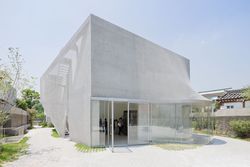
Titre:
SO–IL veut vous parler
SO–IL veut vous parler
Actions:
Description:
SO-IL est dirigé par les associés Florian Idenburg, Jing Liu et Ilias Papageorgiou. Leurs travaux comprennent le plan directeur d’un campus culturel à Shanghai, des logements étudiants à Athènes, le Shrem Museum of Art de l’Université de Californie à Davis, la Foire d’art « Frieze » à New York, et la Kukje Gallery de Séoul. La série Ils veulent vous parler invite les(...)
SO-IL est dirigé par les associés Florian Idenburg, Jing Liu et Ilias Papageorgiou. Leurs travaux comprennent le plan directeur d’un campus culturel à Shanghai, des logements étudiants à Athènes, le Shrem Museum of Art de l’Université de Californie à Davis, la Foire d’art « Frieze » à New York, et la Kukje Gallery de Séoul. La série Ils veulent vous parler invite les(...)
Date:
30 octobre 2014 , 18h
30 octobre 2014 , 18h
Titre:
SO–IL veut vous parler
Actions:
Description:
SO-IL est dirigé par les associés Florian Idenburg, Jing Liu et Ilias Papageorgiou. Leurs travaux comprennent le plan directeur d’un campus culturel à Shanghai, des logements étudiants à Athènes, le Shrem Museum of Art de l’Université de Californie à Davis, la Foire d’art « Frieze » à New York, et la Kukje Gallery de Séoul. La série Ils veulent vous parler invite les(...)
SO–IL veut vous parler
Actions:
Description:
SO-IL est dirigé par les associés Florian Idenburg, Jing Liu et Ilias Papageorgiou. Leurs travaux comprennent le plan directeur d’un campus culturel à Shanghai, des logements étudiants à Athènes, le Shrem Museum of Art de l’Université de Californie à Davis, la Foire d’art « Frieze » à New York, et la Kukje Gallery de Séoul. La série Ils veulent vous parler invite les(...)
Classification:
événements
événements
Date:
30 octobre 2014
18h
30 octobre 2014
18h
Niveau de description archivistique:
Projet
Projet
Numéro de référence:
AP018.S1.1976.PR23
Description:
This project series documents the design of the new National Gallery of Canada for a limited architectural competition in Ottawa, Ontario in 1976. The office identified the project number as 7630. This project consisted of designing a new gallery to house Canada's most prized artworks and artefacts in a competition run by Public Works Canada on behalf of National Museums of Canada. The building site was down the street from Canada's parliament buildings, with views of the Ottawa River and across to Quebec. The design submitted by Parkin Architects Planners was highly modular, with cubes turned on an angle making up the majority of the building. The six-storey building design had three floors of galleries, while other levels were to be used for staff, services, and storage. A panel of international architects and representatives anonymously chose Parkin's design as the winner of the competition in early 1977. However, after cited lack of funds, and controversies over the chosen site and the way in which the competition was run, the newly formed Canada Museums Construction Company sought another design and architect for the new National Gallery. The dispute over this decision is recorded in materials from this project series and related project series. Eventually, Parkin did participate in the construction of the National Gallery's final design, but as the minor partner in a joint venture with Moshe Safdie (see materials in project series AP018.S1.1983.PR02 in this fonds for more information). The project is recorded through drawings, including presentation boards, photographs, and textual records dating from 1974-1985. The drawings are a mix of original design drawings and site drawings. The site drawings were prepared for the competitors by Public Works Canada and the National Capital Commission. The drawings prepared by these government agencies are bilingual. The textual records primarily consist of guidelines, specifications, and other information from Public Works Canada to the competitors. The textual documentation also includes financial records and correspondence on the controversy surrounding the competition.
AP018.S1.1976.PR23
Description:
This project series documents the design of the new National Gallery of Canada for a limited architectural competition in Ottawa, Ontario in 1976. The office identified the project number as 7630. This project consisted of designing a new gallery to house Canada's most prized artworks and artefacts in a competition run by Public Works Canada on behalf of National Museums of Canada. The building site was down the street from Canada's parliament buildings, with views of the Ottawa River and across to Quebec. The design submitted by Parkin Architects Planners was highly modular, with cubes turned on an angle making up the majority of the building. The six-storey building design had three floors of galleries, while other levels were to be used for staff, services, and storage. A panel of international architects and representatives anonymously chose Parkin's design as the winner of the competition in early 1977. However, after cited lack of funds, and controversies over the chosen site and the way in which the competition was run, the newly formed Canada Museums Construction Company sought another design and architect for the new National Gallery. The dispute over this decision is recorded in materials from this project series and related project series. Eventually, Parkin did participate in the construction of the National Gallery's final design, but as the minor partner in a joint venture with Moshe Safdie (see materials in project series AP018.S1.1983.PR02 in this fonds for more information). The project is recorded through drawings, including presentation boards, photographs, and textual records dating from 1974-1985. The drawings are a mix of original design drawings and site drawings. The site drawings were prepared for the competitors by Public Works Canada and the National Capital Commission. The drawings prepared by these government agencies are bilingual. The textual records primarily consist of guidelines, specifications, and other information from Public Works Canada to the competitors. The textual documentation also includes financial records and correspondence on the controversy surrounding the competition.
Personnes et institutions:
Date:
1974-1985
1974-1985
Titre:
National Gallery of Canada, Limited Architectural Competition, Ottawa, Ontario (1976)
Actions:
AP018.S1.1976.PR23
Description:
This project series documents the design of the new National Gallery of Canada for a limited architectural competition in Ottawa, Ontario in 1976. The office identified the project number as 7630. This project consisted of designing a new gallery to house Canada's most prized artworks and artefacts in a competition run by Public Works Canada on behalf of National Museums of Canada. The building site was down the street from Canada's parliament buildings, with views of the Ottawa River and across to Quebec. The design submitted by Parkin Architects Planners was highly modular, with cubes turned on an angle making up the majority of the building. The six-storey building design had three floors of galleries, while other levels were to be used for staff, services, and storage. A panel of international architects and representatives anonymously chose Parkin's design as the winner of the competition in early 1977. However, after cited lack of funds, and controversies over the chosen site and the way in which the competition was run, the newly formed Canada Museums Construction Company sought another design and architect for the new National Gallery. The dispute over this decision is recorded in materials from this project series and related project series. Eventually, Parkin did participate in the construction of the National Gallery's final design, but as the minor partner in a joint venture with Moshe Safdie (see materials in project series AP018.S1.1983.PR02 in this fonds for more information). The project is recorded through drawings, including presentation boards, photographs, and textual records dating from 1974-1985. The drawings are a mix of original design drawings and site drawings. The site drawings were prepared for the competitors by Public Works Canada and the National Capital Commission. The drawings prepared by these government agencies are bilingual. The textual records primarily consist of guidelines, specifications, and other information from Public Works Canada to the competitors. The textual documentation also includes financial records and correspondence on the controversy surrounding the competition.
National Gallery of Canada, Limited Architectural Competition, Ottawa, Ontario (1976)
Actions:
AP018.S1.1976.PR23
Description:
This project series documents the design of the new National Gallery of Canada for a limited architectural competition in Ottawa, Ontario in 1976. The office identified the project number as 7630. This project consisted of designing a new gallery to house Canada's most prized artworks and artefacts in a competition run by Public Works Canada on behalf of National Museums of Canada. The building site was down the street from Canada's parliament buildings, with views of the Ottawa River and across to Quebec. The design submitted by Parkin Architects Planners was highly modular, with cubes turned on an angle making up the majority of the building. The six-storey building design had three floors of galleries, while other levels were to be used for staff, services, and storage. A panel of international architects and representatives anonymously chose Parkin's design as the winner of the competition in early 1977. However, after cited lack of funds, and controversies over the chosen site and the way in which the competition was run, the newly formed Canada Museums Construction Company sought another design and architect for the new National Gallery. The dispute over this decision is recorded in materials from this project series and related project series. Eventually, Parkin did participate in the construction of the National Gallery's final design, but as the minor partner in a joint venture with Moshe Safdie (see materials in project series AP018.S1.1983.PR02 in this fonds for more information). The project is recorded through drawings, including presentation boards, photographs, and textual records dating from 1974-1985. The drawings are a mix of original design drawings and site drawings. The site drawings were prepared for the competitors by Public Works Canada and the National Capital Commission. The drawings prepared by these government agencies are bilingual. The textual records primarily consist of guidelines, specifications, and other information from Public Works Canada to the competitors. The textual documentation also includes financial records and correspondence on the controversy surrounding the competition.
Niveau de description archivistique:
Project
Project
Date:
1974-1985
1974-1985
Personnes et institutions:
Niveau de description archivistique:
Sous-série
Sous-série
Titre:
Publication Drawings
Publication Drawings
Numéro de référence:
AP140.S2.SS4.D11
Description:
File documents publication drawings for several projects by the firms of James Stirling and Partner and James Stirling, Michael Wilford, and Associates. Projects include the Wallraf-Richartz Museum Competition in Cologne, the Government Centre in Dawhah, the Clore Gallery in London, the Paternoster Square Urban Design Competition in London, Kaiserquelle in Aachen, and the Biennale Bookshop in Venice. Material in this file was probably produced between 1974 and 1993. File contains publications drawings and notes.
AP140.S2.SS4.D11
Description:
File documents publication drawings for several projects by the firms of James Stirling and Partner and James Stirling, Michael Wilford, and Associates. Projects include the Wallraf-Richartz Museum Competition in Cologne, the Government Centre in Dawhah, the Clore Gallery in London, the Paternoster Square Urban Design Competition in London, Kaiserquelle in Aachen, and the Biennale Bookshop in Venice. Material in this file was probably produced between 1974 and 1993. File contains publications drawings and notes.
Personnes et institutions:
Date:
circa 1971-1993
circa 1971-1993
Titre:
Publication Drawings
Actions:
AP140.S2.SS4.D11
Description:
File documents publication drawings for several projects by the firms of James Stirling and Partner and James Stirling, Michael Wilford, and Associates. Projects include the Wallraf-Richartz Museum Competition in Cologne, the Government Centre in Dawhah, the Clore Gallery in London, the Paternoster Square Urban Design Competition in London, Kaiserquelle in Aachen, and the Biennale Bookshop in Venice. Material in this file was probably produced between 1974 and 1993. File contains publications drawings and notes.
Publication Drawings
Actions:
AP140.S2.SS4.D11
Description:
File documents publication drawings for several projects by the firms of James Stirling and Partner and James Stirling, Michael Wilford, and Associates. Projects include the Wallraf-Richartz Museum Competition in Cologne, the Government Centre in Dawhah, the Clore Gallery in London, the Paternoster Square Urban Design Competition in London, Kaiserquelle in Aachen, and the Biennale Bookshop in Venice. Material in this file was probably produced between 1974 and 1993. File contains publications drawings and notes.
Niveau de description archivistique:
File 11
File 11
Date:
circa 1971-1993
circa 1971-1993
Personnes et institutions:
Classification:
archives
Niveau de description archivistique:
Fonds
archives
Niveau de description archivistique:
Fonds
Numéro de référence:
AP174
Résumé:
The Testa & Weiser project records, 2001-2014, document the firm’s involvement in several projects as well as the development and use of the software script Weaver. The bulk of the records in the archive are digital files, the majority of which relate to the unbuilt research projects Carbon Tower (2001) and Strand Tower (2006). The archive also contains eight 3D printed physical models and 56 drawings.
AP174
Résumé:
The Testa & Weiser project records, 2001-2014, document the firm’s involvement in several projects as well as the development and use of the software script Weaver. The bulk of the records in the archive are digital files, the majority of which relate to the unbuilt research projects Carbon Tower (2001) and Strand Tower (2006). The archive also contains eight 3D printed physical models and 56 drawings.
Personnes et institutions:
Date:
2001-2014
2001-2014
Titre:
Documents d'archives des projects de Testa & Weiser
Actions:
AP174
Résumé:
The Testa & Weiser project records, 2001-2014, document the firm’s involvement in several projects as well as the development and use of the software script Weaver. The bulk of the records in the archive are digital files, the majority of which relate to the unbuilt research projects Carbon Tower (2001) and Strand Tower (2006). The archive also contains eight 3D printed physical models and 56 drawings.
Documents d'archives des projects de Testa & Weiser
Actions:
AP174
Résumé:
The Testa & Weiser project records, 2001-2014, document the firm’s involvement in several projects as well as the development and use of the software script Weaver. The bulk of the records in the archive are digital files, the majority of which relate to the unbuilt research projects Carbon Tower (2001) and Strand Tower (2006). The archive also contains eight 3D printed physical models and 56 drawings.
Classification:
archives
Niveau de description archivistique:
Fonds
archives
Niveau de description archivistique:
Fonds
Date:
2001-2014
2001-2014
Personnes et institutions:
Classification:
archives
Niveau de description archivistique:
Collection
archives
Niveau de description archivistique:
Collection
Numéro de référence:
AP172
Description:
The Mies in America Research Collection documents an exhibition and publication project produced by Curator and Architectural Historian, Phyllis Lambert (1927-), and associated researchers between 1996-2002. The project explored German-born architect Ludwig Mies van der Rohe's (1886-1969) contributions to the American architectural landscape following his immigration from Germany to Chicago in 1938. The resulting book, a collaboration between the Canadian Centre for Architecture and the Whitney Museum of American Art, was published in 2001. The exhibition ran from 2001-2002 with stops at the Whitney Museum of American Art (New York), the Canadian Centre for Architecture, (Montreal), and the Museum of Contemporary Art (Chicago). The Mies in America research collection consists of correspondence, research, and administrative, manuscript, and curatorial files created by Phyllis Lambert and the project team for the book and exhibition project Mies in America, originally housed in the Mies research office at the Canadian Centre for Architecture. Throughout the process, the team of researchers consulted previously unstudied material on Mies van der Rhoe from major repositories across North America, including drawings, collages, photographs, project documents, letters, and extensive interviews , which are represented in photocopy throughout the collection to document the research activities as well as curatorial choices and manuscript development. Subsequent curatorial decisions based on this research are detailed through notes, correspondence, manuscript drafts, and object lists as the book and exhibition projects took shape. Original annotations, edits, and comments made by Phyllis Lambert and her research associates are present throughout. The administrative activities of the research team are also documented through correspondence, research assistant assignments, research trips, and photography requests. Files from the assistant curator (Cammie McAtee), and research assistants (primarily Elspeth Cowell, Nathalie Senecal, and Deborah Miller) are integrated throughout the collection.
AP172
Description:
The Mies in America Research Collection documents an exhibition and publication project produced by Curator and Architectural Historian, Phyllis Lambert (1927-), and associated researchers between 1996-2002. The project explored German-born architect Ludwig Mies van der Rohe's (1886-1969) contributions to the American architectural landscape following his immigration from Germany to Chicago in 1938. The resulting book, a collaboration between the Canadian Centre for Architecture and the Whitney Museum of American Art, was published in 2001. The exhibition ran from 2001-2002 with stops at the Whitney Museum of American Art (New York), the Canadian Centre for Architecture, (Montreal), and the Museum of Contemporary Art (Chicago). The Mies in America research collection consists of correspondence, research, and administrative, manuscript, and curatorial files created by Phyllis Lambert and the project team for the book and exhibition project Mies in America, originally housed in the Mies research office at the Canadian Centre for Architecture. Throughout the process, the team of researchers consulted previously unstudied material on Mies van der Rhoe from major repositories across North America, including drawings, collages, photographs, project documents, letters, and extensive interviews , which are represented in photocopy throughout the collection to document the research activities as well as curatorial choices and manuscript development. Subsequent curatorial decisions based on this research are detailed through notes, correspondence, manuscript drafts, and object lists as the book and exhibition projects took shape. Original annotations, edits, and comments made by Phyllis Lambert and her research associates are present throughout. The administrative activities of the research team are also documented through correspondence, research assistant assignments, research trips, and photography requests. Files from the assistant curator (Cammie McAtee), and research assistants (primarily Elspeth Cowell, Nathalie Senecal, and Deborah Miller) are integrated throughout the collection.
Personnes et institutions:
Date:
1957-2002
1957-2002
Titre:
Dossier de recherche Mies in America
Actions:
AP172
Description:
The Mies in America Research Collection documents an exhibition and publication project produced by Curator and Architectural Historian, Phyllis Lambert (1927-), and associated researchers between 1996-2002. The project explored German-born architect Ludwig Mies van der Rohe's (1886-1969) contributions to the American architectural landscape following his immigration from Germany to Chicago in 1938. The resulting book, a collaboration between the Canadian Centre for Architecture and the Whitney Museum of American Art, was published in 2001. The exhibition ran from 2001-2002 with stops at the Whitney Museum of American Art (New York), the Canadian Centre for Architecture, (Montreal), and the Museum of Contemporary Art (Chicago). The Mies in America research collection consists of correspondence, research, and administrative, manuscript, and curatorial files created by Phyllis Lambert and the project team for the book and exhibition project Mies in America, originally housed in the Mies research office at the Canadian Centre for Architecture. Throughout the process, the team of researchers consulted previously unstudied material on Mies van der Rhoe from major repositories across North America, including drawings, collages, photographs, project documents, letters, and extensive interviews , which are represented in photocopy throughout the collection to document the research activities as well as curatorial choices and manuscript development. Subsequent curatorial decisions based on this research are detailed through notes, correspondence, manuscript drafts, and object lists as the book and exhibition projects took shape. Original annotations, edits, and comments made by Phyllis Lambert and her research associates are present throughout. The administrative activities of the research team are also documented through correspondence, research assistant assignments, research trips, and photography requests. Files from the assistant curator (Cammie McAtee), and research assistants (primarily Elspeth Cowell, Nathalie Senecal, and Deborah Miller) are integrated throughout the collection.
Dossier de recherche Mies in America
Actions:
AP172
Description:
The Mies in America Research Collection documents an exhibition and publication project produced by Curator and Architectural Historian, Phyllis Lambert (1927-), and associated researchers between 1996-2002. The project explored German-born architect Ludwig Mies van der Rohe's (1886-1969) contributions to the American architectural landscape following his immigration from Germany to Chicago in 1938. The resulting book, a collaboration between the Canadian Centre for Architecture and the Whitney Museum of American Art, was published in 2001. The exhibition ran from 2001-2002 with stops at the Whitney Museum of American Art (New York), the Canadian Centre for Architecture, (Montreal), and the Museum of Contemporary Art (Chicago). The Mies in America research collection consists of correspondence, research, and administrative, manuscript, and curatorial files created by Phyllis Lambert and the project team for the book and exhibition project Mies in America, originally housed in the Mies research office at the Canadian Centre for Architecture. Throughout the process, the team of researchers consulted previously unstudied material on Mies van der Rhoe from major repositories across North America, including drawings, collages, photographs, project documents, letters, and extensive interviews , which are represented in photocopy throughout the collection to document the research activities as well as curatorial choices and manuscript development. Subsequent curatorial decisions based on this research are detailed through notes, correspondence, manuscript drafts, and object lists as the book and exhibition projects took shape. Original annotations, edits, and comments made by Phyllis Lambert and her research associates are present throughout. The administrative activities of the research team are also documented through correspondence, research assistant assignments, research trips, and photography requests. Files from the assistant curator (Cammie McAtee), and research assistants (primarily Elspeth Cowell, Nathalie Senecal, and Deborah Miller) are integrated throughout the collection.
Classification:
archives
Niveau de description archivistique:
Collection 172
archives
Niveau de description archivistique:
Collection 172
Date:
1957-2002
1957-2002
Personnes et institutions:
Niveau de description archivistique:
Série(s)
Série(s)
Numéro de référence:
AP115.S1
Description:
Cette série porte sur le travail de documentation photographique de Robert Duchesnay d'un des exemples construit du Dymaxion Dwelling Machine, à Wichita, Kansas, aux États-Unis. Le Dymaxion Dwelling Machine, concept conçu par Buckminster Fuller et considéré comme le précurseur du dôme géodésique, visait a créer un mode d'habitation donnant un maximun d'espace pour un minimum de coût et de matériaux. L'exemple du Wichita House est conçu par Fuller en 1945-1946. "L'apparence de cette machine à habiter ressemble quelque peu à une soucoupe volante. Avec sa peau externe en aluminium et ses fenêtres en plexiglass, elle offre un surface élégante et profilée, tout en renferman un espace au sol de 1100 pieds carrées." [1] Le Dymaxion Dwelling Machine est abandonné en 1970, pour être finalement acquise en 1990 par le Henry Ford Museum à Detroit, au Michigan. La structure est démantelé la même année avec l'aide d'un ancien collaborateur de Buckminster Fuller, Jay Baldwin. Le Dymaxion Dwelling Machine est toujours visible au Ford Museum. La série contient des photographies de la Wichita House avant et durant le démantèlement, brochures et feuillets du Wichita Art Museum présentant l'exposition de Robert Duchesnay sur le bâtiment, correspondance reçue par Duchesnay sur son projet de documentation des dômes géodésiques de Buckminster Fuller, et coupures de presse sur le Dymaxion Dwelling Machine et le démantèlement de la Wichita House. [1] Robert Duchesnay, "Dymaxion Dwelling Machine", 2022, https://robertduchesnay.com/fr/dymaxion-fr/ (page consultée 27 février 2023).
AP115.S1
Description:
Cette série porte sur le travail de documentation photographique de Robert Duchesnay d'un des exemples construit du Dymaxion Dwelling Machine, à Wichita, Kansas, aux États-Unis. Le Dymaxion Dwelling Machine, concept conçu par Buckminster Fuller et considéré comme le précurseur du dôme géodésique, visait a créer un mode d'habitation donnant un maximun d'espace pour un minimum de coût et de matériaux. L'exemple du Wichita House est conçu par Fuller en 1945-1946. "L'apparence de cette machine à habiter ressemble quelque peu à une soucoupe volante. Avec sa peau externe en aluminium et ses fenêtres en plexiglass, elle offre un surface élégante et profilée, tout en renferman un espace au sol de 1100 pieds carrées." [1] Le Dymaxion Dwelling Machine est abandonné en 1970, pour être finalement acquise en 1990 par le Henry Ford Museum à Detroit, au Michigan. La structure est démantelé la même année avec l'aide d'un ancien collaborateur de Buckminster Fuller, Jay Baldwin. Le Dymaxion Dwelling Machine est toujours visible au Ford Museum. La série contient des photographies de la Wichita House avant et durant le démantèlement, brochures et feuillets du Wichita Art Museum présentant l'exposition de Robert Duchesnay sur le bâtiment, correspondance reçue par Duchesnay sur son projet de documentation des dômes géodésiques de Buckminster Fuller, et coupures de presse sur le Dymaxion Dwelling Machine et le démantèlement de la Wichita House. [1] Robert Duchesnay, "Dymaxion Dwelling Machine", 2022, https://robertduchesnay.com/fr/dymaxion-fr/ (page consultée 27 février 2023).
Personnes et institutions:
Date:
1990-1992
1990-1992
Titre:
Dymaxion Dwelling Machine, Wichita, Kansas
Actions:
AP115.S1
Description:
Cette série porte sur le travail de documentation photographique de Robert Duchesnay d'un des exemples construit du Dymaxion Dwelling Machine, à Wichita, Kansas, aux États-Unis. Le Dymaxion Dwelling Machine, concept conçu par Buckminster Fuller et considéré comme le précurseur du dôme géodésique, visait a créer un mode d'habitation donnant un maximun d'espace pour un minimum de coût et de matériaux. L'exemple du Wichita House est conçu par Fuller en 1945-1946. "L'apparence de cette machine à habiter ressemble quelque peu à une soucoupe volante. Avec sa peau externe en aluminium et ses fenêtres en plexiglass, elle offre un surface élégante et profilée, tout en renferman un espace au sol de 1100 pieds carrées." [1] Le Dymaxion Dwelling Machine est abandonné en 1970, pour être finalement acquise en 1990 par le Henry Ford Museum à Detroit, au Michigan. La structure est démantelé la même année avec l'aide d'un ancien collaborateur de Buckminster Fuller, Jay Baldwin. Le Dymaxion Dwelling Machine est toujours visible au Ford Museum. La série contient des photographies de la Wichita House avant et durant le démantèlement, brochures et feuillets du Wichita Art Museum présentant l'exposition de Robert Duchesnay sur le bâtiment, correspondance reçue par Duchesnay sur son projet de documentation des dômes géodésiques de Buckminster Fuller, et coupures de presse sur le Dymaxion Dwelling Machine et le démantèlement de la Wichita House. [1] Robert Duchesnay, "Dymaxion Dwelling Machine", 2022, https://robertduchesnay.com/fr/dymaxion-fr/ (page consultée 27 février 2023).
Dymaxion Dwelling Machine, Wichita, Kansas
Actions:
AP115.S1
Description:
Cette série porte sur le travail de documentation photographique de Robert Duchesnay d'un des exemples construit du Dymaxion Dwelling Machine, à Wichita, Kansas, aux États-Unis. Le Dymaxion Dwelling Machine, concept conçu par Buckminster Fuller et considéré comme le précurseur du dôme géodésique, visait a créer un mode d'habitation donnant un maximun d'espace pour un minimum de coût et de matériaux. L'exemple du Wichita House est conçu par Fuller en 1945-1946. "L'apparence de cette machine à habiter ressemble quelque peu à une soucoupe volante. Avec sa peau externe en aluminium et ses fenêtres en plexiglass, elle offre un surface élégante et profilée, tout en renferman un espace au sol de 1100 pieds carrées." [1] Le Dymaxion Dwelling Machine est abandonné en 1970, pour être finalement acquise en 1990 par le Henry Ford Museum à Detroit, au Michigan. La structure est démantelé la même année avec l'aide d'un ancien collaborateur de Buckminster Fuller, Jay Baldwin. Le Dymaxion Dwelling Machine est toujours visible au Ford Museum. La série contient des photographies de la Wichita House avant et durant le démantèlement, brochures et feuillets du Wichita Art Museum présentant l'exposition de Robert Duchesnay sur le bâtiment, correspondance reçue par Duchesnay sur son projet de documentation des dômes géodésiques de Buckminster Fuller, et coupures de presse sur le Dymaxion Dwelling Machine et le démantèlement de la Wichita House. [1] Robert Duchesnay, "Dymaxion Dwelling Machine", 2022, https://robertduchesnay.com/fr/dymaxion-fr/ (page consultée 27 février 2023).
Niveau de description archivistique:
Série
Série
Date:
1990-1992
1990-1992
Personnes et institutions:
Niveau de description archivistique:
Projet
Projet
Numéro de référence:
AP018.S1.1983.PR02
Description:
This project series documents the design and construction of the new National Gallery of Canada in Ottawa, Ontario from 1983-1988. The office identified the project number as 8303. In 1977, Parkin Architects Planners won a limited architectural competition for their design of the new National Gallery of Canada. However, after cited lack of funds, and controversies over the chosen site as well as how the competition was run, the newly formed Canada Museums Construction Company sought another design and architect for the new National Gallery. The building site was also moved from its original location near the Canadian parliament buildings on Wellington Street to the corner of Sussex Drive and St Patrick Street. Eventually, Moshe Safdie, in joint venture with Parkin Architects Planners, were chosen as the architects for the project. Parkin was the minor partner in this joint venture and his firm's work seemed to focus more on construction than design. The dispute over this decision can be found in the textual records of project series AP018.S1.1976.PR23 in this fonds. This project was commissioned by Public Works Canada and the Canada Museum Construction Company, both federal government agencies. The project is recorded through drawings, photographs and textual records dating from 1976-1989. The drawings consist largely of structural and construction drawings for the project. Some drawings in this project series were prepared by Public Works Canada. The textual records for this project include specifications, financial records, change order documentation, correspondence, interoffice letters, documentation on the competition controversy and competition reports. The textual records also focus heavily on a dispute between Parkin/Safdie and the client regarding the architects' professional fees.
AP018.S1.1983.PR02
Description:
This project series documents the design and construction of the new National Gallery of Canada in Ottawa, Ontario from 1983-1988. The office identified the project number as 8303. In 1977, Parkin Architects Planners won a limited architectural competition for their design of the new National Gallery of Canada. However, after cited lack of funds, and controversies over the chosen site as well as how the competition was run, the newly formed Canada Museums Construction Company sought another design and architect for the new National Gallery. The building site was also moved from its original location near the Canadian parliament buildings on Wellington Street to the corner of Sussex Drive and St Patrick Street. Eventually, Moshe Safdie, in joint venture with Parkin Architects Planners, were chosen as the architects for the project. Parkin was the minor partner in this joint venture and his firm's work seemed to focus more on construction than design. The dispute over this decision can be found in the textual records of project series AP018.S1.1976.PR23 in this fonds. This project was commissioned by Public Works Canada and the Canada Museum Construction Company, both federal government agencies. The project is recorded through drawings, photographs and textual records dating from 1976-1989. The drawings consist largely of structural and construction drawings for the project. Some drawings in this project series were prepared by Public Works Canada. The textual records for this project include specifications, financial records, change order documentation, correspondence, interoffice letters, documentation on the competition controversy and competition reports. The textual records also focus heavily on a dispute between Parkin/Safdie and the client regarding the architects' professional fees.
Personnes et institutions:
Date:
1976-1989
1976-1989
Titre:
National Gallery of Canada, Ottawa, Ontario (1983)
Actions:
AP018.S1.1983.PR02
Description:
This project series documents the design and construction of the new National Gallery of Canada in Ottawa, Ontario from 1983-1988. The office identified the project number as 8303. In 1977, Parkin Architects Planners won a limited architectural competition for their design of the new National Gallery of Canada. However, after cited lack of funds, and controversies over the chosen site as well as how the competition was run, the newly formed Canada Museums Construction Company sought another design and architect for the new National Gallery. The building site was also moved from its original location near the Canadian parliament buildings on Wellington Street to the corner of Sussex Drive and St Patrick Street. Eventually, Moshe Safdie, in joint venture with Parkin Architects Planners, were chosen as the architects for the project. Parkin was the minor partner in this joint venture and his firm's work seemed to focus more on construction than design. The dispute over this decision can be found in the textual records of project series AP018.S1.1976.PR23 in this fonds. This project was commissioned by Public Works Canada and the Canada Museum Construction Company, both federal government agencies. The project is recorded through drawings, photographs and textual records dating from 1976-1989. The drawings consist largely of structural and construction drawings for the project. Some drawings in this project series were prepared by Public Works Canada. The textual records for this project include specifications, financial records, change order documentation, correspondence, interoffice letters, documentation on the competition controversy and competition reports. The textual records also focus heavily on a dispute between Parkin/Safdie and the client regarding the architects' professional fees.
National Gallery of Canada, Ottawa, Ontario (1983)
Actions:
AP018.S1.1983.PR02
Description:
This project series documents the design and construction of the new National Gallery of Canada in Ottawa, Ontario from 1983-1988. The office identified the project number as 8303. In 1977, Parkin Architects Planners won a limited architectural competition for their design of the new National Gallery of Canada. However, after cited lack of funds, and controversies over the chosen site as well as how the competition was run, the newly formed Canada Museums Construction Company sought another design and architect for the new National Gallery. The building site was also moved from its original location near the Canadian parliament buildings on Wellington Street to the corner of Sussex Drive and St Patrick Street. Eventually, Moshe Safdie, in joint venture with Parkin Architects Planners, were chosen as the architects for the project. Parkin was the minor partner in this joint venture and his firm's work seemed to focus more on construction than design. The dispute over this decision can be found in the textual records of project series AP018.S1.1976.PR23 in this fonds. This project was commissioned by Public Works Canada and the Canada Museum Construction Company, both federal government agencies. The project is recorded through drawings, photographs and textual records dating from 1976-1989. The drawings consist largely of structural and construction drawings for the project. Some drawings in this project series were prepared by Public Works Canada. The textual records for this project include specifications, financial records, change order documentation, correspondence, interoffice letters, documentation on the competition controversy and competition reports. The textual records also focus heavily on a dispute between Parkin/Safdie and the client regarding the architects' professional fees.
Niveau de description archivistique:
Project
Project
Date:
1976-1989
1976-1989
Personnes et institutions:
Niveau de description archivistique:
Sous-série
Sous-série
Titre:
General Textual Files
General Textual Files
Numéro de référence:
AP116.S3.SS23.D1
Description:
File documents some if the activities related to the planning and production of How the Critic Sees: Seven Critics on Seven Buildings, issue 21 of ANY magazine (December) and of the In ANY Event: 8 Critics in 8 Buildings, held 3 May 1997 at the Guggenheim Museum, New York City, New York. Material in file was produced between 1993 and 1998. File contains correspondence, clippings, texts, lay-out mock-ups, photograph, notes, clippings, posters, and postcards.
AP116.S3.SS23.D1
Description:
File documents some if the activities related to the planning and production of How the Critic Sees: Seven Critics on Seven Buildings, issue 21 of ANY magazine (December) and of the In ANY Event: 8 Critics in 8 Buildings, held 3 May 1997 at the Guggenheim Museum, New York City, New York. Material in file was produced between 1993 and 1998. File contains correspondence, clippings, texts, lay-out mock-ups, photograph, notes, clippings, posters, and postcards.
Personnes et institutions:
Date:
1993-1998, predominant 1996-1998
1993-1998, predominant 1996-1998
Titre:
General Textual Files
Actions:
AP116.S3.SS23.D1
Description:
File documents some if the activities related to the planning and production of How the Critic Sees: Seven Critics on Seven Buildings, issue 21 of ANY magazine (December) and of the In ANY Event: 8 Critics in 8 Buildings, held 3 May 1997 at the Guggenheim Museum, New York City, New York. Material in file was produced between 1993 and 1998. File contains correspondence, clippings, texts, lay-out mock-ups, photograph, notes, clippings, posters, and postcards.
General Textual Files
Actions:
AP116.S3.SS23.D1
Description:
File documents some if the activities related to the planning and production of How the Critic Sees: Seven Critics on Seven Buildings, issue 21 of ANY magazine (December) and of the In ANY Event: 8 Critics in 8 Buildings, held 3 May 1997 at the Guggenheim Museum, New York City, New York. Material in file was produced between 1993 and 1998. File contains correspondence, clippings, texts, lay-out mock-ups, photograph, notes, clippings, posters, and postcards.
Niveau de description archivistique:
File 1
File 1
Date:
1993-1998, predominant 1996-1998
1993-1998, predominant 1996-1998
Personnes et institutions:


