


5804 Résultats
Niveau de description archivistique:
Sous-série
Sous-série
Titre:
Broadcast
Broadcast
Numéro de référence:
AP165.S5.SS1
Description:
The Broadcast sub-series, circa 1990 – 2000, consists of 31 video recordings that consist of television broadcasts of Hoberman and his work in transformable design. This includes educational series about Hoberman’s innovation in folding structures, national and international news coverage of Hoberman’s projects and exhibitions, and other collected broadcasts. Material consists of Betacam SP cassettes, MiniDV cassettes, U-matic cassettes and Betacam cassettes. The majority of the records date from the mid to late 90’s to early 2000’s. Video recordings in this sub-series are about Hoberman and/or feature his work in a number of different spaces around the world. It includes television programs featuring Hoberman such as Mister Rogers and The Discovery Channel’s “Invention” series; news coverage from networks such as ABC News and CNN, including footage of President Clinton with the Hoberman Sphere on Eyewitness News, August 16, 1988, and international broadcasts in Japan, Germany, and the Netherlands; and footage of Hoberman’s Innovative Lives Presentation at the Lemelson Centre for the Study of Invention and Innovation at the Smithsonian in 1996.
AP165.S5.SS1
Description:
The Broadcast sub-series, circa 1990 – 2000, consists of 31 video recordings that consist of television broadcasts of Hoberman and his work in transformable design. This includes educational series about Hoberman’s innovation in folding structures, national and international news coverage of Hoberman’s projects and exhibitions, and other collected broadcasts. Material consists of Betacam SP cassettes, MiniDV cassettes, U-matic cassettes and Betacam cassettes. The majority of the records date from the mid to late 90’s to early 2000’s. Video recordings in this sub-series are about Hoberman and/or feature his work in a number of different spaces around the world. It includes television programs featuring Hoberman such as Mister Rogers and The Discovery Channel’s “Invention” series; news coverage from networks such as ABC News and CNN, including footage of President Clinton with the Hoberman Sphere on Eyewitness News, August 16, 1988, and international broadcasts in Japan, Germany, and the Netherlands; and footage of Hoberman’s Innovative Lives Presentation at the Lemelson Centre for the Study of Invention and Innovation at the Smithsonian in 1996.
Personnes et institutions:
Date:
circa 1990-2000
circa 1990-2000
Titre:
Broadcast
Actions:
AP165.S5.SS1
Description:
The Broadcast sub-series, circa 1990 – 2000, consists of 31 video recordings that consist of television broadcasts of Hoberman and his work in transformable design. This includes educational series about Hoberman’s innovation in folding structures, national and international news coverage of Hoberman’s projects and exhibitions, and other collected broadcasts. Material consists of Betacam SP cassettes, MiniDV cassettes, U-matic cassettes and Betacam cassettes. The majority of the records date from the mid to late 90’s to early 2000’s. Video recordings in this sub-series are about Hoberman and/or feature his work in a number of different spaces around the world. It includes television programs featuring Hoberman such as Mister Rogers and The Discovery Channel’s “Invention” series; news coverage from networks such as ABC News and CNN, including footage of President Clinton with the Hoberman Sphere on Eyewitness News, August 16, 1988, and international broadcasts in Japan, Germany, and the Netherlands; and footage of Hoberman’s Innovative Lives Presentation at the Lemelson Centre for the Study of Invention and Innovation at the Smithsonian in 1996.
Broadcast
Actions:
AP165.S5.SS1
Description:
The Broadcast sub-series, circa 1990 – 2000, consists of 31 video recordings that consist of television broadcasts of Hoberman and his work in transformable design. This includes educational series about Hoberman’s innovation in folding structures, national and international news coverage of Hoberman’s projects and exhibitions, and other collected broadcasts. Material consists of Betacam SP cassettes, MiniDV cassettes, U-matic cassettes and Betacam cassettes. The majority of the records date from the mid to late 90’s to early 2000’s. Video recordings in this sub-series are about Hoberman and/or feature his work in a number of different spaces around the world. It includes television programs featuring Hoberman such as Mister Rogers and The Discovery Channel’s “Invention” series; news coverage from networks such as ABC News and CNN, including footage of President Clinton with the Hoberman Sphere on Eyewitness News, August 16, 1988, and international broadcasts in Japan, Germany, and the Netherlands; and footage of Hoberman’s Innovative Lives Presentation at the Lemelson Centre for the Study of Invention and Innovation at the Smithsonian in 1996.
Niveau de description archivistique:
Sub-series 1
Sub-series 1
Date:
circa 1990-2000
circa 1990-2000
Personnes et institutions:
Niveau de description archivistique:
Sous-série
Sous-série
Titre:
Travel Records
Travel Records
Numéro de référence:
AP032.S1.SS4.D3
Description:
Files ARCH219035-ARCH219042 are documents from travels in Europe from 1962-1963, and combined business and family travels in Europe, Japan, Central America and the United States between 1968 and 1980. Papers include a travel journal, invoices and receipts, postcards, travel guides and brochures, maps, itineraries, correspondence, and documents on Danish architecture. FIles ARCH21945-ARCH219061 are documents mostly concerning Goldsmith's vacation trips in the United States. Material includes travel brochures, guide books, maps, postcards and various ephemera. Travel journals from visits to Fripp Island, Harvard, Newport R.I., New York and Washington in 1982 include sketches and calculations of bridges. Some files include colour photographs - a trip to Washington D.C. has large prints of SOM buildings, and a file on the artist Christo includes information and photos of his Umbrella Project in Bakersfield, California. Other destinations include Vermont, Delaware, New Mexico, Michigan and Wisconsin. Two files document a 1993 trip to Germany, France, Spain and Switzerland and include correspondence and itineraries.
AP032.S1.SS4.D3
Description:
Files ARCH219035-ARCH219042 are documents from travels in Europe from 1962-1963, and combined business and family travels in Europe, Japan, Central America and the United States between 1968 and 1980. Papers include a travel journal, invoices and receipts, postcards, travel guides and brochures, maps, itineraries, correspondence, and documents on Danish architecture. FIles ARCH21945-ARCH219061 are documents mostly concerning Goldsmith's vacation trips in the United States. Material includes travel brochures, guide books, maps, postcards and various ephemera. Travel journals from visits to Fripp Island, Harvard, Newport R.I., New York and Washington in 1982 include sketches and calculations of bridges. Some files include colour photographs - a trip to Washington D.C. has large prints of SOM buildings, and a file on the artist Christo includes information and photos of his Umbrella Project in Bakersfield, California. Other destinations include Vermont, Delaware, New Mexico, Michigan and Wisconsin. Two files document a 1993 trip to Germany, France, Spain and Switzerland and include correspondence and itineraries.
Personnes et institutions:
Date:
1962-1993
1962-1993
Titre:
Travel Records
Actions:
AP032.S1.SS4.D3
Description:
Files ARCH219035-ARCH219042 are documents from travels in Europe from 1962-1963, and combined business and family travels in Europe, Japan, Central America and the United States between 1968 and 1980. Papers include a travel journal, invoices and receipts, postcards, travel guides and brochures, maps, itineraries, correspondence, and documents on Danish architecture. FIles ARCH21945-ARCH219061 are documents mostly concerning Goldsmith's vacation trips in the United States. Material includes travel brochures, guide books, maps, postcards and various ephemera. Travel journals from visits to Fripp Island, Harvard, Newport R.I., New York and Washington in 1982 include sketches and calculations of bridges. Some files include colour photographs - a trip to Washington D.C. has large prints of SOM buildings, and a file on the artist Christo includes information and photos of his Umbrella Project in Bakersfield, California. Other destinations include Vermont, Delaware, New Mexico, Michigan and Wisconsin. Two files document a 1993 trip to Germany, France, Spain and Switzerland and include correspondence and itineraries.
Travel Records
Actions:
AP032.S1.SS4.D3
Description:
Files ARCH219035-ARCH219042 are documents from travels in Europe from 1962-1963, and combined business and family travels in Europe, Japan, Central America and the United States between 1968 and 1980. Papers include a travel journal, invoices and receipts, postcards, travel guides and brochures, maps, itineraries, correspondence, and documents on Danish architecture. FIles ARCH21945-ARCH219061 are documents mostly concerning Goldsmith's vacation trips in the United States. Material includes travel brochures, guide books, maps, postcards and various ephemera. Travel journals from visits to Fripp Island, Harvard, Newport R.I., New York and Washington in 1982 include sketches and calculations of bridges. Some files include colour photographs - a trip to Washington D.C. has large prints of SOM buildings, and a file on the artist Christo includes information and photos of his Umbrella Project in Bakersfield, California. Other destinations include Vermont, Delaware, New Mexico, Michigan and Wisconsin. Two files document a 1993 trip to Germany, France, Spain and Switzerland and include correspondence and itineraries.
Niveau de description archivistique:
File 3
File 3
Date:
1962-1993
1962-1993
Personnes et institutions:
Classification:
événements
événements
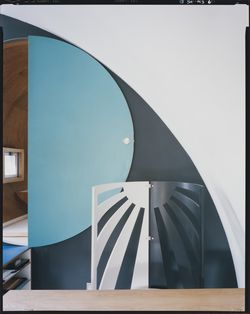
Description:
Figure ayant profondément marqué l’architecture d’après-guerre au Japon, Kazuo Shinohara s’est surtout fait connaître pour ses maisons individuelles. Or il reste peu étudié de nos jours, particulièrement à l’extérieur du Japon. Il a joint certaines formes traditionnelles et l’exploration de principes modernistes au moment des technologies de pointe et de l’information(...)
Figure ayant profondément marqué l’architecture d’après-guerre au Japon, Kazuo Shinohara s’est surtout fait connaître pour ses maisons individuelles. Or il reste peu étudié de nos jours, particulièrement à l’extérieur du Japon. Il a joint certaines formes traditionnelles et l’exploration de principes modernistes au moment des technologies de pointe et de l’information(...)
Date:
21 septembre 2017, 18h30
21 septembre 2017, 18h30
Titre:
David B. Stewart, quel sens avait l’histoire pour Kazuo Shinohara?
Actions:
Description:
Figure ayant profondément marqué l’architecture d’après-guerre au Japon, Kazuo Shinohara s’est surtout fait connaître pour ses maisons individuelles. Or il reste peu étudié de nos jours, particulièrement à l’extérieur du Japon. Il a joint certaines formes traditionnelles et l’exploration de principes modernistes au moment des technologies de pointe et de l’information(...)
David B. Stewart, quel sens avait l’histoire pour Kazuo Shinohara?
Actions:
Description:
Figure ayant profondément marqué l’architecture d’après-guerre au Japon, Kazuo Shinohara s’est surtout fait connaître pour ses maisons individuelles. Or il reste peu étudié de nos jours, particulièrement à l’extérieur du Japon. Il a joint certaines formes traditionnelles et l’exploration de principes modernistes au moment des technologies de pointe et de l’information(...)
Classification:
événements
événements
Date:
21 septembre 2017
18h30
21 septembre 2017
18h30
Classification:
graphique
graphique
Numéro de référence:
ARCH252104
Description:
Various posters advertising IAUS' educational programming, publications and exhibitions: Architecture in Japan, May 26 to June 23 1984 (application form included) IAUS Catalogue 7, Five Houses: Gwathmey Siegel Architects (order form) Architectural Education: Alternatives The High School Architecture Studio Office for Metropolitan Architecture: Toward a modern (re)construction of the European city: Four Housing Projects/ recent projects by Rem Koolhaas and Elia Zenghelis, March 12-May 28, 1982
ARCH252104
Description:
Various posters advertising IAUS' educational programming, publications and exhibitions: Architecture in Japan, May 26 to June 23 1984 (application form included) IAUS Catalogue 7, Five Houses: Gwathmey Siegel Architects (order form) Architectural Education: Alternatives The High School Architecture Studio Office for Metropolitan Architecture: Toward a modern (re)construction of the European city: Four Housing Projects/ recent projects by Rem Koolhaas and Elia Zenghelis, March 12-May 28, 1982
Personnes et institutions:
Date:
1982
1982
Titre:
Various posters advertising IAUS' educational programming
Actions:
ARCH252104
Description:
Various posters advertising IAUS' educational programming, publications and exhibitions: Architecture in Japan, May 26 to June 23 1984 (application form included) IAUS Catalogue 7, Five Houses: Gwathmey Siegel Architects (order form) Architectural Education: Alternatives The High School Architecture Studio Office for Metropolitan Architecture: Toward a modern (re)construction of the European city: Four Housing Projects/ recent projects by Rem Koolhaas and Elia Zenghelis, March 12-May 28, 1982
Various posters advertising IAUS' educational programming
Actions:
ARCH252104
Description:
Various posters advertising IAUS' educational programming, publications and exhibitions: Architecture in Japan, May 26 to June 23 1984 (application form included) IAUS Catalogue 7, Five Houses: Gwathmey Siegel Architects (order form) Architectural Education: Alternatives The High School Architecture Studio Office for Metropolitan Architecture: Toward a modern (re)construction of the European city: Four Housing Projects/ recent projects by Rem Koolhaas and Elia Zenghelis, March 12-May 28, 1982
Classification:
graphique
graphique
Date:
1982
1982
Personnes et institutions:
Niveau de description archivistique:
Sous-série
Sous-série
Titre:
Architectural projects
Architectural projects
Numéro de référence:
AP140.S2.SS1
Description:
Sub-series documents competition entries and projects by James Stirling, and by the successive firms of James Stirling; Stirling and Gowan; James Stirling and Partner; James Stirling, Michael Wilford, and Associates; Michael Wilford and Partners; and Michael Wilford GmbH. Several projects were carried out in association with other architects, including Léon Krier, Walter Nägeli, and the firms of Giancarlo de Carlo and of Marlies Hentrup Norbert Heyer. A majority of projects were designed for London, England and other locations in England and Scotland, Germany and the United States. Other projects were designed for Italy, Iran, Japan, France, Algeria, Spain, Netherlands, Kenya, Qatar, Canada, Singapore and Switzerland. Material in this sub-series was produced between 1951 and probably 2004. The publication drawings for Stirling's projects were often drawn by Leon Krier, Russell Bevington, or Ulrich Schaad ('British Architecture Today', 1991). Sub-series contains reference drawings, conceptual and design development drawings, publication and presentation drawings and panels, and working drawings. It also contains photographic materials, textual records, models and artefacts.
AP140.S2.SS1
Description:
Sub-series documents competition entries and projects by James Stirling, and by the successive firms of James Stirling; Stirling and Gowan; James Stirling and Partner; James Stirling, Michael Wilford, and Associates; Michael Wilford and Partners; and Michael Wilford GmbH. Several projects were carried out in association with other architects, including Léon Krier, Walter Nägeli, and the firms of Giancarlo de Carlo and of Marlies Hentrup Norbert Heyer. A majority of projects were designed for London, England and other locations in England and Scotland, Germany and the United States. Other projects were designed for Italy, Iran, Japan, France, Algeria, Spain, Netherlands, Kenya, Qatar, Canada, Singapore and Switzerland. Material in this sub-series was produced between 1951 and probably 2004. The publication drawings for Stirling's projects were often drawn by Leon Krier, Russell Bevington, or Ulrich Schaad ('British Architecture Today', 1991). Sub-series contains reference drawings, conceptual and design development drawings, publication and presentation drawings and panels, and working drawings. It also contains photographic materials, textual records, models and artefacts.
Personnes et institutions:
Date:
1951-2004
1951-2004
Titre:
Architectural projects
Actions:
AP140.S2.SS1
Description:
Sub-series documents competition entries and projects by James Stirling, and by the successive firms of James Stirling; Stirling and Gowan; James Stirling and Partner; James Stirling, Michael Wilford, and Associates; Michael Wilford and Partners; and Michael Wilford GmbH. Several projects were carried out in association with other architects, including Léon Krier, Walter Nägeli, and the firms of Giancarlo de Carlo and of Marlies Hentrup Norbert Heyer. A majority of projects were designed for London, England and other locations in England and Scotland, Germany and the United States. Other projects were designed for Italy, Iran, Japan, France, Algeria, Spain, Netherlands, Kenya, Qatar, Canada, Singapore and Switzerland. Material in this sub-series was produced between 1951 and probably 2004. The publication drawings for Stirling's projects were often drawn by Leon Krier, Russell Bevington, or Ulrich Schaad ('British Architecture Today', 1991). Sub-series contains reference drawings, conceptual and design development drawings, publication and presentation drawings and panels, and working drawings. It also contains photographic materials, textual records, models and artefacts.
Architectural projects
Actions:
AP140.S2.SS1
Description:
Sub-series documents competition entries and projects by James Stirling, and by the successive firms of James Stirling; Stirling and Gowan; James Stirling and Partner; James Stirling, Michael Wilford, and Associates; Michael Wilford and Partners; and Michael Wilford GmbH. Several projects were carried out in association with other architects, including Léon Krier, Walter Nägeli, and the firms of Giancarlo de Carlo and of Marlies Hentrup Norbert Heyer. A majority of projects were designed for London, England and other locations in England and Scotland, Germany and the United States. Other projects were designed for Italy, Iran, Japan, France, Algeria, Spain, Netherlands, Kenya, Qatar, Canada, Singapore and Switzerland. Material in this sub-series was produced between 1951 and probably 2004. The publication drawings for Stirling's projects were often drawn by Leon Krier, Russell Bevington, or Ulrich Schaad ('British Architecture Today', 1991). Sub-series contains reference drawings, conceptual and design development drawings, publication and presentation drawings and panels, and working drawings. It also contains photographic materials, textual records, models and artefacts.
Niveau de description archivistique:
Sub-Series 1
Sub-Series 1
Date:
1951-2004
1951-2004
Personnes et institutions:
Classification:
articles
articles

Titre:
Sentiments d'espace
Sentiments d'espace
Actions:
Laura Aparicio Llorente sur la demande de subvention d'Arthur Erickson au Conseil des arts du Canada
Publié:
16 décembre 2024
16 décembre 2024
Titre:
Sentiments d'espace
Laura Aparicio Llorente sur la demande de subvention d'Arthur Erickson au Conseil des arts du Canada
Actions:
Sentiments d'espace
Laura Aparicio Llorente sur la demande de subvention d'Arthur Erickson au Conseil des arts du Canada
Actions:
Classification:
livres
livres
Numéro de référence:
ARCH263756
Description:
Cahier de présentation contenant des reproductions de plans et de dessins.
ARCH263756
Description:
Cahier de présentation contenant des reproductions de plans et de dessins.
Personnes et institutions:
Date:
1996
1996
Titre:
Kansai-kan of the national diet library competition ' 96
Actions:
ARCH263756
Description:
Cahier de présentation contenant des reproductions de plans et de dessins.
Kansai-kan of the national diet library competition ' 96
Actions:
ARCH263756
Description:
Cahier de présentation contenant des reproductions de plans et de dessins.
Classification:
livres
livres
Date:
1996
1996
Personnes et institutions:
Classification:
documents textuels
documents textuels
Numéro de référence:
ARCH260020
Description:
Erickson/Massey project proposals labelled 'Permanent Files': Carleton University School of Architecture, BC Building, Dillworth Estates development plan, Edmonton South-East Development, South East Vancouver Elementary School, British Columbia proposal for Expo 70 Osaka Japan, Fisherman's Quay False Creek, Glenwood Park, Institute for the Future physical development plan, Shannon Mews, Royal Columbian Hospital, University of Lethbridge Development Plan and Project One, University of Victoria development and married student housing, Simon Fraser University (reprinted article from Architectural Record, London, 1968)
ARCH260020
Description:
Erickson/Massey project proposals labelled 'Permanent Files': Carleton University School of Architecture, BC Building, Dillworth Estates development plan, Edmonton South-East Development, South East Vancouver Elementary School, British Columbia proposal for Expo 70 Osaka Japan, Fisherman's Quay False Creek, Glenwood Park, Institute for the Future physical development plan, Shannon Mews, Royal Columbian Hospital, University of Lethbridge Development Plan and Project One, University of Victoria development and married student housing, Simon Fraser University (reprinted article from Architectural Record, London, 1968)
Personnes et institutions:
Date:
1968-1969
1968-1969
Titre:
Permanent files for various projects
Actions:
ARCH260020
Description:
Erickson/Massey project proposals labelled 'Permanent Files': Carleton University School of Architecture, BC Building, Dillworth Estates development plan, Edmonton South-East Development, South East Vancouver Elementary School, British Columbia proposal for Expo 70 Osaka Japan, Fisherman's Quay False Creek, Glenwood Park, Institute for the Future physical development plan, Shannon Mews, Royal Columbian Hospital, University of Lethbridge Development Plan and Project One, University of Victoria development and married student housing, Simon Fraser University (reprinted article from Architectural Record, London, 1968)
Permanent files for various projects
Actions:
ARCH260020
Description:
Erickson/Massey project proposals labelled 'Permanent Files': Carleton University School of Architecture, BC Building, Dillworth Estates development plan, Edmonton South-East Development, South East Vancouver Elementary School, British Columbia proposal for Expo 70 Osaka Japan, Fisherman's Quay False Creek, Glenwood Park, Institute for the Future physical development plan, Shannon Mews, Royal Columbian Hospital, University of Lethbridge Development Plan and Project One, University of Victoria development and married student housing, Simon Fraser University (reprinted article from Architectural Record, London, 1968)
Classification:
documents textuels
documents textuels
Date:
1968-1969
1968-1969
Personnes et institutions:
Niveau de description archivistique:
Série(s)
Série(s)
Titre:
Project records from Mr. Koz
Project records from Mr. Koz
Numéro de référence:
AP168.S2
Description:
The Project records from Mr. Koz series, 1996, consists of records produced by Seiichi Kozu of Studio KOZ, a local architect who managed the physical construction and installation of Denari’s show “Interrupted Projections” at Gallery MA in Tokyo, Japan. The series consists of 20 drawings and/or reprographic copies, 19 layouts, 16 slides, and a small amount of promotional material including three posters and one promotional pamphlet. Records date from 1996. For Interrupted Projections, in collaboration with Tokyo-based architect Seiichi Kozu (Mr. Koz) of Studio KOZ, Denari used traditional construction techniques to build a structure inside the gallery space that blended floor, wall and ceiling into a continuous curved surface. This surface displayed printed logos for fictional corporations, designed specifically for the exhibition. The majority of drawings and reprographic copies in the series relate to the construction of the principal architectural installation built on the third floor of Gallery MA. This includes plans and sections for the third floor, as well as working drawings that detail specifications such as dimensions, materials, layouts, and assembly techniques. The series also contains a set of five drawings that include first and second floor plans and sections of Gallery MA. The majority of writing on the drawings is Japanese, aside from one reprographic copy with third floor plans and sections that contains notes in English about elements of the installation such as lighting and the placement and size of fictional company logos. Photographic materials in the series comprise 16 slides that contain images of the built installation, as well as images of the exhibition open to the public, including slides of visitors interacting with the NaviCam. The series also includes printed layouts of the 3D digital renderings for the Interrupted Projections model alongside a pantone sheet, which were used as a reference during the construction process. Promotional material in the series includes three small posters for the exhibition, as well as a brochure that highlights selected works from the show.
AP168.S2
Description:
The Project records from Mr. Koz series, 1996, consists of records produced by Seiichi Kozu of Studio KOZ, a local architect who managed the physical construction and installation of Denari’s show “Interrupted Projections” at Gallery MA in Tokyo, Japan. The series consists of 20 drawings and/or reprographic copies, 19 layouts, 16 slides, and a small amount of promotional material including three posters and one promotional pamphlet. Records date from 1996. For Interrupted Projections, in collaboration with Tokyo-based architect Seiichi Kozu (Mr. Koz) of Studio KOZ, Denari used traditional construction techniques to build a structure inside the gallery space that blended floor, wall and ceiling into a continuous curved surface. This surface displayed printed logos for fictional corporations, designed specifically for the exhibition. The majority of drawings and reprographic copies in the series relate to the construction of the principal architectural installation built on the third floor of Gallery MA. This includes plans and sections for the third floor, as well as working drawings that detail specifications such as dimensions, materials, layouts, and assembly techniques. The series also contains a set of five drawings that include first and second floor plans and sections of Gallery MA. The majority of writing on the drawings is Japanese, aside from one reprographic copy with third floor plans and sections that contains notes in English about elements of the installation such as lighting and the placement and size of fictional company logos. Photographic materials in the series comprise 16 slides that contain images of the built installation, as well as images of the exhibition open to the public, including slides of visitors interacting with the NaviCam. The series also includes printed layouts of the 3D digital renderings for the Interrupted Projections model alongside a pantone sheet, which were used as a reference during the construction process. Promotional material in the series includes three small posters for the exhibition, as well as a brochure that highlights selected works from the show.
Personnes et institutions:
Date:
1996
1996
Titre:
Project records from Mr. Koz
Actions:
AP168.S2
Description:
The Project records from Mr. Koz series, 1996, consists of records produced by Seiichi Kozu of Studio KOZ, a local architect who managed the physical construction and installation of Denari’s show “Interrupted Projections” at Gallery MA in Tokyo, Japan. The series consists of 20 drawings and/or reprographic copies, 19 layouts, 16 slides, and a small amount of promotional material including three posters and one promotional pamphlet. Records date from 1996. For Interrupted Projections, in collaboration with Tokyo-based architect Seiichi Kozu (Mr. Koz) of Studio KOZ, Denari used traditional construction techniques to build a structure inside the gallery space that blended floor, wall and ceiling into a continuous curved surface. This surface displayed printed logos for fictional corporations, designed specifically for the exhibition. The majority of drawings and reprographic copies in the series relate to the construction of the principal architectural installation built on the third floor of Gallery MA. This includes plans and sections for the third floor, as well as working drawings that detail specifications such as dimensions, materials, layouts, and assembly techniques. The series also contains a set of five drawings that include first and second floor plans and sections of Gallery MA. The majority of writing on the drawings is Japanese, aside from one reprographic copy with third floor plans and sections that contains notes in English about elements of the installation such as lighting and the placement and size of fictional company logos. Photographic materials in the series comprise 16 slides that contain images of the built installation, as well as images of the exhibition open to the public, including slides of visitors interacting with the NaviCam. The series also includes printed layouts of the 3D digital renderings for the Interrupted Projections model alongside a pantone sheet, which were used as a reference during the construction process. Promotional material in the series includes three small posters for the exhibition, as well as a brochure that highlights selected works from the show.
Project records from Mr. Koz
Actions:
AP168.S2
Description:
The Project records from Mr. Koz series, 1996, consists of records produced by Seiichi Kozu of Studio KOZ, a local architect who managed the physical construction and installation of Denari’s show “Interrupted Projections” at Gallery MA in Tokyo, Japan. The series consists of 20 drawings and/or reprographic copies, 19 layouts, 16 slides, and a small amount of promotional material including three posters and one promotional pamphlet. Records date from 1996. For Interrupted Projections, in collaboration with Tokyo-based architect Seiichi Kozu (Mr. Koz) of Studio KOZ, Denari used traditional construction techniques to build a structure inside the gallery space that blended floor, wall and ceiling into a continuous curved surface. This surface displayed printed logos for fictional corporations, designed specifically for the exhibition. The majority of drawings and reprographic copies in the series relate to the construction of the principal architectural installation built on the third floor of Gallery MA. This includes plans and sections for the third floor, as well as working drawings that detail specifications such as dimensions, materials, layouts, and assembly techniques. The series also contains a set of five drawings that include first and second floor plans and sections of Gallery MA. The majority of writing on the drawings is Japanese, aside from one reprographic copy with third floor plans and sections that contains notes in English about elements of the installation such as lighting and the placement and size of fictional company logos. Photographic materials in the series comprise 16 slides that contain images of the built installation, as well as images of the exhibition open to the public, including slides of visitors interacting with the NaviCam. The series also includes printed layouts of the 3D digital renderings for the Interrupted Projections model alongside a pantone sheet, which were used as a reference during the construction process. Promotional material in the series includes three small posters for the exhibition, as well as a brochure that highlights selected works from the show.
Niveau de description archivistique:
Series
Series
Date:
1996
1996
Personnes et institutions:
Quantité:
17 FIle
17 FIle
Numéro de référence:
DR1999:0367
Description:
videocassettes include: - "The Unreel" - "What a Wonderful World" - "Construction Site/City Scape" - P. Eisenman " Weak Form: Architecture in a Mediated Environment" (X4: March 25th, 1991; March 28th, 1991; April 1st, 1991; April 4th, 1991) - "1993 AIA Awards" - "National Council of Teachers of Mathematics" May 1991 - 1992 6/12 "Fukuoka" - 1992 6/7 "Daitoku - ji, in kyoto" - "2nd Simposium Internacional De Arquitectura IV" - "The Eye" November 1993 Japan Architecture - "Conferencia De Architectura" February 20th, 1992 - "The Edgo fo Between" P. E. at Colegio de Arquitectos de Madrid May 1988 - Progressive Architecture presentation excerpts - unknown - Japanese title, June 30th, 1992
DR1999:0367
Description:
videocassettes include: - "The Unreel" - "What a Wonderful World" - "Construction Site/City Scape" - P. Eisenman " Weak Form: Architecture in a Mediated Environment" (X4: March 25th, 1991; March 28th, 1991; April 1st, 1991; April 4th, 1991) - "1993 AIA Awards" - "National Council of Teachers of Mathematics" May 1991 - 1992 6/12 "Fukuoka" - 1992 6/7 "Daitoku - ji, in kyoto" - "2nd Simposium Internacional De Arquitectura IV" - "The Eye" November 1993 Japan Architecture - "Conferencia De Architectura" February 20th, 1992 - "The Edgo fo Between" P. E. at Colegio de Arquitectos de Madrid May 1988 - Progressive Architecture presentation excerpts - unknown - Japanese title, June 30th, 1992
Personnes et institutions:
Titre:
Lectures and interviews
Actions:
DR1999:0367
Description:
videocassettes include: - "The Unreel" - "What a Wonderful World" - "Construction Site/City Scape" - P. Eisenman " Weak Form: Architecture in a Mediated Environment" (X4: March 25th, 1991; March 28th, 1991; April 1st, 1991; April 4th, 1991) - "1993 AIA Awards" - "National Council of Teachers of Mathematics" May 1991 - 1992 6/12 "Fukuoka" - 1992 6/7 "Daitoku - ji, in kyoto" - "2nd Simposium Internacional De Arquitectura IV" - "The Eye" November 1993 Japan Architecture - "Conferencia De Architectura" February 20th, 1992 - "The Edgo fo Between" P. E. at Colegio de Arquitectos de Madrid May 1988 - Progressive Architecture presentation excerpts - unknown - Japanese title, June 30th, 1992
Lectures and interviews
Actions:
DR1999:0367
Description:
videocassettes include: - "The Unreel" - "What a Wonderful World" - "Construction Site/City Scape" - P. Eisenman " Weak Form: Architecture in a Mediated Environment" (X4: March 25th, 1991; March 28th, 1991; April 1st, 1991; April 4th, 1991) - "1993 AIA Awards" - "National Council of Teachers of Mathematics" May 1991 - 1992 6/12 "Fukuoka" - 1992 6/7 "Daitoku - ji, in kyoto" - "2nd Simposium Internacional De Arquitectura IV" - "The Eye" November 1993 Japan Architecture - "Conferencia De Architectura" February 20th, 1992 - "The Edgo fo Between" P. E. at Colegio de Arquitectos de Madrid May 1988 - Progressive Architecture presentation excerpts - unknown - Japanese title, June 30th, 1992
Quantité:
17 FIle
17 FIle
Personnes et institutions:


