


144 Résultats
Classification:
livres
livres
Actions:
Prix:
$95.00
(disponible sur commande)
Résumé:
"1968: Radical Italian Design", the newest project from Maurizio Cattelan and Pierpaolo Ferrari's Toilet Paper in collaboration with the Deste Foundation in Athens, offers an unorthodox, kaleidoscopic walk through the Dakis Joannou collection of Italian Radical Design furniture. Led by avant-garde design firms such as Archizoom, Superstudio, Global Tools and 9999, Radical(...)
$95.00
(disponible sur commande)
Résumé:
"1968: Radical Italian Design", the newest project from Maurizio Cattelan and Pierpaolo Ferrari's Toilet Paper in collaboration with the Deste Foundation in Athens, offers an unorthodox, kaleidoscopic walk through the Dakis Joannou collection of Italian Radical Design furniture. Led by avant-garde design firms such as Archizoom, Superstudio, Global Tools and 9999, Radical(...)
Titre:
1968 - radical italian furniture
Actions:
Prix:
$95.00
(disponible sur commande)
Résumé:
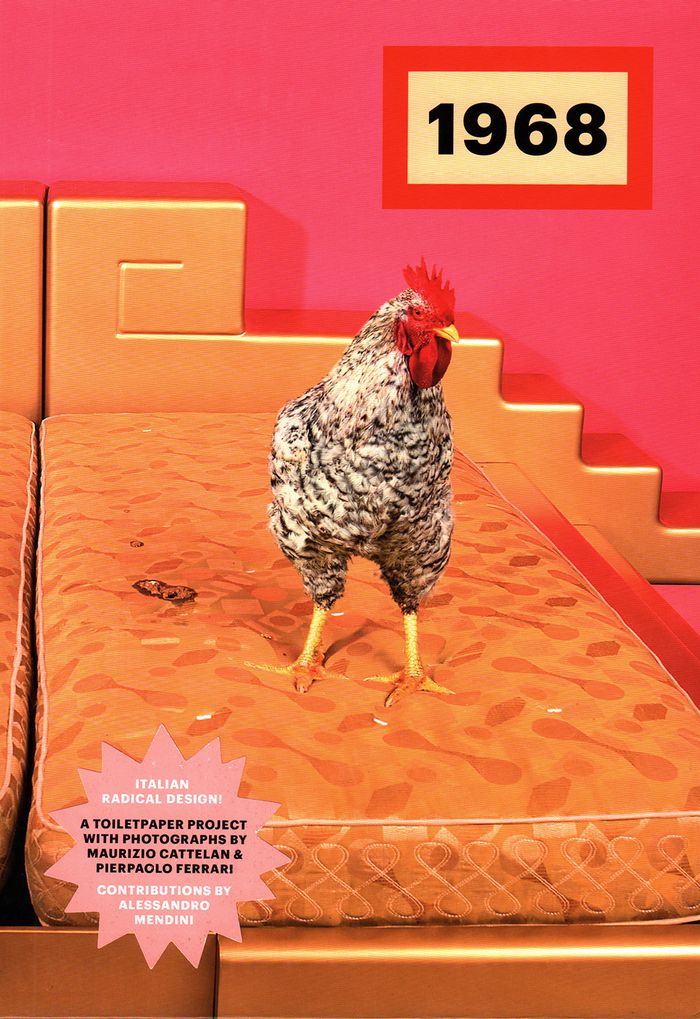
"1968: Radical Italian Design", the newest project from Maurizio Cattelan and Pierpaolo Ferrari's Toilet Paper in collaboration with the Deste Foundation in Athens, offers an unorthodox, kaleidoscopic walk through the Dakis Joannou collection of Italian Radical Design furniture. Led by avant-garde design firms such as Archizoom, Superstudio, Global Tools and 9999, Radical Design was firmly opposed to the ethics, and indeed the very notion of, "good design" or taste. Toilet Paper's bold, mischievous interpretation of Joannou's collection results in delightful, high-contrast photographs that merge the seductive lines of Radical Design furniture and objects with the curves of the modern-day nymphs cavorting among them. Published as a board book, and named after a year that was pivotal for architecture and design (and, of course, the world at large), "1968" is a collection of dreams and nightmares, an inspiring, eye-popping compendium of colorful, ironic objects and bodies. At once charmingly retro and alarmingly surreal, 1968 includes drawings by one of the Radical Design movement's foremost architects, Alessandro Mendini.
1968 - radical italian furniture
Actions:
Prix:
$95.00
(disponible sur commande)
Résumé:
"1968: Radical Italian Design", the newest project from Maurizio Cattelan and Pierpaolo Ferrari's Toilet Paper in collaboration with the Deste Foundation in Athens, offers an unorthodox, kaleidoscopic walk through the Dakis Joannou collection of Italian Radical Design furniture. Led by avant-garde design firms such as Archizoom, Superstudio, Global Tools and 9999, Radical Design was firmly opposed to the ethics, and indeed the very notion of, "good design" or taste. Toilet Paper's bold, mischievous interpretation of Joannou's collection results in delightful, high-contrast photographs that merge the seductive lines of Radical Design furniture and objects with the curves of the modern-day nymphs cavorting among them. Published as a board book, and named after a year that was pivotal for architecture and design (and, of course, the world at large), "1968" is a collection of dreams and nightmares, an inspiring, eye-popping compendium of colorful, ironic objects and bodies. At once charmingly retro and alarmingly surreal, 1968 includes drawings by one of the Radical Design movement's foremost architects, Alessandro Mendini.
Classification:
livres
livres
Publication:
juin 2014
juin 2014
Sujet:
Design industriel
Design industriel
Classification:
livres
livres
Actions:
Prix:
$35.00
(disponible en magasin)
Résumé:
Ce livre présente trois projets autour de l’idée d’un voyage d’aventure commencé il y a 30 ans et interroge, au travers de différentes odyssées dans l’espace, l’idée d’un futur fondé sur la technologie. Depuis le voyage sur la lune en 1969, Alessandro Poli et Superstudio considèrent qu’il n’est plus possible d’imaginer notre environnement coupé de cet espace extérieur,(...)
$35.00
(disponible en magasin)
Résumé:
Ce livre présente trois projets autour de l’idée d’un voyage d’aventure commencé il y a 30 ans et interroge, au travers de différentes odyssées dans l’espace, l’idée d’un futur fondé sur la technologie. Depuis le voyage sur la lune en 1969, Alessandro Poli et Superstudio considèrent qu’il n’est plus possible d’imaginer notre environnement coupé de cet espace extérieur,(...)
Titre:
Autres odyssées de l'espace : Greg Lynn, Michael Maltzan, Alessandro Poli
Actions:
Prix:
$35.00
(disponible en magasin)
Résumé:
Ce livre présente trois projets autour de l’idée d’un voyage d’aventure commencé il y a 30 ans et interroge, au travers de différentes odyssées dans l’espace, l’idée d’un futur fondé sur la technologie. Depuis le voyage sur la lune en 1969, Alessandro Poli et Superstudio considèrent qu’il n’est plus possible d’imaginer notre environnement coupé de cet espace extérieur, devenu une nouvelle réalité. Leurs recherches approfondies ont abouti à un projet désormais légendaire : «Architettura interplanetaria», une autoroute reliant la terre à la lune. Michael Maltzan, architecte basé à Los Angeles, travaille quant à lui sur la conception d’un Voyage vers la lune nouveau laboratoire pour la NASA (Jet Propulsion Laboratory), qui remet en question les modèles actuels de bâtiments abritant la recherche scientifique; il propose un nouveau type d’environnement physique pour faciliter la collaboration dans les processus de recherche. Enfin, Greg Lynn, architecte lui aussi de Los Angeles, a initié, en collaboration avec des étudiants de l’université de Vienne et l’UCLA, un projet de recherche et de design pour de nouveaux terminaux sur la terre et sur la lune, destinés aux voyageurs entre ces deux destinations.
Autres odyssées de l'espace : Greg Lynn, Michael Maltzan, Alessandro Poli
Actions:
Prix:
$35.00
(disponible en magasin)
Résumé:
Ce livre présente trois projets autour de l’idée d’un voyage d’aventure commencé il y a 30 ans et interroge, au travers de différentes odyssées dans l’espace, l’idée d’un futur fondé sur la technologie. Depuis le voyage sur la lune en 1969, Alessandro Poli et Superstudio considèrent qu’il n’est plus possible d’imaginer notre environnement coupé de cet espace extérieur, devenu une nouvelle réalité. Leurs recherches approfondies ont abouti à un projet désormais légendaire : «Architettura interplanetaria», une autoroute reliant la terre à la lune. Michael Maltzan, architecte basé à Los Angeles, travaille quant à lui sur la conception d’un Voyage vers la lune nouveau laboratoire pour la NASA (Jet Propulsion Laboratory), qui remet en question les modèles actuels de bâtiments abritant la recherche scientifique; il propose un nouveau type d’environnement physique pour faciliter la collaboration dans les processus de recherche. Enfin, Greg Lynn, architecte lui aussi de Los Angeles, a initié, en collaboration avec des étudiants de l’université de Vienne et l’UCLA, un projet de recherche et de design pour de nouveaux terminaux sur la terre et sur la lune, destinés aux voyageurs entre ces deux destinations.
Classification:
livres
livres
Publication:
avril 2010
avril 2010
Sujet:
Publications du CCA
Publications du CCA
Classification:
livres
livres
Titre:
Architecture and dystopia
Architecture and dystopia
Actions:
Prix:
$45.00
(disponible sur commande)
Résumé:
As a response to the profound crisis of Western culture the emerged in the 1960s, radical artists from Italy, Austria, England and Japan called into question the foundations of modernist utopias. They transmuted the difficulties of capitalism into a repertory of startling images that revealed the disturbing realities of consumer society, even in those places still(...)
$45.00
(disponible sur commande)
Résumé:
As a response to the profound crisis of Western culture the emerged in the 1960s, radical artists from Italy, Austria, England and Japan called into question the foundations of modernist utopias. They transmuted the difficulties of capitalism into a repertory of startling images that revealed the disturbing realities of consumer society, even in those places still(...)
Titre:
Architecture and dystopia
Actions:
Prix:
$45.00
(disponible sur commande)
Résumé:
As a response to the profound crisis of Western culture the emerged in the 1960s, radical artists from Italy, Austria, England and Japan called into question the foundations of modernist utopias. They transmuted the difficulties of capitalism into a repertory of startling images that revealed the disturbing realities of consumer society, even in those places still resistant to the penetration of modern architecture, such as Superstudio and Archizoom’s Florence. Their model, though exhausted in the space of experimentation, went on to inspire a generation of architects, from the High Tech movement to Rem Koolhaas.. In the light of these examples, how to define a unified 'dystopian' method of design, i.e. a common ground for an architecture that, by its very nature, seems to resist systematization? Are the most recognizable architectural expressions of this theoretical framework — characterized by brazen displays of technology and structures of overwhelming scale — merely isolated cases, albeit of particular iconic power? Or do they belong to a wider landscape of antirational architectural projects? And to what extent are these disturbing expressions premised on the utopian tradition or, better yet, the conceptual model of 'negative thought'? The goal of this book is to respond to such questions, thus initiating an open dialogue about the legitimacy of this critical category.
Architecture and dystopia
Actions:
Prix:
$45.00
(disponible sur commande)
Résumé:
As a response to the profound crisis of Western culture the emerged in the 1960s, radical artists from Italy, Austria, England and Japan called into question the foundations of modernist utopias. They transmuted the difficulties of capitalism into a repertory of startling images that revealed the disturbing realities of consumer society, even in those places still resistant to the penetration of modern architecture, such as Superstudio and Archizoom’s Florence. Their model, though exhausted in the space of experimentation, went on to inspire a generation of architects, from the High Tech movement to Rem Koolhaas.. In the light of these examples, how to define a unified 'dystopian' method of design, i.e. a common ground for an architecture that, by its very nature, seems to resist systematization? Are the most recognizable architectural expressions of this theoretical framework — characterized by brazen displays of technology and structures of overwhelming scale — merely isolated cases, albeit of particular iconic power? Or do they belong to a wider landscape of antirational architectural projects? And to what extent are these disturbing expressions premised on the utopian tradition or, better yet, the conceptual model of 'negative thought'? The goal of this book is to respond to such questions, thus initiating an open dialogue about the legitimacy of this critical category.
Classification:
livres
livres
Publication:
décembre 2019
décembre 2019
Sujet:
Théorie de l’architecture
Théorie de l’architecture
Classification:
livres
livres
Prix:
$79.95
(disponible sur commande)
Résumé:
La médiocrité esthétique et le fonctionnalisme primaire de la reconstruction post 1945 sécrète une crise durable qui affecte l’architecture et l’urbanisme dans l’ensemble du monde occidental. A la "Cité radieuse" des années 1930 succède, au milieu du siècle, une nouvelle utopie la "Mégastructure". Hybride colossal traversant des territoires sans frontières, elle règle du(...)
$79.95
(disponible sur commande)
Résumé:
La médiocrité esthétique et le fonctionnalisme primaire de la reconstruction post 1945 sécrète une crise durable qui affecte l’architecture et l’urbanisme dans l’ensemble du monde occidental. A la "Cité radieuse" des années 1930 succède, au milieu du siècle, une nouvelle utopie la "Mégastructure". Hybride colossal traversant des territoires sans frontières, elle règle du(...)
Publication:
octobre 2004, Paris
octobre 2004, Paris
Titre:
Superarchitecture : le futur de l'architecture 1950-1970
Actions:
Prix:
$79.95
(disponible sur commande)
Résumé:
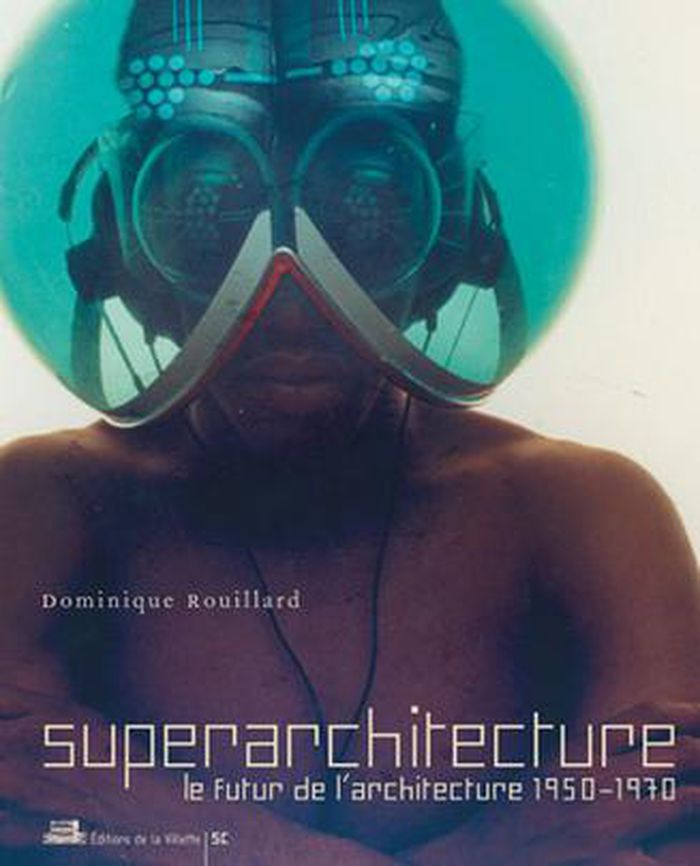
La médiocrité esthétique et le fonctionnalisme primaire de la reconstruction post 1945 sécrète une crise durable qui affecte l’architecture et l’urbanisme dans l’ensemble du monde occidental. A la "Cité radieuse" des années 1930 succède, au milieu du siècle, une nouvelle utopie la "Mégastructure". Hybride colossal traversant des territoires sans frontières, elle règle du même élan, et l’architecture, et l’urbanisme, et les infrastructures. Mais l’engouement pour ces grandes machines sensées résoudre les problèmes à l’échelle planétaire s’émousse durant les sixties. La "Mégastructure" cède le pas à l’"Architecture radicale", ce faisant on assiste au basculement d’une approche de l’architecture dont les références sont le besoin et la construction à une autre dont les références sont l’immédiateté et la consommation, les objets mobiles et le plaisir du corps. Cette transformation correspond au passage d’une architecture conçue en terme de progrès social et de bonheur humain, à une architecture de la révélation du monde existant. Première monographie exhaustive sur la période, Superarchitecture est abondamment illustrée à l’aide d’une iconographie originale issue des archives des Smithson, d’Hollein, de Fuller, Friedman, Archigram, Price, Archizoom, Superstudio, etc. De l’utopie critique qui se dégage des projets de ces acteurs et de la puissance évocatrice de leurs dessins, les architectes contemporains comme Koolhaas, Tschumi ou MRDV se sont fortement inspirés pour construire leur univers conceptuel.
Superarchitecture : le futur de l'architecture 1950-1970
Actions:
Prix:
$79.95
(disponible sur commande)
Résumé:
La médiocrité esthétique et le fonctionnalisme primaire de la reconstruction post 1945 sécrète une crise durable qui affecte l’architecture et l’urbanisme dans l’ensemble du monde occidental. A la "Cité radieuse" des années 1930 succède, au milieu du siècle, une nouvelle utopie la "Mégastructure". Hybride colossal traversant des territoires sans frontières, elle règle du même élan, et l’architecture, et l’urbanisme, et les infrastructures. Mais l’engouement pour ces grandes machines sensées résoudre les problèmes à l’échelle planétaire s’émousse durant les sixties. La "Mégastructure" cède le pas à l’"Architecture radicale", ce faisant on assiste au basculement d’une approche de l’architecture dont les références sont le besoin et la construction à une autre dont les références sont l’immédiateté et la consommation, les objets mobiles et le plaisir du corps. Cette transformation correspond au passage d’une architecture conçue en terme de progrès social et de bonheur humain, à une architecture de la révélation du monde existant. Première monographie exhaustive sur la période, Superarchitecture est abondamment illustrée à l’aide d’une iconographie originale issue des archives des Smithson, d’Hollein, de Fuller, Friedman, Archigram, Price, Archizoom, Superstudio, etc. De l’utopie critique qui se dégage des projets de ces acteurs et de la puissance évocatrice de leurs dessins, les architectes contemporains comme Koolhaas, Tschumi ou MRDV se sont fortement inspirés pour construire leur univers conceptuel.
Classification:
livres
livres
Publication:
octobre 2004, Paris
octobre 2004, Paris


