


5582 Résultats
Niveau de description archivistique:
Sous-série
Sous-série
Numéro de référence:
CI001.S2.D5
Description:
Charles Rohault de Fleury was architect for the Muséum national d'histoire naturelle from 1833 to 1862. His work for the Muséum is represented in the CCA collection by a diverse group of prints and drawings. In addition to documenting his built and unbuilt projects, the inclusion of prints and drawings of museum and zoo buildings by other architects record, if only partially, the resources available to Charles in designing his buildings. This reference material provides insight into the influences on Charles' work as well as the nature of the design process itself. His built works, with the exception of the 1854 addition to the greenhouses, are illustrated in a book of prints with a brief accompanying text - "Muséum d'histoire naturelle: serres chaudes, galeries de minéralogie, etc. etc." (published 1837) (DR1974:0002:004:001; a second copy is held by the CCA library) (1). While prints are included for the Galerie de minéralogie et de géologie, the monkey house and the reservoirs, the majority of the prints are of the greenhouses (serres chaudes) begun 1833 (2). Known for their technological innovations in iron construction, these greenhouses utilized the first multi-storey load-bearing cast-iron façades for the central pavilions as well as space frame roof structures and prefabricated parts. This structural system is well documented in the prints in the CCA collection. The design was apparently inspired by the English greenhouses - a plate of which are included in the book - that Charles saw on a tour of England. The use of prestressed beams and curved roofs in the lateral wings attest to this influence. Charles' greenhouses, in turn, influenced the design of other greenhouses in Europe especially those at the Jardins Botanique in Liège and Ghent, Belgium (3). Although Joseph Paxton saw the greenhouses in 1833, it is unclear if they had an impact on the design of the Crystal Palace constructed 1850-1851 (4). The innovations of Charles' greenhouses continued to be acknowledged into the 20th century. Giedion in "Space, Time and Architecture", while erroneously attributing them to Rouhault (5)(6), refers to the greenhouses as "the prototype of all large iron-framed conservatories" (7). In addition to the greenhouses for the Muséum, the CCA collection includes three proposals (dated 1841) for a private greenhouse designed by Charles Rohault de Fleury (DR1974:0002:002:008 - DR1974:0002:002:013). The designs utilize the same curved roofs as the wings of the greenhouses at the Muséum combined with classically detailed stonework. An different aspect of Charles' work for the Muséum national d'histoire naturelle is represented in the album of unexecuted proposals -the only design drawings for the Muséum in the collection - for a Galerie de zoologie (DR1974:0002:024:001-079). Building on the typology of his earlier classical Galerie de minéralogie et de géologie (constructed 1833 -1841), the proposals, which date from between 1838 and 1862, illustrate a gradual enrichment of Charles' classical architectural vocabulary (8). They vary in their spatial configurations and façade treatments ranging from austere colonnaded designs with little ornament to more elaborate ones with richly encrusted facades, complex rooflines and more dramatic interior spaces characteristic of the Second Empire. The majority of the proposals consist of preliminary drawings illustrating the essential formal, spatial and ornamental aspects of the building. One proposal, dated January 1846, is substantially more developed than the others; in addition to general plans, sections and elevations, more detailed drawings are included for the layout of spaces, the elaboration of the facades, the configuration of the structure and even the designs for the specimen display cases. It is also worth noting that this album includes several plans outlining Rohault de Fleury's ideas for the overall development of the Muséum national d'histoire naturelle. In 1846, an album of prints of the Museo di fiscia e storia naturelle in Florence (DR1974:0002:005:001-018) was presented to Charles by the Grand Duke of Tuscany in response to his request for tracings of that building. These prints were probably used as reference material for the design of the new Galerie de zoologie described above. The portfolio of record drawings (ca. 1862) of the zoos in Antwerp, Brussels, Marseille and Amsterdam (DR1974:0002:018:001-027) is probably a dummy for a publication on zoological gardens as well as background documentation for the renovation and expansion of the zoo at the Muséum national d'histoire naturelle in Paris. Both drawings of the facilities for the animals and visitors and general plans of the zoological gardens are included. The Paris zoo project was apparently never undertaken. (1) These prints were reused in the "Oeuvre de C. Rohault de Fleury, architecte" (published 1884) (DR1974:0002:029:001-044). (2) Rohault de Fleury's greenhouses were destroyed in the Prussian bombardments of 1870. The greenhouses, which now stand in their place, are similar in layout and appearance to the original design, but their structural system is different. (3) John Hix, 'The Glass House' (Cambridge, Mass.: The MIT Press, 1981), p. 115. (4) Ibid., p. 115. (5) This error has been repeated by other authors including Henry-Russell Hitchcock, 'Architecture: Nineteenth and Twentieth Centuries' (Baltimore, Maryland: Penguin Books, 1968), p. 120. (6) Leonardo Benevolo, 'History of Modern Architecture' Volume 1: The tradition of modern architecture (Cambridge, Mass.: The M.I.T. Press, 1971), p. 22. (7) Sigfried Giedion, 'Space, Time and Architecture; the growth of a new tradition' (Cambridge: Harvard University Press, 1941), p. 181. (8) Barry Bergdoll, "Charles Rohault de Fleury: Part two: Muséum d'Histoire Naturelle and Studies on analogous Constructions in Europe", 'CCA Research Report", n.d., p. 1.
CI001.S2.D5
Description:
Charles Rohault de Fleury was architect for the Muséum national d'histoire naturelle from 1833 to 1862. His work for the Muséum is represented in the CCA collection by a diverse group of prints and drawings. In addition to documenting his built and unbuilt projects, the inclusion of prints and drawings of museum and zoo buildings by other architects record, if only partially, the resources available to Charles in designing his buildings. This reference material provides insight into the influences on Charles' work as well as the nature of the design process itself. His built works, with the exception of the 1854 addition to the greenhouses, are illustrated in a book of prints with a brief accompanying text - "Muséum d'histoire naturelle: serres chaudes, galeries de minéralogie, etc. etc." (published 1837) (DR1974:0002:004:001; a second copy is held by the CCA library) (1). While prints are included for the Galerie de minéralogie et de géologie, the monkey house and the reservoirs, the majority of the prints are of the greenhouses (serres chaudes) begun 1833 (2). Known for their technological innovations in iron construction, these greenhouses utilized the first multi-storey load-bearing cast-iron façades for the central pavilions as well as space frame roof structures and prefabricated parts. This structural system is well documented in the prints in the CCA collection. The design was apparently inspired by the English greenhouses - a plate of which are included in the book - that Charles saw on a tour of England. The use of prestressed beams and curved roofs in the lateral wings attest to this influence. Charles' greenhouses, in turn, influenced the design of other greenhouses in Europe especially those at the Jardins Botanique in Liège and Ghent, Belgium (3). Although Joseph Paxton saw the greenhouses in 1833, it is unclear if they had an impact on the design of the Crystal Palace constructed 1850-1851 (4). The innovations of Charles' greenhouses continued to be acknowledged into the 20th century. Giedion in "Space, Time and Architecture", while erroneously attributing them to Rouhault (5)(6), refers to the greenhouses as "the prototype of all large iron-framed conservatories" (7). In addition to the greenhouses for the Muséum, the CCA collection includes three proposals (dated 1841) for a private greenhouse designed by Charles Rohault de Fleury (DR1974:0002:002:008 - DR1974:0002:002:013). The designs utilize the same curved roofs as the wings of the greenhouses at the Muséum combined with classically detailed stonework. An different aspect of Charles' work for the Muséum national d'histoire naturelle is represented in the album of unexecuted proposals -the only design drawings for the Muséum in the collection - for a Galerie de zoologie (DR1974:0002:024:001-079). Building on the typology of his earlier classical Galerie de minéralogie et de géologie (constructed 1833 -1841), the proposals, which date from between 1838 and 1862, illustrate a gradual enrichment of Charles' classical architectural vocabulary (8). They vary in their spatial configurations and façade treatments ranging from austere colonnaded designs with little ornament to more elaborate ones with richly encrusted facades, complex rooflines and more dramatic interior spaces characteristic of the Second Empire. The majority of the proposals consist of preliminary drawings illustrating the essential formal, spatial and ornamental aspects of the building. One proposal, dated January 1846, is substantially more developed than the others; in addition to general plans, sections and elevations, more detailed drawings are included for the layout of spaces, the elaboration of the facades, the configuration of the structure and even the designs for the specimen display cases. It is also worth noting that this album includes several plans outlining Rohault de Fleury's ideas for the overall development of the Muséum national d'histoire naturelle. In 1846, an album of prints of the Museo di fiscia e storia naturelle in Florence (DR1974:0002:005:001-018) was presented to Charles by the Grand Duke of Tuscany in response to his request for tracings of that building. These prints were probably used as reference material for the design of the new Galerie de zoologie described above. The portfolio of record drawings (ca. 1862) of the zoos in Antwerp, Brussels, Marseille and Amsterdam (DR1974:0002:018:001-027) is probably a dummy for a publication on zoological gardens as well as background documentation for the renovation and expansion of the zoo at the Muséum national d'histoire naturelle in Paris. Both drawings of the facilities for the animals and visitors and general plans of the zoological gardens are included. The Paris zoo project was apparently never undertaken. (1) These prints were reused in the "Oeuvre de C. Rohault de Fleury, architecte" (published 1884) (DR1974:0002:029:001-044). (2) Rohault de Fleury's greenhouses were destroyed in the Prussian bombardments of 1870. The greenhouses, which now stand in their place, are similar in layout and appearance to the original design, but their structural system is different. (3) John Hix, 'The Glass House' (Cambridge, Mass.: The MIT Press, 1981), p. 115. (4) Ibid., p. 115. (5) This error has been repeated by other authors including Henry-Russell Hitchcock, 'Architecture: Nineteenth and Twentieth Centuries' (Baltimore, Maryland: Penguin Books, 1968), p. 120. (6) Leonardo Benevolo, 'History of Modern Architecture' Volume 1: The tradition of modern architecture (Cambridge, Mass.: The M.I.T. Press, 1971), p. 22. (7) Sigfried Giedion, 'Space, Time and Architecture; the growth of a new tradition' (Cambridge: Harvard University Press, 1941), p. 181. (8) Barry Bergdoll, "Charles Rohault de Fleury: Part two: Muséum d'Histoire Naturelle and Studies on analogous Constructions in Europe", 'CCA Research Report", n.d., p. 1.
Personnes et institutions:
Date:
[1837-ca. 1862]
[1837-ca. 1862]
Titre:
Muséum nationale d'histoire naturelle
CI001.S2.D5
Description:
Charles Rohault de Fleury was architect for the Muséum national d'histoire naturelle from 1833 to 1862. His work for the Muséum is represented in the CCA collection by a diverse group of prints and drawings. In addition to documenting his built and unbuilt projects, the inclusion of prints and drawings of museum and zoo buildings by other architects record, if only partially, the resources available to Charles in designing his buildings. This reference material provides insight into the influences on Charles' work as well as the nature of the design process itself. His built works, with the exception of the 1854 addition to the greenhouses, are illustrated in a book of prints with a brief accompanying text - "Muséum d'histoire naturelle: serres chaudes, galeries de minéralogie, etc. etc." (published 1837) (DR1974:0002:004:001; a second copy is held by the CCA library) (1). While prints are included for the Galerie de minéralogie et de géologie, the monkey house and the reservoirs, the majority of the prints are of the greenhouses (serres chaudes) begun 1833 (2). Known for their technological innovations in iron construction, these greenhouses utilized the first multi-storey load-bearing cast-iron façades for the central pavilions as well as space frame roof structures and prefabricated parts. This structural system is well documented in the prints in the CCA collection. The design was apparently inspired by the English greenhouses - a plate of which are included in the book - that Charles saw on a tour of England. The use of prestressed beams and curved roofs in the lateral wings attest to this influence. Charles' greenhouses, in turn, influenced the design of other greenhouses in Europe especially those at the Jardins Botanique in Liège and Ghent, Belgium (3). Although Joseph Paxton saw the greenhouses in 1833, it is unclear if they had an impact on the design of the Crystal Palace constructed 1850-1851 (4). The innovations of Charles' greenhouses continued to be acknowledged into the 20th century. Giedion in "Space, Time and Architecture", while erroneously attributing them to Rouhault (5)(6), refers to the greenhouses as "the prototype of all large iron-framed conservatories" (7). In addition to the greenhouses for the Muséum, the CCA collection includes three proposals (dated 1841) for a private greenhouse designed by Charles Rohault de Fleury (DR1974:0002:002:008 - DR1974:0002:002:013). The designs utilize the same curved roofs as the wings of the greenhouses at the Muséum combined with classically detailed stonework. An different aspect of Charles' work for the Muséum national d'histoire naturelle is represented in the album of unexecuted proposals -the only design drawings for the Muséum in the collection - for a Galerie de zoologie (DR1974:0002:024:001-079). Building on the typology of his earlier classical Galerie de minéralogie et de géologie (constructed 1833 -1841), the proposals, which date from between 1838 and 1862, illustrate a gradual enrichment of Charles' classical architectural vocabulary (8). They vary in their spatial configurations and façade treatments ranging from austere colonnaded designs with little ornament to more elaborate ones with richly encrusted facades, complex rooflines and more dramatic interior spaces characteristic of the Second Empire. The majority of the proposals consist of preliminary drawings illustrating the essential formal, spatial and ornamental aspects of the building. One proposal, dated January 1846, is substantially more developed than the others; in addition to general plans, sections and elevations, more detailed drawings are included for the layout of spaces, the elaboration of the facades, the configuration of the structure and even the designs for the specimen display cases. It is also worth noting that this album includes several plans outlining Rohault de Fleury's ideas for the overall development of the Muséum national d'histoire naturelle. In 1846, an album of prints of the Museo di fiscia e storia naturelle in Florence (DR1974:0002:005:001-018) was presented to Charles by the Grand Duke of Tuscany in response to his request for tracings of that building. These prints were probably used as reference material for the design of the new Galerie de zoologie described above. The portfolio of record drawings (ca. 1862) of the zoos in Antwerp, Brussels, Marseille and Amsterdam (DR1974:0002:018:001-027) is probably a dummy for a publication on zoological gardens as well as background documentation for the renovation and expansion of the zoo at the Muséum national d'histoire naturelle in Paris. Both drawings of the facilities for the animals and visitors and general plans of the zoological gardens are included. The Paris zoo project was apparently never undertaken. (1) These prints were reused in the "Oeuvre de C. Rohault de Fleury, architecte" (published 1884) (DR1974:0002:029:001-044). (2) Rohault de Fleury's greenhouses were destroyed in the Prussian bombardments of 1870. The greenhouses, which now stand in their place, are similar in layout and appearance to the original design, but their structural system is different. (3) John Hix, 'The Glass House' (Cambridge, Mass.: The MIT Press, 1981), p. 115. (4) Ibid., p. 115. (5) This error has been repeated by other authors including Henry-Russell Hitchcock, 'Architecture: Nineteenth and Twentieth Centuries' (Baltimore, Maryland: Penguin Books, 1968), p. 120. (6) Leonardo Benevolo, 'History of Modern Architecture' Volume 1: The tradition of modern architecture (Cambridge, Mass.: The M.I.T. Press, 1971), p. 22. (7) Sigfried Giedion, 'Space, Time and Architecture; the growth of a new tradition' (Cambridge: Harvard University Press, 1941), p. 181. (8) Barry Bergdoll, "Charles Rohault de Fleury: Part two: Muséum d'Histoire Naturelle and Studies on analogous Constructions in Europe", 'CCA Research Report", n.d., p. 1.
Muséum nationale d'histoire naturelle
CI001.S2.D5
Description:
Charles Rohault de Fleury was architect for the Muséum national d'histoire naturelle from 1833 to 1862. His work for the Muséum is represented in the CCA collection by a diverse group of prints and drawings. In addition to documenting his built and unbuilt projects, the inclusion of prints and drawings of museum and zoo buildings by other architects record, if only partially, the resources available to Charles in designing his buildings. This reference material provides insight into the influences on Charles' work as well as the nature of the design process itself. His built works, with the exception of the 1854 addition to the greenhouses, are illustrated in a book of prints with a brief accompanying text - "Muséum d'histoire naturelle: serres chaudes, galeries de minéralogie, etc. etc." (published 1837) (DR1974:0002:004:001; a second copy is held by the CCA library) (1). While prints are included for the Galerie de minéralogie et de géologie, the monkey house and the reservoirs, the majority of the prints are of the greenhouses (serres chaudes) begun 1833 (2). Known for their technological innovations in iron construction, these greenhouses utilized the first multi-storey load-bearing cast-iron façades for the central pavilions as well as space frame roof structures and prefabricated parts. This structural system is well documented in the prints in the CCA collection. The design was apparently inspired by the English greenhouses - a plate of which are included in the book - that Charles saw on a tour of England. The use of prestressed beams and curved roofs in the lateral wings attest to this influence. Charles' greenhouses, in turn, influenced the design of other greenhouses in Europe especially those at the Jardins Botanique in Liège and Ghent, Belgium (3). Although Joseph Paxton saw the greenhouses in 1833, it is unclear if they had an impact on the design of the Crystal Palace constructed 1850-1851 (4). The innovations of Charles' greenhouses continued to be acknowledged into the 20th century. Giedion in "Space, Time and Architecture", while erroneously attributing them to Rouhault (5)(6), refers to the greenhouses as "the prototype of all large iron-framed conservatories" (7). In addition to the greenhouses for the Muséum, the CCA collection includes three proposals (dated 1841) for a private greenhouse designed by Charles Rohault de Fleury (DR1974:0002:002:008 - DR1974:0002:002:013). The designs utilize the same curved roofs as the wings of the greenhouses at the Muséum combined with classically detailed stonework. An different aspect of Charles' work for the Muséum national d'histoire naturelle is represented in the album of unexecuted proposals -the only design drawings for the Muséum in the collection - for a Galerie de zoologie (DR1974:0002:024:001-079). Building on the typology of his earlier classical Galerie de minéralogie et de géologie (constructed 1833 -1841), the proposals, which date from between 1838 and 1862, illustrate a gradual enrichment of Charles' classical architectural vocabulary (8). They vary in their spatial configurations and façade treatments ranging from austere colonnaded designs with little ornament to more elaborate ones with richly encrusted facades, complex rooflines and more dramatic interior spaces characteristic of the Second Empire. The majority of the proposals consist of preliminary drawings illustrating the essential formal, spatial and ornamental aspects of the building. One proposal, dated January 1846, is substantially more developed than the others; in addition to general plans, sections and elevations, more detailed drawings are included for the layout of spaces, the elaboration of the facades, the configuration of the structure and even the designs for the specimen display cases. It is also worth noting that this album includes several plans outlining Rohault de Fleury's ideas for the overall development of the Muséum national d'histoire naturelle. In 1846, an album of prints of the Museo di fiscia e storia naturelle in Florence (DR1974:0002:005:001-018) was presented to Charles by the Grand Duke of Tuscany in response to his request for tracings of that building. These prints were probably used as reference material for the design of the new Galerie de zoologie described above. The portfolio of record drawings (ca. 1862) of the zoos in Antwerp, Brussels, Marseille and Amsterdam (DR1974:0002:018:001-027) is probably a dummy for a publication on zoological gardens as well as background documentation for the renovation and expansion of the zoo at the Muséum national d'histoire naturelle in Paris. Both drawings of the facilities for the animals and visitors and general plans of the zoological gardens are included. The Paris zoo project was apparently never undertaken. (1) These prints were reused in the "Oeuvre de C. Rohault de Fleury, architecte" (published 1884) (DR1974:0002:029:001-044). (2) Rohault de Fleury's greenhouses were destroyed in the Prussian bombardments of 1870. The greenhouses, which now stand in their place, are similar in layout and appearance to the original design, but their structural system is different. (3) John Hix, 'The Glass House' (Cambridge, Mass.: The MIT Press, 1981), p. 115. (4) Ibid., p. 115. (5) This error has been repeated by other authors including Henry-Russell Hitchcock, 'Architecture: Nineteenth and Twentieth Centuries' (Baltimore, Maryland: Penguin Books, 1968), p. 120. (6) Leonardo Benevolo, 'History of Modern Architecture' Volume 1: The tradition of modern architecture (Cambridge, Mass.: The M.I.T. Press, 1971), p. 22. (7) Sigfried Giedion, 'Space, Time and Architecture; the growth of a new tradition' (Cambridge: Harvard University Press, 1941), p. 181. (8) Barry Bergdoll, "Charles Rohault de Fleury: Part two: Muséum d'Histoire Naturelle and Studies on analogous Constructions in Europe", 'CCA Research Report", n.d., p. 1.
Niveau de description archivistique:
File 5
File 5
Date:
[1837-ca. 1862]
[1837-ca. 1862]
Personnes et institutions:
Classification:
expositions
expositions
Titre:
L’architecte, autrement
L’architecte, autrement
Actions:
Description:
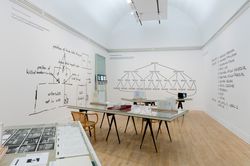
Dès lors que l’architecture ait été réduite à un service de la société ou à une « industrie » dont la finalité est de construire, il y a toujours eut quelqu’un pour l’imaginer plutôt comme un champ de recherche intellectuelle : dynamique, critique et radical. À partir d’une série d’approches provenant de personnes, de périodes et d’endroits divers, l’architecte apparaît,(...)
Dès lors que l’architecture ait été réduite à un service de la société ou à une « industrie » dont la finalité est de construire, il y a toujours eut quelqu’un pour l’imaginer plutôt comme un champ de recherche intellectuelle : dynamique, critique et radical. À partir d’une série d’approches provenant de personnes, de périodes et d’endroits divers, l’architecte apparaît,(...)
Localisation:
Salles principales Mot(s)-clé(s):
L'architecte, autrement, CCA, Montréal, exposition, salles principales
Salles principales Mot(s)-clé(s):
L'architecte, autrement, CCA, Montréal, exposition, salles principales
Date:
28 octobre 2015 au 10 avril 2016
28 octobre 2015 au 10 avril 2016
Titre:
L’architecte, autrement
Actions:
Description:
Dès lors que l’architecture ait été réduite à un service de la société ou à une « industrie » dont la finalité est de construire, il y a toujours eut quelqu’un pour l’imaginer plutôt comme un champ de recherche intellectuelle : dynamique, critique et radical. À partir d’une série d’approches provenant de personnes, de périodes et d’endroits divers, l’architecte apparaît,(...)
L’architecte, autrement
Actions:
Description:
Dès lors que l’architecture ait été réduite à un service de la société ou à une « industrie » dont la finalité est de construire, il y a toujours eut quelqu’un pour l’imaginer plutôt comme un champ de recherche intellectuelle : dynamique, critique et radical. À partir d’une série d’approches provenant de personnes, de périodes et d’endroits divers, l’architecte apparaît,(...)
Classification:
expositions
expositions
Date:
28 octobre 2015 au
10 avril 2016
28 octobre 2015 au
10 avril 2016
Localisation:
Salles principales Mot(s)-clé(s):
L'architecte, autrement, CCA, Montréal, exposition, salles principales
Salles principales Mot(s)-clé(s):
L'architecte, autrement, CCA, Montréal, exposition, salles principales
Classification:
pages web
pages web
Résumé:
Maintenant les droits d’entrée au CCA les premiers dimanches du mois sont à contribution libre.
Titre:
Les premiers dimanches du mois « Payez ce que vous pouvez »
Actions:
Résumé:
Les premiers dimanches du mois « Payez ce que vous pouvez »
Actions:
Résumé:
Maintenant les droits d’entrée au CCA les premiers dimanches du mois sont à contribution libre.
Classification:
pages web
pages web
Classification:
documents textuels
documents textuels
Numéro de référence:
ARCH183802
Description:
General File: Concerning mostly the organization of the competition. Preliminary projects and documents, memos, communiqués, copies of the brochure containing the description and conditions of the competition, documents prepared by lawyer Pierre-André Thémens dated January 21, 1999 concerning "riders" to include in the up-coming agreements (from the office of Robert Spickler, Associate Director of the CCA)
ARCH183802
Description:
General File: Concerning mostly the organization of the competition. Preliminary projects and documents, memos, communiqués, copies of the brochure containing the description and conditions of the competition, documents prepared by lawyer Pierre-André Thémens dated January 21, 1999 concerning "riders" to include in the up-coming agreements (from the office of Robert Spickler, Associate Director of the CCA)
Personnes et institutions:
Date:
1996-1999
1996-1999
Titre:
General file concerning mostly the organization of the competition
Actions:
ARCH183802
Description:
General File: Concerning mostly the organization of the competition. Preliminary projects and documents, memos, communiqués, copies of the brochure containing the description and conditions of the competition, documents prepared by lawyer Pierre-André Thémens dated January 21, 1999 concerning "riders" to include in the up-coming agreements (from the office of Robert Spickler, Associate Director of the CCA)
General file concerning mostly the organization of the competition
Actions:
ARCH183802
Description:
General File: Concerning mostly the organization of the competition. Preliminary projects and documents, memos, communiqués, copies of the brochure containing the description and conditions of the competition, documents prepared by lawyer Pierre-André Thémens dated January 21, 1999 concerning "riders" to include in the up-coming agreements (from the office of Robert Spickler, Associate Director of the CCA)
Classification:
documents textuels
documents textuels
Date:
1996-1999
1996-1999
Personnes et institutions:
Niveau de description archivistique:
Sous-série
Sous-série
Titre:
Domestic Commissions
Domestic Commissions
Numéro de référence:
CI001.S1.D2
Description:
Hubert and Charles Rohault de Fleury received domestic commissions for both urban housing -hôtel particuliers and apartment houses- and rural dwellings -châteaux, country houses and estates. Hubert also executed designs for furniture and garden pavilions. Hubert' work is characterized by restrained classical exteriors and luxurious Empire style interiors; both Charles' exteriors and interiors, especially those for Hôtels Sauvage and Soltykoff, reflect the exuberance of the Second Empire. The CCA albums include drawings from all stages of the design process but with an emphasis on design development drawings. Hubert's albums contain cost calculations and estimates, notes and letters. In general, the drawings by Charles are from a more developed phase of design than Hubert's; Hubert's commissions are more varied than Charles'. The austere classicism of Hubert's domestic work reflects the prevailing taste of the day and reveals the strong influence of his teacher, Jean Nicholas Louis Durand. The compostional effect of the houses' façades relies on the shape and rhythm of the fenestration and the geometric division by string courses and occasionally, pilasters. Columns are used infrequently as is decorative stonework. The plans are symmetrical and modular. This approach to design is especially evident in the series of proposals for a country house for comte Treilhard (DR1974:0002:034:001-082) and in a group of unidentified designs for houses (DR1974:0002:035:001-034), all of which illustrate an emphasis on plan in the design process and a distinct approach to the composition of the elevations, both derived from Durand. Hubert's domestic work was also influenced by Palladio (see especially DR1974:0002:038:001-029). The interiors and furniture designed by Hubert are typical of the Empire style (1). The drawings in the CCA collection illustrate the materials, palette and ornamental motifs of the period. The garden structures in Hubert's albums are more fanciful than his houses and are either Rustic, Chinoiserie or classical in style (2). His garden designs follow the contemporary French trend for "jardins anglais" with winding paths and naturalistic placement of the vegetation, sometimes in combination with more formal French gardens (3). One of the most comprehensively documented domestic project by Hubert is the Rohault de Fleury House (12-14 rue d'Aguesseau; 1824). The CCA collection contains an interesting series of preliminary drawings for alternate proposals for this house, a number of highly finished wash drawings (including the interior decorative scheme) for the final scheme (DR1974:0002:011:001-08) and several earlier (ca. 1806) proposals (DR1974:0002:035:001-034). The Domaine de la Vallée album (DR1974:0002:025:001-059) is notable for the range of subject matter included as well as for the insights into the character of a working country estate in the nineteenth century. The proposed modifications encompassed both functional (a bridge, a levee, granaries and stables) and aesthetic improvements, such as ornamental garden temples. The renovation of the house also exhibits both functional and aesthetic improvements. (1) Examples of Hubert's interiors and furniture can be found in albums, DR1974:0002:007:001-068, DR1974:0002:011:001-089, DR1974:0002:025:001-059, DR1974:0002:030:001-065 and DR1974:0002:035:001-034. (2) The best examples of his pavilions are found in album, DR1974:0002:038:001-029 with other examples in albums, DR1974:0002:025:001-059, DR1974:0002:030:001-065 and DR1974:0002:035:001-034. (3) Examples are found in albums, DR1974:0002:035:001-034 and DR1974:0002 :025:001-059. Also of note are drawings, DR1974:0002:007:007 and DR1974:0002:007:068.
CI001.S1.D2
Description:
Hubert and Charles Rohault de Fleury received domestic commissions for both urban housing -hôtel particuliers and apartment houses- and rural dwellings -châteaux, country houses and estates. Hubert also executed designs for furniture and garden pavilions. Hubert' work is characterized by restrained classical exteriors and luxurious Empire style interiors; both Charles' exteriors and interiors, especially those for Hôtels Sauvage and Soltykoff, reflect the exuberance of the Second Empire. The CCA albums include drawings from all stages of the design process but with an emphasis on design development drawings. Hubert's albums contain cost calculations and estimates, notes and letters. In general, the drawings by Charles are from a more developed phase of design than Hubert's; Hubert's commissions are more varied than Charles'. The austere classicism of Hubert's domestic work reflects the prevailing taste of the day and reveals the strong influence of his teacher, Jean Nicholas Louis Durand. The compostional effect of the houses' façades relies on the shape and rhythm of the fenestration and the geometric division by string courses and occasionally, pilasters. Columns are used infrequently as is decorative stonework. The plans are symmetrical and modular. This approach to design is especially evident in the series of proposals for a country house for comte Treilhard (DR1974:0002:034:001-082) and in a group of unidentified designs for houses (DR1974:0002:035:001-034), all of which illustrate an emphasis on plan in the design process and a distinct approach to the composition of the elevations, both derived from Durand. Hubert's domestic work was also influenced by Palladio (see especially DR1974:0002:038:001-029). The interiors and furniture designed by Hubert are typical of the Empire style (1). The drawings in the CCA collection illustrate the materials, palette and ornamental motifs of the period. The garden structures in Hubert's albums are more fanciful than his houses and are either Rustic, Chinoiserie or classical in style (2). His garden designs follow the contemporary French trend for "jardins anglais" with winding paths and naturalistic placement of the vegetation, sometimes in combination with more formal French gardens (3). One of the most comprehensively documented domestic project by Hubert is the Rohault de Fleury House (12-14 rue d'Aguesseau; 1824). The CCA collection contains an interesting series of preliminary drawings for alternate proposals for this house, a number of highly finished wash drawings (including the interior decorative scheme) for the final scheme (DR1974:0002:011:001-08) and several earlier (ca. 1806) proposals (DR1974:0002:035:001-034). The Domaine de la Vallée album (DR1974:0002:025:001-059) is notable for the range of subject matter included as well as for the insights into the character of a working country estate in the nineteenth century. The proposed modifications encompassed both functional (a bridge, a levee, granaries and stables) and aesthetic improvements, such as ornamental garden temples. The renovation of the house also exhibits both functional and aesthetic improvements. (1) Examples of Hubert's interiors and furniture can be found in albums, DR1974:0002:007:001-068, DR1974:0002:011:001-089, DR1974:0002:025:001-059, DR1974:0002:030:001-065 and DR1974:0002:035:001-034. (2) The best examples of his pavilions are found in album, DR1974:0002:038:001-029 with other examples in albums, DR1974:0002:025:001-059, DR1974:0002:030:001-065 and DR1974:0002:035:001-034. (3) Examples are found in albums, DR1974:0002:035:001-034 and DR1974:0002 :025:001-059. Also of note are drawings, DR1974:0002:007:007 and DR1974:0002:007:068.
Personnes et institutions:
Date:
1802-[1840]
1802-[1840]
Titre:
Domestic Commissions
CI001.S1.D2
Description:
Hubert and Charles Rohault de Fleury received domestic commissions for both urban housing -hôtel particuliers and apartment houses- and rural dwellings -châteaux, country houses and estates. Hubert also executed designs for furniture and garden pavilions. Hubert' work is characterized by restrained classical exteriors and luxurious Empire style interiors; both Charles' exteriors and interiors, especially those for Hôtels Sauvage and Soltykoff, reflect the exuberance of the Second Empire. The CCA albums include drawings from all stages of the design process but with an emphasis on design development drawings. Hubert's albums contain cost calculations and estimates, notes and letters. In general, the drawings by Charles are from a more developed phase of design than Hubert's; Hubert's commissions are more varied than Charles'. The austere classicism of Hubert's domestic work reflects the prevailing taste of the day and reveals the strong influence of his teacher, Jean Nicholas Louis Durand. The compostional effect of the houses' façades relies on the shape and rhythm of the fenestration and the geometric division by string courses and occasionally, pilasters. Columns are used infrequently as is decorative stonework. The plans are symmetrical and modular. This approach to design is especially evident in the series of proposals for a country house for comte Treilhard (DR1974:0002:034:001-082) and in a group of unidentified designs for houses (DR1974:0002:035:001-034), all of which illustrate an emphasis on plan in the design process and a distinct approach to the composition of the elevations, both derived from Durand. Hubert's domestic work was also influenced by Palladio (see especially DR1974:0002:038:001-029). The interiors and furniture designed by Hubert are typical of the Empire style (1). The drawings in the CCA collection illustrate the materials, palette and ornamental motifs of the period. The garden structures in Hubert's albums are more fanciful than his houses and are either Rustic, Chinoiserie or classical in style (2). His garden designs follow the contemporary French trend for "jardins anglais" with winding paths and naturalistic placement of the vegetation, sometimes in combination with more formal French gardens (3). One of the most comprehensively documented domestic project by Hubert is the Rohault de Fleury House (12-14 rue d'Aguesseau; 1824). The CCA collection contains an interesting series of preliminary drawings for alternate proposals for this house, a number of highly finished wash drawings (including the interior decorative scheme) for the final scheme (DR1974:0002:011:001-08) and several earlier (ca. 1806) proposals (DR1974:0002:035:001-034). The Domaine de la Vallée album (DR1974:0002:025:001-059) is notable for the range of subject matter included as well as for the insights into the character of a working country estate in the nineteenth century. The proposed modifications encompassed both functional (a bridge, a levee, granaries and stables) and aesthetic improvements, such as ornamental garden temples. The renovation of the house also exhibits both functional and aesthetic improvements. (1) Examples of Hubert's interiors and furniture can be found in albums, DR1974:0002:007:001-068, DR1974:0002:011:001-089, DR1974:0002:025:001-059, DR1974:0002:030:001-065 and DR1974:0002:035:001-034. (2) The best examples of his pavilions are found in album, DR1974:0002:038:001-029 with other examples in albums, DR1974:0002:025:001-059, DR1974:0002:030:001-065 and DR1974:0002:035:001-034. (3) Examples are found in albums, DR1974:0002:035:001-034 and DR1974:0002 :025:001-059. Also of note are drawings, DR1974:0002:007:007 and DR1974:0002:007:068.
Domestic Commissions
CI001.S1.D2
Description:
Hubert and Charles Rohault de Fleury received domestic commissions for both urban housing -hôtel particuliers and apartment houses- and rural dwellings -châteaux, country houses and estates. Hubert also executed designs for furniture and garden pavilions. Hubert' work is characterized by restrained classical exteriors and luxurious Empire style interiors; both Charles' exteriors and interiors, especially those for Hôtels Sauvage and Soltykoff, reflect the exuberance of the Second Empire. The CCA albums include drawings from all stages of the design process but with an emphasis on design development drawings. Hubert's albums contain cost calculations and estimates, notes and letters. In general, the drawings by Charles are from a more developed phase of design than Hubert's; Hubert's commissions are more varied than Charles'. The austere classicism of Hubert's domestic work reflects the prevailing taste of the day and reveals the strong influence of his teacher, Jean Nicholas Louis Durand. The compostional effect of the houses' façades relies on the shape and rhythm of the fenestration and the geometric division by string courses and occasionally, pilasters. Columns are used infrequently as is decorative stonework. The plans are symmetrical and modular. This approach to design is especially evident in the series of proposals for a country house for comte Treilhard (DR1974:0002:034:001-082) and in a group of unidentified designs for houses (DR1974:0002:035:001-034), all of which illustrate an emphasis on plan in the design process and a distinct approach to the composition of the elevations, both derived from Durand. Hubert's domestic work was also influenced by Palladio (see especially DR1974:0002:038:001-029). The interiors and furniture designed by Hubert are typical of the Empire style (1). The drawings in the CCA collection illustrate the materials, palette and ornamental motifs of the period. The garden structures in Hubert's albums are more fanciful than his houses and are either Rustic, Chinoiserie or classical in style (2). His garden designs follow the contemporary French trend for "jardins anglais" with winding paths and naturalistic placement of the vegetation, sometimes in combination with more formal French gardens (3). One of the most comprehensively documented domestic project by Hubert is the Rohault de Fleury House (12-14 rue d'Aguesseau; 1824). The CCA collection contains an interesting series of preliminary drawings for alternate proposals for this house, a number of highly finished wash drawings (including the interior decorative scheme) for the final scheme (DR1974:0002:011:001-08) and several earlier (ca. 1806) proposals (DR1974:0002:035:001-034). The Domaine de la Vallée album (DR1974:0002:025:001-059) is notable for the range of subject matter included as well as for the insights into the character of a working country estate in the nineteenth century. The proposed modifications encompassed both functional (a bridge, a levee, granaries and stables) and aesthetic improvements, such as ornamental garden temples. The renovation of the house also exhibits both functional and aesthetic improvements. (1) Examples of Hubert's interiors and furniture can be found in albums, DR1974:0002:007:001-068, DR1974:0002:011:001-089, DR1974:0002:025:001-059, DR1974:0002:030:001-065 and DR1974:0002:035:001-034. (2) The best examples of his pavilions are found in album, DR1974:0002:038:001-029 with other examples in albums, DR1974:0002:025:001-059, DR1974:0002:030:001-065 and DR1974:0002:035:001-034. (3) Examples are found in albums, DR1974:0002:035:001-034 and DR1974:0002 :025:001-059. Also of note are drawings, DR1974:0002:007:007 and DR1974:0002:007:068.
Niveau de description archivistique:
File 2
File 2
Date:
1802-[1840]
1802-[1840]
Personnes et institutions:
Classification:
événements
événements
Date:
26 mai 2022, 9h30, 10h30 et 12h30
26 mai 2022, 9h30, 10h30 et 12h30
Classification:
événements
événements
Date:
26 mai 2022
9h30, 10h30 et 12h30
26 mai 2022
9h30, 10h30 et 12h30
Classification:
événements
événements
Date:
2 juin 2022, 9h30, 10h30 et 12h30
2 juin 2022, 9h30, 10h30 et 12h30
Classification:
événements
événements
Date:
2 juin 2022
9h30, 10h30 et 12h30
2 juin 2022
9h30, 10h30 et 12h30
Classification:
événements
événements
Date:
19 mai, 9h30, 10h30 et 12h30
19 mai, 9h30, 10h30 et 12h30
Classification:
événements
événements
Date:
19 mai
9h30, 10h30 et 12h30
19 mai
9h30, 10h30 et 12h30
Classification:
archives
Niveau de description archivistique:
Collection
archives
Niveau de description archivistique:
Collection
Titre:
Collection Rohault de Fleury
Collection Rohault de Fleury
Numéro de référence:
CI001
Résumé:
The Rohault de Fleury collection documents the work of three generations of French architects, Hubert, his son Charles, and his grandson Georges, spanning from the early 18th to late 19th century. The collection is extremely varied encompassing both private and government commissions and including domestic work, institutional buildings, commercial buildings, urban planning, and student work from both the École des beaux-arts and the École polytechnique, and archaeological studies. Stylistically, the projects incorporate the two dominant contemporary directions in French architecture - functionalism as advocated by Jean-Nicolas-Louis Durand and the classicism of the École des beaux-arts.
CI001
Résumé:
The Rohault de Fleury collection documents the work of three generations of French architects, Hubert, his son Charles, and his grandson Georges, spanning from the early 18th to late 19th century. The collection is extremely varied encompassing both private and government commissions and including domestic work, institutional buildings, commercial buildings, urban planning, and student work from both the École des beaux-arts and the École polytechnique, and archaeological studies. Stylistically, the projects incorporate the two dominant contemporary directions in French architecture - functionalism as advocated by Jean-Nicolas-Louis Durand and the classicism of the École des beaux-arts.
Personnes et institutions:
Date:
1717-[1884]
1717-[1884]
Titre:
Collection Rohault de Fleury
CI001
Résumé:
The Rohault de Fleury collection documents the work of three generations of French architects, Hubert, his son Charles, and his grandson Georges, spanning from the early 18th to late 19th century. The collection is extremely varied encompassing both private and government commissions and including domestic work, institutional buildings, commercial buildings, urban planning, and student work from both the École des beaux-arts and the École polytechnique, and archaeological studies. Stylistically, the projects incorporate the two dominant contemporary directions in French architecture - functionalism as advocated by Jean-Nicolas-Louis Durand and the classicism of the École des beaux-arts.
Collection Rohault de Fleury
CI001
Résumé:
The Rohault de Fleury collection documents the work of three generations of French architects, Hubert, his son Charles, and his grandson Georges, spanning from the early 18th to late 19th century. The collection is extremely varied encompassing both private and government commissions and including domestic work, institutional buildings, commercial buildings, urban planning, and student work from both the École des beaux-arts and the École polytechnique, and archaeological studies. Stylistically, the projects incorporate the two dominant contemporary directions in French architecture - functionalism as advocated by Jean-Nicolas-Louis Durand and the classicism of the École des beaux-arts.
Classification:
archives
Niveau de description archivistique:
Collection 1
archives
Niveau de description archivistique:
Collection 1
Date:
1717-[1884]
1717-[1884]
Personnes et institutions:
Classification:
pages web
pages web
Titre:
Programmes jeunesse
Programmes jeunesse
Actions:
Résumé:
Nous offrons des programmes et des ateliers pour les jeunes de 5 à 17 ans. Ces activités remettent en question les définitions traditionnelles de l’architecture.
Titre:
Programmes jeunesse
Actions:
Résumé:
Programmes jeunesse
Actions:
Résumé:
Nous offrons des programmes et des ateliers pour les jeunes de 5 à 17 ans. Ces activités remettent en question les définitions traditionnelles de l’architecture.
Classification:
pages web
pages web


