ARCH401786
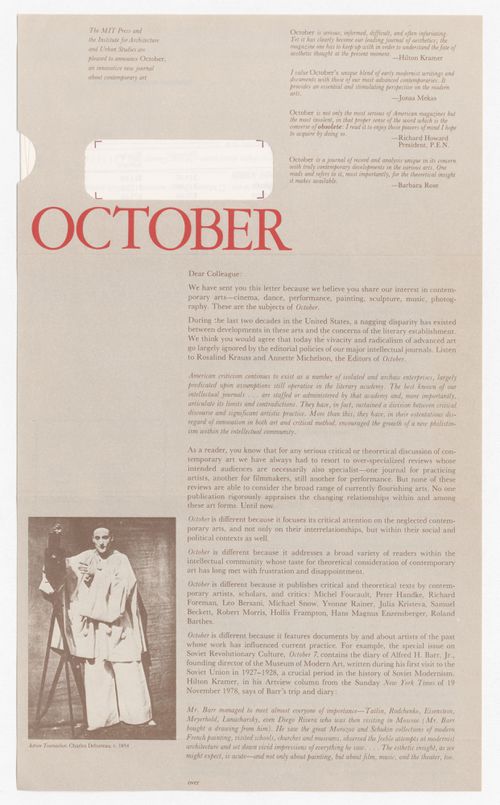
19 February 1981
ARCH401787
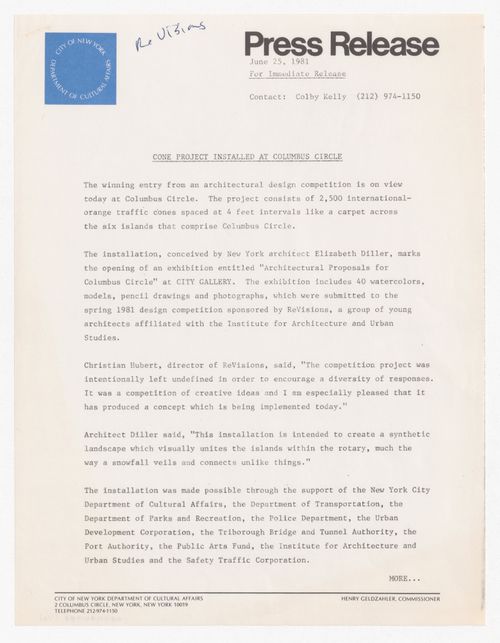
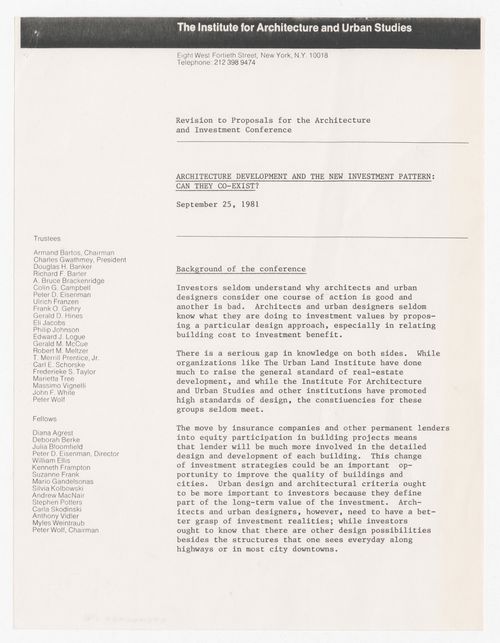
25 September 1981
ARCH401788
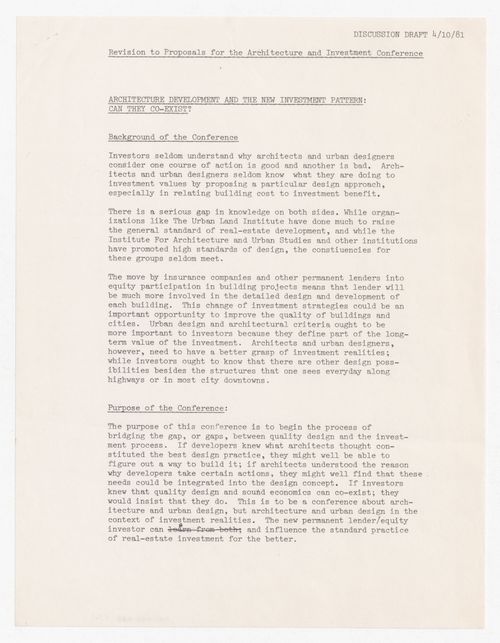
10 April 1981
ARCH401789
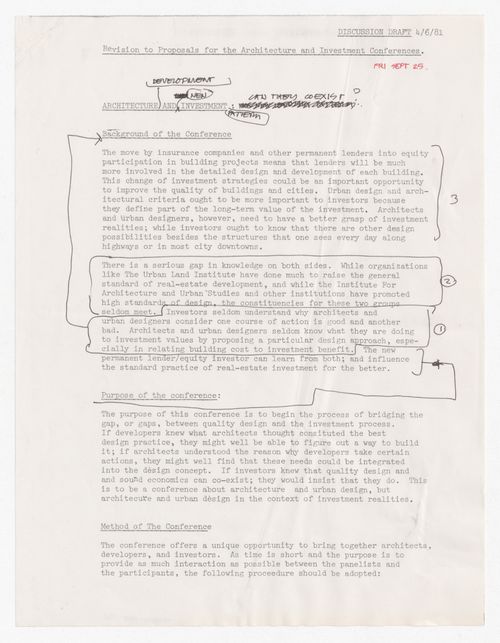
6 April 1981
ARCH281075
1973
ARCH281076
1970-1973
Projet
AP142.S1.D205
Description:
File documents an unsuccessful (?) competition entry for an urban redevelopment in Garibaldi-Repubblica, Milan, Italy. Material in this file was produced in 1991. File contains reference drawings, conceptual drawings, design development drawings, and presentation drawings. File also contains textual records, including drawings, maps, photographs, correspondence, architect's statements, a competition programme, specifications, contract documents, technical reports, a schedule of drawings, and photocopies of pages from publications featuring projects by Aldo Rossi.
1991
Progettazione dell'area Garibaldi Repubblica, Milano
Actions:
AP142.S1.D205
Description:
File documents an unsuccessful (?) competition entry for an urban redevelopment in Garibaldi-Repubblica, Milan, Italy. Material in this file was produced in 1991. File contains reference drawings, conceptual drawings, design development drawings, and presentation drawings. File also contains textual records, including drawings, maps, photographs, correspondence, architect's statements, a competition programme, specifications, contract documents, technical reports, a schedule of drawings, and photocopies of pages from publications featuring projects by Aldo Rossi.
File 205
1991
Projet
AP178.S1.1979.PR05
Description:
This project series documents the Plano de pormenor de Ofir in Esposende, Portugal. While the records were held in the office’s archives this project was assigned the number 54/70. The office assigned the date 1979 to this project. The Plano de pormenor de Ofir was an urban plan study for the area between Ofir, Fão, and Apúlia, commissioned by the Câmara Municipal de Esposende. Documenting this project are wall details and textual materials, including project documentation and correspondence.
1979-1981
Plano de pormenor de Ofir [Detail plan for Ofir], Esposende, Portugal (1979)
Actions:
AP178.S1.1979.PR05
Description:
This project series documents the Plano de pormenor de Ofir in Esposende, Portugal. While the records were held in the office’s archives this project was assigned the number 54/70. The office assigned the date 1979 to this project. The Plano de pormenor de Ofir was an urban plan study for the area between Ofir, Fão, and Apúlia, commissioned by the Câmara Municipal de Esposende. Documenting this project are wall details and textual materials, including project documentation and correspondence.
Project
1979-1981
Dans la série de conférences Hier d’aujourd’hui, l’architecte et auteur canadien Witold Rybczynski expose les origines de l’Ecol House, prototype d’un modèle d’habitation autonome pour les pays en développement. Le projet a été créé à Montréal en 1972 par Ecol Operation, un groupe d’architectes et d’étudiants duquel il était membre et qui devient, au début des années(...)
Théâtre Paul-Desmarais
29 novembre 2007
Witold Rybczynski : Green Before Green
Actions:
Description:
Dans la série de conférences Hier d’aujourd’hui, l’architecte et auteur canadien Witold Rybczynski expose les origines de l’Ecol House, prototype d’un modèle d’habitation autonome pour les pays en développement. Le projet a été créé à Montréal en 1972 par Ecol Operation, un groupe d’architectes et d’étudiants duquel il était membre et qui devient, au début des années(...)
Théâtre Paul-Desmarais
Projet
IBA
AP143.S4.D32
Description:
File documents the partially executed project for the Restricted International Competition "South Friedrichstadt as a Place to Live and Work," West Berlin (now Berlin), West Germany (now in Germany). Material in this file was produced between 1980 and 1988. File documents the design for one of four urban blocks in the area of the Kochstrasse and Friedrichstrasse, Berlin. The competition required the preservation of three existing structures and the construction of mixed-used buildings on vacant lots. The architect develops an overall strategy to occupy the urban block by extending the geometry of the three existing buildings onto the site (DR1991:0018:002; DR1991:0018:004-006), on which he overlays what he calls the "Mercator grid", an orthogonal grid oriented according to the compass (DR1991:0018:016). The "el structures" used by Eisenman in House X, House 11a, and the Cannaregio project reappear in plan, and later as forms emerging from the square compartments delimited by the "Mercator grid", this time developed three-dimensionally (House X, 1975-1977, DR1994:0138:001-1546; House 11a, 1978, DR1994:0139:001-303; Cannaregio project, 1978, DR1991:0017:001-094). After finalizing the urban concept, Eisenman concentrates his efforts on the planning of individual buildings, developing the massing of the building facing Kochstrasse in a series of axonometrics (DR1991:0018:088-092), sections (DR1991:0018:088) and facade studies (DR1991:0018:204-210). A series of scrolled drawings study the L-shaped elements and thin slabs with characteristically gridded surfaces found in House X (DR1991:0018:204 and DR1991:0018:209-210). File contains record drawings, conceptual drawings, design development drawings, schematic drawings, competition drawings, presentation drawings, photographic material, and textual records.
1980-1988
IBA
Actions:
AP143.S4.D32
Description:
File documents the partially executed project for the Restricted International Competition "South Friedrichstadt as a Place to Live and Work," West Berlin (now Berlin), West Germany (now in Germany). Material in this file was produced between 1980 and 1988. File documents the design for one of four urban blocks in the area of the Kochstrasse and Friedrichstrasse, Berlin. The competition required the preservation of three existing structures and the construction of mixed-used buildings on vacant lots. The architect develops an overall strategy to occupy the urban block by extending the geometry of the three existing buildings onto the site (DR1991:0018:002; DR1991:0018:004-006), on which he overlays what he calls the "Mercator grid", an orthogonal grid oriented according to the compass (DR1991:0018:016). The "el structures" used by Eisenman in House X, House 11a, and the Cannaregio project reappear in plan, and later as forms emerging from the square compartments delimited by the "Mercator grid", this time developed three-dimensionally (House X, 1975-1977, DR1994:0138:001-1546; House 11a, 1978, DR1994:0139:001-303; Cannaregio project, 1978, DR1991:0017:001-094). After finalizing the urban concept, Eisenman concentrates his efforts on the planning of individual buildings, developing the massing of the building facing Kochstrasse in a series of axonometrics (DR1991:0018:088-092), sections (DR1991:0018:088) and facade studies (DR1991:0018:204-210). A series of scrolled drawings study the L-shaped elements and thin slabs with characteristically gridded surfaces found in House X (DR1991:0018:204 and DR1991:0018:209-210). File contains record drawings, conceptual drawings, design development drawings, schematic drawings, competition drawings, presentation drawings, photographic material, and textual records.
File 32
1980-1988