


1460 Résultats
Classification:
audio
audio
Actions:
Description:
1 online resource.
Auteur:
Sujet:
Publication:
[Place of publication not identified] : Future Landscapes, 2023.
[Place of publication not identified] : Future Landscapes, 2023.
Classification:
audio
audio
Publication:
[Place of publication not identified] : Future Landscapes, 2023.
[Place of publication not identified] : Future Landscapes, 2023.
Auteur:
Sujet:
Classification:
livres
livres

Titre:
Elastic architecture: Frederick Kiesler and design research in the first age of robotic culture
Elastic architecture: Frederick Kiesler and design research in the first age of robotic culture
Actions:
Prix:
$42.95
(disponible sur commande)
Résumé:
In 1960, architect Philip Johnson championed Frederick Kiesler, calling him “the greatest non-building architect of our time.” Kiesler’s ideas were difficult to construct, but as Johnson believed, “enormous” and “profound.” Kiesler (1890–1965) went against the grain of the accepted modern style, rejecting rectilinear glass and steel in favor of more organic forms and(...)
$42.95
(disponible sur commande)
Résumé:
In 1960, architect Philip Johnson championed Frederick Kiesler, calling him “the greatest non-building architect of our time.” Kiesler’s ideas were difficult to construct, but as Johnson believed, “enormous” and “profound.” Kiesler (1890–1965) went against the grain of the accepted modern style, rejecting rectilinear glass and steel in favor of more organic forms and(...)
Titre:
Elastic architecture: Frederick Kiesler and design research in the first age of robotic culture
Actions:
Prix:
$42.95
(disponible sur commande)
Résumé:
In 1960, architect Philip Johnson championed Frederick Kiesler, calling him “the greatest non-building architect of our time.” Kiesler’s ideas were difficult to construct, but as Johnson believed, “enormous” and “profound.” Kiesler (1890–1965) went against the grain of the accepted modern style, rejecting rectilinear glass and steel in favor of more organic forms and flexible structures that could respond to the ever-changing needs of the body in motion. In Elastic Architecture, Stephen Phillips offers the first in-depth exploration of Kiesler’s innovative and multidisciplinary research and design practice. Exploring Kiesler’s formative relationships with the European avant-garde, Phillips shows how Kiesler found inspiration in the plastic arts, experimental theater, early animation, and automatons to develop and refine his spatial concept of the Endless. Moving from Europe to New York in the 1920s, Kiesler applied these radical Dadaist, constructivist, and surrealist practices to his urban display projects, which included shop windows for Saks Fifth Avenue. After launching his innovative Design Correlation Laboratory at Columbia and Yale, Kiesler went on to invent new houses, theaters, and galleries that were meant to move, shift, and adapt to evolutionary changes occurring within the natural and built environment.
Elastic architecture: Frederick Kiesler and design research in the first age of robotic culture
Actions:
Prix:
$42.95
(disponible sur commande)
Résumé:
In 1960, architect Philip Johnson championed Frederick Kiesler, calling him “the greatest non-building architect of our time.” Kiesler’s ideas were difficult to construct, but as Johnson believed, “enormous” and “profound.” Kiesler (1890–1965) went against the grain of the accepted modern style, rejecting rectilinear glass and steel in favor of more organic forms and flexible structures that could respond to the ever-changing needs of the body in motion. In Elastic Architecture, Stephen Phillips offers the first in-depth exploration of Kiesler’s innovative and multidisciplinary research and design practice. Exploring Kiesler’s formative relationships with the European avant-garde, Phillips shows how Kiesler found inspiration in the plastic arts, experimental theater, early animation, and automatons to develop and refine his spatial concept of the Endless. Moving from Europe to New York in the 1920s, Kiesler applied these radical Dadaist, constructivist, and surrealist practices to his urban display projects, which included shop windows for Saks Fifth Avenue. After launching his innovative Design Correlation Laboratory at Columbia and Yale, Kiesler went on to invent new houses, theaters, and galleries that were meant to move, shift, and adapt to evolutionary changes occurring within the natural and built environment.
Classification:
livres
livres
Publication:
mars 2017
mars 2017
Sujet:
Théorie de l’architecture
Théorie de l’architecture
Classification:
livres
livres
Actions:
Prix:
$58.00
(disponible sur commande)
Résumé:
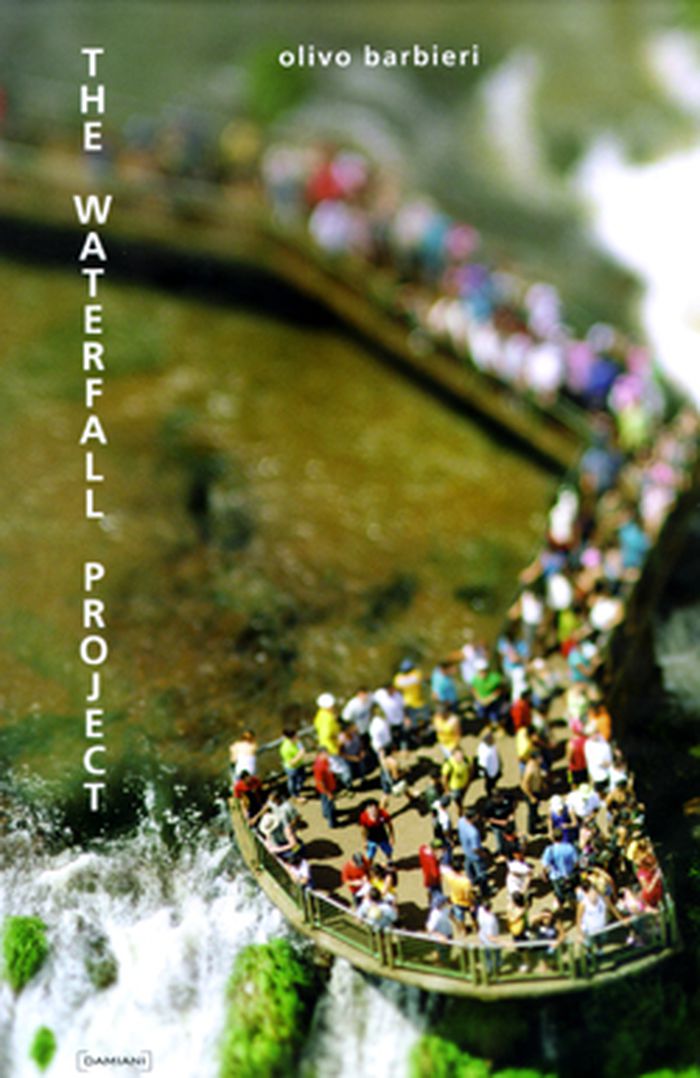
It's impossible not to think, even upon close inspection, that Olivo Barbieri's photographs aren't images of obsessively detailed architectural maquettes. The trees seem plastic, the cars resemble toys and the buildings look as though they would fall over if you so much as breathed on them. The Waterfall Project brings this unreal quality to landscape, specifically to(...)
$58.00
(disponible sur commande)
Résumé:
It's impossible not to think, even upon close inspection, that Olivo Barbieri's photographs aren't images of obsessively detailed architectural maquettes. The trees seem plastic, the cars resemble toys and the buildings look as though they would fall over if you so much as breathed on them. The Waterfall Project brings this unreal quality to landscape, specifically to(...)
Titre:
Olivo Barbieri: the waterfall project
Actions:
Prix:
$58.00
(disponible sur commande)
Résumé:
It's impossible not to think, even upon close inspection, that Olivo Barbieri's photographs aren't images of obsessively detailed architectural maquettes. The trees seem plastic, the cars resemble toys and the buildings look as though they would fall over if you so much as breathed on them. The Waterfall Project brings this unreal quality to landscape, specifically to such touristy waterfalls as Victoria (Zambia/ Zimbabwe), Iguazu (Argentina, Brazil), Khone Papeng (Laos/Cambodia) and Niagara (USA/Canada). In these disorienting images, the spectators on the crowded viewing platforms look like M & M's in a candy bowl, a cluster of toytown Pointillistic color against a backdrop of watery froth. The results are vertiginous and wonderfully bizarre. Critic Walter Guadagnini writes in the introduction: There is an evident technical expedient in this, and it is the choice to photograph from above, to place oneself in a privileged and anomalous condition. In the past, this expedient already gave rise to numerous readings, which range from acknowledging the historical roots of this perspective (going back all the way to Nadar's photographs from a hot-air balloon) up to the socio-political implications deriving from 9/11."
Olivo Barbieri: the waterfall project
Actions:
Prix:
$58.00
(disponible sur commande)
Résumé:
It's impossible not to think, even upon close inspection, that Olivo Barbieri's photographs aren't images of obsessively detailed architectural maquettes. The trees seem plastic, the cars resemble toys and the buildings look as though they would fall over if you so much as breathed on them. The Waterfall Project brings this unreal quality to landscape, specifically to such touristy waterfalls as Victoria (Zambia/ Zimbabwe), Iguazu (Argentina, Brazil), Khone Papeng (Laos/Cambodia) and Niagara (USA/Canada). In these disorienting images, the spectators on the crowded viewing platforms look like M & M's in a candy bowl, a cluster of toytown Pointillistic color against a backdrop of watery froth. The results are vertiginous and wonderfully bizarre. Critic Walter Guadagnini writes in the introduction: There is an evident technical expedient in this, and it is the choice to photograph from above, to place oneself in a privileged and anomalous condition. In the past, this expedient already gave rise to numerous readings, which range from acknowledging the historical roots of this perspective (going back all the way to Nadar's photographs from a hot-air balloon) up to the socio-political implications deriving from 9/11."
Classification:
livres
livres
Publication:
octobre 2008, Bologna
octobre 2008, Bologna
Sujet:
Monographies photo
Monographies photo
Classification:
livres
livres
Actions:
Prix:
$22.95
(disponible sur commande)
Résumé:
Amid the cultural and political ferment of 1960s France, a group of avant-garde architects, artists, writers, theorists, and critics known as "spatial urbanists" envisioned a series of urban utopias--phantom cities of a possible future. The utopian "spatial" city most often took the form of a massive grid or mesh suspended above the ground, all of its parts (and(...)
$22.95
(disponible sur commande)
Résumé:
Amid the cultural and political ferment of 1960s France, a group of avant-garde architects, artists, writers, theorists, and critics known as "spatial urbanists" envisioned a series of urban utopias--phantom cities of a possible future. The utopian "spatial" city most often took the form of a massive grid or mesh suspended above the ground, all of its parts (and(...)
Titre:
Topologies: the urban utopia in France, 1960-1970
Actions:
Prix:
$22.95
(disponible sur commande)
Résumé:
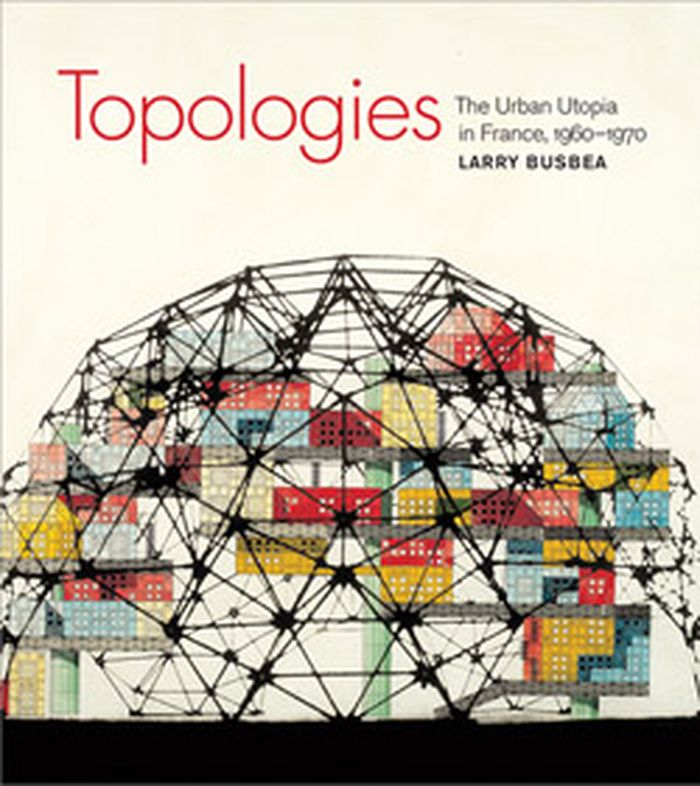
Amid the cultural and political ferment of 1960s France, a group of avant-garde architects, artists, writers, theorists, and critics known as "spatial urbanists" envisioned a series of urban utopias--phantom cities of a possible future. The utopian "spatial" city most often took the form of a massive grid or mesh suspended above the ground, all of its parts (and inhabitants) circulating in a smooth, synchronous rhythm, its streets and buildings constituting a gigantic work of plastic art or interactive machine. In this new urban world, technology and automation were positive forces, providing for material needs as well as time and space for leisure. In this first study of the French avant-garde tendency known as spatial urbanism, Larry Busbea analyzes projects by artists and architects (including the most famous spatial practitioner, Yona Friedman) and explores texts (many of which have never before been translated from the French) by Michel Ragon, the influential founder of the Groupe International d'Architecture Prospective (GIAP), Victor Vasarely, and others. Even at its most fanciful, Busbea argues, the French urban utopia provided an image for social transformations that were only beginning to be described by cultural theorists and sociologists.
Topologies: the urban utopia in France, 1960-1970
Actions:
Prix:
$22.95
(disponible sur commande)
Résumé:
Amid the cultural and political ferment of 1960s France, a group of avant-garde architects, artists, writers, theorists, and critics known as "spatial urbanists" envisioned a series of urban utopias--phantom cities of a possible future. The utopian "spatial" city most often took the form of a massive grid or mesh suspended above the ground, all of its parts (and inhabitants) circulating in a smooth, synchronous rhythm, its streets and buildings constituting a gigantic work of plastic art or interactive machine. In this new urban world, technology and automation were positive forces, providing for material needs as well as time and space for leisure. In this first study of the French avant-garde tendency known as spatial urbanism, Larry Busbea analyzes projects by artists and architects (including the most famous spatial practitioner, Yona Friedman) and explores texts (many of which have never before been translated from the French) by Michel Ragon, the influential founder of the Groupe International d'Architecture Prospective (GIAP), Victor Vasarely, and others. Even at its most fanciful, Busbea argues, the French urban utopia provided an image for social transformations that were only beginning to be described by cultural theorists and sociologists.
Classification:
livres
livres
Publication:
octobre 2012
octobre 2012
Sujet:
Théorie de l’architecture
Théorie de l’architecture
Classification:
livres
livres
Actions:
Exemplaires:
Description:
311 pages : illustrations ; 25 cm
Description:
311 pages : illustrations ; 25 cm
Auteur:
Sujet:
Publication:
New York : W.W. Norton & Company, ©1980.
New York : W.W. Norton & Company, ©1980.
Titre:
Why buildings stand up : the strength of architecture / Mario Salvadori ; illustrations by Saralinda Hooker and Christopher Ragus.
Actions:
Exemplaires:
Description:
311 pages : illustrations ; 25 cm
Why buildings stand up : the strength of architecture / Mario Salvadori ; illustrations by Saralinda Hooker and Christopher Ragus.
Actions:
Exemplaires:
Description:
311 pages : illustrations ; 25 cm
Classification:
livres
livres
Publication:
New York : W.W. Norton & Company, ©1980.
New York : W.W. Norton & Company, ©1980.
Auteur:
Sujet:
Classification:
livres
livres

Titre:
Beatriz Banha: Midday moon
Beatriz Banha: Midday moon
Actions:
Prix:
$50.00
(disponible en magasin)
Résumé:
Much like the moon, which does not cast its own light but reflects the sun’s, the photographs in ''Midday Moon'' appear to represent the world, but are, in fact, an echo of Beatriz Banha’s particular universe. This is a world seen askew: hands mid-gesture, textures half-revealed, objects both tactile and out of place. Banha’s presence is constant but never central.(...)
$50.00
(disponible en magasin)
Résumé:
Much like the moon, which does not cast its own light but reflects the sun’s, the photographs in ''Midday Moon'' appear to represent the world, but are, in fact, an echo of Beatriz Banha’s particular universe. This is a world seen askew: hands mid-gesture, textures half-revealed, objects both tactile and out of place. Banha’s presence is constant but never central.(...)
Titre:
Beatriz Banha: Midday moon
Actions:
Prix:
$50.00
(disponible en magasin)
Résumé:
Much like the moon, which does not cast its own light but reflects the sun’s, the photographs in ''Midday Moon'' appear to represent the world, but are, in fact, an echo of Beatriz Banha’s particular universe. This is a world seen askew: hands mid-gesture, textures half-revealed, objects both tactile and out of place. Banha’s presence is constant but never central. She operates just outside the frame, like a satellite held in orbit. The places that formed her, the house she grew up in, territories in and around Évora, everyday scenes and familiar spaces — are all touched by something unfamiliar: the agency of photography. Flash brings surfaces into sharp relief while casting doubt on their meaning. Obstacles impair our recognition of figures in portraits. Lush still-lives appear gift-wrapped in plastic bags. The scenes appear real enough, yet they feel slightly detached, as if lit by an otherworldly source. ''Midday Moon'' might be a study in perception. A kind of lunary where the moon is rarely seen, but rather what it lights up: a world estranged from itself. An elusive account, equally distanced and affectionate, of the relationship between the real world and Banha’s own, in which photography acts as our interpreter.
Beatriz Banha: Midday moon
Actions:
Prix:
$50.00
(disponible en magasin)
Résumé:
Much like the moon, which does not cast its own light but reflects the sun’s, the photographs in ''Midday Moon'' appear to represent the world, but are, in fact, an echo of Beatriz Banha’s particular universe. This is a world seen askew: hands mid-gesture, textures half-revealed, objects both tactile and out of place. Banha’s presence is constant but never central. She operates just outside the frame, like a satellite held in orbit. The places that formed her, the house she grew up in, territories in and around Évora, everyday scenes and familiar spaces — are all touched by something unfamiliar: the agency of photography. Flash brings surfaces into sharp relief while casting doubt on their meaning. Obstacles impair our recognition of figures in portraits. Lush still-lives appear gift-wrapped in plastic bags. The scenes appear real enough, yet they feel slightly detached, as if lit by an otherworldly source. ''Midday Moon'' might be a study in perception. A kind of lunary where the moon is rarely seen, but rather what it lights up: a world estranged from itself. An elusive account, equally distanced and affectionate, of the relationship between the real world and Banha’s own, in which photography acts as our interpreter.
Classification:
livres
livres
Publication:
juillet 2025
juillet 2025
Sujet:
Monographies photo
Monographies photo
Classification:
livres
livres
Actions:
Prix:
$30.00
(disponible sur commande)
Résumé:
Our culture has no concept of stopping. We continue to build motorways and airports for a future in which cars and planes may no longer exist. We’re converting our planet from a natural one to an artificial one in which the quantity of man-made objects – houses, asphalt, cars, plastic, computers and so on – now exceeds the totality of living matter. And while biomass(...)
$30.00
(disponible sur commande)
Résumé:
Our culture has no concept of stopping. We continue to build motorways and airports for a future in which cars and planes may no longer exist. We’re converting our planet from a natural one to an artificial one in which the quantity of man-made objects – houses, asphalt, cars, plastic, computers and so on – now exceeds the totality of living matter. And while biomass(...)
Titre:
The culture of stopping: obituary to myself
Actions:
Prix:
$30.00
(disponible sur commande)
Résumé:
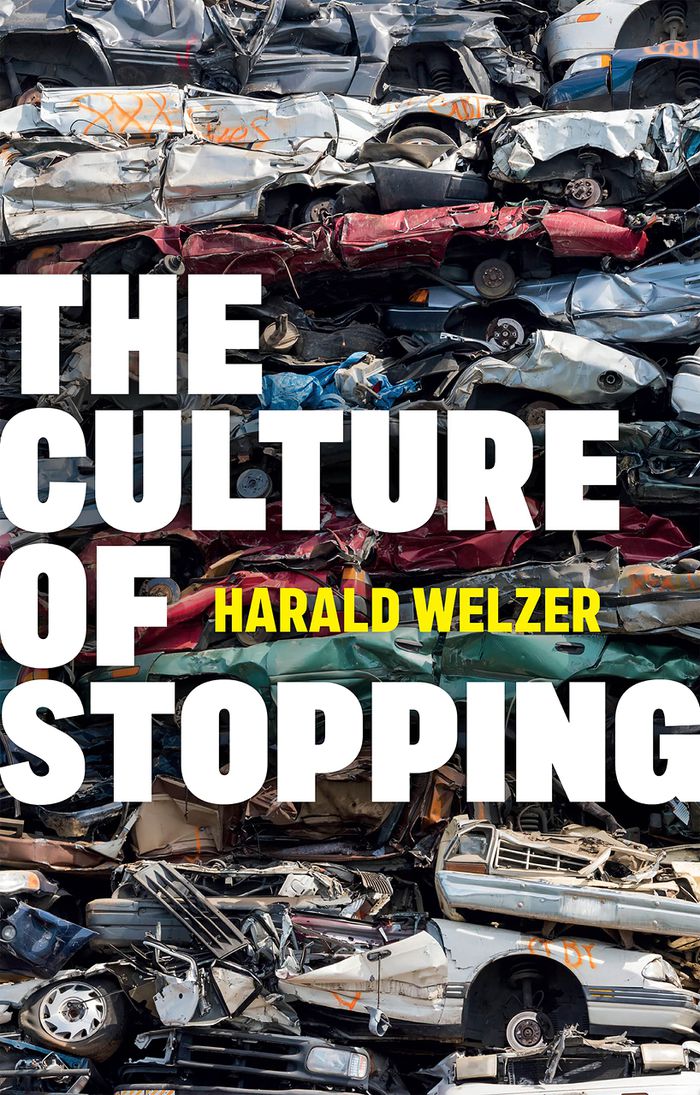
Our culture has no concept of stopping. We continue to build motorways and airports for a future in which cars and planes may no longer exist. We’re converting our planet from a natural one to an artificial one in which the quantity of man-made objects – houses, asphalt, cars, plastic, computers and so on – now exceeds the totality of living matter. And while biomass continues to decline due to deforestation and species extinction, the mass of man-made objects is growing faster than ever. We’re on a treadmill to disaster. To get off this treadmill, argues Harald Welzer, we need to learn how to stop: as individuals and as societies, we need to stop doing what we’re doing and say ‘enough’. We find it hard to do this because our culture has trained us to regard endless escalation as desirable, and we’re reluctant to surrender the material benefits of growth. But as long as the expansive cultural model continues to prevail, there will be no change of course in favour of sustainable and climate-friendly practices and lifestyles. We need a cultural model in which the beauty of stopping is given the recognition needed for the project of civilization to continue. Optimizing processes that are heading in the wrong direction only makes matters worse.
The culture of stopping: obituary to myself
Actions:
Prix:
$30.00
(disponible sur commande)
Résumé:
Our culture has no concept of stopping. We continue to build motorways and airports for a future in which cars and planes may no longer exist. We’re converting our planet from a natural one to an artificial one in which the quantity of man-made objects – houses, asphalt, cars, plastic, computers and so on – now exceeds the totality of living matter. And while biomass continues to decline due to deforestation and species extinction, the mass of man-made objects is growing faster than ever. We’re on a treadmill to disaster. To get off this treadmill, argues Harald Welzer, we need to learn how to stop: as individuals and as societies, we need to stop doing what we’re doing and say ‘enough’. We find it hard to do this because our culture has trained us to regard endless escalation as desirable, and we’re reluctant to surrender the material benefits of growth. But as long as the expansive cultural model continues to prevail, there will be no change of course in favour of sustainable and climate-friendly practices and lifestyles. We need a cultural model in which the beauty of stopping is given the recognition needed for the project of civilization to continue. Optimizing processes that are heading in the wrong direction only makes matters worse.
Classification:
livres
livres
Publication:
août 2023
août 2023
Sujet:
Social
Social
Classification:
livres
livres
Titre:
Binge
Binge
Actions:
Prix:
$29.95
(disponible sur commande)
Résumé:
'' Imagine feeling 100% alive every moment of every minute of the day! Maybe that’s how animals live. Or trees, even. I sometimes stare at the plastic bag tree visible from my apartment window and marvel that both it and I are equally alive and that there’s no sliding scale of life. You’re either alive, or you’re not. Or you’re dead or you’re not.'' Thirty years after(...)
$29.95
(disponible sur commande)
Résumé:
'' Imagine feeling 100% alive every moment of every minute of the day! Maybe that’s how animals live. Or trees, even. I sometimes stare at the plastic bag tree visible from my apartment window and marvel that both it and I are equally alive and that there’s no sliding scale of life. You’re either alive, or you’re not. Or you’re dead or you’re not.'' Thirty years after(...)
Titre:
Binge
Actions:
Prix:
$29.95
(disponible sur commande)
Résumé:
'' Imagine feeling 100% alive every moment of every minute of the day! Maybe that’s how animals live. Or trees, even. I sometimes stare at the plastic bag tree visible from my apartment window and marvel that both it and I are equally alive and that there’s no sliding scale of life. You’re either alive, or you’re not. Or you’re dead or you’re not.'' Thirty years after Douglas Coupland broke the fiction mould and defined a generation with ''Generation X,'' he is back with ''Binge,'' 60 stories laced with his observational profundity about the way we live and his existential worry about how we should be living: the very things that have made him such an influential and bestselling writer. Not to mention that he can also be really funny. Here the narrators vary from story to story as Doug catches what he calls “the voice of the people,” inspired by the way we write about ourselves and our experiences in online forums. The characters, of course, are Doug’s own: crackpots, cranks and sweetie-pies, dad dancers and perpetrators of carbecues. People in the grip of unconscionable urges; lonely people; dying people; silly people. If you love Doug’s fiction, this collection is like rain on the desert.
Binge
Actions:
Prix:
$29.95
(disponible sur commande)
Résumé:
'' Imagine feeling 100% alive every moment of every minute of the day! Maybe that’s how animals live. Or trees, even. I sometimes stare at the plastic bag tree visible from my apartment window and marvel that both it and I are equally alive and that there’s no sliding scale of life. You’re either alive, or you’re not. Or you’re dead or you’re not.'' Thirty years after Douglas Coupland broke the fiction mould and defined a generation with ''Generation X,'' he is back with ''Binge,'' 60 stories laced with his observational profundity about the way we live and his existential worry about how we should be living: the very things that have made him such an influential and bestselling writer. Not to mention that he can also be really funny. Here the narrators vary from story to story as Doug catches what he calls “the voice of the people,” inspired by the way we write about ourselves and our experiences in online forums. The characters, of course, are Doug’s own: crackpots, cranks and sweetie-pies, dad dancers and perpetrators of carbecues. People in the grip of unconscionable urges; lonely people; dying people; silly people. If you love Doug’s fiction, this collection is like rain on the desert.
Classification:
livres
livres
Publication:
octobre 2021
octobre 2021
Sujet:
Expositions en cours
Expositions en cours
Classification:
livres
livres
Actions:
Prix:
$77.00
(disponible sur commande)
Résumé:
Inspired by Chekhov's short stories--and by his own contagious joy in the book form--photographer Paul Graham has created A Shimmer of Possibility, comprised of 12 individual books, each a photographic short story of everyday life. Some are simple and linear--a man smokes a cigarette while he waits for a bus in Las Vegas, or the camera tracks an autumn walk in Boston.(...)
$77.00
(disponible sur commande)
Résumé:
Inspired by Chekhov's short stories--and by his own contagious joy in the book form--photographer Paul Graham has created A Shimmer of Possibility, comprised of 12 individual books, each a photographic short story of everyday life. Some are simple and linear--a man smokes a cigarette while he waits for a bus in Las Vegas, or the camera tracks an autumn walk in Boston.(...)
Titre:
Paul Graham: a shimmer of possibility
Actions:
Prix:
$77.00
(disponible sur commande)
Résumé:
Inspired by Chekhov's short stories--and by his own contagious joy in the book form--photographer Paul Graham has created A Shimmer of Possibility, comprised of 12 individual books, each a photographic short story of everyday life. Some are simple and linear--a man smokes a cigarette while he waits for a bus in Las Vegas, or the camera tracks an autumn walk in Boston. Some entwine two, three or four scenes--while a couple carry their shopping home in Texas, a small child dances with a plastic bag in a garden. Some watch a quiet narrative break unexpectedly into a sublime moment--as a man cuts the grass in Pittsburgh it begins to rain, until the low sun breaks through and illuminates each drop. Graham's filmic haikus shun any forceful summation or tidy packaging. Instead, they create the impression of life flowing around and past us while we stand and stare, and make it hard not to share the artist's quiet astonishment with its beauty and grace. The 12 books gathered here are identical in trim size, but vary in length from just a single photograph to 60 pages of images made at one street corner. Paul Graham's work has been widely exhibited and published for 25 years, most recently in the book American Night.
Paul Graham: a shimmer of possibility
Actions:
Prix:
$77.00
(disponible sur commande)
Résumé:
Inspired by Chekhov's short stories--and by his own contagious joy in the book form--photographer Paul Graham has created A Shimmer of Possibility, comprised of 12 individual books, each a photographic short story of everyday life. Some are simple and linear--a man smokes a cigarette while he waits for a bus in Las Vegas, or the camera tracks an autumn walk in Boston. Some entwine two, three or four scenes--while a couple carry their shopping home in Texas, a small child dances with a plastic bag in a garden. Some watch a quiet narrative break unexpectedly into a sublime moment--as a man cuts the grass in Pittsburgh it begins to rain, until the low sun breaks through and illuminates each drop. Graham's filmic haikus shun any forceful summation or tidy packaging. Instead, they create the impression of life flowing around and past us while we stand and stare, and make it hard not to share the artist's quiet astonishment with its beauty and grace. The 12 books gathered here are identical in trim size, but vary in length from just a single photograph to 60 pages of images made at one street corner. Paul Graham's work has been widely exhibited and published for 25 years, most recently in the book American Night.
Classification:
livres
livres
Publication:
janvier 2009
janvier 2009
Sujet:
Monographies photo
Monographies photo
Classification:
livres
livres

Actions:
Prix:
$25.95
(disponible sur commande)
Résumé:
We are living in the Anthropocene—an era of dramatic and violent climate change featuring warming oceans, melting icecaps, extreme weather events, habitat loss, species extinction, and more. What will life be like in a climate-changed world? In ''Tomorrow’s parties,'' science fiction authors speculate how we might be able to live and even thrive through the advancing(...)
$25.95
(disponible sur commande)
Résumé:
We are living in the Anthropocene—an era of dramatic and violent climate change featuring warming oceans, melting icecaps, extreme weather events, habitat loss, species extinction, and more. What will life be like in a climate-changed world? In ''Tomorrow’s parties,'' science fiction authors speculate how we might be able to live and even thrive through the advancing(...)
Titre:
Tomorrow's parties: Life in the Anthropocene
Actions:
Prix:
$25.95
(disponible sur commande)
Résumé:
We are living in the Anthropocene—an era of dramatic and violent climate change featuring warming oceans, melting icecaps, extreme weather events, habitat loss, species extinction, and more. What will life be like in a climate-changed world? In ''Tomorrow’s parties,'' science fiction authors speculate how we might be able to live and even thrive through the advancing Anthropocene. In ten original stories by writers from around the world, an interview with celebrated writer Kim Stanley Robinson, and a series of intricate and elegant artworks by Sean Bodley, ''Tomorrow’s parties'' takes rational optimism as a moral imperative, or at least a pragmatic alternative to despair. In these stories—by writers from the United Kingdom, the United States, Nigeria, China, Bangladesh, and Australia—a young man steals from delivery drones; a political community lives on an island made of ocean-borne plastic waste; and a climate change denier tries to unmask ''crisis actors.'' Climate-changed life also has its pleasures and epiphanies, as when a father in Africa works to make his son’s dreams of ''Viking adventure'' a reality, and an IT professional dispatched to a distant village encounters a marvelous predigital fungal network. Contributors include Pascall Prize for Criticism winner James Bradley, Hugo Award winners Greg Egan and Sarah Gailey, Philip K Dick Award winner Meg Elison, and New York Times bestselling author Daryl Gregory.
Tomorrow's parties: Life in the Anthropocene
Actions:
Prix:
$25.95
(disponible sur commande)
Résumé:
We are living in the Anthropocene—an era of dramatic and violent climate change featuring warming oceans, melting icecaps, extreme weather events, habitat loss, species extinction, and more. What will life be like in a climate-changed world? In ''Tomorrow’s parties,'' science fiction authors speculate how we might be able to live and even thrive through the advancing Anthropocene. In ten original stories by writers from around the world, an interview with celebrated writer Kim Stanley Robinson, and a series of intricate and elegant artworks by Sean Bodley, ''Tomorrow’s parties'' takes rational optimism as a moral imperative, or at least a pragmatic alternative to despair. In these stories—by writers from the United Kingdom, the United States, Nigeria, China, Bangladesh, and Australia—a young man steals from delivery drones; a political community lives on an island made of ocean-borne plastic waste; and a climate change denier tries to unmask ''crisis actors.'' Climate-changed life also has its pleasures and epiphanies, as when a father in Africa works to make his son’s dreams of ''Viking adventure'' a reality, and an IT professional dispatched to a distant village encounters a marvelous predigital fungal network. Contributors include Pascall Prize for Criticism winner James Bradley, Hugo Award winners Greg Egan and Sarah Gailey, Philip K Dick Award winner Meg Elison, and New York Times bestselling author Daryl Gregory.
Classification:
livres
livres
Publication:
août 2022
août 2022
Sujet:
Littérature et poésie
Littérature et poésie


