


1537 Résultats
Classification:
livres
livres
Actions:
Prix:
$47.00
(disponible sur commande)
Résumé:
In The Second Self, Sherry Turkle looks at the computer not as a "tool," but as part of our social and psychological lives; she looks beyond how we use computer games and spreadsheets to explore how the computer affects our awareness of ourselves, of one another, and of our relationship with the world. "Technology," she writes, "catalyzes changes not only in what we do(...)
$47.00
(disponible sur commande)
Résumé:
In The Second Self, Sherry Turkle looks at the computer not as a "tool," but as part of our social and psychological lives; she looks beyond how we use computer games and spreadsheets to explore how the computer affects our awareness of ourselves, of one another, and of our relationship with the world. "Technology," she writes, "catalyzes changes not only in what we do(...)
Publication:
janvier 2005
janvier 2005
Titre:
The second self: computers and the human spirit
Actions:
Prix:
$47.00
(disponible sur commande)
Résumé:
In The Second Self, Sherry Turkle looks at the computer not as a "tool," but as part of our social and psychological lives; she looks beyond how we use computer games and spreadsheets to explore how the computer affects our awareness of ourselves, of one another, and of our relationship with the world. "Technology," she writes, "catalyzes changes not only in what we do but in how we think." First published in 1984, The Second Self is still essential reading as a primer in the psychology of computation. This twentieth anniversary edition allows us to reconsider two decades of computer culture--to (re)experience what was and is most novel in our new media culture and to view our own contemporary relationship with technology with fresh eyes.
The second self: computers and the human spirit
Actions:
Prix:
$47.00
(disponible sur commande)
Résumé:
In The Second Self, Sherry Turkle looks at the computer not as a "tool," but as part of our social and psychological lives; she looks beyond how we use computer games and spreadsheets to explore how the computer affects our awareness of ourselves, of one another, and of our relationship with the world. "Technology," she writes, "catalyzes changes not only in what we do but in how we think." First published in 1984, The Second Self is still essential reading as a primer in the psychology of computation. This twentieth anniversary edition allows us to reconsider two decades of computer culture--to (re)experience what was and is most novel in our new media culture and to view our own contemporary relationship with technology with fresh eyes.
Classification:
livres
livres
Publication:
janvier 2005
janvier 2005
Classification:
livres
livres

Actions:
Prix:
$48.00
(disponible sur commande)
Résumé:
Is there a cultural logic of what we have come to call the information age? Have the technologies and techniques centered on the computer provided not only tools but also the metaphors through which we now understand the social and economic formation of our world? In Control, Seb Franklin addresses the conditions of knowledge that make the concept of the "information(...)
$48.00
(disponible sur commande)
Résumé:
Is there a cultural logic of what we have come to call the information age? Have the technologies and techniques centered on the computer provided not only tools but also the metaphors through which we now understand the social and economic formation of our world? In Control, Seb Franklin addresses the conditions of knowledge that make the concept of the "information(...)
Titre:
Control: digitality as cultural logic
Actions:
Prix:
$48.00
(disponible sur commande)
Résumé:
Is there a cultural logic of what we have come to call the information age? Have the technologies and techniques centered on the computer provided not only tools but also the metaphors through which we now understand the social and economic formation of our world? In Control, Seb Franklin addresses the conditions of knowledge that make the concept of the "information economy" possible while at the same time obscuring its effects on material social spaces. In so doing, Franklin traces three intertwined threads: the relationships among information, labor, and social management that emerged in the nineteenth century; the mid-twentieth-century diffusion of computational metaphors; and the appearance of informatic principles in certain contemporary socioeconomic and cultural practices. Drawing on critical theory, media theory, and the history of science, Franklin names control as the episteme grounding late capitalism. Beyond any specific device or set of technically mediated practices, digitality functions within this episteme as the logical basis for reshaped concepts of labor, subjectivity, and collectivity, as well as for the intensification of older modes of exclusion and dispossession. In tracking the pervasiveness of this logical mode into the present, Franklin locates the cultural traces of control across a diverse body of objects and practices, from cybernetics to economic theory and management styles, and from concepts of language and subjectivity to literary texts, films, and video games.
Control: digitality as cultural logic
Actions:
Prix:
$48.00
(disponible sur commande)
Résumé:
Is there a cultural logic of what we have come to call the information age? Have the technologies and techniques centered on the computer provided not only tools but also the metaphors through which we now understand the social and economic formation of our world? In Control, Seb Franklin addresses the conditions of knowledge that make the concept of the "information economy" possible while at the same time obscuring its effects on material social spaces. In so doing, Franklin traces three intertwined threads: the relationships among information, labor, and social management that emerged in the nineteenth century; the mid-twentieth-century diffusion of computational metaphors; and the appearance of informatic principles in certain contemporary socioeconomic and cultural practices. Drawing on critical theory, media theory, and the history of science, Franklin names control as the episteme grounding late capitalism. Beyond any specific device or set of technically mediated practices, digitality functions within this episteme as the logical basis for reshaped concepts of labor, subjectivity, and collectivity, as well as for the intensification of older modes of exclusion and dispossession. In tracking the pervasiveness of this logical mode into the present, Franklin locates the cultural traces of control across a diverse body of objects and practices, from cybernetics to economic theory and management styles, and from concepts of language and subjectivity to literary texts, films, and video games.
Classification:
livres
livres
Publication:
novembre 2015
novembre 2015
Classification:
livres
livres
Actions:
Prix:
$41.95
(disponible en magasin)
Résumé:
Over the last few decades the term "bootlegging"—a practice once relegated to smugglers and copyright infringers—has become understood as a creative act. Debates about homage, appropriation, and theft that are common in the art world, are now being held in the spheres of corporate branding, social media, and the creative industry as a whole. Today, bootlegging has become(...)
$41.95
(disponible en magasin)
Résumé:
Over the last few decades the term "bootlegging"—a practice once relegated to smugglers and copyright infringers—has become understood as a creative act. Debates about homage, appropriation, and theft that are common in the art world, are now being held in the spheres of corporate branding, social media, and the creative industry as a whole. Today, bootlegging has become(...)
Titre:
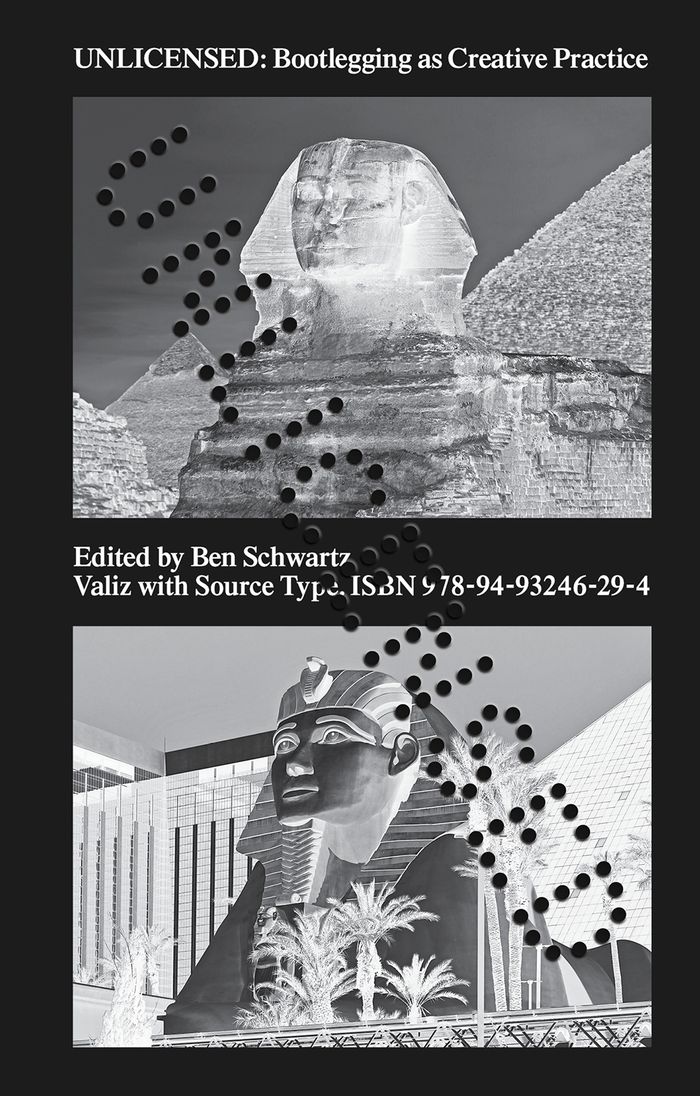
Unlicensed: Bootlegging as creative practice
Actions:
Prix:
$41.95
(disponible en magasin)
Résumé:
Over the last few decades the term "bootlegging"—a practice once relegated to smugglers and copyright infringers—has become understood as a creative act. Debates about homage, appropriation, and theft that are common in the art world, are now being held in the spheres of corporate branding, social media, and the creative industry as a whole. Today, bootlegging has become fetishized as an aesthetic in and of itself, influencing everything from underground record labels to DIY T-shirts, publishing ideologies, to acts of high fashion détournement. "Unlicensed" contains twenty-one interviews with a range of creative practitioners on the topic of bootlegging. The conversations in "Unlicensed" investigate bootlegging’s creative and critical potential, and explore new ways bootlegging can be deployed in order to thrive as an impactful cultural force.
Unlicensed: Bootlegging as creative practice
Actions:
Prix:
$41.95
(disponible en magasin)
Résumé:
Over the last few decades the term "bootlegging"—a practice once relegated to smugglers and copyright infringers—has become understood as a creative act. Debates about homage, appropriation, and theft that are common in the art world, are now being held in the spheres of corporate branding, social media, and the creative industry as a whole. Today, bootlegging has become fetishized as an aesthetic in and of itself, influencing everything from underground record labels to DIY T-shirts, publishing ideologies, to acts of high fashion détournement. "Unlicensed" contains twenty-one interviews with a range of creative practitioners on the topic of bootlegging. The conversations in "Unlicensed" investigate bootlegging’s creative and critical potential, and explore new ways bootlegging can be deployed in order to thrive as an impactful cultural force.
Classification:
livres
livres
Publication:
octobre 2023
octobre 2023
Sujet:
Théorie de l’art
Théorie de l’art
Classification:
livres
livres

Actions:
Prix:
$93.95
(disponible sur commande)
Résumé:
Throughout the twentieth century, housing displays have proven to be a singular genre of architectural and design exhibitions. By crossing geographies and adopting multiple scales of observation – from domestic space to urban visions – this volume investigates a set of unexplored events devoted to housing and dwelling, organised by technical, professional, cultural or(...)
$93.95
(disponible sur commande)
Résumé:
Throughout the twentieth century, housing displays have proven to be a singular genre of architectural and design exhibitions. By crossing geographies and adopting multiple scales of observation – from domestic space to urban visions – this volume investigates a set of unexplored events devoted to housing and dwelling, organised by technical, professional, cultural or(...)
Titre:
The housing project: discourses, ideals, models and politics in 20th century exhibitions
Actions:
Prix:
$93.95
(disponible sur commande)
Résumé:
Throughout the twentieth century, housing displays have proven to be a singular genre of architectural and design exhibitions. By crossing geographies and adopting multiple scales of observation – from domestic space to urban visions – this volume investigates a set of unexplored events devoted to housing and dwelling, organised by technical, professional, cultural or governmental institutions from the interwar years to the Cold War. The book offers a first critical assessment of twentieth-century housing exhibits and explores the role of exhibitions in the codification of notions of domesticity, social models, policies, and architectural and urban discourse. At the intersection of housing studies and the history of exhibitions, ''The Housing Project'' not only offers a novel angle on architectural history but also enriches scholarly perspectives in urban studies, cultural and media history, design, and consumption studies.
The housing project: discourses, ideals, models and politics in 20th century exhibitions
Actions:
Prix:
$93.95
(disponible sur commande)
Résumé:
Throughout the twentieth century, housing displays have proven to be a singular genre of architectural and design exhibitions. By crossing geographies and adopting multiple scales of observation – from domestic space to urban visions – this volume investigates a set of unexplored events devoted to housing and dwelling, organised by technical, professional, cultural or governmental institutions from the interwar years to the Cold War. The book offers a first critical assessment of twentieth-century housing exhibits and explores the role of exhibitions in the codification of notions of domesticity, social models, policies, and architectural and urban discourse. At the intersection of housing studies and the history of exhibitions, ''The Housing Project'' not only offers a novel angle on architectural history but also enriches scholarly perspectives in urban studies, cultural and media history, design, and consumption studies.
Classification:
livres
livres
Publication:
août 2019
août 2019
Sujet:
Logements collectifs
Logements collectifs
Classification:
livres
livres

Titre:
The digital condition
The digital condition
Actions:
Prix:
$27.95
(disponible sur commande)
Résumé:
Our daily lives, our culture, and our politics are now shaped by the digital condition, in which greater numbers of people are engaged in negotiating meaning in ever more dimensions of life, from the trivial to the profound. They are making use of a complex communication infrastructure, currently dominated by social mass media such as Twitter and Facebook, on which they(...)
$27.95
(disponible sur commande)
Résumé:
Our daily lives, our culture, and our politics are now shaped by the digital condition, in which greater numbers of people are engaged in negotiating meaning in ever more dimensions of life, from the trivial to the profound. They are making use of a complex communication infrastructure, currently dominated by social mass media such as Twitter and Facebook, on which they(...)
Titre:
The digital condition
Actions:
Prix:
$27.95
(disponible sur commande)
Résumé:
Our daily lives, our culture, and our politics are now shaped by the digital condition, in which greater numbers of people are engaged in negotiating meaning in ever more dimensions of life, from the trivial to the profound. They are making use of a complex communication infrastructure, currently dominated by social mass media such as Twitter and Facebook, on which they have come to depend.Amidst a confusing plurality, Felix Stalder argues that there are three key constituents of this condition: the use of existing cultural materials for one’s own production, the way in which new meaning is established as a collective endeavor, and the underlying role of algorithms and automated decision-making processes that give shape to massive volumes of data. These three characteristics define what Stalder calls “the digital condition.”
The digital condition
Actions:
Prix:
$27.95
(disponible sur commande)
Résumé:
Our daily lives, our culture, and our politics are now shaped by the digital condition, in which greater numbers of people are engaged in negotiating meaning in ever more dimensions of life, from the trivial to the profound. They are making use of a complex communication infrastructure, currently dominated by social mass media such as Twitter and Facebook, on which they have come to depend.Amidst a confusing plurality, Felix Stalder argues that there are three key constituents of this condition: the use of existing cultural materials for one’s own production, the way in which new meaning is established as a collective endeavor, and the underlying role of algorithms and automated decision-making processes that give shape to massive volumes of data. These three characteristics define what Stalder calls “the digital condition.”
Classification:
livres
livres
Publication:
décembre 2017
décembre 2017
Classification:
livres
livres

Actions:
Prix:
$74.95
(disponible en magasin)
Résumé:
A photo-collage of past and present street visuals in Asia, Aestheticizing Public Space explores the domestic, regional, and global nexus of East Asian cities through their graffiti, street art, and other visual forms in public space. Attempting to unfold the complex positions of these images in the urban spatial politics of their respective regions, Lu Pan explores how(...)
$74.95
(disponible en magasin)
Résumé:
A photo-collage of past and present street visuals in Asia, Aestheticizing Public Space explores the domestic, regional, and global nexus of East Asian cities through their graffiti, street art, and other visual forms in public space. Attempting to unfold the complex positions of these images in the urban spatial politics of their respective regions, Lu Pan explores how(...)
Titre:
Aestheticizing Public Space: street visual politics in east asian cities
Actions:
Prix:
$74.95
(disponible en magasin)
Résumé:
A photo-collage of past and present street visuals in Asia, Aestheticizing Public Space explores the domestic, regional, and global nexus of East Asian cities through their graffiti, street art, and other visual forms in public space. Attempting to unfold the complex positions of these images in the urban spatial politics of their respective regions, Lu Pan explores how graffiti in East Asia reflects the relationship between aesthetics and politics. The book situates itself in a contested dynamic relationship among human bodies, visual modernity, social or moral norms, styles, and historical experiences and narratives. On a broader level, this book aims to shed light on how aesthetics and politics are mobilized in different contested spaces and media forms, in which the producer and the spectator change and exchange their identities.
Aestheticizing Public Space: street visual politics in east asian cities
Actions:
Prix:
$74.95
(disponible en magasin)
Résumé:
A photo-collage of past and present street visuals in Asia, Aestheticizing Public Space explores the domestic, regional, and global nexus of East Asian cities through their graffiti, street art, and other visual forms in public space. Attempting to unfold the complex positions of these images in the urban spatial politics of their respective regions, Lu Pan explores how graffiti in East Asia reflects the relationship between aesthetics and politics. The book situates itself in a contested dynamic relationship among human bodies, visual modernity, social or moral norms, styles, and historical experiences and narratives. On a broader level, this book aims to shed light on how aesthetics and politics are mobilized in different contested spaces and media forms, in which the producer and the spectator change and exchange their identities.
Classification:
livres
livres
Publication:
novembre 2015
novembre 2015
Classification:
livres
livres

Titre:
Avocado: a global history
Avocado: a global history
Actions:
Prix:
$29.95
(disponible sur commande)
Résumé:
The avocado is the iconic food of the twenty-first century. It has gone from a little-known regional food to a social media darling in less than a hundred years. This is an astounding trajectory for a fruit that isn’t sweet, becomes bitter when it is cooked and has perhaps the oddest texture of any fruit or vegetable. But the idea that this rich and delicious fruit is(...)
$29.95
(disponible sur commande)
Résumé:
The avocado is the iconic food of the twenty-first century. It has gone from a little-known regional food to a social media darling in less than a hundred years. This is an astounding trajectory for a fruit that isn’t sweet, becomes bitter when it is cooked and has perhaps the oddest texture of any fruit or vegetable. But the idea that this rich and delicious fruit is(...)
Titre:
Avocado: a global history
Actions:
Prix:
$29.95
(disponible sur commande)
Résumé:
The avocado is the iconic food of the twenty-first century. It has gone from a little-known regional food to a social media darling in less than a hundred years. This is an astounding trajectory for a fruit that isn’t sweet, becomes bitter when it is cooked and has perhaps the oddest texture of any fruit or vegetable. But the idea that this rich and delicious fruit is also healthy despite being fatty and energy-dense gives it unicorn status among modern eaters, especially millennials. Through lively anecdotes, colourful pictures and delicious recipes, Jeff Miller explores the meteoric rise of the avocado, from its co-evolution with the megaherbivores of the Pleistocene to its acceptance by the Spanish conquistadores in Mexico and its current dominance of food consumers’ imagination.
Avocado: a global history
Actions:
Prix:
$29.95
(disponible sur commande)
Résumé:
The avocado is the iconic food of the twenty-first century. It has gone from a little-known regional food to a social media darling in less than a hundred years. This is an astounding trajectory for a fruit that isn’t sweet, becomes bitter when it is cooked and has perhaps the oddest texture of any fruit or vegetable. But the idea that this rich and delicious fruit is also healthy despite being fatty and energy-dense gives it unicorn status among modern eaters, especially millennials. Through lively anecdotes, colourful pictures and delicious recipes, Jeff Miller explores the meteoric rise of the avocado, from its co-evolution with the megaherbivores of the Pleistocene to its acceptance by the Spanish conquistadores in Mexico and its current dominance of food consumers’ imagination.
Classification:
livres
livres
Publication:
octobre 2020
octobre 2020
Sujet:
Bouffe
Bouffe
Classification:
livres
livres
Titre:
Gutai: splendid playground
Gutai: splendid playground
Actions:
Prix:
$65.00
(disponible sur commande)
Résumé:
Gutai: Splendid Playground surveys the influential Japanese collective and artistic movement. This exhibition catalogue aims to demonstrate the range of bold and innovative creativity present in the avant-garde movement, to examine the aesthetic strategies in the cultural, social and political context of postwar Japan and the West, and to further establish Gutai in an(...)
$65.00
(disponible sur commande)
Résumé:
Gutai: Splendid Playground surveys the influential Japanese collective and artistic movement. This exhibition catalogue aims to demonstrate the range of bold and innovative creativity present in the avant-garde movement, to examine the aesthetic strategies in the cultural, social and political context of postwar Japan and the West, and to further establish Gutai in an(...)
Titre:
Gutai: splendid playground
Actions:
Prix:
$65.00
(disponible sur commande)
Résumé:
Gutai: Splendid Playground surveys the influential Japanese collective and artistic movement. This exhibition catalogue aims to demonstrate the range of bold and innovative creativity present in the avant-garde movement, to examine the aesthetic strategies in the cultural, social and political context of postwar Japan and the West, and to further establish Gutai in an expanded, transnational history and critical discourse of modern art. Organized thematically and chronologically to explore Gutai’s unique approach to materials, concepts, process, performativity and enviroment, this publication investigates the group’s radical experimentation across a range of media and styles, and demonstrates how individual artists pushed the limits of what art could be or mean in a post-atomic era. The range includes painting, conceptual art, performance, film, installation art, sound art, interactive art, light art and kinetic art.
Gutai: splendid playground
Actions:
Prix:
$65.00
(disponible sur commande)
Résumé:
Gutai: Splendid Playground surveys the influential Japanese collective and artistic movement. This exhibition catalogue aims to demonstrate the range of bold and innovative creativity present in the avant-garde movement, to examine the aesthetic strategies in the cultural, social and political context of postwar Japan and the West, and to further establish Gutai in an expanded, transnational history and critical discourse of modern art. Organized thematically and chronologically to explore Gutai’s unique approach to materials, concepts, process, performativity and enviroment, this publication investigates the group’s radical experimentation across a range of media and styles, and demonstrates how individual artists pushed the limits of what art could be or mean in a post-atomic era. The range includes painting, conceptual art, performance, film, installation art, sound art, interactive art, light art and kinetic art.
Classification:
livres
livres
Publication:
février 2013
février 2013
Classification:
livres
livres
Titre:
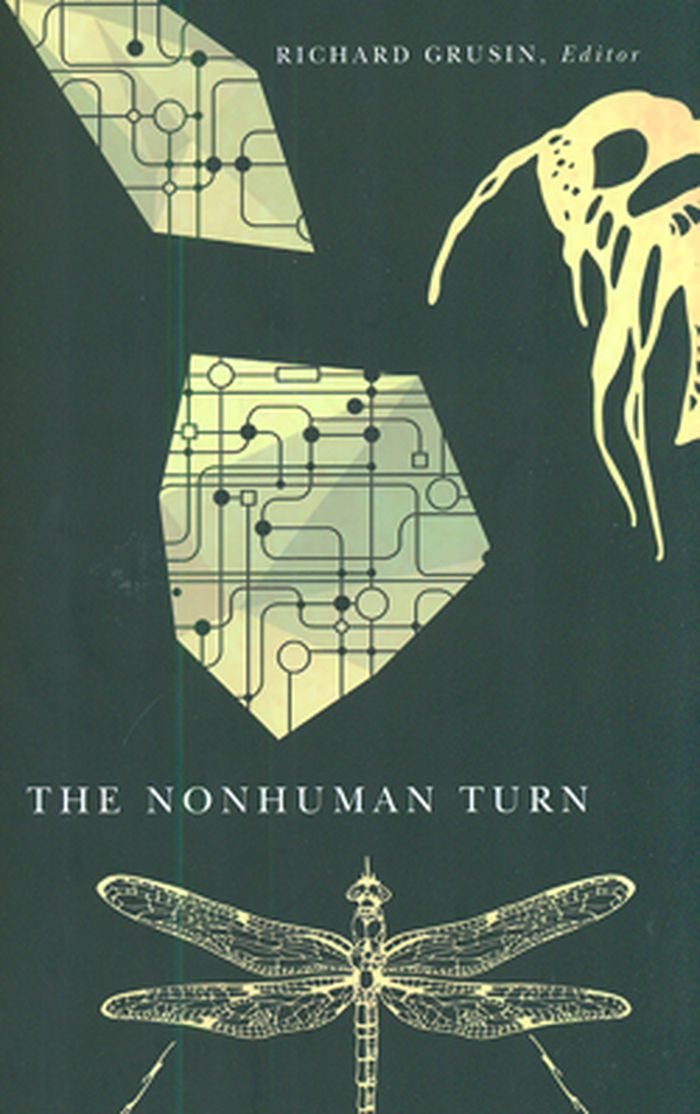
The nonhuman turn
The nonhuman turn
Actions:
Prix:
$38.95
(disponible sur commande)
Résumé:
Edited by Richard Grusin of the Center for 21st Century Studies, this is the first book to name and characterize--and therefore consolidate--a wide array of current critical, theoretical, and philosophical approaches to the humanities and social sciences under the concept of the nonhuman turn. Each of these approaches is engaged in decentering the human in favor of a(...)
$38.95
(disponible sur commande)
Résumé:
Edited by Richard Grusin of the Center for 21st Century Studies, this is the first book to name and characterize--and therefore consolidate--a wide array of current critical, theoretical, and philosophical approaches to the humanities and social sciences under the concept of the nonhuman turn. Each of these approaches is engaged in decentering the human in favor of a(...)
Titre:
The nonhuman turn
Actions:
Prix:
$38.95
(disponible sur commande)
Résumé:
Edited by Richard Grusin of the Center for 21st Century Studies, this is the first book to name and characterize--and therefore consolidate--a wide array of current critical, theoretical, and philosophical approaches to the humanities and social sciences under the concept of the nonhuman turn. Each of these approaches is engaged in decentering the human in favor of a concern for the nonhuman, understood by contributors in a variety of ways--in terms of animals, affectivity, bodies, materiality, technologies, and organic and geophysical systems.The nonhuman turn in twenty-first-century studies can be traced to multiple intellectual and theoretical developments from the last decades of the twentieth century: actor-network theory, affect theory, animal studies, assemblage theory, cognitive sciences, new materialism, new media theory, speculative realism, and systems theory.
The nonhuman turn
Actions:
Prix:
$38.95
(disponible sur commande)
Résumé:
Edited by Richard Grusin of the Center for 21st Century Studies, this is the first book to name and characterize--and therefore consolidate--a wide array of current critical, theoretical, and philosophical approaches to the humanities and social sciences under the concept of the nonhuman turn. Each of these approaches is engaged in decentering the human in favor of a concern for the nonhuman, understood by contributors in a variety of ways--in terms of animals, affectivity, bodies, materiality, technologies, and organic and geophysical systems.The nonhuman turn in twenty-first-century studies can be traced to multiple intellectual and theoretical developments from the last decades of the twentieth century: actor-network theory, affect theory, animal studies, assemblage theory, cognitive sciences, new materialism, new media theory, speculative realism, and systems theory.
Classification:
livres
livres
Publication:
avril 2015
avril 2015
Sujet:
Théorie/ philosophie
Théorie/ philosophie
Classification:
périodiques
périodiques

Actions:
Prix:
$35.00
(disponible sur commande)
Résumé:
Decades following the rise of computer aided design and the aesthetic-theoretical debates that coincided, it might seem late, at this point, to place a spotlight on photography. After all, hardly anyone defends photography’s loyalty to the analog index anymore, or mourns the medium specificities of centuries past. And yet, who can dispute that the photograph has become(...)
$35.00
(disponible sur commande)
Résumé:
Decades following the rise of computer aided design and the aesthetic-theoretical debates that coincided, it might seem late, at this point, to place a spotlight on photography. After all, hardly anyone defends photography’s loyalty to the analog index anymore, or mourns the medium specificities of centuries past. And yet, who can dispute that the photograph has become(...)
Titre:
Texte zur Kunst 99: photography
Actions:
Prix:
$35.00
(disponible sur commande)
Résumé:
Decades following the rise of computer aided design and the aesthetic-theoretical debates that coincided, it might seem late, at this point, to place a spotlight on photography. After all, hardly anyone defends photography’s loyalty to the analog index anymore, or mourns the medium specificities of centuries past. And yet, who can dispute that the photograph has become the primary base for establishing identity now, for cohering a social body; one that, as the substrate across which today’s human subject is drawn, stands as, in a sense, our material support? As the image’s gaze has become omnipresent, it is perhaps prime time to ask how do we now understand photo-media to operate? What information do we expect it to carry? What facts do we trust it to convey?
Texte zur Kunst 99: photography
Actions:
Prix:
$35.00
(disponible sur commande)
Résumé:
Decades following the rise of computer aided design and the aesthetic-theoretical debates that coincided, it might seem late, at this point, to place a spotlight on photography. After all, hardly anyone defends photography’s loyalty to the analog index anymore, or mourns the medium specificities of centuries past. And yet, who can dispute that the photograph has become the primary base for establishing identity now, for cohering a social body; one that, as the substrate across which today’s human subject is drawn, stands as, in a sense, our material support? As the image’s gaze has become omnipresent, it is perhaps prime time to ask how do we now understand photo-media to operate? What information do we expect it to carry? What facts do we trust it to convey?
Classification:
périodiques
périodiques
Publication:
septembre 2015
septembre 2015
Sujet:
Revues
Revues


