


2855 Résultats
Niveau de description archivistique:
Projet
Projet
Numéro de référence:
AP018.S1.1974.PR25
Description:
This project series documents the design and construction of the Royal Ottawa Regional Rehabilitation Centre in Ottawa, Ontario from 1974-1981. The office identified the project number as 7432. The Ottawa Heath Sciences Complex, a vast hospital network encompassing institutions across the city, hired Parkin Architects Planners in 1971 to design and construct University of Ottawa buildings within the network. These campus buildings were located in the Alta Vista neighbourhood and referred to as the Health Sciences Centre. This project consists of one building in that complex, the Royal Ottawa Regional Rehabilitation Centre. The distinction between these names should be noted when viewing the materials. The two-storey rehabilitation centre was constructed directly beside the Ottawa Health Sciences Building, another hospital in the network built by Parkin (see project series AP018.S1.1974.PR01 in this fonds). The proposal conceived a 145,000 square foot hospital with 77 in-patient beds. The design included space for patient accommodation, teaching, research, administrative activities, patient care and treatment, and a concession area. Patients at the hospital would range from those with severe brain injuries, to amputees, to those with rheumatic diseases. The building was carefully designed to accommodate the specialized needs of the patients. The hospital design also included a swimming pool, sports areas, and spaces for other leisure activities thought to aid in the rehabilitation process. The project is recorded through construction photographs, drawings, and textual materials dating from 1971-1983. The textual records include correspondence, specifications, schedules, contract data, conference reports and minutes, inspection reports, predesign notes, consultancy records, financial documents, change orders, supplementary instructions, research, and deficiency lists. The majority of these textual records deal with the hospital's construction, rather than design. Most drawings are reprographic copies of detail drawings and can be found within the textual records. Box AP018.S1.1974.PR25.002 contains an index to the textual records, which was created by the office.
AP018.S1.1974.PR25
Description:
This project series documents the design and construction of the Royal Ottawa Regional Rehabilitation Centre in Ottawa, Ontario from 1974-1981. The office identified the project number as 7432. The Ottawa Heath Sciences Complex, a vast hospital network encompassing institutions across the city, hired Parkin Architects Planners in 1971 to design and construct University of Ottawa buildings within the network. These campus buildings were located in the Alta Vista neighbourhood and referred to as the Health Sciences Centre. This project consists of one building in that complex, the Royal Ottawa Regional Rehabilitation Centre. The distinction between these names should be noted when viewing the materials. The two-storey rehabilitation centre was constructed directly beside the Ottawa Health Sciences Building, another hospital in the network built by Parkin (see project series AP018.S1.1974.PR01 in this fonds). The proposal conceived a 145,000 square foot hospital with 77 in-patient beds. The design included space for patient accommodation, teaching, research, administrative activities, patient care and treatment, and a concession area. Patients at the hospital would range from those with severe brain injuries, to amputees, to those with rheumatic diseases. The building was carefully designed to accommodate the specialized needs of the patients. The hospital design also included a swimming pool, sports areas, and spaces for other leisure activities thought to aid in the rehabilitation process. The project is recorded through construction photographs, drawings, and textual materials dating from 1971-1983. The textual records include correspondence, specifications, schedules, contract data, conference reports and minutes, inspection reports, predesign notes, consultancy records, financial documents, change orders, supplementary instructions, research, and deficiency lists. The majority of these textual records deal with the hospital's construction, rather than design. Most drawings are reprographic copies of detail drawings and can be found within the textual records. Box AP018.S1.1974.PR25.002 contains an index to the textual records, which was created by the office.
Personnes et institutions:
Date:
1971-1983
1971-1983
Titre:
Royal Ottawa Regional Rehabilitation Centre, Ottawa Health Sciences Centre, Ottawa, Ontario (1974)
Actions:
AP018.S1.1974.PR25
Description:
This project series documents the design and construction of the Royal Ottawa Regional Rehabilitation Centre in Ottawa, Ontario from 1974-1981. The office identified the project number as 7432. The Ottawa Heath Sciences Complex, a vast hospital network encompassing institutions across the city, hired Parkin Architects Planners in 1971 to design and construct University of Ottawa buildings within the network. These campus buildings were located in the Alta Vista neighbourhood and referred to as the Health Sciences Centre. This project consists of one building in that complex, the Royal Ottawa Regional Rehabilitation Centre. The distinction between these names should be noted when viewing the materials. The two-storey rehabilitation centre was constructed directly beside the Ottawa Health Sciences Building, another hospital in the network built by Parkin (see project series AP018.S1.1974.PR01 in this fonds). The proposal conceived a 145,000 square foot hospital with 77 in-patient beds. The design included space for patient accommodation, teaching, research, administrative activities, patient care and treatment, and a concession area. Patients at the hospital would range from those with severe brain injuries, to amputees, to those with rheumatic diseases. The building was carefully designed to accommodate the specialized needs of the patients. The hospital design also included a swimming pool, sports areas, and spaces for other leisure activities thought to aid in the rehabilitation process. The project is recorded through construction photographs, drawings, and textual materials dating from 1971-1983. The textual records include correspondence, specifications, schedules, contract data, conference reports and minutes, inspection reports, predesign notes, consultancy records, financial documents, change orders, supplementary instructions, research, and deficiency lists. The majority of these textual records deal with the hospital's construction, rather than design. Most drawings are reprographic copies of detail drawings and can be found within the textual records. Box AP018.S1.1974.PR25.002 contains an index to the textual records, which was created by the office.
Royal Ottawa Regional Rehabilitation Centre, Ottawa Health Sciences Centre, Ottawa, Ontario (1974)
Actions:
AP018.S1.1974.PR25
Description:
This project series documents the design and construction of the Royal Ottawa Regional Rehabilitation Centre in Ottawa, Ontario from 1974-1981. The office identified the project number as 7432. The Ottawa Heath Sciences Complex, a vast hospital network encompassing institutions across the city, hired Parkin Architects Planners in 1971 to design and construct University of Ottawa buildings within the network. These campus buildings were located in the Alta Vista neighbourhood and referred to as the Health Sciences Centre. This project consists of one building in that complex, the Royal Ottawa Regional Rehabilitation Centre. The distinction between these names should be noted when viewing the materials. The two-storey rehabilitation centre was constructed directly beside the Ottawa Health Sciences Building, another hospital in the network built by Parkin (see project series AP018.S1.1974.PR01 in this fonds). The proposal conceived a 145,000 square foot hospital with 77 in-patient beds. The design included space for patient accommodation, teaching, research, administrative activities, patient care and treatment, and a concession area. Patients at the hospital would range from those with severe brain injuries, to amputees, to those with rheumatic diseases. The building was carefully designed to accommodate the specialized needs of the patients. The hospital design also included a swimming pool, sports areas, and spaces for other leisure activities thought to aid in the rehabilitation process. The project is recorded through construction photographs, drawings, and textual materials dating from 1971-1983. The textual records include correspondence, specifications, schedules, contract data, conference reports and minutes, inspection reports, predesign notes, consultancy records, financial documents, change orders, supplementary instructions, research, and deficiency lists. The majority of these textual records deal with the hospital's construction, rather than design. Most drawings are reprographic copies of detail drawings and can be found within the textual records. Box AP018.S1.1974.PR25.002 contains an index to the textual records, which was created by the office.
Niveau de description archivistique:
Project
Project
Date:
1971-1983
1971-1983
Personnes et institutions:
Classification:
documents textuels
documents textuels
Numéro de référence:
AP197.S3.004
Description:
The box is comprised of correspondence for 1991-1994, organized in alphabetical order by last name, from L-T. The box documents Frampton’s career as Ware professor at the Graduate School of Architecture, Planning and Preservation, Columbia University and his related professional activities. Correspondence in this box includes: offers of teaching positions; requests to write articles, reviews, books and recommendation letters; invitations to teach, present, or attend at lectures/symposiums/conferences; and requests to serve on juries. Correspondence relates to Kenneth Frampton’s involvement/participation as: a lecturer at Association of Collegiate Schools of Architecture (ASCA) Conference and the Chinese University of Hong Kong; a keynote speaker at the National University of Singapore Conference; visiting professorship at the Université de Montréal; as Chairman of the Jerusalem Seminar in Architecture; a member of the advisory board for the World Architecture Triennale, Nara.
AP197.S3.004
Description:
The box is comprised of correspondence for 1991-1994, organized in alphabetical order by last name, from L-T. The box documents Frampton’s career as Ware professor at the Graduate School of Architecture, Planning and Preservation, Columbia University and his related professional activities. Correspondence in this box includes: offers of teaching positions; requests to write articles, reviews, books and recommendation letters; invitations to teach, present, or attend at lectures/symposiums/conferences; and requests to serve on juries. Correspondence relates to Kenneth Frampton’s involvement/participation as: a lecturer at Association of Collegiate Schools of Architecture (ASCA) Conference and the Chinese University of Hong Kong; a keynote speaker at the National University of Singapore Conference; visiting professorship at the Université de Montréal; as Chairman of the Jerusalem Seminar in Architecture; a member of the advisory board for the World Architecture Triennale, Nara.
Personnes et institutions:
Date:
1991-1994
1991-1994
Titre:
Personal and professional correspondence for names L-T from 1991-1994
Actions:
AP197.S3.004
Description:
The box is comprised of correspondence for 1991-1994, organized in alphabetical order by last name, from L-T. The box documents Frampton’s career as Ware professor at the Graduate School of Architecture, Planning and Preservation, Columbia University and his related professional activities. Correspondence in this box includes: offers of teaching positions; requests to write articles, reviews, books and recommendation letters; invitations to teach, present, or attend at lectures/symposiums/conferences; and requests to serve on juries. Correspondence relates to Kenneth Frampton’s involvement/participation as: a lecturer at Association of Collegiate Schools of Architecture (ASCA) Conference and the Chinese University of Hong Kong; a keynote speaker at the National University of Singapore Conference; visiting professorship at the Université de Montréal; as Chairman of the Jerusalem Seminar in Architecture; a member of the advisory board for the World Architecture Triennale, Nara.
Personal and professional correspondence for names L-T from 1991-1994
Actions:
AP197.S3.004
Description:
The box is comprised of correspondence for 1991-1994, organized in alphabetical order by last name, from L-T. The box documents Frampton’s career as Ware professor at the Graduate School of Architecture, Planning and Preservation, Columbia University and his related professional activities. Correspondence in this box includes: offers of teaching positions; requests to write articles, reviews, books and recommendation letters; invitations to teach, present, or attend at lectures/symposiums/conferences; and requests to serve on juries. Correspondence relates to Kenneth Frampton’s involvement/participation as: a lecturer at Association of Collegiate Schools of Architecture (ASCA) Conference and the Chinese University of Hong Kong; a keynote speaker at the National University of Singapore Conference; visiting professorship at the Université de Montréal; as Chairman of the Jerusalem Seminar in Architecture; a member of the advisory board for the World Architecture Triennale, Nara.
Classification:
documents textuels
documents textuels
Date:
1991-1994
1991-1994
Personnes et institutions:
Classification:
événements
événements
Titre:
Dénouer le paysage numérique
Dénouer le paysage numérique
Actions:
Description:
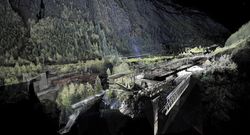
Dans cette conférence, Christophe Girot aborde les modèles de paysage numérique : Le design et l’analyse du paysage numérique ont traversé une révolution tranquille au cours des dix dernières années, suscitée par l’introduction de modèles numériques de nuages de points. La portée et la précision de ces modèles de paysages numériques créés à l’aide de lecteurs laser(...)
Dans cette conférence, Christophe Girot aborde les modèles de paysage numérique : Le design et l’analyse du paysage numérique ont traversé une révolution tranquille au cours des dix dernières années, suscitée par l’introduction de modèles numériques de nuages de points. La portée et la précision de ces modèles de paysages numériques créés à l’aide de lecteurs laser(...)
Localisation:
Théâtre Paul-Desmarais
Théâtre Paul-Desmarais
Date:
6 octobre 2016, 18h
6 octobre 2016, 18h
Titre:
Dénouer le paysage numérique
Actions:
Description:
Dans cette conférence, Christophe Girot aborde les modèles de paysage numérique : Le design et l’analyse du paysage numérique ont traversé une révolution tranquille au cours des dix dernières années, suscitée par l’introduction de modèles numériques de nuages de points. La portée et la précision de ces modèles de paysages numériques créés à l’aide de lecteurs laser(...)
Dénouer le paysage numérique
Actions:
Description:
Dans cette conférence, Christophe Girot aborde les modèles de paysage numérique : Le design et l’analyse du paysage numérique ont traversé une révolution tranquille au cours des dix dernières années, suscitée par l’introduction de modèles numériques de nuages de points. La portée et la précision de ces modèles de paysages numériques créés à l’aide de lecteurs laser(...)
Classification:
événements
événements
Date:
6 octobre 2016
18h
6 octobre 2016
18h
Localisation:
Théâtre Paul-Desmarais
Théâtre Paul-Desmarais
Niveau de description archivistique:
Série(s)
Série(s)
Titre:
Personal Papers
Personal Papers
Numéro de référence:
AP032.S1
Description:
This series contains chronologically-arranged papers, photographs and drawings concerning Goldsmith's life from about the time of his enrollment at the Armour Institute in Chicago, to the mid-1950s when he returned from Europe to America to join Skidmore, Owings & Merrill. These documents are records of Goldsmith's early influences, and his education and training as an architect at the Armour Institute (later the Illinois Institute of Technology) and at the University of Rome. The papers also concern his service as an structural engineer in the U.S. armed forces, work in the office of Mies van der Rohe, and travels in Europe in the early 1950's all of which could be also considered as part of his education. The documents in this series are interesting for the quantity of Goldsmith's student sketches and research notes, including lectures by and observations on Mies van der Rohe and Pier Luigi Nervi. Moreover, correspondence, notes and photographs reveal a variety of other important influences on the young Goldsmith, such as a pilgrimage to visit Frank Lloyd Wright at Taliesan East, and letters to Buckminister Fuller. Of particular interest are the papers concerning Mies van der Rohe as teacher, mentor and friend to Goldsmith. The fonds contains various documents from office files, including Goldsmith's notations on projects like the Farnsworth House, and collections of period photographs and blueprints of Mies' buildings and furniture designs. Related documentation on Mies exists in various files throughout the fonds, especially in the Mies van der Rohe Centennial Project located in Series 3: Professional Activities - Teaching. The last section in this series, Papers and Correspondence, which consists of personal and business papers dating from the late 1950's to the mid-1990's. This material includes the Goldsmith-Ferris Portfolio, a collection of 150 mounted photographs (possibly for an exhibition) that presents mostly Goldsmith's collaborative work with architect James Ferris, from the experimental projects in reinforced concrete in Rome to the Kitt Peak Solar Telescope of 1962. Also included are documents concerning Mies van der Rohe's Mansion House Square scheme as revived by architect Peter Carter (1982-84).
AP032.S1
Description:
This series contains chronologically-arranged papers, photographs and drawings concerning Goldsmith's life from about the time of his enrollment at the Armour Institute in Chicago, to the mid-1950s when he returned from Europe to America to join Skidmore, Owings & Merrill. These documents are records of Goldsmith's early influences, and his education and training as an architect at the Armour Institute (later the Illinois Institute of Technology) and at the University of Rome. The papers also concern his service as an structural engineer in the U.S. armed forces, work in the office of Mies van der Rohe, and travels in Europe in the early 1950's all of which could be also considered as part of his education. The documents in this series are interesting for the quantity of Goldsmith's student sketches and research notes, including lectures by and observations on Mies van der Rohe and Pier Luigi Nervi. Moreover, correspondence, notes and photographs reveal a variety of other important influences on the young Goldsmith, such as a pilgrimage to visit Frank Lloyd Wright at Taliesan East, and letters to Buckminister Fuller. Of particular interest are the papers concerning Mies van der Rohe as teacher, mentor and friend to Goldsmith. The fonds contains various documents from office files, including Goldsmith's notations on projects like the Farnsworth House, and collections of period photographs and blueprints of Mies' buildings and furniture designs. Related documentation on Mies exists in various files throughout the fonds, especially in the Mies van der Rohe Centennial Project located in Series 3: Professional Activities - Teaching. The last section in this series, Papers and Correspondence, which consists of personal and business papers dating from the late 1950's to the mid-1990's. This material includes the Goldsmith-Ferris Portfolio, a collection of 150 mounted photographs (possibly for an exhibition) that presents mostly Goldsmith's collaborative work with architect James Ferris, from the experimental projects in reinforced concrete in Rome to the Kitt Peak Solar Telescope of 1962. Also included are documents concerning Mies van der Rohe's Mansion House Square scheme as revived by architect Peter Carter (1982-84).
Personnes et institutions:
Date:
1931-1995
1931-1995
Titre:
Personal Papers
Actions:
AP032.S1
Description:
This series contains chronologically-arranged papers, photographs and drawings concerning Goldsmith's life from about the time of his enrollment at the Armour Institute in Chicago, to the mid-1950s when he returned from Europe to America to join Skidmore, Owings & Merrill. These documents are records of Goldsmith's early influences, and his education and training as an architect at the Armour Institute (later the Illinois Institute of Technology) and at the University of Rome. The papers also concern his service as an structural engineer in the U.S. armed forces, work in the office of Mies van der Rohe, and travels in Europe in the early 1950's all of which could be also considered as part of his education. The documents in this series are interesting for the quantity of Goldsmith's student sketches and research notes, including lectures by and observations on Mies van der Rohe and Pier Luigi Nervi. Moreover, correspondence, notes and photographs reveal a variety of other important influences on the young Goldsmith, such as a pilgrimage to visit Frank Lloyd Wright at Taliesan East, and letters to Buckminister Fuller. Of particular interest are the papers concerning Mies van der Rohe as teacher, mentor and friend to Goldsmith. The fonds contains various documents from office files, including Goldsmith's notations on projects like the Farnsworth House, and collections of period photographs and blueprints of Mies' buildings and furniture designs. Related documentation on Mies exists in various files throughout the fonds, especially in the Mies van der Rohe Centennial Project located in Series 3: Professional Activities - Teaching. The last section in this series, Papers and Correspondence, which consists of personal and business papers dating from the late 1950's to the mid-1990's. This material includes the Goldsmith-Ferris Portfolio, a collection of 150 mounted photographs (possibly for an exhibition) that presents mostly Goldsmith's collaborative work with architect James Ferris, from the experimental projects in reinforced concrete in Rome to the Kitt Peak Solar Telescope of 1962. Also included are documents concerning Mies van der Rohe's Mansion House Square scheme as revived by architect Peter Carter (1982-84).
Personal Papers
Actions:
AP032.S1
Description:
This series contains chronologically-arranged papers, photographs and drawings concerning Goldsmith's life from about the time of his enrollment at the Armour Institute in Chicago, to the mid-1950s when he returned from Europe to America to join Skidmore, Owings & Merrill. These documents are records of Goldsmith's early influences, and his education and training as an architect at the Armour Institute (later the Illinois Institute of Technology) and at the University of Rome. The papers also concern his service as an structural engineer in the U.S. armed forces, work in the office of Mies van der Rohe, and travels in Europe in the early 1950's all of which could be also considered as part of his education. The documents in this series are interesting for the quantity of Goldsmith's student sketches and research notes, including lectures by and observations on Mies van der Rohe and Pier Luigi Nervi. Moreover, correspondence, notes and photographs reveal a variety of other important influences on the young Goldsmith, such as a pilgrimage to visit Frank Lloyd Wright at Taliesan East, and letters to Buckminister Fuller. Of particular interest are the papers concerning Mies van der Rohe as teacher, mentor and friend to Goldsmith. The fonds contains various documents from office files, including Goldsmith's notations on projects like the Farnsworth House, and collections of period photographs and blueprints of Mies' buildings and furniture designs. Related documentation on Mies exists in various files throughout the fonds, especially in the Mies van der Rohe Centennial Project located in Series 3: Professional Activities - Teaching. The last section in this series, Papers and Correspondence, which consists of personal and business papers dating from the late 1950's to the mid-1990's. This material includes the Goldsmith-Ferris Portfolio, a collection of 150 mounted photographs (possibly for an exhibition) that presents mostly Goldsmith's collaborative work with architect James Ferris, from the experimental projects in reinforced concrete in Rome to the Kitt Peak Solar Telescope of 1962. Also included are documents concerning Mies van der Rohe's Mansion House Square scheme as revived by architect Peter Carter (1982-84).
Niveau de description archivistique:
Series 1
Series 1
Date:
1931-1995
1931-1995
Personnes et institutions:
Classification:
archives
Niveau de description archivistique:
Fonds
archives
Niveau de description archivistique:
Fonds
Titre:
Bernard Tschumi fonds
Bernard Tschumi fonds
Numéro de référence:
AP214
Résumé:
The Bernard Tschumi fonds, dating from approximately 1965-2015, documents the professional activities of Bernard Tschumi including Tschumi’s career in academia and his professional practice as an architect through approximately 75 projects dating from the late 1980s to 2012.
AP214
Résumé:
The Bernard Tschumi fonds, dating from approximately 1965-2015, documents the professional activities of Bernard Tschumi including Tschumi’s career in academia and his professional practice as an architect through approximately 75 projects dating from the late 1980s to 2012.
Personnes et institutions:
Date:
circa 1964-2015
circa 1964-2015
Titre:
Bernard Tschumi fonds
Actions:
AP214
Résumé:
The Bernard Tschumi fonds, dating from approximately 1965-2015, documents the professional activities of Bernard Tschumi including Tschumi’s career in academia and his professional practice as an architect through approximately 75 projects dating from the late 1980s to 2012.
Bernard Tschumi fonds
Actions:
AP214
Résumé:
The Bernard Tschumi fonds, dating from approximately 1965-2015, documents the professional activities of Bernard Tschumi including Tschumi’s career in academia and his professional practice as an architect through approximately 75 projects dating from the late 1980s to 2012.
Classification:
archives
Niveau de description archivistique:
Fonds
archives
Niveau de description archivistique:
Fonds
Date:
circa 1964-2015
circa 1964-2015
Personnes et institutions:
Classification:
expositions
expositions
Description:
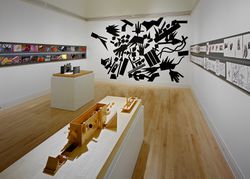
Autres résonances : oeuvres choisies de John Hejduk, 1954-1997, la première rétrospective majeure consacrée à l’architecte, explore les thèmes qui ont préoccupé Hejduk tout au long de sa carrière : l’architecture en tant qu’acte social, le mur, la maison, l’église, le passage et la transformation, l’expérience de la ville. L’importance de la place occupée par John Hejduk(...)
Autres résonances : oeuvres choisies de John Hejduk, 1954-1997, la première rétrospective majeure consacrée à l’architecte, explore les thèmes qui ont préoccupé Hejduk tout au long de sa carrière : l’architecture en tant qu’acte social, le mur, la maison, l’église, le passage et la transformation, l’expérience de la ville. L’importance de la place occupée par John Hejduk(...)
Localisation:
Salles principales
Salles principales
Date:
22 octobre 1997 au 15 février 1998
22 octobre 1997 au 15 février 1998
Titre:
Autres résonances : oeuvres choisies de John Hejduk, 1954-1997
Actions:
Description:
Autres résonances : oeuvres choisies de John Hejduk, 1954-1997, la première rétrospective majeure consacrée à l’architecte, explore les thèmes qui ont préoccupé Hejduk tout au long de sa carrière : l’architecture en tant qu’acte social, le mur, la maison, l’église, le passage et la transformation, l’expérience de la ville. L’importance de la place occupée par John Hejduk(...)
Autres résonances : oeuvres choisies de John Hejduk, 1954-1997
Actions:
Description:
Autres résonances : oeuvres choisies de John Hejduk, 1954-1997, la première rétrospective majeure consacrée à l’architecte, explore les thèmes qui ont préoccupé Hejduk tout au long de sa carrière : l’architecture en tant qu’acte social, le mur, la maison, l’église, le passage et la transformation, l’expérience de la ville. L’importance de la place occupée par John Hejduk(...)
Classification:
expositions
expositions
Date:
22 octobre 1997 au
15 février 1998
22 octobre 1997 au
15 février 1998
Localisation:
Salles principales
Salles principales
Niveau de description archivistique:
Projet
Projet
Titre:
O.C.H. Feasibility Study
O.C.H. Feasibility Study
Numéro de référence:
AP144.S2.D59
Description:
File documents a feasibility study commissioned by J. Lyons Co. Ltd for the conversion of the Oxford Corner House, in London, England, United Kingdom, into a combined information, education and skill centre. The unrealized project was to include a 'self-pace public skill and information hive' with facilities for conferences, teaching, exhibitions, computer use, planetarium, audio-visual library, and public eating areas. The project included a movable floor system and projection screens. Reference material includes plans and details of London Electric Railway subway line, alterations to Oxford Street Corner House by J. Lyons and Co. Ltd., field notes, photographs and photomontages of site. Conceptual diagrammatic plans explore designs for the organization of activities. Charts show variables, including number of people, monitors/screens, and study carrels; circulation patterns; and maximization of viewing capacity. Preliminary presentation boards illustrate project feasibility and include photographs of model and existing conditions. Design development drawings include floor plans, plans exploring the relationships between various activities, analysis of building volumes and networks, comparative plans showing main structural grid, sections, diagrammatic sections for public activity areas, axonometric drawings of roof, perspectives of projection screens and moveable floor system, progress charts, and diagrams and graphs of communication and travel modes, routes, and time into central London from outlying areas. Some material in this file was published in Price, Cedric. 'Cedric Price-Works II' (London: Architectural Press, 1984), 11, 54, 112; Landau, Royston. 'New Directions in British Architecture'. New York: George Braziller, 1968. 108-111; and 'Self-Pace Public Skill and Information Hive.' 'Architectural Design'. (May 1968), 237-239. Material in this file was produced between 1927 and 1967, but predominantly between 1965 and 1966. Group DR1995:0224:001-013 contains reference drawings attributed to London Transport Architect's Department and J. Lyons & Company Limited Architect's Office. Group DR1995:0224:333-341 contains drawings attributed to Richard Sutcliffe Limited, Felix J. Samuely & Partners, and G.E.C. (Process Engineering) Ltd. File contains conceptual drawings, consultant drawings, design development drawings, presentation drawings, presentation panels, reference drawings, photographic material, and textual records.
AP144.S2.D59
Description:
File documents a feasibility study commissioned by J. Lyons Co. Ltd for the conversion of the Oxford Corner House, in London, England, United Kingdom, into a combined information, education and skill centre. The unrealized project was to include a 'self-pace public skill and information hive' with facilities for conferences, teaching, exhibitions, computer use, planetarium, audio-visual library, and public eating areas. The project included a movable floor system and projection screens. Reference material includes plans and details of London Electric Railway subway line, alterations to Oxford Street Corner House by J. Lyons and Co. Ltd., field notes, photographs and photomontages of site. Conceptual diagrammatic plans explore designs for the organization of activities. Charts show variables, including number of people, monitors/screens, and study carrels; circulation patterns; and maximization of viewing capacity. Preliminary presentation boards illustrate project feasibility and include photographs of model and existing conditions. Design development drawings include floor plans, plans exploring the relationships between various activities, analysis of building volumes and networks, comparative plans showing main structural grid, sections, diagrammatic sections for public activity areas, axonometric drawings of roof, perspectives of projection screens and moveable floor system, progress charts, and diagrams and graphs of communication and travel modes, routes, and time into central London from outlying areas. Some material in this file was published in Price, Cedric. 'Cedric Price-Works II' (London: Architectural Press, 1984), 11, 54, 112; Landau, Royston. 'New Directions in British Architecture'. New York: George Braziller, 1968. 108-111; and 'Self-Pace Public Skill and Information Hive.' 'Architectural Design'. (May 1968), 237-239. Material in this file was produced between 1927 and 1967, but predominantly between 1965 and 1966. Group DR1995:0224:001-013 contains reference drawings attributed to London Transport Architect's Department and J. Lyons & Company Limited Architect's Office. Group DR1995:0224:333-341 contains drawings attributed to Richard Sutcliffe Limited, Felix J. Samuely & Partners, and G.E.C. (Process Engineering) Ltd. File contains conceptual drawings, consultant drawings, design development drawings, presentation drawings, presentation panels, reference drawings, photographic material, and textual records.
Personnes et institutions:
Date:
1927-1967, predominant 1965-1966
1927-1967, predominant 1965-1966
Titre:
O.C.H. Feasibility Study
Actions:
AP144.S2.D59
Description:
File documents a feasibility study commissioned by J. Lyons Co. Ltd for the conversion of the Oxford Corner House, in London, England, United Kingdom, into a combined information, education and skill centre. The unrealized project was to include a 'self-pace public skill and information hive' with facilities for conferences, teaching, exhibitions, computer use, planetarium, audio-visual library, and public eating areas. The project included a movable floor system and projection screens. Reference material includes plans and details of London Electric Railway subway line, alterations to Oxford Street Corner House by J. Lyons and Co. Ltd., field notes, photographs and photomontages of site. Conceptual diagrammatic plans explore designs for the organization of activities. Charts show variables, including number of people, monitors/screens, and study carrels; circulation patterns; and maximization of viewing capacity. Preliminary presentation boards illustrate project feasibility and include photographs of model and existing conditions. Design development drawings include floor plans, plans exploring the relationships between various activities, analysis of building volumes and networks, comparative plans showing main structural grid, sections, diagrammatic sections for public activity areas, axonometric drawings of roof, perspectives of projection screens and moveable floor system, progress charts, and diagrams and graphs of communication and travel modes, routes, and time into central London from outlying areas. Some material in this file was published in Price, Cedric. 'Cedric Price-Works II' (London: Architectural Press, 1984), 11, 54, 112; Landau, Royston. 'New Directions in British Architecture'. New York: George Braziller, 1968. 108-111; and 'Self-Pace Public Skill and Information Hive.' 'Architectural Design'. (May 1968), 237-239. Material in this file was produced between 1927 and 1967, but predominantly between 1965 and 1966. Group DR1995:0224:001-013 contains reference drawings attributed to London Transport Architect's Department and J. Lyons & Company Limited Architect's Office. Group DR1995:0224:333-341 contains drawings attributed to Richard Sutcliffe Limited, Felix J. Samuely & Partners, and G.E.C. (Process Engineering) Ltd. File contains conceptual drawings, consultant drawings, design development drawings, presentation drawings, presentation panels, reference drawings, photographic material, and textual records.
O.C.H. Feasibility Study
Actions:
AP144.S2.D59
Description:
File documents a feasibility study commissioned by J. Lyons Co. Ltd for the conversion of the Oxford Corner House, in London, England, United Kingdom, into a combined information, education and skill centre. The unrealized project was to include a 'self-pace public skill and information hive' with facilities for conferences, teaching, exhibitions, computer use, planetarium, audio-visual library, and public eating areas. The project included a movable floor system and projection screens. Reference material includes plans and details of London Electric Railway subway line, alterations to Oxford Street Corner House by J. Lyons and Co. Ltd., field notes, photographs and photomontages of site. Conceptual diagrammatic plans explore designs for the organization of activities. Charts show variables, including number of people, monitors/screens, and study carrels; circulation patterns; and maximization of viewing capacity. Preliminary presentation boards illustrate project feasibility and include photographs of model and existing conditions. Design development drawings include floor plans, plans exploring the relationships between various activities, analysis of building volumes and networks, comparative plans showing main structural grid, sections, diagrammatic sections for public activity areas, axonometric drawings of roof, perspectives of projection screens and moveable floor system, progress charts, and diagrams and graphs of communication and travel modes, routes, and time into central London from outlying areas. Some material in this file was published in Price, Cedric. 'Cedric Price-Works II' (London: Architectural Press, 1984), 11, 54, 112; Landau, Royston. 'New Directions in British Architecture'. New York: George Braziller, 1968. 108-111; and 'Self-Pace Public Skill and Information Hive.' 'Architectural Design'. (May 1968), 237-239. Material in this file was produced between 1927 and 1967, but predominantly between 1965 and 1966. Group DR1995:0224:001-013 contains reference drawings attributed to London Transport Architect's Department and J. Lyons & Company Limited Architect's Office. Group DR1995:0224:333-341 contains drawings attributed to Richard Sutcliffe Limited, Felix J. Samuely & Partners, and G.E.C. (Process Engineering) Ltd. File contains conceptual drawings, consultant drawings, design development drawings, presentation drawings, presentation panels, reference drawings, photographic material, and textual records.
Niveau de description archivistique:
File 59
File 59
Date:
1927-1967, predominant 1965-1966
1927-1967, predominant 1965-1966
Personnes et institutions:
Niveau de description archivistique:
Sous-série
Sous-série
Titre:
Education
Education
Numéro de référence:
CI001.S2.D1
Description:
Like his father Hubert, Charles Rohault de Fleury also studied at the École polytechnique with Jean-Nicolas-Louis Durand (1820-1821), and at the École des Beaux-Arts (1823-1825), Charles studied under his father and Louis Hippolyte Lebas. The CCA collection contains his printed exercise book from the École polytechnique and an album of drawings of the orders executed at both schools. The printed exercise book (DR1974:0002:001:001-105), primarily dated to 1821, provides an overview of the first year curriculum at the École polytechnique reflecting the emphasis placed on the course in descriptive geometry. The exercises proceed from the simple to the complex; from the analysis of simple shapes to the interpretation of basic architectural elements. Many of the problems have been solved by Charles, and carry the approval seal of his professor. A large engraving included in the album provides a succinct table recording the career paths of graduating students in the various Écoles d'application, a description of the core curriculum, and a historical and chronological outline of the École polytechnique from its inception to 1828. Charles' studies of the architectural orders (DR1974:0002:019:001-033), many of which are copied directly from Charles Normand's 'Nouveau parallele des ordres d'architecture...,' demonstrate the continued application of Durand's methodology applied to typical Beaux-Arts studies. The orders executed at the École polytechnique are pared down to their essential form and porticos are abstracted and grouped according to their tetrastyle, hexastyle, or octastyle configurations, whereas the orders completed at the École des beaux-arts are simplified, but still reflect the traditional mimetic interpretation of classical antiquity, with its fidelity to mouldings and details. The conspicous abscence of the composite order and the addition of the 'Dorique Romain and Moderne', attest to the continued influence of Durand's ''Precis'. The information regarding George's architectural career is limited to twelve drawings for architectural ornament and sculpture (1858-1859) submitted to a newly introduced, and obligatory, 'dessin' Concours d'emulation at the École des beaux-arts (1). (1) R. Chaffe, "The teaching of architecture at the École des Beaux-Arts" in Arthur Drexler ed., 'The Architecture of the École des Beaux-Arts' (New York: MOMA, 1975), p.84 and fn. 120.)
CI001.S2.D1
Description:
Like his father Hubert, Charles Rohault de Fleury also studied at the École polytechnique with Jean-Nicolas-Louis Durand (1820-1821), and at the École des Beaux-Arts (1823-1825), Charles studied under his father and Louis Hippolyte Lebas. The CCA collection contains his printed exercise book from the École polytechnique and an album of drawings of the orders executed at both schools. The printed exercise book (DR1974:0002:001:001-105), primarily dated to 1821, provides an overview of the first year curriculum at the École polytechnique reflecting the emphasis placed on the course in descriptive geometry. The exercises proceed from the simple to the complex; from the analysis of simple shapes to the interpretation of basic architectural elements. Many of the problems have been solved by Charles, and carry the approval seal of his professor. A large engraving included in the album provides a succinct table recording the career paths of graduating students in the various Écoles d'application, a description of the core curriculum, and a historical and chronological outline of the École polytechnique from its inception to 1828. Charles' studies of the architectural orders (DR1974:0002:019:001-033), many of which are copied directly from Charles Normand's 'Nouveau parallele des ordres d'architecture...,' demonstrate the continued application of Durand's methodology applied to typical Beaux-Arts studies. The orders executed at the École polytechnique are pared down to their essential form and porticos are abstracted and grouped according to their tetrastyle, hexastyle, or octastyle configurations, whereas the orders completed at the École des beaux-arts are simplified, but still reflect the traditional mimetic interpretation of classical antiquity, with its fidelity to mouldings and details. The conspicous abscence of the composite order and the addition of the 'Dorique Romain and Moderne', attest to the continued influence of Durand's ''Precis'. The information regarding George's architectural career is limited to twelve drawings for architectural ornament and sculpture (1858-1859) submitted to a newly introduced, and obligatory, 'dessin' Concours d'emulation at the École des beaux-arts (1). (1) R. Chaffe, "The teaching of architecture at the École des Beaux-Arts" in Arthur Drexler ed., 'The Architecture of the École des Beaux-Arts' (New York: MOMA, 1975), p.84 and fn. 120.)
Personnes et institutions:
Date:
[1776?]-1868
[1776?]-1868
Titre:
Education
CI001.S2.D1
Description:
Like his father Hubert, Charles Rohault de Fleury also studied at the École polytechnique with Jean-Nicolas-Louis Durand (1820-1821), and at the École des Beaux-Arts (1823-1825), Charles studied under his father and Louis Hippolyte Lebas. The CCA collection contains his printed exercise book from the École polytechnique and an album of drawings of the orders executed at both schools. The printed exercise book (DR1974:0002:001:001-105), primarily dated to 1821, provides an overview of the first year curriculum at the École polytechnique reflecting the emphasis placed on the course in descriptive geometry. The exercises proceed from the simple to the complex; from the analysis of simple shapes to the interpretation of basic architectural elements. Many of the problems have been solved by Charles, and carry the approval seal of his professor. A large engraving included in the album provides a succinct table recording the career paths of graduating students in the various Écoles d'application, a description of the core curriculum, and a historical and chronological outline of the École polytechnique from its inception to 1828. Charles' studies of the architectural orders (DR1974:0002:019:001-033), many of which are copied directly from Charles Normand's 'Nouveau parallele des ordres d'architecture...,' demonstrate the continued application of Durand's methodology applied to typical Beaux-Arts studies. The orders executed at the École polytechnique are pared down to their essential form and porticos are abstracted and grouped according to their tetrastyle, hexastyle, or octastyle configurations, whereas the orders completed at the École des beaux-arts are simplified, but still reflect the traditional mimetic interpretation of classical antiquity, with its fidelity to mouldings and details. The conspicous abscence of the composite order and the addition of the 'Dorique Romain and Moderne', attest to the continued influence of Durand's ''Precis'. The information regarding George's architectural career is limited to twelve drawings for architectural ornament and sculpture (1858-1859) submitted to a newly introduced, and obligatory, 'dessin' Concours d'emulation at the École des beaux-arts (1). (1) R. Chaffe, "The teaching of architecture at the École des Beaux-Arts" in Arthur Drexler ed., 'The Architecture of the École des Beaux-Arts' (New York: MOMA, 1975), p.84 and fn. 120.)
Education
CI001.S2.D1
Description:
Like his father Hubert, Charles Rohault de Fleury also studied at the École polytechnique with Jean-Nicolas-Louis Durand (1820-1821), and at the École des Beaux-Arts (1823-1825), Charles studied under his father and Louis Hippolyte Lebas. The CCA collection contains his printed exercise book from the École polytechnique and an album of drawings of the orders executed at both schools. The printed exercise book (DR1974:0002:001:001-105), primarily dated to 1821, provides an overview of the first year curriculum at the École polytechnique reflecting the emphasis placed on the course in descriptive geometry. The exercises proceed from the simple to the complex; from the analysis of simple shapes to the interpretation of basic architectural elements. Many of the problems have been solved by Charles, and carry the approval seal of his professor. A large engraving included in the album provides a succinct table recording the career paths of graduating students in the various Écoles d'application, a description of the core curriculum, and a historical and chronological outline of the École polytechnique from its inception to 1828. Charles' studies of the architectural orders (DR1974:0002:019:001-033), many of which are copied directly from Charles Normand's 'Nouveau parallele des ordres d'architecture...,' demonstrate the continued application of Durand's methodology applied to typical Beaux-Arts studies. The orders executed at the École polytechnique are pared down to their essential form and porticos are abstracted and grouped according to their tetrastyle, hexastyle, or octastyle configurations, whereas the orders completed at the École des beaux-arts are simplified, but still reflect the traditional mimetic interpretation of classical antiquity, with its fidelity to mouldings and details. The conspicous abscence of the composite order and the addition of the 'Dorique Romain and Moderne', attest to the continued influence of Durand's ''Precis'. The information regarding George's architectural career is limited to twelve drawings for architectural ornament and sculpture (1858-1859) submitted to a newly introduced, and obligatory, 'dessin' Concours d'emulation at the École des beaux-arts (1). (1) R. Chaffe, "The teaching of architecture at the École des Beaux-Arts" in Arthur Drexler ed., 'The Architecture of the École des Beaux-Arts' (New York: MOMA, 1975), p.84 and fn. 120.)
Niveau de description archivistique:
File 1
File 1
Date:
[1776?]-1868
[1776?]-1868
Personnes et institutions:
Classification:
documents textuels
documents textuels
Numéro de référence:
AP197.S3.003
Description:
The box is comprised of correspondence for the years of 1991-1994, organized in alphabetical order by last name, from A-K. The box documents Frampton’s career as Ware professor at the Graduate School of Architecture, Planning and Preservation, Columbia University and his related professional activities. Correspondence in this box includes: offers of teaching positions; requests to write articles, reviews, books and recommendation letters; invitations to teach, present, or attend at lectures/symposiums/conferences; and requests to serve on juries. Throughout this period, Frampton corresponded with architects, professors, publishers, and editors of various publications such as: Botond Bognar; Norman Foster; Yukio Futagawa; Gevork Hartoonian; and the commissioning editor of Phaidon Press Limited, David Jenkins. Correspondence relates to Kenneth Frampton’s involvement/participation in the publication of Hopkins: The Work of Michael Hopkins and Partners; as a lecturer at the Association of Collegiate Schools of Architecture (ASCA) Conference, the Berlage Institute and the École polytechnique fédérale de Lausanne; and as a jury member for the Carlsberg Architectural Prize.
AP197.S3.003
Description:
The box is comprised of correspondence for the years of 1991-1994, organized in alphabetical order by last name, from A-K. The box documents Frampton’s career as Ware professor at the Graduate School of Architecture, Planning and Preservation, Columbia University and his related professional activities. Correspondence in this box includes: offers of teaching positions; requests to write articles, reviews, books and recommendation letters; invitations to teach, present, or attend at lectures/symposiums/conferences; and requests to serve on juries. Throughout this period, Frampton corresponded with architects, professors, publishers, and editors of various publications such as: Botond Bognar; Norman Foster; Yukio Futagawa; Gevork Hartoonian; and the commissioning editor of Phaidon Press Limited, David Jenkins. Correspondence relates to Kenneth Frampton’s involvement/participation in the publication of Hopkins: The Work of Michael Hopkins and Partners; as a lecturer at the Association of Collegiate Schools of Architecture (ASCA) Conference, the Berlage Institute and the École polytechnique fédérale de Lausanne; and as a jury member for the Carlsberg Architectural Prize.
Personnes et institutions:
Date:
1991-1994
1991-1994
Titre:
Personal and professional correspondence for names A-K from 1991-1994
Actions:
AP197.S3.003
Description:
The box is comprised of correspondence for the years of 1991-1994, organized in alphabetical order by last name, from A-K. The box documents Frampton’s career as Ware professor at the Graduate School of Architecture, Planning and Preservation, Columbia University and his related professional activities. Correspondence in this box includes: offers of teaching positions; requests to write articles, reviews, books and recommendation letters; invitations to teach, present, or attend at lectures/symposiums/conferences; and requests to serve on juries. Throughout this period, Frampton corresponded with architects, professors, publishers, and editors of various publications such as: Botond Bognar; Norman Foster; Yukio Futagawa; Gevork Hartoonian; and the commissioning editor of Phaidon Press Limited, David Jenkins. Correspondence relates to Kenneth Frampton’s involvement/participation in the publication of Hopkins: The Work of Michael Hopkins and Partners; as a lecturer at the Association of Collegiate Schools of Architecture (ASCA) Conference, the Berlage Institute and the École polytechnique fédérale de Lausanne; and as a jury member for the Carlsberg Architectural Prize.
Personal and professional correspondence for names A-K from 1991-1994
Actions:
AP197.S3.003
Description:
The box is comprised of correspondence for the years of 1991-1994, organized in alphabetical order by last name, from A-K. The box documents Frampton’s career as Ware professor at the Graduate School of Architecture, Planning and Preservation, Columbia University and his related professional activities. Correspondence in this box includes: offers of teaching positions; requests to write articles, reviews, books and recommendation letters; invitations to teach, present, or attend at lectures/symposiums/conferences; and requests to serve on juries. Throughout this period, Frampton corresponded with architects, professors, publishers, and editors of various publications such as: Botond Bognar; Norman Foster; Yukio Futagawa; Gevork Hartoonian; and the commissioning editor of Phaidon Press Limited, David Jenkins. Correspondence relates to Kenneth Frampton’s involvement/participation in the publication of Hopkins: The Work of Michael Hopkins and Partners; as a lecturer at the Association of Collegiate Schools of Architecture (ASCA) Conference, the Berlage Institute and the École polytechnique fédérale de Lausanne; and as a jury member for the Carlsberg Architectural Prize.
Classification:
documents textuels
documents textuels
Date:
1991-1994
1991-1994
Personnes et institutions:
Classification:
documents textuels
documents textuels
Numéro de référence:
AP197.S3.005
Description:
The box is comprised of correspondence for the years of 1991-1994, organized in alphabetical order by last name, from U-Z. The last four folders in this box comprises of loose correspondence organized in chronological order, from 1991-1994; this correspondence is not organized in alphabetical order. The box documents Frampton’s career as Ware professor at the Graduate School of Architecture, Planning and Preservation, Columbia University and his related professional activities. Correspondence in this box includes: offers of teaching positions; requests to write articles, reviews, books and recommendation letters; invitations to teach, present, or attend at lectures/symposiums/conferences; and requests to serve on juries. Correspondence relates to Frampton’s participation/involvement in: the “Architecture and legitimacy” conference at the Congress Netherlands Architecture Institute; as part of the International Board of Advisors for the Fundación de Arquitectura Tapatía; in the Chinese translation for the Studies in Tectonic Culture publication; as a visiting professor at the École polytechnique fédérale de Lausanne.
AP197.S3.005
Description:
The box is comprised of correspondence for the years of 1991-1994, organized in alphabetical order by last name, from U-Z. The last four folders in this box comprises of loose correspondence organized in chronological order, from 1991-1994; this correspondence is not organized in alphabetical order. The box documents Frampton’s career as Ware professor at the Graduate School of Architecture, Planning and Preservation, Columbia University and his related professional activities. Correspondence in this box includes: offers of teaching positions; requests to write articles, reviews, books and recommendation letters; invitations to teach, present, or attend at lectures/symposiums/conferences; and requests to serve on juries. Correspondence relates to Frampton’s participation/involvement in: the “Architecture and legitimacy” conference at the Congress Netherlands Architecture Institute; as part of the International Board of Advisors for the Fundación de Arquitectura Tapatía; in the Chinese translation for the Studies in Tectonic Culture publication; as a visiting professor at the École polytechnique fédérale de Lausanne.
Personnes et institutions:
Date:
1991-1994
1991-1994
Titre:
Personal and professional correspondence for names U-Z from 1991-1994
Actions:
AP197.S3.005
Description:
The box is comprised of correspondence for the years of 1991-1994, organized in alphabetical order by last name, from U-Z. The last four folders in this box comprises of loose correspondence organized in chronological order, from 1991-1994; this correspondence is not organized in alphabetical order. The box documents Frampton’s career as Ware professor at the Graduate School of Architecture, Planning and Preservation, Columbia University and his related professional activities. Correspondence in this box includes: offers of teaching positions; requests to write articles, reviews, books and recommendation letters; invitations to teach, present, or attend at lectures/symposiums/conferences; and requests to serve on juries. Correspondence relates to Frampton’s participation/involvement in: the “Architecture and legitimacy” conference at the Congress Netherlands Architecture Institute; as part of the International Board of Advisors for the Fundación de Arquitectura Tapatía; in the Chinese translation for the Studies in Tectonic Culture publication; as a visiting professor at the École polytechnique fédérale de Lausanne.
Personal and professional correspondence for names U-Z from 1991-1994
Actions:
AP197.S3.005
Description:
The box is comprised of correspondence for the years of 1991-1994, organized in alphabetical order by last name, from U-Z. The last four folders in this box comprises of loose correspondence organized in chronological order, from 1991-1994; this correspondence is not organized in alphabetical order. The box documents Frampton’s career as Ware professor at the Graduate School of Architecture, Planning and Preservation, Columbia University and his related professional activities. Correspondence in this box includes: offers of teaching positions; requests to write articles, reviews, books and recommendation letters; invitations to teach, present, or attend at lectures/symposiums/conferences; and requests to serve on juries. Correspondence relates to Frampton’s participation/involvement in: the “Architecture and legitimacy” conference at the Congress Netherlands Architecture Institute; as part of the International Board of Advisors for the Fundación de Arquitectura Tapatía; in the Chinese translation for the Studies in Tectonic Culture publication; as a visiting professor at the École polytechnique fédérale de Lausanne.
Classification:
documents textuels
documents textuels
Date:
1991-1994
1991-1994
Personnes et institutions:


