


1537 Résultats
Classification:
livres
livres
Titre:
Crowds
Crowds
Actions:
Prix:
$29.95
(disponible sur commande)
Résumé:
Crowds explores the key role assumed by human multitudes in modern life by means of a graphically innovative, multi-author volume in which essays, word histories, and personal testimonies are woven together into a multiperspectival and multilayered group portrait. The portrait in question includes analyses of market crowds, crowds in modern art and literature, modern(...)
$29.95
(disponible sur commande)
Résumé:
Crowds explores the key role assumed by human multitudes in modern life by means of a graphically innovative, multi-author volume in which essays, word histories, and personal testimonies are woven together into a multiperspectival and multilayered group portrait. The portrait in question includes analyses of market crowds, crowds in modern art and literature, modern(...)
Sujet:
Théorie de l’urbanisme
Théorie de l’urbanisme
Publication:
mai 2006, Stanford
mai 2006, Stanford
Titre:
Crowds
Actions:
Prix:
$29.95
(disponible sur commande)
Résumé:
Crowds explores the key role assumed by human multitudes in modern life by means of a graphically innovative, multi-author volume in which essays, word histories, and personal testimonies are woven together into a multiperspectival and multilayered group portrait. The portrait in question includes analyses of market crowds, crowds in modern art and literature, modern assemblies as compared to their premodern and ancient counterparts, modern sports crowds, human multitudes and mass media such as photography and cinema, crowds as political actors, and the emergence of crowd-centred discourses in social sciences such as psychology, anthropology, and sociology. Contributors include Stefan Jonsson, Allen Guttmann, Susanna Elm, John Plotz, Christine Poggi, William Egginton, Haun Saussy, Joan Ramon Resina, and Charles Tilly, with testimonies by authors such as Greil Marcus, Richard Rorty, Michel Serres, Alain Schnapp, Michael Hardt, T. J. Clark, and Susan Buck-Morss. The book represents the main output of one of the Stanford Humanities Lab’s prototype “Big Humanities” projects.
Crowds
Actions:
Prix:
$29.95
(disponible sur commande)
Résumé:
Crowds explores the key role assumed by human multitudes in modern life by means of a graphically innovative, multi-author volume in which essays, word histories, and personal testimonies are woven together into a multiperspectival and multilayered group portrait. The portrait in question includes analyses of market crowds, crowds in modern art and literature, modern assemblies as compared to their premodern and ancient counterparts, modern sports crowds, human multitudes and mass media such as photography and cinema, crowds as political actors, and the emergence of crowd-centred discourses in social sciences such as psychology, anthropology, and sociology. Contributors include Stefan Jonsson, Allen Guttmann, Susanna Elm, John Plotz, Christine Poggi, William Egginton, Haun Saussy, Joan Ramon Resina, and Charles Tilly, with testimonies by authors such as Greil Marcus, Richard Rorty, Michel Serres, Alain Schnapp, Michael Hardt, T. J. Clark, and Susan Buck-Morss. The book represents the main output of one of the Stanford Humanities Lab’s prototype “Big Humanities” projects.
Classification:
livres
livres
Publication:
mai 2006, Stanford
mai 2006, Stanford
Sujet:
Théorie de l’urbanisme
Théorie de l’urbanisme
Classification:
livres
livres
Prix:
$41.95
(disponible en magasin)
Résumé:
"Hors-Sol" is a record of poster interventions by artists in public spaces in Switzerland from 1961 to the present day. The poster is usually a medium for commercial messages, but here it is used to convey new meanings, some of which are more firmly anchored in the context of art, others explicitly aimed at advertising. These unusual intrusions are disturbing and cause(...)
$41.95
(disponible en magasin)
Résumé:
"Hors-Sol" is a record of poster interventions by artists in public spaces in Switzerland from 1961 to the present day. The poster is usually a medium for commercial messages, but here it is used to convey new meanings, some of which are more firmly anchored in the context of art, others explicitly aimed at advertising. These unusual intrusions are disturbing and cause(...)
Publication:
février 2002, Zurich
février 2002, Zurich
Titre:
Poster collection 04 : Hors-sol, poster actions in Switzerland
Actions:
Prix:
$41.95
(disponible en magasin)
Résumé:
"Hors-Sol" is a record of poster interventions by artists in public spaces in Switzerland from 1961 to the present day. The poster is usually a medium for commercial messages, but here it is used to convey new meanings, some of which are more firmly anchored in the context of art, others explicitly aimed at advertising. These unusual intrusions are disturbing and cause people to reflect on the conditions in which art and PR function, the use and effect of the mass media, the occupation of public spaces, and personal roles in different contexts. In historical comparison, they function as a mirror of the time and reveal a great deal about changing social conditions. The poster campaigns that took place in the 1960s and 1980s seemed to be impressively explosive and alarmingly direct, whereas today's artistic forays into the poster as a medium are evidence that PR aesthetics and the art world are coming into line, both formally and rhetorically.
Poster collection 04 : Hors-sol, poster actions in Switzerland
Actions:
Prix:
$41.95
(disponible en magasin)
Résumé:
"Hors-Sol" is a record of poster interventions by artists in public spaces in Switzerland from 1961 to the present day. The poster is usually a medium for commercial messages, but here it is used to convey new meanings, some of which are more firmly anchored in the context of art, others explicitly aimed at advertising. These unusual intrusions are disturbing and cause people to reflect on the conditions in which art and PR function, the use and effect of the mass media, the occupation of public spaces, and personal roles in different contexts. In historical comparison, they function as a mirror of the time and reveal a great deal about changing social conditions. The poster campaigns that took place in the 1960s and 1980s seemed to be impressively explosive and alarmingly direct, whereas today's artistic forays into the poster as a medium are evidence that PR aesthetics and the art world are coming into line, both formally and rhetorically.
Classification:
livres
livres
Publication:
février 2002, Zurich
février 2002, Zurich
Classification:
livres
livres
Actions:
Prix:
$33.95
(disponible en magasin)
Résumé:
There is widespread consensus that we are living at the end—of democracy, of liberalism, of capitalism, of a healthy planet, of the Holocene, of civilization as we know it. In this book, drawing on radical futurisms and visions of justice-to-come emerging from the traditions of the oppressed—Indigenous, African-American, multispecies, anti-capitalist—as materialized in(...)
$33.95
(disponible en magasin)
Résumé:
There is widespread consensus that we are living at the end—of democracy, of liberalism, of capitalism, of a healthy planet, of the Holocene, of civilization as we know it. In this book, drawing on radical futurisms and visions of justice-to-come emerging from the traditions of the oppressed—Indigenous, African-American, multispecies, anti-capitalist—as materialized in(...)
Titre:
Radical futurisms: Ecologies of collapse/chronopolitics/justice to come
Actions:
Prix:
$33.95
(disponible en magasin)
Résumé:
There is widespread consensus that we are living at the end—of democracy, of liberalism, of capitalism, of a healthy planet, of the Holocene, of civilization as we know it. In this book, drawing on radical futurisms and visions of justice-to-come emerging from the traditions of the oppressed—Indigenous, African-American, multispecies, anti-capitalist—as materialized in experimental visual cultural, new media, aesthetic practices, and social movements, T. J. Demos poses speculative questions about what comes after end-of-world narratives. He argues that it's as vital to defeat fatalistic nihilism as it is to defeat the false solutions of green capitalism and algorithmic governance. How might we decolonize the future, and cultivate an emancipated chronopolitics in relation to an undetermined not-yet? If we are to avoid climate emergency's cooptation by technofixes, and the defuturing of multitudes by xenophobic eco-fascism, Demos argues, we must cultivate visions of just futurity and multispecies flourishing.
Radical futurisms: Ecologies of collapse/chronopolitics/justice to come
Actions:
Prix:
$33.95
(disponible en magasin)
Résumé:
There is widespread consensus that we are living at the end—of democracy, of liberalism, of capitalism, of a healthy planet, of the Holocene, of civilization as we know it. In this book, drawing on radical futurisms and visions of justice-to-come emerging from the traditions of the oppressed—Indigenous, African-American, multispecies, anti-capitalist—as materialized in experimental visual cultural, new media, aesthetic practices, and social movements, T. J. Demos poses speculative questions about what comes after end-of-world narratives. He argues that it's as vital to defeat fatalistic nihilism as it is to defeat the false solutions of green capitalism and algorithmic governance. How might we decolonize the future, and cultivate an emancipated chronopolitics in relation to an undetermined not-yet? If we are to avoid climate emergency's cooptation by technofixes, and the defuturing of multitudes by xenophobic eco-fascism, Demos argues, we must cultivate visions of just futurity and multispecies flourishing.
Classification:
livres
livres
Publication:
mai 2023
mai 2023
Sujet:
L'écologie de l'architecure
L'écologie de l'architecure
Classification:
livres
livres
Titre:
What is co-dividuality?: post-individual architecture, shared houses and other stories of openness
What is co-dividuality?: post-individual architecture, shared houses and other stories of openness
Actions:
Prix:
$48.95
(disponible sur commande)
Résumé:
This book explores the concept of co-dividuality, an architecture that expresses a new response to joint living in the age of postindividualism, social media, and the sharing economy. The focus lies on current experimentation in Japanese architecture and presents thematic homes with shared spaces designed as a result of warm, simple, fun and contemporary design(...)
$48.95
(disponible sur commande)
Résumé:
This book explores the concept of co-dividuality, an architecture that expresses a new response to joint living in the age of postindividualism, social media, and the sharing economy. The focus lies on current experimentation in Japanese architecture and presents thematic homes with shared spaces designed as a result of warm, simple, fun and contemporary design(...)
Publication:
juin 2020
juin 2020
Titre:
What is co-dividuality?: post-individual architecture, shared houses and other stories of openness
Actions:
Prix:
$48.95
(disponible sur commande)
Résumé:
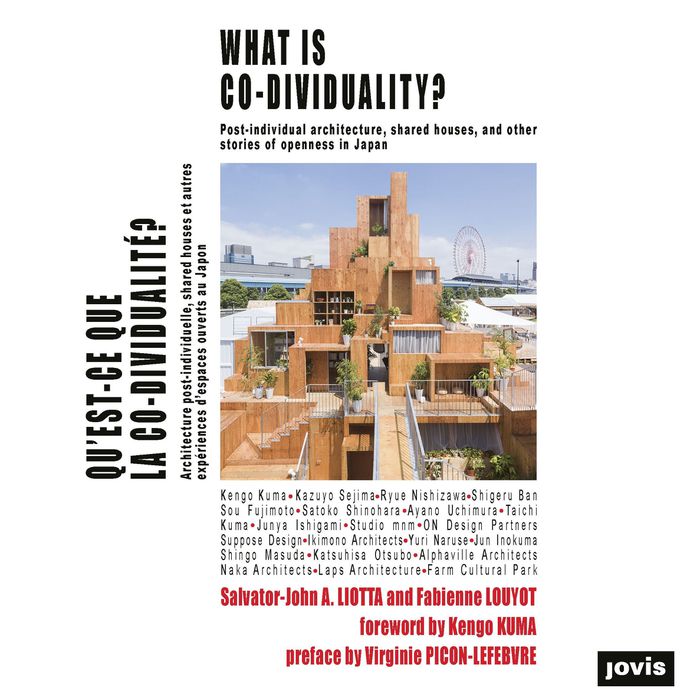
This book explores the concept of co-dividuality, an architecture that expresses a new response to joint living in the age of postindividualism, social media, and the sharing economy. The focus lies on current experimentation in Japanese architecture and presents thematic homes with shared spaces designed as a result of warm, simple, fun and contemporary design reflections. In addition to their private room, the co-tenants have large common areas where they can practice urban farming, create a start-up, cook together, or experience new spatial ergonomics. The book offers an overview not only on domestic space but also on projects characterized by a multifarious mix between public and private spheres. 'What Is Co-dividuality?' reflects on how we might want to live tomorrow. The book includes projects by Kengo Kuma, Kazuyo Sejima, Ryue Nishizawa, Shigeru Ban, Sou Fujimoto, Satoko Shinohara, Ayano Uchimura, Taichi Kuma, Junya Ishigami, Suppose Design, Naruse Inokuma, and Masuda + Otsubo, among others.
What is co-dividuality?: post-individual architecture, shared houses and other stories of openness
Actions:
Prix:
$48.95
(disponible sur commande)
Résumé:
This book explores the concept of co-dividuality, an architecture that expresses a new response to joint living in the age of postindividualism, social media, and the sharing economy. The focus lies on current experimentation in Japanese architecture and presents thematic homes with shared spaces designed as a result of warm, simple, fun and contemporary design reflections. In addition to their private room, the co-tenants have large common areas where they can practice urban farming, create a start-up, cook together, or experience new spatial ergonomics. The book offers an overview not only on domestic space but also on projects characterized by a multifarious mix between public and private spheres. 'What Is Co-dividuality?' reflects on how we might want to live tomorrow. The book includes projects by Kengo Kuma, Kazuyo Sejima, Ryue Nishizawa, Shigeru Ban, Sou Fujimoto, Satoko Shinohara, Ayano Uchimura, Taichi Kuma, Junya Ishigami, Suppose Design, Naruse Inokuma, and Masuda + Otsubo, among others.
Classification:
livres
livres
Publication:
juin 2020
juin 2020
Classification:
livres
livres
Titre:
Ways of knowing cities
Ways of knowing cities
Actions:
Prix:
$35.95
(disponible sur commande)
Résumé:
Technology mediates how we know and experience cities, and the nature of this mediation has always been deeply political. Today, the production and deployment of data is at the forefront of projects to grasp and reshape urban life. ''Ways of knowing cities'' considers the role of technology in generating, materializing, and contesting urban epistemologies- tracing an arc(...)
$35.95
(disponible sur commande)
Résumé:
Technology mediates how we know and experience cities, and the nature of this mediation has always been deeply political. Today, the production and deployment of data is at the forefront of projects to grasp and reshape urban life. ''Ways of knowing cities'' considers the role of technology in generating, materializing, and contesting urban epistemologies- tracing an arc(...)
Titre:
Ways of knowing cities
Actions:
Prix:
$35.95
(disponible sur commande)
Résumé:
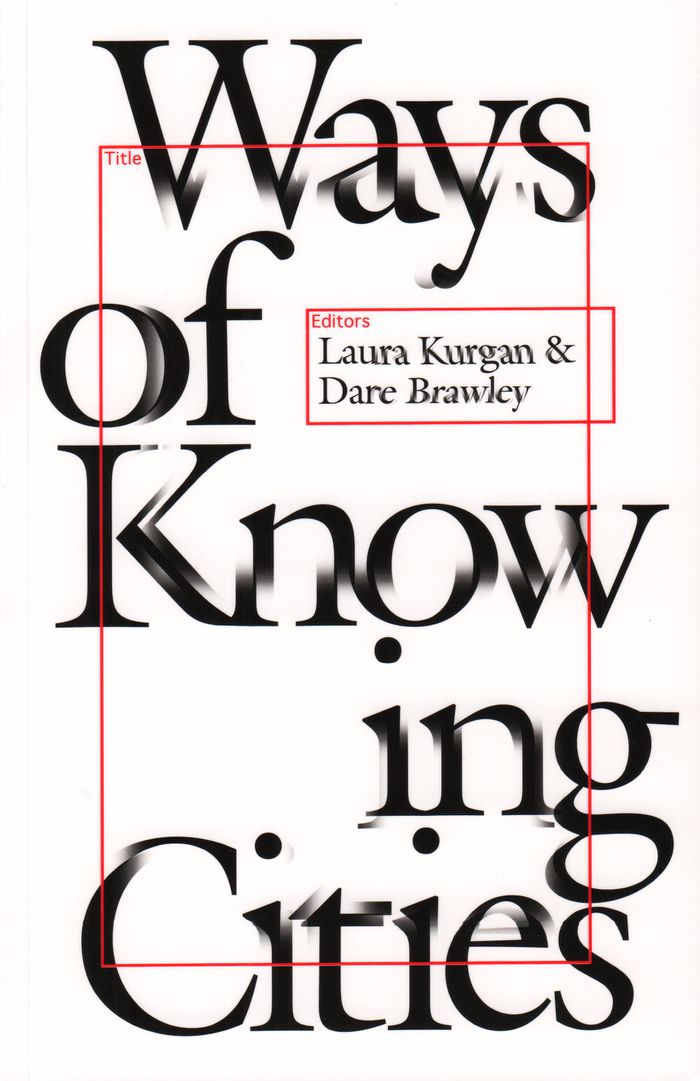
Technology mediates how we know and experience cities, and the nature of this mediation has always been deeply political. Today, the production and deployment of data is at the forefront of projects to grasp and reshape urban life. ''Ways of knowing cities'' considers the role of technology in generating, materializing, and contesting urban epistemologies- tracing an arc from ubiquitous sites of ''smart'' urbanism, to discrete struggles over infrastructural governance, to forgotten histories of segregation now naturalized in urban algorithms, to exceptional territories of border policing. Bringing together architects, urbanists, artists, and scholars of critical migration studies, media theory, geography, anthropology, and literature, the essays stage a deeply interdisciplinary conversation, interrogating the ways in which certain ways of knowing are predicated on the erasure of others. In this opening, the book engages the information systems that structure urban space and social life in it, historically and in the present moment, to imagine alternative practices and generate new critical perspectives on spatial research.
Ways of knowing cities
Actions:
Prix:
$35.95
(disponible sur commande)
Résumé:
Technology mediates how we know and experience cities, and the nature of this mediation has always been deeply political. Today, the production and deployment of data is at the forefront of projects to grasp and reshape urban life. ''Ways of knowing cities'' considers the role of technology in generating, materializing, and contesting urban epistemologies- tracing an arc from ubiquitous sites of ''smart'' urbanism, to discrete struggles over infrastructural governance, to forgotten histories of segregation now naturalized in urban algorithms, to exceptional territories of border policing. Bringing together architects, urbanists, artists, and scholars of critical migration studies, media theory, geography, anthropology, and literature, the essays stage a deeply interdisciplinary conversation, interrogating the ways in which certain ways of knowing are predicated on the erasure of others. In this opening, the book engages the information systems that structure urban space and social life in it, historically and in the present moment, to imagine alternative practices and generate new critical perspectives on spatial research.
Classification:
livres
livres
Publication:
décembre 2019
décembre 2019
Sujet:
Théorie de l’urbanisme
Théorie de l’urbanisme
Classification:
livres
livres
Actions:
Prix:
$66.00
(disponible en magasin)
Résumé:
American cities underwent seismic transformations in the 1960s and '70s, from shifting demographics and political protests to reshaping through highways and urban renewal. Amid this climate of upheaval, photographers, architects, activists, performance artists, and filmmakers turned conditions of crisis into sites for civic discourse and artistic expression. The City Lost(...)
$66.00
(disponible en magasin)
Résumé:
American cities underwent seismic transformations in the 1960s and '70s, from shifting demographics and political protests to reshaping through highways and urban renewal. Amid this climate of upheaval, photographers, architects, activists, performance artists, and filmmakers turned conditions of crisis into sites for civic discourse and artistic expression. The City Lost(...)
Sujet:
Théorie de l’urbanisme
Théorie de l’urbanisme
Publication:
novembre 2014
novembre 2014
Titre:
The city lost & found: capturing New York, Chicago, and Los Angeles
Actions:
Prix:
$66.00
(disponible en magasin)
Résumé:
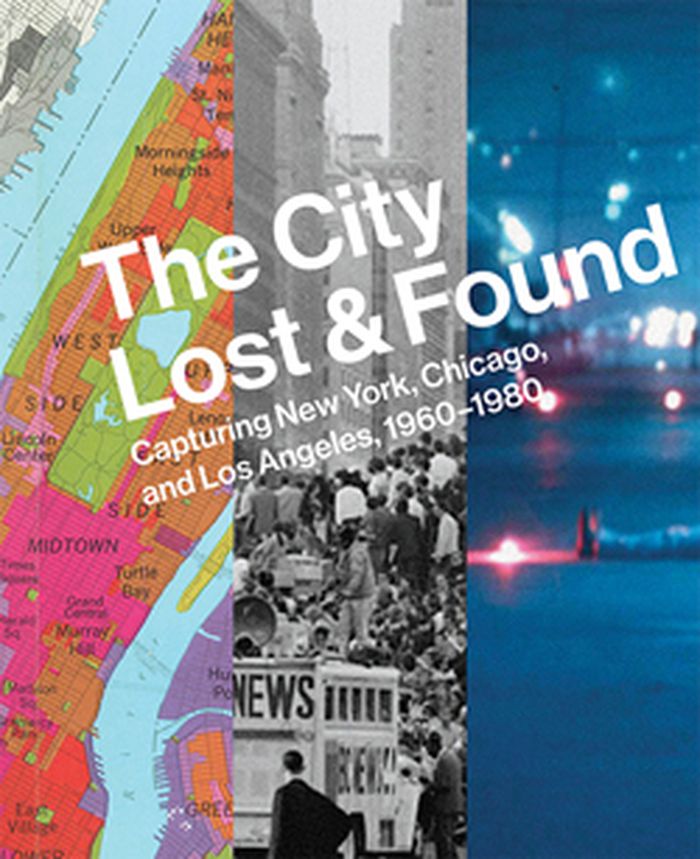
American cities underwent seismic transformations in the 1960s and '70s, from shifting demographics and political protests to reshaping through highways and urban renewal. Amid this climate of upheaval, photographers, architects, activists, performance artists, and filmmakers turned conditions of crisis into sites for civic discourse and artistic expression. The City Lost and Found explores photographic and cinematic responses to the changing fabric of New York, Chicago, and Los Angeles that contributed to a reconsideration of cities in popular media and urban policy during this period. This book raises timely questions about the role of art within the social, political, and physical landscape of cities. Featuring contributions from more than 20 noted scholars in fields including art history, urban planning, architecture, and cultural studies, this is the first publication to address an important shift in photographic, cinematic, and planning practices based on close observations of streets, neighborhoods, and seminal events in the country's three largest cities.
The city lost & found: capturing New York, Chicago, and Los Angeles
Actions:
Prix:
$66.00
(disponible en magasin)
Résumé:
American cities underwent seismic transformations in the 1960s and '70s, from shifting demographics and political protests to reshaping through highways and urban renewal. Amid this climate of upheaval, photographers, architects, activists, performance artists, and filmmakers turned conditions of crisis into sites for civic discourse and artistic expression. The City Lost and Found explores photographic and cinematic responses to the changing fabric of New York, Chicago, and Los Angeles that contributed to a reconsideration of cities in popular media and urban policy during this period. This book raises timely questions about the role of art within the social, political, and physical landscape of cities. Featuring contributions from more than 20 noted scholars in fields including art history, urban planning, architecture, and cultural studies, this is the first publication to address an important shift in photographic, cinematic, and planning practices based on close observations of streets, neighborhoods, and seminal events in the country's three largest cities.
Classification:
livres
livres
Publication:
novembre 2014
novembre 2014
Sujet:
Théorie de l’urbanisme
Théorie de l’urbanisme
Classification:
livres
livres
Prix:
$68.00
(disponible sur commande)
Résumé:
This volume explores how leading architects of the twentieth century incorporated climate-mediating strategies into their designs, and shows how regional approaches to climate adaptability were essential to the development of modern architecture. Focusing on the period surrounding World War II—before fossil-fuel powered air-conditioning became widely available—Daniel(...)
$68.00
(disponible sur commande)
Résumé:
This volume explores how leading architects of the twentieth century incorporated climate-mediating strategies into their designs, and shows how regional approaches to climate adaptability were essential to the development of modern architecture. Focusing on the period surrounding World War II—before fossil-fuel powered air-conditioning became widely available—Daniel(...)
Titre:
Modern architecture and climate: Design before air conditioning
Actions:
Prix:
$68.00
(disponible sur commande)
Résumé:
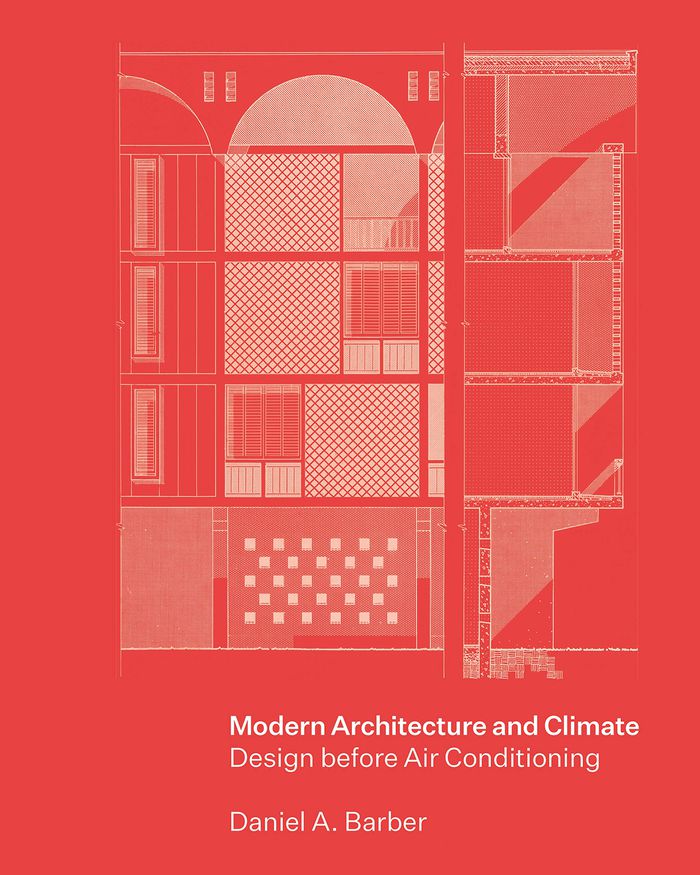
This volume explores how leading architects of the twentieth century incorporated climate-mediating strategies into their designs, and shows how regional approaches to climate adaptability were essential to the development of modern architecture. Focusing on the period surrounding World War II—before fossil-fuel powered air-conditioning became widely available—Daniel Barber brings to light a vibrant and dynamic architectural discussion involving design, materials, and shading systems as means of interior climate control. He looks at projects by well-known architects such as Richard Neutra, Le Corbusier, Lúcio Costa, Mies van der Rohe, and Skidmore, Owings, and Merrill, and the work of climate-focused architects such as MMM Roberto, Olgyay and Olgyay, and Cliff May. Drawing on the editorial projects of James Marston Fitch, Elizabeth Gordon, and others, he demonstrates how images and diagrams produced by architects helped conceptualize climate knowledge, alongside the work of meteorologists, physicists, engineers, and social scientists. Barber describes how this novel type of environmental media catalyzed new ways of thinking about climate and architectural design.
Modern architecture and climate: Design before air conditioning
Actions:
Prix:
$68.00
(disponible sur commande)
Résumé:
This volume explores how leading architects of the twentieth century incorporated climate-mediating strategies into their designs, and shows how regional approaches to climate adaptability were essential to the development of modern architecture. Focusing on the period surrounding World War II—before fossil-fuel powered air-conditioning became widely available—Daniel Barber brings to light a vibrant and dynamic architectural discussion involving design, materials, and shading systems as means of interior climate control. He looks at projects by well-known architects such as Richard Neutra, Le Corbusier, Lúcio Costa, Mies van der Rohe, and Skidmore, Owings, and Merrill, and the work of climate-focused architects such as MMM Roberto, Olgyay and Olgyay, and Cliff May. Drawing on the editorial projects of James Marston Fitch, Elizabeth Gordon, and others, he demonstrates how images and diagrams produced by architects helped conceptualize climate knowledge, alongside the work of meteorologists, physicists, engineers, and social scientists. Barber describes how this novel type of environmental media catalyzed new ways of thinking about climate and architectural design.
Classification:
livres
livres
Publication:
avril 2023
avril 2023
Sujet:
Théorie de l’architecture
Théorie de l’architecture
Classification:
livres
livres

Prix:
$95.00
(disponible en magasin)
Résumé:
Media coverage of Japanese architecture the past twenty years has largely been dominated by the works of SANAA, Sou Fujimoto, Junya Ishigami and their contemporaries. Their skillfully designed, ethereal white spaces and structures, have proved well suited to being exported in an increasingly visual culture. ''Communal Ecologies'', on the other hand, highlights an(...)
$95.00
(disponible en magasin)
Résumé:
Media coverage of Japanese architecture the past twenty years has largely been dominated by the works of SANAA, Sou Fujimoto, Junya Ishigami and their contemporaries. Their skillfully designed, ethereal white spaces and structures, have proved well suited to being exported in an increasingly visual culture. ''Communal Ecologies'', on the other hand, highlights an(...)
Publication:
décembre 2025
décembre 2025
Titre:
Communal Ecologies: Conversations with Young Japanese Architects
Actions:
Prix:
$95.00
(disponible en magasin)
Résumé:
Media coverage of Japanese architecture the past twenty years has largely been dominated by the works of SANAA, Sou Fujimoto, Junya Ishigami and their contemporaries. Their skillfully designed, ethereal white spaces and structures, have proved well suited to being exported in an increasingly visual culture. ''Communal Ecologies'', on the other hand, highlights an emerging generation of young architects pursuing a very different vision. They strive for an architecture that is rougher, more dynamic, and deeply rooted in social and ecological engagement. With a growing interest in community and network building, and a reevaluation of architecture’s connection to nature, they are developing critical methodologies for practice, and are reimagining the role of the architect in the process. Faced with a lack of opportunities in traditional housing design due to Japan’s economic decline, alongside a heightened awareness of ecological challenges brought on by frequent natural disasters, this generation of architects are crafting innovative strategies to engage with the existing housing stock and address challenges related to sustainability, reuse and transformation.
Communal Ecologies: Conversations with Young Japanese Architects
Actions:
Prix:
$95.00
(disponible en magasin)
Résumé:
Media coverage of Japanese architecture the past twenty years has largely been dominated by the works of SANAA, Sou Fujimoto, Junya Ishigami and their contemporaries. Their skillfully designed, ethereal white spaces and structures, have proved well suited to being exported in an increasingly visual culture. ''Communal Ecologies'', on the other hand, highlights an emerging generation of young architects pursuing a very different vision. They strive for an architecture that is rougher, more dynamic, and deeply rooted in social and ecological engagement. With a growing interest in community and network building, and a reevaluation of architecture’s connection to nature, they are developing critical methodologies for practice, and are reimagining the role of the architect in the process. Faced with a lack of opportunities in traditional housing design due to Japan’s economic decline, alongside a heightened awareness of ecological challenges brought on by frequent natural disasters, this generation of architects are crafting innovative strategies to engage with the existing housing stock and address challenges related to sustainability, reuse and transformation.
Classification:
livres
livres
Publication:
décembre 2025
décembre 2025
Classification:
livres
livres
Prix:
$77.00
(disponible sur commande)
Résumé:
explores how leading architects of the twentieth century incorporated climate-mediating strategies into their designs, and shows how regional approaches to climate adaptability were essential to the development of modern architecture. Focusing on the period surrounding World War II—before fossil-fuel powered air-conditioning became widely available—Daniel Barber brings to(...)
$77.00
(disponible sur commande)
Résumé:
explores how leading architects of the twentieth century incorporated climate-mediating strategies into their designs, and shows how regional approaches to climate adaptability were essential to the development of modern architecture. Focusing on the period surrounding World War II—before fossil-fuel powered air-conditioning became widely available—Daniel Barber brings to(...)
Titre:
Modern architecture and climate: design before air conditioning
Actions:
Prix:
$77.00
(disponible sur commande)
Résumé:
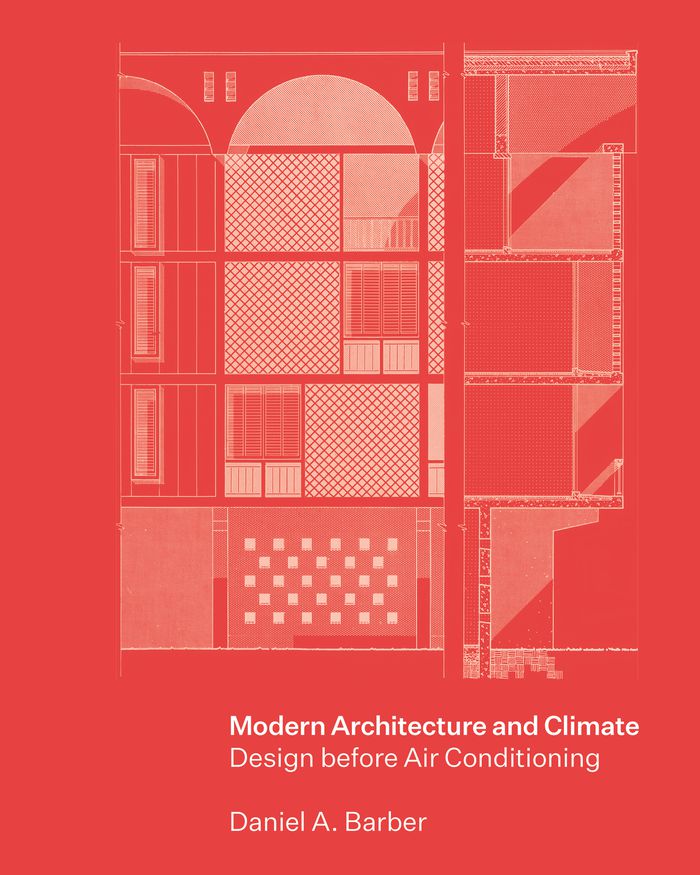
explores how leading architects of the twentieth century incorporated climate-mediating strategies into their designs, and shows how regional approaches to climate adaptability were essential to the development of modern architecture. Focusing on the period surrounding World War II—before fossil-fuel powered air-conditioning became widely available—Daniel Barber brings to light a vibrant and dynamic architectural discussion involving design, materials, and shading systems as means of interior climate control. He looks at projects by well-known architects such as Richard Neutra, Le Corbusier, Lúcio Costa, Mies van der Rohe, and Skidmore, Owings, and Merrill, and the work of climate-focused architects such as MMM Roberto, Olgyay and Olgyay, and Cliff May. Drawing on the editorial projects of James Marston Fitch, Elizabeth Gordon, and others, he demonstrates how images and diagrams produced by architects helped conceptualize climate knowledge, alongside the work of meteorologists, physicists, engineers, and social scientists. Barber describes how this novel type of environmental media catalyzed new ways of thinking about climate and architectural design.
Modern architecture and climate: design before air conditioning
Actions:
Prix:
$77.00
(disponible sur commande)
Résumé:
explores how leading architects of the twentieth century incorporated climate-mediating strategies into their designs, and shows how regional approaches to climate adaptability were essential to the development of modern architecture. Focusing on the period surrounding World War II—before fossil-fuel powered air-conditioning became widely available—Daniel Barber brings to light a vibrant and dynamic architectural discussion involving design, materials, and shading systems as means of interior climate control. He looks at projects by well-known architects such as Richard Neutra, Le Corbusier, Lúcio Costa, Mies van der Rohe, and Skidmore, Owings, and Merrill, and the work of climate-focused architects such as MMM Roberto, Olgyay and Olgyay, and Cliff May. Drawing on the editorial projects of James Marston Fitch, Elizabeth Gordon, and others, he demonstrates how images and diagrams produced by architects helped conceptualize climate knowledge, alongside the work of meteorologists, physicists, engineers, and social scientists. Barber describes how this novel type of environmental media catalyzed new ways of thinking about climate and architectural design.
Classification:
livres
livres
Publication:
avril 2020
avril 2020
Sujet:
Théorie de l’architecture
Théorie de l’architecture
Classification:
livres
livres
Prix:
$44.95
(disponible sur commande)
Résumé:
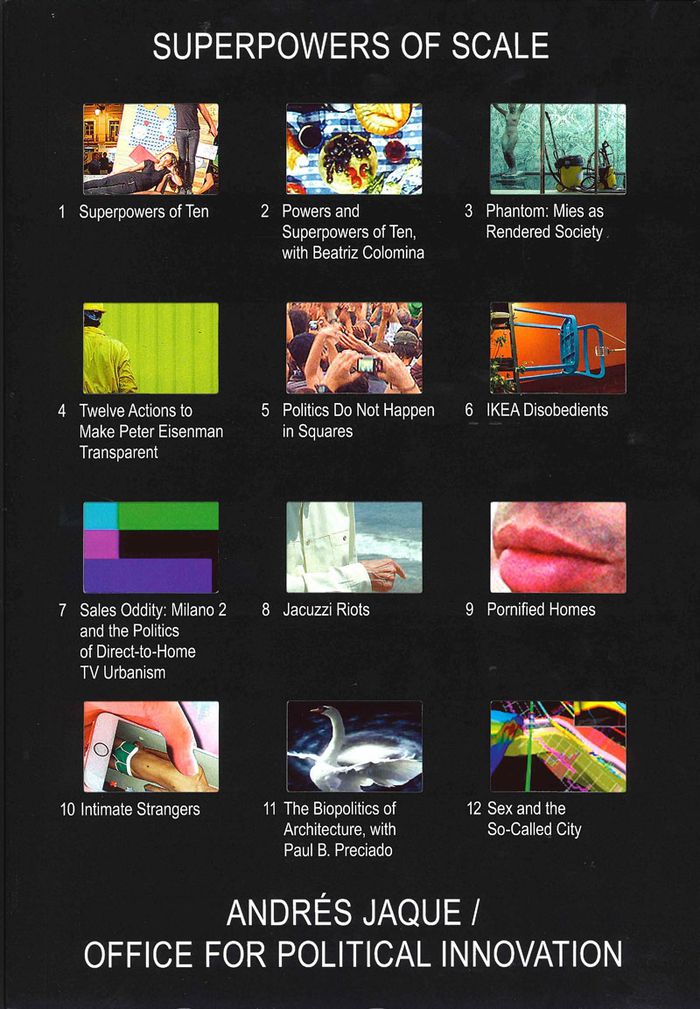
The objects of architecture are not simply inert assemblies of material - they are complex entities that unfold their potential agencies (whether political, social, or environmental) in equally complex ways. Exploring these forms of architectural agency has in recent years been a central aspect of the work of Andrés Jaque and the Office for Political Innovation, who, in(...)
$44.95
(disponible sur commande)
Résumé:
The objects of architecture are not simply inert assemblies of material - they are complex entities that unfold their potential agencies (whether political, social, or environmental) in equally complex ways. Exploring these forms of architectural agency has in recent years been a central aspect of the work of Andrés Jaque and the Office for Political Innovation, who, in(...)
Titre:
Superpowers of scale: Office for Political Innovation
Actions:
Prix:
$44.95
(disponible sur commande)
Résumé:
The objects of architecture are not simply inert assemblies of material - they are complex entities that unfold their potential agencies (whether political, social, or environmental) in equally complex ways. Exploring these forms of architectural agency has in recent years been a central aspect of the work of Andrés Jaque and the Office for Political Innovation, who, in addition to their built works, pursue a research practice through the many other media of architectural production. Their projects are reactive, intervening on what already exists to demonstrate how design, politics, and criticality operate across different scales and at the intersection of multiple realities. Jaque’s performances, videos, and installations—and this book, which collects a range of recent research projects—bring new subjects into the fold of architecture, focusing on alternative actors, distributions of power and representation, and the sociocultural effects of architecture. These episodes address ideas like genetic manipulation, the necessary requeering of dequeered spaces of online interaction, and the selling of modern architectural comforts in order to subvert the field from within and to contest capitalism's flattening-out of public life.
Superpowers of scale: Office for Political Innovation
Actions:
Prix:
$44.95
(disponible sur commande)
Résumé:
The objects of architecture are not simply inert assemblies of material - they are complex entities that unfold their potential agencies (whether political, social, or environmental) in equally complex ways. Exploring these forms of architectural agency has in recent years been a central aspect of the work of Andrés Jaque and the Office for Political Innovation, who, in addition to their built works, pursue a research practice through the many other media of architectural production. Their projects are reactive, intervening on what already exists to demonstrate how design, politics, and criticality operate across different scales and at the intersection of multiple realities. Jaque’s performances, videos, and installations—and this book, which collects a range of recent research projects—bring new subjects into the fold of architecture, focusing on alternative actors, distributions of power and representation, and the sociocultural effects of architecture. These episodes address ideas like genetic manipulation, the necessary requeering of dequeered spaces of online interaction, and the selling of modern architectural comforts in order to subvert the field from within and to contest capitalism's flattening-out of public life.
Classification:
livres
livres
Publication:
mars 2020
mars 2020
Sujet:
Architecture, monographies
Architecture, monographies


