


16899 Résultats
Classification:
dessins, photographies
dessins, photographies
Numéro de référence:
ARCH277702
Description:
File's title: Federico: maquetas, Barcelona litoral, New Museum, Sociopolis, Bienal de Rotterdam, maq. MoMA Vitoria, Logroño; Casa Gonzalez. - New Museum de Arte Contemporáneo, New York (AP164.S1.2003.D1): 8 photographs: model; - Sociópolis, Valencia (AP164.S1.2003.D2): 8 photographs: model; - Barcelona Forum 2004 (AP164.S1.2000.D9): 9 photographs: model; - Casa González (AP164.S1.1997.D5): 13 photographs, 1 drawing: model.
ARCH277702
Description:
File's title: Federico: maquetas, Barcelona litoral, New Museum, Sociopolis, Bienal de Rotterdam, maq. MoMA Vitoria, Logroño; Casa Gonzalez. - New Museum de Arte Contemporáneo, New York (AP164.S1.2003.D1): 8 photographs: model; - Sociópolis, Valencia (AP164.S1.2003.D2): 8 photographs: model; - Barcelona Forum 2004 (AP164.S1.2000.D9): 9 photographs: model; - Casa González (AP164.S1.1997.D5): 13 photographs, 1 drawing: model.
Personnes et institutions:
Date:
between 1997 and 2003
between 1997 and 2003
Titre:
Views of models by Federico from four projects by Abalos & Herreros
Actions:
ARCH277702
Description:
File's title: Federico: maquetas, Barcelona litoral, New Museum, Sociopolis, Bienal de Rotterdam, maq. MoMA Vitoria, Logroño; Casa Gonzalez. - New Museum de Arte Contemporáneo, New York (AP164.S1.2003.D1): 8 photographs: model; - Sociópolis, Valencia (AP164.S1.2003.D2): 8 photographs: model; - Barcelona Forum 2004 (AP164.S1.2000.D9): 9 photographs: model; - Casa González (AP164.S1.1997.D5): 13 photographs, 1 drawing: model.
Views of models by Federico from four projects by Abalos & Herreros
Actions:
ARCH277702
Description:
File's title: Federico: maquetas, Barcelona litoral, New Museum, Sociopolis, Bienal de Rotterdam, maq. MoMA Vitoria, Logroño; Casa Gonzalez. - New Museum de Arte Contemporáneo, New York (AP164.S1.2003.D1): 8 photographs: model; - Sociópolis, Valencia (AP164.S1.2003.D2): 8 photographs: model; - Barcelona Forum 2004 (AP164.S1.2000.D9): 9 photographs: model; - Casa González (AP164.S1.1997.D5): 13 photographs, 1 drawing: model.
Classification:
dessins, photographies
dessins, photographies
Date:
between 1997 and 2003
between 1997 and 2003
Personnes et institutions:
Classification:
documents textuels
documents textuels
Numéro de référence:
DR2012:0012:078:007
Description:
File containing documents in English, including notes, press materials related to A Chicago construction. Original folder inscribed in graphite: MUSEUM OF CONTEMPORARY ART, CHICAGO, 1982.
DR2012:0012:078:007
Description:
File containing documents in English, including notes, press materials related to A Chicago construction. Original folder inscribed in graphite: MUSEUM OF CONTEMPORARY ART, CHICAGO, 1982.
Personnes et institutions:
Date:
1982, 1988
1982, 1988
Titre:
Notes, and press materials, A Chicago construction
Actions:
DR2012:0012:078:007
Description:
File containing documents in English, including notes, press materials related to A Chicago construction. Original folder inscribed in graphite: MUSEUM OF CONTEMPORARY ART, CHICAGO, 1982.
Notes, and press materials, A Chicago construction
Actions:
DR2012:0012:078:007
Description:
File containing documents in English, including notes, press materials related to A Chicago construction. Original folder inscribed in graphite: MUSEUM OF CONTEMPORARY ART, CHICAGO, 1982.
Classification:
documents textuels
documents textuels
Date:
1982, 1988
1982, 1988
Personnes et institutions:
Classification:
documents textuels
documents textuels
Numéro de référence:
ARCH256995
Description:
Permanent Files for British Columbia Provincial Museum planning study proposal (1985), Wake County Schools proposal design package VII, Raliegh, North Carolina (Boney ARchitects, 1986).
ARCH256995
Description:
Permanent Files for British Columbia Provincial Museum planning study proposal (1985), Wake County Schools proposal design package VII, Raliegh, North Carolina (Boney ARchitects, 1986).
Personnes et institutions:
Date:
1985-1986
1985-1986
Titre:
Permanent files for various projects
Actions:
ARCH256995
Description:
Permanent Files for British Columbia Provincial Museum planning study proposal (1985), Wake County Schools proposal design package VII, Raliegh, North Carolina (Boney ARchitects, 1986).
Permanent files for various projects
Actions:
ARCH256995
Description:
Permanent Files for British Columbia Provincial Museum planning study proposal (1985), Wake County Schools proposal design package VII, Raliegh, North Carolina (Boney ARchitects, 1986).
Classification:
documents textuels
documents textuels
Date:
1985-1986
1985-1986
Personnes et institutions:
Niveau de description archivistique:
Projet
Projet
Titre:
Carbon Tower (2001)
Carbon Tower (2001)
Numéro de référence:
AP174.S1.2001.D1
Description:
This project file documents an unbuilt design by Testa & Weiser for Carbon Tower (2001), a forty-storey building made almost entirely of carbon fibre. The project was developed in parallel with scripting software designed while Peter Testa and Devyn Weiser co-directed the Emergent Design Group at MIT. "The tower consists of an interdependent set of parts: floor plates hang from a diagrid structure of bundled fibres reinforced by two double-helix covered ramps, which are run in and out of the structure and are themselves made of strands woven at a finer scale. A thin composite skin—glass would be too heavy—wraps the tower’s parts together. A collaboration with Arup in 2002 allowed Testa & Weiser to simplify the scheme even further, by moving all core elements, from elevators to structural supports, to the tower’s perimeter. To take full advantage of the flexibility and energy efficiency of composite materials, Testa & Weiser also imagined that the carbon fibre structures would be formed on site through a process called pultrusion."[1] The file contains a large number of digital files documenting the conceptual and design development of the project; consultation with Arup Consulting Engineers, New York; research on composite materials; fabrication of 3D printed physical models by 3D Systems and Windform; and exhibition of the project at several museums and galleries, including the Museum of Contemporary Art, Los Angeles and the Cooper-Hewitt Smithsonian Design Museum, New York. Also contained in the file are 56 paper drawings (including some sketches done on top of printed computer-aided designs) and two 3D printed physical models produced by 3D Systems. Sources: [1] Canadian Centre for Architecture. Archaeology of the Digital 12: Testa & Weiser, Carbon Tower, ed. Greg Lynn (2015), ISBN 978-1-927071-25-0.
AP174.S1.2001.D1
Description:
This project file documents an unbuilt design by Testa & Weiser for Carbon Tower (2001), a forty-storey building made almost entirely of carbon fibre. The project was developed in parallel with scripting software designed while Peter Testa and Devyn Weiser co-directed the Emergent Design Group at MIT. "The tower consists of an interdependent set of parts: floor plates hang from a diagrid structure of bundled fibres reinforced by two double-helix covered ramps, which are run in and out of the structure and are themselves made of strands woven at a finer scale. A thin composite skin—glass would be too heavy—wraps the tower’s parts together. A collaboration with Arup in 2002 allowed Testa & Weiser to simplify the scheme even further, by moving all core elements, from elevators to structural supports, to the tower’s perimeter. To take full advantage of the flexibility and energy efficiency of composite materials, Testa & Weiser also imagined that the carbon fibre structures would be formed on site through a process called pultrusion."[1] The file contains a large number of digital files documenting the conceptual and design development of the project; consultation with Arup Consulting Engineers, New York; research on composite materials; fabrication of 3D printed physical models by 3D Systems and Windform; and exhibition of the project at several museums and galleries, including the Museum of Contemporary Art, Los Angeles and the Cooper-Hewitt Smithsonian Design Museum, New York. Also contained in the file are 56 paper drawings (including some sketches done on top of printed computer-aided designs) and two 3D printed physical models produced by 3D Systems. Sources: [1] Canadian Centre for Architecture. Archaeology of the Digital 12: Testa & Weiser, Carbon Tower, ed. Greg Lynn (2015), ISBN 978-1-927071-25-0.
Personnes et institutions:
Date:
2002-2014
2002-2014
Titre:
Carbon Tower (2001)
Actions:
AP174.S1.2001.D1
Description:
This project file documents an unbuilt design by Testa & Weiser for Carbon Tower (2001), a forty-storey building made almost entirely of carbon fibre. The project was developed in parallel with scripting software designed while Peter Testa and Devyn Weiser co-directed the Emergent Design Group at MIT. "The tower consists of an interdependent set of parts: floor plates hang from a diagrid structure of bundled fibres reinforced by two double-helix covered ramps, which are run in and out of the structure and are themselves made of strands woven at a finer scale. A thin composite skin—glass would be too heavy—wraps the tower’s parts together. A collaboration with Arup in 2002 allowed Testa & Weiser to simplify the scheme even further, by moving all core elements, from elevators to structural supports, to the tower’s perimeter. To take full advantage of the flexibility and energy efficiency of composite materials, Testa & Weiser also imagined that the carbon fibre structures would be formed on site through a process called pultrusion."[1] The file contains a large number of digital files documenting the conceptual and design development of the project; consultation with Arup Consulting Engineers, New York; research on composite materials; fabrication of 3D printed physical models by 3D Systems and Windform; and exhibition of the project at several museums and galleries, including the Museum of Contemporary Art, Los Angeles and the Cooper-Hewitt Smithsonian Design Museum, New York. Also contained in the file are 56 paper drawings (including some sketches done on top of printed computer-aided designs) and two 3D printed physical models produced by 3D Systems. Sources: [1] Canadian Centre for Architecture. Archaeology of the Digital 12: Testa & Weiser, Carbon Tower, ed. Greg Lynn (2015), ISBN 978-1-927071-25-0.
Carbon Tower (2001)
Actions:
AP174.S1.2001.D1
Description:
This project file documents an unbuilt design by Testa & Weiser for Carbon Tower (2001), a forty-storey building made almost entirely of carbon fibre. The project was developed in parallel with scripting software designed while Peter Testa and Devyn Weiser co-directed the Emergent Design Group at MIT. "The tower consists of an interdependent set of parts: floor plates hang from a diagrid structure of bundled fibres reinforced by two double-helix covered ramps, which are run in and out of the structure and are themselves made of strands woven at a finer scale. A thin composite skin—glass would be too heavy—wraps the tower’s parts together. A collaboration with Arup in 2002 allowed Testa & Weiser to simplify the scheme even further, by moving all core elements, from elevators to structural supports, to the tower’s perimeter. To take full advantage of the flexibility and energy efficiency of composite materials, Testa & Weiser also imagined that the carbon fibre structures would be formed on site through a process called pultrusion."[1] The file contains a large number of digital files documenting the conceptual and design development of the project; consultation with Arup Consulting Engineers, New York; research on composite materials; fabrication of 3D printed physical models by 3D Systems and Windform; and exhibition of the project at several museums and galleries, including the Museum of Contemporary Art, Los Angeles and the Cooper-Hewitt Smithsonian Design Museum, New York. Also contained in the file are 56 paper drawings (including some sketches done on top of printed computer-aided designs) and two 3D printed physical models produced by 3D Systems. Sources: [1] Canadian Centre for Architecture. Archaeology of the Digital 12: Testa & Weiser, Carbon Tower, ed. Greg Lynn (2015), ISBN 978-1-927071-25-0.
Niveau de description archivistique:
Project
Project
Date:
2002-2014
2002-2014
Personnes et institutions:
Niveau de description archivistique:
Sous-série
Sous-série
Titre:
Correspondence
Correspondence
Numéro de référence:
AP041.S5.SS02
Description:
This sub-series documents Melvin Charney's activities through professional correspondence with various institutions, museums, galleries and collaborators related to his projects, his writings, lectures, interviews, exhibitions he curated and the group exhibitions he participated in. The sub-series also includes some personal correspondence.
AP041.S5.SS02
Description:
This sub-series documents Melvin Charney's activities through professional correspondence with various institutions, museums, galleries and collaborators related to his projects, his writings, lectures, interviews, exhibitions he curated and the group exhibitions he participated in. The sub-series also includes some personal correspondence.
Personnes et institutions:
Date:
1935-2012
1935-2012
Titre:
Correspondence
Actions:
AP041.S5.SS02
Description:
This sub-series documents Melvin Charney's activities through professional correspondence with various institutions, museums, galleries and collaborators related to his projects, his writings, lectures, interviews, exhibitions he curated and the group exhibitions he participated in. The sub-series also includes some personal correspondence.
Correspondence
Actions:
AP041.S5.SS02
Description:
This sub-series documents Melvin Charney's activities through professional correspondence with various institutions, museums, galleries and collaborators related to his projects, his writings, lectures, interviews, exhibitions he curated and the group exhibitions he participated in. The sub-series also includes some personal correspondence.
Niveau de description archivistique:
Sub-series
Sub-series
Date:
1935-2012
1935-2012
Personnes et institutions:
Classification:
dessins, né numérique
dessins, né numérique
Numéro de référence:
AP165.S7.SS1.004
Description:
This file includes directories originally labelled "HYPAR" and "LA museum." Most common file formats: AutoLISP File, AutoCAD Drawing, Unidentified, Plain Text File, MS-DOS Executable
AP165.S7.SS1.004
Description:
This file includes directories originally labelled "HYPAR" and "LA museum." Most common file formats: AutoLISP File, AutoCAD Drawing, Unidentified, Plain Text File, MS-DOS Executable
Personnes et institutions:
Date:
1990 - 1998
1990 - 1998
Titre:
Scripts and AutoCAD drawings for Expanding Hypar at California Science Center, Los Angeles
Actions:
AP165.S7.SS1.004
Description:
This file includes directories originally labelled "HYPAR" and "LA museum." Most common file formats: AutoLISP File, AutoCAD Drawing, Unidentified, Plain Text File, MS-DOS Executable
Scripts and AutoCAD drawings for Expanding Hypar at California Science Center, Los Angeles
Actions:
AP165.S7.SS1.004
Description:
This file includes directories originally labelled "HYPAR" and "LA museum." Most common file formats: AutoLISP File, AutoCAD Drawing, Unidentified, Plain Text File, MS-DOS Executable
Classification:
dessins, né numérique
dessins, né numérique
Date:
1990 - 1998
1990 - 1998
Personnes et institutions:
Classification:
documents textuels
documents textuels
Numéro de référence:
ARCH260031
Description:
Proposals and correspondence concerning projects in the United States: Center for the performing Arts, Florida; Hilton International, Texas; Indianapolis Art Museum; New Indianapolis State Museum; New State Courts building, Indiana; des Moines Art Center Addition, Iowa; Kansas City, Missouri, mixed site development; Warner Center Marriott Hotel, Los Angeles; College of the Atlantic, Maine; Minneapolis Convention Center; Grotta residence, New Jersey
ARCH260031
Description:
Proposals and correspondence concerning projects in the United States: Center for the performing Arts, Florida; Hilton International, Texas; Indianapolis Art Museum; New Indianapolis State Museum; New State Courts building, Indiana; des Moines Art Center Addition, Iowa; Kansas City, Missouri, mixed site development; Warner Center Marriott Hotel, Los Angeles; College of the Atlantic, Maine; Minneapolis Convention Center; Grotta residence, New Jersey
Personnes et institutions:
Date:
1980-1986
1980-1986
Titre:
Proposals and correspondence concerning projects in the United States
Actions:
ARCH260031
Description:
Proposals and correspondence concerning projects in the United States: Center for the performing Arts, Florida; Hilton International, Texas; Indianapolis Art Museum; New Indianapolis State Museum; New State Courts building, Indiana; des Moines Art Center Addition, Iowa; Kansas City, Missouri, mixed site development; Warner Center Marriott Hotel, Los Angeles; College of the Atlantic, Maine; Minneapolis Convention Center; Grotta residence, New Jersey
Proposals and correspondence concerning projects in the United States
Actions:
ARCH260031
Description:
Proposals and correspondence concerning projects in the United States: Center for the performing Arts, Florida; Hilton International, Texas; Indianapolis Art Museum; New Indianapolis State Museum; New State Courts building, Indiana; des Moines Art Center Addition, Iowa; Kansas City, Missouri, mixed site development; Warner Center Marriott Hotel, Los Angeles; College of the Atlantic, Maine; Minneapolis Convention Center; Grotta residence, New Jersey
Classification:
documents textuels
documents textuels
Date:
1980-1986
1980-1986
Personnes et institutions:
Niveau de description archivistique:
Sous-série
Sous-série
Numéro de référence:
AP116.S3.SS20
Description:
Sub-series documents the planning and production of Public Fear: What's So Scary About Architecture?, issue 18 of ANY magazine (May) and its accompanying In ANY Event Symposium, held January 25, 1997 at the Guggenheim Museum, New York City, New York. Sub-series is arranged into seven files, by object type. Material in sub-series was produced between 1996 and 1997. Sub-series contains drafts, research materials, documents relating to publicity, articles, illustrations and photographs, mock-ups, videocassettes and audiocassettes of symposium and copies of the issue.
AP116.S3.SS20
Description:
Sub-series documents the planning and production of Public Fear: What's So Scary About Architecture?, issue 18 of ANY magazine (May) and its accompanying In ANY Event Symposium, held January 25, 1997 at the Guggenheim Museum, New York City, New York. Sub-series is arranged into seven files, by object type. Material in sub-series was produced between 1996 and 1997. Sub-series contains drafts, research materials, documents relating to publicity, articles, illustrations and photographs, mock-ups, videocassettes and audiocassettes of symposium and copies of the issue.
Personnes et institutions:
Date:
1996-1997
1996-1997
Titre:
Public Fear: What's So Scary About Architecture?
Actions:
AP116.S3.SS20
Description:
Sub-series documents the planning and production of Public Fear: What's So Scary About Architecture?, issue 18 of ANY magazine (May) and its accompanying In ANY Event Symposium, held January 25, 1997 at the Guggenheim Museum, New York City, New York. Sub-series is arranged into seven files, by object type. Material in sub-series was produced between 1996 and 1997. Sub-series contains drafts, research materials, documents relating to publicity, articles, illustrations and photographs, mock-ups, videocassettes and audiocassettes of symposium and copies of the issue.
Public Fear: What's So Scary About Architecture?
Actions:
AP116.S3.SS20
Description:
Sub-series documents the planning and production of Public Fear: What's So Scary About Architecture?, issue 18 of ANY magazine (May) and its accompanying In ANY Event Symposium, held January 25, 1997 at the Guggenheim Museum, New York City, New York. Sub-series is arranged into seven files, by object type. Material in sub-series was produced between 1996 and 1997. Sub-series contains drafts, research materials, documents relating to publicity, articles, illustrations and photographs, mock-ups, videocassettes and audiocassettes of symposium and copies of the issue.
Niveau de description archivistique:
Sub-series 20
Sub-series 20
Date:
1996-1997
1996-1997
Personnes et institutions:
Classification:
documents textuels
documents textuels
Numéro de référence:
ARCH257076
Description:
press clipping, offer of services: Clark County Government Centre (1991), DHL-London (correspondence), Granville Waterfront, Boca Raton Art Museum, General Motors, City of lawndale, IBM
ARCH257076
Description:
press clipping, offer of services: Clark County Government Centre (1991), DHL-London (correspondence), Granville Waterfront, Boca Raton Art Museum, General Motors, City of lawndale, IBM
Personnes et institutions:
Titre:
Press clipping, and offer of services
Actions:
ARCH257076
Description:
press clipping, offer of services: Clark County Government Centre (1991), DHL-London (correspondence), Granville Waterfront, Boca Raton Art Museum, General Motors, City of lawndale, IBM
Press clipping, and offer of services
Actions:
ARCH257076
Description:
press clipping, offer of services: Clark County Government Centre (1991), DHL-London (correspondence), Granville Waterfront, Boca Raton Art Museum, General Motors, City of lawndale, IBM
Classification:
documents textuels
documents textuels
Personnes et institutions:
Classification:
expositions
expositions
Titre:
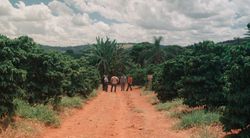
Avec la forêt
Avec la forêt
Actions:
Description:
Avec la forêt suit l’architecte Carla Juaçaba dans son projet de développement d’un musée en solidarité avec Flor de Café, un collectif de petits agriculteurs du Minas Gerais. Inspirée par la temporalité des structures collectives autochtones et la forme des panneaux autoroutiers qui ponctuent le vaste paysage rural de la région, Juaçaba propose un point de repère sur une(...)
Avec la forêt suit l’architecte Carla Juaçaba dans son projet de développement d’un musée en solidarité avec Flor de Café, un collectif de petits agriculteurs du Minas Gerais. Inspirée par la temporalité des structures collectives autochtones et la forme des panneaux autoroutiers qui ponctuent le vaste paysage rural de la région, Juaçaba propose un point de repère sur une(...)
Localisation:
Salles principales Mot(s)-clé(s):
Brésil, Carla Juacaba, Sur le terrain, café, Nepomuceno, Minas Gerais, Irene Chin, Francesco Garutti, Joshua Frank
Salles principales Mot(s)-clé(s):
Brésil, Carla Juacaba, Sur le terrain, café, Nepomuceno, Minas Gerais, Irene Chin, Francesco Garutti, Joshua Frank
Date:
19 juin 2025 au 12 octobre 2025
19 juin 2025 au 12 octobre 2025
Titre:
Avec la forêt
Actions:
Description:
Avec la forêt suit l’architecte Carla Juaçaba dans son projet de développement d’un musée en solidarité avec Flor de Café, un collectif de petits agriculteurs du Minas Gerais. Inspirée par la temporalité des structures collectives autochtones et la forme des panneaux autoroutiers qui ponctuent le vaste paysage rural de la région, Juaçaba propose un point de repère sur une(...)
Avec la forêt
Actions:
Description:
Avec la forêt suit l’architecte Carla Juaçaba dans son projet de développement d’un musée en solidarité avec Flor de Café, un collectif de petits agriculteurs du Minas Gerais. Inspirée par la temporalité des structures collectives autochtones et la forme des panneaux autoroutiers qui ponctuent le vaste paysage rural de la région, Juaçaba propose un point de repère sur une(...)
Classification:
expositions
expositions
Date:
19 juin 2025 au
12 octobre 2025
19 juin 2025 au
12 octobre 2025
Localisation:
Salles principales Mot(s)-clé(s):
Brésil, Carla Juacaba, Sur le terrain, café, Nepomuceno, Minas Gerais, Irene Chin, Francesco Garutti, Joshua Frank
Salles principales Mot(s)-clé(s):
Brésil, Carla Juacaba, Sur le terrain, café, Nepomuceno, Minas Gerais, Irene Chin, Francesco Garutti, Joshua Frank


