


26977 Résultats
Classification:
oeuvres d'art
oeuvres d'art
Actions:
Numéro de référence:
DR1984:0574
Description:
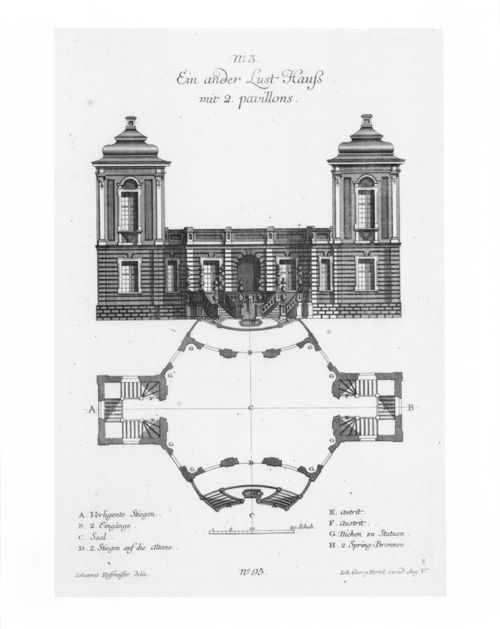
- DR1984:0574, DR1984:0575, and DR1984:0576 describe a theoretical project for a garden house consisting of a central block and two pavilions. The plan of the central block has the form of a stretched octagon curved inward on the two longest sides. These two sides are approached by double stairs and constitute the front and back of the building. The short sides on the long axis open into the two pavilions (joined at right angles to the central block), which are square in plan and contain stairs leading to the upper floor. As in the building described in DR1984:0572 and DR1984:0573, the pavilions are two storeys high, while the area above the central hall is open to the sky. The interior and exterior of this structure are articulated much as in the first garden house (DR1984:0572 - DR1984:0573) except that the second storey exterior walls of the pavilions are enframed by Ionic pilasters. Also, only two fountains, one at front and back, are used at ground level.
DR1984:0574
Description:
- DR1984:0574, DR1984:0575, and DR1984:0576 describe a theoretical project for a garden house consisting of a central block and two pavilions. The plan of the central block has the form of a stretched octagon curved inward on the two longest sides. These two sides are approached by double stairs and constitute the front and back of the building. The short sides on the long axis open into the two pavilions (joined at right angles to the central block), which are square in plan and contain stairs leading to the upper floor. As in the building described in DR1984:0572 and DR1984:0573, the pavilions are two storeys high, while the area above the central hall is open to the sky. The interior and exterior of this structure are articulated much as in the first garden house (DR1984:0572 - DR1984:0573) except that the second storey exterior walls of the pavilions are enframed by Ionic pilasters. Also, only two fountains, one at front and back, are used at ground level.
Personnes et institutions:
Sujet:
architecture, architecture de paysage
architecture, architecture de paysage
Date:
ca. 1735-ca. 1745
ca. 1735-ca. 1745
Titre:
Ground-floor plan and principal elevation of a Garden Pleasure House
Actions:
DR1984:0574
Description:
- DR1984:0574, DR1984:0575, and DR1984:0576 describe a theoretical project for a garden house consisting of a central block and two pavilions. The plan of the central block has the form of a stretched octagon curved inward on the two longest sides. These two sides are approached by double stairs and constitute the front and back of the building. The short sides on the long axis open into the two pavilions (joined at right angles to the central block), which are square in plan and contain stairs leading to the upper floor. As in the building described in DR1984:0572 and DR1984:0573, the pavilions are two storeys high, while the area above the central hall is open to the sky. The interior and exterior of this structure are articulated much as in the first garden house (DR1984:0572 - DR1984:0573) except that the second storey exterior walls of the pavilions are enframed by Ionic pilasters. Also, only two fountains, one at front and back, are used at ground level.
Ground-floor plan and principal elevation of a Garden Pleasure House
Actions:
DR1984:0574
Description:
- DR1984:0574, DR1984:0575, and DR1984:0576 describe a theoretical project for a garden house consisting of a central block and two pavilions. The plan of the central block has the form of a stretched octagon curved inward on the two longest sides. These two sides are approached by double stairs and constitute the front and back of the building. The short sides on the long axis open into the two pavilions (joined at right angles to the central block), which are square in plan and contain stairs leading to the upper floor. As in the building described in DR1984:0572 and DR1984:0573, the pavilions are two storeys high, while the area above the central hall is open to the sky. The interior and exterior of this structure are articulated much as in the first garden house (DR1984:0572 - DR1984:0573) except that the second storey exterior walls of the pavilions are enframed by Ionic pilasters. Also, only two fountains, one at front and back, are used at ground level.
Classification:
oeuvres d'art
oeuvres d'art
Date:
ca. 1735-ca. 1745
ca. 1735-ca. 1745
Personnes et institutions:
Sujet:
architecture, architecture de paysage
architecture, architecture de paysage
Classification:
dessins, documents textuels, né numérique, photographies
dessins, documents textuels, né numérique, photographies
Numéro de référence:
AP181.S1.019
Description:
Original directory name: "25_TRIAS-Aussenbrücke". File content shows the design and construction planning for a pedestrian bridge connecting BMW Welt to the BMW Museum. Records include plans, drawings, research material, presentations, approval planning, building specification, list of plans, final handover of the arch bridge, etc. The bulk of records are CAD drawings and 3D models of the design development and planning. The drawings are organized by type of plan: site plan, sections, axonometric views, etc. As for 3D models, they are organized mostly by file format, and then by date. The "3D" sub-directory also contains more than 1500 screenshots saved as JPEG. Additional records include site photographs, digitized sketches, visual research material, presentations of the concept, bridge structure technical descriptions, 2D and 3D technical drawings (in PDF, CAD, JPG, and Illustrator formats), renderings, project planning charts, and plan lists. Most common file formats: JPEG File Interchange Format, AutoCAD Drawing, 3DM, Exchangeable Image File Format (Compressed), Maya Binary File Format
AP181.S1.019
Description:
Original directory name: "25_TRIAS-Aussenbrücke". File content shows the design and construction planning for a pedestrian bridge connecting BMW Welt to the BMW Museum. Records include plans, drawings, research material, presentations, approval planning, building specification, list of plans, final handover of the arch bridge, etc. The bulk of records are CAD drawings and 3D models of the design development and planning. The drawings are organized by type of plan: site plan, sections, axonometric views, etc. As for 3D models, they are organized mostly by file format, and then by date. The "3D" sub-directory also contains more than 1500 screenshots saved as JPEG. Additional records include site photographs, digitized sketches, visual research material, presentations of the concept, bridge structure technical descriptions, 2D and 3D technical drawings (in PDF, CAD, JPG, and Illustrator formats), renderings, project planning charts, and plan lists. Most common file formats: JPEG File Interchange Format, AutoCAD Drawing, 3DM, Exchangeable Image File Format (Compressed), Maya Binary File Format
Personnes et institutions:
Date:
2002-2007
2002-2007
Titre:
Design and construction planning of bridge to BMW Museum, BMW Welt, Munich
Actions:
AP181.S1.019
Description:
Original directory name: "25_TRIAS-Aussenbrücke". File content shows the design and construction planning for a pedestrian bridge connecting BMW Welt to the BMW Museum. Records include plans, drawings, research material, presentations, approval planning, building specification, list of plans, final handover of the arch bridge, etc. The bulk of records are CAD drawings and 3D models of the design development and planning. The drawings are organized by type of plan: site plan, sections, axonometric views, etc. As for 3D models, they are organized mostly by file format, and then by date. The "3D" sub-directory also contains more than 1500 screenshots saved as JPEG. Additional records include site photographs, digitized sketches, visual research material, presentations of the concept, bridge structure technical descriptions, 2D and 3D technical drawings (in PDF, CAD, JPG, and Illustrator formats), renderings, project planning charts, and plan lists. Most common file formats: JPEG File Interchange Format, AutoCAD Drawing, 3DM, Exchangeable Image File Format (Compressed), Maya Binary File Format
Design and construction planning of bridge to BMW Museum, BMW Welt, Munich
Actions:
AP181.S1.019
Description:
Original directory name: "25_TRIAS-Aussenbrücke". File content shows the design and construction planning for a pedestrian bridge connecting BMW Welt to the BMW Museum. Records include plans, drawings, research material, presentations, approval planning, building specification, list of plans, final handover of the arch bridge, etc. The bulk of records are CAD drawings and 3D models of the design development and planning. The drawings are organized by type of plan: site plan, sections, axonometric views, etc. As for 3D models, they are organized mostly by file format, and then by date. The "3D" sub-directory also contains more than 1500 screenshots saved as JPEG. Additional records include site photographs, digitized sketches, visual research material, presentations of the concept, bridge structure technical descriptions, 2D and 3D technical drawings (in PDF, CAD, JPG, and Illustrator formats), renderings, project planning charts, and plan lists. Most common file formats: JPEG File Interchange Format, AutoCAD Drawing, 3DM, Exchangeable Image File Format (Compressed), Maya Binary File Format
Classification:
dessins, documents textuels, né numérique, photographies
dessins, documents textuels, né numérique, photographies
Date:
2002-2007
2002-2007
Personnes et institutions:
Classification:
archives
Niveau de description archivistique:
Fonds
archives
Niveau de description archivistique:
Fonds
Numéro de référence:
AP057
Résumé:
The Institute for Architecture and Urban Studies (IAUS) fonds is composed primarily of textual and photographic material which document the activities of the IAUS from its inception in 1967 until its dissolution in 1983. Those activities include the publication of three periodicals (Oppositions, October and Skyline), as well as numerous books, conferences, lectures, exhibitions and educational programming. In addition, the IAUS fonds documents the activities of the IAUS' director, architect Peter Eisenman.
AP057
Résumé:
The Institute for Architecture and Urban Studies (IAUS) fonds is composed primarily of textual and photographic material which document the activities of the IAUS from its inception in 1967 until its dissolution in 1983. Those activities include the publication of three periodicals (Oppositions, October and Skyline), as well as numerous books, conferences, lectures, exhibitions and educational programming. In addition, the IAUS fonds documents the activities of the IAUS' director, architect Peter Eisenman.
Personnes et institutions:
Date:
1965-1984
1965-1984
Titre:
Fonds Institute for Architecture and Urban Studies
Actions:
AP057
Résumé:
The Institute for Architecture and Urban Studies (IAUS) fonds is composed primarily of textual and photographic material which document the activities of the IAUS from its inception in 1967 until its dissolution in 1983. Those activities include the publication of three periodicals (Oppositions, October and Skyline), as well as numerous books, conferences, lectures, exhibitions and educational programming. In addition, the IAUS fonds documents the activities of the IAUS' director, architect Peter Eisenman.
Fonds Institute for Architecture and Urban Studies
Actions:
AP057
Résumé:
The Institute for Architecture and Urban Studies (IAUS) fonds is composed primarily of textual and photographic material which document the activities of the IAUS from its inception in 1967 until its dissolution in 1983. Those activities include the publication of three periodicals (Oppositions, October and Skyline), as well as numerous books, conferences, lectures, exhibitions and educational programming. In addition, the IAUS fonds documents the activities of the IAUS' director, architect Peter Eisenman.
Classification:
archives
Niveau de description archivistique:
Fonds
archives
Niveau de description archivistique:
Fonds
Date:
1965-1984
1965-1984
Personnes et institutions:
Niveau de description archivistique:
Projet
Projet
Numéro de référence:
AP046.S1.1983.PR01
Description:
This project series documents the design and construction of the Canadian Centre for Architecture, Montréal, Québec. After initially working as a consultant on the CCA warehouse project in the early 1980s, Peter Rose began designing the current CCA building in 1983. Architect, Erol Argun joined the project in 1985. The CCA building integrates the historic Shaughnessy House whose restoration ran concurrently with the CCA construction and was supervised by architect Denis St-Louis. For the realization of the Canadian Centre for Architecture, Rose worked in collaboration with the CCA’s founder and consulting architect, Phyllis Lambert and architects Erol Argun and Denis St. Louis. The CCA’s unique design and construction earned Rose a Prix d'excellence from the Ordre des architectes du Québec (1989), a National Honour Award from the American Institute of Architects (1992), a Governor General’s Award for Architecture (1992), and a Medal of Excellence from the Royal Architectural Institute of Canada (1993). The drawings in this project are largely arranged chronologically from the restoration of the Shaughnessy House to the design and construction of the CCA building. The bulk of the drawings are dated between 1985 and 1989 which correspond with the dates of construction, however there is a large number of sketches from 1983 on. Any materials which are not explicitly dated have been given the date range of the project. The textual records include minutes, correspondence with contractors, consultants and suppliers which often include discussions of design revisions, reports, architectural plan record sets, administrative files, architectural change orders, and files specific to the Shaughnessy House restoration. The majority of the records follow the original file structure, the largest two categories being Consultants, and Builder / Construction manager. There are also approximately 1.32 l.m. of architectural and shop drawings which were kept with the textual records. The photographic material includes mainly research and reference photographs and documents the CCA construction phases as well as a few photographs that document the Shaughnessy House restoration. The models are presentation and development models for the CCA building. These models provide views of Shaughnessy House, the entrance pavilion to the CCA, the galleries, library, Alcan Scholar’s wing, the Paul Desmarais Theatre, mock-ups of the CCA’s handrails and exterior wall facades as well as lamp bases for the Shaughnessy House. In order to better navigate the materials it is important to note that when referring exclusively to the CCA floor plans or to floor plans which show both the CCA and Shaughnessy House, Rose often uses the term “level” with the height in feet above sea level, for example, level 149’ 9” is the main floor. However, architectural plans exclusively for Shaughnessy House often use floor numbers. It should also be noted that all plans for the Paul Desmarais Theatre are labeled as auditorium.
AP046.S1.1983.PR01
Description:
This project series documents the design and construction of the Canadian Centre for Architecture, Montréal, Québec. After initially working as a consultant on the CCA warehouse project in the early 1980s, Peter Rose began designing the current CCA building in 1983. Architect, Erol Argun joined the project in 1985. The CCA building integrates the historic Shaughnessy House whose restoration ran concurrently with the CCA construction and was supervised by architect Denis St-Louis. For the realization of the Canadian Centre for Architecture, Rose worked in collaboration with the CCA’s founder and consulting architect, Phyllis Lambert and architects Erol Argun and Denis St. Louis. The CCA’s unique design and construction earned Rose a Prix d'excellence from the Ordre des architectes du Québec (1989), a National Honour Award from the American Institute of Architects (1992), a Governor General’s Award for Architecture (1992), and a Medal of Excellence from the Royal Architectural Institute of Canada (1993). The drawings in this project are largely arranged chronologically from the restoration of the Shaughnessy House to the design and construction of the CCA building. The bulk of the drawings are dated between 1985 and 1989 which correspond with the dates of construction, however there is a large number of sketches from 1983 on. Any materials which are not explicitly dated have been given the date range of the project. The textual records include minutes, correspondence with contractors, consultants and suppliers which often include discussions of design revisions, reports, architectural plan record sets, administrative files, architectural change orders, and files specific to the Shaughnessy House restoration. The majority of the records follow the original file structure, the largest two categories being Consultants, and Builder / Construction manager. There are also approximately 1.32 l.m. of architectural and shop drawings which were kept with the textual records. The photographic material includes mainly research and reference photographs and documents the CCA construction phases as well as a few photographs that document the Shaughnessy House restoration. The models are presentation and development models for the CCA building. These models provide views of Shaughnessy House, the entrance pavilion to the CCA, the galleries, library, Alcan Scholar’s wing, the Paul Desmarais Theatre, mock-ups of the CCA’s handrails and exterior wall facades as well as lamp bases for the Shaughnessy House. In order to better navigate the materials it is important to note that when referring exclusively to the CCA floor plans or to floor plans which show both the CCA and Shaughnessy House, Rose often uses the term “level” with the height in feet above sea level, for example, level 149’ 9” is the main floor. However, architectural plans exclusively for Shaughnessy House often use floor numbers. It should also be noted that all plans for the Paul Desmarais Theatre are labeled as auditorium.
Personnes et institutions:
Date:
1983-1989
1983-1989
Titre:
Canadian Centre for Architecture, Montréal, Québec
Actions:
AP046.S1.1983.PR01
Description:
This project series documents the design and construction of the Canadian Centre for Architecture, Montréal, Québec. After initially working as a consultant on the CCA warehouse project in the early 1980s, Peter Rose began designing the current CCA building in 1983. Architect, Erol Argun joined the project in 1985. The CCA building integrates the historic Shaughnessy House whose restoration ran concurrently with the CCA construction and was supervised by architect Denis St-Louis. For the realization of the Canadian Centre for Architecture, Rose worked in collaboration with the CCA’s founder and consulting architect, Phyllis Lambert and architects Erol Argun and Denis St. Louis. The CCA’s unique design and construction earned Rose a Prix d'excellence from the Ordre des architectes du Québec (1989), a National Honour Award from the American Institute of Architects (1992), a Governor General’s Award for Architecture (1992), and a Medal of Excellence from the Royal Architectural Institute of Canada (1993). The drawings in this project are largely arranged chronologically from the restoration of the Shaughnessy House to the design and construction of the CCA building. The bulk of the drawings are dated between 1985 and 1989 which correspond with the dates of construction, however there is a large number of sketches from 1983 on. Any materials which are not explicitly dated have been given the date range of the project. The textual records include minutes, correspondence with contractors, consultants and suppliers which often include discussions of design revisions, reports, architectural plan record sets, administrative files, architectural change orders, and files specific to the Shaughnessy House restoration. The majority of the records follow the original file structure, the largest two categories being Consultants, and Builder / Construction manager. There are also approximately 1.32 l.m. of architectural and shop drawings which were kept with the textual records. The photographic material includes mainly research and reference photographs and documents the CCA construction phases as well as a few photographs that document the Shaughnessy House restoration. The models are presentation and development models for the CCA building. These models provide views of Shaughnessy House, the entrance pavilion to the CCA, the galleries, library, Alcan Scholar’s wing, the Paul Desmarais Theatre, mock-ups of the CCA’s handrails and exterior wall facades as well as lamp bases for the Shaughnessy House. In order to better navigate the materials it is important to note that when referring exclusively to the CCA floor plans or to floor plans which show both the CCA and Shaughnessy House, Rose often uses the term “level” with the height in feet above sea level, for example, level 149’ 9” is the main floor. However, architectural plans exclusively for Shaughnessy House often use floor numbers. It should also be noted that all plans for the Paul Desmarais Theatre are labeled as auditorium.
Canadian Centre for Architecture, Montréal, Québec
Actions:
AP046.S1.1983.PR01
Description:
This project series documents the design and construction of the Canadian Centre for Architecture, Montréal, Québec. After initially working as a consultant on the CCA warehouse project in the early 1980s, Peter Rose began designing the current CCA building in 1983. Architect, Erol Argun joined the project in 1985. The CCA building integrates the historic Shaughnessy House whose restoration ran concurrently with the CCA construction and was supervised by architect Denis St-Louis. For the realization of the Canadian Centre for Architecture, Rose worked in collaboration with the CCA’s founder and consulting architect, Phyllis Lambert and architects Erol Argun and Denis St. Louis. The CCA’s unique design and construction earned Rose a Prix d'excellence from the Ordre des architectes du Québec (1989), a National Honour Award from the American Institute of Architects (1992), a Governor General’s Award for Architecture (1992), and a Medal of Excellence from the Royal Architectural Institute of Canada (1993). The drawings in this project are largely arranged chronologically from the restoration of the Shaughnessy House to the design and construction of the CCA building. The bulk of the drawings are dated between 1985 and 1989 which correspond with the dates of construction, however there is a large number of sketches from 1983 on. Any materials which are not explicitly dated have been given the date range of the project. The textual records include minutes, correspondence with contractors, consultants and suppliers which often include discussions of design revisions, reports, architectural plan record sets, administrative files, architectural change orders, and files specific to the Shaughnessy House restoration. The majority of the records follow the original file structure, the largest two categories being Consultants, and Builder / Construction manager. There are also approximately 1.32 l.m. of architectural and shop drawings which were kept with the textual records. The photographic material includes mainly research and reference photographs and documents the CCA construction phases as well as a few photographs that document the Shaughnessy House restoration. The models are presentation and development models for the CCA building. These models provide views of Shaughnessy House, the entrance pavilion to the CCA, the galleries, library, Alcan Scholar’s wing, the Paul Desmarais Theatre, mock-ups of the CCA’s handrails and exterior wall facades as well as lamp bases for the Shaughnessy House. In order to better navigate the materials it is important to note that when referring exclusively to the CCA floor plans or to floor plans which show both the CCA and Shaughnessy House, Rose often uses the term “level” with the height in feet above sea level, for example, level 149’ 9” is the main floor. However, architectural plans exclusively for Shaughnessy House often use floor numbers. It should also be noted that all plans for the Paul Desmarais Theatre are labeled as auditorium.
Niveau de description archivistique:
Project
Project
Date:
1983-1989
1983-1989
Personnes et institutions:
Niveau de description archivistique:
Projet
Projet
Numéro de référence:
AP056.S1.1987.PR02
Description:
This project series documents a competition entry for the design of Ottawa City Hall in Ottawa, Ontario from 1987-1988. The office identified the project number as 8711. This competition for Ottawa's new city hall called for a contemporary building that would integrate the old city hall, originally built in the 1950s and located on Green Island in the Rideau Canal. Set between Sussex Drive and Union Street, this project consisted of 1 building with 6 distinct parts: the old office building, the new office building, the City Room, the Council Chamber, the podium, and the daycare centre. The old office building was the original modernist-style city hall that would now serve as office spaces for civic workers. It would be renovated to create better circulation with the new extension. The new office building, serving a similar function, would sit behind the old one to create an L-shape on half of the perimeter. It had a large civic tower on one end that would serve as an observation deck. The City Room, a three-storey element in the centre of the structure, had a distinctive roof made up of more than a dozen small pyramids. Whitton Hall would be used as a ceremonial space, the building's lobby, a major central assembly hall, and meeting rooms. The council chambers were located in a self-contained rotunda, which also had press offices on the ground floor. The daycare centre consisted of a rectangular pavilion, set on a diagonal axis from the rest of City Hall. All of these elements sat on a raised podium that had landscaped terraces and gardens around the building's exterior. The terrace offered stunning views of the Ottawa cityscape across the canal. The podium contained one level of parking, with two additional levels below ground. This project was conceptualized to have two distinct fronts, one with its formal address on Sussex Drive that had a ceremonial entrance called the Plaza of Nations, and one off Union Street beneath the podium and underneath the Peace Bell. KPMB's entry proposed a building that would integrate with the existing system of green parks and walkways already present on the island. However, this was not the winning design for the competition and the project was eventually realized by architect Moshe Safdie. This project is recorded through drawings, photographs, a model and watercolour paintings dating from 1987-1988. The drawings are mostly originals and include sketches, surveys and site plans, floor plans, elevations, sections, perspectives and axonometrics of the design. There are also a number of presentation panels that show the final competition submission with short texts about the design intention and construction phasing. The watercolours present the building's exterior and photographs show different views of the project model.
AP056.S1.1987.PR02
Description:
This project series documents a competition entry for the design of Ottawa City Hall in Ottawa, Ontario from 1987-1988. The office identified the project number as 8711. This competition for Ottawa's new city hall called for a contemporary building that would integrate the old city hall, originally built in the 1950s and located on Green Island in the Rideau Canal. Set between Sussex Drive and Union Street, this project consisted of 1 building with 6 distinct parts: the old office building, the new office building, the City Room, the Council Chamber, the podium, and the daycare centre. The old office building was the original modernist-style city hall that would now serve as office spaces for civic workers. It would be renovated to create better circulation with the new extension. The new office building, serving a similar function, would sit behind the old one to create an L-shape on half of the perimeter. It had a large civic tower on one end that would serve as an observation deck. The City Room, a three-storey element in the centre of the structure, had a distinctive roof made up of more than a dozen small pyramids. Whitton Hall would be used as a ceremonial space, the building's lobby, a major central assembly hall, and meeting rooms. The council chambers were located in a self-contained rotunda, which also had press offices on the ground floor. The daycare centre consisted of a rectangular pavilion, set on a diagonal axis from the rest of City Hall. All of these elements sat on a raised podium that had landscaped terraces and gardens around the building's exterior. The terrace offered stunning views of the Ottawa cityscape across the canal. The podium contained one level of parking, with two additional levels below ground. This project was conceptualized to have two distinct fronts, one with its formal address on Sussex Drive that had a ceremonial entrance called the Plaza of Nations, and one off Union Street beneath the podium and underneath the Peace Bell. KPMB's entry proposed a building that would integrate with the existing system of green parks and walkways already present on the island. However, this was not the winning design for the competition and the project was eventually realized by architect Moshe Safdie. This project is recorded through drawings, photographs, a model and watercolour paintings dating from 1987-1988. The drawings are mostly originals and include sketches, surveys and site plans, floor plans, elevations, sections, perspectives and axonometrics of the design. There are also a number of presentation panels that show the final competition submission with short texts about the design intention and construction phasing. The watercolours present the building's exterior and photographs show different views of the project model.
Personnes et institutions:
Date:
1987-1988
1987-1988
Titre:
Ottawa City Hall Competition, Ontario (1987-1988)
Actions:
AP056.S1.1987.PR02
Description:
This project series documents a competition entry for the design of Ottawa City Hall in Ottawa, Ontario from 1987-1988. The office identified the project number as 8711. This competition for Ottawa's new city hall called for a contemporary building that would integrate the old city hall, originally built in the 1950s and located on Green Island in the Rideau Canal. Set between Sussex Drive and Union Street, this project consisted of 1 building with 6 distinct parts: the old office building, the new office building, the City Room, the Council Chamber, the podium, and the daycare centre. The old office building was the original modernist-style city hall that would now serve as office spaces for civic workers. It would be renovated to create better circulation with the new extension. The new office building, serving a similar function, would sit behind the old one to create an L-shape on half of the perimeter. It had a large civic tower on one end that would serve as an observation deck. The City Room, a three-storey element in the centre of the structure, had a distinctive roof made up of more than a dozen small pyramids. Whitton Hall would be used as a ceremonial space, the building's lobby, a major central assembly hall, and meeting rooms. The council chambers were located in a self-contained rotunda, which also had press offices on the ground floor. The daycare centre consisted of a rectangular pavilion, set on a diagonal axis from the rest of City Hall. All of these elements sat on a raised podium that had landscaped terraces and gardens around the building's exterior. The terrace offered stunning views of the Ottawa cityscape across the canal. The podium contained one level of parking, with two additional levels below ground. This project was conceptualized to have two distinct fronts, one with its formal address on Sussex Drive that had a ceremonial entrance called the Plaza of Nations, and one off Union Street beneath the podium and underneath the Peace Bell. KPMB's entry proposed a building that would integrate with the existing system of green parks and walkways already present on the island. However, this was not the winning design for the competition and the project was eventually realized by architect Moshe Safdie. This project is recorded through drawings, photographs, a model and watercolour paintings dating from 1987-1988. The drawings are mostly originals and include sketches, surveys and site plans, floor plans, elevations, sections, perspectives and axonometrics of the design. There are also a number of presentation panels that show the final competition submission with short texts about the design intention and construction phasing. The watercolours present the building's exterior and photographs show different views of the project model.
Ottawa City Hall Competition, Ontario (1987-1988)
Actions:
AP056.S1.1987.PR02
Description:
This project series documents a competition entry for the design of Ottawa City Hall in Ottawa, Ontario from 1987-1988. The office identified the project number as 8711. This competition for Ottawa's new city hall called for a contemporary building that would integrate the old city hall, originally built in the 1950s and located on Green Island in the Rideau Canal. Set between Sussex Drive and Union Street, this project consisted of 1 building with 6 distinct parts: the old office building, the new office building, the City Room, the Council Chamber, the podium, and the daycare centre. The old office building was the original modernist-style city hall that would now serve as office spaces for civic workers. It would be renovated to create better circulation with the new extension. The new office building, serving a similar function, would sit behind the old one to create an L-shape on half of the perimeter. It had a large civic tower on one end that would serve as an observation deck. The City Room, a three-storey element in the centre of the structure, had a distinctive roof made up of more than a dozen small pyramids. Whitton Hall would be used as a ceremonial space, the building's lobby, a major central assembly hall, and meeting rooms. The council chambers were located in a self-contained rotunda, which also had press offices on the ground floor. The daycare centre consisted of a rectangular pavilion, set on a diagonal axis from the rest of City Hall. All of these elements sat on a raised podium that had landscaped terraces and gardens around the building's exterior. The terrace offered stunning views of the Ottawa cityscape across the canal. The podium contained one level of parking, with two additional levels below ground. This project was conceptualized to have two distinct fronts, one with its formal address on Sussex Drive that had a ceremonial entrance called the Plaza of Nations, and one off Union Street beneath the podium and underneath the Peace Bell. KPMB's entry proposed a building that would integrate with the existing system of green parks and walkways already present on the island. However, this was not the winning design for the competition and the project was eventually realized by architect Moshe Safdie. This project is recorded through drawings, photographs, a model and watercolour paintings dating from 1987-1988. The drawings are mostly originals and include sketches, surveys and site plans, floor plans, elevations, sections, perspectives and axonometrics of the design. There are also a number of presentation panels that show the final competition submission with short texts about the design intention and construction phasing. The watercolours present the building's exterior and photographs show different views of the project model.
Niveau de description archivistique:
Project
Project
Date:
1987-1988
1987-1988
Personnes et institutions:
Classification:
archives
Niveau de description archivistique:
Fonds
archives
Niveau de description archivistique:
Fonds
Numéro de référence:
AP168
Résumé:
The Neil Denari Interrupted Projections project records, 1994-2004 (predominant 1994-1996), document the development and installation of Denari’s show “Interrupted Projections” at Gallery MA in Tokyo, Japan. The archive consists of original born-digital files and a small amount of physical material, including drawings, transparencies, slides, and promotional materials.
AP168
Résumé:
The Neil Denari Interrupted Projections project records, 1994-2004 (predominant 1994-1996), document the development and installation of Denari’s show “Interrupted Projections” at Gallery MA in Tokyo, Japan. The archive consists of original born-digital files and a small amount of physical material, including drawings, transparencies, slides, and promotional materials.
Personnes et institutions:
Date:
1994-2004
1994-2004
Titre:
Documents d’archives de Neil Denari pour le projet Interrupted Projections
Actions:
AP168
Résumé:
The Neil Denari Interrupted Projections project records, 1994-2004 (predominant 1994-1996), document the development and installation of Denari’s show “Interrupted Projections” at Gallery MA in Tokyo, Japan. The archive consists of original born-digital files and a small amount of physical material, including drawings, transparencies, slides, and promotional materials.
Documents d’archives de Neil Denari pour le projet Interrupted Projections
Actions:
AP168
Résumé:
The Neil Denari Interrupted Projections project records, 1994-2004 (predominant 1994-1996), document the development and installation of Denari’s show “Interrupted Projections” at Gallery MA in Tokyo, Japan. The archive consists of original born-digital files and a small amount of physical material, including drawings, transparencies, slides, and promotional materials.
Classification:
archives
Niveau de description archivistique:
Fonds
archives
Niveau de description archivistique:
Fonds
Date:
1994-2004
1994-2004
Personnes et institutions:
Classification:
photographies
photographies
Numéro de référence:
ARCH274355
Description:
Architectural reference slides. Labeled, "Miscellaneous reference material, non- AEA," includes: Cadillac Buildings, Toronto, California Sea Ranch, Lois Spence House, Toronto Art Gallery, underground structures, Burnaby Municipal Hall- concrete, concrete miscellaneous, Winnipeg Trizec project, miscellaneous university, Thameshead housing project, University of Alberta- administration building, Rockefeller Centre, Whitney Museum of American Art and Weyer Hauser.
ARCH274355
Description:
Architectural reference slides. Labeled, "Miscellaneous reference material, non- AEA," includes: Cadillac Buildings, Toronto, California Sea Ranch, Lois Spence House, Toronto Art Gallery, underground structures, Burnaby Municipal Hall- concrete, concrete miscellaneous, Winnipeg Trizec project, miscellaneous university, Thameshead housing project, University of Alberta- administration building, Rockefeller Centre, Whitney Museum of American Art and Weyer Hauser.
Personnes et institutions:
Date:
ca. 1968- ca. 1975
ca. 1968- ca. 1975
Titre:
Architectural reference slides
Actions:
ARCH274355
Description:
Architectural reference slides. Labeled, "Miscellaneous reference material, non- AEA," includes: Cadillac Buildings, Toronto, California Sea Ranch, Lois Spence House, Toronto Art Gallery, underground structures, Burnaby Municipal Hall- concrete, concrete miscellaneous, Winnipeg Trizec project, miscellaneous university, Thameshead housing project, University of Alberta- administration building, Rockefeller Centre, Whitney Museum of American Art and Weyer Hauser.
Architectural reference slides
Actions:
ARCH274355
Description:
Architectural reference slides. Labeled, "Miscellaneous reference material, non- AEA," includes: Cadillac Buildings, Toronto, California Sea Ranch, Lois Spence House, Toronto Art Gallery, underground structures, Burnaby Municipal Hall- concrete, concrete miscellaneous, Winnipeg Trizec project, miscellaneous university, Thameshead housing project, University of Alberta- administration building, Rockefeller Centre, Whitney Museum of American Art and Weyer Hauser.
Classification:
photographies
photographies
Date:
ca. 1968- ca. 1975
ca. 1968- ca. 1975
Personnes et institutions:
Classification:
expositions
expositions
Description:
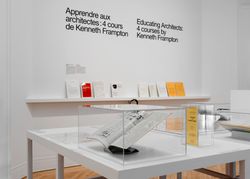
Lors de la réforme de l’enseignement dans les écoles d’architecture américaines durant les années 1970, Kenneth Frampton a joué un rôle de premier plan dans la transformation du programme de la Graduate School of Architecture Planning de Columbia University. Il a notamment créé et enseigné les trois cours de base du programme: le séminaire théorique «Comparative Critical(...)
Lors de la réforme de l’enseignement dans les écoles d’architecture américaines durant les années 1970, Kenneth Frampton a joué un rôle de premier plan dans la transformation du programme de la Graduate School of Architecture Planning de Columbia University. Il a notamment créé et enseigné les trois cours de base du programme: le séminaire théorique «Comparative Critical(...)
Localisation:
Salle octogonale Mot(s)-clé(s):
Kenneth Frampton, Columbia, Princeton, teaching, GSAPP
Salle octogonale Mot(s)-clé(s):
Kenneth Frampton, Columbia, Princeton, teaching, GSAPP
Date:
31 mai 2017 au 24 septembre 2017
31 mai 2017 au 24 septembre 2017
Titre:
Apprendre aux architectes : quatre cours de Kenneth Frampton
Actions:
Description:
Lors de la réforme de l’enseignement dans les écoles d’architecture américaines durant les années 1970, Kenneth Frampton a joué un rôle de premier plan dans la transformation du programme de la Graduate School of Architecture Planning de Columbia University. Il a notamment créé et enseigné les trois cours de base du programme: le séminaire théorique «Comparative Critical(...)
Apprendre aux architectes : quatre cours de Kenneth Frampton
Actions:
Description:
Lors de la réforme de l’enseignement dans les écoles d’architecture américaines durant les années 1970, Kenneth Frampton a joué un rôle de premier plan dans la transformation du programme de la Graduate School of Architecture Planning de Columbia University. Il a notamment créé et enseigné les trois cours de base du programme: le séminaire théorique «Comparative Critical(...)
Classification:
expositions
expositions
Date:
31 mai 2017 au
24 septembre 2017
31 mai 2017 au
24 septembre 2017
Localisation:
Salle octogonale Mot(s)-clé(s):
Kenneth Frampton, Columbia, Princeton, teaching, GSAPP
Salle octogonale Mot(s)-clé(s):
Kenneth Frampton, Columbia, Princeton, teaching, GSAPP
Classification:
photographies
photographies
Actions:
Numéro de référence:
PH1980:0048.02:012
Description:
- Suzanne K. Williamson indicates that this photograph shows the western walls and a tower as well as structures "M" and "N" of the Crusader Castle in Marqab, Ottoman Empire (now Syria) (Oct. 1986). Further research should include verification of this information and identification of the source(s) from which it was obtained. The cardinal point indicated in the title, also provided by Williamson, is presumed to be correct.
PH1980:0048.02:012
Description:
- Suzanne K. Williamson indicates that this photograph shows the western walls and a tower as well as structures "M" and "N" of the Crusader Castle in Marqab, Ottoman Empire (now Syria) (Oct. 1986). Further research should include verification of this information and identification of the source(s) from which it was obtained. The cardinal point indicated in the title, also provided by Williamson, is presumed to be correct.
Personnes et institutions:
Sujet:
architecture, militaire
architecture, militaire
Date:
1859-1860
1859-1860
Titre:
View of the ruins of the Crusader Castle showing the western walls, Marqab, Ottoman Empire (now in Syria)
Actions:
PH1980:0048.02:012
Description:
- Suzanne K. Williamson indicates that this photograph shows the western walls and a tower as well as structures "M" and "N" of the Crusader Castle in Marqab, Ottoman Empire (now Syria) (Oct. 1986). Further research should include verification of this information and identification of the source(s) from which it was obtained. The cardinal point indicated in the title, also provided by Williamson, is presumed to be correct.
View of the ruins of the Crusader Castle showing the western walls, Marqab, Ottoman Empire (now in Syria)
Actions:
PH1980:0048.02:012
Description:
- Suzanne K. Williamson indicates that this photograph shows the western walls and a tower as well as structures "M" and "N" of the Crusader Castle in Marqab, Ottoman Empire (now Syria) (Oct. 1986). Further research should include verification of this information and identification of the source(s) from which it was obtained. The cardinal point indicated in the title, also provided by Williamson, is presumed to be correct.
Classification:
photographies
photographies
Date:
1859-1860
1859-1860
Personnes et institutions:
Sujet:
architecture, militaire
architecture, militaire
Classification:
livres
livres
Actions:
Numéro de référence:
DR1974:0002:039
Description:
- One of two volumes of a history of Tuscan civil and military architecture to 1400, this publication includes several chapters on major cities such as Florence and Pisa with accounts of their important buildings, as well as discussions of many of the smaller towns in Tuscany. The text is accompanied by photomechanical illustrations, mostly sketches of scenes from bas-reliefs and manuscripts, but also including some illustrations of built structures.
DR1974:0002:039
Description:
- One of two volumes of a history of Tuscan civil and military architecture to 1400, this publication includes several chapters on major cities such as Florence and Pisa with accounts of their important buildings, as well as discussions of many of the smaller towns in Tuscany. The text is accompanied by photomechanical illustrations, mostly sketches of scenes from bas-reliefs and manuscripts, but also including some illustrations of built structures.
Personnes et institutions:
Sujet:
architecture, militaire
architecture, militaire
Date:
printed 1874
printed 1874
Titre:
LETTRES SUR LA TOSCANE / EN 1400 / ARCHITECTURE CIVILE ET MILITAIRE / PAR / M. GEORGES ROHAULT DE FLEURY / MEMBRE DES ACADÉMIES DES BEAUX-ARTS DE FLORENCE ET DE PISE / TOME Ier
Actions:
DR1974:0002:039
Description:
- One of two volumes of a history of Tuscan civil and military architecture to 1400, this publication includes several chapters on major cities such as Florence and Pisa with accounts of their important buildings, as well as discussions of many of the smaller towns in Tuscany. The text is accompanied by photomechanical illustrations, mostly sketches of scenes from bas-reliefs and manuscripts, but also including some illustrations of built structures.
LETTRES SUR LA TOSCANE / EN 1400 / ARCHITECTURE CIVILE ET MILITAIRE / PAR / M. GEORGES ROHAULT DE FLEURY / MEMBRE DES ACADÉMIES DES BEAUX-ARTS DE FLORENCE ET DE PISE / TOME Ier
Actions:
DR1974:0002:039
Description:
- One of two volumes of a history of Tuscan civil and military architecture to 1400, this publication includes several chapters on major cities such as Florence and Pisa with accounts of their important buildings, as well as discussions of many of the smaller towns in Tuscany. The text is accompanied by photomechanical illustrations, mostly sketches of scenes from bas-reliefs and manuscripts, but also including some illustrations of built structures.
Classification:
livres
livres
Date:
printed 1874
printed 1874
Personnes et institutions:
Sujet:
architecture, militaire
architecture, militaire


