


6925 Résultats
Classification:
expositions
expositions
Actions:
Description:
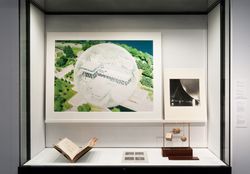
La bulle constitue une merveille de tension superficielle. Dans son interprétation architecturale, elle peut être comprise comme une prouesse d’ingénierie ou comme la métaphore d’un environnement hermétiquement clos. En ce sens, la bulle apparaît, selon l’architecte Cedric Price, « quelles qu’en soient la forme ou la taille », comme un puissant symbole du futur, ou(...)
La bulle constitue une merveille de tension superficielle. Dans son interprétation architecturale, elle peut être comprise comme une prouesse d’ingénierie ou comme la métaphore d’un environnement hermétiquement clos. En ce sens, la bulle apparaît, selon l’architecte Cedric Price, « quelles qu’en soient la forme ou la taille », comme un puissant symbole du futur, ou(...)
Localisation:
Vitrines
Vitrines
Date:
26 novembre 2009 au 17 janvier 2010
26 novembre 2009 au 17 janvier 2010
Titre:
Sur les traces de... la bulle
Actions:
Description:
La bulle constitue une merveille de tension superficielle. Dans son interprétation architecturale, elle peut être comprise comme une prouesse d’ingénierie ou comme la métaphore d’un environnement hermétiquement clos. En ce sens, la bulle apparaît, selon l’architecte Cedric Price, « quelles qu’en soient la forme ou la taille », comme un puissant symbole du futur, ou(...)
Sur les traces de... la bulle
Actions:
Description:
La bulle constitue une merveille de tension superficielle. Dans son interprétation architecturale, elle peut être comprise comme une prouesse d’ingénierie ou comme la métaphore d’un environnement hermétiquement clos. En ce sens, la bulle apparaît, selon l’architecte Cedric Price, « quelles qu’en soient la forme ou la taille », comme un puissant symbole du futur, ou(...)
Classification:
expositions
expositions
Date:
26 novembre 2009 au
17 janvier 2010
26 novembre 2009 au
17 janvier 2010
Localisation:
Vitrines
Vitrines
Classification:
archives
Niveau de description archivistique:
Fonds
archives
Niveau de description archivistique:
Fonds
Numéro de référence:
AP198
Résumé:
The Kivi Sotamaa OCEAN North project records, 1997-2000, consist of born-digital files, drawings, photographs, and physical models that document two projects by the OCEAN North collective: Jyväskylä Music and Arts Centre (competition, 1997) and Tölöö Football Stadium (competition, 1997). The archive also includes born-digital reference materials on 14 projects from the collective, including the two projects mentioned above.
AP198
Résumé:
The Kivi Sotamaa OCEAN North project records, 1997-2000, consist of born-digital files, drawings, photographs, and physical models that document two projects by the OCEAN North collective: Jyväskylä Music and Arts Centre (competition, 1997) and Tölöö Football Stadium (competition, 1997). The archive also includes born-digital reference materials on 14 projects from the collective, including the two projects mentioned above.
Personnes et institutions:
Date:
1997-2000
1997-2000
Titre:
Documents d’archives de Kivi Sotamaa pour les projets de OCEAN North
Actions:
AP198
Résumé:
The Kivi Sotamaa OCEAN North project records, 1997-2000, consist of born-digital files, drawings, photographs, and physical models that document two projects by the OCEAN North collective: Jyväskylä Music and Arts Centre (competition, 1997) and Tölöö Football Stadium (competition, 1997). The archive also includes born-digital reference materials on 14 projects from the collective, including the two projects mentioned above.
Documents d’archives de Kivi Sotamaa pour les projets de OCEAN North
Actions:
AP198
Résumé:
The Kivi Sotamaa OCEAN North project records, 1997-2000, consist of born-digital files, drawings, photographs, and physical models that document two projects by the OCEAN North collective: Jyväskylä Music and Arts Centre (competition, 1997) and Tölöö Football Stadium (competition, 1997). The archive also includes born-digital reference materials on 14 projects from the collective, including the two projects mentioned above.
Classification:
archives
Niveau de description archivistique:
Fonds
archives
Niveau de description archivistique:
Fonds
Date:
1997-2000
1997-2000
Personnes et institutions:
Niveau de description archivistique:
Projet
Projet
Numéro de référence:
AP056.S1.1994.PR07
Description:
This project series documents the offices of Gluskin Sheff and Associates Inc. in Toronto from 1994-1995. The office identified the project number as 9416. Located on the 46th floor of BCE Place on Wellington Street, the offices were shaped like two conjoined octagons and were conceived as a mix of open and closed office spaces. Beech wood, panoramic views and curved lines created serenity in an attempt to offset the high-energy of daily investment activity. Similarly, custom-curved furnishings such as the trading desk added organic forms to the office environment. Sandblasted glass screens were used throughout the office to create transparency, while clear glass created openness in enclosed spaces.[1] This project was led by Marianne McKenna and Bruce Kuwabara. The project is recorded through drawings, textual records and a project model dating from 1994-1995. The drawings are mostly originals and include sketches, model and presentation drawings, plans, elevations, perspectives, drawings of custom furnishings and construction drawings. The textual records consist of a staffing schedule. [1]Bruce Kuwabara et al., Kuwabara, Payne, McKenna, Blumberg (Gloucester, MA: Rockport Publ., 1998), 120-127.
AP056.S1.1994.PR07
Description:
This project series documents the offices of Gluskin Sheff and Associates Inc. in Toronto from 1994-1995. The office identified the project number as 9416. Located on the 46th floor of BCE Place on Wellington Street, the offices were shaped like two conjoined octagons and were conceived as a mix of open and closed office spaces. Beech wood, panoramic views and curved lines created serenity in an attempt to offset the high-energy of daily investment activity. Similarly, custom-curved furnishings such as the trading desk added organic forms to the office environment. Sandblasted glass screens were used throughout the office to create transparency, while clear glass created openness in enclosed spaces.[1] This project was led by Marianne McKenna and Bruce Kuwabara. The project is recorded through drawings, textual records and a project model dating from 1994-1995. The drawings are mostly originals and include sketches, model and presentation drawings, plans, elevations, perspectives, drawings of custom furnishings and construction drawings. The textual records consist of a staffing schedule. [1]Bruce Kuwabara et al., Kuwabara, Payne, McKenna, Blumberg (Gloucester, MA: Rockport Publ., 1998), 120-127.
Personnes et institutions:
Date:
1994-1995
1994-1995
Titre:
Gluskin Sheff and Associates Inc., Toronto (1994-1995)
Actions:
AP056.S1.1994.PR07
Description:
This project series documents the offices of Gluskin Sheff and Associates Inc. in Toronto from 1994-1995. The office identified the project number as 9416. Located on the 46th floor of BCE Place on Wellington Street, the offices were shaped like two conjoined octagons and were conceived as a mix of open and closed office spaces. Beech wood, panoramic views and curved lines created serenity in an attempt to offset the high-energy of daily investment activity. Similarly, custom-curved furnishings such as the trading desk added organic forms to the office environment. Sandblasted glass screens were used throughout the office to create transparency, while clear glass created openness in enclosed spaces.[1] This project was led by Marianne McKenna and Bruce Kuwabara. The project is recorded through drawings, textual records and a project model dating from 1994-1995. The drawings are mostly originals and include sketches, model and presentation drawings, plans, elevations, perspectives, drawings of custom furnishings and construction drawings. The textual records consist of a staffing schedule. [1]Bruce Kuwabara et al., Kuwabara, Payne, McKenna, Blumberg (Gloucester, MA: Rockport Publ., 1998), 120-127.
Gluskin Sheff and Associates Inc., Toronto (1994-1995)
Actions:
AP056.S1.1994.PR07
Description:
This project series documents the offices of Gluskin Sheff and Associates Inc. in Toronto from 1994-1995. The office identified the project number as 9416. Located on the 46th floor of BCE Place on Wellington Street, the offices were shaped like two conjoined octagons and were conceived as a mix of open and closed office spaces. Beech wood, panoramic views and curved lines created serenity in an attempt to offset the high-energy of daily investment activity. Similarly, custom-curved furnishings such as the trading desk added organic forms to the office environment. Sandblasted glass screens were used throughout the office to create transparency, while clear glass created openness in enclosed spaces.[1] This project was led by Marianne McKenna and Bruce Kuwabara. The project is recorded through drawings, textual records and a project model dating from 1994-1995. The drawings are mostly originals and include sketches, model and presentation drawings, plans, elevations, perspectives, drawings of custom furnishings and construction drawings. The textual records consist of a staffing schedule. [1]Bruce Kuwabara et al., Kuwabara, Payne, McKenna, Blumberg (Gloucester, MA: Rockport Publ., 1998), 120-127.
Niveau de description archivistique:
Project
Project
Date:
1994-1995
1994-1995
Personnes et institutions:
Niveau de description archivistique:
Projet
Projet
Numéro de référence:
AP207.S1.1973.PR03
Description:
The project series documents "Spazio Vuoto Riservato A Gianni Pettena", an installation that consists of a banner with the words "Spazio Vuoto Riservato A Gianni Pettena". The first version of the banner dates from 1973, but it was initially used for the exhibition "Contribution" in Rennes in 2008, where Pettena, one of the artists invited to carry out interventions in symbolic locations around the city, chose to install his banner inside the market. The banner was used also in Pettena's solo exhibition at the Galerie Mercier & Associés, in Paris in 2011, and again at the Spazio MEGA in Milan, in 2017. "Pettena not only introduced the artistic intervention into an environment that was alien to it, but extended the provocation to the point of laying claim to absolute freedom for the artist." [1] The project series contains a sign with the words "Spazio Vuoto Riservato A Gianni Pettena", possibly the sign designed in 1973, photographs of the second edition in Rennes, photographs of the third edition of the installation at the Galerie Mercier et Associés, and photographs of the fourth edition of the installation at the Spazio MEGA. Source: [1] Gianni Pettena website, https://www.giannipettena.it/italiano/opere-1/inst-empty-space-2008/ (last accessed 12 November 2019).
AP207.S1.1973.PR03
Description:
The project series documents "Spazio Vuoto Riservato A Gianni Pettena", an installation that consists of a banner with the words "Spazio Vuoto Riservato A Gianni Pettena". The first version of the banner dates from 1973, but it was initially used for the exhibition "Contribution" in Rennes in 2008, where Pettena, one of the artists invited to carry out interventions in symbolic locations around the city, chose to install his banner inside the market. The banner was used also in Pettena's solo exhibition at the Galerie Mercier & Associés, in Paris in 2011, and again at the Spazio MEGA in Milan, in 2017. "Pettena not only introduced the artistic intervention into an environment that was alien to it, but extended the provocation to the point of laying claim to absolute freedom for the artist." [1] The project series contains a sign with the words "Spazio Vuoto Riservato A Gianni Pettena", possibly the sign designed in 1973, photographs of the second edition in Rennes, photographs of the third edition of the installation at the Galerie Mercier et Associés, and photographs of the fourth edition of the installation at the Spazio MEGA. Source: [1] Gianni Pettena website, https://www.giannipettena.it/italiano/opere-1/inst-empty-space-2008/ (last accessed 12 November 2019).
Personnes et institutions:
Date:
1973-2017
1973-2017
Titre:
Spazio Vuoto Riservato A Gianni Pettena [Empty Space Reserved for Gianni Pettena] (1973)
Actions:
AP207.S1.1973.PR03
Description:
The project series documents "Spazio Vuoto Riservato A Gianni Pettena", an installation that consists of a banner with the words "Spazio Vuoto Riservato A Gianni Pettena". The first version of the banner dates from 1973, but it was initially used for the exhibition "Contribution" in Rennes in 2008, where Pettena, one of the artists invited to carry out interventions in symbolic locations around the city, chose to install his banner inside the market. The banner was used also in Pettena's solo exhibition at the Galerie Mercier & Associés, in Paris in 2011, and again at the Spazio MEGA in Milan, in 2017. "Pettena not only introduced the artistic intervention into an environment that was alien to it, but extended the provocation to the point of laying claim to absolute freedom for the artist." [1] The project series contains a sign with the words "Spazio Vuoto Riservato A Gianni Pettena", possibly the sign designed in 1973, photographs of the second edition in Rennes, photographs of the third edition of the installation at the Galerie Mercier et Associés, and photographs of the fourth edition of the installation at the Spazio MEGA. Source: [1] Gianni Pettena website, https://www.giannipettena.it/italiano/opere-1/inst-empty-space-2008/ (last accessed 12 November 2019).
Spazio Vuoto Riservato A Gianni Pettena [Empty Space Reserved for Gianni Pettena] (1973)
Actions:
AP207.S1.1973.PR03
Description:
The project series documents "Spazio Vuoto Riservato A Gianni Pettena", an installation that consists of a banner with the words "Spazio Vuoto Riservato A Gianni Pettena". The first version of the banner dates from 1973, but it was initially used for the exhibition "Contribution" in Rennes in 2008, where Pettena, one of the artists invited to carry out interventions in symbolic locations around the city, chose to install his banner inside the market. The banner was used also in Pettena's solo exhibition at the Galerie Mercier & Associés, in Paris in 2011, and again at the Spazio MEGA in Milan, in 2017. "Pettena not only introduced the artistic intervention into an environment that was alien to it, but extended the provocation to the point of laying claim to absolute freedom for the artist." [1] The project series contains a sign with the words "Spazio Vuoto Riservato A Gianni Pettena", possibly the sign designed in 1973, photographs of the second edition in Rennes, photographs of the third edition of the installation at the Galerie Mercier et Associés, and photographs of the fourth edition of the installation at the Spazio MEGA. Source: [1] Gianni Pettena website, https://www.giannipettena.it/italiano/opere-1/inst-empty-space-2008/ (last accessed 12 November 2019).
Niveau de description archivistique:
Project
Project
Date:
1973-2017
1973-2017
Personnes et institutions:
Niveau de description archivistique:
Projet
Projet
Numéro de référence:
AP207.S1.2014.PR01
Description:
The project series documents the installation "Architettura "Correta"" designed by Pettena for the exhibition "Soleil Politique" at the Museion in Bolzano, in 2014. The project was a design for a new museum entrance. The installation was made of three glass walls on which were drawn facade details of three historical buildings of the city. The central glass wall represents the entrance from the Piacentini square in Bolzano, with, at its left, a ‘serlian’ arch, and, at its right, a detail of the portico of a ‘Piazza d’Italia’ by Giorgio de Chirico. The idea was to "connect the museum to the city’s history, an architectural element was chosen, one which, in addition to favoring the idea of ‘entrance’ to the exhibit also permitted a view both of the urban and the natural setting, the sky, the mountains, an environment typical of the area in which the city itself rises." [1] The project series contains a sketch and a spiral bound volume with correspondence between Pettena and Pierre Bal Blanc, curator of the exhibitions, and proposals for the installation. The project series also contains photographs of the installation, including printouts. Source: [1] Gianni Pettena website, https://www.giannipettena.it/italiano/opere-1/inst-revised-architecture-2014/ (last accessed 27 January 2020)
AP207.S1.2014.PR01
Description:
The project series documents the installation "Architettura "Correta"" designed by Pettena for the exhibition "Soleil Politique" at the Museion in Bolzano, in 2014. The project was a design for a new museum entrance. The installation was made of three glass walls on which were drawn facade details of three historical buildings of the city. The central glass wall represents the entrance from the Piacentini square in Bolzano, with, at its left, a ‘serlian’ arch, and, at its right, a detail of the portico of a ‘Piazza d’Italia’ by Giorgio de Chirico. The idea was to "connect the museum to the city’s history, an architectural element was chosen, one which, in addition to favoring the idea of ‘entrance’ to the exhibit also permitted a view both of the urban and the natural setting, the sky, the mountains, an environment typical of the area in which the city itself rises." [1] The project series contains a sketch and a spiral bound volume with correspondence between Pettena and Pierre Bal Blanc, curator of the exhibitions, and proposals for the installation. The project series also contains photographs of the installation, including printouts. Source: [1] Gianni Pettena website, https://www.giannipettena.it/italiano/opere-1/inst-revised-architecture-2014/ (last accessed 27 January 2020)
Personnes et institutions:
Date:
2014-2015
2014-2015
Titre:
Architettura "Correta" ["Revised" Architecture] (2014)
Actions:
AP207.S1.2014.PR01
Description:
The project series documents the installation "Architettura "Correta"" designed by Pettena for the exhibition "Soleil Politique" at the Museion in Bolzano, in 2014. The project was a design for a new museum entrance. The installation was made of three glass walls on which were drawn facade details of three historical buildings of the city. The central glass wall represents the entrance from the Piacentini square in Bolzano, with, at its left, a ‘serlian’ arch, and, at its right, a detail of the portico of a ‘Piazza d’Italia’ by Giorgio de Chirico. The idea was to "connect the museum to the city’s history, an architectural element was chosen, one which, in addition to favoring the idea of ‘entrance’ to the exhibit also permitted a view both of the urban and the natural setting, the sky, the mountains, an environment typical of the area in which the city itself rises." [1] The project series contains a sketch and a spiral bound volume with correspondence between Pettena and Pierre Bal Blanc, curator of the exhibitions, and proposals for the installation. The project series also contains photographs of the installation, including printouts. Source: [1] Gianni Pettena website, https://www.giannipettena.it/italiano/opere-1/inst-revised-architecture-2014/ (last accessed 27 January 2020)
Architettura "Correta" ["Revised" Architecture] (2014)
Actions:
AP207.S1.2014.PR01
Description:
The project series documents the installation "Architettura "Correta"" designed by Pettena for the exhibition "Soleil Politique" at the Museion in Bolzano, in 2014. The project was a design for a new museum entrance. The installation was made of three glass walls on which were drawn facade details of three historical buildings of the city. The central glass wall represents the entrance from the Piacentini square in Bolzano, with, at its left, a ‘serlian’ arch, and, at its right, a detail of the portico of a ‘Piazza d’Italia’ by Giorgio de Chirico. The idea was to "connect the museum to the city’s history, an architectural element was chosen, one which, in addition to favoring the idea of ‘entrance’ to the exhibit also permitted a view both of the urban and the natural setting, the sky, the mountains, an environment typical of the area in which the city itself rises." [1] The project series contains a sketch and a spiral bound volume with correspondence between Pettena and Pierre Bal Blanc, curator of the exhibitions, and proposals for the installation. The project series also contains photographs of the installation, including printouts. Source: [1] Gianni Pettena website, https://www.giannipettena.it/italiano/opere-1/inst-revised-architecture-2014/ (last accessed 27 January 2020)
Niveau de description archivistique:
Project
Project
Date:
2014-2015
2014-2015
Personnes et institutions:
Niveau de description archivistique:
Sous-série
Sous-série
Titre:
Drawings and scripts
Drawings and scripts
Numéro de référence:
AP165.S7.SS1
Description:
The Drawings and scripts sub-series, 1980 – 2000, consists of 2538 digital files (2 GB) that document Hoberman’s work in AutoCAD to create his patented transformable designs. The majority of records are AutoCAD drawing files and AutoLISP scripts, dating from the mid to late 1990s. Drawings in the sub-series comprise a variety of Hoberman’s expanding installations, toy products and architectural structures, as well as a series of industrial patents and production drawings that detail the manufacturing and assembly of parts. AutoLISP scripts included in the sub-series were written and used by Hoberman for customized command within the AutoCAD environment as the in-program language. These scripts allowed Hoberman to solve the complex mathematical and geometrical calculations necessary to control the design and engineering of each component of his structures. Notable projects include: Iris Dome at Expo 2000 World's Fair, Hanover (2000); Expanding Hypar at California Science Center, Los Angeles (1998); Expanding Helicoid at Inventor's Hall of Fame, Akron (1998); Expanding Fabric Dome at Centre Georges Pompidou, Paris (1997); Iris Dome at Museum of Modern Art, New York (1994); Geodesic Sphere at Technorama der Shweiz, Winterthur (1993); and Expanding Sphere at Liberty Science Center, Jersey City (1991).
AP165.S7.SS1
Description:
The Drawings and scripts sub-series, 1980 – 2000, consists of 2538 digital files (2 GB) that document Hoberman’s work in AutoCAD to create his patented transformable designs. The majority of records are AutoCAD drawing files and AutoLISP scripts, dating from the mid to late 1990s. Drawings in the sub-series comprise a variety of Hoberman’s expanding installations, toy products and architectural structures, as well as a series of industrial patents and production drawings that detail the manufacturing and assembly of parts. AutoLISP scripts included in the sub-series were written and used by Hoberman for customized command within the AutoCAD environment as the in-program language. These scripts allowed Hoberman to solve the complex mathematical and geometrical calculations necessary to control the design and engineering of each component of his structures. Notable projects include: Iris Dome at Expo 2000 World's Fair, Hanover (2000); Expanding Hypar at California Science Center, Los Angeles (1998); Expanding Helicoid at Inventor's Hall of Fame, Akron (1998); Expanding Fabric Dome at Centre Georges Pompidou, Paris (1997); Iris Dome at Museum of Modern Art, New York (1994); Geodesic Sphere at Technorama der Shweiz, Winterthur (1993); and Expanding Sphere at Liberty Science Center, Jersey City (1991).
Personnes et institutions:
Date:
1980 - 2000
1980 - 2000
Titre:
Drawings and scripts
Actions:
AP165.S7.SS1
Description:
The Drawings and scripts sub-series, 1980 – 2000, consists of 2538 digital files (2 GB) that document Hoberman’s work in AutoCAD to create his patented transformable designs. The majority of records are AutoCAD drawing files and AutoLISP scripts, dating from the mid to late 1990s. Drawings in the sub-series comprise a variety of Hoberman’s expanding installations, toy products and architectural structures, as well as a series of industrial patents and production drawings that detail the manufacturing and assembly of parts. AutoLISP scripts included in the sub-series were written and used by Hoberman for customized command within the AutoCAD environment as the in-program language. These scripts allowed Hoberman to solve the complex mathematical and geometrical calculations necessary to control the design and engineering of each component of his structures. Notable projects include: Iris Dome at Expo 2000 World's Fair, Hanover (2000); Expanding Hypar at California Science Center, Los Angeles (1998); Expanding Helicoid at Inventor's Hall of Fame, Akron (1998); Expanding Fabric Dome at Centre Georges Pompidou, Paris (1997); Iris Dome at Museum of Modern Art, New York (1994); Geodesic Sphere at Technorama der Shweiz, Winterthur (1993); and Expanding Sphere at Liberty Science Center, Jersey City (1991).
Drawings and scripts
Actions:
AP165.S7.SS1
Description:
The Drawings and scripts sub-series, 1980 – 2000, consists of 2538 digital files (2 GB) that document Hoberman’s work in AutoCAD to create his patented transformable designs. The majority of records are AutoCAD drawing files and AutoLISP scripts, dating from the mid to late 1990s. Drawings in the sub-series comprise a variety of Hoberman’s expanding installations, toy products and architectural structures, as well as a series of industrial patents and production drawings that detail the manufacturing and assembly of parts. AutoLISP scripts included in the sub-series were written and used by Hoberman for customized command within the AutoCAD environment as the in-program language. These scripts allowed Hoberman to solve the complex mathematical and geometrical calculations necessary to control the design and engineering of each component of his structures. Notable projects include: Iris Dome at Expo 2000 World's Fair, Hanover (2000); Expanding Hypar at California Science Center, Los Angeles (1998); Expanding Helicoid at Inventor's Hall of Fame, Akron (1998); Expanding Fabric Dome at Centre Georges Pompidou, Paris (1997); Iris Dome at Museum of Modern Art, New York (1994); Geodesic Sphere at Technorama der Shweiz, Winterthur (1993); and Expanding Sphere at Liberty Science Center, Jersey City (1991).
Niveau de description archivistique:
Sub-series 1
Sub-series 1
Date:
1980 - 2000
1980 - 2000
Personnes et institutions:
Classification:
articles
articles
Dossier:
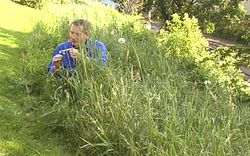
Notre client, la planète
Notre client, la planète
Classification:
événements
événements
Titre:
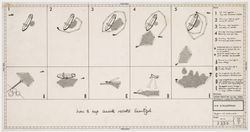
Histoires de l’environnement
Histoires de l’environnement
Actions:
Description:
Pour débuter « Architecture et/pour l’environnement », le troisième Projet de Recherche Multidisciplinaire du CCA financé par la Andrew W. Mellon Foundation, Daniel Abramson et Imre Szeman présenteront deux concepts clés pour reconcevoir l’environnement dans l’histoire de l’architecture. Daniel Abramson, historien de l’architecture, discutera de « l’obsolescence » comme(...)
Pour débuter « Architecture et/pour l’environnement », le troisième Projet de Recherche Multidisciplinaire du CCA financé par la Andrew W. Mellon Foundation, Daniel Abramson et Imre Szeman présenteront deux concepts clés pour reconcevoir l’environnement dans l’histoire de l’architecture. Daniel Abramson, historien de l’architecture, discutera de « l’obsolescence » comme(...)
Localisation:
Théâtre Paul-Demarais
Théâtre Paul-Demarais
Date:
15 décembre 2016, 18h
15 décembre 2016, 18h
Titre:
Histoires de l’environnement
Actions:
Description:
Pour débuter « Architecture et/pour l’environnement », le troisième Projet de Recherche Multidisciplinaire du CCA financé par la Andrew W. Mellon Foundation, Daniel Abramson et Imre Szeman présenteront deux concepts clés pour reconcevoir l’environnement dans l’histoire de l’architecture. Daniel Abramson, historien de l’architecture, discutera de « l’obsolescence » comme(...)
Histoires de l’environnement
Actions:
Description:
Pour débuter « Architecture et/pour l’environnement », le troisième Projet de Recherche Multidisciplinaire du CCA financé par la Andrew W. Mellon Foundation, Daniel Abramson et Imre Szeman présenteront deux concepts clés pour reconcevoir l’environnement dans l’histoire de l’architecture. Daniel Abramson, historien de l’architecture, discutera de « l’obsolescence » comme(...)
Classification:
événements
événements
Date:
15 décembre 2016
18h
15 décembre 2016
18h
Localisation:
Théâtre Paul-Demarais
Théâtre Paul-Demarais
Classification:
documents textuels
documents textuels
Numéro de référence:
AP206.S2.074
Description:
File was originally housed in a binder along with content arranged in AP206.S2.072 and AP206.S2.073. This file includes the following papers: "Le Corbusier's Chandigarh: Architecture in the Cultural Context," symposium talk, 1990 "Why not Ruralisation," paper outline "Growing Problems of Cities," book review of "The Politics of Urban Redevelopment: A Study of Old Delhi by Ajay K. Mehra," 1991 "Housing as Consumer Commodity," book review of "Housing and Urbanisation: A Study of India by Cedric Pugh," 1991 "Air Pollution and Conservation of the Environment," speech
AP206.S2.074
Description:
File was originally housed in a binder along with content arranged in AP206.S2.072 and AP206.S2.073. This file includes the following papers: "Le Corbusier's Chandigarh: Architecture in the Cultural Context," symposium talk, 1990 "Why not Ruralisation," paper outline "Growing Problems of Cities," book review of "The Politics of Urban Redevelopment: A Study of Old Delhi by Ajay K. Mehra," 1991 "Housing as Consumer Commodity," book review of "Housing and Urbanisation: A Study of India by Cedric Pugh," 1991 "Air Pollution and Conservation of the Environment," speech
Personnes et institutions:
Date:
1986-1998
1986-1998
Titre:
Published and unpublished papers (folder 3 of 3)
Actions:
AP206.S2.074
Description:
File was originally housed in a binder along with content arranged in AP206.S2.072 and AP206.S2.073. This file includes the following papers: "Le Corbusier's Chandigarh: Architecture in the Cultural Context," symposium talk, 1990 "Why not Ruralisation," paper outline "Growing Problems of Cities," book review of "The Politics of Urban Redevelopment: A Study of Old Delhi by Ajay K. Mehra," 1991 "Housing as Consumer Commodity," book review of "Housing and Urbanisation: A Study of India by Cedric Pugh," 1991 "Air Pollution and Conservation of the Environment," speech
Published and unpublished papers (folder 3 of 3)
Actions:
AP206.S2.074
Description:
File was originally housed in a binder along with content arranged in AP206.S2.072 and AP206.S2.073. This file includes the following papers: "Le Corbusier's Chandigarh: Architecture in the Cultural Context," symposium talk, 1990 "Why not Ruralisation," paper outline "Growing Problems of Cities," book review of "The Politics of Urban Redevelopment: A Study of Old Delhi by Ajay K. Mehra," 1991 "Housing as Consumer Commodity," book review of "Housing and Urbanisation: A Study of India by Cedric Pugh," 1991 "Air Pollution and Conservation of the Environment," speech
Classification:
documents textuels
documents textuels
Date:
1986-1998
1986-1998
Personnes et institutions:
Classification:
expositions
expositions
Actions:
Description:
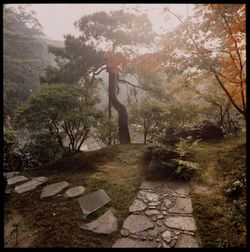
Notes de site examine les échanges d’Arthur Erickson avec les gens, les lieux, les paysages, les bâtiments, les rituels et les idées lors de ses premiers voyages en Europe et en Afrique du Nord entre 1950 et 1952, puis en Asie en 1961. Informé par une compréhension instinctive du site et de l’environnement, Erickson était convaincu que l’architecture devait être vécue(...)
Notes de site examine les échanges d’Arthur Erickson avec les gens, les lieux, les paysages, les bâtiments, les rituels et les idées lors de ses premiers voyages en Europe et en Afrique du Nord entre 1950 et 1952, puis en Asie en 1961. Informé par une compréhension instinctive du site et de l’environnement, Erickson était convaincu que l’architecture devait être vécue(...)
Date:
15 novembre 2024 au 30 mars 2025
15 novembre 2024 au 30 mars 2025
Titre:
Notes de site : La photographie dans les premiers carnets de voyage d'Arthur Erickson
Actions:
Description:
Notes de site examine les échanges d’Arthur Erickson avec les gens, les lieux, les paysages, les bâtiments, les rituels et les idées lors de ses premiers voyages en Europe et en Afrique du Nord entre 1950 et 1952, puis en Asie en 1961. Informé par une compréhension instinctive du site et de l’environnement, Erickson était convaincu que l’architecture devait être vécue(...)
Notes de site : La photographie dans les premiers carnets de voyage d'Arthur Erickson
Actions:
Description:
Notes de site examine les échanges d’Arthur Erickson avec les gens, les lieux, les paysages, les bâtiments, les rituels et les idées lors de ses premiers voyages en Europe et en Afrique du Nord entre 1950 et 1952, puis en Asie en 1961. Informé par une compréhension instinctive du site et de l’environnement, Erickson était convaincu que l’architecture devait être vécue(...)
Classification:
expositions
expositions
Date:
15 novembre 2024 au
30 mars 2025
15 novembre 2024 au
30 mars 2025


