


12611 Résultats
Classification:
événements
événements
Actions:
Description:
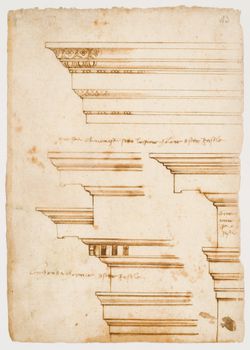
Cara Rachele, chercheure en résidence 2016, présente ses recherches: Cette conférence se penche sur l’explosion de dessins détaillés produits pendant la Renaissance. Elle établit le lien entre l’émergence, au XVIe siècle, du détail devenu un canon du dessin et l’évocation de l’antique matériel. L’évolution organique de la façon de dessiner les détails transparaît dans(...)
Cara Rachele, chercheure en résidence 2016, présente ses recherches: Cette conférence se penche sur l’explosion de dessins détaillés produits pendant la Renaissance. Elle établit le lien entre l’émergence, au XVIe siècle, du détail devenu un canon du dessin et l’évocation de l’antique matériel. L’évolution organique de la façon de dessiner les détails transparaît dans(...)
Date:
11 août 2016, 18h
11 août 2016, 18h
Titre:
Séminaire de chercheur en résidence : Cara Rachele
Actions:
Description:
Cara Rachele, chercheure en résidence 2016, présente ses recherches: Cette conférence se penche sur l’explosion de dessins détaillés produits pendant la Renaissance. Elle établit le lien entre l’émergence, au XVIe siècle, du détail devenu un canon du dessin et l’évocation de l’antique matériel. L’évolution organique de la façon de dessiner les détails transparaît dans(...)
Séminaire de chercheur en résidence : Cara Rachele
Actions:
Description:
Cara Rachele, chercheure en résidence 2016, présente ses recherches: Cette conférence se penche sur l’explosion de dessins détaillés produits pendant la Renaissance. Elle établit le lien entre l’émergence, au XVIe siècle, du détail devenu un canon du dessin et l’évocation de l’antique matériel. L’évolution organique de la façon de dessiner les détails transparaît dans(...)
Classification:
événements
événements
Date:
11 août 2016
18h
11 août 2016
18h
Classification:
recherche
recherche
Actions:
Description:
Subventions de recherche Bechtel dans la collection du CCA : Peter Coffman (Queens University); Christina Contandriopoulos (McGill University); Heather Diack (University of Toronto); Brent Epp (University of British Columbia); Jennifer Ferng (Massachusetts Institute of Technology); Nicolas Gaudreau (Concordia University, Montreal); Lauren Kroiz (Massachusetts Institute(...)
Subventions de recherche Bechtel dans la collection du CCA : Peter Coffman (Queens University); Christina Contandriopoulos (McGill University); Heather Diack (University of Toronto); Brent Epp (University of British Columbia); Jennifer Ferng (Massachusetts Institute of Technology); Nicolas Gaudreau (Concordia University, Montreal); Lauren Kroiz (Massachusetts Institute(...)
Date:
janvier 2004 au août 2004
janvier 2004 au août 2004
Titre:
Programme pour les doctorants 2004
Actions:
Description:
Subventions de recherche Bechtel dans la collection du CCA : Peter Coffman (Queens University); Christina Contandriopoulos (McGill University); Heather Diack (University of Toronto); Brent Epp (University of British Columbia); Jennifer Ferng (Massachusetts Institute of Technology); Nicolas Gaudreau (Concordia University, Montreal); Lauren Kroiz (Massachusetts Institute(...)
Programme pour les doctorants 2004
Actions:
Description:
Subventions de recherche Bechtel dans la collection du CCA : Peter Coffman (Queens University); Christina Contandriopoulos (McGill University); Heather Diack (University of Toronto); Brent Epp (University of British Columbia); Jennifer Ferng (Massachusetts Institute of Technology); Nicolas Gaudreau (Concordia University, Montreal); Lauren Kroiz (Massachusetts Institute(...)
Classification:
recherche
recherche
Date:
janvier 2004 au
août 2004
janvier 2004 au
août 2004
Classification:
événements
événements
Description:
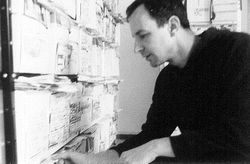
Wolfgang Ernst, titulaire de la chaire de théorie des médias à la Humboldt Universität de Berlin, présente l’archéologie des médias comme méthode de recherche et discute des concepts récents de l’archive dynamique. Il soutient la création d’un musée virtuel de l’architecture de l’ordinateur et traite du concept de ce qu’il convient d’appeler les humanités numériques, avec(...)
Wolfgang Ernst, titulaire de la chaire de théorie des médias à la Humboldt Universität de Berlin, présente l’archéologie des médias comme méthode de recherche et discute des concepts récents de l’archive dynamique. Il soutient la création d’un musée virtuel de l’architecture de l’ordinateur et traite du concept de ce qu’il convient d’appeler les humanités numériques, avec(...)
Localisation:
Théâtre Paul-Desmarais
Théâtre Paul-Desmarais
Date:
25 septembre 2014 , 18h
25 septembre 2014 , 18h
Titre:
Archéologie des médias numériques : archives, musée et sonicité
Actions:
Description:
Wolfgang Ernst, titulaire de la chaire de théorie des médias à la Humboldt Universität de Berlin, présente l’archéologie des médias comme méthode de recherche et discute des concepts récents de l’archive dynamique. Il soutient la création d’un musée virtuel de l’architecture de l’ordinateur et traite du concept de ce qu’il convient d’appeler les humanités numériques, avec(...)
Archéologie des médias numériques : archives, musée et sonicité
Actions:
Description:
Wolfgang Ernst, titulaire de la chaire de théorie des médias à la Humboldt Universität de Berlin, présente l’archéologie des médias comme méthode de recherche et discute des concepts récents de l’archive dynamique. Il soutient la création d’un musée virtuel de l’architecture de l’ordinateur et traite du concept de ce qu’il convient d’appeler les humanités numériques, avec(...)
Classification:
événements
événements
Date:
25 septembre 2014
18h
25 septembre 2014
18h
Localisation:
Théâtre Paul-Desmarais
Théâtre Paul-Desmarais
Niveau de description archivistique:
Projet
Projet
Numéro de référence:
AP046.S1.1983.PR01
Description:
This project series documents the design and construction of the Canadian Centre for Architecture, Montréal, Québec. After initially working as a consultant on the CCA warehouse project in the early 1980s, Peter Rose began designing the current CCA building in 1983. Architect, Erol Argun joined the project in 1985. The CCA building integrates the historic Shaughnessy House whose restoration ran concurrently with the CCA construction and was supervised by architect Denis St-Louis. For the realization of the Canadian Centre for Architecture, Rose worked in collaboration with the CCA’s founder and consulting architect, Phyllis Lambert and architects Erol Argun and Denis St. Louis. The CCA’s unique design and construction earned Rose a Prix d'excellence from the Ordre des architectes du Québec (1989), a National Honour Award from the American Institute of Architects (1992), a Governor General’s Award for Architecture (1992), and a Medal of Excellence from the Royal Architectural Institute of Canada (1993). The drawings in this project are largely arranged chronologically from the restoration of the Shaughnessy House to the design and construction of the CCA building. The bulk of the drawings are dated between 1985 and 1989 which correspond with the dates of construction, however there is a large number of sketches from 1983 on. Any materials which are not explicitly dated have been given the date range of the project. The textual records include minutes, correspondence with contractors, consultants and suppliers which often include discussions of design revisions, reports, architectural plan record sets, administrative files, architectural change orders, and files specific to the Shaughnessy House restoration. The majority of the records follow the original file structure, the largest two categories being Consultants, and Builder / Construction manager. There are also approximately 1.32 l.m. of architectural and shop drawings which were kept with the textual records. The photographic material includes mainly research and reference photographs and documents the CCA construction phases as well as a few photographs that document the Shaughnessy House restoration. The models are presentation and development models for the CCA building. These models provide views of Shaughnessy House, the entrance pavilion to the CCA, the galleries, library, Alcan Scholar’s wing, the Paul Desmarais Theatre, mock-ups of the CCA’s handrails and exterior wall facades as well as lamp bases for the Shaughnessy House. In order to better navigate the materials it is important to note that when referring exclusively to the CCA floor plans or to floor plans which show both the CCA and Shaughnessy House, Rose often uses the term “level” with the height in feet above sea level, for example, level 149’ 9” is the main floor. However, architectural plans exclusively for Shaughnessy House often use floor numbers. It should also be noted that all plans for the Paul Desmarais Theatre are labeled as auditorium.
AP046.S1.1983.PR01
Description:
This project series documents the design and construction of the Canadian Centre for Architecture, Montréal, Québec. After initially working as a consultant on the CCA warehouse project in the early 1980s, Peter Rose began designing the current CCA building in 1983. Architect, Erol Argun joined the project in 1985. The CCA building integrates the historic Shaughnessy House whose restoration ran concurrently with the CCA construction and was supervised by architect Denis St-Louis. For the realization of the Canadian Centre for Architecture, Rose worked in collaboration with the CCA’s founder and consulting architect, Phyllis Lambert and architects Erol Argun and Denis St. Louis. The CCA’s unique design and construction earned Rose a Prix d'excellence from the Ordre des architectes du Québec (1989), a National Honour Award from the American Institute of Architects (1992), a Governor General’s Award for Architecture (1992), and a Medal of Excellence from the Royal Architectural Institute of Canada (1993). The drawings in this project are largely arranged chronologically from the restoration of the Shaughnessy House to the design and construction of the CCA building. The bulk of the drawings are dated between 1985 and 1989 which correspond with the dates of construction, however there is a large number of sketches from 1983 on. Any materials which are not explicitly dated have been given the date range of the project. The textual records include minutes, correspondence with contractors, consultants and suppliers which often include discussions of design revisions, reports, architectural plan record sets, administrative files, architectural change orders, and files specific to the Shaughnessy House restoration. The majority of the records follow the original file structure, the largest two categories being Consultants, and Builder / Construction manager. There are also approximately 1.32 l.m. of architectural and shop drawings which were kept with the textual records. The photographic material includes mainly research and reference photographs and documents the CCA construction phases as well as a few photographs that document the Shaughnessy House restoration. The models are presentation and development models for the CCA building. These models provide views of Shaughnessy House, the entrance pavilion to the CCA, the galleries, library, Alcan Scholar’s wing, the Paul Desmarais Theatre, mock-ups of the CCA’s handrails and exterior wall facades as well as lamp bases for the Shaughnessy House. In order to better navigate the materials it is important to note that when referring exclusively to the CCA floor plans or to floor plans which show both the CCA and Shaughnessy House, Rose often uses the term “level” with the height in feet above sea level, for example, level 149’ 9” is the main floor. However, architectural plans exclusively for Shaughnessy House often use floor numbers. It should also be noted that all plans for the Paul Desmarais Theatre are labeled as auditorium.
Personnes et institutions:
Date:
1983-1989
1983-1989
Titre:
Canadian Centre for Architecture, Montréal, Québec
Actions:
AP046.S1.1983.PR01
Description:
This project series documents the design and construction of the Canadian Centre for Architecture, Montréal, Québec. After initially working as a consultant on the CCA warehouse project in the early 1980s, Peter Rose began designing the current CCA building in 1983. Architect, Erol Argun joined the project in 1985. The CCA building integrates the historic Shaughnessy House whose restoration ran concurrently with the CCA construction and was supervised by architect Denis St-Louis. For the realization of the Canadian Centre for Architecture, Rose worked in collaboration with the CCA’s founder and consulting architect, Phyllis Lambert and architects Erol Argun and Denis St. Louis. The CCA’s unique design and construction earned Rose a Prix d'excellence from the Ordre des architectes du Québec (1989), a National Honour Award from the American Institute of Architects (1992), a Governor General’s Award for Architecture (1992), and a Medal of Excellence from the Royal Architectural Institute of Canada (1993). The drawings in this project are largely arranged chronologically from the restoration of the Shaughnessy House to the design and construction of the CCA building. The bulk of the drawings are dated between 1985 and 1989 which correspond with the dates of construction, however there is a large number of sketches from 1983 on. Any materials which are not explicitly dated have been given the date range of the project. The textual records include minutes, correspondence with contractors, consultants and suppliers which often include discussions of design revisions, reports, architectural plan record sets, administrative files, architectural change orders, and files specific to the Shaughnessy House restoration. The majority of the records follow the original file structure, the largest two categories being Consultants, and Builder / Construction manager. There are also approximately 1.32 l.m. of architectural and shop drawings which were kept with the textual records. The photographic material includes mainly research and reference photographs and documents the CCA construction phases as well as a few photographs that document the Shaughnessy House restoration. The models are presentation and development models for the CCA building. These models provide views of Shaughnessy House, the entrance pavilion to the CCA, the galleries, library, Alcan Scholar’s wing, the Paul Desmarais Theatre, mock-ups of the CCA’s handrails and exterior wall facades as well as lamp bases for the Shaughnessy House. In order to better navigate the materials it is important to note that when referring exclusively to the CCA floor plans or to floor plans which show both the CCA and Shaughnessy House, Rose often uses the term “level” with the height in feet above sea level, for example, level 149’ 9” is the main floor. However, architectural plans exclusively for Shaughnessy House often use floor numbers. It should also be noted that all plans for the Paul Desmarais Theatre are labeled as auditorium.
Canadian Centre for Architecture, Montréal, Québec
Actions:
AP046.S1.1983.PR01
Description:
This project series documents the design and construction of the Canadian Centre for Architecture, Montréal, Québec. After initially working as a consultant on the CCA warehouse project in the early 1980s, Peter Rose began designing the current CCA building in 1983. Architect, Erol Argun joined the project in 1985. The CCA building integrates the historic Shaughnessy House whose restoration ran concurrently with the CCA construction and was supervised by architect Denis St-Louis. For the realization of the Canadian Centre for Architecture, Rose worked in collaboration with the CCA’s founder and consulting architect, Phyllis Lambert and architects Erol Argun and Denis St. Louis. The CCA’s unique design and construction earned Rose a Prix d'excellence from the Ordre des architectes du Québec (1989), a National Honour Award from the American Institute of Architects (1992), a Governor General’s Award for Architecture (1992), and a Medal of Excellence from the Royal Architectural Institute of Canada (1993). The drawings in this project are largely arranged chronologically from the restoration of the Shaughnessy House to the design and construction of the CCA building. The bulk of the drawings are dated between 1985 and 1989 which correspond with the dates of construction, however there is a large number of sketches from 1983 on. Any materials which are not explicitly dated have been given the date range of the project. The textual records include minutes, correspondence with contractors, consultants and suppliers which often include discussions of design revisions, reports, architectural plan record sets, administrative files, architectural change orders, and files specific to the Shaughnessy House restoration. The majority of the records follow the original file structure, the largest two categories being Consultants, and Builder / Construction manager. There are also approximately 1.32 l.m. of architectural and shop drawings which were kept with the textual records. The photographic material includes mainly research and reference photographs and documents the CCA construction phases as well as a few photographs that document the Shaughnessy House restoration. The models are presentation and development models for the CCA building. These models provide views of Shaughnessy House, the entrance pavilion to the CCA, the galleries, library, Alcan Scholar’s wing, the Paul Desmarais Theatre, mock-ups of the CCA’s handrails and exterior wall facades as well as lamp bases for the Shaughnessy House. In order to better navigate the materials it is important to note that when referring exclusively to the CCA floor plans or to floor plans which show both the CCA and Shaughnessy House, Rose often uses the term “level” with the height in feet above sea level, for example, level 149’ 9” is the main floor. However, architectural plans exclusively for Shaughnessy House often use floor numbers. It should also be noted that all plans for the Paul Desmarais Theatre are labeled as auditorium.
Niveau de description archivistique:
Project
Project
Date:
1983-1989
1983-1989
Personnes et institutions:
Classification:
archives
Niveau de description archivistique:
Collection
archives
Niveau de description archivistique:
Collection
Numéro de référence:
CD033
Résumé:
The Aldo Cibic Microrealities project collection primarily consists of presentation materials, publications and born digital materials, like videos and photographs, by Aldo Cibic produced between 2003 and 2008 for the project “Microrealities”.
CD033
Résumé:
The Aldo Cibic Microrealities project collection primarily consists of presentation materials, publications and born digital materials, like videos and photographs, by Aldo Cibic produced between 2003 and 2008 for the project “Microrealities”.
Personnes et institutions:
Date:
2003-2008
2003-2008
Titre:
Collection d’Aldo Cibic pour le projet Microrealities
Actions:
CD033
Résumé:
The Aldo Cibic Microrealities project collection primarily consists of presentation materials, publications and born digital materials, like videos and photographs, by Aldo Cibic produced between 2003 and 2008 for the project “Microrealities”.
Collection d’Aldo Cibic pour le projet Microrealities
Actions:
CD033
Résumé:
The Aldo Cibic Microrealities project collection primarily consists of presentation materials, publications and born digital materials, like videos and photographs, by Aldo Cibic produced between 2003 and 2008 for the project “Microrealities”.
Classification:
archives
Niveau de description archivistique:
collection
archives
Niveau de description archivistique:
collection
Date:
2003-2008
2003-2008
Personnes et institutions:
Classification:
événements
événements
Actions:
Description:
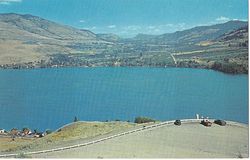
Ben Bradley présente comment lautomobile a influencé la manière dont les Canadiens ont fait lexpérience de leur pays cours du XXe siècle. Alors que des millions de personnes sont parties à la rencontre du Canada à travers le voyage automobile, elles ont aussi donné forme aux endroits quelles ont traversés, par leurs habitudes de visite, leurs goûts et leurs mouvements.(...)
Ben Bradley présente comment lautomobile a influencé la manière dont les Canadiens ont fait lexpérience de leur pays cours du XXe siècle. Alors que des millions de personnes sont parties à la rencontre du Canada à travers le voyage automobile, elles ont aussi donné forme aux endroits quelles ont traversés, par leurs habitudes de visite, leurs goûts et leurs mouvements.(...)
Localisation:
Théâtre Paul-Demarais Mot(s)-clé(s):
Canada, Le temps presse, environnement, Bradley, halte-routière, roadside
Théâtre Paul-Demarais Mot(s)-clé(s):
Canada, Le temps presse, environnement, Bradley, halte-routière, roadside
Date:
23 février 2017, 18h
23 février 2017, 18h
Titre:
Faire du Canada une halte-routière
Actions:
Description:
Ben Bradley présente comment lautomobile a influencé la manière dont les Canadiens ont fait lexpérience de leur pays cours du XXe siècle. Alors que des millions de personnes sont parties à la rencontre du Canada à travers le voyage automobile, elles ont aussi donné forme aux endroits quelles ont traversés, par leurs habitudes de visite, leurs goûts et leurs mouvements.(...)
Faire du Canada une halte-routière
Actions:
Description:
Ben Bradley présente comment lautomobile a influencé la manière dont les Canadiens ont fait lexpérience de leur pays cours du XXe siècle. Alors que des millions de personnes sont parties à la rencontre du Canada à travers le voyage automobile, elles ont aussi donné forme aux endroits quelles ont traversés, par leurs habitudes de visite, leurs goûts et leurs mouvements.(...)
Classification:
événements
événements
Date:
23 février 2017
18h
23 février 2017
18h
Localisation:
Théâtre Paul-Demarais Mot(s)-clé(s):
Canada, Le temps presse, environnement, Bradley, halte-routière, roadside
Théâtre Paul-Demarais Mot(s)-clé(s):
Canada, Le temps presse, environnement, Bradley, halte-routière, roadside
Niveau de description archivistique:
Projet
Projet
Numéro de référence:
AP143.S4.D108
Description:
The project series documents the executed project for Cites of Artificial Excavation, Madrid, Spain. Material in was produced between 1994 and 1995. In 1993, the CCA invited Peter Eisenman to design an installation for the exhibition 'Cities of Artificial Excavation: The Work of Peter Eisenman, 1978-1988'. The exhibition was presented at the CCA from 2 March to 29 May 1994. The drawings and models in this project series document the development of Eisenman's installation design from late 1993 through March 1994, as well as the various processes used by the architect in his investigation of the 'Cities of Artificial Excavation'. Eisenman uses a computer to superimpose, distort and multiply a Greek cross, while simultaneously modifying its plan and section. The computer enables the architect to generate geometric figures that are extremely difficult to produce by traditional means. It also constitutes a new phase in Eisenman's research into the depersonalization of the creative process, a central concern of his 'Cities of Artificial Excavation' (1978-1988). The Greek cross was one of the elements of the grid developed for the 'Museum of Artifical Excavation', and part of the project he submitted for the Internationale Bauausstellung in Berlin (1980-1986). The project series contains material by Eisenman's office including material for schemes A and B, the first and second proposals for the installation, as well as material for the exhibition installation. Material for scheme A includes conceptual drawings (DR1994:0030:001-005), hardline design development drawings (DR1994:0030:006-011), design development computer-aided drawings (DR1994:0030:012-027), and fully developed drawings (DR1994:0030:028-034). Material for scheme B, a design which is closer to the final project, includes hardline drawings (DR1994:0030:035-044) and computer-aided drawings (DR1994:0030:045-069). Material for the exhibition installation includes: computer-aided drawings (DR1994:0030:070-196) which were generated to construct models for the installation, notably a preliminary model (DR1994:0035) and the final model (DR1994:0036) which was used for planning the exhibition layout; hardline drawings which are the final drawings for the installation (DR1994:0030:262-265); a preliminary exhibition layout (DR1994:0030:280); and Iris colour prints of computer-aided conceptual axonometrics (DR1994:0030:281-282). Three working models show different stages of the design development (DR1994:0031 - DR1994:0034). Also included are photographs of the completed installation by Richard Pare (DR1994:0037:001-028), fragments of the installation preserved after its demolition (DR1994:0038:001-0028), and paint samples (DR1994:0038:035-037). The project series contains design development drawings, working drawings, photographic materials, publication drawings, reference drawings, textual records, and models.
AP143.S4.D108
Description:
The project series documents the executed project for Cites of Artificial Excavation, Madrid, Spain. Material in was produced between 1994 and 1995. In 1993, the CCA invited Peter Eisenman to design an installation for the exhibition 'Cities of Artificial Excavation: The Work of Peter Eisenman, 1978-1988'. The exhibition was presented at the CCA from 2 March to 29 May 1994. The drawings and models in this project series document the development of Eisenman's installation design from late 1993 through March 1994, as well as the various processes used by the architect in his investigation of the 'Cities of Artificial Excavation'. Eisenman uses a computer to superimpose, distort and multiply a Greek cross, while simultaneously modifying its plan and section. The computer enables the architect to generate geometric figures that are extremely difficult to produce by traditional means. It also constitutes a new phase in Eisenman's research into the depersonalization of the creative process, a central concern of his 'Cities of Artificial Excavation' (1978-1988). The Greek cross was one of the elements of the grid developed for the 'Museum of Artifical Excavation', and part of the project he submitted for the Internationale Bauausstellung in Berlin (1980-1986). The project series contains material by Eisenman's office including material for schemes A and B, the first and second proposals for the installation, as well as material for the exhibition installation. Material for scheme A includes conceptual drawings (DR1994:0030:001-005), hardline design development drawings (DR1994:0030:006-011), design development computer-aided drawings (DR1994:0030:012-027), and fully developed drawings (DR1994:0030:028-034). Material for scheme B, a design which is closer to the final project, includes hardline drawings (DR1994:0030:035-044) and computer-aided drawings (DR1994:0030:045-069). Material for the exhibition installation includes: computer-aided drawings (DR1994:0030:070-196) which were generated to construct models for the installation, notably a preliminary model (DR1994:0035) and the final model (DR1994:0036) which was used for planning the exhibition layout; hardline drawings which are the final drawings for the installation (DR1994:0030:262-265); a preliminary exhibition layout (DR1994:0030:280); and Iris colour prints of computer-aided conceptual axonometrics (DR1994:0030:281-282). Three working models show different stages of the design development (DR1994:0031 - DR1994:0034). Also included are photographs of the completed installation by Richard Pare (DR1994:0037:001-028), fragments of the installation preserved after its demolition (DR1994:0038:001-0028), and paint samples (DR1994:0038:035-037). The project series contains design development drawings, working drawings, photographic materials, publication drawings, reference drawings, textual records, and models.
Personnes et institutions:
Date:
1994-1995
1994-1995
Titre:
Cities of Artificial Excavation, Madrid
Actions:
AP143.S4.D108
Description:
The project series documents the executed project for Cites of Artificial Excavation, Madrid, Spain. Material in was produced between 1994 and 1995. In 1993, the CCA invited Peter Eisenman to design an installation for the exhibition 'Cities of Artificial Excavation: The Work of Peter Eisenman, 1978-1988'. The exhibition was presented at the CCA from 2 March to 29 May 1994. The drawings and models in this project series document the development of Eisenman's installation design from late 1993 through March 1994, as well as the various processes used by the architect in his investigation of the 'Cities of Artificial Excavation'. Eisenman uses a computer to superimpose, distort and multiply a Greek cross, while simultaneously modifying its plan and section. The computer enables the architect to generate geometric figures that are extremely difficult to produce by traditional means. It also constitutes a new phase in Eisenman's research into the depersonalization of the creative process, a central concern of his 'Cities of Artificial Excavation' (1978-1988). The Greek cross was one of the elements of the grid developed for the 'Museum of Artifical Excavation', and part of the project he submitted for the Internationale Bauausstellung in Berlin (1980-1986). The project series contains material by Eisenman's office including material for schemes A and B, the first and second proposals for the installation, as well as material for the exhibition installation. Material for scheme A includes conceptual drawings (DR1994:0030:001-005), hardline design development drawings (DR1994:0030:006-011), design development computer-aided drawings (DR1994:0030:012-027), and fully developed drawings (DR1994:0030:028-034). Material for scheme B, a design which is closer to the final project, includes hardline drawings (DR1994:0030:035-044) and computer-aided drawings (DR1994:0030:045-069). Material for the exhibition installation includes: computer-aided drawings (DR1994:0030:070-196) which were generated to construct models for the installation, notably a preliminary model (DR1994:0035) and the final model (DR1994:0036) which was used for planning the exhibition layout; hardline drawings which are the final drawings for the installation (DR1994:0030:262-265); a preliminary exhibition layout (DR1994:0030:280); and Iris colour prints of computer-aided conceptual axonometrics (DR1994:0030:281-282). Three working models show different stages of the design development (DR1994:0031 - DR1994:0034). Also included are photographs of the completed installation by Richard Pare (DR1994:0037:001-028), fragments of the installation preserved after its demolition (DR1994:0038:001-0028), and paint samples (DR1994:0038:035-037). The project series contains design development drawings, working drawings, photographic materials, publication drawings, reference drawings, textual records, and models.
Cities of Artificial Excavation, Madrid
Actions:
AP143.S4.D108
Description:
The project series documents the executed project for Cites of Artificial Excavation, Madrid, Spain. Material in was produced between 1994 and 1995. In 1993, the CCA invited Peter Eisenman to design an installation for the exhibition 'Cities of Artificial Excavation: The Work of Peter Eisenman, 1978-1988'. The exhibition was presented at the CCA from 2 March to 29 May 1994. The drawings and models in this project series document the development of Eisenman's installation design from late 1993 through March 1994, as well as the various processes used by the architect in his investigation of the 'Cities of Artificial Excavation'. Eisenman uses a computer to superimpose, distort and multiply a Greek cross, while simultaneously modifying its plan and section. The computer enables the architect to generate geometric figures that are extremely difficult to produce by traditional means. It also constitutes a new phase in Eisenman's research into the depersonalization of the creative process, a central concern of his 'Cities of Artificial Excavation' (1978-1988). The Greek cross was one of the elements of the grid developed for the 'Museum of Artifical Excavation', and part of the project he submitted for the Internationale Bauausstellung in Berlin (1980-1986). The project series contains material by Eisenman's office including material for schemes A and B, the first and second proposals for the installation, as well as material for the exhibition installation. Material for scheme A includes conceptual drawings (DR1994:0030:001-005), hardline design development drawings (DR1994:0030:006-011), design development computer-aided drawings (DR1994:0030:012-027), and fully developed drawings (DR1994:0030:028-034). Material for scheme B, a design which is closer to the final project, includes hardline drawings (DR1994:0030:035-044) and computer-aided drawings (DR1994:0030:045-069). Material for the exhibition installation includes: computer-aided drawings (DR1994:0030:070-196) which were generated to construct models for the installation, notably a preliminary model (DR1994:0035) and the final model (DR1994:0036) which was used for planning the exhibition layout; hardline drawings which are the final drawings for the installation (DR1994:0030:262-265); a preliminary exhibition layout (DR1994:0030:280); and Iris colour prints of computer-aided conceptual axonometrics (DR1994:0030:281-282). Three working models show different stages of the design development (DR1994:0031 - DR1994:0034). Also included are photographs of the completed installation by Richard Pare (DR1994:0037:001-028), fragments of the installation preserved after its demolition (DR1994:0038:001-0028), and paint samples (DR1994:0038:035-037). The project series contains design development drawings, working drawings, photographic materials, publication drawings, reference drawings, textual records, and models.
Niveau de description archivistique:
File 108
File 108
Date:
1994-1995
1994-1995
Personnes et institutions:
Classification:
événements
événements
Actions:
Description:
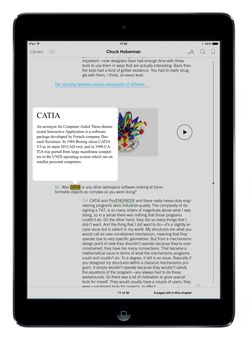
Joignez-vous à nous à la Librairie pour le lancement de notre première série de publications numériques avec une présentation spéciale de Tamara Maletic et Dan Michaelson du studio Linked By Air, de New York. Nos publications parues jusqu’à maintenant présentent des conversations avec les architectes Chuck Hoberman et Peter Eisenman.
Joignez-vous à nous à la Librairie pour le lancement de notre première série de publications numériques avec une présentation spéciale de Tamara Maletic et Dan Michaelson du studio Linked By Air, de New York. Nos publications parues jusqu’à maintenant présentent des conversations avec les architectes Chuck Hoberman et Peter Eisenman.
Localisation:
Librarie du CCA
Librarie du CCA
Date:
15 mai 2014 , 18h
15 mai 2014 , 18h
Titre:
Linked By Air présente notre nouvelle série de publications numériques
Actions:
Description:
Joignez-vous à nous à la Librairie pour le lancement de notre première série de publications numériques avec une présentation spéciale de Tamara Maletic et Dan Michaelson du studio Linked By Air, de New York. Nos publications parues jusqu’à maintenant présentent des conversations avec les architectes Chuck Hoberman et Peter Eisenman.
Linked By Air présente notre nouvelle série de publications numériques
Actions:
Description:
Joignez-vous à nous à la Librairie pour le lancement de notre première série de publications numériques avec une présentation spéciale de Tamara Maletic et Dan Michaelson du studio Linked By Air, de New York. Nos publications parues jusqu’à maintenant présentent des conversations avec les architectes Chuck Hoberman et Peter Eisenman.
Classification:
événements
événements
Date:
15 mai 2014
18h
15 mai 2014
18h
Localisation:
Librarie du CCA
Librarie du CCA
Classification:
événements
événements
Actions:
Description:
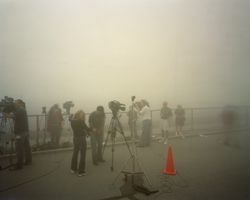
Robert Burley, boursier, chercheur principal de la fondation Mellon du CCA et professeur adjoint à la Ryerson University, présente sa conférence « The Architecture of Photography in an Age of Obsolescence». Le programme pour boursiers et chercheurs principaux de la fondation Mellon du CCA a été mis sur pied en 2001 afin d’encourager la recherche de pointe en histoire et(...)
Robert Burley, boursier, chercheur principal de la fondation Mellon du CCA et professeur adjoint à la Ryerson University, présente sa conférence « The Architecture of Photography in an Age of Obsolescence». Le programme pour boursiers et chercheurs principaux de la fondation Mellon du CCA a été mis sur pied en 2001 afin d’encourager la recherche de pointe en histoire et(...)
Localisation:
Théâtre Paul-Desmarais
Théâtre Paul-Desmarais
Date:
16 septembre 2010, 18h
16 septembre 2010, 18h
Titre:
Robert Burley : « The Architecture of Photography in an Age of Obsolescence »
Actions:
Description:
Robert Burley, boursier, chercheur principal de la fondation Mellon du CCA et professeur adjoint à la Ryerson University, présente sa conférence « The Architecture of Photography in an Age of Obsolescence». Le programme pour boursiers et chercheurs principaux de la fondation Mellon du CCA a été mis sur pied en 2001 afin d’encourager la recherche de pointe en histoire et(...)
Robert Burley : « The Architecture of Photography in an Age of Obsolescence »
Actions:
Description:
Robert Burley, boursier, chercheur principal de la fondation Mellon du CCA et professeur adjoint à la Ryerson University, présente sa conférence « The Architecture of Photography in an Age of Obsolescence». Le programme pour boursiers et chercheurs principaux de la fondation Mellon du CCA a été mis sur pied en 2001 afin d’encourager la recherche de pointe en histoire et(...)
Classification:
événements
événements
Date:
16 septembre 2010
18h
16 septembre 2010
18h
Localisation:
Théâtre Paul-Desmarais
Théâtre Paul-Desmarais
Classification:
recherche
recherche
Actions:
Description:
Subventions de recherche Groupe Banque TD dans la collection du CCA : Nuria Carton de Grammont (Concordia University); Dwayne Avery (McGill University); Victor Halim Nasr (Université de Montréal); Jenni Pace Presnell (University of British Columbia); Zubin Singh (McGill University); Ana Maria León (Massachusetts Institute of Technology); S. Faisal Hassan (Massachusetts(...)
Subventions de recherche Groupe Banque TD dans la collection du CCA : Nuria Carton de Grammont (Concordia University); Dwayne Avery (McGill University); Victor Halim Nasr (Université de Montréal); Jenni Pace Presnell (University of British Columbia); Zubin Singh (McGill University); Ana Maria León (Massachusetts Institute of Technology); S. Faisal Hassan (Massachusetts(...)
Date:
mai 2010 au décembre 2010
mai 2010 au décembre 2010
Titre:
Programme pour les doctorants 2010
Actions:
Description:
Subventions de recherche Groupe Banque TD dans la collection du CCA : Nuria Carton de Grammont (Concordia University); Dwayne Avery (McGill University); Victor Halim Nasr (Université de Montréal); Jenni Pace Presnell (University of British Columbia); Zubin Singh (McGill University); Ana Maria León (Massachusetts Institute of Technology); S. Faisal Hassan (Massachusetts(...)
Programme pour les doctorants 2010
Actions:
Description:
Subventions de recherche Groupe Banque TD dans la collection du CCA : Nuria Carton de Grammont (Concordia University); Dwayne Avery (McGill University); Victor Halim Nasr (Université de Montréal); Jenni Pace Presnell (University of British Columbia); Zubin Singh (McGill University); Ana Maria León (Massachusetts Institute of Technology); S. Faisal Hassan (Massachusetts(...)
Classification:
recherche
recherche
Date:
mai 2010 au
décembre 2010
mai 2010 au
décembre 2010


