


1734 Résultats
Classification:
livres
livres
Titre:
Making cities smarter
Making cities smarter
Actions:
Prix:
$45.00
(disponible sur commande)
Résumé:
More than half of the world’s population is now living in cities, and this number is predicted to rise. This means that more people than ever before will share the same urban infrastructure, and city governments around the world are heavily investing in smart city technologies to prepare. At the same time, scholars argue for a movement toward smart citizens and more(...)
$45.00
(disponible sur commande)
Résumé:
More than half of the world’s population is now living in cities, and this number is predicted to rise. This means that more people than ever before will share the same urban infrastructure, and city governments around the world are heavily investing in smart city technologies to prepare. At the same time, scholars argue for a movement toward smart citizens and more(...)
Titre:
Making cities smarter
Actions:
Prix:
$45.00
(disponible sur commande)
Résumé:
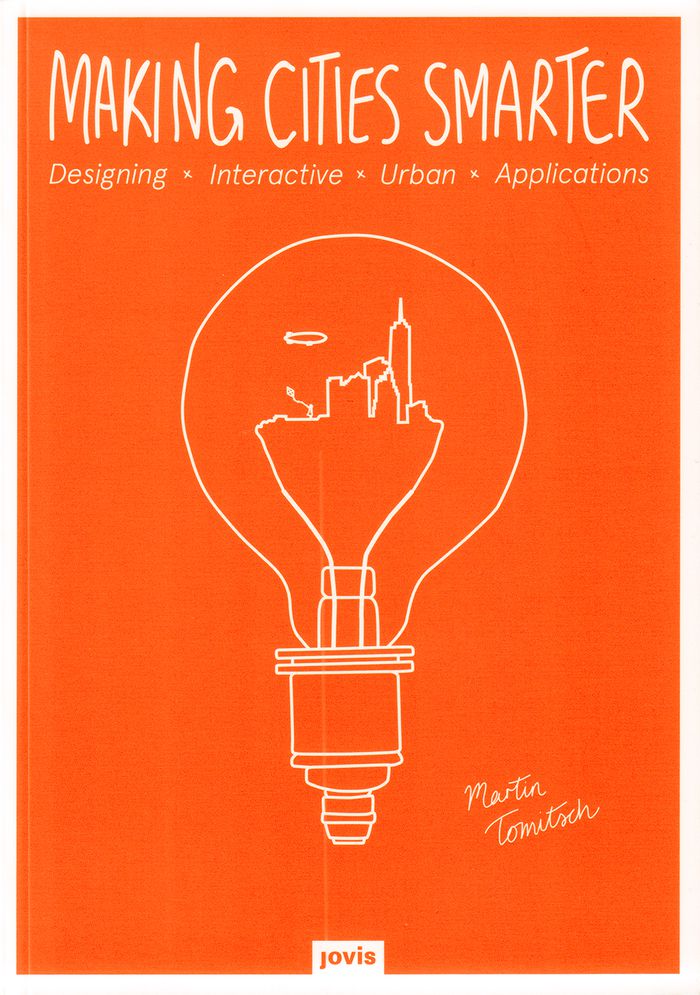
More than half of the world’s population is now living in cities, and this number is predicted to rise. This means that more people than ever before will share the same urban infrastructure, and city governments around the world are heavily investing in smart city technologies to prepare. At the same time, scholars argue for a movement toward smart citizens and more participatory approaches to city making. "Making Cities Smarter" focuses on an often-overlooked element of the smart-city discourse the interface between citizens and smart-city applications. This volume translates principles from the field of user experience design to explore city-specific challenges, such as integrating physical and digital experiences. Offering a practical perspective on the concept of the smart city, this volume is the first comprehensive publication to focus on the citizen as the end user of smart-city systems.
Making cities smarter
Actions:
Prix:
$45.00
(disponible sur commande)
Résumé:
More than half of the world’s population is now living in cities, and this number is predicted to rise. This means that more people than ever before will share the same urban infrastructure, and city governments around the world are heavily investing in smart city technologies to prepare. At the same time, scholars argue for a movement toward smart citizens and more participatory approaches to city making. "Making Cities Smarter" focuses on an often-overlooked element of the smart-city discourse the interface between citizens and smart-city applications. This volume translates principles from the field of user experience design to explore city-specific challenges, such as integrating physical and digital experiences. Offering a practical perspective on the concept of the smart city, this volume is the first comprehensive publication to focus on the citizen as the end user of smart-city systems.
Classification:
livres
livres
Publication:
mars 2018
mars 2018
Sujet:
Théorie de l’urbanisme
Théorie de l’urbanisme
Classification:
livres
livres

Actions:
Prix:
$35.95
(disponible en magasin)
Résumé:
Some of the largest architecture firms have effectively become war corporations. At the same time as designing Olympic parks and world-famous buildings, they have constructed military bases, maintained weaponry, and trained personnel for wars in which hundreds of thousands of people have been killed. In some conflicts, the same firms have been contracted from invasion to(...)
$35.95
(disponible en magasin)
Résumé:
Some of the largest architecture firms have effectively become war corporations. At the same time as designing Olympic parks and world-famous buildings, they have constructed military bases, maintained weaponry, and trained personnel for wars in which hundreds of thousands of people have been killed. In some conflicts, the same firms have been contracted from invasion to(...)
Titre:
Architecture for warfare: How corporations profit from destruction and rerconstruction
Actions:
Prix:
$35.95
(disponible en magasin)
Résumé:
Some of the largest architecture firms have effectively become war corporations. At the same time as designing Olympic parks and world-famous buildings, they have constructed military bases, maintained weaponry, and trained personnel for wars in which hundreds of thousands of people have been killed. In some conflicts, the same firms have been contracted from invasion to reconstruction, including facilitating military attacks, rebuilding war-damaged infrastructure, and establishing new governments. Architecture for Warfare tells the story of a form of multidisciplinary corporation that employs architects skilled in designing structures alongside former military personnel with experience handling live-fire weapons. It highlights the tensions and contradictions within these architecture-led firms that claim to make the world a better place. The book combines personal narrative with detailed research to reveal unsettling relations between design, planning, and armed conflict.
Architecture for warfare: How corporations profit from destruction and rerconstruction
Actions:
Prix:
$35.95
(disponible en magasin)
Résumé:
Some of the largest architecture firms have effectively become war corporations. At the same time as designing Olympic parks and world-famous buildings, they have constructed military bases, maintained weaponry, and trained personnel for wars in which hundreds of thousands of people have been killed. In some conflicts, the same firms have been contracted from invasion to reconstruction, including facilitating military attacks, rebuilding war-damaged infrastructure, and establishing new governments. Architecture for Warfare tells the story of a form of multidisciplinary corporation that employs architects skilled in designing structures alongside former military personnel with experience handling live-fire weapons. It highlights the tensions and contradictions within these architecture-led firms that claim to make the world a better place. The book combines personal narrative with detailed research to reveal unsettling relations between design, planning, and armed conflict.
Classification:
livres
livres
Publication:
avril 2026
avril 2026
Sujet:
Théorie de l’architecture
Théorie de l’architecture
Classification:
livres
livres
Titre:
Yavuz Sultan Selim bridge
Yavuz Sultan Selim bridge
Actions:
Prix:
$85.00
(disponible sur commande)
Résumé:
A fascinating look at one of the most important engineering achievements of recent times. This book chronicles in detail the various phases of the Yavuz Sultan Selim Bridge, which is the third to connect Europe and Asia over the Bosphorus straits. From its design and engineering concept to its realization, this book offers detailed insights through a historical essay,(...)
$85.00
(disponible sur commande)
Résumé:
A fascinating look at one of the most important engineering achievements of recent times. This book chronicles in detail the various phases of the Yavuz Sultan Selim Bridge, which is the third to connect Europe and Asia over the Bosphorus straits. From its design and engineering concept to its realization, this book offers detailed insights through a historical essay,(...)
Sujet:
Structures d’ingénierie
Structures d’ingénierie
Publication:
septembre 2017
septembre 2017
Titre:
Yavuz Sultan Selim bridge
Actions:
Prix:
$85.00
(disponible sur commande)
Résumé:
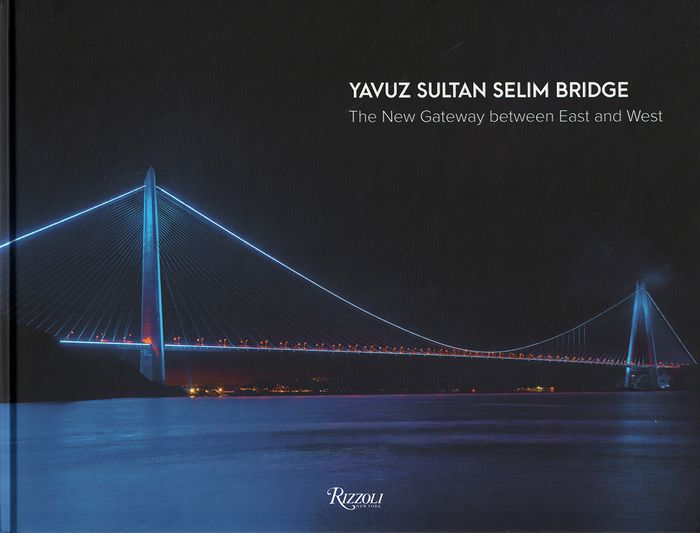
A fascinating look at one of the most important engineering achievements of recent times. This book chronicles in detail the various phases of the Yavuz Sultan Selim Bridge, which is the third to connect Europe and Asia over the Bosphorus straits. From its design and engineering concept to its realization, this book offers detailed insights through a historical essay, texts, interviews, illustrations, diagrams, and stunning photography. The book pays particular attention to the engineering accomplishments of the bridge, through a series of drawings and photographs that explain the process of its realization and its operative functionality. It also captures, through specially commissioned images by renowned photographer Michel Denancé, the experience of the traveler crossing the bridge from Europe to Asia, its presence as a major work of infrastructure in the landscape, and its relation to the city of Istanbul.
Yavuz Sultan Selim bridge
Actions:
Prix:
$85.00
(disponible sur commande)
Résumé:
A fascinating look at one of the most important engineering achievements of recent times. This book chronicles in detail the various phases of the Yavuz Sultan Selim Bridge, which is the third to connect Europe and Asia over the Bosphorus straits. From its design and engineering concept to its realization, this book offers detailed insights through a historical essay, texts, interviews, illustrations, diagrams, and stunning photography. The book pays particular attention to the engineering accomplishments of the bridge, through a series of drawings and photographs that explain the process of its realization and its operative functionality. It also captures, through specially commissioned images by renowned photographer Michel Denancé, the experience of the traveler crossing the bridge from Europe to Asia, its presence as a major work of infrastructure in the landscape, and its relation to the city of Istanbul.
Classification:
livres
livres
Publication:
septembre 2017
septembre 2017
Sujet:
Structures d’ingénierie
Structures d’ingénierie
Classification:
livres
livres
Actions:
Prix:
$45.00
(disponible en magasin)
Résumé:
In recent years, the specific formats and challenges of exhibiting architecture and design, both built and speculative, have often been used as critical devices for identifying, communicating, and convening the public around shared matters of concern. These have increasingly included urgent questions of equity and justice, labor, gender, race, class, community, and(...)
$45.00
(disponible en magasin)
Résumé:
In recent years, the specific formats and challenges of exhibiting architecture and design, both built and speculative, have often been used as critical devices for identifying, communicating, and convening the public around shared matters of concern. These have increasingly included urgent questions of equity and justice, labor, gender, race, class, community, and(...)
Titre:
Futures of the architectural exhibition: Five conversations on the display of space
Actions:
Prix:
$45.00
(disponible en magasin)
Résumé:
In recent years, the specific formats and challenges of exhibiting architecture and design, both built and speculative, have often been used as critical devices for identifying, communicating, and convening the public around shared matters of concern. These have increasingly included urgent questions of equity and justice, labor, gender, race, class, community, and lifestyle in relation to spatial issues of density, economy, policy, infrastructure, climate, and sustainability. This book records a discussion of critical approaches to the representation of architecture through conversations with seven contemporary curators working inside and outside of the museum. Mario Ballesteros (Archivo Diseño y Arquitectura), Giovanna Borasi (Canadian Center for Architecture), Ann Lui (Future Firm), Ana Miljacki (Critical Broadcasting Lab, MIT), Zoë Ryan (ICA, University of Pennsylvania), Martino Stierli (Museum of Modern Art), and Shirley Surya (M+, Hong Kong) speculate on the specific challenges and potentials of exhibiting space.
Futures of the architectural exhibition: Five conversations on the display of space
Actions:
Prix:
$45.00
(disponible en magasin)
Résumé:
In recent years, the specific formats and challenges of exhibiting architecture and design, both built and speculative, have often been used as critical devices for identifying, communicating, and convening the public around shared matters of concern. These have increasingly included urgent questions of equity and justice, labor, gender, race, class, community, and lifestyle in relation to spatial issues of density, economy, policy, infrastructure, climate, and sustainability. This book records a discussion of critical approaches to the representation of architecture through conversations with seven contemporary curators working inside and outside of the museum. Mario Ballesteros (Archivo Diseño y Arquitectura), Giovanna Borasi (Canadian Center for Architecture), Ann Lui (Future Firm), Ana Miljacki (Critical Broadcasting Lab, MIT), Zoë Ryan (ICA, University of Pennsylvania), Martino Stierli (Museum of Modern Art), and Shirley Surya (M+, Hong Kong) speculate on the specific challenges and potentials of exhibiting space.
Classification:
livres
livres
Publication:
septembre 2022
septembre 2022
Sujet:
Muséologie
Muséologie
Classification:
livres
livres
Actions:
Exemplaires:
Description:
171 pages : illustrations ; 25 cm
Description:
171 pages : illustrations ; 25 cm
Auteur:
Sujet:
Publication:
Genève : Métis Presses, [2022], ©2022
Genève : Métis Presses, [2022], ©2022
Titre:
Paysage de lignes : esthétique et télécommunications / Carlotta Darò.
Actions:
Exemplaires:
Description:
171 pages : illustrations ; 25 cm
Paysage de lignes : esthétique et télécommunications / Carlotta Darò.
Actions:
Exemplaires:
Description:
171 pages : illustrations ; 25 cm
Classification:
livres
livres
Publication:
Genève : Métis Presses, [2022], ©2022
Genève : Métis Presses, [2022], ©2022
Auteur:
Sujet:
Classification:
livres
livres
Actions:
Exemplaires:
Description:
336 pages : illustrations, facsimiles ; 17 cm
Description:
336 pages : illustrations, facsimiles ; 17 cm
Auteur:
Sujet:
Publication:
Paris : Éditions de L'Éclat, [2020], ©2020
Paris : Éditions de L'Éclat, [2020], ©2020
Titre:
L'architecture mobile : vers une cité conçue par ses habitants (1958-2020) / Yona Friedman.
Actions:
Exemplaires:
Description:
336 pages : illustrations, facsimiles ; 17 cm
L'architecture mobile : vers une cité conçue par ses habitants (1958-2020) / Yona Friedman.
Actions:
Exemplaires:
Description:
336 pages : illustrations, facsimiles ; 17 cm
Classification:
livres
livres
Publication:
Paris : Éditions de L'Éclat, [2020], ©2020
Paris : Éditions de L'Éclat, [2020], ©2020
Auteur:
Sujet:
Classification:
livres
livres
Actions:
Prix:
$102.00
(disponible sur commande)
Résumé:
This book presents fragments of nature—some of them mise en scène, others untouched by urban growth—on the periphery of the artificially illuminated infrastructure of large Asian cities. Unlike natural light, the lights of the big city do not follow any direction: the artificial suns comprised of sodium lamps, automobile headlights, and illuminated skyscrapers form a kind(...)
$102.00
(disponible sur commande)
Résumé:
This book presents fragments of nature—some of them mise en scène, others untouched by urban growth—on the periphery of the artificially illuminated infrastructure of large Asian cities. Unlike natural light, the lights of the big city do not follow any direction: the artificial suns comprised of sodium lamps, automobile headlights, and illuminated skyscrapers form a kind(...)
Titre:
Peter Bialobrzeski: paradise now
Actions:
Prix:
$102.00
(disponible sur commande)
Résumé:
This book presents fragments of nature—some of them mise en scène, others untouched by urban growth—on the periphery of the artificially illuminated infrastructure of large Asian cities. Unlike natural light, the lights of the big city do not follow any direction: the artificial suns comprised of sodium lamps, automobile headlights, and illuminated skyscrapers form a kind of “vernacular light” that makes the urban super-green alternate between the hyper-real and the surreal. The images in this publication celebrate this lush green as a sign of hope, but also pose the question of whether we can continue to take responsibility for this incandescence, considering the predicted climatic catastrophe. Never before have our cities been so bright—they will not be able to glow like this in the future. Taken between October 2007 and March 2008 in Hanoi, Jakarta, Singapore, Bangkok, and Kuala Lumpur,
Peter Bialobrzeski: paradise now
Actions:
Prix:
$102.00
(disponible sur commande)
Résumé:
This book presents fragments of nature—some of them mise en scène, others untouched by urban growth—on the periphery of the artificially illuminated infrastructure of large Asian cities. Unlike natural light, the lights of the big city do not follow any direction: the artificial suns comprised of sodium lamps, automobile headlights, and illuminated skyscrapers form a kind of “vernacular light” that makes the urban super-green alternate between the hyper-real and the surreal. The images in this publication celebrate this lush green as a sign of hope, but also pose the question of whether we can continue to take responsibility for this incandescence, considering the predicted climatic catastrophe. Never before have our cities been so bright—they will not be able to glow like this in the future. Taken between October 2007 and March 2008 in Hanoi, Jakarta, Singapore, Bangkok, and Kuala Lumpur,
Classification:
livres
livres
Publication:
juillet 2009
juillet 2009
Sujet:
Monographies photo
Monographies photo
Classification:
livres
livres
Actions:
Prix:
$67.99
(disponible sur commande)
Résumé:
Access and accessibility are central themes in architecture and urbanism. The goal is to make buildings accessible both horizontally and vertically, as well as to provide them with technical infrastructure. But the aim is also to ensure the accessibility of whole streets, routes, parks, and squares, and even entire cities and regions. Today, access is a key concept in the(...)
$67.99
(disponible sur commande)
Résumé:
Access and accessibility are central themes in architecture and urbanism. The goal is to make buildings accessible both horizontally and vertically, as well as to provide them with technical infrastructure. But the aim is also to ensure the accessibility of whole streets, routes, parks, and squares, and even entire cities and regions. Today, access is a key concept in the(...)
Titre:
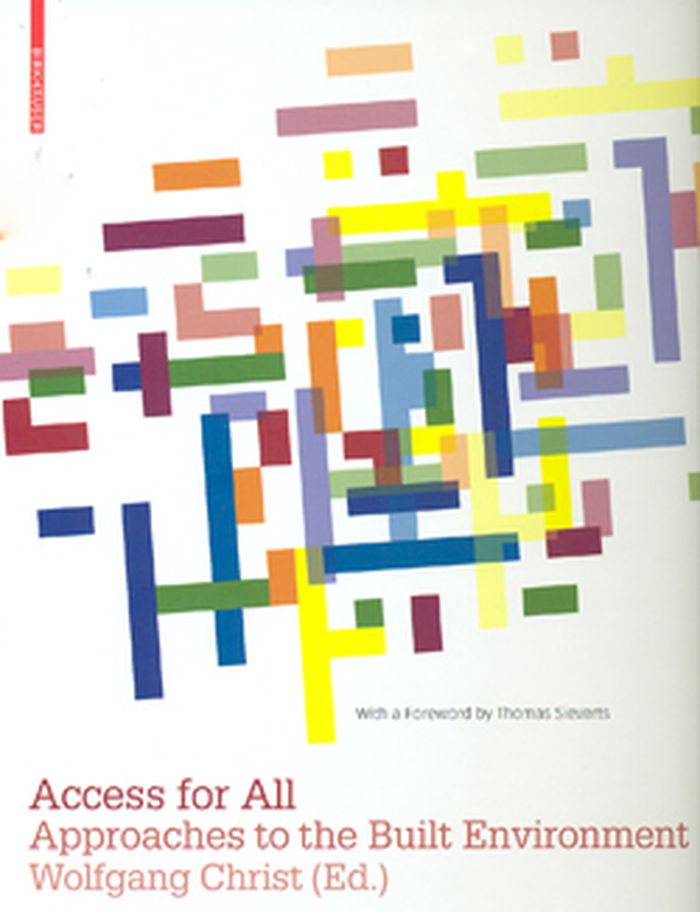
Access for all : approaches to the built environment
Actions:
Prix:
$67.99
(disponible sur commande)
Résumé:
Access and accessibility are central themes in architecture and urbanism. The goal is to make buildings accessible both horizontally and vertically, as well as to provide them with technical infrastructure. But the aim is also to ensure the accessibility of whole streets, routes, parks, and squares, and even entire cities and regions. Today, access is a key concept in the most disparate areas of life. Thus, it is also a matter of access to knowledge and education, access to knowledge media like the Internet, access to healthcare, access to languages, etc. In thirteen articles, this book deals with this world of access in architecture, city planning, and neighboring fields. Topics include ensuring the accessibility of entire urban areas, renewing that of areas that were previously utilized differently, including the general populace in concept planning, and how architecture can help provide access to a better quality of life.
Access for all : approaches to the built environment
Actions:
Prix:
$67.99
(disponible sur commande)
Résumé:
Access and accessibility are central themes in architecture and urbanism. The goal is to make buildings accessible both horizontally and vertically, as well as to provide them with technical infrastructure. But the aim is also to ensure the accessibility of whole streets, routes, parks, and squares, and even entire cities and regions. Today, access is a key concept in the most disparate areas of life. Thus, it is also a matter of access to knowledge and education, access to knowledge media like the Internet, access to healthcare, access to languages, etc. In thirteen articles, this book deals with this world of access in architecture, city planning, and neighboring fields. Topics include ensuring the accessibility of entire urban areas, renewing that of areas that were previously utilized differently, including the general populace in concept planning, and how architecture can help provide access to a better quality of life.
Classification:
livres
livres
Publication:
novembre 2009
novembre 2009
Sujet:
Théorie de l’urbanisme
Théorie de l’urbanisme
Classification:
livres
livres
Prix:
$90.00
(disponible sur commande)
Résumé:
In this view of London, Farrell looks beyond the contribution of individual buildings to the city. He creates a larger, more exciting frame, charting how the capital’s messy and complex shape has been hewn out of a series of layers – natural and manmade, so the Thames and the natural landscape gets as much attention as the railway infrastructure, the roads and the canals.(...)
$90.00
(disponible sur commande)
Résumé:
In this view of London, Farrell looks beyond the contribution of individual buildings to the city. He creates a larger, more exciting frame, charting how the capital’s messy and complex shape has been hewn out of a series of layers – natural and manmade, so the Thames and the natural landscape gets as much attention as the railway infrastructure, the roads and the canals.(...)
Titre:
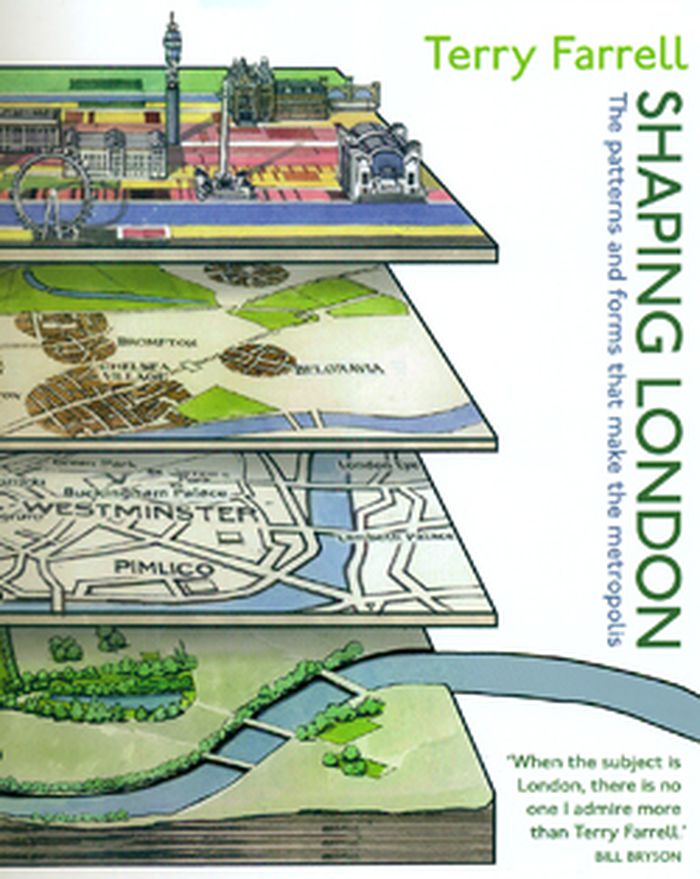
Shaping London: The patterns and forms that make the metropolis
Actions:
Prix:
$90.00
(disponible sur commande)
Résumé:
In this view of London, Farrell looks beyond the contribution of individual buildings to the city. He creates a larger, more exciting frame, charting how the capital’s messy and complex shape has been hewn out of a series of layers – natural and manmade, so the Thames and the natural landscape gets as much attention as the railway infrastructure, the roads and the canals. This provides a whole series of revelations that allow us to see the city afresh: How might the natural bends in the river have impacted where and what was built? How have the Thames’ tributaries affected historic boundaries and development, played out in the estates of Mayfair? How is the Roman plan for the city of London still discernible in today’s street patterns? Illustrated with original sketches, maps, archive photographs and paintings, this book provides a collage of London’s patterns and its history.
Shaping London: The patterns and forms that make the metropolis
Actions:
Prix:
$90.00
(disponible sur commande)
Résumé:
In this view of London, Farrell looks beyond the contribution of individual buildings to the city. He creates a larger, more exciting frame, charting how the capital’s messy and complex shape has been hewn out of a series of layers – natural and manmade, so the Thames and the natural landscape gets as much attention as the railway infrastructure, the roads and the canals. This provides a whole series of revelations that allow us to see the city afresh: How might the natural bends in the river have impacted where and what was built? How have the Thames’ tributaries affected historic boundaries and development, played out in the estates of Mayfair? How is the Roman plan for the city of London still discernible in today’s street patterns? Illustrated with original sketches, maps, archive photographs and paintings, this book provides a collage of London’s patterns and its history.
Classification:
livres
livres
Publication:
décembre 2009
décembre 2009
Classification:
périodiques
périodiques
Titre:
Bracket 3, At Extremes
Bracket 3, At Extremes
Actions:
Prix:
$51.95
(disponible sur commande)
Résumé:
"Bracket [at Extremes]" includes critical articles and unpublished design projects that investigate architecture, infrastructure and technology as they operate in conditions of imbalance, negotiate tipping points and test limit states. We are conditioned, as designers of the built environment, towards the organization of people, programs and movement. Indeed the history(...)
$51.95
(disponible sur commande)
Résumé:
"Bracket [at Extremes]" includes critical articles and unpublished design projects that investigate architecture, infrastructure and technology as they operate in conditions of imbalance, negotiate tipping points and test limit states. We are conditioned, as designers of the built environment, towards the organization of people, programs and movement. Indeed the history(...)
Titre:
Bracket 3, At Extremes
Actions:
Prix:
$51.95
(disponible sur commande)
Résumé:
"Bracket [at Extremes]" includes critical articles and unpublished design projects that investigate architecture, infrastructure and technology as they operate in conditions of imbalance, negotiate tipping points and test limit states. We are conditioned, as designers of the built environment, towards the organization of people, programs and movement. Indeed the history of modern urbanism, architecture and building science has been predicated on an anti-entropic notion of programmatic and social order. But are there scenarios in which a state of extremity or imbalance is productive? Bracket [at Extremes] seeks to understand what new spatial orders emerge in this liminal space. How might it be leveraged as an opportunity for invention? What are the limits of wilderness and control, of the natural and artificial, the real and the virtual? What new landscapes, networks, and urban models might emerge in the wake of destabilized economic, social and environmental conditions?
Bracket 3, At Extremes
Actions:
Prix:
$51.95
(disponible sur commande)
Résumé:
"Bracket [at Extremes]" includes critical articles and unpublished design projects that investigate architecture, infrastructure and technology as they operate in conditions of imbalance, negotiate tipping points and test limit states. We are conditioned, as designers of the built environment, towards the organization of people, programs and movement. Indeed the history of modern urbanism, architecture and building science has been predicated on an anti-entropic notion of programmatic and social order. But are there scenarios in which a state of extremity or imbalance is productive? Bracket [at Extremes] seeks to understand what new spatial orders emerge in this liminal space. How might it be leveraged as an opportunity for invention? What are the limits of wilderness and control, of the natural and artificial, the real and the virtual? What new landscapes, networks, and urban models might emerge in the wake of destabilized economic, social and environmental conditions?
Classification:
périodiques
périodiques
Publication:
septembre 2016
septembre 2016
Sujet:
Revues
Revues


