


1735 Résultats
Classification:
livres
livres
Titre:
Aernout Mik
Aernout Mik
Actions:
Prix:
$30.00
(disponible sur commande)
Résumé:
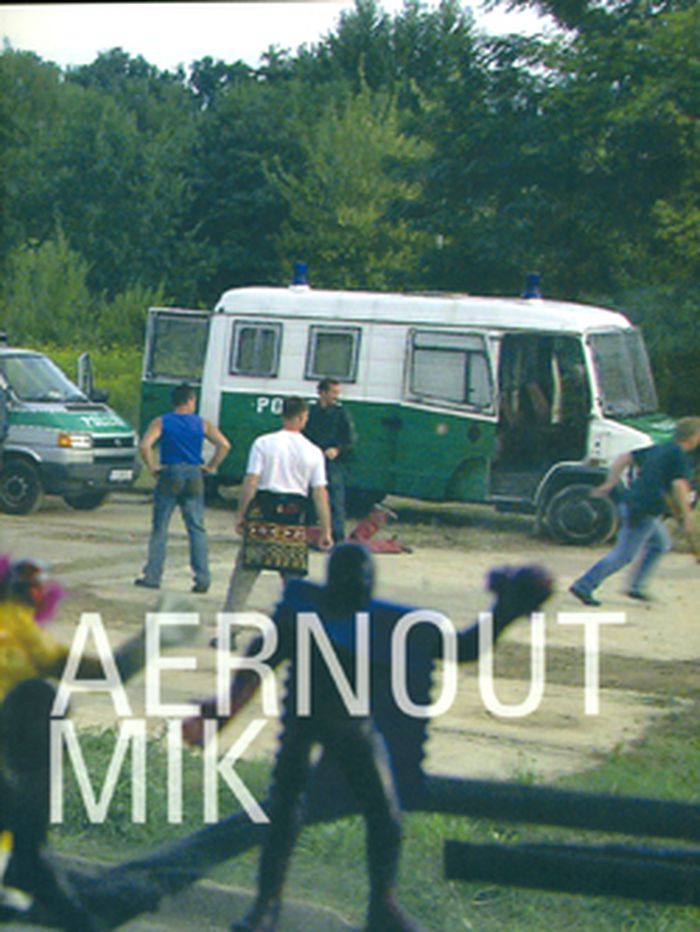
Dutch artist Aernout Mik's moving-image installations meld filmmaking, sculpture and architecture into experiences that are at once compelling and unsettling, irrational yet plausible. The artist designs and constructs architectural spaces that hold his moving images, making the viewer's physical relationship to the piece a critical component of the overall experience. By(...)
Titre:
Aernout Mik
Actions:
Prix:
$30.00
(disponible sur commande)
Résumé:
Dutch artist Aernout Mik's moving-image installations meld filmmaking, sculpture and architecture into experiences that are at once compelling and unsettling, irrational yet plausible. The artist designs and constructs architectural spaces that hold his moving images, making the viewer's physical relationship to the piece a critical component of the overall experience. By interrogating the most basic ideas of narrative and reality and rejecting classical cinematic ideals, Mik creates works that are rich in allusion but subversive of codes. Published to accompany the artist's first U.S. retrospective, this volume is a vivid exploration of Mik's work and process. Laurence Kardish, MoMA's Senior Curator in the Department of Film, situates Mik within the history of documentary and nonnarrative cinema, while Michael Taussig, Professor of Anthropology at Columbia University, investigates the ways in which the artist's work changes the way we see reality while simultaneously reinforcing the norms of visual culture. Abundantly illustrated with stills and the artist's own drawings, the book also features detailed descriptions of the installations, an exhibition history and a bibliography, making it the most comprehensive volume on the artist available in English.
Classification:
livres
livres
Publication:
juin 2009
juin 2009
Classification:
livres
livres
Actions:
Prix:
$29.95
(disponible sur commande)
Résumé:
This eighth book in a series from the Poster Collection of the Zurich Museum für Gestaltung focuses on the work of Ralph Schraivogel. Schraivogel was born in 1960 in Lucerne, Switzerland. He studied at the Zurich School of Design and, upon his graduation in 1982, opened his own graphic design studio in Zurich. Long-term clients include Film Podium, the Zurich repertory(...)
Titre:
Poster collection 09 : Ralph Schraivogel
Actions:
Prix:
$29.95
(disponible sur commande)
Résumé:
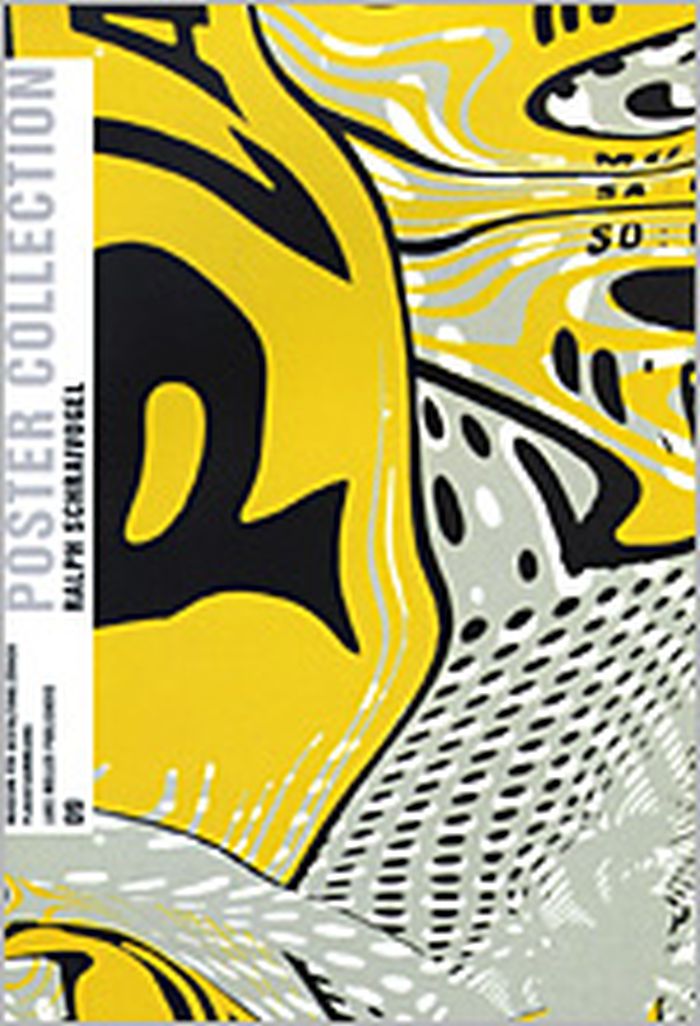
This eighth book in a series from the Poster Collection of the Zurich Museum für Gestaltung focuses on the work of Ralph Schraivogel. Schraivogel was born in 1960 in Lucerne, Switzerland. He studied at the Zurich School of Design and, upon his graduation in 1982, opened his own graphic design studio in Zurich. Long-term clients include Film Podium, the Zurich repertory cinema, and the Zurich Museum fur Gestaltung. Since opening his studio, Schraivogel has worked with many cultural institutions, such as the Kunsthaus Zurich, Theater am Neumarkt, the Jazz Festival Zurich, the Literature Days in Solothurn and the African Film Festival in Zurich. Among his multiple awards are the Gold Medal at the 1994 Warsaw Poster Biennial, the Gold Medal at the 1994 Moscow Poster Biennial, the Gold Medal at the 1997 Chaumont Poster Festival, the Grand Prix at the 1998 Brno Poster Biennial, and the Gold Medal at the 2001 Ningbo International Poster Exhibition. Schraivogel is the three-time winner of the Swiss Federal Prize for Applied Art and the twelve-time winner of the Best Swiss Poster of the Year Award.
Classification:
livres
livres
Publication:
janvier 2004, Zürich
janvier 2004, Zürich
Classification:
livres
livres
Prix:
$41.95
(disponible sur commande)
Résumé:
The Urban Spectator is a lively and utterly fascinating exploration of the ways in which technologies have influenced our collective conception of the American city, as well as our relationship with urban space and architecture. Eric Gordon argues that the city, developing late and in conjunction with a range of modern media, produced a particular way of seeing--what he(...)
Titre:
The urban spectator: American concept-cities from Kodak to Google
Actions:
Prix:
$41.95
(disponible sur commande)
Résumé:
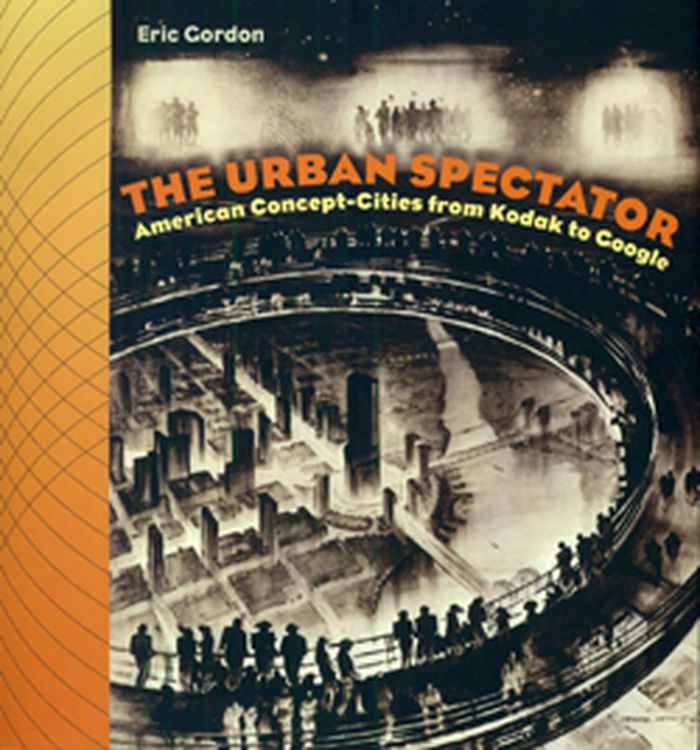
The Urban Spectator is a lively and utterly fascinating exploration of the ways in which technologies have influenced our collective conception of the American city, as well as our relationship with urban space and architecture. Eric Gordon argues that the city, developing late and in conjunction with a range of modern media, produced a particular way of seeing--what he labels "possessive spectatorship." Lacking the historical rootedness of European cities, the American city was open to individual interpretation, definition, and ownership. Beginning with the White City of the Chicago World's Fair of 1893 and the efforts to commodify the concept city through photography, Gordon shows how the American city has always been a product of the collision between the dominant conceptualization, shaped by contemporary media, and the spectator. From the viewfinder of the Kodak camera, to the public display of early cinema, to the speculative desire of network radio, all the way to machine-age utopianism, nostalgia, and America's "rerun" culture, the city is an amalgam of practice and concept. All of this comes to a head in the "database city" where urban spectatorship takes on the characteristics of a Google search. In new urban developments, the spectator searches, retrieves, and combines urban references to construct each experience of the city.
Classification:
livres
livres
Publication:
février 2010
février 2010
Sujet:
Théorie de l’urbanisme
Théorie de l’urbanisme
Classification:
livres
livres
Prix:
$54.95
(disponible sur commande)
Résumé:
An early version of the slide projector and an immediate predecessor of narrative cinema, the magic lantern provided the lens through which late-nineteenth century Europe and America viewed and imagined the world. Magic lantern slide shows were a popular, entertaining and educational way for people to learn about the world beyond their own horizons, and from Cairo to(...)
Titre:
Memories of a lost world : travels through the magic lantern
Actions:
Prix:
$54.95
(disponible sur commande)
Résumé:
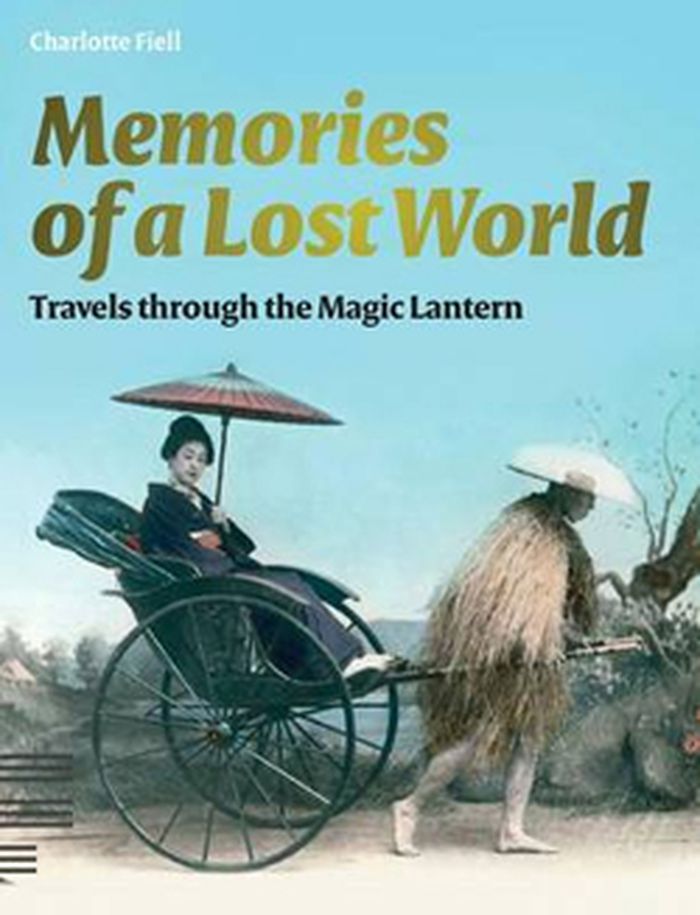
An early version of the slide projector and an immediate predecessor of narrative cinema, the magic lantern provided the lens through which late-nineteenth century Europe and America viewed and imagined the world. Magic lantern slide shows were a popular, entertaining and educational way for people to learn about the world beyond their own horizons, and from Cairo to Delhi to Adelaide and Cape Town, intrepid European and American photographers traveled to all corners of the world to document its peoples and customs. Now, for the first time, images of original magic lantern slides have been brought together in a single publication. Memories of a Lost World: Travels through the Magic Latern takes the reader back to a pre-globalised world in which regional customs and national cultures were as distinctive as they were diverse. From the bustling streets of Victorian London and the ruins of ancient Egypt to the temples of Japan and the tribesmen of New Guinea, Memories of a Lost World explores the world through a captivating collection of over 800 magic lantern slide images. This volume is not only an important source of primary historical information, but also conveys something of what the world was like before the advent of television and mass travel.
Classification:
livres
livres
Publication:
novembre 2012
novembre 2012
Classification:
périodiques
périodiques
Titre:
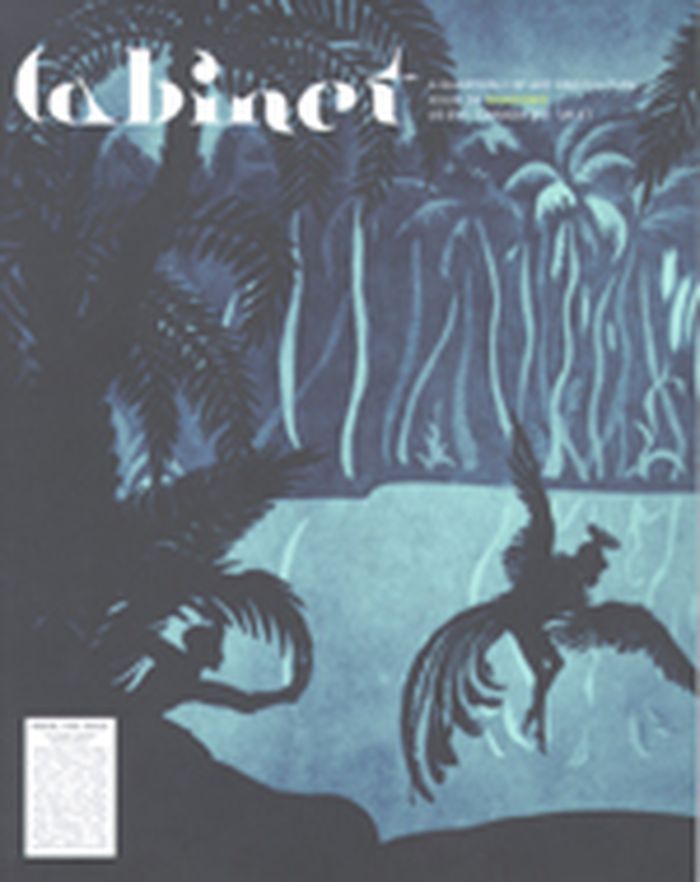
Cabinet 24 : shadows
Cabinet 24 : shadows
Actions:
Prix:
$11.00
(disponible sur commande)
Résumé:
The inherently contingent physics of shadows--never things in themselves but instead always "cast" signs of other things; tangible yet insubstantial--has long been a rich source of inspiration for thinkers and artists. From the Biblical valley where humanity is stalked by the "shadow of death" to the purported supernatural phenomenon of the shadow people, the idea has(...)
Titre:
Cabinet 24 : shadows
Actions:
Prix:
$11.00
(disponible sur commande)
Résumé:
The inherently contingent physics of shadows--never things in themselves but instead always "cast" signs of other things; tangible yet insubstantial--has long been a rich source of inspiration for thinkers and artists. From the Biblical valley where humanity is stalked by the "shadow of death" to the purported supernatural phenomenon of the shadow people, the idea has always suggested forces of the unseen, of the Other, its relational quality evoking a sense a duality that haunts our supposedly integral identities. Cabinet 24 includes interviews with Michael Baxandall on the Enlightenment's attitude toward shadows and with Victor Stoichita on the battle between light and dark, Kris Lee on Comte de Silhouette and the rise of phrenology, Julia Bryan-Wilson on the perpetually shaded Swiss town of Rattenberg, Trevor Paglen on the secret patches from clandestine divisions of the U.S. Armed Forces and George Pendle on Otto Neurath and his Everyman informational figures. Artist projects include a portfolio of shadow drawings and an unwitting contribution by a celebrated artist secretly trailed by a private detective hired by Cabinet. Plus, Jocko Weyland on the AP archive; Tony Wood on Konstantin Melnikov's proposal for a collectivized Soviet dormitory system; Amelie Hastie on eating at the cinema and Daniel Handler on the color violet.
Classification:
périodiques
périodiques
Publication:
février 2007, New York
février 2007, New York
Sujet:
Revues
Revues
Classification:
livres
livres

Actions:
Prix:
$51.00
(disponible sur commande)
Résumé:
How much do criminal acts and their representation in cinema, literature and music really have in common? Is the execution of crime in everyday life as appealing or as inspired as creative artists have made it seem since, say, Arthur Conan Doyle’s Professor Moriarty? Does the film industry continue to learn from the real-life Mafia, or have the imaginings of scriptwriters(...)
Titre:
Crime: a series of interviews
Actions:
Prix:
$51.00
(disponible sur commande)
Résumé:
How much do criminal acts and their representation in cinema, literature and music really have in common? Is the execution of crime in everyday life as appealing or as inspired as creative artists have made it seem since, say, Arthur Conan Doyle’s Professor Moriarty? Does the film industry continue to learn from the real-life Mafia, or have the imaginings of scriptwriters had their own effect on organized crime? And what experience do these people who mold our perceptions of crime and criminals have of the real thing? This remarkable book is the first to explore our images of crime by interviewing those involved on, in and around all sides of the law, both real and fictional, and often somewhere in between. Through a series of exclusive interviews with artists, authors and actors such as Ben Affleck, David Cronenberg, Elmore Leonard, Viggo Mortensen, Ice-T, David Mamet and Takeshi Kitano, as well as real life bank robbers, gangsters and current prison inmates, editor Alix Lambert (artist, photographer of Russian prisoners’ tattoos and writer for HBO’s Deadwood) explores the gaps and overlaps between real crime and its representation in the arts, each commenting on and assessing the impact of the other.
Classification:
livres
livres
Publication:
juin 2008, London
juin 2008, London
Sujet:
Théorie de l’art
Théorie de l’art
Classification:
livres
livres
Titre:
Warhol's dream
Warhol's dream
Actions:
Prix:
$26.00
(disponible sur commande)
Résumé:
"12 February 1972--I had slept badly. I decided to go out for breakfast, but when I got down to the street, there was no one there, and I thought, Andy, you must be still dreaming. It was like New York at eight in the morning on New Year's Day. Completely deserted. Everything shut. It's my favorite time to be out, actually. I decided to go to my favorite diner, the Star(...)
Sujet:
Théorie de l’art
Théorie de l’art
Publication:
janvier 1900, Paris Zurich
janvier 1900, Paris Zurich
Titre:
Warhol's dream
Actions:
Prix:
$26.00
(disponible sur commande)
Résumé:
"12 February 1972--I had slept badly. I decided to go out for breakfast, but when I got down to the street, there was no one there, and I thought, Andy, you must be still dreaming. It was like New York at eight in the morning on New Year's Day. Completely deserted. Everything shut. It's my favorite time to be out, actually. I decided to go to my favorite diner, the Star Palace, on 37th and Madison. And there, sitting alone at the window was, believe it or not, Robert Smithson, who I've met a few times. They all think he's a genius. But I still can't get through the stuff he writes in Artforum. I get a headache almost right away." Saul Anton, an Editor-at-Large at Cabinet magazine who has written for Salon and Artforum, among other publications, describes an imaginary encounter between Robert Smithson and Andy Warhol, drifting together for a day through an empty New York City, talking about entropy, glamour, science fiction, cinema and the art of their times. Published in conjunction with les Presses du reel, this highly informative and witty essay on both artists' works in the form of a fiction could be considered a contemporary Platonic Symposium.
Classification:
livres
livres
Publication:
janvier 1900, Paris Zurich
janvier 1900, Paris Zurich
Sujet:
Théorie de l’art
Théorie de l’art
Classification:
livres
livres
Actions:
Prix:
$37.95
(disponible sur commande)
Résumé:
Accelerationism is the name of a contemporary political heresy: the insistence that the only radical political response to capitalism is not to protest, disrupt, critique, or détourne it, but to accelerate and exacerbate its uprooting, alienating, decoding, abstractive tendencies. "#Accelerate" presents a genealogy of accelerationism, tracking the impulse through 90s UK(...)
Titre:
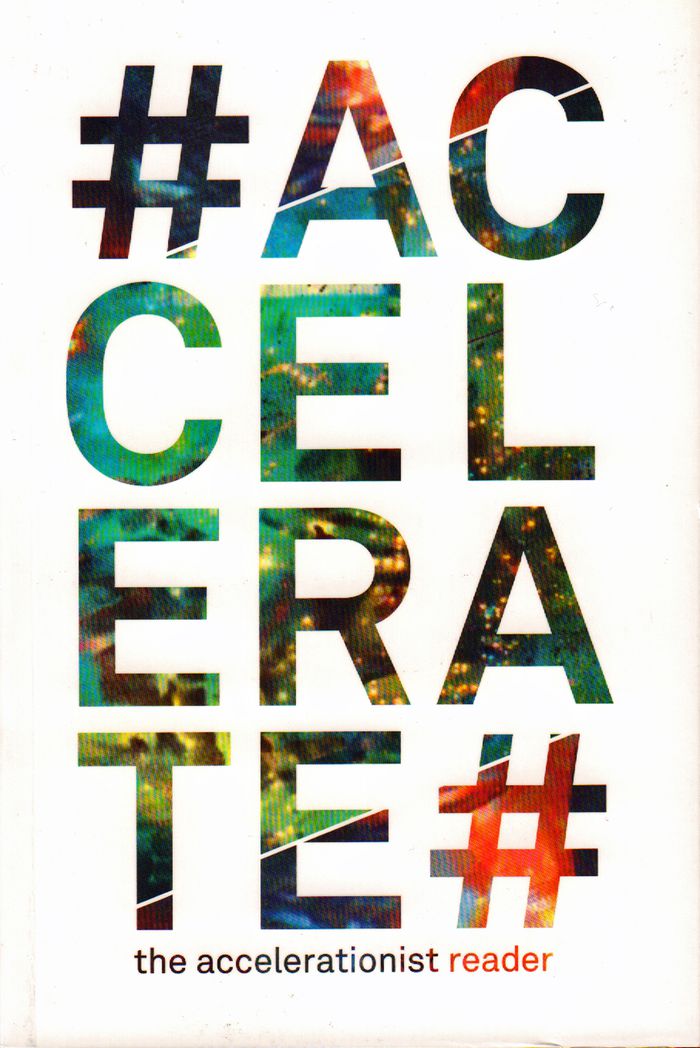
#Accelerate: the accelerationist reader
Actions:
Prix:
$37.95
(disponible sur commande)
Résumé:
Accelerationism is the name of a contemporary political heresy: the insistence that the only radical political response to capitalism is not to protest, disrupt, critique, or détourne it, but to accelerate and exacerbate its uprooting, alienating, decoding, abstractive tendencies. "#Accelerate" presents a genealogy of accelerationism, tracking the impulse through 90s UK darkside cyberculture and the theory-fictions of Nick Land, Sadie Plant, Iain Grant, and CCRU, across the cultural underground of the 80s (rave, acid house, SF cinema) and back to its sources in delirious post-68 ferment, in texts whose searing nihilistic jouissance would later be disavowed by their authors and the marxist and academic establishment alike. On either side of this central sequence, the book includes texts by Marx that call attention to his own ‘Prometheanism’, and key works from recent years document the recent extraordinary emergence of new accelerationisms steeled against the onslaughts of neoliberal capitalist realism, and retooled for the twenty-first century. At the forefront of the energetic contemporary debate around this disputed, problematic term, "#Accelerate" activates a historical conversation about futurality, technology, politics, enjoyment and capital. This is a legacy shot through with contradictions, yet urgently galvanized today by the poverty of ‘reasonable’ contemporary political alternatives.
Classification:
livres
livres
Publication:
mai 2014
mai 2014
Sujet:
Théorie/ philosophie
Théorie/ philosophie
Classification:
livres
livres
Actions:
Prix:
$60.95
(disponible sur commande)
Résumé:
Eadweard Muybridge, one of the great pioneer-innovators of the 19th century, is a familiar figure to students of art history, photography, and cinema. Best known for the photographs of horses and other animals in motion that he made in the 1870s and '80s, Muybridge was the first person to use photography to freeze rapid action for analysis and study. He devised a method(...)
Titre:
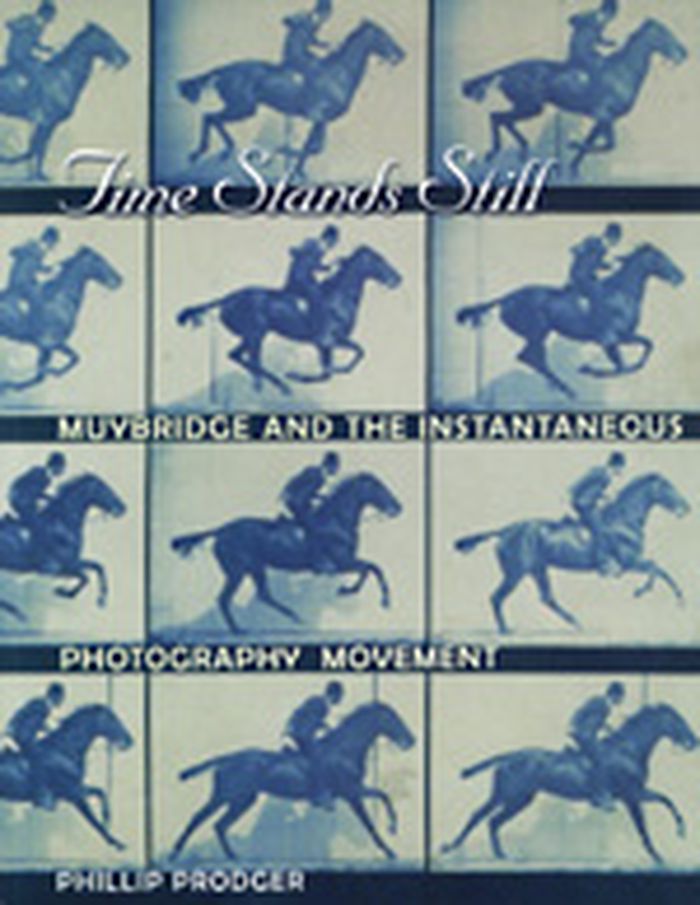
Time stands still : Muybridge and the instantaneous photography movement
Actions:
Prix:
$60.95
(disponible sur commande)
Résumé:
Eadweard Muybridge, one of the great pioneer-innovators of the 19th century, is a familiar figure to students of art history, photography, and cinema. Best known for the photographs of horses and other animals in motion that he made in the 1870s and '80s, Muybridge was the first person to use photography to freeze rapid action for analysis and study. He devised a method for photographing episodes of behavior using a series of cameras, producing some of the most famous sequential photographs ever made. These pictures, the first successful photographs of rapidly moving subjects, revolutionized expectations of what photography could reveal about the natural world, and ultimately led to the invention of the motion picture in the mid-1890s. "Time stands still" is the catalogue that accompanies an exhibition celebrating Muybridge's work. Though the instantaneous photography movement stands as a crucial event in the progression of photography to motion pictures, this exhibition represents the first major organized treatment of the subject. Opening in spring 2003 at the Iris and B. Gerald Cantor Center for Visual Arts at Stanford University and touring through 2004, it combines an examination of the artist's career in motion photography with a survey of early attempts to photograph moving subjects.
Classification:
livres
livres
Publication:
avril 2003, New York
avril 2003, New York
Sujet:
Monographies photo
Monographies photo
Classification:
livres
livres
Titre:
Graftworld
Graftworld
Actions:
Prix:
$21.95
(disponible sur commande)
Résumé:
In addition to Graft’s the widely published projects, like the prize-winning Hotel Q in Berlin, Restaurants Fix and Stack in Las Vegas and several international houses, the exhibition will focus on the new and unpublished work of Graft, including numerous high-rise buildings, special hotel designs and private residences, research installations as well as public(...)
Titre:
Graftworld
Actions:
Prix:
$21.95
(disponible sur commande)
Résumé:
In addition to Graft’s the widely published projects, like the prize-winning Hotel Q in Berlin, Restaurants Fix and Stack in Las Vegas and several international houses, the exhibition will focus on the new and unpublished work of Graft, including numerous high-rise buildings, special hotel designs and private residences, research installations as well as public projects. Graftworld refers to Graft’s specific method of work process, which fuses syntactic, semantic and phenomenological aspects into architecture. Graft uses narrative elements of cinema, exploiting space - time interconnections through storyboarding with progressive technical research of long term collaborations with various companies. The exhibit will showcase this methodology in an accessible, usable exhibition sculpture, an interactive lounge displaying not only projects of all three office locations but providing chillout zones to relax as well. Classical distinctive architecture elements like floor, wall and ceiling will be fused into a lounge-display-hybrid. Graftworld is thought to be inclusive and rather crosses and blurs boundaries than accepting their exclusive nature. This approach also touches on the increasing transition of distinct modern mono-functional living and working environments, that are blending into new urban lifestyles of the metropolitan nomads. Graftworld proposes architecture that can evolve to be sculpture, be furniture, be a product, be an urban scenario, be landscape at the same time. Design, methodology and technology are not classically “displayed”, but are integrated in the Graftworld.
Classification:
livres
livres
Publication:
janvier 2007, Berlin
janvier 2007, Berlin
Sujet:
petits formats
petits formats


