


1722 Résultats
Classification:
livres
livres
Titre:
6,000 years of housing
6,000 years of housing
Actions:
Prix:
$54.00
(disponible sur commande)
Résumé:
Part architecture, part history, and part anthropology, this encyclopedic book limns the story of housing around the world from the pre-urban dwellings of nomadic, semi-nomadic, and sedentary agricultural societies to the present. Ancient urban dwellings were inward-looking, ranged around a courtyard. Until fairly recently, these dwelling types survived in indigenous(...)
Titre:
6,000 years of housing
Actions:
Prix:
$54.00
(disponible sur commande)
Résumé:
Part architecture, part history, and part anthropology, this encyclopedic book limns the story of housing around the world from the pre-urban dwellings of nomadic, semi-nomadic, and sedentary agricultural societies to the present. Ancient urban dwellings were inward-looking, ranged around a courtyard. Until fairly recently, these dwelling types survived in indigenous urban house forms in the Islamic world, India, China, and the Iberian peninsula and Latin America. After the collapse of the Roman Empire, however, outward-looking house forms replaced the ancient form in most of Europe and the New World. In the Middle Ages houses served both as homes and as places of work, but gradually the domestic and business lives of the inhabitants became separate. In the wake of the Industrial Revolution, profound changes in the residential development of the western world occurred: housing became segregated along socioeconomic lines and dwelling types polarized, with low-density, single-family houses at one extreme, and tall, high-density, multifamily tenements and apartments at the other. Side effects of America’s automobile-intensive suburban dream housing include inefficient land use, pollution, and urban decay. "6,000 Years of Housing" chronicles how this came about, and suggests solutions based on a rich variety of historical precedents.
Classification:
livres
livres
Publication:
juillet 2003, New York
juillet 2003, New York
Sujet:
Logements collectifs
Logements collectifs
Classification:
livres
livres
Actions:
Prix:
$58.95
(disponible en magasin)
Résumé:
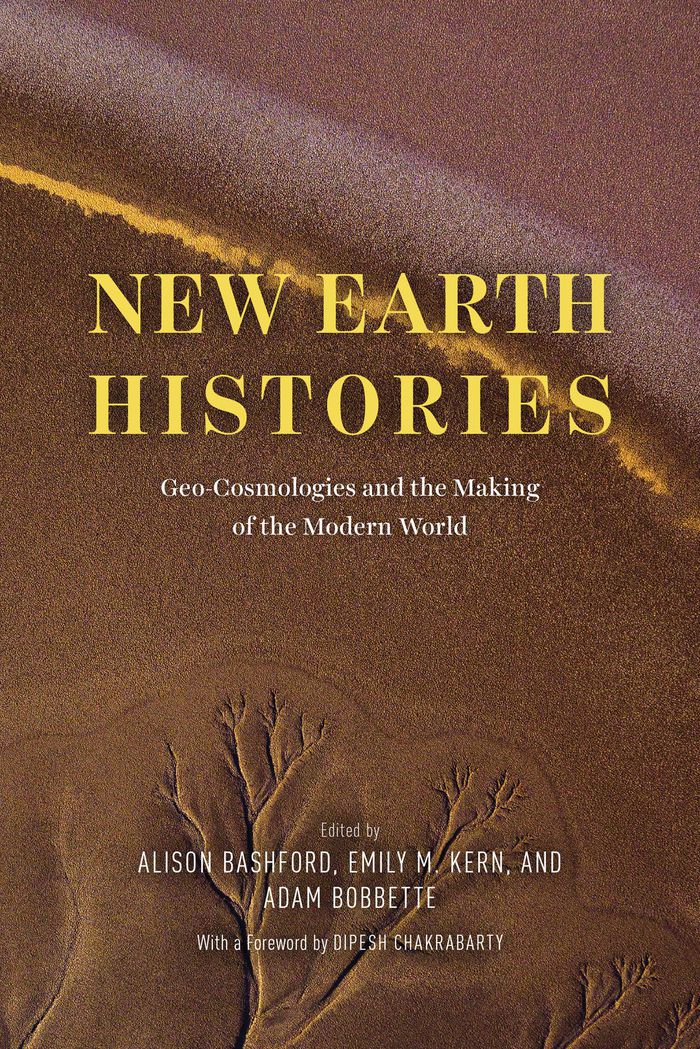
This book brings the history of the geosciences and world cosmologies together, exploring many traditions, including Chinese, Pacific, Islamic, South and Southeast Asian conceptions of the earth’s origin and makeup. Together the chapters ask: How have different ideas about the sacred, animate, and earthly changed modern environmental sciences? How have different world(...)
Publication:
novembre 2023
novembre 2023
Titre:
New earth histories: Geo-cosmologies and the making of the modern world
Actions:
Prix:
$58.95
(disponible en magasin)
Résumé:
This book brings the history of the geosciences and world cosmologies together, exploring many traditions, including Chinese, Pacific, Islamic, South and Southeast Asian conceptions of the earth’s origin and makeup. Together the chapters ask: How have different ideas about the sacred, animate, and earthly changed modern environmental sciences? How have different world traditions understood human and geological origins? How does the inclusion of multiple cosmologies change the meaning of the Anthropocene and the global climate crisis? By carefully examining these questions, ''New earth histories'' sets an ambitious agenda for how we think about the earth. The chapters consider debates about the age and structure of the earth, how humans and earth systems interact, and how empire has been conceived in multiple traditions. The methods the authors deploy are diverse—from cultural history and visual and material studies to ethnography, geography, and Indigenous studies—and the effect is to highlight how earth knowledge emerged from historically specific situations. ''New earth histories'' provides both a framework for studying science at a global scale and fascinating examples to educate as well as inspire future work. Essential reading for students and scholars of earth science history, environmental humanities, history of science and religion, and science and empire.
Classification:
livres
livres
Publication:
novembre 2023
novembre 2023
Classification:
livres
livres
Exemplaires:
Description:
xxix, 587 pages : maps ; 24 cm
Description:
xxix, 587 pages : maps ; 24 cm
Auteur:
Sujet:
Publication:
Cambridge, Mass. : Harvard University Press, 1993., ©1993
Cambridge, Mass. : Harvard University Press, 1993., ©1993
Titre:
The Roman Near East, 31 B.C.-A.D. 337 / Fergus Millar.
Actions:
Exemplaires:
Description:
xxix, 587 pages : maps ; 24 cm
The Roman Near East, 31 B.C.-A.D. 337 / Fergus Millar.
Actions:
Exemplaires:
Description:
xxix, 587 pages : maps ; 24 cm
Classification:
livres
livres
Publication:
Cambridge, Mass. : Harvard University Press, 1993., ©1993
Cambridge, Mass. : Harvard University Press, 1993., ©1993
Auteur:
Sujet:
Classification:
livres
livres
Prix:
$52.95
(disponible sur commande)
Résumé:
In recent years the idea of sacred space has not been considered a relevant topic in contemporary architecture, a neglect that is even more pronounced in terms of debates about the city. The texts and projects collected together in this book aim to redress this oversight, and re-open a contemporary understanding and discussion of the architecture of sacred space. The book(...)
Sujet:
Architecture contemporaine
Architecture contemporaine
Publication:
novembre 2016
novembre 2016
Titre:
AA Agendas: Rituals and walls. The architecture of sacred space
Actions:
Prix:
$52.95
(disponible sur commande)
Résumé:
In recent years the idea of sacred space has not been considered a relevant topic in contemporary architecture, a neglect that is even more pronounced in terms of debates about the city. The texts and projects collected together in this book aim to redress this oversight, and re-open a contemporary understanding and discussion of the architecture of sacred space. The book itself is the result of a year-long investigation on the nature of sacred space and its manifestation developed in the AA’s Diploma Unit 14. It consists of design proposals that range from a multi-faith school in Strasbourg to the reconstruction of a festival hall in the city of Xian, China; from a Jesuit monastery in Detroit to a women’s Islamic centre in Paris. Each proposal is introduced by critical texts that analyse the political and ideological meaning of religious architecture. The book is complemented by essays by Pier Vittorio Aureli, Maria Sheherazade Giudici and Hamed Khosravi that focus on the relationship between forms of worship and architecture, and argue that within sacred space form must follow function – in other words, architectural space must adhere to the rituals through which the sacred is enacted, and that the meaning of sacred space goes far beyond the stereotypes of contemplation and spirituality, and instead aligns with the political and social ethos of the city.
Classification:
livres
livres
Publication:
novembre 2016
novembre 2016
Sujet:
Architecture contemporaine
Architecture contemporaine
Classification:
périodiques
périodiques
Titre:
Cabinet 61: Calendars
Cabinet 61: Calendars
Actions:
Prix:
$15.00
(disponible sur commande)
Résumé:
This description of "Cabinet issue 61" was written on 1 September 2015. Which also happens to be 17 Dhu al-Qada 1436. And 17 Elul 5775. And 19 Wu 4713. The passage of time may be immutable, but the innumerable systems (Gregorian, Islamic, Hebrew and Chinese, respectively, above) that have been used to order our experience of Earth’s transit through the solar system(...)
Titre:
Cabinet 61: Calendars
Actions:
Prix:
$15.00
(disponible sur commande)
Résumé:
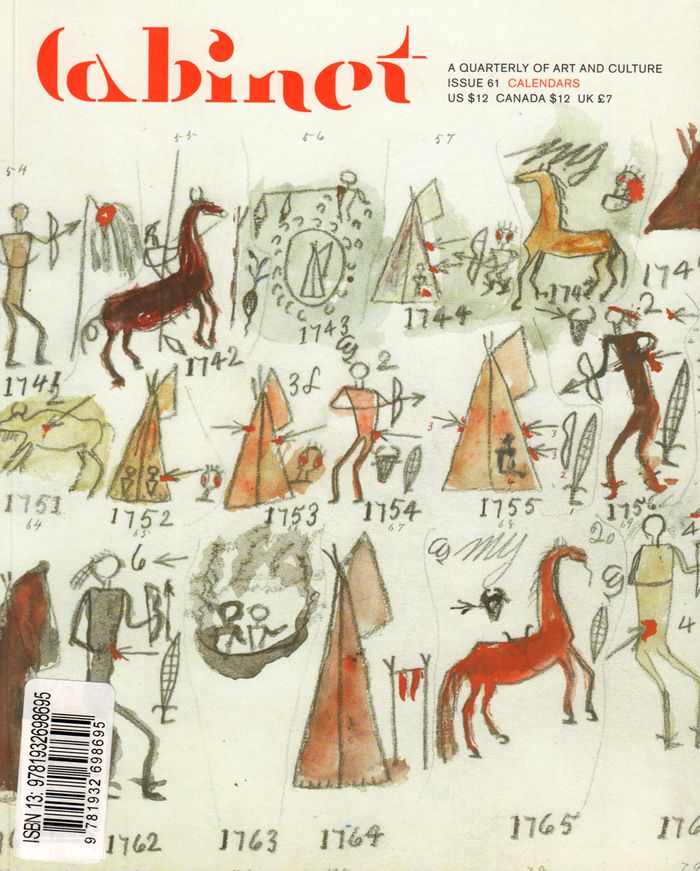
This description of "Cabinet issue 61" was written on 1 September 2015. Which also happens to be 17 Dhu al-Qada 1436. And 17 Elul 5775. And 19 Wu 4713. The passage of time may be immutable, but the innumerable systems (Gregorian, Islamic, Hebrew and Chinese, respectively, above) that have been used to order our experience of Earth’s transit through the solar system suggest that our methods of measuring it are not. With its roots in the Latin kalendae—meaning "the called," the word refers to the practice of Roman priests "calling" the first day of each Roman month—the calendar has long had a profound relationship to the state’s economic, religious and political power. And the common trajectory of calendars’ development during mid- to late antiquity, from empirical, flexible systems to schematic, fixed ones, also has telling parallels with shifts in broader social, scientific and technological attitudes. "Cabinet issue 61", with a special section on "Calendars," includes Sebastian Lunefeld on why so many radical political movements have tried to institute calendar reform; Joanna Dopico on 19th-century French sociologist August Comte’s positivist calendar; and Gordon Landon on why some cultures developed, and continue to use, lunar calendars. Elsewhere in the issue: David Serlin on the long history of battlefield bandages with instructions printed on them; Tom Levin on early "voicemail," messages recorded on vinyl and mailed to loved ones; and Christopher Turner on the rise and fall of scratch-and-sniff films.
Classification:
périodiques
périodiques
Publication:
février 2017
février 2017
Sujet:
Revues
Revues
Classification:
livres
livres
Actions:
Prix:
$58.95
(disponible sur commande)
Résumé:
Bathing in antiquity elevates a prosaic function to the level of a civic institution for which there is no counterpart in contemporary culture. Enriched by over 500 illustrations, many of them by the author, "Baths and bathing in classical antiquity" is an important sourcebook for this ancient institution. Through hundreds of examples, it reviews and analyzes the(...)
Titre:
Baths and bathing in classical antiquity
Actions:
Prix:
$58.95
(disponible sur commande)
Résumé:
Bathing in antiquity elevates a prosaic function to the level of a civic institution for which there is no counterpart in contemporary culture. Enriched by over 500 illustrations, many of them by the author, "Baths and bathing in classical antiquity" is an important sourcebook for this ancient institution. Through hundreds of examples, it reviews and analyzes the structure, function, and design of baths, seeking to integrate their architecture with the wider social and cultural custom of bathing, and examining in particular the changes this custom underwent in Late Antiquity and in Byzantine and Islamic cultures. Yegul explores the complexities of ancient bathing from several points of view. Sociologically, the baths with their vast appeal for all levels of society - were seen as the epitome of democratic ideals and institutions. Politically, they provided the perfect vehicle of propaganda : their lavish and magnificent interiors reflected the might and prosperity of the Roman empire and the apparent generosity of the emperor himself. Architecturally, baths are at the vanguard in the development of Roman building technology. Some of the earliest uses of concrete as a building material and the most innovative applications of the aesthetics of concrete - bold, curvilinear forms, vaults, and domes involved bath buildings. Because of their status as transition between purely utilitarian structures and the more conservative, traditional forms of public and religious architecture, the baths helped to propagate and make acceptable new ideas and new styles in architecture.
Classification:
livres
livres
Publication:
août 1995, Cambridge
août 1995, Cambridge
Classification:
livres
livres
Actions:
Exemplaires:
Description:
192 pages : illustrations (chiely color), color maps ; 23 cm
Description:
192 pages : illustrations (chiely color), color maps ; 23 cm
Auteur:
Sujet:
Publication:
Rotterdam : NAi Publishers ; New York : D.A.P./Distributed Art Publishers [distributor], ©2009.
Rotterdam : NAi Publishers ; New York : D.A.P./Distributed Art Publishers [distributor], ©2009.
Titre:
The mosque : political, architectural and social transformations / [compiled and edited by] Ergün Erkoçu and Cihan Buǧdaci ; [with contributions by Frits Bolkestein [and others]].
Actions:
Exemplaires:
Description:
192 pages : illustrations (chiely color), color maps ; 23 cm
The mosque : political, architectural and social transformations / [compiled and edited by] Ergün Erkoçu and Cihan Buǧdaci ; [with contributions by Frits Bolkestein [and others]].
Actions:
Exemplaires:
Description:
192 pages : illustrations (chiely color), color maps ; 23 cm
Classification:
livres
livres
Publication:
Rotterdam : NAi Publishers ; New York : D.A.P./Distributed Art Publishers [distributor], ©2009.
Rotterdam : NAi Publishers ; New York : D.A.P./Distributed Art Publishers [distributor], ©2009.
Auteur:
Sujet:
Classification:
livres
livres
Actions:
Prix:
$29.95
(disponible sur commande)
Résumé:
In this publication, the Indonesian architectural and urban historian Abidin Kusno explores the connections between the built environment and political consciousness in Indonesia during the colonial and postcolonial eras. Focusing primarily on Jakarta, he describes how perceptions of the past, anxieties about the rapid pace of change in the present, and hopes for the(...)
Titre:
The appearances of memory : mnemonic practices of architecture and urban form in Indonesia
Actions:
Prix:
$29.95
(disponible sur commande)
Résumé:
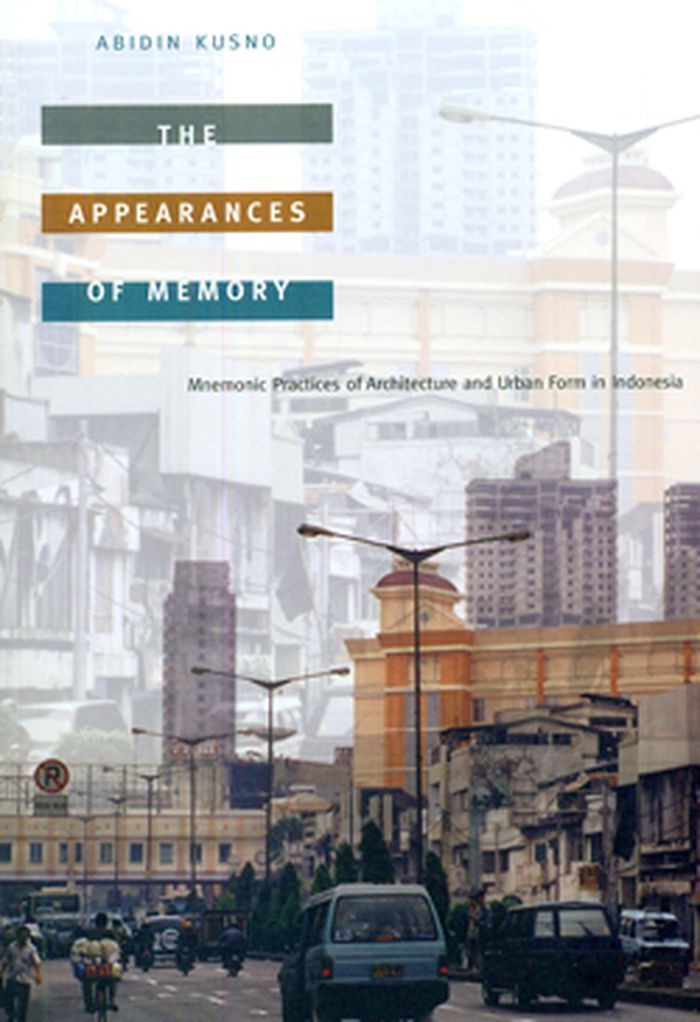
In this publication, the Indonesian architectural and urban historian Abidin Kusno explores the connections between the built environment and political consciousness in Indonesia during the colonial and postcolonial eras. Focusing primarily on Jakarta, he describes how perceptions of the past, anxieties about the rapid pace of change in the present, and hopes for the future have been embodied in architecture and urban space at different historical moments. He argues that the built environment serves as a reminder of the practices of the past and an instantiation of the desire to remake oneself within, as well as beyond, one’s particular time and place. Addressing developments in Indonesia since the fall of President Suharto’s regime in 1998, Kusno delves into such topics as the domestication of traumatic violence and the restoration of order in the urban space, the intense interest in urban history in contemporary Indonesia, and the implications of "superblocks", large urban complexes consisting of residences, offices, shops, and entertainment venues. Moving farther back in time, he examines how Indonesian architects reinvented colonial architectural styles to challenge the political culture of the state, how colonial structures such as railway and commercial buildings created a new, politically charged cognitive map of cities in Java in the early twentieth century, and how the Dutch, in attempting to quell dissent, imposed a distinctive urban visual order in the 1930s. Finally, the present and the past meet in his long-term considerations of how Java has responded to the global flow of Islamic architecture, and how the meanings of Indonesian gatehouses have changed and persisted over time.
Classification:
livres
livres
Publication:
avril 2010
avril 2010
Sujet:
Histoire jusqu'à 1900, Asie
Histoire jusqu'à 1900, Asie
Classification:
livres
livres
Actions:
Exemplaires:
Description:
141 pages : illustrations ; 26 cm
Description:
141 pages : illustrations ; 26 cm
Auteur:
Sujet:
Publication:
Harmondsworth, Middlesex, England ; New York, N.Y., U.S.A. : Viking, [1986], ©1986
Harmondsworth, Middlesex, England ; New York, N.Y., U.S.A. : Viking, [1986], ©1986
Titre:
Traveller through time : a photographic journey with Freya Stark / Malise Ruthven.
Actions:
Exemplaires:
Description:
141 pages : illustrations ; 26 cm
Traveller through time : a photographic journey with Freya Stark / Malise Ruthven.
Actions:
Exemplaires:
Description:
141 pages : illustrations ; 26 cm
Classification:
livres
livres
Publication:
Harmondsworth, Middlesex, England ; New York, N.Y., U.S.A. : Viking, [1986], ©1986
Harmondsworth, Middlesex, England ; New York, N.Y., U.S.A. : Viking, [1986], ©1986
Auteur:
Sujet:
Classification:
livres
livres
Titre:
Building for hope
Building for hope
Actions:
Prix:
$39.95
(disponible sur commande)
Résumé:
This new book by Syrian architect Marwa al-Sabouni, seeks to understand how cities and buildings- scarred by conflict, blight, and pandemic- can be healed through design and urban mindfulness. When Marwa al-Sabouni published Battle for Home in 2016, she was a little-known architect, living in battle-ravaged Homs, Syria, unable to practice her profession. She turned her(...)
Titre:
Building for hope
Actions:
Prix:
$39.95
(disponible sur commande)
Résumé:
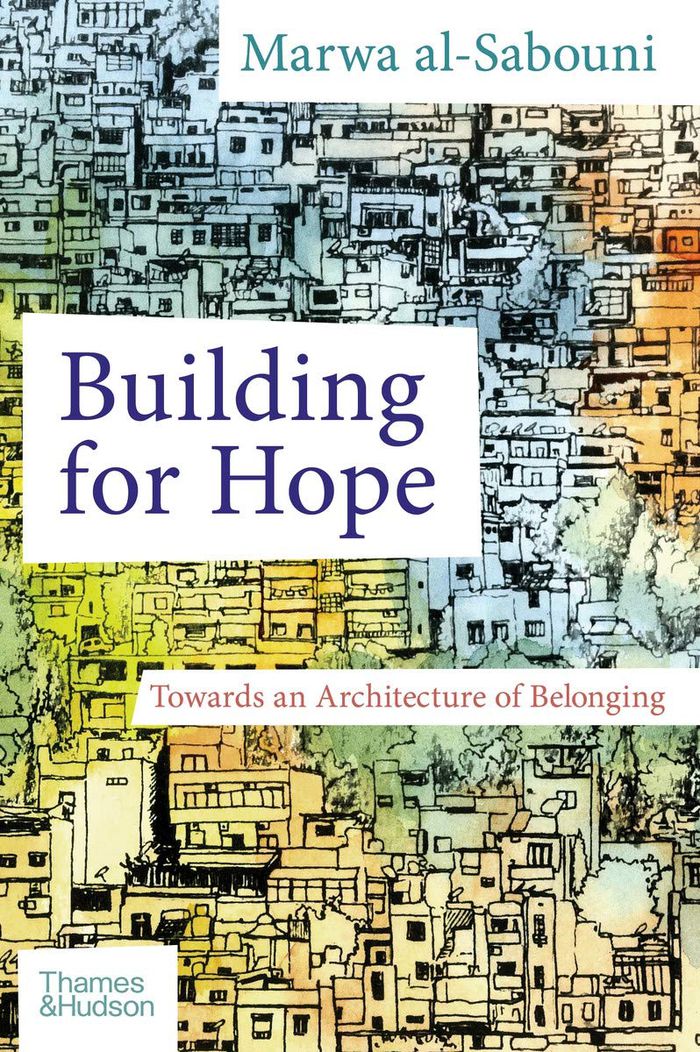
This new book by Syrian architect Marwa al-Sabouni, seeks to understand how cities and buildings- scarred by conflict, blight, and pandemic- can be healed through design and urban mindfulness. When Marwa al-Sabouni published Battle for Home in 2016, she was a little-known architect, living in battle-ravaged Homs, Syria, unable to practice her profession. She turned her fierce intelligence to chronicling how her city and country were undone through decades of architectural mismanagement and mistakes. Once published, Marwa al-Sabouni’s book and story attracted the attention of international media- CNN, The New York Times- and received critical acclaim worldwide. The United Nations called on her for insights and expertise. She became a TED fellow, was invited to speak to audiences around the world, and some suggested she be nominated for architecture’s highest honor, the Pritzker Prize. Al-Sabouni’s deep understanding of Middle Eastern heritage and architecture gives her insight into a wide range of cities, informing her views on how cities work best, how they might fail, and what can be done to harmonize the lives of all their inhabitants. In this new book, al-Sabouni draws together several narratives: her personal and professional observations of some of the world’s most fascinating cities, from Detroit to Helsinki; the lessons that Western societies might learn from Islamic culture and design; and philosophical reflections on how our personal and communal spaces can provide the basic foundations for happiness. Through this tapestry of personal experience, unblinking perspective, and insight, al-Sabouni offers real-world solutions- and hope- for how peace might be created through mindful urban planning.
Classification:
livres
livres
Publication:
avril 2021
avril 2021
Sujet:
Théorie de l’architecture
Théorie de l’architecture


