


44145 Résultats
Classification:
expositions
expositions
Actions:
Description:
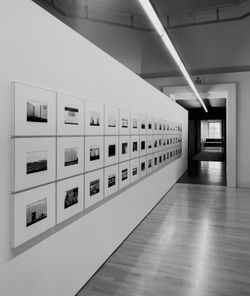
L’exposition présente les œuvres de l’artiste américain Lewis Baltz, lesquelles incitent à la réflexion critique portant sur les relations entre l’architecture, le paysage et la photographie. Les nouveaux parcs industriels fait partie d’une série monographique élaborée dans les années 1970 (The Tract Houses, Maryland, Nevada et Park City), qui traite de vastes questions(...)
L’exposition présente les œuvres de l’artiste américain Lewis Baltz, lesquelles incitent à la réflexion critique portant sur les relations entre l’architecture, le paysage et la photographie. Les nouveaux parcs industriels fait partie d’une série monographique élaborée dans les années 1970 (The Tract Houses, Maryland, Nevada et Park City), qui traite de vastes questions(...)
Localisation:
Salle octogonale
Salle octogonale
Date:
18 avril 2002 au 29 septembre 2002
18 avril 2002 au 29 septembre 2002
Titre:
Lewis Baltz : Les nouveaux parcs industriels près de Irvine, Californie
Actions:
Description:
L’exposition présente les œuvres de l’artiste américain Lewis Baltz, lesquelles incitent à la réflexion critique portant sur les relations entre l’architecture, le paysage et la photographie. Les nouveaux parcs industriels fait partie d’une série monographique élaborée dans les années 1970 (The Tract Houses, Maryland, Nevada et Park City), qui traite de vastes questions(...)
Lewis Baltz : Les nouveaux parcs industriels près de Irvine, Californie
Actions:
Description:
L’exposition présente les œuvres de l’artiste américain Lewis Baltz, lesquelles incitent à la réflexion critique portant sur les relations entre l’architecture, le paysage et la photographie. Les nouveaux parcs industriels fait partie d’une série monographique élaborée dans les années 1970 (The Tract Houses, Maryland, Nevada et Park City), qui traite de vastes questions(...)
Classification:
expositions
expositions
Date:
18 avril 2002 au
29 septembre 2002
18 avril 2002 au
29 septembre 2002
Localisation:
Salle octogonale
Salle octogonale
Classification:
archives
Niveau de description archivistique:
Fonds
archives
Niveau de description archivistique:
Fonds
Numéro de référence:
AP137
Résumé:
The fonds documents architectural projects from 1955-1969 by the Montréal-based firm of Affleck, Desbarats, Dimakopoulos, Lebensold, Sise. Most of the 44 projects are located in Canada, and include major buildings such as Place Ville Marie, Place Bonaventure, and the National Arts Centre in Ottawa. Two projects are in Italy, and there is a proposed exhibition pavilion for Osaka, Japan. The fonds consists primarily of architectural drawings - design development, presentation and working drawings - and some presentation panels probably used for exhibition purposes.
AP137
Résumé:
The fonds documents architectural projects from 1955-1969 by the Montréal-based firm of Affleck, Desbarats, Dimakopoulos, Lebensold, Sise. Most of the 44 projects are located in Canada, and include major buildings such as Place Ville Marie, Place Bonaventure, and the National Arts Centre in Ottawa. Two projects are in Italy, and there is a proposed exhibition pavilion for Osaka, Japan. The fonds consists primarily of architectural drawings - design development, presentation and working drawings - and some presentation panels probably used for exhibition purposes.
Personnes et institutions:
Date:
1955, 1957-1969
1955, 1957-1969
Titre:
Fonds Affleck, Desbarats, Dimakopoulos, Lebensold, Sise
Actions:
AP137
Résumé:
The fonds documents architectural projects from 1955-1969 by the Montréal-based firm of Affleck, Desbarats, Dimakopoulos, Lebensold, Sise. Most of the 44 projects are located in Canada, and include major buildings such as Place Ville Marie, Place Bonaventure, and the National Arts Centre in Ottawa. Two projects are in Italy, and there is a proposed exhibition pavilion for Osaka, Japan. The fonds consists primarily of architectural drawings - design development, presentation and working drawings - and some presentation panels probably used for exhibition purposes.
Fonds Affleck, Desbarats, Dimakopoulos, Lebensold, Sise
Actions:
AP137
Résumé:
The fonds documents architectural projects from 1955-1969 by the Montréal-based firm of Affleck, Desbarats, Dimakopoulos, Lebensold, Sise. Most of the 44 projects are located in Canada, and include major buildings such as Place Ville Marie, Place Bonaventure, and the National Arts Centre in Ottawa. Two projects are in Italy, and there is a proposed exhibition pavilion for Osaka, Japan. The fonds consists primarily of architectural drawings - design development, presentation and working drawings - and some presentation panels probably used for exhibition purposes.
Classification:
archives
Niveau de description archivistique:
Fonds
archives
Niveau de description archivistique:
Fonds
Date:
1955, 1957-1969
1955, 1957-1969
Personnes et institutions:
Classification:
photographies
photographies
Titre:
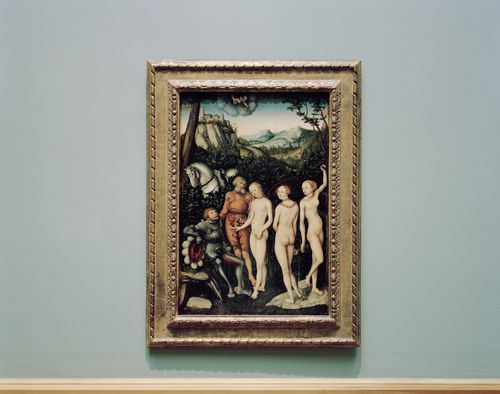
Questioning Pictures: Photograph of Judgment of Paris, painting by Lucas Cranach the elder, 1528
Questioning Pictures: Photograph of Judgment of Paris, painting by Lucas Cranach the elder, 1528
Actions:
Numéro de référence:
PH2018:0005:025
Description:
Photograph by Stefano Graziani of the following work: Lucas Cranach the Elder, The Judgment of the Paris, mixed media on beech wood, 84.7 x 57 cm 1528, Kunstmuseum Basel, Schenkung Martha und Robert von Hirsch 1977, Inv. G 1977.37, Basel Questioning Pictures is a 36 photograph project commissioned by Fondazione Prada, Milan. Artist Stefano Graziani investigates archival and conservation systems in a number of museums. Through photographing museum objects, Graziani, focusing on the relationship between photographs, the museum objects and the power structures at play within institutions. The museums include the Canadian Centre for Architecture (CCA) in Montréal, Canada; Sir John Soane’s Museum in London, UK; the Kunstmuseum Basel, Switzerland; Museum Insel Hombroich in Neuss, Germany; the Museo di Castelvecchio in Verona, Italy; and the Plaster Cast Gallery at Museo Canova in Possagno, Italy.
PH2018:0005:025
Description:
Photograph by Stefano Graziani of the following work: Lucas Cranach the Elder, The Judgment of the Paris, mixed media on beech wood, 84.7 x 57 cm 1528, Kunstmuseum Basel, Schenkung Martha und Robert von Hirsch 1977, Inv. G 1977.37, Basel Questioning Pictures is a 36 photograph project commissioned by Fondazione Prada, Milan. Artist Stefano Graziani investigates archival and conservation systems in a number of museums. Through photographing museum objects, Graziani, focusing on the relationship between photographs, the museum objects and the power structures at play within institutions. The museums include the Canadian Centre for Architecture (CCA) in Montréal, Canada; Sir John Soane’s Museum in London, UK; the Kunstmuseum Basel, Switzerland; Museum Insel Hombroich in Neuss, Germany; the Museo di Castelvecchio in Verona, Italy; and the Plaster Cast Gallery at Museo Canova in Possagno, Italy.
Personnes et institutions:
Date:
2017
2017
Titre:
Questioning Pictures: Photograph of Judgment of Paris, painting by Lucas Cranach the elder, 1528
Actions:
PH2018:0005:025
Description:
Photograph by Stefano Graziani of the following work: Lucas Cranach the Elder, The Judgment of the Paris, mixed media on beech wood, 84.7 x 57 cm 1528, Kunstmuseum Basel, Schenkung Martha und Robert von Hirsch 1977, Inv. G 1977.37, Basel Questioning Pictures is a 36 photograph project commissioned by Fondazione Prada, Milan. Artist Stefano Graziani investigates archival and conservation systems in a number of museums. Through photographing museum objects, Graziani, focusing on the relationship between photographs, the museum objects and the power structures at play within institutions. The museums include the Canadian Centre for Architecture (CCA) in Montréal, Canada; Sir John Soane’s Museum in London, UK; the Kunstmuseum Basel, Switzerland; Museum Insel Hombroich in Neuss, Germany; the Museo di Castelvecchio in Verona, Italy; and the Plaster Cast Gallery at Museo Canova in Possagno, Italy.
Questioning Pictures: Photograph of Judgment of Paris, painting by Lucas Cranach the elder, 1528
Actions:
PH2018:0005:025
Description:
Photograph by Stefano Graziani of the following work: Lucas Cranach the Elder, The Judgment of the Paris, mixed media on beech wood, 84.7 x 57 cm 1528, Kunstmuseum Basel, Schenkung Martha und Robert von Hirsch 1977, Inv. G 1977.37, Basel Questioning Pictures is a 36 photograph project commissioned by Fondazione Prada, Milan. Artist Stefano Graziani investigates archival and conservation systems in a number of museums. Through photographing museum objects, Graziani, focusing on the relationship between photographs, the museum objects and the power structures at play within institutions. The museums include the Canadian Centre for Architecture (CCA) in Montréal, Canada; Sir John Soane’s Museum in London, UK; the Kunstmuseum Basel, Switzerland; Museum Insel Hombroich in Neuss, Germany; the Museo di Castelvecchio in Verona, Italy; and the Plaster Cast Gallery at Museo Canova in Possagno, Italy.
Classification:
photographies
photographies
Date:
2017
2017
Personnes et institutions:
Niveau de description archivistique:
Projet
Projet
Numéro de référence:
AP164.S1.1993.D11
Description:
The project series documents industrial prototypes of prefabricated homes designed for GIA y Asociados. The firm identified this project as number 89. Only fragments of the homes were built. Abalos & Herreros worked with Evelia Blanco, Ángel Borrego, Rafael Hernández, Jaime Cervera, Imetsol, TDM, Teodoro Martínez, Francisco Gómez and José Adolfo Forniés. Documenting the project are conceptual, design development, presentation and working drawings, correspondence, dummies, project descriptions and reference materials.
AP164.S1.1993.D11
Description:
The project series documents industrial prototypes of prefabricated homes designed for GIA y Asociados. The firm identified this project as number 89. Only fragments of the homes were built. Abalos & Herreros worked with Evelia Blanco, Ángel Borrego, Rafael Hernández, Jaime Cervera, Imetsol, TDM, Teodoro Martínez, Francisco Gómez and José Adolfo Forniés. Documenting the project are conceptual, design development, presentation and working drawings, correspondence, dummies, project descriptions and reference materials.
Personnes et institutions:
Date:
1993-1996, 2006
1993-1996, 2006
Titre:
Prototipos de vivienda industrializada: Casas AH-Gia (1993-1996)
Actions:
AP164.S1.1993.D11
Description:
The project series documents industrial prototypes of prefabricated homes designed for GIA y Asociados. The firm identified this project as number 89. Only fragments of the homes were built. Abalos & Herreros worked with Evelia Blanco, Ángel Borrego, Rafael Hernández, Jaime Cervera, Imetsol, TDM, Teodoro Martínez, Francisco Gómez and José Adolfo Forniés. Documenting the project are conceptual, design development, presentation and working drawings, correspondence, dummies, project descriptions and reference materials.
Prototipos de vivienda industrializada: Casas AH-Gia (1993-1996)
Actions:
AP164.S1.1993.D11
Description:
The project series documents industrial prototypes of prefabricated homes designed for GIA y Asociados. The firm identified this project as number 89. Only fragments of the homes were built. Abalos & Herreros worked with Evelia Blanco, Ángel Borrego, Rafael Hernández, Jaime Cervera, Imetsol, TDM, Teodoro Martínez, Francisco Gómez and José Adolfo Forniés. Documenting the project are conceptual, design development, presentation and working drawings, correspondence, dummies, project descriptions and reference materials.
Niveau de description archivistique:
Project
Project
Date:
1993-1996, 2006
1993-1996, 2006
Personnes et institutions:
Niveau de description archivistique:
Projet
Projet
Numéro de référence:
AP164.S1.1997.D5
Description:
The project series documents the demolition, design, and reconstruction of the Francisco González and Carmen Ordoñez house, in the Colina de los Chopos, Madrid, Spain. Abalos & Herreros worked with the firm Obiol & Moya. The firm identified this project as number 104. Documenting the project are conceptual, design development and working drawings, correspondence, project descriptions, budgets, specifications, notes, estimates, invoices, business agreements, proposals, quantity reports, models, reference, photographic, graphic and digital materials.
AP164.S1.1997.D5
Description:
The project series documents the demolition, design, and reconstruction of the Francisco González and Carmen Ordoñez house, in the Colina de los Chopos, Madrid, Spain. Abalos & Herreros worked with the firm Obiol & Moya. The firm identified this project as number 104. Documenting the project are conceptual, design development and working drawings, correspondence, project descriptions, budgets, specifications, notes, estimates, invoices, business agreements, proposals, quantity reports, models, reference, photographic, graphic and digital materials.
Personnes et institutions:
Date:
1976, 1991-2000, predominant 1997-1999
1976, 1991-2000, predominant 1997-1999
Titre:
Casa González, Madrid, Spain (1997)
Actions:
AP164.S1.1997.D5
Description:
The project series documents the demolition, design, and reconstruction of the Francisco González and Carmen Ordoñez house, in the Colina de los Chopos, Madrid, Spain. Abalos & Herreros worked with the firm Obiol & Moya. The firm identified this project as number 104. Documenting the project are conceptual, design development and working drawings, correspondence, project descriptions, budgets, specifications, notes, estimates, invoices, business agreements, proposals, quantity reports, models, reference, photographic, graphic and digital materials.
Casa González, Madrid, Spain (1997)
Actions:
AP164.S1.1997.D5
Description:
The project series documents the demolition, design, and reconstruction of the Francisco González and Carmen Ordoñez house, in the Colina de los Chopos, Madrid, Spain. Abalos & Herreros worked with the firm Obiol & Moya. The firm identified this project as number 104. Documenting the project are conceptual, design development and working drawings, correspondence, project descriptions, budgets, specifications, notes, estimates, invoices, business agreements, proposals, quantity reports, models, reference, photographic, graphic and digital materials.
Niveau de description archivistique:
Project
Project
Date:
1976, 1991-2000, predominant 1997-1999
1976, 1991-2000, predominant 1997-1999
Personnes et institutions:
Niveau de description archivistique:
Projet
Projet
Numéro de référence:
AP164.S1.2002.D2
Description:
The project series documents the Bioclimatic mixed-use towers in the Salburúa fens, Vitoria, Spain. The four “passive” towers include residential units, offices, and commercial space. The firm identified the project as number 146. In 2001, Abalos & Herreros was invited to the competition held by the Sociedad Urbanística Ensanche-21 and Jaureguizahar, where the firm's entry won first place. The firm worked with Renata Sentkiewicz, David Sobrino, and Obiol y Moya. Documenting the project is a model.
AP164.S1.2002.D2
Description:
The project series documents the Bioclimatic mixed-use towers in the Salburúa fens, Vitoria, Spain. The four “passive” towers include residential units, offices, and commercial space. The firm identified the project as number 146. In 2001, Abalos & Herreros was invited to the competition held by the Sociedad Urbanística Ensanche-21 and Jaureguizahar, where the firm's entry won first place. The firm worked with Renata Sentkiewicz, David Sobrino, and Obiol y Moya. Documenting the project is a model.
Personnes et institutions:
Date:
2002
2002
Titre:
Torres mixtas bioclimáticas en el Humedal de Salburua, Vitoria-Gasteiz, Spain (2002-2006)
Actions:
AP164.S1.2002.D2
Description:
The project series documents the Bioclimatic mixed-use towers in the Salburúa fens, Vitoria, Spain. The four “passive” towers include residential units, offices, and commercial space. The firm identified the project as number 146. In 2001, Abalos & Herreros was invited to the competition held by the Sociedad Urbanística Ensanche-21 and Jaureguizahar, where the firm's entry won first place. The firm worked with Renata Sentkiewicz, David Sobrino, and Obiol y Moya. Documenting the project is a model.
Torres mixtas bioclimáticas en el Humedal de Salburua, Vitoria-Gasteiz, Spain (2002-2006)
Actions:
AP164.S1.2002.D2
Description:
The project series documents the Bioclimatic mixed-use towers in the Salburúa fens, Vitoria, Spain. The four “passive” towers include residential units, offices, and commercial space. The firm identified the project as number 146. In 2001, Abalos & Herreros was invited to the competition held by the Sociedad Urbanística Ensanche-21 and Jaureguizahar, where the firm's entry won first place. The firm worked with Renata Sentkiewicz, David Sobrino, and Obiol y Moya. Documenting the project is a model.
Niveau de description archivistique:
Project
Project
Date:
2002
2002
Personnes et institutions:
Niveau de description archivistique:
Projet
Projet
Numéro de référence:
AP180.S1.1998.PR01
Description:
This project series documents the replanning of the Piazzale della Farnesina, the access avenue to the Foreign Ministry's office in Rome, Italy. This project was realized. Riva worked on this project from 1996-1999. The project was done in collaboration with Paolo Ricatti, P. Conviti, Giovanni Drugman, Monica Manfredi, Alessandro Scandurra, Paolo Bonvini, and Maddalena Ferrara. The project is recorded through studies and design development drawings, including plans, sections, elevations, and details for the outdoor furnishings, such as street lamps.
AP180.S1.1998.PR01
Description:
This project series documents the replanning of the Piazzale della Farnesina, the access avenue to the Foreign Ministry's office in Rome, Italy. This project was realized. Riva worked on this project from 1996-1999. The project was done in collaboration with Paolo Ricatti, P. Conviti, Giovanni Drugman, Monica Manfredi, Alessandro Scandurra, Paolo Bonvini, and Maddalena Ferrara. The project is recorded through studies and design development drawings, including plans, sections, elevations, and details for the outdoor furnishings, such as street lamps.
Personnes et institutions:
Date:
1998
1998
Titre:
Piazzale della Farnesina, Rome, Italy (1998)
Actions:
AP180.S1.1998.PR01
Description:
This project series documents the replanning of the Piazzale della Farnesina, the access avenue to the Foreign Ministry's office in Rome, Italy. This project was realized. Riva worked on this project from 1996-1999. The project was done in collaboration with Paolo Ricatti, P. Conviti, Giovanni Drugman, Monica Manfredi, Alessandro Scandurra, Paolo Bonvini, and Maddalena Ferrara. The project is recorded through studies and design development drawings, including plans, sections, elevations, and details for the outdoor furnishings, such as street lamps.
Piazzale della Farnesina, Rome, Italy (1998)
Actions:
AP180.S1.1998.PR01
Description:
This project series documents the replanning of the Piazzale della Farnesina, the access avenue to the Foreign Ministry's office in Rome, Italy. This project was realized. Riva worked on this project from 1996-1999. The project was done in collaboration with Paolo Ricatti, P. Conviti, Giovanni Drugman, Monica Manfredi, Alessandro Scandurra, Paolo Bonvini, and Maddalena Ferrara. The project is recorded through studies and design development drawings, including plans, sections, elevations, and details for the outdoor furnishings, such as street lamps.
Niveau de description archivistique:
Project
Project
Date:
1998
1998
Personnes et institutions:
Niveau de description archivistique:
Projet
Projet
Numéro de référence:
AP180.S1.2006.PR01
Description:
This project series documents an unrealized design for the control centre of Centrale Termoelettrica Edison, a thermoelectric power plant in Jesi, Italy. Riva worked on this project in 2006. It consisted of an upgrade to the building in order to adhere to environmental standards. The project is recorded through design development drawings, including axonometric drawings, exterior elevations, sections, floor plans, and a general plan for the power plant. The material also includes print-outs of renderings showing the entire power plant.
AP180.S1.2006.PR01
Description:
This project series documents an unrealized design for the control centre of Centrale Termoelettrica Edison, a thermoelectric power plant in Jesi, Italy. Riva worked on this project in 2006. It consisted of an upgrade to the building in order to adhere to environmental standards. The project is recorded through design development drawings, including axonometric drawings, exterior elevations, sections, floor plans, and a general plan for the power plant. The material also includes print-outs of renderings showing the entire power plant.
Personnes et institutions:
Date:
ca. 2006
ca. 2006
Titre:
Centrale Termoelettrica Edison [Edison thermoelectric power plant], Jesi, Italy (2006)
Actions:
AP180.S1.2006.PR01
Description:
This project series documents an unrealized design for the control centre of Centrale Termoelettrica Edison, a thermoelectric power plant in Jesi, Italy. Riva worked on this project in 2006. It consisted of an upgrade to the building in order to adhere to environmental standards. The project is recorded through design development drawings, including axonometric drawings, exterior elevations, sections, floor plans, and a general plan for the power plant. The material also includes print-outs of renderings showing the entire power plant.
Centrale Termoelettrica Edison [Edison thermoelectric power plant], Jesi, Italy (2006)
Actions:
AP180.S1.2006.PR01
Description:
This project series documents an unrealized design for the control centre of Centrale Termoelettrica Edison, a thermoelectric power plant in Jesi, Italy. Riva worked on this project in 2006. It consisted of an upgrade to the building in order to adhere to environmental standards. The project is recorded through design development drawings, including axonometric drawings, exterior elevations, sections, floor plans, and a general plan for the power plant. The material also includes print-outs of renderings showing the entire power plant.
Niveau de description archivistique:
Project
Project
Date:
ca. 2006
ca. 2006
Personnes et institutions:
Niveau de description archivistique:
Projet
Projet
Numéro de référence:
AP075.S1.1950.PR01
Description:
This project series documents Cornelia Hahn Oberlander's design for a neighbourhood playground for the Lutheran Settlement House on Frankford Avenue in Philadelphia, Pennsylvania. Oberlander worked on this project from 1950-1954 while working for the Citizen's Council on City Planning (CCCP) as community planner. The playground includes a basketball, badminton and handball field, an area for games on earth surface, a quiet area, and a paved area for small children. The project series consists solely of a general landscape plan of the playground.
AP075.S1.1950.PR01
Description:
This project series documents Cornelia Hahn Oberlander's design for a neighbourhood playground for the Lutheran Settlement House on Frankford Avenue in Philadelphia, Pennsylvania. Oberlander worked on this project from 1950-1954 while working for the Citizen's Council on City Planning (CCCP) as community planner. The playground includes a basketball, badminton and handball field, an area for games on earth surface, a quiet area, and a paved area for small children. The project series consists solely of a general landscape plan of the playground.
Personnes et institutions:
Date:
1950-1954
1950-1954
Titre:
Neighbourhood playground for Lutheran Settlement House, Philadelphia, Pennsylvania (1950-1954)
Actions:
AP075.S1.1950.PR01
Description:
This project series documents Cornelia Hahn Oberlander's design for a neighbourhood playground for the Lutheran Settlement House on Frankford Avenue in Philadelphia, Pennsylvania. Oberlander worked on this project from 1950-1954 while working for the Citizen's Council on City Planning (CCCP) as community planner. The playground includes a basketball, badminton and handball field, an area for games on earth surface, a quiet area, and a paved area for small children. The project series consists solely of a general landscape plan of the playground.
Neighbourhood playground for Lutheran Settlement House, Philadelphia, Pennsylvania (1950-1954)
Actions:
AP075.S1.1950.PR01
Description:
This project series documents Cornelia Hahn Oberlander's design for a neighbourhood playground for the Lutheran Settlement House on Frankford Avenue in Philadelphia, Pennsylvania. Oberlander worked on this project from 1950-1954 while working for the Citizen's Council on City Planning (CCCP) as community planner. The playground includes a basketball, badminton and handball field, an area for games on earth surface, a quiet area, and a paved area for small children. The project series consists solely of a general landscape plan of the playground.
Niveau de description archivistique:
Project
Project
Date:
1950-1954
1950-1954
Personnes et institutions:
Classification:
événements
événements
Actions:
Description:
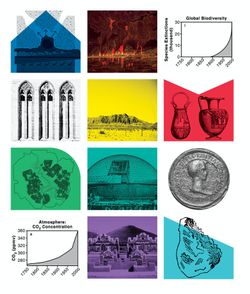
Depuis 2006, l’Aggregate Architectural History Collaborative s’est engagé dans de nombreux projets communs : de la création d’ouvrages collectifs à la rédaction conjointe, de l’organisation d’ateliers de révision par les pairs à la publication de sites web, en plus de conférences, de symposiums et de présentations publiques. Organisme à but non lucratif autofinancé,(...)
Depuis 2006, l’Aggregate Architectural History Collaborative s’est engagé dans de nombreux projets communs : de la création d’ouvrages collectifs à la rédaction conjointe, de l’organisation d’ateliers de révision par les pairs à la publication de sites web, en plus de conférences, de symposiums et de présentations publiques. Organisme à but non lucratif autofinancé,(...)
Date:
13 juillet 2023, 14h à 16h (EST)
13 juillet 2023, 14h à 16h (EST)
Titre:
Modalités et limites de la collaboration
Actions:
Description:
Depuis 2006, l’Aggregate Architectural History Collaborative s’est engagé dans de nombreux projets communs : de la création d’ouvrages collectifs à la rédaction conjointe, de l’organisation d’ateliers de révision par les pairs à la publication de sites web, en plus de conférences, de symposiums et de présentations publiques. Organisme à but non lucratif autofinancé,(...)
Modalités et limites de la collaboration
Actions:
Description:
Depuis 2006, l’Aggregate Architectural History Collaborative s’est engagé dans de nombreux projets communs : de la création d’ouvrages collectifs à la rédaction conjointe, de l’organisation d’ateliers de révision par les pairs à la publication de sites web, en plus de conférences, de symposiums et de présentations publiques. Organisme à but non lucratif autofinancé,(...)
Classification:
événements
événements
Date:
13 juillet 2023
14h à 16h (EST)
13 juillet 2023
14h à 16h (EST)


