


7241 Résultats
Classification:
expositions
expositions
Titre:
La ville en jeux
La ville en jeux
Actions:
Description:
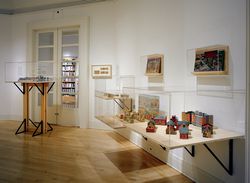
L’exposition La ville en jeux explore la manière dont on a représenté les villes et villages dans les jouets d’Europe et d’Amérique du Nord. Les 29 villes en jouet de l’exposition, tirées de la collection de jeux et jouets d’architecture du CCA, reflètent l’évolution des valeurs sociales en même temps que différentes façons de concevoir, d’organiser et de planifier le(...)
L’exposition La ville en jeux explore la manière dont on a représenté les villes et villages dans les jouets d’Europe et d’Amérique du Nord. Les 29 villes en jouet de l’exposition, tirées de la collection de jeux et jouets d’architecture du CCA, reflètent l’évolution des valeurs sociales en même temps que différentes façons de concevoir, d’organiser et de planifier le(...)
Localisation:
Salle octogonale
Salle octogonale
Date:
22 octobre 1997 au 31 mai 1998
22 octobre 1997 au 31 mai 1998
Titre:
La ville en jeux
Actions:
Description:
L’exposition La ville en jeux explore la manière dont on a représenté les villes et villages dans les jouets d’Europe et d’Amérique du Nord. Les 29 villes en jouet de l’exposition, tirées de la collection de jeux et jouets d’architecture du CCA, reflètent l’évolution des valeurs sociales en même temps que différentes façons de concevoir, d’organiser et de planifier le(...)
La ville en jeux
Actions:
Description:
L’exposition La ville en jeux explore la manière dont on a représenté les villes et villages dans les jouets d’Europe et d’Amérique du Nord. Les 29 villes en jouet de l’exposition, tirées de la collection de jeux et jouets d’architecture du CCA, reflètent l’évolution des valeurs sociales en même temps que différentes façons de concevoir, d’organiser et de planifier le(...)
Classification:
expositions
expositions
Date:
22 octobre 1997 au
31 mai 1998
22 octobre 1997 au
31 mai 1998
Localisation:
Salle octogonale
Salle octogonale
Classification:
expositions
expositions

Actions:
Description:
L’exposition témoigne de l’œuvre maîtresse de Cormier, l’Université de Montréal, construite sur le versant nord-ouest du mont Royal entre 1928 et 1943. Elle permet de situer l’architecte montréalais ainsi que son œuvre dans un courant international de pensée où convergent les influences nord-américaines et européennes. Les documents qu’on y présente proviennent en grande(...)
L’exposition témoigne de l’œuvre maîtresse de Cormier, l’Université de Montréal, construite sur le versant nord-ouest du mont Royal entre 1928 et 1943. Elle permet de situer l’architecte montréalais ainsi que son œuvre dans un courant international de pensée où convergent les influences nord-américaines et européennes. Les documents qu’on y présente proviennent en grande(...)
Localisation:
Salles principales
Salles principales
Date:
2 mai 1990 au 21 octobre 1990
2 mai 1990 au 21 octobre 1990
Titre:
Ernest Cormier et l'Université de Montréal
Actions:
Description:
L’exposition témoigne de l’œuvre maîtresse de Cormier, l’Université de Montréal, construite sur le versant nord-ouest du mont Royal entre 1928 et 1943. Elle permet de situer l’architecte montréalais ainsi que son œuvre dans un courant international de pensée où convergent les influences nord-américaines et européennes. Les documents qu’on y présente proviennent en grande(...)
Ernest Cormier et l'Université de Montréal
Actions:
Description:
L’exposition témoigne de l’œuvre maîtresse de Cormier, l’Université de Montréal, construite sur le versant nord-ouest du mont Royal entre 1928 et 1943. Elle permet de situer l’architecte montréalais ainsi que son œuvre dans un courant international de pensée où convergent les influences nord-américaines et européennes. Les documents qu’on y présente proviennent en grande(...)
Classification:
expositions
expositions
Date:
2 mai 1990 au
21 octobre 1990
2 mai 1990 au
21 octobre 1990
Localisation:
Salles principales
Salles principales
Niveau de description archivistique:
Projet
Projet
Numéro de référence:
AP018.S1.1971.PR07
Description:
This project series documents the design and construction of the Health Sciences Complex at Memorial University (MUN) in St. John’s, Newfoundland from 1971-1976. The office identified the project number as 7111. The Health Sciences Complex was built to replace the St. John’s General Hospital. Constructed on MUN’s north campus, the hospital would integrate the university’s medical school to create a teaching hospital. The design included classrooms, labs, and a library for the students. The St. John’s General Hospital and MUN medical school would retain their independence and authority while sharing the space. The proposed design called for a banal building that was always unfinished so that future expansions and changes could be easily accommodated. The project also included the construction of the Utilities Annex building, a separate building to house heating and cooling plants, generators and electrical distribution. Having these facilities in a separate building would allow them to expand the hospital without crucial systems getting in the way. The main expansion envisioned in the scope of this project was the Life Sciences Complex, a university building and hospital connected to the Health Sciences Complex. In the project materials, the project is often referred to as The Health and Life Sciences Complex, although only the Health Sciences Complex was constructed under this project number. The original budget for the project was $60 million, a figure which included the Life Sciences Complex. The project is recorded through drawings, photographic materials, boards of material samples, a painting and textual records dating from 1971-1978. The textual records include correspondence with the client and consultants, meeting minutes and reports, consultancy records, a systems report, food facilities planning records, outline specifications, product catalogues for hospital equipment, research, project proposals, financial documentation and schedules. All of the drawings issued for tender are arranged within the textual materials. There are also two presentation boards, one of a project painting and the other of a photograph of the site model. Box AP018.S1.1971.PR07.049 contains an index to the textual records, which was created by the office.
AP018.S1.1971.PR07
Description:
This project series documents the design and construction of the Health Sciences Complex at Memorial University (MUN) in St. John’s, Newfoundland from 1971-1976. The office identified the project number as 7111. The Health Sciences Complex was built to replace the St. John’s General Hospital. Constructed on MUN’s north campus, the hospital would integrate the university’s medical school to create a teaching hospital. The design included classrooms, labs, and a library for the students. The St. John’s General Hospital and MUN medical school would retain their independence and authority while sharing the space. The proposed design called for a banal building that was always unfinished so that future expansions and changes could be easily accommodated. The project also included the construction of the Utilities Annex building, a separate building to house heating and cooling plants, generators and electrical distribution. Having these facilities in a separate building would allow them to expand the hospital without crucial systems getting in the way. The main expansion envisioned in the scope of this project was the Life Sciences Complex, a university building and hospital connected to the Health Sciences Complex. In the project materials, the project is often referred to as The Health and Life Sciences Complex, although only the Health Sciences Complex was constructed under this project number. The original budget for the project was $60 million, a figure which included the Life Sciences Complex. The project is recorded through drawings, photographic materials, boards of material samples, a painting and textual records dating from 1971-1978. The textual records include correspondence with the client and consultants, meeting minutes and reports, consultancy records, a systems report, food facilities planning records, outline specifications, product catalogues for hospital equipment, research, project proposals, financial documentation and schedules. All of the drawings issued for tender are arranged within the textual materials. There are also two presentation boards, one of a project painting and the other of a photograph of the site model. Box AP018.S1.1971.PR07.049 contains an index to the textual records, which was created by the office.
Personnes et institutions:
Date:
1970-1978
1970-1978
Titre:
Memorial University of Newfoundland, Health Sciences Complex, St. Johns, Newfoundland (1971-1976)
Actions:
AP018.S1.1971.PR07
Description:
This project series documents the design and construction of the Health Sciences Complex at Memorial University (MUN) in St. John’s, Newfoundland from 1971-1976. The office identified the project number as 7111. The Health Sciences Complex was built to replace the St. John’s General Hospital. Constructed on MUN’s north campus, the hospital would integrate the university’s medical school to create a teaching hospital. The design included classrooms, labs, and a library for the students. The St. John’s General Hospital and MUN medical school would retain their independence and authority while sharing the space. The proposed design called for a banal building that was always unfinished so that future expansions and changes could be easily accommodated. The project also included the construction of the Utilities Annex building, a separate building to house heating and cooling plants, generators and electrical distribution. Having these facilities in a separate building would allow them to expand the hospital without crucial systems getting in the way. The main expansion envisioned in the scope of this project was the Life Sciences Complex, a university building and hospital connected to the Health Sciences Complex. In the project materials, the project is often referred to as The Health and Life Sciences Complex, although only the Health Sciences Complex was constructed under this project number. The original budget for the project was $60 million, a figure which included the Life Sciences Complex. The project is recorded through drawings, photographic materials, boards of material samples, a painting and textual records dating from 1971-1978. The textual records include correspondence with the client and consultants, meeting minutes and reports, consultancy records, a systems report, food facilities planning records, outline specifications, product catalogues for hospital equipment, research, project proposals, financial documentation and schedules. All of the drawings issued for tender are arranged within the textual materials. There are also two presentation boards, one of a project painting and the other of a photograph of the site model. Box AP018.S1.1971.PR07.049 contains an index to the textual records, which was created by the office.
Memorial University of Newfoundland, Health Sciences Complex, St. Johns, Newfoundland (1971-1976)
Actions:
AP018.S1.1971.PR07
Description:
This project series documents the design and construction of the Health Sciences Complex at Memorial University (MUN) in St. John’s, Newfoundland from 1971-1976. The office identified the project number as 7111. The Health Sciences Complex was built to replace the St. John’s General Hospital. Constructed on MUN’s north campus, the hospital would integrate the university’s medical school to create a teaching hospital. The design included classrooms, labs, and a library for the students. The St. John’s General Hospital and MUN medical school would retain their independence and authority while sharing the space. The proposed design called for a banal building that was always unfinished so that future expansions and changes could be easily accommodated. The project also included the construction of the Utilities Annex building, a separate building to house heating and cooling plants, generators and electrical distribution. Having these facilities in a separate building would allow them to expand the hospital without crucial systems getting in the way. The main expansion envisioned in the scope of this project was the Life Sciences Complex, a university building and hospital connected to the Health Sciences Complex. In the project materials, the project is often referred to as The Health and Life Sciences Complex, although only the Health Sciences Complex was constructed under this project number. The original budget for the project was $60 million, a figure which included the Life Sciences Complex. The project is recorded through drawings, photographic materials, boards of material samples, a painting and textual records dating from 1971-1978. The textual records include correspondence with the client and consultants, meeting minutes and reports, consultancy records, a systems report, food facilities planning records, outline specifications, product catalogues for hospital equipment, research, project proposals, financial documentation and schedules. All of the drawings issued for tender are arranged within the textual materials. There are also two presentation boards, one of a project painting and the other of a photograph of the site model. Box AP018.S1.1971.PR07.049 contains an index to the textual records, which was created by the office.
Niveau de description archivistique:
Project
Project
Date:
1970-1978
1970-1978
Personnes et institutions:
Classification:
expositions
expositions
Description:
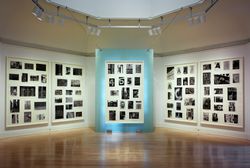
Letters from the People : photographies de Lee Friedlander explore le thème des mots et du langage dans la ville – la manière dont les enseignes commerciales et les graffiti construisent notre perception de l’environnement urbain et, dans une large mesure, définissent nos rapports avec celui-ci. Le photographe américain Lee Friedlander (né en 1934) s’est attaché à(...)
Letters from the People : photographies de Lee Friedlander explore le thème des mots et du langage dans la ville – la manière dont les enseignes commerciales et les graffiti construisent notre perception de l’environnement urbain et, dans une large mesure, définissent nos rapports avec celui-ci. Le photographe américain Lee Friedlander (né en 1934) s’est attaché à(...)
Localisation:
Salle octogonale
Salle octogonale
Date:
22 septembre 1993 au 28 novembre 1993
22 septembre 1993 au 28 novembre 1993
Titre:
“Letters from the People” : photographies de Lee Friedlander
Actions:
Description:
Letters from the People : photographies de Lee Friedlander explore le thème des mots et du langage dans la ville – la manière dont les enseignes commerciales et les graffiti construisent notre perception de l’environnement urbain et, dans une large mesure, définissent nos rapports avec celui-ci. Le photographe américain Lee Friedlander (né en 1934) s’est attaché à(...)
“Letters from the People” : photographies de Lee Friedlander
Actions:
Description:
Letters from the People : photographies de Lee Friedlander explore le thème des mots et du langage dans la ville – la manière dont les enseignes commerciales et les graffiti construisent notre perception de l’environnement urbain et, dans une large mesure, définissent nos rapports avec celui-ci. Le photographe américain Lee Friedlander (né en 1934) s’est attaché à(...)
Classification:
expositions
expositions
Date:
22 septembre 1993 au
28 novembre 1993
22 septembre 1993 au
28 novembre 1993
Localisation:
Salle octogonale
Salle octogonale
Classification:
archives
Niveau de description archivistique:
Fonds
archives
Niveau de description archivistique:
Fonds
Numéro de référence:
AP075
Résumé:
The Cornelia Hahn Oberlander fonds documents Oberlander's professional activities as a landscape architect. It contains over 203 projects that span from 1950 to 2018 predominantly in Canada and in the United States, but also in Germany. The fonds is a complete record of Oberlander's work, and comprises her playground projects, roof gardens, and public space landscapes, as well as landscape designs for private residences, as well as administrative records from her practice, her professional engagements, and her research materials. The material in this fonds is dated from 1936 to 2021.
AP075
Résumé:
The Cornelia Hahn Oberlander fonds documents Oberlander's professional activities as a landscape architect. It contains over 203 projects that span from 1950 to 2018 predominantly in Canada and in the United States, but also in Germany. The fonds is a complete record of Oberlander's work, and comprises her playground projects, roof gardens, and public space landscapes, as well as landscape designs for private residences, as well as administrative records from her practice, her professional engagements, and her research materials. The material in this fonds is dated from 1936 to 2021.
Personnes et institutions:
Date:
1936-2021
1936-2021
Titre:
Fonds Cornelia Hahn Oberlander
Actions:
AP075
Résumé:
The Cornelia Hahn Oberlander fonds documents Oberlander's professional activities as a landscape architect. It contains over 203 projects that span from 1950 to 2018 predominantly in Canada and in the United States, but also in Germany. The fonds is a complete record of Oberlander's work, and comprises her playground projects, roof gardens, and public space landscapes, as well as landscape designs for private residences, as well as administrative records from her practice, her professional engagements, and her research materials. The material in this fonds is dated from 1936 to 2021.
Fonds Cornelia Hahn Oberlander
Actions:
AP075
Résumé:
The Cornelia Hahn Oberlander fonds documents Oberlander's professional activities as a landscape architect. It contains over 203 projects that span from 1950 to 2018 predominantly in Canada and in the United States, but also in Germany. The fonds is a complete record of Oberlander's work, and comprises her playground projects, roof gardens, and public space landscapes, as well as landscape designs for private residences, as well as administrative records from her practice, her professional engagements, and her research materials. The material in this fonds is dated from 1936 to 2021.
Classification:
archives
Niveau de description archivistique:
Fonds
archives
Niveau de description archivistique:
Fonds
Date:
1936-2021
1936-2021
Personnes et institutions:
Classification:
photographies
photographies
Numéro de référence:
AP140.S2.SS1.D26.P24
Description:
views of a presentation model and of working and publication drawings, as well as views of drawings not otherwise present in the project documents, including views of an incomplete set of numbered and revised working drawings, of a ground-floor plan showing the circulation patterns of students and "senior members" at the north and south entrances, of a composite drawing consisting of a mirror image of an east-west cross section, and of a site plan (that was probably part of the competition entry) showing the library roof oriented towards the south-west, rather than towards the south-east, as in the executed design. Includes views of an article by Hugh Brogan in 'The Cambridge Review', 11 October 1968; also one portrait of a woman
AP140.S2.SS1.D26.P24
Description:
views of a presentation model and of working and publication drawings, as well as views of drawings not otherwise present in the project documents, including views of an incomplete set of numbered and revised working drawings, of a ground-floor plan showing the circulation patterns of students and "senior members" at the north and south entrances, of a composite drawing consisting of a mirror image of an east-west cross section, and of a site plan (that was probably part of the competition entry) showing the library roof oriented towards the south-west, rather than towards the south-east, as in the executed design. Includes views of an article by Hugh Brogan in 'The Cambridge Review', 11 October 1968; also one portrait of a woman
Personnes et institutions:
Titre:
Views of a presentation model and of working and publication drawings, as well as views of drawings not otherwise present in the project documents
Actions:
AP140.S2.SS1.D26.P24
Description:
views of a presentation model and of working and publication drawings, as well as views of drawings not otherwise present in the project documents, including views of an incomplete set of numbered and revised working drawings, of a ground-floor plan showing the circulation patterns of students and "senior members" at the north and south entrances, of a composite drawing consisting of a mirror image of an east-west cross section, and of a site plan (that was probably part of the competition entry) showing the library roof oriented towards the south-west, rather than towards the south-east, as in the executed design. Includes views of an article by Hugh Brogan in 'The Cambridge Review', 11 October 1968; also one portrait of a woman
Views of a presentation model and of working and publication drawings, as well as views of drawings not otherwise present in the project documents
Actions:
AP140.S2.SS1.D26.P24
Description:
views of a presentation model and of working and publication drawings, as well as views of drawings not otherwise present in the project documents, including views of an incomplete set of numbered and revised working drawings, of a ground-floor plan showing the circulation patterns of students and "senior members" at the north and south entrances, of a composite drawing consisting of a mirror image of an east-west cross section, and of a site plan (that was probably part of the competition entry) showing the library roof oriented towards the south-west, rather than towards the south-east, as in the executed design. Includes views of an article by Hugh Brogan in 'The Cambridge Review', 11 October 1968; also one portrait of a woman
Classification:
photographies
photographies
Personnes et institutions:
Classification:
photographies
photographies
Actions:
Numéro de référence:
PH1986:0901:015:003
Description:
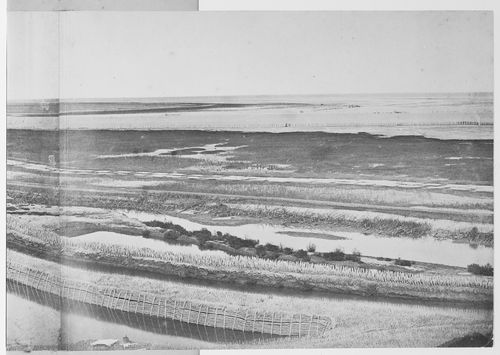
- This photograph is one in a series of views which Felice Beato made of the four Taku Forts (Harris, p. 139; Worswick, p. 138). - This photograph was made from the Great South Taku Fort looking north across the walls of the fort and the Pei (now Hai) River toward the Gulf of Chihli (now Bo Hai) (Harris, p. 143). - A copy print of this panorama under the title "Interior of South Taku Fort and Showing the Place of Landing June 25th 1859" is reproduced in Harris on pages 68-69 (cat. no. 23), and a copy print of PH1986:0901:015:002 (p. 167, fig. 23-3) under the title "Pei-Ho River and Taku Fort II" is reproduced in Harris on p. 167 (fig. 23-3).
PH1986:0901:015:003
Description:
- This photograph is one in a series of views which Felice Beato made of the four Taku Forts (Harris, p. 139; Worswick, p. 138). - This photograph was made from the Great South Taku Fort looking north across the walls of the fort and the Pei (now Hai) River toward the Gulf of Chihli (now Bo Hai) (Harris, p. 143). - A copy print of this panorama under the title "Interior of South Taku Fort and Showing the Place of Landing June 25th 1859" is reproduced in Harris on pages 68-69 (cat. no. 23), and a copy print of PH1986:0901:015:002 (p. 167, fig. 23-3) under the title "Pei-Ho River and Taku Fort II" is reproduced in Harris on p. 167 (fig. 23-3).
Personnes et institutions:
Sujet:
architecture, ingénierie, militaire, topographique
architecture, ingénierie, militaire, topographique
Date:
between 22 August and 21 September 1860
between 22 August and 21 September 1860
Titre:
View showing part of the outworks of the Great South Taku Fort and the Pei (now Hai) River delta, Taku (now Dagu), near Tientsin (now Tianjin), China
Actions:
PH1986:0901:015:003
Description:
- This photograph is one in a series of views which Felice Beato made of the four Taku Forts (Harris, p. 139; Worswick, p. 138). - This photograph was made from the Great South Taku Fort looking north across the walls of the fort and the Pei (now Hai) River toward the Gulf of Chihli (now Bo Hai) (Harris, p. 143). - A copy print of this panorama under the title "Interior of South Taku Fort and Showing the Place of Landing June 25th 1859" is reproduced in Harris on pages 68-69 (cat. no. 23), and a copy print of PH1986:0901:015:002 (p. 167, fig. 23-3) under the title "Pei-Ho River and Taku Fort II" is reproduced in Harris on p. 167 (fig. 23-3).
View showing part of the outworks of the Great South Taku Fort and the Pei (now Hai) River delta, Taku (now Dagu), near Tientsin (now Tianjin), China
Actions:
PH1986:0901:015:003
Description:
- This photograph is one in a series of views which Felice Beato made of the four Taku Forts (Harris, p. 139; Worswick, p. 138). - This photograph was made from the Great South Taku Fort looking north across the walls of the fort and the Pei (now Hai) River toward the Gulf of Chihli (now Bo Hai) (Harris, p. 143). - A copy print of this panorama under the title "Interior of South Taku Fort and Showing the Place of Landing June 25th 1859" is reproduced in Harris on pages 68-69 (cat. no. 23), and a copy print of PH1986:0901:015:002 (p. 167, fig. 23-3) under the title "Pei-Ho River and Taku Fort II" is reproduced in Harris on p. 167 (fig. 23-3).
Classification:
photographies
photographies
Date:
between 22 August and 21 September 1860
between 22 August and 21 September 1860
Personnes et institutions:
Sujet:
architecture, ingénierie, militaire, topographique
architecture, ingénierie, militaire, topographique
Classification:
événements
événements

Description:
À la suite de la révolution du 25 avril 1974 au Portugal, larchitecte Alexandre Alves Costa est devenu membre du comité de coordination du SAAL pour le secteur nord, responsable de la planification et du soutien de projet. Avec José António Bandeirinha, architecte et professeur agrégé titulaire à lUniversité de Coimbra, il abordera lors de cette conférence le rôle nouveau(...)
À la suite de la révolution du 25 avril 1974 au Portugal, larchitecte Alexandre Alves Costa est devenu membre du comité de coordination du SAAL pour le secteur nord, responsable de la planification et du soutien de projet. Avec José António Bandeirinha, architecte et professeur agrégé titulaire à lUniversité de Coimbra, il abordera lors de cette conférence le rôle nouveau(...)
Localisation:
Théâtre Paul-Desmarais
Théâtre Paul-Desmarais
Date:
17 septembre 2015, 18h
17 septembre 2015, 18h
Titre:
SAAL 1974 : l'architecture portugaise s'ouvre au monde
Actions:
Description:
À la suite de la révolution du 25 avril 1974 au Portugal, larchitecte Alexandre Alves Costa est devenu membre du comité de coordination du SAAL pour le secteur nord, responsable de la planification et du soutien de projet. Avec José António Bandeirinha, architecte et professeur agrégé titulaire à lUniversité de Coimbra, il abordera lors de cette conférence le rôle nouveau(...)
SAAL 1974 : l'architecture portugaise s'ouvre au monde
Actions:
Description:
À la suite de la révolution du 25 avril 1974 au Portugal, larchitecte Alexandre Alves Costa est devenu membre du comité de coordination du SAAL pour le secteur nord, responsable de la planification et du soutien de projet. Avec José António Bandeirinha, architecte et professeur agrégé titulaire à lUniversité de Coimbra, il abordera lors de cette conférence le rôle nouveau(...)
Classification:
événements
événements
Date:
17 septembre 2015
18h
17 septembre 2015
18h
Localisation:
Théâtre Paul-Desmarais
Théâtre Paul-Desmarais
Classification:
événements
événements
Actions:
Description:
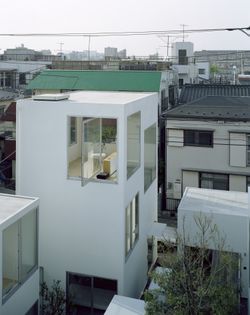
L’architecte japonais Ryue Nishizawa discute de son œuvre et de l’exposition Perspectives de vie à Londres et à Tokyo imaginées par Stephen Taylor et Ryue Nishizawa tenue au CCA en 2008. L’exposition marque la première présentation en Amérique du Nord des projets résidentiels de Taylor et Nishizawa et dévoile les solutions originales qu’ils apportent aux défis de la(...)
L’architecte japonais Ryue Nishizawa discute de son œuvre et de l’exposition Perspectives de vie à Londres et à Tokyo imaginées par Stephen Taylor et Ryue Nishizawa tenue au CCA en 2008. L’exposition marque la première présentation en Amérique du Nord des projets résidentiels de Taylor et Nishizawa et dévoile les solutions originales qu’ils apportent aux défis de la(...)
Localisation:
Théâtre Paul-Desmarais
Théâtre Paul-Desmarais
Date:
14 mai 2008
14 mai 2008
Titre:
Ryue Nishizawa : Some Ideas on Living
Actions:
Description:
L’architecte japonais Ryue Nishizawa discute de son œuvre et de l’exposition Perspectives de vie à Londres et à Tokyo imaginées par Stephen Taylor et Ryue Nishizawa tenue au CCA en 2008. L’exposition marque la première présentation en Amérique du Nord des projets résidentiels de Taylor et Nishizawa et dévoile les solutions originales qu’ils apportent aux défis de la(...)
Ryue Nishizawa : Some Ideas on Living
Actions:
Description:
L’architecte japonais Ryue Nishizawa discute de son œuvre et de l’exposition Perspectives de vie à Londres et à Tokyo imaginées par Stephen Taylor et Ryue Nishizawa tenue au CCA en 2008. L’exposition marque la première présentation en Amérique du Nord des projets résidentiels de Taylor et Nishizawa et dévoile les solutions originales qu’ils apportent aux défis de la(...)
Classification:
événements
événements
Date:
14 mai 2008
14 mai 2008
Localisation:
Théâtre Paul-Desmarais
Théâtre Paul-Desmarais
Classification:
expositions
expositions
Actions:
Description:
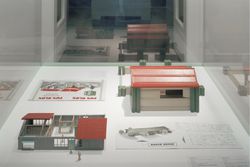
À partir de jeux et de jouets d’architecture choisis dans la collection du CCA, y compris 33 jouets d’architecture nord-américains et européens datant du début du XIXe siècle jusqu’à 1995, Maisons de rêve, maisons jouets examine les notions de domicile, d’enfance, de jeu, d’apprentissage et de rôle déterminé selon le sexe. Cette exposition montre comment les jouets(...)
À partir de jeux et de jouets d’architecture choisis dans la collection du CCA, y compris 33 jouets d’architecture nord-américains et européens datant du début du XIXe siècle jusqu’à 1995, Maisons de rêve, maisons jouets examine les notions de domicile, d’enfance, de jeu, d’apprentissage et de rôle déterminé selon le sexe. Cette exposition montre comment les jouets(...)
Titre:
Maisons de rêve, maisons jouets
Actions:
Description:
À partir de jeux et de jouets d’architecture choisis dans la collection du CCA, y compris 33 jouets d’architecture nord-américains et européens datant du début du XIXe siècle jusqu’à 1995, Maisons de rêve, maisons jouets examine les notions de domicile, d’enfance, de jeu, d’apprentissage et de rôle déterminé selon le sexe. Cette exposition montre comment les jouets(...)
Maisons de rêve, maisons jouets
Actions:
Description:
À partir de jeux et de jouets d’architecture choisis dans la collection du CCA, y compris 33 jouets d’architecture nord-américains et européens datant du début du XIXe siècle jusqu’à 1995, Maisons de rêve, maisons jouets examine les notions de domicile, d’enfance, de jeu, d’apprentissage et de rôle déterminé selon le sexe. Cette exposition montre comment les jouets(...)
Classification:
expositions
expositions
Date:
8 novembre 1995 au
31 mars 1996
8 novembre 1995 au
31 mars 1996


