


44160 Résultats
Niveau de description archivistique:
Série(s)
Série(s)
Titre:
Objectile records
Objectile records
Numéro de référence:
AP169.S1
Description:
Series 1, Objectile, 1993 - 2011, relates to the firm’s activities, from the production of decorative panels to the management of daily business. This series includes born-digital material and chiefly dates from 2004-2008. “Objectile” is a term first proposed by philosopher Gilles Deleuze in his book The Fold, published in 1988. It was used to name the research conducted by Bernard Cache and his associate Patrick Beaucé around the development of industrial means to produce “non-standard” objects. In his book Earth Moves (Terre Meuble), Bernard Cache describes non-standard objects as repeatable variations on a theme, such as a family of curves declining the same mathematical model. The randomness of their patterns recalls earth’s forms and curves, the way geography generates nature’s topography. Cache also wanted these folds and curves to express a relationship between the exterior (geography) and the interior (furniture) of architecture. From these ideas, the firm Objectile was founded created to industrially produce and market those non-standard objects mostly taking the form of decorative panels. Those panels and other furniture were among the first objects to be computationally designed with computer-aided design software (CAD) and then industrially built through computer numerical control (CNC). The patterns were designed through unique algorithms that could endlessly be modified and personalized. Materials in this series reflect the work of Objectile. This includes design and execution records for the different wooden panels and other furniture, which are primarily in still image and CAD formats (TopSolid, AutoCAD). There is also a significant body of material for the Objectile website (in HTML and XML formats). The series additionally includes textual documentation reflecting the administration of the firm, including accounting and legal documentation, as well as correspondence. These materials are in typical office formats and include email.
AP169.S1
Description:
Series 1, Objectile, 1993 - 2011, relates to the firm’s activities, from the production of decorative panels to the management of daily business. This series includes born-digital material and chiefly dates from 2004-2008. “Objectile” is a term first proposed by philosopher Gilles Deleuze in his book The Fold, published in 1988. It was used to name the research conducted by Bernard Cache and his associate Patrick Beaucé around the development of industrial means to produce “non-standard” objects. In his book Earth Moves (Terre Meuble), Bernard Cache describes non-standard objects as repeatable variations on a theme, such as a family of curves declining the same mathematical model. The randomness of their patterns recalls earth’s forms and curves, the way geography generates nature’s topography. Cache also wanted these folds and curves to express a relationship between the exterior (geography) and the interior (furniture) of architecture. From these ideas, the firm Objectile was founded created to industrially produce and market those non-standard objects mostly taking the form of decorative panels. Those panels and other furniture were among the first objects to be computationally designed with computer-aided design software (CAD) and then industrially built through computer numerical control (CNC). The patterns were designed through unique algorithms that could endlessly be modified and personalized. Materials in this series reflect the work of Objectile. This includes design and execution records for the different wooden panels and other furniture, which are primarily in still image and CAD formats (TopSolid, AutoCAD). There is also a significant body of material for the Objectile website (in HTML and XML formats). The series additionally includes textual documentation reflecting the administration of the firm, including accounting and legal documentation, as well as correspondence. These materials are in typical office formats and include email.
Personnes et institutions:
Date:
1993-2011
1993-2011
Titre:
Objectile records
Actions:
AP169.S1
Description:
Series 1, Objectile, 1993 - 2011, relates to the firm’s activities, from the production of decorative panels to the management of daily business. This series includes born-digital material and chiefly dates from 2004-2008. “Objectile” is a term first proposed by philosopher Gilles Deleuze in his book The Fold, published in 1988. It was used to name the research conducted by Bernard Cache and his associate Patrick Beaucé around the development of industrial means to produce “non-standard” objects. In his book Earth Moves (Terre Meuble), Bernard Cache describes non-standard objects as repeatable variations on a theme, such as a family of curves declining the same mathematical model. The randomness of their patterns recalls earth’s forms and curves, the way geography generates nature’s topography. Cache also wanted these folds and curves to express a relationship between the exterior (geography) and the interior (furniture) of architecture. From these ideas, the firm Objectile was founded created to industrially produce and market those non-standard objects mostly taking the form of decorative panels. Those panels and other furniture were among the first objects to be computationally designed with computer-aided design software (CAD) and then industrially built through computer numerical control (CNC). The patterns were designed through unique algorithms that could endlessly be modified and personalized. Materials in this series reflect the work of Objectile. This includes design and execution records for the different wooden panels and other furniture, which are primarily in still image and CAD formats (TopSolid, AutoCAD). There is also a significant body of material for the Objectile website (in HTML and XML formats). The series additionally includes textual documentation reflecting the administration of the firm, including accounting and legal documentation, as well as correspondence. These materials are in typical office formats and include email.
Objectile records
Actions:
AP169.S1
Description:
Series 1, Objectile, 1993 - 2011, relates to the firm’s activities, from the production of decorative panels to the management of daily business. This series includes born-digital material and chiefly dates from 2004-2008. “Objectile” is a term first proposed by philosopher Gilles Deleuze in his book The Fold, published in 1988. It was used to name the research conducted by Bernard Cache and his associate Patrick Beaucé around the development of industrial means to produce “non-standard” objects. In his book Earth Moves (Terre Meuble), Bernard Cache describes non-standard objects as repeatable variations on a theme, such as a family of curves declining the same mathematical model. The randomness of their patterns recalls earth’s forms and curves, the way geography generates nature’s topography. Cache also wanted these folds and curves to express a relationship between the exterior (geography) and the interior (furniture) of architecture. From these ideas, the firm Objectile was founded created to industrially produce and market those non-standard objects mostly taking the form of decorative panels. Those panels and other furniture were among the first objects to be computationally designed with computer-aided design software (CAD) and then industrially built through computer numerical control (CNC). The patterns were designed through unique algorithms that could endlessly be modified and personalized. Materials in this series reflect the work of Objectile. This includes design and execution records for the different wooden panels and other furniture, which are primarily in still image and CAD formats (TopSolid, AutoCAD). There is also a significant body of material for the Objectile website (in HTML and XML formats). The series additionally includes textual documentation reflecting the administration of the firm, including accounting and legal documentation, as well as correspondence. These materials are in typical office formats and include email.
Niveau de description archivistique:
Series
Series
Date:
1993-2011
1993-2011
Personnes et institutions:
Niveau de description archivistique:
Projet
Projet
Numéro de référence:
AP198.S1.1997.PR01
Description:
Project records document OCEAN North’s design for their competition entry for the Töölö Football Stadium in Helsinki in 1997. The project was titled Open Arena by OCEAN North. The site for the football stadium was in the Töölö neighbourhood, between a park area including the Helsinki Olympic Stadium, and a residential area. OCEAN North’s entry was a building that would integrate with its natural surroundings while being able to accommodate a variety of activities and events. The structure for Open Arena has three topological surfaces. The first provides stadium access to the players and the public, and includes services such as restaurant, cafeteria, and bars. Its shape aims to integrate with the natural landscape. The second contains the audience seating areas, including VIP and press areas, and aimed to arrange the audience as if it was loosely dispersed on a hillside. The third topological surface consists of the roof. The Töölö Football Stadium marks the introduction of the Channelling Systems process, defining building’s integration to its surroundings and distributing functions across the structure. Records show different stages of the design process and include two digitized photographs of Plexiglas sections that were used to physically explore the design. Digital files are grouped under categories such as Board images, Board lay-out, Graft, Sections, Siteplans, digital model images, scanned plans and site images. This last directory contains digitized photographs of the grounds surrounding the Helsinki Olympic Stadium. All drawings are vector or raster images of the whole or parts of the structure, with some including the identifications of the structure’s parts. Project records also include preliminary or working plans. Most were drawn to scale on paper and some were printed from CAD drawings. They chiefly reflect the design work to define the surfaces and shapes of the stadium’s structure. Source: Ateljé Sotamaa. “Portfolio: Open Arena”. http://portfolio.sotamaa.net/Open-Arena accessed in February 2018.
AP198.S1.1997.PR01
Description:
Project records document OCEAN North’s design for their competition entry for the Töölö Football Stadium in Helsinki in 1997. The project was titled Open Arena by OCEAN North. The site for the football stadium was in the Töölö neighbourhood, between a park area including the Helsinki Olympic Stadium, and a residential area. OCEAN North’s entry was a building that would integrate with its natural surroundings while being able to accommodate a variety of activities and events. The structure for Open Arena has three topological surfaces. The first provides stadium access to the players and the public, and includes services such as restaurant, cafeteria, and bars. Its shape aims to integrate with the natural landscape. The second contains the audience seating areas, including VIP and press areas, and aimed to arrange the audience as if it was loosely dispersed on a hillside. The third topological surface consists of the roof. The Töölö Football Stadium marks the introduction of the Channelling Systems process, defining building’s integration to its surroundings and distributing functions across the structure. Records show different stages of the design process and include two digitized photographs of Plexiglas sections that were used to physically explore the design. Digital files are grouped under categories such as Board images, Board lay-out, Graft, Sections, Siteplans, digital model images, scanned plans and site images. This last directory contains digitized photographs of the grounds surrounding the Helsinki Olympic Stadium. All drawings are vector or raster images of the whole or parts of the structure, with some including the identifications of the structure’s parts. Project records also include preliminary or working plans. Most were drawn to scale on paper and some were printed from CAD drawings. They chiefly reflect the design work to define the surfaces and shapes of the stadium’s structure. Source: Ateljé Sotamaa. “Portfolio: Open Arena”. http://portfolio.sotamaa.net/Open-Arena accessed in February 2018.
Personnes et institutions:
Date:
1997
1997
Titre:
Open Arena – Töölö Football Stadium, international competition entry
Actions:
AP198.S1.1997.PR01
Description:
Project records document OCEAN North’s design for their competition entry for the Töölö Football Stadium in Helsinki in 1997. The project was titled Open Arena by OCEAN North. The site for the football stadium was in the Töölö neighbourhood, between a park area including the Helsinki Olympic Stadium, and a residential area. OCEAN North’s entry was a building that would integrate with its natural surroundings while being able to accommodate a variety of activities and events. The structure for Open Arena has three topological surfaces. The first provides stadium access to the players and the public, and includes services such as restaurant, cafeteria, and bars. Its shape aims to integrate with the natural landscape. The second contains the audience seating areas, including VIP and press areas, and aimed to arrange the audience as if it was loosely dispersed on a hillside. The third topological surface consists of the roof. The Töölö Football Stadium marks the introduction of the Channelling Systems process, defining building’s integration to its surroundings and distributing functions across the structure. Records show different stages of the design process and include two digitized photographs of Plexiglas sections that were used to physically explore the design. Digital files are grouped under categories such as Board images, Board lay-out, Graft, Sections, Siteplans, digital model images, scanned plans and site images. This last directory contains digitized photographs of the grounds surrounding the Helsinki Olympic Stadium. All drawings are vector or raster images of the whole or parts of the structure, with some including the identifications of the structure’s parts. Project records also include preliminary or working plans. Most were drawn to scale on paper and some were printed from CAD drawings. They chiefly reflect the design work to define the surfaces and shapes of the stadium’s structure. Source: Ateljé Sotamaa. “Portfolio: Open Arena”. http://portfolio.sotamaa.net/Open-Arena accessed in February 2018.
Open Arena – Töölö Football Stadium, international competition entry
Actions:
AP198.S1.1997.PR01
Description:
Project records document OCEAN North’s design for their competition entry for the Töölö Football Stadium in Helsinki in 1997. The project was titled Open Arena by OCEAN North. The site for the football stadium was in the Töölö neighbourhood, between a park area including the Helsinki Olympic Stadium, and a residential area. OCEAN North’s entry was a building that would integrate with its natural surroundings while being able to accommodate a variety of activities and events. The structure for Open Arena has three topological surfaces. The first provides stadium access to the players and the public, and includes services such as restaurant, cafeteria, and bars. Its shape aims to integrate with the natural landscape. The second contains the audience seating areas, including VIP and press areas, and aimed to arrange the audience as if it was loosely dispersed on a hillside. The third topological surface consists of the roof. The Töölö Football Stadium marks the introduction of the Channelling Systems process, defining building’s integration to its surroundings and distributing functions across the structure. Records show different stages of the design process and include two digitized photographs of Plexiglas sections that were used to physically explore the design. Digital files are grouped under categories such as Board images, Board lay-out, Graft, Sections, Siteplans, digital model images, scanned plans and site images. This last directory contains digitized photographs of the grounds surrounding the Helsinki Olympic Stadium. All drawings are vector or raster images of the whole or parts of the structure, with some including the identifications of the structure’s parts. Project records also include preliminary or working plans. Most were drawn to scale on paper and some were printed from CAD drawings. They chiefly reflect the design work to define the surfaces and shapes of the stadium’s structure. Source: Ateljé Sotamaa. “Portfolio: Open Arena”. http://portfolio.sotamaa.net/Open-Arena accessed in February 2018.
Niveau de description archivistique:
Project
Project
Date:
1997
1997
Personnes et institutions:
Classification:
dessins
dessins
Titre:
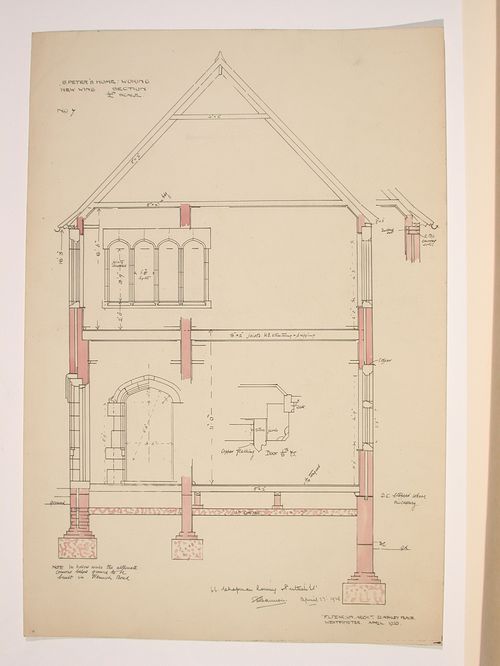
St. Peter's Home, Woking: Section and details for the new wing, with a section for the door jamb
St. Peter's Home, Woking: Section and details for the new wing, with a section for the door jamb
Actions:
Numéro de référence:
DR1989:0015:055
Description:
- This work is part of a group of drawings and reprographic copies of drawings for St. Peter's Home, Woking, and St. Peter's Convent, Woking, from the offices of John Loughborough Pearson and Frank Loughborough Pearson (DR1989:0015:011 - DR1989:0015:085 R/V). Composed of contract and working drawings including plans, site plans, sections, and elevations dated between 1881 and 1936, these drawings were sold at auction by the convent along with those for the older institution of St. Peter's Home, Kilburn (DR1989:0015:001 - DR1989:0015:010). Both St. Peter's Home, Kilburn, and St. Peter's Home, Woking were commissioned from John Loughborough Pearson by Benjamin Lancaster. The alterations to the Home at Kilburn were commissioned on behalf of Lancaster's wife, who founded the home and a lay nursing order which ran it. The institution at Woking was founded by Lancaster as a home for incurables in 1882 and dedicated to the memory of his deceased wife (Quiney 67-68, 254-255, and 284). It was probably first known as St. Peter's Home, Woking, not becoming a convent until ca. 1934.
DR1989:0015:055
Description:
- This work is part of a group of drawings and reprographic copies of drawings for St. Peter's Home, Woking, and St. Peter's Convent, Woking, from the offices of John Loughborough Pearson and Frank Loughborough Pearson (DR1989:0015:011 - DR1989:0015:085 R/V). Composed of contract and working drawings including plans, site plans, sections, and elevations dated between 1881 and 1936, these drawings were sold at auction by the convent along with those for the older institution of St. Peter's Home, Kilburn (DR1989:0015:001 - DR1989:0015:010). Both St. Peter's Home, Kilburn, and St. Peter's Home, Woking were commissioned from John Loughborough Pearson by Benjamin Lancaster. The alterations to the Home at Kilburn were commissioned on behalf of Lancaster's wife, who founded the home and a lay nursing order which ran it. The institution at Woking was founded by Lancaster as a home for incurables in 1882 and dedicated to the memory of his deceased wife (Quiney 67-68, 254-255, and 284). It was probably first known as St. Peter's Home, Woking, not becoming a convent until ca. 1934.
Personnes et institutions:
Sujet:
architecture
architecture
Date:
1925-1926
1925-1926
Titre:
St. Peter's Home, Woking: Section and details for the new wing, with a section for the door jamb
Actions:
DR1989:0015:055
Description:
- This work is part of a group of drawings and reprographic copies of drawings for St. Peter's Home, Woking, and St. Peter's Convent, Woking, from the offices of John Loughborough Pearson and Frank Loughborough Pearson (DR1989:0015:011 - DR1989:0015:085 R/V). Composed of contract and working drawings including plans, site plans, sections, and elevations dated between 1881 and 1936, these drawings were sold at auction by the convent along with those for the older institution of St. Peter's Home, Kilburn (DR1989:0015:001 - DR1989:0015:010). Both St. Peter's Home, Kilburn, and St. Peter's Home, Woking were commissioned from John Loughborough Pearson by Benjamin Lancaster. The alterations to the Home at Kilburn were commissioned on behalf of Lancaster's wife, who founded the home and a lay nursing order which ran it. The institution at Woking was founded by Lancaster as a home for incurables in 1882 and dedicated to the memory of his deceased wife (Quiney 67-68, 254-255, and 284). It was probably first known as St. Peter's Home, Woking, not becoming a convent until ca. 1934.
St. Peter's Home, Woking: Section and details for the new wing, with a section for the door jamb
Actions:
DR1989:0015:055
Description:
- This work is part of a group of drawings and reprographic copies of drawings for St. Peter's Home, Woking, and St. Peter's Convent, Woking, from the offices of John Loughborough Pearson and Frank Loughborough Pearson (DR1989:0015:011 - DR1989:0015:085 R/V). Composed of contract and working drawings including plans, site plans, sections, and elevations dated between 1881 and 1936, these drawings were sold at auction by the convent along with those for the older institution of St. Peter's Home, Kilburn (DR1989:0015:001 - DR1989:0015:010). Both St. Peter's Home, Kilburn, and St. Peter's Home, Woking were commissioned from John Loughborough Pearson by Benjamin Lancaster. The alterations to the Home at Kilburn were commissioned on behalf of Lancaster's wife, who founded the home and a lay nursing order which ran it. The institution at Woking was founded by Lancaster as a home for incurables in 1882 and dedicated to the memory of his deceased wife (Quiney 67-68, 254-255, and 284). It was probably first known as St. Peter's Home, Woking, not becoming a convent until ca. 1934.
Classification:
dessins
dessins
Date:
1925-1926
1925-1926
Personnes et institutions:
Sujet:
architecture
architecture
Classification:
dessins
dessins
Actions:
Numéro de référence:
DR1989:0015:056
Description:
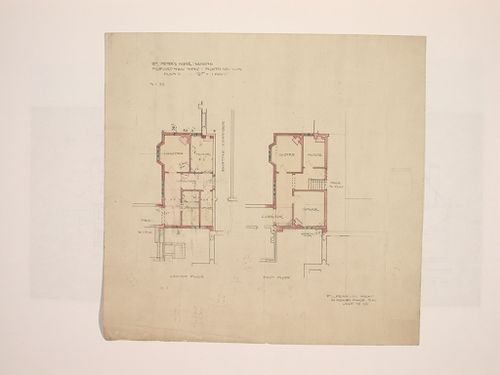
- This work is part of a group of drawings and reprographic copies of drawings for St. Peter's Home, Woking, and St. Peter's Convent, Woking, from the offices of John Loughborough Pearson and Frank Loughborough Pearson (DR1989:0015:011 - DR1989:0015:085 R/V). Composed of contract and working drawings including plans, site plans, sections, and elevations dated between 1881 and 1936, these drawings were sold at auction by the convent along with those for the older institution of St. Peter's Home, Kilburn (DR1989:0015:001 - DR1989:0015:010). Both St. Peter's Home, Kilburn, and St. Peter's Home, Woking were commissioned from John Loughborough Pearson by Benjamin Lancaster. The alterations to the Home at Kilburn were commissioned on behalf of Lancaster's wife, who founded the home and a lay nursing order which ran it. The institution at Woking was founded by Lancaster as a home for incurables in 1882 and dedicated to the memory of his deceased wife (Quiney 67-68, 254-255, and 284). It was probably first known as St. Peter's Home, Woking, not becoming a convent until ca. 1934.
DR1989:0015:056
Description:
- This work is part of a group of drawings and reprographic copies of drawings for St. Peter's Home, Woking, and St. Peter's Convent, Woking, from the offices of John Loughborough Pearson and Frank Loughborough Pearson (DR1989:0015:011 - DR1989:0015:085 R/V). Composed of contract and working drawings including plans, site plans, sections, and elevations dated between 1881 and 1936, these drawings were sold at auction by the convent along with those for the older institution of St. Peter's Home, Kilburn (DR1989:0015:001 - DR1989:0015:010). Both St. Peter's Home, Kilburn, and St. Peter's Home, Woking were commissioned from John Loughborough Pearson by Benjamin Lancaster. The alterations to the Home at Kilburn were commissioned on behalf of Lancaster's wife, who founded the home and a lay nursing order which ran it. The institution at Woking was founded by Lancaster as a home for incurables in 1882 and dedicated to the memory of his deceased wife (Quiney 67-68, 254-255, and 284). It was probably first known as St. Peter's Home, Woking, not becoming a convent until ca. 1934.
Personnes et institutions:
Sujet:
architecture
architecture
Date:
1926
1926
Titre:
St. Peter's Home, Woking: Plans for the north portion of the new wing
Actions:
DR1989:0015:056
Description:
- This work is part of a group of drawings and reprographic copies of drawings for St. Peter's Home, Woking, and St. Peter's Convent, Woking, from the offices of John Loughborough Pearson and Frank Loughborough Pearson (DR1989:0015:011 - DR1989:0015:085 R/V). Composed of contract and working drawings including plans, site plans, sections, and elevations dated between 1881 and 1936, these drawings were sold at auction by the convent along with those for the older institution of St. Peter's Home, Kilburn (DR1989:0015:001 - DR1989:0015:010). Both St. Peter's Home, Kilburn, and St. Peter's Home, Woking were commissioned from John Loughborough Pearson by Benjamin Lancaster. The alterations to the Home at Kilburn were commissioned on behalf of Lancaster's wife, who founded the home and a lay nursing order which ran it. The institution at Woking was founded by Lancaster as a home for incurables in 1882 and dedicated to the memory of his deceased wife (Quiney 67-68, 254-255, and 284). It was probably first known as St. Peter's Home, Woking, not becoming a convent until ca. 1934.
St. Peter's Home, Woking: Plans for the north portion of the new wing
Actions:
DR1989:0015:056
Description:
- This work is part of a group of drawings and reprographic copies of drawings for St. Peter's Home, Woking, and St. Peter's Convent, Woking, from the offices of John Loughborough Pearson and Frank Loughborough Pearson (DR1989:0015:011 - DR1989:0015:085 R/V). Composed of contract and working drawings including plans, site plans, sections, and elevations dated between 1881 and 1936, these drawings were sold at auction by the convent along with those for the older institution of St. Peter's Home, Kilburn (DR1989:0015:001 - DR1989:0015:010). Both St. Peter's Home, Kilburn, and St. Peter's Home, Woking were commissioned from John Loughborough Pearson by Benjamin Lancaster. The alterations to the Home at Kilburn were commissioned on behalf of Lancaster's wife, who founded the home and a lay nursing order which ran it. The institution at Woking was founded by Lancaster as a home for incurables in 1882 and dedicated to the memory of his deceased wife (Quiney 67-68, 254-255, and 284). It was probably first known as St. Peter's Home, Woking, not becoming a convent until ca. 1934.
Classification:
dessins
dessins
Date:
1926
1926
Personnes et institutions:
Sujet:
architecture
architecture
Classification:
dessins
dessins
Actions:
Numéro de référence:
DR1989:0015:057
Description:
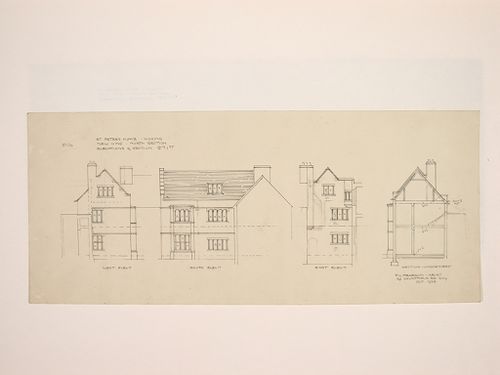
- This work is part of a group of drawings and reprographic copies of drawings for St. Peter's Home, Woking, and St. Peter's Convent, Woking, from the offices of John Loughborough Pearson and Frank Loughborough Pearson (DR1989:0015:011 - DR1989:0015:085 R/V). Composed of contract and working drawings including plans, site plans, sections, and elevations dated between 1881 and 1936, these drawings were sold at auction by the convent along with those for the older institution of St. Peter's Home, Kilburn (DR1989:0015:001 - DR1989:0015:010). Both St. Peter's Home, Kilburn, and St. Peter's Home, Woking were commissioned from John Loughborough Pearson by Benjamin Lancaster. The alterations to the Home at Kilburn were commissioned on behalf of Lancaster's wife, who founded the home and a lay nursing order which ran it. The institution at Woking was founded by Lancaster as a home for incurables in 1882 and dedicated to the memory of his deceased wife (Quiney 67-68, 254-255, and 284). It was probably first known as St. Peter's Home, Woking, not becoming a convent until ca. 1934.
DR1989:0015:057
Description:
- This work is part of a group of drawings and reprographic copies of drawings for St. Peter's Home, Woking, and St. Peter's Convent, Woking, from the offices of John Loughborough Pearson and Frank Loughborough Pearson (DR1989:0015:011 - DR1989:0015:085 R/V). Composed of contract and working drawings including plans, site plans, sections, and elevations dated between 1881 and 1936, these drawings were sold at auction by the convent along with those for the older institution of St. Peter's Home, Kilburn (DR1989:0015:001 - DR1989:0015:010). Both St. Peter's Home, Kilburn, and St. Peter's Home, Woking were commissioned from John Loughborough Pearson by Benjamin Lancaster. The alterations to the Home at Kilburn were commissioned on behalf of Lancaster's wife, who founded the home and a lay nursing order which ran it. The institution at Woking was founded by Lancaster as a home for incurables in 1882 and dedicated to the memory of his deceased wife (Quiney 67-68, 254-255, and 284). It was probably first known as St. Peter's Home, Woking, not becoming a convent until ca. 1934.
Personnes et institutions:
Sujet:
architecture
architecture
Date:
1926
1926
Titre:
St. Peter's Home, Woking: Elevations and sections for the north portion of the new wing
Actions:
DR1989:0015:057
Description:
- This work is part of a group of drawings and reprographic copies of drawings for St. Peter's Home, Woking, and St. Peter's Convent, Woking, from the offices of John Loughborough Pearson and Frank Loughborough Pearson (DR1989:0015:011 - DR1989:0015:085 R/V). Composed of contract and working drawings including plans, site plans, sections, and elevations dated between 1881 and 1936, these drawings were sold at auction by the convent along with those for the older institution of St. Peter's Home, Kilburn (DR1989:0015:001 - DR1989:0015:010). Both St. Peter's Home, Kilburn, and St. Peter's Home, Woking were commissioned from John Loughborough Pearson by Benjamin Lancaster. The alterations to the Home at Kilburn were commissioned on behalf of Lancaster's wife, who founded the home and a lay nursing order which ran it. The institution at Woking was founded by Lancaster as a home for incurables in 1882 and dedicated to the memory of his deceased wife (Quiney 67-68, 254-255, and 284). It was probably first known as St. Peter's Home, Woking, not becoming a convent until ca. 1934.
St. Peter's Home, Woking: Elevations and sections for the north portion of the new wing
Actions:
DR1989:0015:057
Description:
- This work is part of a group of drawings and reprographic copies of drawings for St. Peter's Home, Woking, and St. Peter's Convent, Woking, from the offices of John Loughborough Pearson and Frank Loughborough Pearson (DR1989:0015:011 - DR1989:0015:085 R/V). Composed of contract and working drawings including plans, site plans, sections, and elevations dated between 1881 and 1936, these drawings were sold at auction by the convent along with those for the older institution of St. Peter's Home, Kilburn (DR1989:0015:001 - DR1989:0015:010). Both St. Peter's Home, Kilburn, and St. Peter's Home, Woking were commissioned from John Loughborough Pearson by Benjamin Lancaster. The alterations to the Home at Kilburn were commissioned on behalf of Lancaster's wife, who founded the home and a lay nursing order which ran it. The institution at Woking was founded by Lancaster as a home for incurables in 1882 and dedicated to the memory of his deceased wife (Quiney 67-68, 254-255, and 284). It was probably first known as St. Peter's Home, Woking, not becoming a convent until ca. 1934.
Classification:
dessins
dessins
Date:
1926
1926
Personnes et institutions:
Sujet:
architecture
architecture
Classification:
dessins
dessins
Actions:
Numéro de référence:
DR1989:0015:058
Description:
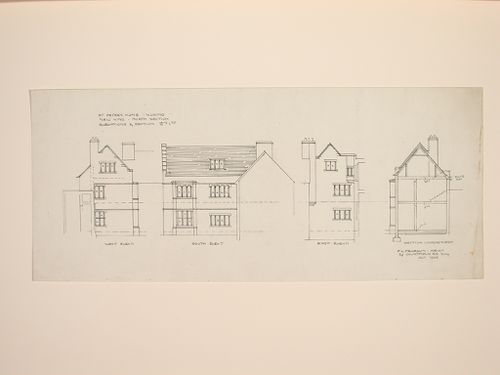
- This work is part of a group of drawings and reprographic copies of drawings for St. Peter's Home, Woking, and St. Peter's Convent, Woking, from the offices of John Loughborough Pearson and Frank Loughborough Pearson (DR1989:0015:011 - DR1989:0015:085 R/V). Composed of contract and working drawings including plans, site plans, sections, and elevations dated between 1881 and 1936, these drawings were sold at auction by the convent along with those for the older institution of St. Peter's Home, Kilburn (DR1989:0015:001 - DR1989:0015:010). Both St. Peter's Home, Kilburn, and St. Peter's Home, Woking were commissioned from John Loughborough Pearson by Benjamin Lancaster. The alterations to the Home at Kilburn were commissioned on behalf of Lancaster's wife, who founded the home and a lay nursing order which ran it. The institution at Woking was founded by Lancaster as a home for incurables in 1882 and dedicated to the memory of his deceased wife (Quiney 67-68, 254-255, and 284). It was probably first known as St. Peter's Home, Woking, not becoming a convent until ca. 1934.
DR1989:0015:058
Description:
- This work is part of a group of drawings and reprographic copies of drawings for St. Peter's Home, Woking, and St. Peter's Convent, Woking, from the offices of John Loughborough Pearson and Frank Loughborough Pearson (DR1989:0015:011 - DR1989:0015:085 R/V). Composed of contract and working drawings including plans, site plans, sections, and elevations dated between 1881 and 1936, these drawings were sold at auction by the convent along with those for the older institution of St. Peter's Home, Kilburn (DR1989:0015:001 - DR1989:0015:010). Both St. Peter's Home, Kilburn, and St. Peter's Home, Woking were commissioned from John Loughborough Pearson by Benjamin Lancaster. The alterations to the Home at Kilburn were commissioned on behalf of Lancaster's wife, who founded the home and a lay nursing order which ran it. The institution at Woking was founded by Lancaster as a home for incurables in 1882 and dedicated to the memory of his deceased wife (Quiney 67-68, 254-255, and 284). It was probably first known as St. Peter's Home, Woking, not becoming a convent until ca. 1934.
Personnes et institutions:
Sujet:
architecture
architecture
Date:
1926
1926
Titre:
St. Peter's Home, Woking: Elevations and sections for the north portion of the new wing
Actions:
DR1989:0015:058
Description:
- This work is part of a group of drawings and reprographic copies of drawings for St. Peter's Home, Woking, and St. Peter's Convent, Woking, from the offices of John Loughborough Pearson and Frank Loughborough Pearson (DR1989:0015:011 - DR1989:0015:085 R/V). Composed of contract and working drawings including plans, site plans, sections, and elevations dated between 1881 and 1936, these drawings were sold at auction by the convent along with those for the older institution of St. Peter's Home, Kilburn (DR1989:0015:001 - DR1989:0015:010). Both St. Peter's Home, Kilburn, and St. Peter's Home, Woking were commissioned from John Loughborough Pearson by Benjamin Lancaster. The alterations to the Home at Kilburn were commissioned on behalf of Lancaster's wife, who founded the home and a lay nursing order which ran it. The institution at Woking was founded by Lancaster as a home for incurables in 1882 and dedicated to the memory of his deceased wife (Quiney 67-68, 254-255, and 284). It was probably first known as St. Peter's Home, Woking, not becoming a convent until ca. 1934.
St. Peter's Home, Woking: Elevations and sections for the north portion of the new wing
Actions:
DR1989:0015:058
Description:
- This work is part of a group of drawings and reprographic copies of drawings for St. Peter's Home, Woking, and St. Peter's Convent, Woking, from the offices of John Loughborough Pearson and Frank Loughborough Pearson (DR1989:0015:011 - DR1989:0015:085 R/V). Composed of contract and working drawings including plans, site plans, sections, and elevations dated between 1881 and 1936, these drawings were sold at auction by the convent along with those for the older institution of St. Peter's Home, Kilburn (DR1989:0015:001 - DR1989:0015:010). Both St. Peter's Home, Kilburn, and St. Peter's Home, Woking were commissioned from John Loughborough Pearson by Benjamin Lancaster. The alterations to the Home at Kilburn were commissioned on behalf of Lancaster's wife, who founded the home and a lay nursing order which ran it. The institution at Woking was founded by Lancaster as a home for incurables in 1882 and dedicated to the memory of his deceased wife (Quiney 67-68, 254-255, and 284). It was probably first known as St. Peter's Home, Woking, not becoming a convent until ca. 1934.
Classification:
dessins
dessins
Date:
1926
1926
Personnes et institutions:
Sujet:
architecture
architecture
Classification:
dessins
dessins
Actions:
Numéro de référence:
DR1989:0015:060
Description:
- This work is part of a group of drawings and reprographic prints of drawings for St. Peter's Home, Woking, and St. Peter's Convent, Woking, from the offices of John Loughborough Pearson and Frank Loughborough Pearson (DR1989:0015:011 - DR1989:0015:085 R/V). Composed of contract and working drawings including plans, site plans, sections, and elevations dated between 1881 and 1936, these drawings were sold at auction by the convent along with those for the older institution of St. Peter's Home, Kilburn (DR1989:0015:001 - DR1989:0015:010). Both St. Peter's Home, Kilburn, and St. Peter's Home, Woking were commissioned from John Loughborough Pearson by Benjamin Lancaster. The alterations to the Home at Kilburn were commissioned on behalf of Lancaster's wife, who founded the home and a lay nursing order which ran it. The institution at Woking was founded by Lancaster as a home for incurables in 1882 and dedicated to the memory of his deceased wife (Quiney 67-68, 254-255, and 284). It was probably first known as St. Peter's Home, Woking, not becoming a convent until ca. 1934.
DR1989:0015:060
Description:
- This work is part of a group of drawings and reprographic prints of drawings for St. Peter's Home, Woking, and St. Peter's Convent, Woking, from the offices of John Loughborough Pearson and Frank Loughborough Pearson (DR1989:0015:011 - DR1989:0015:085 R/V). Composed of contract and working drawings including plans, site plans, sections, and elevations dated between 1881 and 1936, these drawings were sold at auction by the convent along with those for the older institution of St. Peter's Home, Kilburn (DR1989:0015:001 - DR1989:0015:010). Both St. Peter's Home, Kilburn, and St. Peter's Home, Woking were commissioned from John Loughborough Pearson by Benjamin Lancaster. The alterations to the Home at Kilburn were commissioned on behalf of Lancaster's wife, who founded the home and a lay nursing order which ran it. The institution at Woking was founded by Lancaster as a home for incurables in 1882 and dedicated to the memory of his deceased wife (Quiney 67-68, 254-255, and 284). It was probably first known as St. Peter's Home, Woking, not becoming a convent until ca. 1934.
Personnes et institutions:
Sujet:
architecture
architecture
Date:
1926-1927 ?
1926-1927 ?
Titre:
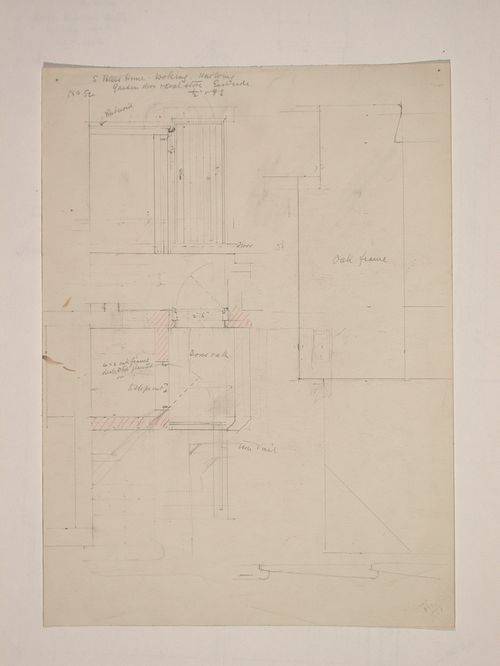
St. Peter's Home, Woking: Studies for the garden door and the coal store on the east side of new wing
Actions:
DR1989:0015:060
Description:
- This work is part of a group of drawings and reprographic prints of drawings for St. Peter's Home, Woking, and St. Peter's Convent, Woking, from the offices of John Loughborough Pearson and Frank Loughborough Pearson (DR1989:0015:011 - DR1989:0015:085 R/V). Composed of contract and working drawings including plans, site plans, sections, and elevations dated between 1881 and 1936, these drawings were sold at auction by the convent along with those for the older institution of St. Peter's Home, Kilburn (DR1989:0015:001 - DR1989:0015:010). Both St. Peter's Home, Kilburn, and St. Peter's Home, Woking were commissioned from John Loughborough Pearson by Benjamin Lancaster. The alterations to the Home at Kilburn were commissioned on behalf of Lancaster's wife, who founded the home and a lay nursing order which ran it. The institution at Woking was founded by Lancaster as a home for incurables in 1882 and dedicated to the memory of his deceased wife (Quiney 67-68, 254-255, and 284). It was probably first known as St. Peter's Home, Woking, not becoming a convent until ca. 1934.
St. Peter's Home, Woking: Studies for the garden door and the coal store on the east side of new wing
Actions:
DR1989:0015:060
Description:
- This work is part of a group of drawings and reprographic prints of drawings for St. Peter's Home, Woking, and St. Peter's Convent, Woking, from the offices of John Loughborough Pearson and Frank Loughborough Pearson (DR1989:0015:011 - DR1989:0015:085 R/V). Composed of contract and working drawings including plans, site plans, sections, and elevations dated between 1881 and 1936, these drawings were sold at auction by the convent along with those for the older institution of St. Peter's Home, Kilburn (DR1989:0015:001 - DR1989:0015:010). Both St. Peter's Home, Kilburn, and St. Peter's Home, Woking were commissioned from John Loughborough Pearson by Benjamin Lancaster. The alterations to the Home at Kilburn were commissioned on behalf of Lancaster's wife, who founded the home and a lay nursing order which ran it. The institution at Woking was founded by Lancaster as a home for incurables in 1882 and dedicated to the memory of his deceased wife (Quiney 67-68, 254-255, and 284). It was probably first known as St. Peter's Home, Woking, not becoming a convent until ca. 1934.
Classification:
dessins
dessins
Date:
1926-1927 ?
1926-1927 ?
Personnes et institutions:
Sujet:
architecture
architecture
Classification:
dessins
dessins
Titre:
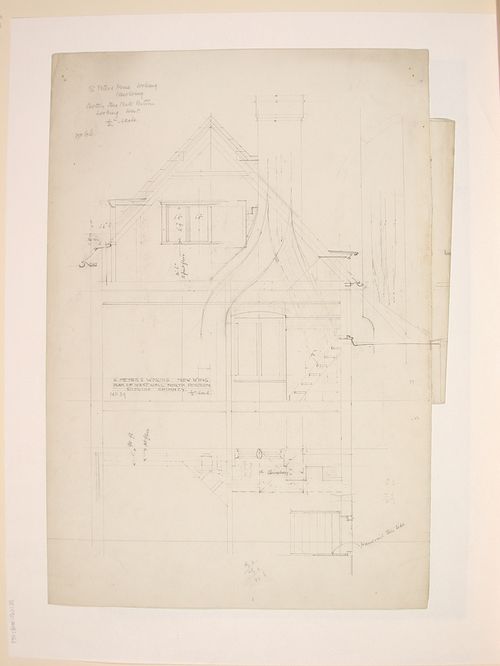
St. Peter's Home, Woking: Sectional elevation for the north portion of the new wing, looking west
St. Peter's Home, Woking: Sectional elevation for the north portion of the new wing, looking west
Actions:
Numéro de référence:
DR1989:0015:061
Description:
- This work is part of a group of drawings and reprographic prints of drawings for St. Peter's Home, Woking, and St. Peter's Convent, Woking, from the offices of John Loughborough Pearson and Frank Loughborough Pearson (DR1989:0015:011 - DR1989:0015:085 R/V). Composed of contract and working drawings including plans, site plans, sections, and elevations dated between 1881 and 1936, these drawings were sold at auction by the convent along with those for the older institution of St. Peter's Home, Kilburn (DR1989:0015:001 - DR1989:0015:010). Both St. Peter's Home, Kilburn, and St. Peter's Home, Woking were commissioned from John Loughborough Pearson by Benjamin Lancaster. The alterations to the Home at Kilburn were commissioned on behalf of Lancaster's wife, who founded the home and a lay nursing order which ran it. The institution at Woking was founded by Lancaster as a home for incurables in 1882 and dedicated to the memory of his deceased wife (Quiney 67-68, 254-255, and 284). It was probably first known as St. Peter's Home, Woking, not becoming a convent until ca. 1934.
DR1989:0015:061
Description:
- This work is part of a group of drawings and reprographic prints of drawings for St. Peter's Home, Woking, and St. Peter's Convent, Woking, from the offices of John Loughborough Pearson and Frank Loughborough Pearson (DR1989:0015:011 - DR1989:0015:085 R/V). Composed of contract and working drawings including plans, site plans, sections, and elevations dated between 1881 and 1936, these drawings were sold at auction by the convent along with those for the older institution of St. Peter's Home, Kilburn (DR1989:0015:001 - DR1989:0015:010). Both St. Peter's Home, Kilburn, and St. Peter's Home, Woking were commissioned from John Loughborough Pearson by Benjamin Lancaster. The alterations to the Home at Kilburn were commissioned on behalf of Lancaster's wife, who founded the home and a lay nursing order which ran it. The institution at Woking was founded by Lancaster as a home for incurables in 1882 and dedicated to the memory of his deceased wife (Quiney 67-68, 254-255, and 284). It was probably first known as St. Peter's Home, Woking, not becoming a convent until ca. 1934.
Personnes et institutions:
Sujet:
architecture
architecture
Date:
1926 ?
1926 ?
Titre:
St. Peter's Home, Woking: Sectional elevation for the north portion of the new wing, looking west
Actions:
DR1989:0015:061
Description:
- This work is part of a group of drawings and reprographic prints of drawings for St. Peter's Home, Woking, and St. Peter's Convent, Woking, from the offices of John Loughborough Pearson and Frank Loughborough Pearson (DR1989:0015:011 - DR1989:0015:085 R/V). Composed of contract and working drawings including plans, site plans, sections, and elevations dated between 1881 and 1936, these drawings were sold at auction by the convent along with those for the older institution of St. Peter's Home, Kilburn (DR1989:0015:001 - DR1989:0015:010). Both St. Peter's Home, Kilburn, and St. Peter's Home, Woking were commissioned from John Loughborough Pearson by Benjamin Lancaster. The alterations to the Home at Kilburn were commissioned on behalf of Lancaster's wife, who founded the home and a lay nursing order which ran it. The institution at Woking was founded by Lancaster as a home for incurables in 1882 and dedicated to the memory of his deceased wife (Quiney 67-68, 254-255, and 284). It was probably first known as St. Peter's Home, Woking, not becoming a convent until ca. 1934.
St. Peter's Home, Woking: Sectional elevation for the north portion of the new wing, looking west
Actions:
DR1989:0015:061
Description:
- This work is part of a group of drawings and reprographic prints of drawings for St. Peter's Home, Woking, and St. Peter's Convent, Woking, from the offices of John Loughborough Pearson and Frank Loughborough Pearson (DR1989:0015:011 - DR1989:0015:085 R/V). Composed of contract and working drawings including plans, site plans, sections, and elevations dated between 1881 and 1936, these drawings were sold at auction by the convent along with those for the older institution of St. Peter's Home, Kilburn (DR1989:0015:001 - DR1989:0015:010). Both St. Peter's Home, Kilburn, and St. Peter's Home, Woking were commissioned from John Loughborough Pearson by Benjamin Lancaster. The alterations to the Home at Kilburn were commissioned on behalf of Lancaster's wife, who founded the home and a lay nursing order which ran it. The institution at Woking was founded by Lancaster as a home for incurables in 1882 and dedicated to the memory of his deceased wife (Quiney 67-68, 254-255, and 284). It was probably first known as St. Peter's Home, Woking, not becoming a convent until ca. 1934.
Classification:
dessins
dessins
Date:
1926 ?
1926 ?
Personnes et institutions:
Sujet:
architecture
architecture
Classification:
dessins
dessins
Actions:
Numéro de référence:
DR1989:0015:063
Description:
- This work is part of a group of drawings and reprographic prints of drawings for St. Peter's Home, Woking, and St. Peter's Convent, Woking, from the offices of John Loughborough Pearson and Frank Loughborough Pearson (DR1989:0015:011 - DR1989:0015:085 R/V). Composed of contract and working drawings including plans, site plans, sections, and elevations dated between 1881 and 1936, these drawings were sold at auction by the convent along with those for the older institution of St. Peter's Home, Kilburn (DR1989:0015:001 - DR1989:0015:010). Both St. Peter's Home, Kilburn, and St. Peter's Home, Woking were commissioned from John Loughborough Pearson by Benjamin Lancaster. The alterations to the Home at Kilburn were commissioned on behalf of Lancaster's wife, who founded the home and a lay nursing order which ran it. The institution at Woking was founded by Lancaster as a home for incurables in 1882 and dedicated to the memory of his deceased wife (Quiney 67-68, 254-255, and 284). It was probably first known as St. Peter's Home, Woking, not becoming a convent until ca. 1934.
DR1989:0015:063
Description:
- This work is part of a group of drawings and reprographic prints of drawings for St. Peter's Home, Woking, and St. Peter's Convent, Woking, from the offices of John Loughborough Pearson and Frank Loughborough Pearson (DR1989:0015:011 - DR1989:0015:085 R/V). Composed of contract and working drawings including plans, site plans, sections, and elevations dated between 1881 and 1936, these drawings were sold at auction by the convent along with those for the older institution of St. Peter's Home, Kilburn (DR1989:0015:001 - DR1989:0015:010). Both St. Peter's Home, Kilburn, and St. Peter's Home, Woking were commissioned from John Loughborough Pearson by Benjamin Lancaster. The alterations to the Home at Kilburn were commissioned on behalf of Lancaster's wife, who founded the home and a lay nursing order which ran it. The institution at Woking was founded by Lancaster as a home for incurables in 1882 and dedicated to the memory of his deceased wife (Quiney 67-68, 254-255, and 284). It was probably first known as St. Peter's Home, Woking, not becoming a convent until ca. 1934.
Personnes et institutions:
Sujet:
architecture
architecture
Date:
1927
1927
Titre:
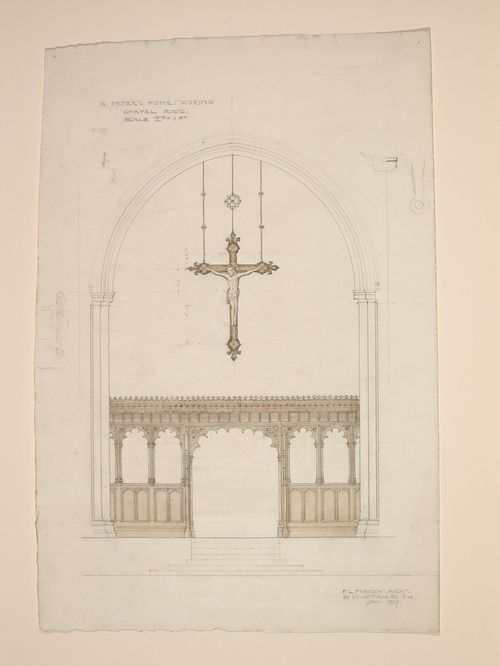
St. Peter's Home, Woking: Chapel rood screen
Actions:
DR1989:0015:063
Description:
- This work is part of a group of drawings and reprographic prints of drawings for St. Peter's Home, Woking, and St. Peter's Convent, Woking, from the offices of John Loughborough Pearson and Frank Loughborough Pearson (DR1989:0015:011 - DR1989:0015:085 R/V). Composed of contract and working drawings including plans, site plans, sections, and elevations dated between 1881 and 1936, these drawings were sold at auction by the convent along with those for the older institution of St. Peter's Home, Kilburn (DR1989:0015:001 - DR1989:0015:010). Both St. Peter's Home, Kilburn, and St. Peter's Home, Woking were commissioned from John Loughborough Pearson by Benjamin Lancaster. The alterations to the Home at Kilburn were commissioned on behalf of Lancaster's wife, who founded the home and a lay nursing order which ran it. The institution at Woking was founded by Lancaster as a home for incurables in 1882 and dedicated to the memory of his deceased wife (Quiney 67-68, 254-255, and 284). It was probably first known as St. Peter's Home, Woking, not becoming a convent until ca. 1934.
St. Peter's Home, Woking: Chapel rood screen
Actions:
DR1989:0015:063
Description:
- This work is part of a group of drawings and reprographic prints of drawings for St. Peter's Home, Woking, and St. Peter's Convent, Woking, from the offices of John Loughborough Pearson and Frank Loughborough Pearson (DR1989:0015:011 - DR1989:0015:085 R/V). Composed of contract and working drawings including plans, site plans, sections, and elevations dated between 1881 and 1936, these drawings were sold at auction by the convent along with those for the older institution of St. Peter's Home, Kilburn (DR1989:0015:001 - DR1989:0015:010). Both St. Peter's Home, Kilburn, and St. Peter's Home, Woking were commissioned from John Loughborough Pearson by Benjamin Lancaster. The alterations to the Home at Kilburn were commissioned on behalf of Lancaster's wife, who founded the home and a lay nursing order which ran it. The institution at Woking was founded by Lancaster as a home for incurables in 1882 and dedicated to the memory of his deceased wife (Quiney 67-68, 254-255, and 284). It was probably first known as St. Peter's Home, Woking, not becoming a convent until ca. 1934.
Classification:
dessins
dessins
Date:
1927
1927
Personnes et institutions:
Sujet:
architecture
architecture
Classification:
dessins
dessins
Numéro de référence:
DR1989:0015:048
Description:
- This work is part of a group of drawings and reprographic prints of drawings for St. Peter's Home, Woking, and St. Peter's Convent, Woking, from the offices of John Loughborough Pearson and Frank Loughborough Pearson (DR1989:0015:011 - DR1989:0015:085 R/V). Composed of contract and working drawings including plans, site plans, sections, and elevations dated between 1881 and 1936, these drawings were sold at auction by the convent along with those for the older institution of St. Peter's Home, Kilburn (DR1989:0015:001 - DR1989:0015:010). Both St. Peter's Home, Kilburn, and St. Peter's Home, Woking were commissioned from John Loughborough Pearson by Benjamin Lancaster. The alterations to the Home at Kilburn were commissioned on behalf of Lancaster's wife, who founded the home and a lay nursing order which ran it. The institution at Woking was founded by Lancaster as a home for incurables in 1882 and dedicated to the memory of his deceased wife (Quiney 67-68, 254-255, and 284). It was probably first known as St. Peter's Home, Woking, not becoming a convent until ca. 1934.
DR1989:0015:048
Description:
- This work is part of a group of drawings and reprographic prints of drawings for St. Peter's Home, Woking, and St. Peter's Convent, Woking, from the offices of John Loughborough Pearson and Frank Loughborough Pearson (DR1989:0015:011 - DR1989:0015:085 R/V). Composed of contract and working drawings including plans, site plans, sections, and elevations dated between 1881 and 1936, these drawings were sold at auction by the convent along with those for the older institution of St. Peter's Home, Kilburn (DR1989:0015:001 - DR1989:0015:010). Both St. Peter's Home, Kilburn, and St. Peter's Home, Woking were commissioned from John Loughborough Pearson by Benjamin Lancaster. The alterations to the Home at Kilburn were commissioned on behalf of Lancaster's wife, who founded the home and a lay nursing order which ran it. The institution at Woking was founded by Lancaster as a home for incurables in 1882 and dedicated to the memory of his deceased wife (Quiney 67-68, 254-255, and 284). It was probably first known as St. Peter's Home, Woking, not becoming a convent until ca. 1934.
Personnes et institutions:
Sujet:
architecture
architecture
Date:
1925
1925
Titre:
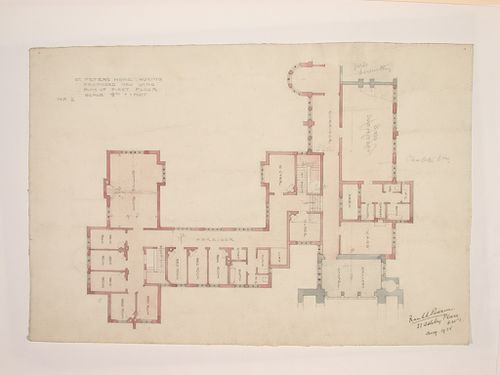
St. Peter's Home, Woking: First floor plan for the new wing
Actions:
DR1989:0015:048
Description:
- This work is part of a group of drawings and reprographic prints of drawings for St. Peter's Home, Woking, and St. Peter's Convent, Woking, from the offices of John Loughborough Pearson and Frank Loughborough Pearson (DR1989:0015:011 - DR1989:0015:085 R/V). Composed of contract and working drawings including plans, site plans, sections, and elevations dated between 1881 and 1936, these drawings were sold at auction by the convent along with those for the older institution of St. Peter's Home, Kilburn (DR1989:0015:001 - DR1989:0015:010). Both St. Peter's Home, Kilburn, and St. Peter's Home, Woking were commissioned from John Loughborough Pearson by Benjamin Lancaster. The alterations to the Home at Kilburn were commissioned on behalf of Lancaster's wife, who founded the home and a lay nursing order which ran it. The institution at Woking was founded by Lancaster as a home for incurables in 1882 and dedicated to the memory of his deceased wife (Quiney 67-68, 254-255, and 284). It was probably first known as St. Peter's Home, Woking, not becoming a convent until ca. 1934.
St. Peter's Home, Woking: First floor plan for the new wing
Actions:
DR1989:0015:048
Description:
- This work is part of a group of drawings and reprographic prints of drawings for St. Peter's Home, Woking, and St. Peter's Convent, Woking, from the offices of John Loughborough Pearson and Frank Loughborough Pearson (DR1989:0015:011 - DR1989:0015:085 R/V). Composed of contract and working drawings including plans, site plans, sections, and elevations dated between 1881 and 1936, these drawings were sold at auction by the convent along with those for the older institution of St. Peter's Home, Kilburn (DR1989:0015:001 - DR1989:0015:010). Both St. Peter's Home, Kilburn, and St. Peter's Home, Woking were commissioned from John Loughborough Pearson by Benjamin Lancaster. The alterations to the Home at Kilburn were commissioned on behalf of Lancaster's wife, who founded the home and a lay nursing order which ran it. The institution at Woking was founded by Lancaster as a home for incurables in 1882 and dedicated to the memory of his deceased wife (Quiney 67-68, 254-255, and 284). It was probably first known as St. Peter's Home, Woking, not becoming a convent until ca. 1934.
Classification:
dessins
dessins
Date:
1925
1925
Personnes et institutions:
Sujet:
architecture
architecture


