


206 Résultats
Classification:
livres
livres

Titre:
Potato (Object Lessons)
Potato (Object Lessons)
Actions:
Prix:
$21.95
(disponible sur commande)
Résumé:
''Object Lessons'' is a series of short, beautifully designed books about the hidden lives of ordinary things. Baked potatoes, Bombay potatoes, pommes frites . . . everyone eats potatoes, but what do they mean? To the United Nations they mean global food security (potatoes are the world's fourth most important food crop). To 18th-century philosophers they promised(...)
$21.95
(disponible sur commande)
Résumé:
''Object Lessons'' is a series of short, beautifully designed books about the hidden lives of ordinary things. Baked potatoes, Bombay potatoes, pommes frites . . . everyone eats potatoes, but what do they mean? To the United Nations they mean global food security (potatoes are the world's fourth most important food crop). To 18th-century philosophers they promised(...)
Titre:
Potato (Object Lessons)
Actions:
Prix:
$21.95
(disponible sur commande)
Résumé:
''Object Lessons'' is a series of short, beautifully designed books about the hidden lives of ordinary things. Baked potatoes, Bombay potatoes, pommes frites . . . everyone eats potatoes, but what do they mean? To the United Nations they mean global food security (potatoes are the world's fourth most important food crop). To 18th-century philosophers they promised happiness. Nutritionists warn that too many increase your risk of hypertension. For the poet Seamus Heaney they conjured up both his mother and the 19th-century Irish famine. What stories lie behind the ordinary potato? The potato is entangled with the birth of the liberal state and the idea that individuals, rather than communities, should form the building blocks of society. Potatoes also speak about family, and our quest for communion with the universe. Thinking about potatoes turns out to be a good way of thinking about some of the important tensions in our world.
Potato (Object Lessons)
Actions:
Prix:
$21.95
(disponible sur commande)
Résumé:
''Object Lessons'' is a series of short, beautifully designed books about the hidden lives of ordinary things. Baked potatoes, Bombay potatoes, pommes frites . . . everyone eats potatoes, but what do they mean? To the United Nations they mean global food security (potatoes are the world's fourth most important food crop). To 18th-century philosophers they promised happiness. Nutritionists warn that too many increase your risk of hypertension. For the poet Seamus Heaney they conjured up both his mother and the 19th-century Irish famine. What stories lie behind the ordinary potato? The potato is entangled with the birth of the liberal state and the idea that individuals, rather than communities, should form the building blocks of society. Potatoes also speak about family, and our quest for communion with the universe. Thinking about potatoes turns out to be a good way of thinking about some of the important tensions in our world.
Classification:
livres
livres
Publication:
mars 2019
mars 2019
Sujet:
Bouffe
Bouffe
Classification:
livres
livres
Actions:
Prix:
$42.00
(disponible sur commande)
Résumé:
''Escapology: modern cabins, cottages and retreats'' is a book of modern-day retreats - bucolic weekend escapes by the sea, remote getaways in the woods, and rustic mountain hideouts - to inspire peaceful and quiet living. The authors genuinely believe that cabin time has a remarkably positive impact on our health, wellbeing and our happiness. Whether it's a rustic(...)
$42.00
(disponible sur commande)
Résumé:
''Escapology: modern cabins, cottages and retreats'' is a book of modern-day retreats - bucolic weekend escapes by the sea, remote getaways in the woods, and rustic mountain hideouts - to inspire peaceful and quiet living. The authors genuinely believe that cabin time has a remarkably positive impact on our health, wellbeing and our happiness. Whether it's a rustic(...)
Titre:
Escapology: modern cabins, cottages and retreats
Actions:
Prix:
$42.00
(disponible sur commande)
Résumé:
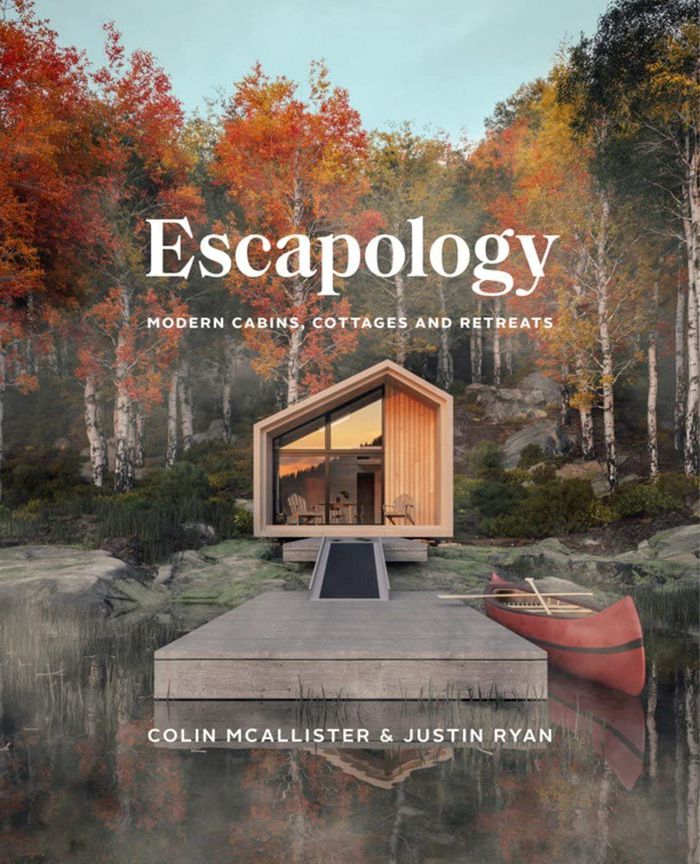
''Escapology: modern cabins, cottages and retreats'' is a book of modern-day retreats - bucolic weekend escapes by the sea, remote getaways in the woods, and rustic mountain hideouts - to inspire peaceful and quiet living. The authors genuinely believe that cabin time has a remarkably positive impact on our health, wellbeing and our happiness. Whether it's a rustic cottage nestled deep within a Nordic forest, a robust mountain lodge in Montana, a breathtaking treehouse in Canada, or a steel-walled, one-room "hotel" in Denmark, these retreats share one vital aspect in common: they proffer the chance to escape and to and live in harmony with nature, far from the madding crowd. Part style bible and lifestyle manual, the book features a collection of classic and contemporary cottages and cabins, each accompanied by an informative design profile and photographed images. You'll find relevant information about different types of dwelling styles, builds, sustainability/off-grid living, tiny homes, renovation on a budget, room zonings, decor and everything in between.
Escapology: modern cabins, cottages and retreats
Actions:
Prix:
$42.00
(disponible sur commande)
Résumé:
''Escapology: modern cabins, cottages and retreats'' is a book of modern-day retreats - bucolic weekend escapes by the sea, remote getaways in the woods, and rustic mountain hideouts - to inspire peaceful and quiet living. The authors genuinely believe that cabin time has a remarkably positive impact on our health, wellbeing and our happiness. Whether it's a rustic cottage nestled deep within a Nordic forest, a robust mountain lodge in Montana, a breathtaking treehouse in Canada, or a steel-walled, one-room "hotel" in Denmark, these retreats share one vital aspect in common: they proffer the chance to escape and to and live in harmony with nature, far from the madding crowd. Part style bible and lifestyle manual, the book features a collection of classic and contemporary cottages and cabins, each accompanied by an informative design profile and photographed images. You'll find relevant information about different types of dwelling styles, builds, sustainability/off-grid living, tiny homes, renovation on a budget, room zonings, decor and everything in between.
Classification:
livres
livres
Publication:
octobre 2020
octobre 2020
Sujet:
Architecture résidentielle
Architecture résidentielle
Classification:
livres
livres
Actions:
Prix:
$29.95
(disponible en magasin)
Résumé:
Are you bored of the endless scroll of your social media feed? Do you swipe left before considering the human being whose face you just summarily rejected? Do you skim articles on your screen in search of intellectual stimulation that never arrives? If so, this book is the philosophical lifeline you have been waiting for. Offering a timely meditation on the profound(...)
$29.95
(disponible en magasin)
Résumé:
Are you bored of the endless scroll of your social media feed? Do you swipe left before considering the human being whose face you just summarily rejected? Do you skim articles on your screen in search of intellectual stimulation that never arrives? If so, this book is the philosophical lifeline you have been waiting for. Offering a timely meditation on the profound(...)
Titre:
Wish I were here: Boredom and the interface
Actions:
Prix:
$29.95
(disponible en magasin)
Résumé:
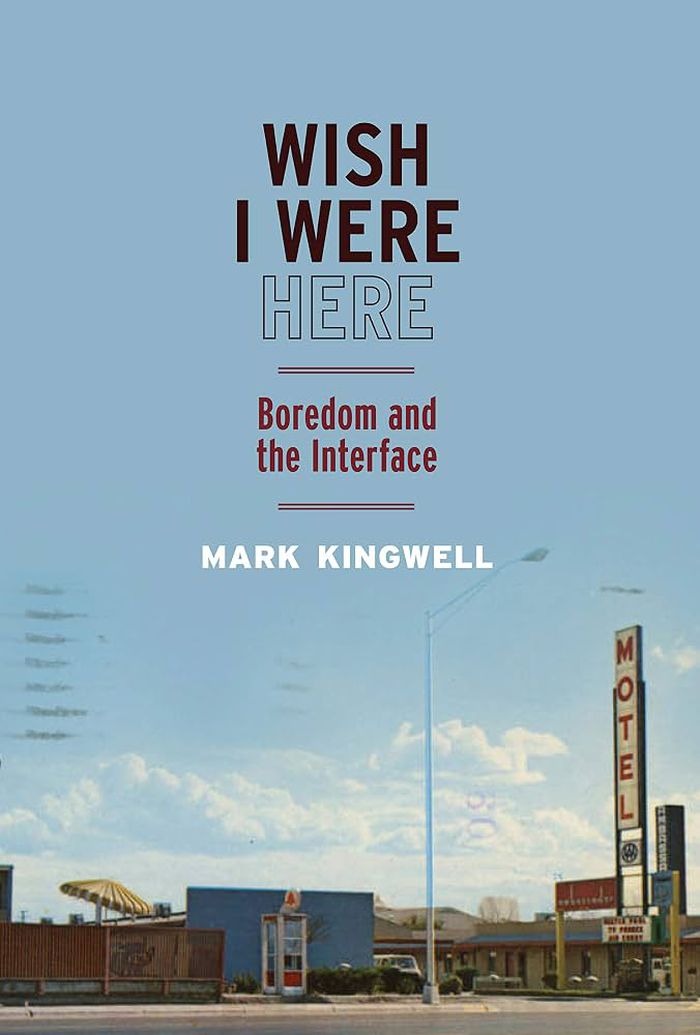
Are you bored of the endless scroll of your social media feed? Do you swipe left before considering the human being whose face you just summarily rejected? Do you skim articles on your screen in search of intellectual stimulation that never arrives? If so, this book is the philosophical lifeline you have been waiting for. Offering a timely meditation on the profound effects of constant immersion in technology, also known as the Interface, ''Wish I Were Here'' draws on philosophical analysis of boredom and happiness to examine the pressing issues of screen addiction and the lure of online outrage. Without moralizing, Mark Kingwell takes seriously the possibility that current conditions of life and connection are creating hollowed-out human selves, divorced from their own external world. While scrolling, swiping, and clicking suggest purposeful action, such as choosing and connecting with others, Kingwell argues that repeated flicks of the finger provide merely the shadow of meaning, by reducing us to scattered data fragments, Twitter feeds, Instagram posts, shopping preferences, and text trends captured by algorithms. Written in accessible language that references both classical philosophers and contemporary critics, ''Wish I Were Here'' turns to philosophy for a cure to the widespread unease that something is amiss in modern waking life.
Wish I were here: Boredom and the interface
Actions:
Prix:
$29.95
(disponible en magasin)
Résumé:
Are you bored of the endless scroll of your social media feed? Do you swipe left before considering the human being whose face you just summarily rejected? Do you skim articles on your screen in search of intellectual stimulation that never arrives? If so, this book is the philosophical lifeline you have been waiting for. Offering a timely meditation on the profound effects of constant immersion in technology, also known as the Interface, ''Wish I Were Here'' draws on philosophical analysis of boredom and happiness to examine the pressing issues of screen addiction and the lure of online outrage. Without moralizing, Mark Kingwell takes seriously the possibility that current conditions of life and connection are creating hollowed-out human selves, divorced from their own external world. While scrolling, swiping, and clicking suggest purposeful action, such as choosing and connecting with others, Kingwell argues that repeated flicks of the finger provide merely the shadow of meaning, by reducing us to scattered data fragments, Twitter feeds, Instagram posts, shopping preferences, and text trends captured by algorithms. Written in accessible language that references both classical philosophers and contemporary critics, ''Wish I Were Here'' turns to philosophy for a cure to the widespread unease that something is amiss in modern waking life.
Classification:
livres
livres
Publication:
mai 2026
mai 2026
Sujet:
Social
Social
Classification:
livres
livres
Titre:
Mythologies
Mythologies
Actions:
Prix:
$17.00
(disponible sur commande)
Résumé:
"No denunciation without its proper instrument of close analysis," Roland Barthes wrote in his preface to Mythologies. There is no more proper instrument of analysis of our contemporary myths than this book—one of the most significant works in French theory, and one that has transformed the way readers and philosophers view the world around them. Our age is a triumph(...)
$17.00
(disponible sur commande)
Résumé:
"No denunciation without its proper instrument of close analysis," Roland Barthes wrote in his preface to Mythologies. There is no more proper instrument of analysis of our contemporary myths than this book—one of the most significant works in French theory, and one that has transformed the way readers and philosophers view the world around them. Our age is a triumph(...)
Sujet:
Théorie/ philosophie
Théorie/ philosophie
Publication:
novembre 2013
novembre 2013
Titre:
Mythologies
Actions:
Prix:
$17.00
(disponible sur commande)
Résumé:
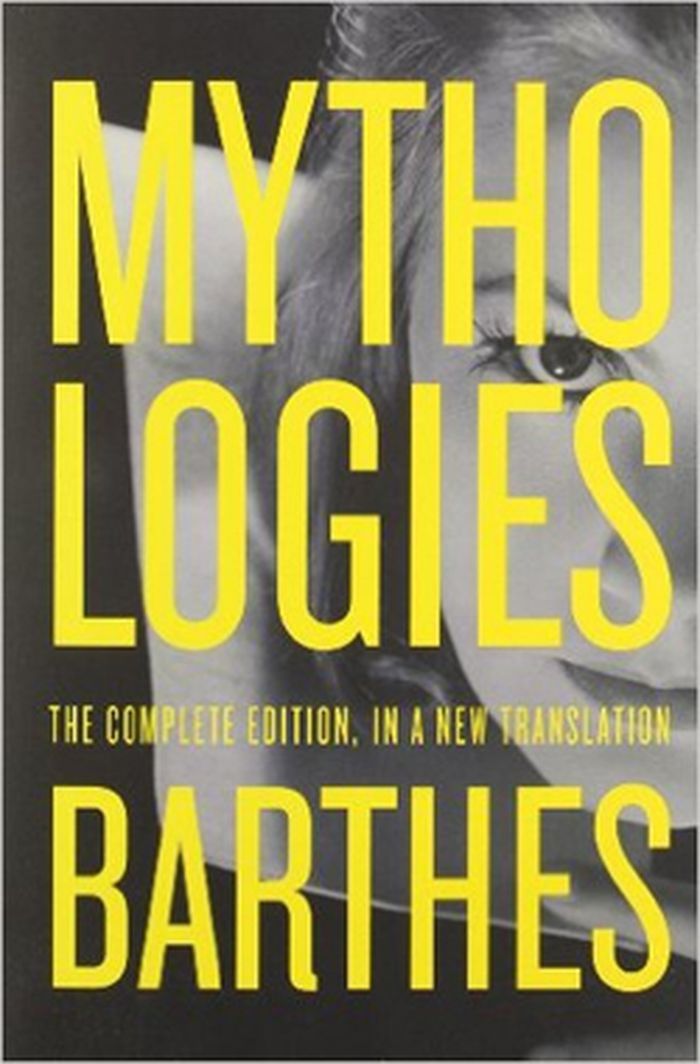
"No denunciation without its proper instrument of close analysis," Roland Barthes wrote in his preface to Mythologies. There is no more proper instrument of analysis of our contemporary myths than this book—one of the most significant works in French theory, and one that has transformed the way readers and philosophers view the world around them. Our age is a triumph of codification. We own devices that bring the world to the command of our fingertips. We have access to boundless information and prodigious quantities of stuff. We decide to like or not, to believe or not, to buy or not. We pick and choose. We think we are free. Yet all around us, in pop culture, politics, mainstream media, and advertising, there are codes and symbols that govern our choices. They are the fabrications of consumer society. They express myths of success, well-being, or happiness. As Barthes sees it, these myths must be carefully deciphered, and debunked. What Barthes discerned in mass media, the fashion of plastic, and the politics of postcolonial France applies with equal force to today's social networks, the iPhone, and the images of 9/11. This new edition of Mythologies, complete and beautifully rendered by the Pulitzer Prize–winning poet, critic, and translator Richard Howard, is a consecration of Barthes's classic—a lesson in clairvoyance that is more relevant now than ever.
Mythologies
Actions:
Prix:
$17.00
(disponible sur commande)
Résumé:
"No denunciation without its proper instrument of close analysis," Roland Barthes wrote in his preface to Mythologies. There is no more proper instrument of analysis of our contemporary myths than this book—one of the most significant works in French theory, and one that has transformed the way readers and philosophers view the world around them. Our age is a triumph of codification. We own devices that bring the world to the command of our fingertips. We have access to boundless information and prodigious quantities of stuff. We decide to like or not, to believe or not, to buy or not. We pick and choose. We think we are free. Yet all around us, in pop culture, politics, mainstream media, and advertising, there are codes and symbols that govern our choices. They are the fabrications of consumer society. They express myths of success, well-being, or happiness. As Barthes sees it, these myths must be carefully deciphered, and debunked. What Barthes discerned in mass media, the fashion of plastic, and the politics of postcolonial France applies with equal force to today's social networks, the iPhone, and the images of 9/11. This new edition of Mythologies, complete and beautifully rendered by the Pulitzer Prize–winning poet, critic, and translator Richard Howard, is a consecration of Barthes's classic—a lesson in clairvoyance that is more relevant now than ever.
Classification:
livres
livres
Publication:
novembre 2013
novembre 2013
Sujet:
Théorie/ philosophie
Théorie/ philosophie
Classification:
livres
livres
Titre:
Building for hope
Building for hope
Actions:
Prix:
$39.95
(disponible sur commande)
Résumé:
This new book by Syrian architect Marwa al-Sabouni, seeks to understand how cities and buildings- scarred by conflict, blight, and pandemic- can be healed through design and urban mindfulness. When Marwa al-Sabouni published Battle for Home in 2016, she was a little-known architect, living in battle-ravaged Homs, Syria, unable to practice her profession. She turned her(...)
$39.95
(disponible sur commande)
Résumé:
This new book by Syrian architect Marwa al-Sabouni, seeks to understand how cities and buildings- scarred by conflict, blight, and pandemic- can be healed through design and urban mindfulness. When Marwa al-Sabouni published Battle for Home in 2016, she was a little-known architect, living in battle-ravaged Homs, Syria, unable to practice her profession. She turned her(...)
Titre:
Building for hope
Actions:
Prix:
$39.95
(disponible sur commande)
Résumé:
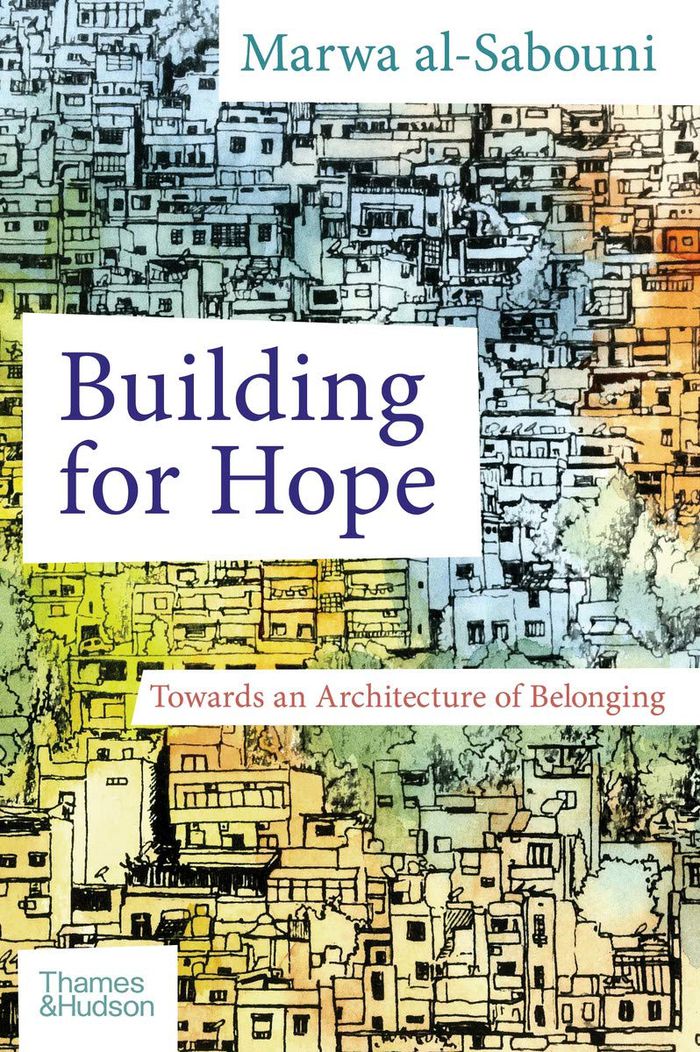
This new book by Syrian architect Marwa al-Sabouni, seeks to understand how cities and buildings- scarred by conflict, blight, and pandemic- can be healed through design and urban mindfulness. When Marwa al-Sabouni published Battle for Home in 2016, she was a little-known architect, living in battle-ravaged Homs, Syria, unable to practice her profession. She turned her fierce intelligence to chronicling how her city and country were undone through decades of architectural mismanagement and mistakes. Once published, Marwa al-Sabouni’s book and story attracted the attention of international media- CNN, The New York Times- and received critical acclaim worldwide. The United Nations called on her for insights and expertise. She became a TED fellow, was invited to speak to audiences around the world, and some suggested she be nominated for architecture’s highest honor, the Pritzker Prize. Al-Sabouni’s deep understanding of Middle Eastern heritage and architecture gives her insight into a wide range of cities, informing her views on how cities work best, how they might fail, and what can be done to harmonize the lives of all their inhabitants. In this new book, al-Sabouni draws together several narratives: her personal and professional observations of some of the world’s most fascinating cities, from Detroit to Helsinki; the lessons that Western societies might learn from Islamic culture and design; and philosophical reflections on how our personal and communal spaces can provide the basic foundations for happiness. Through this tapestry of personal experience, unblinking perspective, and insight, al-Sabouni offers real-world solutions- and hope- for how peace might be created through mindful urban planning.
Building for hope
Actions:
Prix:
$39.95
(disponible sur commande)
Résumé:
This new book by Syrian architect Marwa al-Sabouni, seeks to understand how cities and buildings- scarred by conflict, blight, and pandemic- can be healed through design and urban mindfulness. When Marwa al-Sabouni published Battle for Home in 2016, she was a little-known architect, living in battle-ravaged Homs, Syria, unable to practice her profession. She turned her fierce intelligence to chronicling how her city and country were undone through decades of architectural mismanagement and mistakes. Once published, Marwa al-Sabouni’s book and story attracted the attention of international media- CNN, The New York Times- and received critical acclaim worldwide. The United Nations called on her for insights and expertise. She became a TED fellow, was invited to speak to audiences around the world, and some suggested she be nominated for architecture’s highest honor, the Pritzker Prize. Al-Sabouni’s deep understanding of Middle Eastern heritage and architecture gives her insight into a wide range of cities, informing her views on how cities work best, how they might fail, and what can be done to harmonize the lives of all their inhabitants. In this new book, al-Sabouni draws together several narratives: her personal and professional observations of some of the world’s most fascinating cities, from Detroit to Helsinki; the lessons that Western societies might learn from Islamic culture and design; and philosophical reflections on how our personal and communal spaces can provide the basic foundations for happiness. Through this tapestry of personal experience, unblinking perspective, and insight, al-Sabouni offers real-world solutions- and hope- for how peace might be created through mindful urban planning.
Classification:
livres
livres
Publication:
avril 2021
avril 2021
Sujet:
Théorie de l’architecture
Théorie de l’architecture
Classification:
livres
livres
Actions:
Prix:
$67.95
(disponible sur commande)
Résumé:
The dream of the twentieth century was the construction of mass utopia. As the century closes, this dream is being left behind; the belief that industrial modernization can bring about the good society by overcoming material scarcity for all has been challenged by the disintegration(...)
$67.95
(disponible sur commande)
Résumé:
The dream of the twentieth century was the construction of mass utopia. As the century closes, this dream is being left behind; the belief that industrial modernization can bring about the good society by overcoming material scarcity for all has been challenged by the disintegration(...)
Titre:
Dreamworld and catastrophe : the passing of mass utopia in East and West
Actions:
Prix:
$67.95
(disponible sur commande)
Résumé:
The dream of the twentieth century was the construction of mass utopia. As the century closes, this dream is being left behind; the belief that industrial modernization can bring about the good society by overcoming material scarcity for all has been challenged by the disintegration of European socialism, capitalist restructuring, and ecological constraints. The larger social vision has given way to private dreams of material happiness and to political cynicism. Developing the notion of dreamworld as both a poetic description of a collective mental state and an analytical concept, Susan Buck-Morss attempts to come to terms with mass dreamworlds at the moment of their passing. She shows how dreamworlds became dangerous when their energy was used by the structures of power as an instrument of force against the masses. Stressing the similarities between the East and West and using the end of the Cold War as her point of departure, she examines both extremes of mass utopia, dreamworld and catastrophe. The book is in four parts. "Dreamworlds of Democracy" asks whether collective sovereignty can ever be democratic. "Dreamworlds of History" calls for a rethinking of revolution by political and artistic avant-gardes. "Dreamworlds of Mass Culture" explores the affinities between mass culture's socialist and capitalist forms. An "Afterward" places the book in the historical context of the author's collaboration with a group of Moscow philosophers and artists over the past two tumultuous decades. The book is an experiment in visual culture, using images as philosophy, presenting, literally, a way of seeing the past. Its pictorial narratives rescue historical data that with the end of the Cold War are threatened with oblivion and challenge common conceptions of what this century was all about.
Dreamworld and catastrophe : the passing of mass utopia in East and West
Actions:
Prix:
$67.95
(disponible sur commande)
Résumé:
The dream of the twentieth century was the construction of mass utopia. As the century closes, this dream is being left behind; the belief that industrial modernization can bring about the good society by overcoming material scarcity for all has been challenged by the disintegration of European socialism, capitalist restructuring, and ecological constraints. The larger social vision has given way to private dreams of material happiness and to political cynicism. Developing the notion of dreamworld as both a poetic description of a collective mental state and an analytical concept, Susan Buck-Morss attempts to come to terms with mass dreamworlds at the moment of their passing. She shows how dreamworlds became dangerous when their energy was used by the structures of power as an instrument of force against the masses. Stressing the similarities between the East and West and using the end of the Cold War as her point of departure, she examines both extremes of mass utopia, dreamworld and catastrophe. The book is in four parts. "Dreamworlds of Democracy" asks whether collective sovereignty can ever be democratic. "Dreamworlds of History" calls for a rethinking of revolution by political and artistic avant-gardes. "Dreamworlds of Mass Culture" explores the affinities between mass culture's socialist and capitalist forms. An "Afterward" places the book in the historical context of the author's collaboration with a group of Moscow philosophers and artists over the past two tumultuous decades. The book is an experiment in visual culture, using images as philosophy, presenting, literally, a way of seeing the past. Its pictorial narratives rescue historical data that with the end of the Cold War are threatened with oblivion and challenge common conceptions of what this century was all about.
Classification:
livres
livres
Publication:
janvier 1900, Cambridge
janvier 1900, Cambridge
Sujet:
Théorie de l’architecture
Théorie de l’architecture


