


44174 Résultats
Classification:
dessins, documents textuels, né numérique
dessins, documents textuels, né numérique
Numéro de référence:
AP181.S1.015
Description:
Original directory name: "18_AN- Ausführende Firmen". File consists of records related to the construction, or execution, phase of the BMW Welt project. There are five high-level directories, identified with numerical codes and which element of the construction is being addressed by the records: construction signs, facade engineering, foundations, structural work, and facade steel construction. The firms include Werbetechnik Deger, Bauer, and Maurer Söhne. The bulk of the records is found under the "3060_Stahlbau_Fassade_MSG" directory, consisting of CAD drawings and 3D models for the roof support head points, the service walkways, cover panels, placement of security cameras, the internal helix, the drainage system, etc. These are CAD files, screen captures, and annotated digitisations of printed drawings, the latter two showing very specific details of the structure. There are approximately 500 plotter files in directories "3017 Fassadentechnik" (facade engineering) and "3060_Stahlbau_Fassade_MSG/I_Pläne/Ausgang", some being in archive files (.zip). Files also include some textual records, such as lists, presentations, and correspondence between stakeholders. Most common file formats: JPEG File Interchange Format, Hewlett Packard Vector Graphic Plotter File, Acrobat PDF 1.3 - Portable Document Format, AutoCAD Drawing, Acrobat PDF 1.4 - Portable Document Format
AP181.S1.015
Description:
Original directory name: "18_AN- Ausführende Firmen". File consists of records related to the construction, or execution, phase of the BMW Welt project. There are five high-level directories, identified with numerical codes and which element of the construction is being addressed by the records: construction signs, facade engineering, foundations, structural work, and facade steel construction. The firms include Werbetechnik Deger, Bauer, and Maurer Söhne. The bulk of the records is found under the "3060_Stahlbau_Fassade_MSG" directory, consisting of CAD drawings and 3D models for the roof support head points, the service walkways, cover panels, placement of security cameras, the internal helix, the drainage system, etc. These are CAD files, screen captures, and annotated digitisations of printed drawings, the latter two showing very specific details of the structure. There are approximately 500 plotter files in directories "3017 Fassadentechnik" (facade engineering) and "3060_Stahlbau_Fassade_MSG/I_Pläne/Ausgang", some being in archive files (.zip). Files also include some textual records, such as lists, presentations, and correspondence between stakeholders. Most common file formats: JPEG File Interchange Format, Hewlett Packard Vector Graphic Plotter File, Acrobat PDF 1.3 - Portable Document Format, AutoCAD Drawing, Acrobat PDF 1.4 - Portable Document Format
Personnes et institutions:
Date:
2003-2007
2003-2007
Titre:
Construction documentation, BMW Welt, Munich
Actions:
AP181.S1.015
Description:
Original directory name: "18_AN- Ausführende Firmen". File consists of records related to the construction, or execution, phase of the BMW Welt project. There are five high-level directories, identified with numerical codes and which element of the construction is being addressed by the records: construction signs, facade engineering, foundations, structural work, and facade steel construction. The firms include Werbetechnik Deger, Bauer, and Maurer Söhne. The bulk of the records is found under the "3060_Stahlbau_Fassade_MSG" directory, consisting of CAD drawings and 3D models for the roof support head points, the service walkways, cover panels, placement of security cameras, the internal helix, the drainage system, etc. These are CAD files, screen captures, and annotated digitisations of printed drawings, the latter two showing very specific details of the structure. There are approximately 500 plotter files in directories "3017 Fassadentechnik" (facade engineering) and "3060_Stahlbau_Fassade_MSG/I_Pläne/Ausgang", some being in archive files (.zip). Files also include some textual records, such as lists, presentations, and correspondence between stakeholders. Most common file formats: JPEG File Interchange Format, Hewlett Packard Vector Graphic Plotter File, Acrobat PDF 1.3 - Portable Document Format, AutoCAD Drawing, Acrobat PDF 1.4 - Portable Document Format
Construction documentation, BMW Welt, Munich
Actions:
AP181.S1.015
Description:
Original directory name: "18_AN- Ausführende Firmen". File consists of records related to the construction, or execution, phase of the BMW Welt project. There are five high-level directories, identified with numerical codes and which element of the construction is being addressed by the records: construction signs, facade engineering, foundations, structural work, and facade steel construction. The firms include Werbetechnik Deger, Bauer, and Maurer Söhne. The bulk of the records is found under the "3060_Stahlbau_Fassade_MSG" directory, consisting of CAD drawings and 3D models for the roof support head points, the service walkways, cover panels, placement of security cameras, the internal helix, the drainage system, etc. These are CAD files, screen captures, and annotated digitisations of printed drawings, the latter two showing very specific details of the structure. There are approximately 500 plotter files in directories "3017 Fassadentechnik" (facade engineering) and "3060_Stahlbau_Fassade_MSG/I_Pläne/Ausgang", some being in archive files (.zip). Files also include some textual records, such as lists, presentations, and correspondence between stakeholders. Most common file formats: JPEG File Interchange Format, Hewlett Packard Vector Graphic Plotter File, Acrobat PDF 1.3 - Portable Document Format, AutoCAD Drawing, Acrobat PDF 1.4 - Portable Document Format
Classification:
dessins, documents textuels, né numérique
dessins, documents textuels, né numérique
Date:
2003-2007
2003-2007
Personnes et institutions:
Actions:
Numéro de référence:
DR1986:0108:001-081
Description:
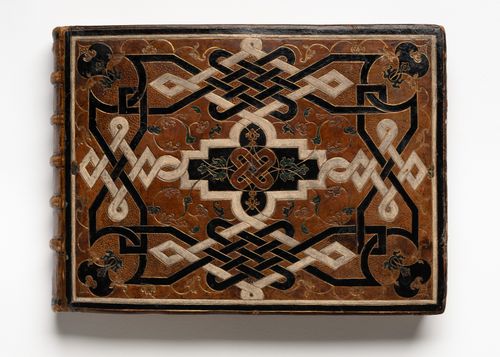
The album contains drawings of architectural details (chimneys, windows, arches, columns), proposals for small-scale works such as tombs, wells, and fountains, large architectural projects including palaces and temples, and drawings of built works.
DR1986:0108:001-081
Description:
The album contains drawings of architectural details (chimneys, windows, arches, columns), proposals for small-scale works such as tombs, wells, and fountains, large architectural projects including palaces and temples, and drawings of built works.
Personnes et institutions:
Date:
circa 1545-1550
circa 1545-1550
Titre:
Album of eighty-one drawings of architecture
Actions:
DR1986:0108:001-081
Description:
The album contains drawings of architectural details (chimneys, windows, arches, columns), proposals for small-scale works such as tombs, wells, and fountains, large architectural projects including palaces and temples, and drawings of built works.
Album of eighty-one drawings of architecture
Actions:
DR1986:0108:001-081
Description:
The album contains drawings of architectural details (chimneys, windows, arches, columns), proposals for small-scale works such as tombs, wells, and fountains, large architectural projects including palaces and temples, and drawings of built works.
Date:
circa 1545-1550
circa 1545-1550
Personnes et institutions:
Classification:
événements
événements
Actions:
Description:
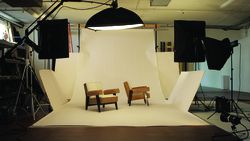
Dans son œuvre Provenance (2013), en images mobiles, l’artiste américaine Amie Siegel remonte à l’envers la route du commerce mondial de mobilier originaire de Chandigarh, à partir des résidences de collectionneurs européens et nord-américains, en passant par les ventes aux enchères, le processus de restauration, le transport outre-mer et, enfin, l’Inde. Le mobilier de(...)
Dans son œuvre Provenance (2013), en images mobiles, l’artiste américaine Amie Siegel remonte à l’envers la route du commerce mondial de mobilier originaire de Chandigarh, à partir des résidences de collectionneurs européens et nord-américains, en passant par les ventes aux enchères, le processus de restauration, le transport outre-mer et, enfin, l’Inde. Le mobilier de(...)
Date:
24 avril 2014 , 18h
24 avril 2014 , 18h
Titre:
Conférence de l’artiste : Amie Siegel, Provenance
Actions:
Description:
Dans son œuvre Provenance (2013), en images mobiles, l’artiste américaine Amie Siegel remonte à l’envers la route du commerce mondial de mobilier originaire de Chandigarh, à partir des résidences de collectionneurs européens et nord-américains, en passant par les ventes aux enchères, le processus de restauration, le transport outre-mer et, enfin, l’Inde. Le mobilier de(...)
Conférence de l’artiste : Amie Siegel, Provenance
Actions:
Description:
Dans son œuvre Provenance (2013), en images mobiles, l’artiste américaine Amie Siegel remonte à l’envers la route du commerce mondial de mobilier originaire de Chandigarh, à partir des résidences de collectionneurs européens et nord-américains, en passant par les ventes aux enchères, le processus de restauration, le transport outre-mer et, enfin, l’Inde. Le mobilier de(...)
Classification:
événements
événements
Date:
24 avril 2014
18h
24 avril 2014
18h
Classification:
événements
événements
Titre:
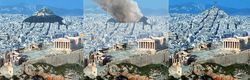
L’enseignement... d'Athènes
L’enseignement... d'Athènes
Actions:
Description:
Konstantinos Pantazis, cofondateur de Point Supreme, parle des travaux de la firme établie à Athènes. Dans sa causerie, il interroge les façons d’affronter la situation de crise actuelle, les propositions proactives afin d’améliorer la ville, comment composer avec l’inconscient collectif et construire sans argent. Il présente les processus sur lesquels se fondent les(...)
Konstantinos Pantazis, cofondateur de Point Supreme, parle des travaux de la firme établie à Athènes. Dans sa causerie, il interroge les façons d’affronter la situation de crise actuelle, les propositions proactives afin d’améliorer la ville, comment composer avec l’inconscient collectif et construire sans argent. Il présente les processus sur lesquels se fondent les(...)
Localisation:
Théâtre Paul-Desmarais
Théâtre Paul-Desmarais
Date:
7 avril 2016, 18h
7 avril 2016, 18h
Titre:
L’enseignement... d'Athènes
Actions:
Description:
Konstantinos Pantazis, cofondateur de Point Supreme, parle des travaux de la firme établie à Athènes. Dans sa causerie, il interroge les façons d’affronter la situation de crise actuelle, les propositions proactives afin d’améliorer la ville, comment composer avec l’inconscient collectif et construire sans argent. Il présente les processus sur lesquels se fondent les(...)
L’enseignement... d'Athènes
Actions:
Description:
Konstantinos Pantazis, cofondateur de Point Supreme, parle des travaux de la firme établie à Athènes. Dans sa causerie, il interroge les façons d’affronter la situation de crise actuelle, les propositions proactives afin d’améliorer la ville, comment composer avec l’inconscient collectif et construire sans argent. Il présente les processus sur lesquels se fondent les(...)
Classification:
événements
événements
Date:
7 avril 2016
18h
7 avril 2016
18h
Localisation:
Théâtre Paul-Desmarais
Théâtre Paul-Desmarais
Classification:
photographies
photographies
Numéro de référence:
AP206.S3.006
Description:
Aditya Prakash also worked as an architect on the Indo-Swiss Training Centre. These photos were most likely taken by him.
AP206.S3.006
Description:
Aditya Prakash also worked as an architect on the Indo-Swiss Training Centre. These photos were most likely taken by him.
Personnes et institutions:
Date:
circa 1958
circa 1958
Titre:
Photographs of the Indo-Swiss Training Centre
Actions:
AP206.S3.006
Description:
Aditya Prakash also worked as an architect on the Indo-Swiss Training Centre. These photos were most likely taken by him.
Photographs of the Indo-Swiss Training Centre
Actions:
AP206.S3.006
Description:
Aditya Prakash also worked as an architect on the Indo-Swiss Training Centre. These photos were most likely taken by him.
Classification:
photographies
photographies
Date:
circa 1958
circa 1958
Personnes et institutions:
Classification:
archives
Niveau de description archivistique:
Fonds
archives
Niveau de description archivistique:
Fonds
Numéro de référence:
AP074
Résumé:
The Catherine Chard Wisnicki fonds contains photographs dating from about 1947, of a house project in West Vancouver which Chard Wisnicki, the first female graduate of the McGill School of Architecture, was assistant architect. The fonds also contains a videocassette recording of an interview with Chard Wisnicki from 1995, and one textual document from 1997.
AP074
Résumé:
The Catherine Chard Wisnicki fonds contains photographs dating from about 1947, of a house project in West Vancouver which Chard Wisnicki, the first female graduate of the McGill School of Architecture, was assistant architect. The fonds also contains a videocassette recording of an interview with Chard Wisnicki from 1995, and one textual document from 1997.
Personnes et institutions:
Date:
[ca. 1947], 1995, 1997
[ca. 1947], 1995, 1997
Titre:
Fonds Catherine Chard Wisnicki
Actions:
AP074
Résumé:
The Catherine Chard Wisnicki fonds contains photographs dating from about 1947, of a house project in West Vancouver which Chard Wisnicki, the first female graduate of the McGill School of Architecture, was assistant architect. The fonds also contains a videocassette recording of an interview with Chard Wisnicki from 1995, and one textual document from 1997.
Fonds Catherine Chard Wisnicki
Actions:
AP074
Résumé:
The Catherine Chard Wisnicki fonds contains photographs dating from about 1947, of a house project in West Vancouver which Chard Wisnicki, the first female graduate of the McGill School of Architecture, was assistant architect. The fonds also contains a videocassette recording of an interview with Chard Wisnicki from 1995, and one textual document from 1997.
Classification:
archives
Niveau de description archivistique:
Fonds
archives
Niveau de description archivistique:
Fonds
Date:
[ca. 1947], 1995, 1997
[ca. 1947], 1995, 1997
Personnes et institutions:
Classification:
expositions
expositions
Actions:
Description:
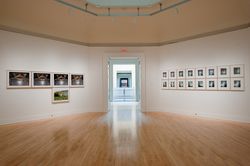
Dans cette exposition, Guido Guidi, photographe italien, explore les notions de temps, d’espace et de lumière dans son essai photographique sur le mausolée de la famille Brion en Italie, considéré comme le chef-d’œuvre de l’architecte Carlo Scarpa. Révélée par les 54 photographies couleur de l’artiste exposées, la beauté de l’architecture de cet complexe funéraire, aux(...)
Dans cette exposition, Guido Guidi, photographe italien, explore les notions de temps, d’espace et de lumière dans son essai photographique sur le mausolée de la famille Brion en Italie, considéré comme le chef-d’œuvre de l’architecte Carlo Scarpa. Révélée par les 54 photographies couleur de l’artiste exposées, la beauté de l’architecture de cet complexe funéraire, aux(...)
Localisation:
Salle octogonale
Salle octogonale
Date:
11 septembre 2009 au 10 janvier 2010
11 septembre 2009 au 10 janvier 2010
Titre:
La tombe Brion de Carlo Scarpa : photographies de Guido Guidi, 1997-2007
Actions:
Description:
Dans cette exposition, Guido Guidi, photographe italien, explore les notions de temps, d’espace et de lumière dans son essai photographique sur le mausolée de la famille Brion en Italie, considéré comme le chef-d’œuvre de l’architecte Carlo Scarpa. Révélée par les 54 photographies couleur de l’artiste exposées, la beauté de l’architecture de cet complexe funéraire, aux(...)
La tombe Brion de Carlo Scarpa : photographies de Guido Guidi, 1997-2007
Actions:
Description:
Dans cette exposition, Guido Guidi, photographe italien, explore les notions de temps, d’espace et de lumière dans son essai photographique sur le mausolée de la famille Brion en Italie, considéré comme le chef-d’œuvre de l’architecte Carlo Scarpa. Révélée par les 54 photographies couleur de l’artiste exposées, la beauté de l’architecture de cet complexe funéraire, aux(...)
Classification:
expositions
expositions
Date:
11 septembre 2009 au
10 janvier 2010
11 septembre 2009 au
10 janvier 2010
Localisation:
Salle octogonale
Salle octogonale
Classification:
expositions
expositions
Actions:
Description:
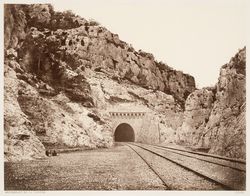
Édouard Baldus a défini mieux qu’aucun autre la notion moderne de paysage et les critères de la photographie d’architecture. Les photographies d’Édouard Baldus : paysages et monuments de France témoigne de l’âge d’or français du point de vue du photographe. L’exposition se présente comme une suite chronologique de séquences qui montrent l’évolution du travail de l’artiste(...)
Édouard Baldus a défini mieux qu’aucun autre la notion moderne de paysage et les critères de la photographie d’architecture. Les photographies d’Édouard Baldus : paysages et monuments de France témoigne de l’âge d’or français du point de vue du photographe. L’exposition se présente comme une suite chronologique de séquences qui montrent l’évolution du travail de l’artiste(...)
Localisation:
Salles principales
Salles principales
Date:
25 janvier 1995 au 23 avril 1995
25 janvier 1995 au 23 avril 1995
Titre:
Les photographies d'Édouard Baldus : paysages et monuments de France
Actions:
Description:
Édouard Baldus a défini mieux qu’aucun autre la notion moderne de paysage et les critères de la photographie d’architecture. Les photographies d’Édouard Baldus : paysages et monuments de France témoigne de l’âge d’or français du point de vue du photographe. L’exposition se présente comme une suite chronologique de séquences qui montrent l’évolution du travail de l’artiste(...)
Les photographies d'Édouard Baldus : paysages et monuments de France
Actions:
Description:
Édouard Baldus a défini mieux qu’aucun autre la notion moderne de paysage et les critères de la photographie d’architecture. Les photographies d’Édouard Baldus : paysages et monuments de France témoigne de l’âge d’or français du point de vue du photographe. L’exposition se présente comme une suite chronologique de séquences qui montrent l’évolution du travail de l’artiste(...)
Classification:
expositions
expositions
Date:
25 janvier 1995 au
23 avril 1995
25 janvier 1995 au
23 avril 1995
Localisation:
Salles principales
Salles principales
Classification:
maquettes
maquettes
Numéro de référence:
AP056.S1.1990.PR04.008
Description:
This model has a lighting component that works with a transformer.
AP056.S1.1990.PR04.008
Description:
This model has a lighting component that works with a transformer.
Personnes et institutions:
Date:
circa 1990
circa 1990
Titre:
Project model, Canada Life Assurance Building Competition, Toronto
Actions:
AP056.S1.1990.PR04.008
Description:
This model has a lighting component that works with a transformer.
Project model, Canada Life Assurance Building Competition, Toronto
Actions:
AP056.S1.1990.PR04.008
Description:
This model has a lighting component that works with a transformer.
Classification:
maquettes
maquettes
Date:
circa 1990
circa 1990
Personnes et institutions:
Classification:
événements
événements
Titre:
La parole à Siza
La parole à Siza
Actions:
Description:
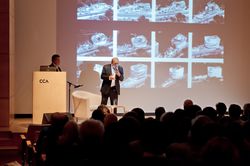
Álvaro Siza, architecte portugais lauréat du prix Pritzker, présente exceptionnellement une conférence en Amérique du Nord qui porte sur l’élaboration du concept du Iberê Camargo Museum, à Porto Alegre, dont la structure est reconnue pour ses volumes sculpturaux et sa remarquable intégration à l’escarpement côtier. L’architecte discutera de l’importance des croquis(...)
Álvaro Siza, architecte portugais lauréat du prix Pritzker, présente exceptionnellement une conférence en Amérique du Nord qui porte sur l’élaboration du concept du Iberê Camargo Museum, à Porto Alegre, dont la structure est reconnue pour ses volumes sculpturaux et sa remarquable intégration à l’escarpement côtier. L’architecte discutera de l’importance des croquis(...)
Localisation:
Théâtre Paul-Desmarais
Théâtre Paul-Desmarais
Date:
26 avril 2012 , 19h
26 avril 2012 , 19h
Titre:
La parole à Siza
Actions:
Description:
Álvaro Siza, architecte portugais lauréat du prix Pritzker, présente exceptionnellement une conférence en Amérique du Nord qui porte sur l’élaboration du concept du Iberê Camargo Museum, à Porto Alegre, dont la structure est reconnue pour ses volumes sculpturaux et sa remarquable intégration à l’escarpement côtier. L’architecte discutera de l’importance des croquis(...)
La parole à Siza
Actions:
Description:
Álvaro Siza, architecte portugais lauréat du prix Pritzker, présente exceptionnellement une conférence en Amérique du Nord qui porte sur l’élaboration du concept du Iberê Camargo Museum, à Porto Alegre, dont la structure est reconnue pour ses volumes sculpturaux et sa remarquable intégration à l’escarpement côtier. L’architecte discutera de l’importance des croquis(...)
Classification:
événements
événements
Date:
26 avril 2012
19h
26 avril 2012
19h
Localisation:
Théâtre Paul-Desmarais
Théâtre Paul-Desmarais


