


3095 Résultats
Classification:
livres
livres
Prix:
$74.95
(disponible en magasin)
Résumé:
This illustrated book highlights the contrasts and correspondences in the lives and work of two of Modernism’s innovators, Josef Albers (1888–1976) and László Moholy-Nagy (1895–1947). Beginning in the 1930s, Albers and Moholy-Nagy each developed a rigorously abstract language that condensed art to its visual fundamentals: line, color, texture, light, and form. This(...)
$74.95
(disponible en magasin)
Résumé:
This illustrated book highlights the contrasts and correspondences in the lives and work of two of Modernism’s innovators, Josef Albers (1888–1976) and László Moholy-Nagy (1895–1947). Beginning in the 1930s, Albers and Moholy-Nagy each developed a rigorously abstract language that condensed art to its visual fundamentals: line, color, texture, light, and form. This(...)
Titre:
Albers and Moholy-Nagy : from the Bauhaus to the new world
Actions:
Prix:
$74.95
(disponible en magasin)
Résumé:
This illustrated book highlights the contrasts and correspondences in the lives and work of two of Modernism’s innovators, Josef Albers (1888–1976) and László Moholy-Nagy (1895–1947). Beginning in the 1930s, Albers and Moholy-Nagy each developed a rigorously abstract language that condensed art to its visual fundamentals: line, color, texture, light, and form. This language experienced a creative explosion during their Bauhaus years, when both artists moved freely between media and disciplines. Essays by leading scholars follow the artists’ separate paths through to their emigration to the United States, where each continued to push tirelessly the conventions of artistic practice—Albers at Black Mountain College in North Carolina and then at Yale University, and Moholy-Nagy in Chicago at the New Bauhaus School and the Institute of Design. As highly influential teachers, Albers and Moholy-Nagy became important catalysts for the transmission of Modernist ideas from Europe to America. This book presents four decades of works in a variety of media, including painting, collage, glass, moving sculpture, photography, film, furniture, and graphic design. With contributions by Hal Forster, Hattula Moholy-Nagy, Terence A. Senter, Nicholas Fox Weber, and Michael White.
Albers and Moholy-Nagy : from the Bauhaus to the new world
Actions:
Prix:
$74.95
(disponible en magasin)
Résumé:
This illustrated book highlights the contrasts and correspondences in the lives and work of two of Modernism’s innovators, Josef Albers (1888–1976) and László Moholy-Nagy (1895–1947). Beginning in the 1930s, Albers and Moholy-Nagy each developed a rigorously abstract language that condensed art to its visual fundamentals: line, color, texture, light, and form. This language experienced a creative explosion during their Bauhaus years, when both artists moved freely between media and disciplines. Essays by leading scholars follow the artists’ separate paths through to their emigration to the United States, where each continued to push tirelessly the conventions of artistic practice—Albers at Black Mountain College in North Carolina and then at Yale University, and Moholy-Nagy in Chicago at the New Bauhaus School and the Institute of Design. As highly influential teachers, Albers and Moholy-Nagy became important catalysts for the transmission of Modernist ideas from Europe to America. This book presents four decades of works in a variety of media, including painting, collage, glass, moving sculpture, photography, film, furniture, and graphic design. With contributions by Hal Forster, Hattula Moholy-Nagy, Terence A. Senter, Nicholas Fox Weber, and Michael White.
Classification:
livres
livres
Publication:
août 2006, New Haven / London
août 2006, New Haven / London
Sujet:
Modernisme
Modernisme
Classification:
livres
livres
Titre:
Bauhaus 1910-1933
Bauhaus 1910-1933
Actions:
Prix:
$24.95
(disponible sur commande)
Résumé:
Focusing on buildings designed by Bauhaus members from 1919 to 1933, this book features famous and lesser-known building projects in Germany, Vienna, Barcelona, Prague, and Budapest by architects including Walter Gropius, Marcel Breuer, and Ludwig Mies van der Rohe. Arranged chronologically, Bauhaus offers informative commentary and photographs, taken especially for this(...)
$24.95
(disponible sur commande)
Résumé:
Focusing on buildings designed by Bauhaus members from 1919 to 1933, this book features famous and lesser-known building projects in Germany, Vienna, Barcelona, Prague, and Budapest by architects including Walter Gropius, Marcel Breuer, and Ludwig Mies van der Rohe. Arranged chronologically, Bauhaus offers informative commentary and photographs, taken especially for this(...)
Sujet:
Modernisme
Modernisme
Publication:
mai 2006, München / Berlin / London / New York
mai 2006, München / Berlin / London / New York
Titre:
Bauhaus 1910-1933
Actions:
Prix:
$24.95
(disponible sur commande)
Résumé:
Focusing on buildings designed by Bauhaus members from 1919 to 1933, this book features famous and lesser-known building projects in Germany, Vienna, Barcelona, Prague, and Budapest by architects including Walter Gropius, Marcel Breuer, and Ludwig Mies van der Rohe. Arranged chronologically, Bauhaus offers informative commentary and photographs, taken especially for this book. Engels' photographs show many buildings in their newly restored conditions and reflect the full range of Bauhaus architecture, one of the most influential schools of architecture in the twentieth century.
Bauhaus 1910-1933
Actions:
Prix:
$24.95
(disponible sur commande)
Résumé:
Focusing on buildings designed by Bauhaus members from 1919 to 1933, this book features famous and lesser-known building projects in Germany, Vienna, Barcelona, Prague, and Budapest by architects including Walter Gropius, Marcel Breuer, and Ludwig Mies van der Rohe. Arranged chronologically, Bauhaus offers informative commentary and photographs, taken especially for this book. Engels' photographs show many buildings in their newly restored conditions and reflect the full range of Bauhaus architecture, one of the most influential schools of architecture in the twentieth century.
Classification:
livres
livres
Publication:
mai 2006, München / Berlin / London / New York
mai 2006, München / Berlin / London / New York
Sujet:
Modernisme
Modernisme
Classification:
livres
livres
Actions:
Prix:
$59.95
(disponible sur commande)
Résumé:
L'auteur aborde à la fois les dimensions pratiques, esthétiques et sociales de l'architecture, tout en en privilégiant les aspects formels et symboliques. Pour cette troisième édition - la première à paraître en français -, le texte a été entièrement révisé et enrichi, en tenant compte des nouvelles connaissances et en reconsidérant l'architecture moderne dans sa variété(...)
$59.95
(disponible sur commande)
Résumé:
L'auteur aborde à la fois les dimensions pratiques, esthétiques et sociales de l'architecture, tout en en privilégiant les aspects formels et symboliques. Pour cette troisième édition - la première à paraître en français -, le texte a été entièrement révisé et enrichi, en tenant compte des nouvelles connaissances et en reconsidérant l'architecture moderne dans sa variété(...)
Titre:
L'architecture moderne depuis 1900
Actions:
Prix:
$59.95
(disponible sur commande)
Résumé:
L'auteur aborde à la fois les dimensions pratiques, esthétiques et sociales de l'architecture, tout en en privilégiant les aspects formels et symboliques. Pour cette troisième édition - la première à paraître en français -, le texte a été entièrement révisé et enrichi, en tenant compte des nouvelles connaissances et en reconsidérant l'architecture moderne dans sa variété et sa complexité. Sept chapitres ont été ajoutés, dont trois, à la fin de l'ouvrage, concernent l'évolution mondiale récente. La bibliographie et les notes ont également été augmentées et actualisées.
L'architecture moderne depuis 1900
Actions:
Prix:
$59.95
(disponible sur commande)
Résumé:
L'auteur aborde à la fois les dimensions pratiques, esthétiques et sociales de l'architecture, tout en en privilégiant les aspects formels et symboliques. Pour cette troisième édition - la première à paraître en français -, le texte a été entièrement révisé et enrichi, en tenant compte des nouvelles connaissances et en reconsidérant l'architecture moderne dans sa variété et sa complexité. Sept chapitres ont été ajoutés, dont trois, à la fin de l'ouvrage, concernent l'évolution mondiale récente. La bibliographie et les notes ont également été augmentées et actualisées.
Classification:
livres
livres
Publication:
mars 2006, London
mars 2006, London
Sujet:
Modernisme
Modernisme
Classification:
livres
livres
Titre:
The modernist home
The modernist home
Actions:
Prix:
$38.95
(disponible sur commande)
Résumé:
The Modernist house was a test of modern architects’ ability to meet human needs while fuelling the intellect. "The Modernist home" reveals the striking results of the challenge to fit utopian modernist principles to day-to-day living. The Modernist house dissolved the closed spaces of the traditional home, modernising the bathrooms and kitchens, opening the interior(...)
$38.95
(disponible sur commande)
Résumé:
The Modernist house was a test of modern architects’ ability to meet human needs while fuelling the intellect. "The Modernist home" reveals the striking results of the challenge to fit utopian modernist principles to day-to-day living. The Modernist house dissolved the closed spaces of the traditional home, modernising the bathrooms and kitchens, opening the interior(...)
Titre:
The modernist home
Actions:
Prix:
$38.95
(disponible sur commande)
Résumé:
The Modernist house was a test of modern architects’ ability to meet human needs while fuelling the intellect. "The Modernist home" reveals the striking results of the challenge to fit utopian modernist principles to day-to-day living. The Modernist house dissolved the closed spaces of the traditional home, modernising the bathrooms and kitchens, opening the interior to natural light and providing balconies and terraces for sun-worship and sleeping in the open air. Tim Benton uncovers its elements: from the technology that provided central heating and electric lighting; to new construction materials, such as concrete and steel; to close-ups on features like winter gardens and folding furniture. He opens the door on Modernist houses around the world, from Le Corbusier’s Villa Savoye, to Mies van der Rohe’s Barcelona Pavilion, all fully illustrated with colour photographs and plans.
The modernist home
Actions:
Prix:
$38.95
(disponible sur commande)
Résumé:
The Modernist house was a test of modern architects’ ability to meet human needs while fuelling the intellect. "The Modernist home" reveals the striking results of the challenge to fit utopian modernist principles to day-to-day living. The Modernist house dissolved the closed spaces of the traditional home, modernising the bathrooms and kitchens, opening the interior to natural light and providing balconies and terraces for sun-worship and sleeping in the open air. Tim Benton uncovers its elements: from the technology that provided central heating and electric lighting; to new construction materials, such as concrete and steel; to close-ups on features like winter gardens and folding furniture. He opens the door on Modernist houses around the world, from Le Corbusier’s Villa Savoye, to Mies van der Rohe’s Barcelona Pavilion, all fully illustrated with colour photographs and plans.
Classification:
livres
livres
Publication:
mai 2006, London
mai 2006, London
Sujet:
Modernisme
Modernisme
Classification:
livres
livres
Actions:
Prix:
$69.95
(disponible en magasin)
Résumé:
In "That’s Brutal, What’s Modern?: The Smithsons," Banham, and the Mies-Image, Mark D. Linder offers an original understanding of New Brutalism as a consequential and generative episode in the history of post-photographic imaging practices. This episode exemplifies and anticipates the kinds of cognition and intelligence that dominate architectural imagination today.(...)
$69.95
(disponible en magasin)
Résumé:
In "That’s Brutal, What’s Modern?: The Smithsons," Banham, and the Mies-Image, Mark D. Linder offers an original understanding of New Brutalism as a consequential and generative episode in the history of post-photographic imaging practices. This episode exemplifies and anticipates the kinds of cognition and intelligence that dominate architectural imagination today.(...)
Titre:
That’s Brutal, What’s Modern?: The Smithsons, Banham, and the Mies-Image
Actions:
Prix:
$69.95
(disponible en magasin)
Résumé:
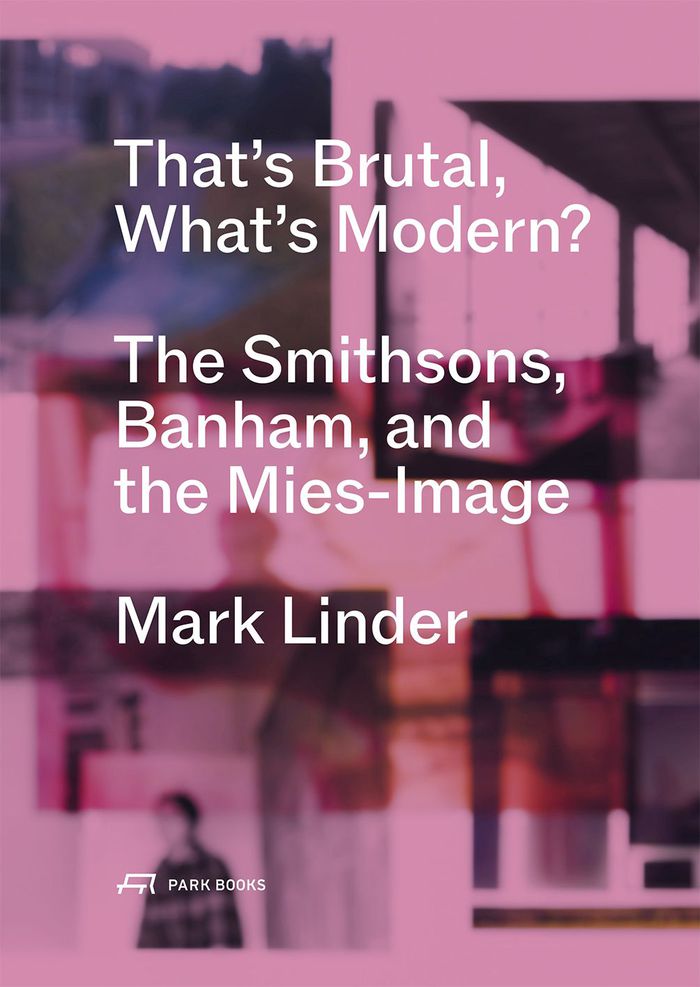
In "That’s Brutal, What’s Modern?: The Smithsons," Banham, and the Mies-Image, Mark D. Linder offers an original understanding of New Brutalism as a consequential and generative episode in the history of post-photographic imaging practices. This episode exemplifies and anticipates the kinds of cognition and intelligence that dominate architectural imagination today. Linder aims to recover a specific and integral, yet overlooked, aspect of the peculiar novelty of New Brutalism by reconsidering the entirety of Alison and Peter Smithson’s work as a fitful and evolving fifty-year fascination with the imaging potential they found in the architecture of Mies van der Rohe. In six chapters and some forty arrays of images, the book progresses from historical research to theoretical speculations on the historical legacy and contemporary potential of the Smithsons’ pursuit of the "Mies-Image."
That’s Brutal, What’s Modern?: The Smithsons, Banham, and the Mies-Image
Actions:
Prix:
$69.95
(disponible en magasin)
Résumé:
In "That’s Brutal, What’s Modern?: The Smithsons," Banham, and the Mies-Image, Mark D. Linder offers an original understanding of New Brutalism as a consequential and generative episode in the history of post-photographic imaging practices. This episode exemplifies and anticipates the kinds of cognition and intelligence that dominate architectural imagination today. Linder aims to recover a specific and integral, yet overlooked, aspect of the peculiar novelty of New Brutalism by reconsidering the entirety of Alison and Peter Smithson’s work as a fitful and evolving fifty-year fascination with the imaging potential they found in the architecture of Mies van der Rohe. In six chapters and some forty arrays of images, the book progresses from historical research to theoretical speculations on the historical legacy and contemporary potential of the Smithsons’ pursuit of the "Mies-Image."
Classification:
livres
livres
Publication:
décembre 2025
décembre 2025
Sujet:
Modernisme
Modernisme
Classification:
livres
livres
Titre:
Modernist travel guide
Modernist travel guide
Actions:
Prix:
$65.00
(disponible en magasin)
Résumé:
The "Modernist Travel Guide" is a pocket-sized reference book written and photographed by design historian Adam Štech (@okolo_architecture), featuring nearly 400 of his favourite examples of modernist architecture across 30 major cities worldwide. Drawing from Štech’s extensive archive of 150,000 photographs - documenting more than 6,000 buildings and interiors in 40(...)
$65.00
(disponible en magasin)
Résumé:
The "Modernist Travel Guide" is a pocket-sized reference book written and photographed by design historian Adam Štech (@okolo_architecture), featuring nearly 400 of his favourite examples of modernist architecture across 30 major cities worldwide. Drawing from Štech’s extensive archive of 150,000 photographs - documenting more than 6,000 buildings and interiors in 40(...)
Titre:
Modernist travel guide
Actions:
Prix:
$65.00
(disponible en magasin)
Résumé:
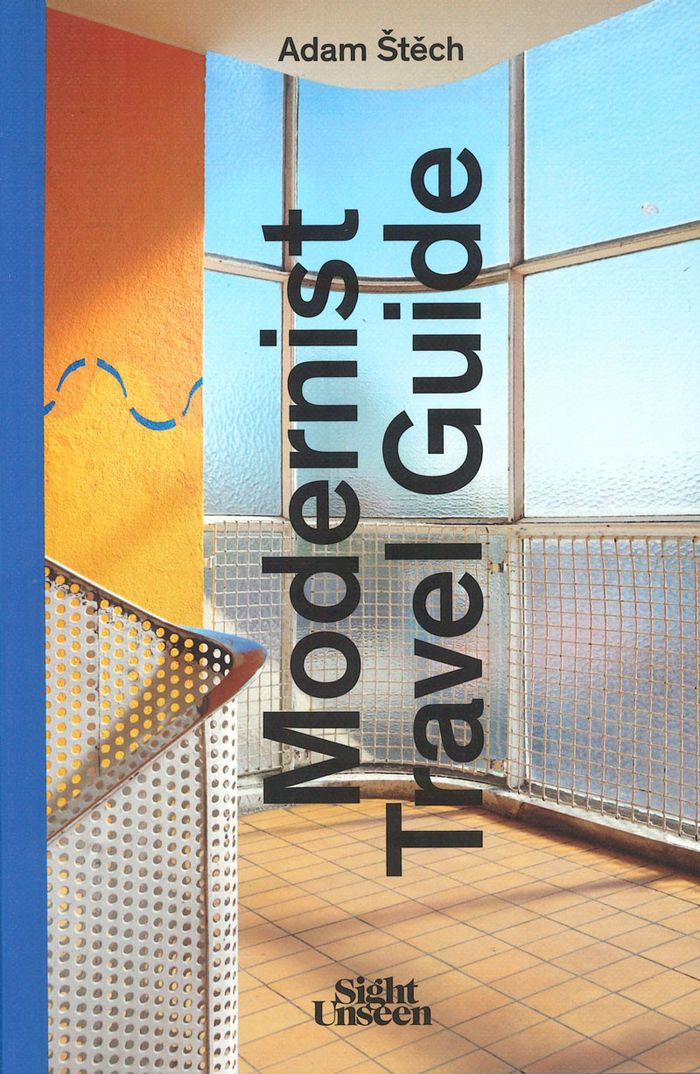
The "Modernist Travel Guide" is a pocket-sized reference book written and photographed by design historian Adam Štech (@okolo_architecture), featuring nearly 400 of his favourite examples of modernist architecture across 30 major cities worldwide. Drawing from Štech’s extensive archive of 150,000 photographs - documenting more than 6,000 buildings and interiors in 40 countries - the guide is an essential travel companion for design enthusiasts. It provides background stories, addresses, and accessibility details for both iconic landmarks and hidden gems.
Modernist travel guide
Actions:
Prix:
$65.00
(disponible en magasin)
Résumé:
The "Modernist Travel Guide" is a pocket-sized reference book written and photographed by design historian Adam Štech (@okolo_architecture), featuring nearly 400 of his favourite examples of modernist architecture across 30 major cities worldwide. Drawing from Štech’s extensive archive of 150,000 photographs - documenting more than 6,000 buildings and interiors in 40 countries - the guide is an essential travel companion for design enthusiasts. It provides background stories, addresses, and accessibility details for both iconic landmarks and hidden gems.
Classification:
livres
livres
Publication:
mai 2025
mai 2025
Sujet:
Modernisme
Modernisme
Classification:
livres
livres
Prix:
$54.95
(disponible en magasin)
Résumé:
Mass-produced from the 1970s to the 1990s, modular kiosks like the seminal K67, designed by the Slovenian architect Saša J. Mächtig, and similar systems – including the Polish Kami, the Macedonian KC190, and the Soviet ‘Bathyscaphe’ – could be found anywhere throughout the former Eastern Bloc and ex-Yugoslav countries, from bustling city squares to socialist-era housing(...)
$54.95
(disponible en magasin)
Résumé:
Mass-produced from the 1970s to the 1990s, modular kiosks like the seminal K67, designed by the Slovenian architect Saša J. Mächtig, and similar systems – including the Polish Kami, the Macedonian KC190, and the Soviet ‘Bathyscaphe’ – could be found anywhere throughout the former Eastern Bloc and ex-Yugoslav countries, from bustling city squares to socialist-era housing(...)
Titre:
Kiosk: The last modernist booths across Central and Eastern Europe
Actions:
Prix:
$54.95
(disponible en magasin)
Résumé:
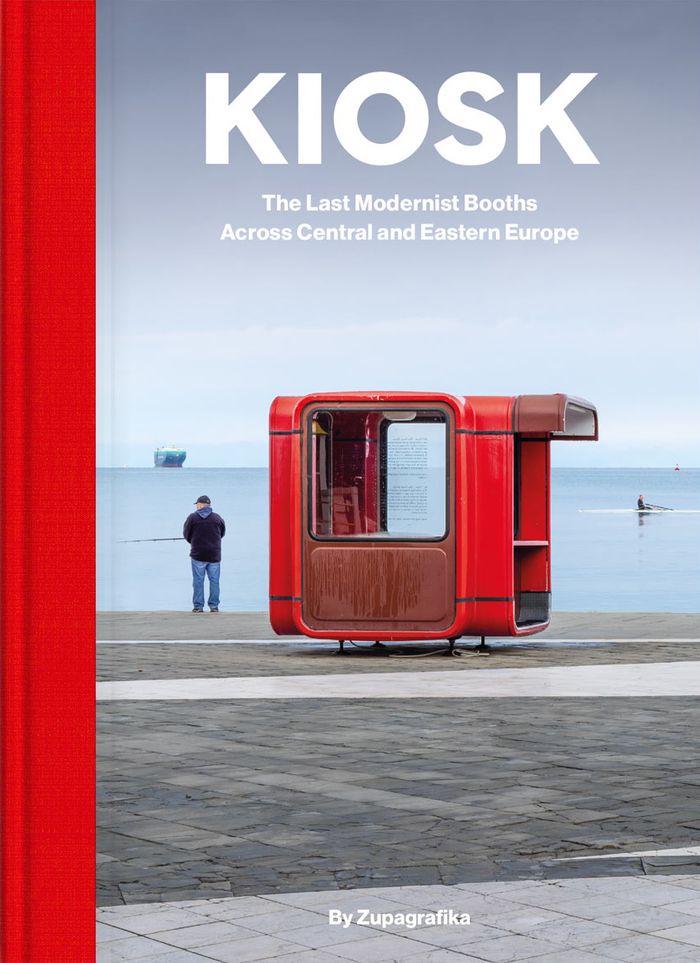
Mass-produced from the 1970s to the 1990s, modular kiosks like the seminal K67, designed by the Slovenian architect Saša J. Mächtig, and similar systems – including the Polish Kami, the Macedonian KC190, and the Soviet ‘Bathyscaphe’ – could be found anywhere throughout the former Eastern Bloc and ex-Yugoslav countries, from bustling city squares to socialist-era housing estates. They served as hot dog and Polish zapiekanka joints, farm egg and rotisserie chicken vendors, funeral flower shops, newsstands, car park booths, currency exchange offices, and more. Featuring over 150 kiosks – from Ljubljana to Warsaw, and from Belgrade to Berlin – this photobook provides previously unseen documentation of the remaining modernist booths that witnessed the socio-political transformation of Central and Eastern Europe at the end of the 20th century. While some remain active or have undergone refurbishment, others have been abandoned or have slowly faded from the urban landscape. The photographs in this unique collection were taken over the last decade by Zupagrafika’s founders, David Navarro and Martyna Sobecka. The book includes a foreword by urban explorer Maciej Czarnecki and an introduction by architectural historian Anna Cymer, offering invaluable insights into the history of these mobile structures.
Kiosk: The last modernist booths across Central and Eastern Europe
Actions:
Prix:
$54.95
(disponible en magasin)
Résumé:
Mass-produced from the 1970s to the 1990s, modular kiosks like the seminal K67, designed by the Slovenian architect Saša J. Mächtig, and similar systems – including the Polish Kami, the Macedonian KC190, and the Soviet ‘Bathyscaphe’ – could be found anywhere throughout the former Eastern Bloc and ex-Yugoslav countries, from bustling city squares to socialist-era housing estates. They served as hot dog and Polish zapiekanka joints, farm egg and rotisserie chicken vendors, funeral flower shops, newsstands, car park booths, currency exchange offices, and more. Featuring over 150 kiosks – from Ljubljana to Warsaw, and from Belgrade to Berlin – this photobook provides previously unseen documentation of the remaining modernist booths that witnessed the socio-political transformation of Central and Eastern Europe at the end of the 20th century. While some remain active or have undergone refurbishment, others have been abandoned or have slowly faded from the urban landscape. The photographs in this unique collection were taken over the last decade by Zupagrafika’s founders, David Navarro and Martyna Sobecka. The book includes a foreword by urban explorer Maciej Czarnecki and an introduction by architectural historian Anna Cymer, offering invaluable insights into the history of these mobile structures.
Classification:
livres
livres
Publication:
novembre 2024
novembre 2024
Sujet:
Modernisme
Modernisme
Classification:
livres
livres
Prix:
$50.00
(disponible en magasin)
Résumé:
Mass housing in post-war socialist countries was a quick and effective way to provide homes for the expanding city populations after WWII, but after the collapse of the Soviet Bloc the fate of these constructions became uncertain. While modernist estates are being renovated or prematurely demolished, their tenants remain undaunted. They have lived through the buildings’(...)
$50.00
(disponible en magasin)
Résumé:
Mass housing in post-war socialist countries was a quick and effective way to provide homes for the expanding city populations after WWII, but after the collapse of the Soviet Bloc the fate of these constructions became uncertain. While modernist estates are being renovated or prematurely demolished, their tenants remain undaunted. They have lived through the buildings’(...)
Titre:
The tenants: Concrete portraits of the former Eastern Bloc
Actions:
Prix:
$50.00
(disponible en magasin)
Résumé:
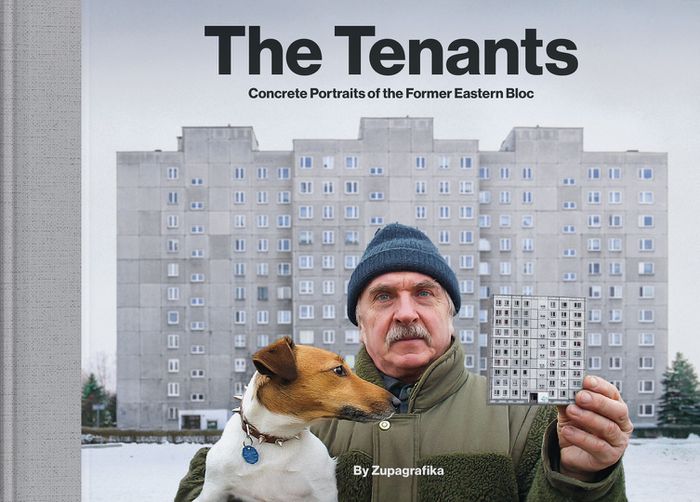
Mass housing in post-war socialist countries was a quick and effective way to provide homes for the expanding city populations after WWII, but after the collapse of the Soviet Bloc the fate of these constructions became uncertain. While modernist estates are being renovated or prematurely demolished, their tenants remain undaunted. They have lived through the buildings’ golden years and darker times. For the last decade, Zupagrafika has documented the housing estates erected in Central and Eastern Europe, still perceived by many as ‘eyesores,’ through photographs and illustrated paper models. The Tenants features over 40 housing projects in 37 different cities of the former Eastern Bloc and ex-Yugoslavia. From Berlin to Norilsk, and all the way through Kyiv to Tallinn, the album portrays the inhabitants of those complexes holding models of their homes, while sharing the stories of lives lived in the prefab panel blocks. Includes a foreword by the sociologist and urban researcher Maciej Frackowiak and an index of the featured housing estates, providing an insight into their history. The portraits were taken by David Navarro and Martyna Sobecka, with contributions by local photographers.
The tenants: Concrete portraits of the former Eastern Bloc
Actions:
Prix:
$50.00
(disponible en magasin)
Résumé:
Mass housing in post-war socialist countries was a quick and effective way to provide homes for the expanding city populations after WWII, but after the collapse of the Soviet Bloc the fate of these constructions became uncertain. While modernist estates are being renovated or prematurely demolished, their tenants remain undaunted. They have lived through the buildings’ golden years and darker times. For the last decade, Zupagrafika has documented the housing estates erected in Central and Eastern Europe, still perceived by many as ‘eyesores,’ through photographs and illustrated paper models. The Tenants features over 40 housing projects in 37 different cities of the former Eastern Bloc and ex-Yugoslavia. From Berlin to Norilsk, and all the way through Kyiv to Tallinn, the album portrays the inhabitants of those complexes holding models of their homes, while sharing the stories of lives lived in the prefab panel blocks. Includes a foreword by the sociologist and urban researcher Maciej Frackowiak and an index of the featured housing estates, providing an insight into their history. The portraits were taken by David Navarro and Martyna Sobecka, with contributions by local photographers.
Classification:
livres
livres
Publication:
septembre 2022
septembre 2022
Sujet:
Modernisme
Modernisme
Classification:
livres
livres
Prix:
$52.00
(disponible sur commande)
Résumé:
A photographic survey of Soviet-era playgrounds found in former members of the USSR, such as Ukraine, Lithuania, Latvia, Estonia, Russia, Belarus, Kazakhstan, Tajikistan, and Uzbekistan. Through five chapters containing more than 150 photographs, the book documents the mass-produced, yet diverse play equipment installed in the communal spaces of socialist-era housing(...)
$52.00
(disponible sur commande)
Résumé:
A photographic survey of Soviet-era playgrounds found in former members of the USSR, such as Ukraine, Lithuania, Latvia, Estonia, Russia, Belarus, Kazakhstan, Tajikistan, and Uzbekistan. Through five chapters containing more than 150 photographs, the book documents the mass-produced, yet diverse play equipment installed in the communal spaces of socialist-era housing(...)
Titre:
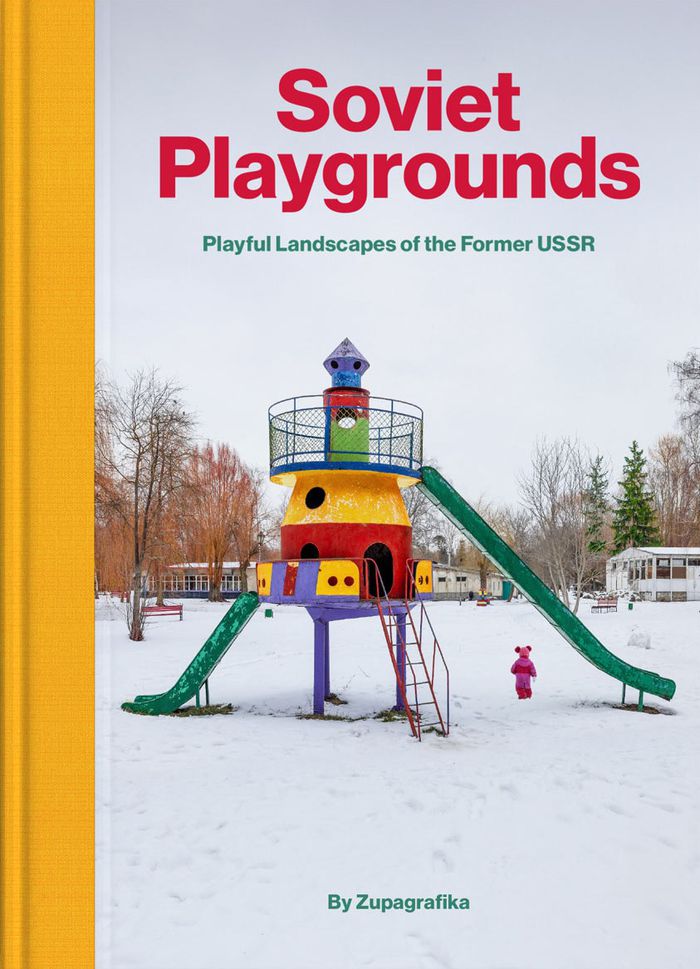
Soviet playgrounds: Playful landscapes of the former USSR
Actions:
Prix:
$52.00
(disponible sur commande)
Résumé:
A photographic survey of Soviet-era playgrounds found in former members of the USSR, such as Ukraine, Lithuania, Latvia, Estonia, Russia, Belarus, Kazakhstan, Tajikistan, and Uzbekistan. Through five chapters containing more than 150 photographs, the book documents the mass-produced, yet diverse play equipment installed in the communal spaces of socialist-era housing estates, such as rocket slides and earth-shaped climbers, spaceships and animal-themed ladders, cosmic roundabouts and bizarre objects that would probably raise safety concerns nowadays. From Riga to Dushanbe and all the way from Kyiv to Vladivostok, children dreamt of becoming cosmonauts, and enjoyed the many space-themed playscapes which had proliferated since the onset of the Cold War era. While some are still in use, others are slowly disappearing to make way for modern equipment, or, more recently, being destroyed during the Russian invasion of Ukraine, becoming only a faint memory of a Soviet childhood. Includes a foreword by the Ukrainian urban planner Mykola Gorokhov and informative maps of the playgrounds featured in every chapter. Pictures were taken by Zupagrafika, with contributions by local photographers.
Soviet playgrounds: Playful landscapes of the former USSR
Actions:
Prix:
$52.00
(disponible sur commande)
Résumé:
A photographic survey of Soviet-era playgrounds found in former members of the USSR, such as Ukraine, Lithuania, Latvia, Estonia, Russia, Belarus, Kazakhstan, Tajikistan, and Uzbekistan. Through five chapters containing more than 150 photographs, the book documents the mass-produced, yet diverse play equipment installed in the communal spaces of socialist-era housing estates, such as rocket slides and earth-shaped climbers, spaceships and animal-themed ladders, cosmic roundabouts and bizarre objects that would probably raise safety concerns nowadays. From Riga to Dushanbe and all the way from Kyiv to Vladivostok, children dreamt of becoming cosmonauts, and enjoyed the many space-themed playscapes which had proliferated since the onset of the Cold War era. While some are still in use, others are slowly disappearing to make way for modern equipment, or, more recently, being destroyed during the Russian invasion of Ukraine, becoming only a faint memory of a Soviet childhood. Includes a foreword by the Ukrainian urban planner Mykola Gorokhov and informative maps of the playgrounds featured in every chapter. Pictures were taken by Zupagrafika, with contributions by local photographers.
Classification:
livres
livres
Publication:
septembre 2022
septembre 2022
Sujet:
Modernisme
Modernisme
Classification:
livres
livres
Prix:
$50.00
(disponible sur commande)
Résumé:
A photographic exploration of the Soviet monotowns - urban settlements erected around single industries in the hinterlands of the former USSR -; some thriving, others struggling to survive, still others partially abandoned. Through nine chapters with over 130 photographs taken by Russian photographer Alexander Veryovkin, Monotowns by Zupagrafika captures the(...)
$50.00
(disponible sur commande)
Résumé:
A photographic exploration of the Soviet monotowns - urban settlements erected around single industries in the hinterlands of the former USSR -; some thriving, others struggling to survive, still others partially abandoned. Through nine chapters with over 130 photographs taken by Russian photographer Alexander Veryovkin, Monotowns by Zupagrafika captures the(...)
Titre:
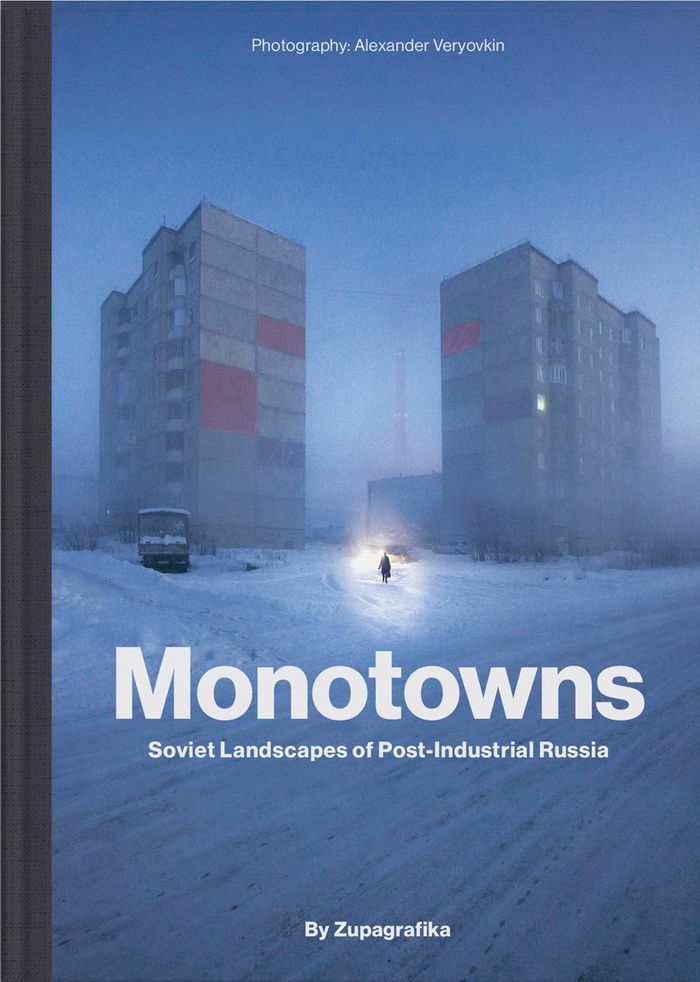
Monotowns: Soviet landscapes of post-industrial Russia
Actions:
Prix:
$50.00
(disponible sur commande)
Résumé:
A photographic exploration of the Soviet monotowns - urban settlements erected around single industries in the hinterlands of the former USSR -; some thriving, others struggling to survive, still others partially abandoned. Through nine chapters with over 130 photographs taken by Russian photographer Alexander Veryovkin, Monotowns by Zupagrafika captures the post-industrial landscapes and Soviet-era architecture of the monogorods extending from the Arctic Circle to the Russian Far East, such as Vorkuta, Norilsk, Mirny, Kirovsk, Tolyatti, Cherepovets, Magnitogorsk, Monchegorsk and Nikel, and the daily lives of their inhabitants. Includes informative texts providing a valuable insight into the urban development of the featured cities and a foreword by the architectural critic Konstantin Budarin.
Monotowns: Soviet landscapes of post-industrial Russia
Actions:
Prix:
$50.00
(disponible sur commande)
Résumé:
A photographic exploration of the Soviet monotowns - urban settlements erected around single industries in the hinterlands of the former USSR -; some thriving, others struggling to survive, still others partially abandoned. Through nine chapters with over 130 photographs taken by Russian photographer Alexander Veryovkin, Monotowns by Zupagrafika captures the post-industrial landscapes and Soviet-era architecture of the monogorods extending from the Arctic Circle to the Russian Far East, such as Vorkuta, Norilsk, Mirny, Kirovsk, Tolyatti, Cherepovets, Magnitogorsk, Monchegorsk and Nikel, and the daily lives of their inhabitants. Includes informative texts providing a valuable insight into the urban development of the featured cities and a foreword by the architectural critic Konstantin Budarin.
Classification:
livres
livres
Publication:
septembre 2021
septembre 2021
Sujet:
Modernisme
Modernisme


