


36938 Résultats
Classification:
événements
événements
Actions:
Description:
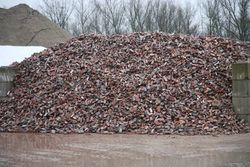
Michael Ghyoot et Maarten Gielen, membres du collectif Rotor, examinent les processus et les pratiques liés à la gestion matérielle des déchets dans Bruxelles et sa banlieue. La notion de déchet, construite à partir des visites rendues par centaines aux commerces, aux lieux de travail et aux centres de tri, a joué un rôle important dans cette recherche. En effet, l’étude(...)
Michael Ghyoot et Maarten Gielen, membres du collectif Rotor, examinent les processus et les pratiques liés à la gestion matérielle des déchets dans Bruxelles et sa banlieue. La notion de déchet, construite à partir des visites rendues par centaines aux commerces, aux lieux de travail et aux centres de tri, a joué un rôle important dans cette recherche. En effet, l’étude(...)
Localisation:
Théâtre Paul-Desmarais
Théâtre Paul-Desmarais
Date:
19 avril 2012 , 19h
19 avril 2012 , 19h
Titre:
L'enseignement de... Bruxelles : Rotor
Actions:
Description:
Michael Ghyoot et Maarten Gielen, membres du collectif Rotor, examinent les processus et les pratiques liés à la gestion matérielle des déchets dans Bruxelles et sa banlieue. La notion de déchet, construite à partir des visites rendues par centaines aux commerces, aux lieux de travail et aux centres de tri, a joué un rôle important dans cette recherche. En effet, l’étude(...)
L'enseignement de... Bruxelles : Rotor
Actions:
Description:
Michael Ghyoot et Maarten Gielen, membres du collectif Rotor, examinent les processus et les pratiques liés à la gestion matérielle des déchets dans Bruxelles et sa banlieue. La notion de déchet, construite à partir des visites rendues par centaines aux commerces, aux lieux de travail et aux centres de tri, a joué un rôle important dans cette recherche. En effet, l’étude(...)
Classification:
événements
événements
Date:
19 avril 2012
19h
19 avril 2012
19h
Localisation:
Théâtre Paul-Desmarais
Théâtre Paul-Desmarais
Classification:
événements
événements
Actions:
Description:
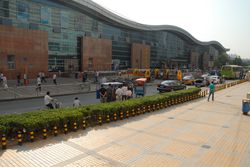
Depuis les années 1990, les politiques urbaines recourent fréquemment à l’aménagement de villes nouvelles dans les régions métropolitaines surpeuplées de la Chine. Cette conférence par Jing Zhou se penche sur le cas de Tongzhou, près de Beijing, qui illustre le mélange d’un aménagement urbain planifié et non planifié.Tongzhou a d’abord été fondé comme ville satellite dans(...)
Depuis les années 1990, les politiques urbaines recourent fréquemment à l’aménagement de villes nouvelles dans les régions métropolitaines surpeuplées de la Chine. Cette conférence par Jing Zhou se penche sur le cas de Tongzhou, près de Beijing, qui illustre le mélange d’un aménagement urbain planifié et non planifié.Tongzhou a d’abord été fondé comme ville satellite dans(...)
Localisation:
Théâtre Paul-Desmarais
Théâtre Paul-Desmarais
Date:
10 avril 2014 , 18h
10 avril 2014 , 18h
Titre:
L’enseignement de... Tongzhou
Actions:
Description:
Depuis les années 1990, les politiques urbaines recourent fréquemment à l’aménagement de villes nouvelles dans les régions métropolitaines surpeuplées de la Chine. Cette conférence par Jing Zhou se penche sur le cas de Tongzhou, près de Beijing, qui illustre le mélange d’un aménagement urbain planifié et non planifié.Tongzhou a d’abord été fondé comme ville satellite dans(...)
L’enseignement de... Tongzhou
Actions:
Description:
Depuis les années 1990, les politiques urbaines recourent fréquemment à l’aménagement de villes nouvelles dans les régions métropolitaines surpeuplées de la Chine. Cette conférence par Jing Zhou se penche sur le cas de Tongzhou, près de Beijing, qui illustre le mélange d’un aménagement urbain planifié et non planifié.Tongzhou a d’abord été fondé comme ville satellite dans(...)
Classification:
événements
événements
Date:
10 avril 2014
18h
10 avril 2014
18h
Localisation:
Théâtre Paul-Desmarais
Théâtre Paul-Desmarais
Classification:
documents textuels
documents textuels
Numéro de référence:
ARCH263880
Description:
Le manuscrit contient de l'information sur les bâtiments publics contemporains.
ARCH263880
Description:
Le manuscrit contient de l'information sur les bâtiments publics contemporains.
Personnes et institutions:
Date:
20 juin 1958
20 juin 1958
Titre:
Manuscrit de Pierre Jeanneret [?] à Amar Chand Joshi
Actions:
ARCH263880
Description:
Le manuscrit contient de l'information sur les bâtiments publics contemporains.
Manuscrit de Pierre Jeanneret [?] à Amar Chand Joshi
Actions:
ARCH263880
Description:
Le manuscrit contient de l'information sur les bâtiments publics contemporains.
Classification:
documents textuels
documents textuels
Date:
20 juin 1958
20 juin 1958
Personnes et institutions:
Classification:
dessins, documents textuels
dessins, documents textuels
Numéro de référence:
AP178.S1.1991.PR05.SS1.042.1
Description:
Original file title: Montreuil espaces publics
AP178.S1.1991.PR05.SS1.042.1
Description:
Original file title: Montreuil espaces publics
Personnes et institutions:
Date:
1999-2000
1999-2000
Titre:
Studies, reports, and drawings of the exterior spaces, Plano Centre Ville de Montreuil, Montreuil (folder 1 of 2)
Actions:
AP178.S1.1991.PR05.SS1.042.1
Description:
Original file title: Montreuil espaces publics
Studies, reports, and drawings of the exterior spaces, Plano Centre Ville de Montreuil, Montreuil (folder 1 of 2)
Actions:
AP178.S1.1991.PR05.SS1.042.1
Description:
Original file title: Montreuil espaces publics
Classification:
dessins, documents textuels
dessins, documents textuels
Date:
1999-2000
1999-2000
Personnes et institutions:
Classification:
dessins, photographies
dessins, photographies
Numéro de référence:
AP178.S1.1991.PR05.SS1.042.2
Description:
Original file title: Montreuil espaces publics
AP178.S1.1991.PR05.SS1.042.2
Description:
Original file title: Montreuil espaces publics
Personnes et institutions:
Date:
1999-2000
1999-2000
Titre:
Studies, reports, and drawings of the exterior spaces, Plano Centre Ville de Montreuil, Montreuil (folder 2 of 2)
Actions:
AP178.S1.1991.PR05.SS1.042.2
Description:
Original file title: Montreuil espaces publics
Studies, reports, and drawings of the exterior spaces, Plano Centre Ville de Montreuil, Montreuil (folder 2 of 2)
Actions:
AP178.S1.1991.PR05.SS1.042.2
Description:
Original file title: Montreuil espaces publics
Classification:
dessins, photographies
dessins, photographies
Date:
1999-2000
1999-2000
Personnes et institutions:
Classification:
documents textuels
documents textuels
Numéro de référence:
AP075.S3.SS1.056
Description:
Contains minutes of meetings, reports, correspondence and documentation. Original folder entitled "Art in Public Places / ART IN PUBLIC PLACES / VANCOUVER, SEATTLE"
AP075.S3.SS1.056
Description:
Contains minutes of meetings, reports, correspondence and documentation. Original folder entitled "Art in Public Places / ART IN PUBLIC PLACES / VANCOUVER, SEATTLE"
Personnes et institutions:
Date:
1987-1988
1987-1988
Titre:
Cornelia Hahn Oberlander participation to the Art in Public Places Subcommittee Meeting of the City of Vancouver
Actions:
AP075.S3.SS1.056
Description:
Contains minutes of meetings, reports, correspondence and documentation. Original folder entitled "Art in Public Places / ART IN PUBLIC PLACES / VANCOUVER, SEATTLE"
Cornelia Hahn Oberlander participation to the Art in Public Places Subcommittee Meeting of the City of Vancouver
Actions:
AP075.S3.SS1.056
Description:
Contains minutes of meetings, reports, correspondence and documentation. Original folder entitled "Art in Public Places / ART IN PUBLIC PLACES / VANCOUVER, SEATTLE"
Classification:
documents textuels
documents textuels
Date:
1987-1988
1987-1988
Personnes et institutions:
Niveau de description archivistique:
Projet
Projet
Numéro de référence:
AP148.S1.1970.PR02
Description:
The project series documents Poli's work on the Interplanetary Architecture project, which was also made into a film by Superstudio directed by Alessandro Poli (the film is not included in the fonds). The project reflects Poli's deep fascination with the moon landing in 1969. Poli uses this major media event as a catalyst for thinking about a new approach to architecture and tools for design, including the idea that film and the movie camera should become part of the toolset. The project also seems to be in some way a response to Epoch magazine's challenge for a "Primo concorso di architettura nello spazio" (the first architectural competition in space), and includes much imagery and textual references to a new road or architectural links between the earth and other planets, including an earth moon highway. In his storyboard, Poli also makes reference to his earlier Piper project, and some imagery features wheels and an amusement park. The Interplanetary Architecture project was exhibited by Superstudio in Rome in 1972 and featured in "Casabella" magazine in April 1972 (no. 364). The project was also featured in the 2010 CCA exhibition "Other Space Odysseys". In the accompanying CCA publication, Poli describes this project as "a voyage off earthbound routes in quest of architecture unfettered by the urban nightmare, by induced needs or by planning as the only tool for regulating and solving the world's problems" (Poli quoted in Borasi and Zardini, 2010, 110). Poli's work on this project is deeply tied to the Zeno project, which was also featured in this exhibition and is included in this fonds (see AP148.S1.1972.PR01). For the Zeno project, Poli envisioned a dialogue between astronaut Buzz Aldrin and an Italian peasant, Zeno of Riparbella. Poli felt that these two shared a similarity in that both their homes were isolated capsules, one that provided a lens from which to see the rest of the world and understand their place in it. The material in the series includes numerous photomontages and collages of astronauts in space, as well as drawings of plantery shapes and structures. There are also texts, some of which include calculations of distances and diameters of planets, as well as notebooks and sketchbooks, many of which Poli included in a folder he entitled "Storyboard." The series also includes an unsent letter from Poli to Adolfo Natalini which describes how, after the moon landing, everything - the planet, the moon, the stars - is architecture, and that this will necessitate the need for new design tools, such as the movie camera. Some works are signed Alessandro Poli-Superstudio. Source cited: Giovanna Borasi and Mirko Zardini, eds., Other Space Odysseys, Montreal and Baden: Canadian Centre for Architecture/Lars Müller Publishers, 2010.
AP148.S1.1970.PR02
Description:
The project series documents Poli's work on the Interplanetary Architecture project, which was also made into a film by Superstudio directed by Alessandro Poli (the film is not included in the fonds). The project reflects Poli's deep fascination with the moon landing in 1969. Poli uses this major media event as a catalyst for thinking about a new approach to architecture and tools for design, including the idea that film and the movie camera should become part of the toolset. The project also seems to be in some way a response to Epoch magazine's challenge for a "Primo concorso di architettura nello spazio" (the first architectural competition in space), and includes much imagery and textual references to a new road or architectural links between the earth and other planets, including an earth moon highway. In his storyboard, Poli also makes reference to his earlier Piper project, and some imagery features wheels and an amusement park. The Interplanetary Architecture project was exhibited by Superstudio in Rome in 1972 and featured in "Casabella" magazine in April 1972 (no. 364). The project was also featured in the 2010 CCA exhibition "Other Space Odysseys". In the accompanying CCA publication, Poli describes this project as "a voyage off earthbound routes in quest of architecture unfettered by the urban nightmare, by induced needs or by planning as the only tool for regulating and solving the world's problems" (Poli quoted in Borasi and Zardini, 2010, 110). Poli's work on this project is deeply tied to the Zeno project, which was also featured in this exhibition and is included in this fonds (see AP148.S1.1972.PR01). For the Zeno project, Poli envisioned a dialogue between astronaut Buzz Aldrin and an Italian peasant, Zeno of Riparbella. Poli felt that these two shared a similarity in that both their homes were isolated capsules, one that provided a lens from which to see the rest of the world and understand their place in it. The material in the series includes numerous photomontages and collages of astronauts in space, as well as drawings of plantery shapes and structures. There are also texts, some of which include calculations of distances and diameters of planets, as well as notebooks and sketchbooks, many of which Poli included in a folder he entitled "Storyboard." The series also includes an unsent letter from Poli to Adolfo Natalini which describes how, after the moon landing, everything - the planet, the moon, the stars - is architecture, and that this will necessitate the need for new design tools, such as the movie camera. Some works are signed Alessandro Poli-Superstudio. Source cited: Giovanna Borasi and Mirko Zardini, eds., Other Space Odysseys, Montreal and Baden: Canadian Centre for Architecture/Lars Müller Publishers, 2010.
Personnes et institutions:
Date:
1969-1971
1969-1971
Titre:
Architettura Interplanetaria [Interplanetary Architecture] (1970-1971)
Actions:
AP148.S1.1970.PR02
Description:
The project series documents Poli's work on the Interplanetary Architecture project, which was also made into a film by Superstudio directed by Alessandro Poli (the film is not included in the fonds). The project reflects Poli's deep fascination with the moon landing in 1969. Poli uses this major media event as a catalyst for thinking about a new approach to architecture and tools for design, including the idea that film and the movie camera should become part of the toolset. The project also seems to be in some way a response to Epoch magazine's challenge for a "Primo concorso di architettura nello spazio" (the first architectural competition in space), and includes much imagery and textual references to a new road or architectural links between the earth and other planets, including an earth moon highway. In his storyboard, Poli also makes reference to his earlier Piper project, and some imagery features wheels and an amusement park. The Interplanetary Architecture project was exhibited by Superstudio in Rome in 1972 and featured in "Casabella" magazine in April 1972 (no. 364). The project was also featured in the 2010 CCA exhibition "Other Space Odysseys". In the accompanying CCA publication, Poli describes this project as "a voyage off earthbound routes in quest of architecture unfettered by the urban nightmare, by induced needs or by planning as the only tool for regulating and solving the world's problems" (Poli quoted in Borasi and Zardini, 2010, 110). Poli's work on this project is deeply tied to the Zeno project, which was also featured in this exhibition and is included in this fonds (see AP148.S1.1972.PR01). For the Zeno project, Poli envisioned a dialogue between astronaut Buzz Aldrin and an Italian peasant, Zeno of Riparbella. Poli felt that these two shared a similarity in that both their homes were isolated capsules, one that provided a lens from which to see the rest of the world and understand their place in it. The material in the series includes numerous photomontages and collages of astronauts in space, as well as drawings of plantery shapes and structures. There are also texts, some of which include calculations of distances and diameters of planets, as well as notebooks and sketchbooks, many of which Poli included in a folder he entitled "Storyboard." The series also includes an unsent letter from Poli to Adolfo Natalini which describes how, after the moon landing, everything - the planet, the moon, the stars - is architecture, and that this will necessitate the need for new design tools, such as the movie camera. Some works are signed Alessandro Poli-Superstudio. Source cited: Giovanna Borasi and Mirko Zardini, eds., Other Space Odysseys, Montreal and Baden: Canadian Centre for Architecture/Lars Müller Publishers, 2010.
Architettura Interplanetaria [Interplanetary Architecture] (1970-1971)
Actions:
AP148.S1.1970.PR02
Description:
The project series documents Poli's work on the Interplanetary Architecture project, which was also made into a film by Superstudio directed by Alessandro Poli (the film is not included in the fonds). The project reflects Poli's deep fascination with the moon landing in 1969. Poli uses this major media event as a catalyst for thinking about a new approach to architecture and tools for design, including the idea that film and the movie camera should become part of the toolset. The project also seems to be in some way a response to Epoch magazine's challenge for a "Primo concorso di architettura nello spazio" (the first architectural competition in space), and includes much imagery and textual references to a new road or architectural links between the earth and other planets, including an earth moon highway. In his storyboard, Poli also makes reference to his earlier Piper project, and some imagery features wheels and an amusement park. The Interplanetary Architecture project was exhibited by Superstudio in Rome in 1972 and featured in "Casabella" magazine in April 1972 (no. 364). The project was also featured in the 2010 CCA exhibition "Other Space Odysseys". In the accompanying CCA publication, Poli describes this project as "a voyage off earthbound routes in quest of architecture unfettered by the urban nightmare, by induced needs or by planning as the only tool for regulating and solving the world's problems" (Poli quoted in Borasi and Zardini, 2010, 110). Poli's work on this project is deeply tied to the Zeno project, which was also featured in this exhibition and is included in this fonds (see AP148.S1.1972.PR01). For the Zeno project, Poli envisioned a dialogue between astronaut Buzz Aldrin and an Italian peasant, Zeno of Riparbella. Poli felt that these two shared a similarity in that both their homes were isolated capsules, one that provided a lens from which to see the rest of the world and understand their place in it. The material in the series includes numerous photomontages and collages of astronauts in space, as well as drawings of plantery shapes and structures. There are also texts, some of which include calculations of distances and diameters of planets, as well as notebooks and sketchbooks, many of which Poli included in a folder he entitled "Storyboard." The series also includes an unsent letter from Poli to Adolfo Natalini which describes how, after the moon landing, everything - the planet, the moon, the stars - is architecture, and that this will necessitate the need for new design tools, such as the movie camera. Some works are signed Alessandro Poli-Superstudio. Source cited: Giovanna Borasi and Mirko Zardini, eds., Other Space Odysseys, Montreal and Baden: Canadian Centre for Architecture/Lars Müller Publishers, 2010.
Niveau de description archivistique:
Project
Project
Date:
1969-1971
1969-1971
Personnes et institutions:
Classification:
expositions
expositions
Actions:
Description:
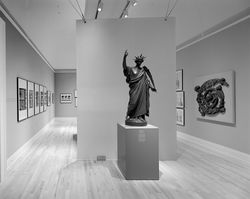
L’exposition souligne le rôle primordial du Panthéon dans la vie artistique et politique française depuis les débuts du projet en 1774 jusqu’au 20e siècle. Coïncidant avec les célébrations internationales du bicentenaire de la Révolution française, elle porte essentiellement sur l’une des principales manifestations architecturales de la Révolution : la transformation de(...)
L’exposition souligne le rôle primordial du Panthéon dans la vie artistique et politique française depuis les débuts du projet en 1774 jusqu’au 20e siècle. Coïncidant avec les célébrations internationales du bicentenaire de la Révolution française, elle porte essentiellement sur l’une des principales manifestations architecturales de la Révolution : la transformation de(...)
Localisation:
Salles principales
Salles principales
Date:
19 septembre 1989 au 19 novembre 1989
19 septembre 1989 au 19 novembre 1989
Titre:
Le Panthéon, symbole des révolutions
Actions:
Description:
L’exposition souligne le rôle primordial du Panthéon dans la vie artistique et politique française depuis les débuts du projet en 1774 jusqu’au 20e siècle. Coïncidant avec les célébrations internationales du bicentenaire de la Révolution française, elle porte essentiellement sur l’une des principales manifestations architecturales de la Révolution : la transformation de(...)
Le Panthéon, symbole des révolutions
Actions:
Description:
L’exposition souligne le rôle primordial du Panthéon dans la vie artistique et politique française depuis les débuts du projet en 1774 jusqu’au 20e siècle. Coïncidant avec les célébrations internationales du bicentenaire de la Révolution française, elle porte essentiellement sur l’une des principales manifestations architecturales de la Révolution : la transformation de(...)
Classification:
expositions
expositions
Date:
19 septembre 1989 au
19 novembre 1989
19 septembre 1989 au
19 novembre 1989
Localisation:
Salles principales
Salles principales
Classification:
documents textuels
documents textuels
Numéro de référence:
AP075.S1.1992.PR01.020
Description:
Original folder entitled "VANCOUVER PUBLIC LIBRARY / PRESS".
AP075.S1.1992.PR01.020
Description:
Original folder entitled "VANCOUVER PUBLIC LIBRARY / PRESS".
Personnes et institutions:
Date:
1992
1992
Titre:
Press clippings on the Library Square, Vancouver, British Columbia
Actions:
AP075.S1.1992.PR01.020
Description:
Original folder entitled "VANCOUVER PUBLIC LIBRARY / PRESS".
Press clippings on the Library Square, Vancouver, British Columbia
Actions:
AP075.S1.1992.PR01.020
Description:
Original folder entitled "VANCOUVER PUBLIC LIBRARY / PRESS".
Classification:
documents textuels
documents textuels
Date:
1992
1992
Personnes et institutions:
Classification:
archives
Niveau de description archivistique:
Fonds
archives
Niveau de description archivistique:
Fonds
Titre:
Fonds Roger D'Astous
Fonds Roger D'Astous
Numéro de référence:
AP060
Résumé:
Le fonds témoigne des activités personnelles et professionnelles de Roger D'Astous, de sa carrière d'architecte et de sa contribution à l'architecture québécoise. Il nous renseigne sur sa formation académique à l'École des Beaux-Arts de Montréal, sur son séjour en tant qu'apprenti à l'atelier de Frank Lloyd Wright à Taliesin (Arizona et Wisconsin), ainsi que sur sa pratique professionnelle en tant qu'architecte. Ces projets professionnels sont principalement concentrés au Québec, à Montréal, en Montérégie, dans les Laurentides, à Laval, ainsi qu'en Ontario (dont à Brockville et à Kingston). Le fonds contient, entre autres, 4 100 dessins d’architecture, 2 581 documents photographiques, 7 maquettes et 1,23 m.l. de documents textuels.
AP060
Résumé:
Le fonds témoigne des activités personnelles et professionnelles de Roger D'Astous, de sa carrière d'architecte et de sa contribution à l'architecture québécoise. Il nous renseigne sur sa formation académique à l'École des Beaux-Arts de Montréal, sur son séjour en tant qu'apprenti à l'atelier de Frank Lloyd Wright à Taliesin (Arizona et Wisconsin), ainsi que sur sa pratique professionnelle en tant qu'architecte. Ces projets professionnels sont principalement concentrés au Québec, à Montréal, en Montérégie, dans les Laurentides, à Laval, ainsi qu'en Ontario (dont à Brockville et à Kingston). Le fonds contient, entre autres, 4 100 dessins d’architecture, 2 581 documents photographiques, 7 maquettes et 1,23 m.l. de documents textuels.
Personnes et institutions:
Date:
1893-1998, surtout 1951-1998
1893-1998, surtout 1951-1998
Titre:
Fonds Roger D'Astous
Actions:
AP060
Résumé:
Le fonds témoigne des activités personnelles et professionnelles de Roger D'Astous, de sa carrière d'architecte et de sa contribution à l'architecture québécoise. Il nous renseigne sur sa formation académique à l'École des Beaux-Arts de Montréal, sur son séjour en tant qu'apprenti à l'atelier de Frank Lloyd Wright à Taliesin (Arizona et Wisconsin), ainsi que sur sa pratique professionnelle en tant qu'architecte. Ces projets professionnels sont principalement concentrés au Québec, à Montréal, en Montérégie, dans les Laurentides, à Laval, ainsi qu'en Ontario (dont à Brockville et à Kingston). Le fonds contient, entre autres, 4 100 dessins d’architecture, 2 581 documents photographiques, 7 maquettes et 1,23 m.l. de documents textuels.
Fonds Roger D'Astous
Actions:
AP060
Résumé:
Le fonds témoigne des activités personnelles et professionnelles de Roger D'Astous, de sa carrière d'architecte et de sa contribution à l'architecture québécoise. Il nous renseigne sur sa formation académique à l'École des Beaux-Arts de Montréal, sur son séjour en tant qu'apprenti à l'atelier de Frank Lloyd Wright à Taliesin (Arizona et Wisconsin), ainsi que sur sa pratique professionnelle en tant qu'architecte. Ces projets professionnels sont principalement concentrés au Québec, à Montréal, en Montérégie, dans les Laurentides, à Laval, ainsi qu'en Ontario (dont à Brockville et à Kingston). Le fonds contient, entre autres, 4 100 dessins d’architecture, 2 581 documents photographiques, 7 maquettes et 1,23 m.l. de documents textuels.
Classification:
archives
Niveau de description archivistique:
Fonds
archives
Niveau de description archivistique:
Fonds
Date:
1893-1998, surtout 1951-1998
1893-1998, surtout 1951-1998
Personnes et institutions:


