


3114 Résultats
Classification:
livres
livres
Actions:
Prix:
$38.95
(disponible sur commande)
Résumé:
This acclaimed survey of modern architecture and its origins has become a classic since it first appeared in 1980. For the fourth edition Kenneth Frampton has added a major new section that explores the effects of globalization on architecture in recent years and examines the phenomenon of international celebrity architects who are increasingly active all over the world.(...)
Titre:
Modern architecture, 4th edition
Actions:
Prix:
$38.95
(disponible sur commande)
Résumé:
This acclaimed survey of modern architecture and its origins has become a classic since it first appeared in 1980. For the fourth edition Kenneth Frampton has added a major new section that explores the effects of globalization on architecture in recent years and examines the phenomenon of international celebrity architects who are increasingly active all over the world. The bibliography has been updated and expanded, making this volume more complete and indispensable than ever.
Classification:
livres
livres
Publication:
septembre 2007
septembre 2007
Sujet:
Modernisme
Modernisme
Classification:
livres
livres
Actions:
Prix:
$105.00
(disponible sur commande)
Résumé:
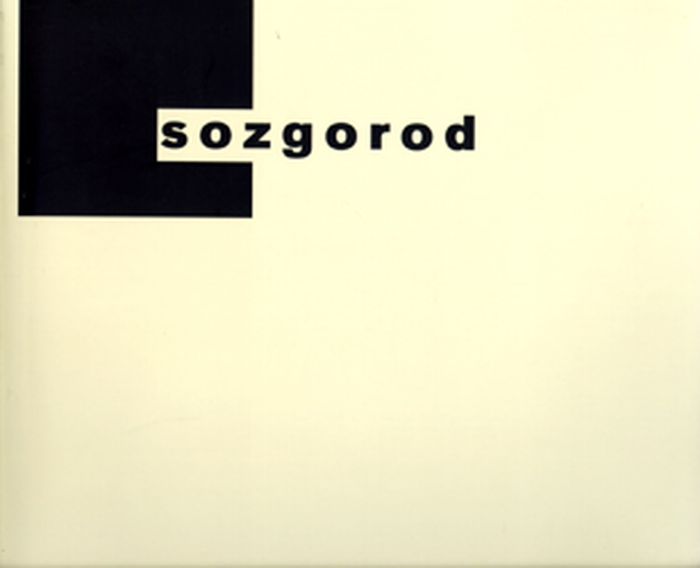
In 1930, Nikolai A. Milyutin presented his structural-engineering vision of the Marxist-stamped form of city and lifestyle with this book. The orientation towards Western ideas of design, but especially his demand for decentralised metropolises made him a reluctant enemy of the state, and Sozgorod immediately became forbidden literature. This facsimile edition, the first(...)
Titre:
Sozgorod, faksimile der erstausgabe von 1930
Actions:
Prix:
$105.00
(disponible sur commande)
Résumé:
In 1930, Nikolai A. Milyutin presented his structural-engineering vision of the Marxist-stamped form of city and lifestyle with this book. The orientation towards Western ideas of design, but especially his demand for decentralised metropolises made him a reluctant enemy of the state, and Sozgorod immediately became forbidden literature. This facsimile edition, the first direct German translation of the original Russian, makes Milyutin’s legacy available again.
Classification:
livres
livres
Publication:
octobre 2008, Berlin
octobre 2008, Berlin
Sujet:
Modernisme
Modernisme
Classification:
livres
livres
Actions:
Prix:
$28.95
(disponible en magasin)
Résumé:
The third issue of the Bauhaus Journal is titled ''Experiment: Learning Communities'' and features a diverse set of contributions that look at learning communities from a contemporary and historical perspective. In one way or another, these communities have contributed on an ongoing basis to the creation of alternative learning environments in art, architecture, and(...)
Titre:
Experiment: Learning communities. Schools of departure No. 3. Bauhaus journal
Actions:
Prix:
$28.95
(disponible en magasin)
Résumé:
The third issue of the Bauhaus Journal is titled ''Experiment: Learning Communities'' and features a diverse set of contributions that look at learning communities from a contemporary and historical perspective. In one way or another, these communities have contributed on an ongoing basis to the creation of alternative learning environments in art, architecture, and design. Katja Klaus at the Bauhaus Dessau Foundation invited the authors of this new issue to explore the question of how pedagogical reform attempts shaped past ideas of education and community. Some of these attempts continue to develop today in various pedagogical approaches and schools. In their essays, the authors analyse how teachers and learners come together to shape their en- vironment, share knowledge in neighbourhoods, and try out new, experimental ways of shaping society and learning and living together.
Classification:
livres
livres
Publication:
juillet 2026
juillet 2026
Sujet:
Modernisme
Modernisme
Classification:
livres
livres
Actions:
Prix:
$97.50
(disponible sur commande)
Résumé:
In 1919 the Social Democrat city council of Vienna initiated a radical program of reforms designed to reshape the city's infrastructure along socialist lines. The centrepiece and most enduring achievement of "Red" Vienna was the construction of the Wiener (...)
Titre:
The architecture of red Vienna 1919-1934
Actions:
Prix:
$97.50
(disponible sur commande)
Résumé:
In 1919 the Social Democrat city council of Vienna initiated a radical program of reforms designed to reshape the city's infrastructure along socialist lines. The centrepiece and most enduring achievement of "Red" Vienna was the construction of the Wiener Gemeindebauten, 400 communal housing blocks, distributed throughout the city, in which workers' dwellings were incorporated with kindergartens, libraries, medical clinics, theaters, cooperative stores, and other public facilities. The 64,000 units housed one tenth of the city's population. Throughout this socialist building campaign, however, Austria was ruled by a conservative, clerical, and antisocialist political majority. Thus the architecture of Red Vienna took shape in the midst of highly charged, and often violent, political conflict between left and right. In this book, Eve Blau looks at how that ideological conflict shaped the buildings of Red Vienna--in terms of their programme, spatial conception, language, and use--as well as how political meaning itself is manifested in architecture. She shows how the architecture of Red Vienna constructed meaning in relation to the ideological conflicts that defined Austrian politics in the interwar period--how it was shaped by the conditions of its making, and how it engaged its own codes, practices, and history to stake out a political position in relation to those conditions. Her investigation sheds light both on the complex relationship among political program, architectural practice, and urban history in interwar Vienna, and on the process by which architecture can generate a collective discourse that includes all members of society.
Classification:
livres
livres
Publication:
décembre 1998, Cambridge, Mass.
décembre 1998, Cambridge, Mass.
Sujet:
Modernisme
Modernisme
Classification:
livres
livres
Actions:
Prix:
$67.95
(disponible sur commande)
Résumé:
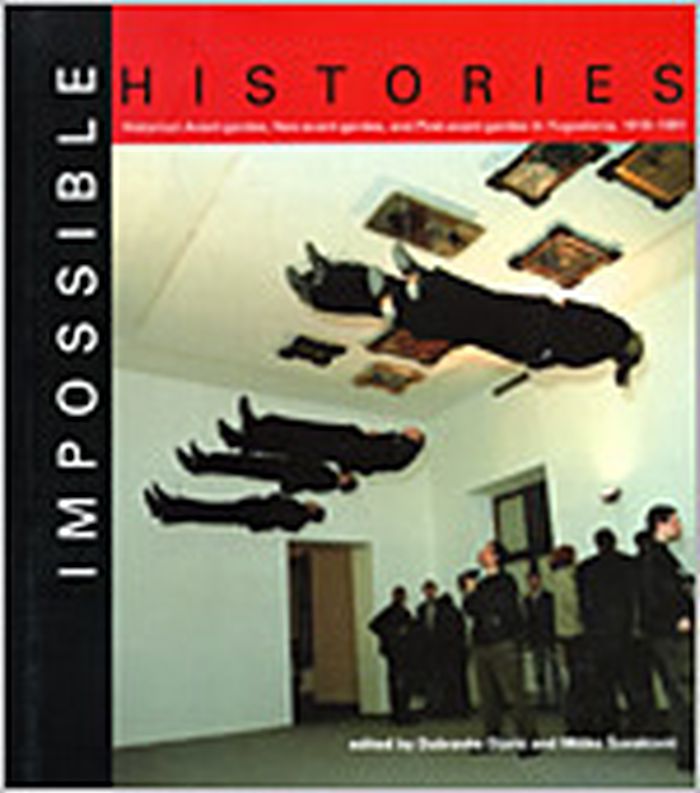
"Impossible histories" is the first critical survey of the extraordinary experiments in the arts that took place in the former Yugoslavia from the country's founding in 1918 to its breakup in 1991. The combination of Austro-Hungarian, French, German, Italian, and Turkish influences gave Yugoslavia's avant-gardes a distinct character unlike those of other Eastern and(...)
Sujet:
Modernisme
Modernisme
Publication:
juillet 2003, Cambridge / London
juillet 2003, Cambridge / London
Titre:
Impossible histories : historical avant-gardes, neo-avant-gardes, and post-avant-gardes in Yugoslavia, 1918-1991
Actions:
Prix:
$67.95
(disponible sur commande)
Résumé:
"Impossible histories" is the first critical survey of the extraordinary experiments in the arts that took place in the former Yugoslavia from the country's founding in 1918 to its breakup in 1991. The combination of Austro-Hungarian, French, German, Italian, and Turkish influences gave Yugoslavia's avant-gardes a distinct character unlike those of other Eastern and Central European avant-gardes. Censorship and suppression kept much of the work far from the eyes and ears of the Yugoslav people, while language barriers and the inaccessibility of archives caused it to remain largely unknown to Western scholars. Even at this late stage in the scholarly investigation of the avant-garde, few Westerners have heard of the movements Belgrade surrealism, signalism, Yugo-Dada, and zenitism; the groups Alfa, Exat 51, Gorgona, OHO, and Scipion Nasice Sisters Theater; or the magazines Danas, Red Pilot, Tank, Vecnost, and Zvrk. The pieces in this collection offer comparative and interpretive accounts of the avant-gardes in the former Yugoslavian countries of Croatia, Serbia, and Slovenia. The book is divided into four sections : art and politics; literature; visual art and architecture; and art in motion (covering theater, dance, music, film, and video). All of the contributors live in the region and many of them participated in the movements discussed. The book also reprints a selection of the most important manifestos generated by all phases of Yugoslav avant-garde activity.
Classification:
livres
livres
Publication:
juillet 2003, Cambridge / London
juillet 2003, Cambridge / London
Sujet:
Modernisme
Modernisme
Classification:
livres
livres

Actions:
Prix:
$85.00
(disponible sur commande)
Résumé:
This book is the result of long and thorough research on the development of the Modern Movement in Africa over a period of time of great relevance.
$85.00
(disponible sur commande)
Résumé:
This book is the result of long and thorough research on the development of the Modern Movement in Africa over a period of time of great relevance.
Titre:
Modern architecture in Africa: Angola and Mozambique
Actions:
Prix:
$85.00
(disponible sur commande)
Résumé:
This book is the result of long and thorough research on the development of the Modern Movement in Africa over a period of time of great relevance.
Modern architecture in Africa: Angola and Mozambique
Actions:
Prix:
$85.00
(disponible sur commande)
Résumé:
This book is the result of long and thorough research on the development of the Modern Movement in Africa over a period of time of great relevance.
Classification:
livres
livres
Publication:
novembre 2015
novembre 2015
Sujet:
Modernisme
Modernisme
Classification:
livres
livres
Titre:
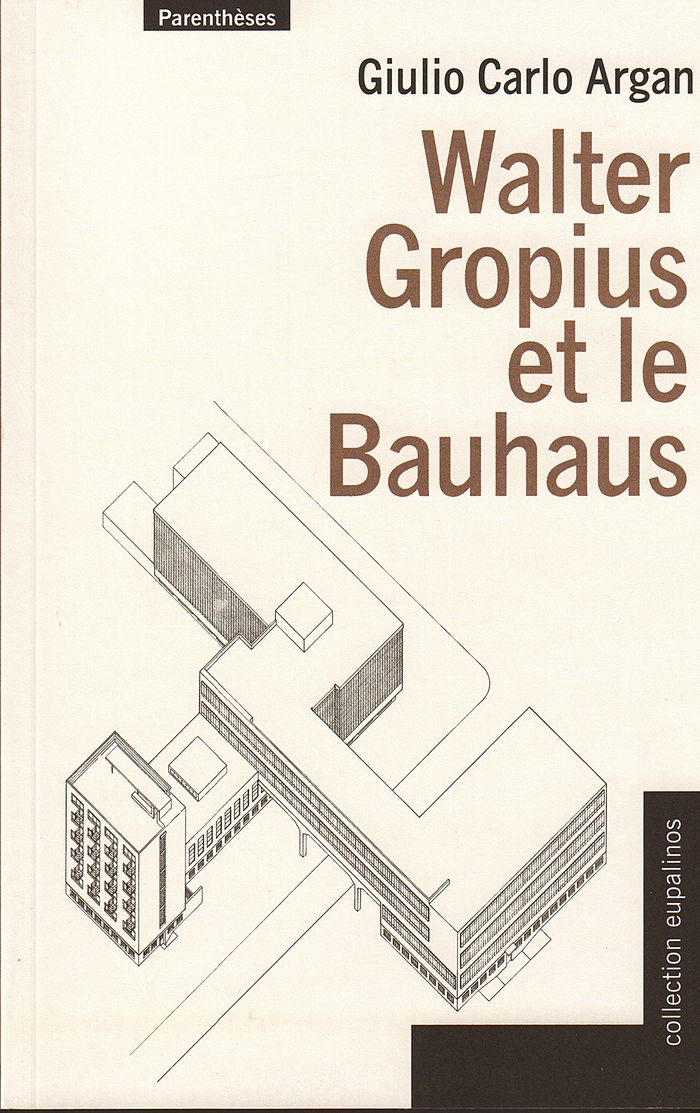
Walter Gropius et le Bauhaus
Walter Gropius et le Bauhaus
Actions:
Prix:
$34.95
(disponible sur commande)
Résumé:
Fondateur et premier directeur de l’école du Bauhaus de 1919 à 1928, Walter Gropius fut un théoricien en même temps qu’un des meilleurs architectes modernes. Argan analyse l’oeuvre et, plus largement, la pensée de Gropius. Pour lui, la spécificité du Bauhaus tient à ce qu’il reflète la crise de la société allemande de l’entre-deux-guerres (et de toute la culture moderne)(...)
Titre:
Walter Gropius et le Bauhaus
Actions:
Prix:
$34.95
(disponible sur commande)
Résumé:
Fondateur et premier directeur de l’école du Bauhaus de 1919 à 1928, Walter Gropius fut un théoricien en même temps qu’un des meilleurs architectes modernes. Argan analyse l’oeuvre et, plus largement, la pensée de Gropius. Pour lui, la spécificité du Bauhaus tient à ce qu’il reflète la crise de la société allemande de l’entre-deux-guerres (et de toute la culture moderne) tout en se proposant comme un instrument de réforme artistique visant à créer un modèle social différent. Le caractère emblématique que la personnalité et l’oeuvre de Gropius prennent à travers les mots enthousiasmants de Argan naît de ce que design industriel, architecture et urbanisme sont unis et traversés par une même valeur civique. Plus d’un siècle après sa parution, cette puissante idée raisonne encore.
Classification:
livres
livres
Publication:
décembre 2015
décembre 2015
Sujet:
Modernisme
Modernisme
Classification:
livres
livres

Actions:
Prix:
$27.95
(disponible sur commande)
Résumé:
This volume chronicles the iconic double house in Mexico City constructed in 1930 by Swiss architects Hans Schmidt (1938–1972) and Paul Artaria (1892–1959). Built in the booming Colonia Del Valle neighborhood, the house was one of the first modernist buildings in Mexico City.
Titre:
The first modern building in Mexico: twin houses of Paul Artaria and Hans Schmidt
Actions:
Prix:
$27.95
(disponible sur commande)
Résumé:
This volume chronicles the iconic double house in Mexico City constructed in 1930 by Swiss architects Hans Schmidt (1938–1972) and Paul Artaria (1892–1959). Built in the booming Colonia Del Valle neighborhood, the house was one of the first modernist buildings in Mexico City.
Classification:
livres
livres
Publication:
octobre 2020
octobre 2020
Sujet:
Modernisme
Modernisme
Classification:
livres
livres

Actions:
Prix:
$66.00
(disponible en magasin)
Résumé:
It is an architectural concept as alluring as it is elusive, as futuristic as it is primordial. Megastructure is what it sounds like: a vastly scaled edifice that can contain potentially countless uses, contexts, and adaptations. Theorized and briefly experimented with in built form in the 1960s, megastructures almost as quickly went out of fashion in the profession. But(...)
Titre:
Megastructure: urban futures of the recent past
Actions:
Prix:
$66.00
(disponible en magasin)
Résumé:
It is an architectural concept as alluring as it is elusive, as futuristic as it is primordial. Megastructure is what it sounds like: a vastly scaled edifice that can contain potentially countless uses, contexts, and adaptations. Theorized and briefly experimented with in built form in the 1960s, megastructures almost as quickly went out of fashion in the profession. But Reyner Banham's 1976 book compiled the origin stories and ongoing mythos of this visionary movement, seeking to chart its lively rise, rapid fall, and ongoing meaning. Now back in print after decades Megastructure: Urban Futures of the Recent Past is part of the recent surge in attention to this quixotic form, of which some examples were built but to this day remains--decades after its codification--more of a poetic idea than a real architectural type.
Classification:
livres
livres
Publication:
mai 2020
mai 2020
Sujet:
Modernisme
Modernisme
Classification:
livres
livres
Actions:
Prix:
$94.95
(disponible sur commande)
Résumé:
Following the liberation and subsequent occupation of Austria at the end of World War II in spring 1945 by the victorious powers Britain, France, the United States, and the Soviet Union, Vienna soon became a central stage for the quickly emerging Cold War. The struggle of differing political systems was also carried out in the field of architecture. Cold War and(...)
Titre:
Cold war and architecture: the competing forces that reshaped Austria after 1945
Actions:
Prix:
$94.95
(disponible sur commande)
Résumé:
Following the liberation and subsequent occupation of Austria at the end of World War II in spring 1945 by the victorious powers Britain, France, the United States, and the Soviet Union, Vienna soon became a central stage for the quickly emerging Cold War. The struggle of differing political systems was also carried out in the field of architecture. Cold War and Architecture sheds new light on the building activity in postwar Austria and its main protagonists. For the first time, this book explores the lines of architectural debates of the time in the context of the global political and cultural conflict of East vs. West. With its transnational perspective, it changes our view of architectural history and postwar society. During the ten-year occupation period, Austria experienced a transition from authoritarian government to democratic consumer society. Each of the four Allied powers established its own extensive cultural program. Architectural exhibitions became important instruments of such educational schemes with the objective of a new social order. British, American, French, and Soviet cultural policies served as catalysts for ideological convictions.
Classification:
livres
livres
Publication:
avril 2020
avril 2020
Sujet:
Modernisme
Modernisme


