


3857 Résultats
Niveau de description archivistique:
Projet
Projet
Numéro de référence:
AP178.S1.1990.PR04
Description:
This project series documents the Ceramique Terrein Blocos de habitação e escritórios in Maastricht, The Netherlands. While the records were held in the office’s archives this project was assigned the number 6/90 A/B. The office assigned the date 1990 to this project. The project is located in the Ceramique district. The industrial area was revitalized during the nineties with buildings built by international architects, including Aldo Rossi's the Bonnefanten Museum and Jo Coenen's Centre Céramique. The building is divided into three independent buildings: Block 6, Block 7, and Block 8. Block 6 is made up of commercial space on the ground floor and residential units on the other six floors. Block 8 is the biggest unit of the project, with a double tower of 16 storeys. Block 7 is a four-storey building. The project was realized. Documenting this project are sketches and plans. Textual material includes correspondence and technical details. Photographic material documents the project site, construction work, and built project.
AP178.S1.1990.PR04
Description:
This project series documents the Ceramique Terrein Blocos de habitação e escritórios in Maastricht, The Netherlands. While the records were held in the office’s archives this project was assigned the number 6/90 A/B. The office assigned the date 1990 to this project. The project is located in the Ceramique district. The industrial area was revitalized during the nineties with buildings built by international architects, including Aldo Rossi's the Bonnefanten Museum and Jo Coenen's Centre Céramique. The building is divided into three independent buildings: Block 6, Block 7, and Block 8. Block 6 is made up of commercial space on the ground floor and residential units on the other six floors. Block 8 is the biggest unit of the project, with a double tower of 16 storeys. Block 7 is a four-storey building. The project was realized. Documenting this project are sketches and plans. Textual material includes correspondence and technical details. Photographic material documents the project site, construction work, and built project.
Personnes et institutions:
Date:
1991-2000
1991-2000
Titre:
Ceramique Terrein Blocos de habitação e escritórios [Ceramic Terrain apartments and offices], Maastricht, The Netherlands (1990)
Actions:
AP178.S1.1990.PR04
Description:
This project series documents the Ceramique Terrein Blocos de habitação e escritórios in Maastricht, The Netherlands. While the records were held in the office’s archives this project was assigned the number 6/90 A/B. The office assigned the date 1990 to this project. The project is located in the Ceramique district. The industrial area was revitalized during the nineties with buildings built by international architects, including Aldo Rossi's the Bonnefanten Museum and Jo Coenen's Centre Céramique. The building is divided into three independent buildings: Block 6, Block 7, and Block 8. Block 6 is made up of commercial space on the ground floor and residential units on the other six floors. Block 8 is the biggest unit of the project, with a double tower of 16 storeys. Block 7 is a four-storey building. The project was realized. Documenting this project are sketches and plans. Textual material includes correspondence and technical details. Photographic material documents the project site, construction work, and built project.
Ceramique Terrein Blocos de habitação e escritórios [Ceramic Terrain apartments and offices], Maastricht, The Netherlands (1990)
Actions:
AP178.S1.1990.PR04
Description:
This project series documents the Ceramique Terrein Blocos de habitação e escritórios in Maastricht, The Netherlands. While the records were held in the office’s archives this project was assigned the number 6/90 A/B. The office assigned the date 1990 to this project. The project is located in the Ceramique district. The industrial area was revitalized during the nineties with buildings built by international architects, including Aldo Rossi's the Bonnefanten Museum and Jo Coenen's Centre Céramique. The building is divided into three independent buildings: Block 6, Block 7, and Block 8. Block 6 is made up of commercial space on the ground floor and residential units on the other six floors. Block 8 is the biggest unit of the project, with a double tower of 16 storeys. Block 7 is a four-storey building. The project was realized. Documenting this project are sketches and plans. Textual material includes correspondence and technical details. Photographic material documents the project site, construction work, and built project.
Niveau de description archivistique:
Project
Project
Date:
1991-2000
1991-2000
Personnes et institutions:
Niveau de description archivistique:
Projet
Projet
Titre:
House V
House V
Numéro de référence:
AP143.S4.D13
Description:
File documents an unexecuted project for House V. Material in this file was produced between 1971 and 1974 and in 1987. Documents include fourteen conceptual sketches by Eisenman (DR1994:0133:001-014); other conceptual drawings, mostly by members of Eisenman's office (DR1994:0133:014-131); and a partial set of presentation drawings (DR1994:0133:133-135). File contains conceptual drawings, including plans, elevations, sections, axonometrics, and perspectives - many graphite and some black felt-tip pen on tracing paper; sketchbooks - mostly black felt-tip pen on tracing paper; and one manuscript - graphite on ruled paper. Design development drawings include one plan - graphite on tracing vellum. Presentation drawings include plans, and one elevation - all pen and black ink on mylar.
AP143.S4.D13
Description:
File documents an unexecuted project for House V. Material in this file was produced between 1971 and 1974 and in 1987. Documents include fourteen conceptual sketches by Eisenman (DR1994:0133:001-014); other conceptual drawings, mostly by members of Eisenman's office (DR1994:0133:014-131); and a partial set of presentation drawings (DR1994:0133:133-135). File contains conceptual drawings, including plans, elevations, sections, axonometrics, and perspectives - many graphite and some black felt-tip pen on tracing paper; sketchbooks - mostly black felt-tip pen on tracing paper; and one manuscript - graphite on ruled paper. Design development drawings include one plan - graphite on tracing vellum. Presentation drawings include plans, and one elevation - all pen and black ink on mylar.
Personnes et institutions:
Date:
1971-1974, 1987, predominant 1971-1974
1971-1974, 1987, predominant 1971-1974
Titre:
House V
Actions:
AP143.S4.D13
Description:
File documents an unexecuted project for House V. Material in this file was produced between 1971 and 1974 and in 1987. Documents include fourteen conceptual sketches by Eisenman (DR1994:0133:001-014); other conceptual drawings, mostly by members of Eisenman's office (DR1994:0133:014-131); and a partial set of presentation drawings (DR1994:0133:133-135). File contains conceptual drawings, including plans, elevations, sections, axonometrics, and perspectives - many graphite and some black felt-tip pen on tracing paper; sketchbooks - mostly black felt-tip pen on tracing paper; and one manuscript - graphite on ruled paper. Design development drawings include one plan - graphite on tracing vellum. Presentation drawings include plans, and one elevation - all pen and black ink on mylar.
House V
Actions:
AP143.S4.D13
Description:
File documents an unexecuted project for House V. Material in this file was produced between 1971 and 1974 and in 1987. Documents include fourteen conceptual sketches by Eisenman (DR1994:0133:001-014); other conceptual drawings, mostly by members of Eisenman's office (DR1994:0133:014-131); and a partial set of presentation drawings (DR1994:0133:133-135). File contains conceptual drawings, including plans, elevations, sections, axonometrics, and perspectives - many graphite and some black felt-tip pen on tracing paper; sketchbooks - mostly black felt-tip pen on tracing paper; and one manuscript - graphite on ruled paper. Design development drawings include one plan - graphite on tracing vellum. Presentation drawings include plans, and one elevation - all pen and black ink on mylar.
Niveau de description archivistique:
File 13
File 13
Date:
1971-1974, 1987, predominant 1971-1974
1971-1974, 1987, predominant 1971-1974
Personnes et institutions:
Classification:
événements
événements
Titre:
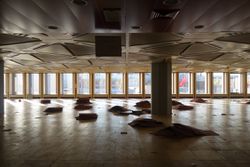
Rotor Deconstruction
Rotor Deconstruction
Actions:
Description:
Maarten Gielen présente les activités de Rotor, un groupe d’architectes, de designers et d’autres professionnels intéressés par les flux de matériaux dans l’industrie et la construction. Le groupe travaille en particulier sur les ressources, les déchets, l’utilisation et la réutilisation des matériaux. Rotor diffuse des stratégies innovatrices de récupération et de(...)
Maarten Gielen présente les activités de Rotor, un groupe d’architectes, de designers et d’autres professionnels intéressés par les flux de matériaux dans l’industrie et la construction. Le groupe travaille en particulier sur les ressources, les déchets, l’utilisation et la réutilisation des matériaux. Rotor diffuse des stratégies innovatrices de récupération et de(...)
Date:
4 février 2016
4 février 2016
Titre:
Rotor Deconstruction
Actions:
Description:
Maarten Gielen présente les activités de Rotor, un groupe d’architectes, de designers et d’autres professionnels intéressés par les flux de matériaux dans l’industrie et la construction. Le groupe travaille en particulier sur les ressources, les déchets, l’utilisation et la réutilisation des matériaux. Rotor diffuse des stratégies innovatrices de récupération et de(...)
Rotor Deconstruction
Actions:
Description:
Maarten Gielen présente les activités de Rotor, un groupe d’architectes, de designers et d’autres professionnels intéressés par les flux de matériaux dans l’industrie et la construction. Le groupe travaille en particulier sur les ressources, les déchets, l’utilisation et la réutilisation des matériaux. Rotor diffuse des stratégies innovatrices de récupération et de(...)
Classification:
événements
événements
Date:
4 février 2016
4 février 2016
Classification:
documents textuels
documents textuels
Numéro de référence:
ARCH257211
Description:
Offer of Services and Permanent Files: York University expression of interest in campus concept plan, Maritime Museum of British Columbia (Victoria), Ontario Hydro Building proposal, Architects / Engineers questionaire, memo on filing Prblic Relations material, slides of models and projects (including Napp Laboratories, Calfornia Plaza, Air Defense Command, amongst others)
ARCH257211
Description:
Offer of Services and Permanent Files: York University expression of interest in campus concept plan, Maritime Museum of British Columbia (Victoria), Ontario Hydro Building proposal, Architects / Engineers questionaire, memo on filing Prblic Relations material, slides of models and projects (including Napp Laboratories, Calfornia Plaza, Air Defense Command, amongst others)
Personnes et institutions:
Date:
1986-1990
1986-1990
Titre:
Offer of Services and permanent files for various projects
Actions:
ARCH257211
Description:
Offer of Services and Permanent Files: York University expression of interest in campus concept plan, Maritime Museum of British Columbia (Victoria), Ontario Hydro Building proposal, Architects / Engineers questionaire, memo on filing Prblic Relations material, slides of models and projects (including Napp Laboratories, Calfornia Plaza, Air Defense Command, amongst others)
Offer of Services and permanent files for various projects
Actions:
ARCH257211
Description:
Offer of Services and Permanent Files: York University expression of interest in campus concept plan, Maritime Museum of British Columbia (Victoria), Ontario Hydro Building proposal, Architects / Engineers questionaire, memo on filing Prblic Relations material, slides of models and projects (including Napp Laboratories, Calfornia Plaza, Air Defense Command, amongst others)
Classification:
documents textuels
documents textuels
Date:
1986-1990
1986-1990
Personnes et institutions:
Classification:
archives
Niveau de description archivistique:
Fonds
archives
Niveau de description archivistique:
Fonds
Numéro de référence:
AP119
Résumé:
The Peter Yeadon Prix de Rome project records consist of twenty ink jet printouts of computer-generated images, four sketchbooks, as well as project documentation of Yeadon's Prix de Rome project. All of the drawings were made in Rome between 1999 and 2000.
AP119
Résumé:
The Peter Yeadon Prix de Rome project records consist of twenty ink jet printouts of computer-generated images, four sketchbooks, as well as project documentation of Yeadon's Prix de Rome project. All of the drawings were made in Rome between 1999 and 2000.
Personnes et institutions:
Date:
1998-2002
1998-2002
Titre:
Documents d’archives de Peter Yeadon pour le Prix de Rome
Actions:
AP119
Résumé:
The Peter Yeadon Prix de Rome project records consist of twenty ink jet printouts of computer-generated images, four sketchbooks, as well as project documentation of Yeadon's Prix de Rome project. All of the drawings were made in Rome between 1999 and 2000.
Documents d’archives de Peter Yeadon pour le Prix de Rome
Actions:
AP119
Résumé:
The Peter Yeadon Prix de Rome project records consist of twenty ink jet printouts of computer-generated images, four sketchbooks, as well as project documentation of Yeadon's Prix de Rome project. All of the drawings were made in Rome between 1999 and 2000.
Classification:
archives
Niveau de description archivistique:
Fonds
archives
Niveau de description archivistique:
Fonds
Date:
1998-2002
1998-2002
Personnes et institutions:
Classification:
archives
Niveau de description archivistique:
Fonds
archives
Niveau de description archivistique:
Fonds
Titre:
Fonds John Hejduk
Fonds John Hejduk
Numéro de référence:
AP145
Résumé:
The John Hejduk fonds documents the professional practice of architect John Hejduk. Drawings of nearly every project by Hejduk are present, with many of his most significant architectural, exhibition, and publishing projects particularly well represented. Material in this fonds was produced between 1947 and 2000.
AP145
Résumé:
The John Hejduk fonds documents the professional practice of architect John Hejduk. Drawings of nearly every project by Hejduk are present, with many of his most significant architectural, exhibition, and publishing projects particularly well represented. Material in this fonds was produced between 1947 and 2000.
Personnes et institutions:
Date:
1947-2000, predominant 1947-1996
1947-2000, predominant 1947-1996
Titre:
Fonds John Hejduk
Actions:
AP145
Résumé:
The John Hejduk fonds documents the professional practice of architect John Hejduk. Drawings of nearly every project by Hejduk are present, with many of his most significant architectural, exhibition, and publishing projects particularly well represented. Material in this fonds was produced between 1947 and 2000.
Fonds John Hejduk
Actions:
AP145
Résumé:
The John Hejduk fonds documents the professional practice of architect John Hejduk. Drawings of nearly every project by Hejduk are present, with many of his most significant architectural, exhibition, and publishing projects particularly well represented. Material in this fonds was produced between 1947 and 2000.
Classification:
archives
Niveau de description archivistique:
Fonds
archives
Niveau de description archivistique:
Fonds
Date:
1947-2000, predominant 1947-1996
1947-2000, predominant 1947-1996
Personnes et institutions:
Classification:
archives
Niveau de description archivistique:
Fonds
archives
Niveau de description archivistique:
Fonds
Numéro de référence:
AP198
Résumé:
The Kivi Sotamaa OCEAN North project records, 1997-2000, consist of born-digital files, drawings, photographs, and physical models that document two projects by the OCEAN North collective: Jyväskylä Music and Arts Centre (competition, 1997) and Tölöö Football Stadium (competition, 1997). The archive also includes born-digital reference materials on 14 projects from the collective, including the two projects mentioned above.
AP198
Résumé:
The Kivi Sotamaa OCEAN North project records, 1997-2000, consist of born-digital files, drawings, photographs, and physical models that document two projects by the OCEAN North collective: Jyväskylä Music and Arts Centre (competition, 1997) and Tölöö Football Stadium (competition, 1997). The archive also includes born-digital reference materials on 14 projects from the collective, including the two projects mentioned above.
Personnes et institutions:
Date:
1997-2000
1997-2000
Titre:
Documents d’archives de Kivi Sotamaa pour les projets de OCEAN North
Actions:
AP198
Résumé:
The Kivi Sotamaa OCEAN North project records, 1997-2000, consist of born-digital files, drawings, photographs, and physical models that document two projects by the OCEAN North collective: Jyväskylä Music and Arts Centre (competition, 1997) and Tölöö Football Stadium (competition, 1997). The archive also includes born-digital reference materials on 14 projects from the collective, including the two projects mentioned above.
Documents d’archives de Kivi Sotamaa pour les projets de OCEAN North
Actions:
AP198
Résumé:
The Kivi Sotamaa OCEAN North project records, 1997-2000, consist of born-digital files, drawings, photographs, and physical models that document two projects by the OCEAN North collective: Jyväskylä Music and Arts Centre (competition, 1997) and Tölöö Football Stadium (competition, 1997). The archive also includes born-digital reference materials on 14 projects from the collective, including the two projects mentioned above.
Classification:
archives
Niveau de description archivistique:
Fonds
archives
Niveau de description archivistique:
Fonds
Date:
1997-2000
1997-2000
Personnes et institutions:
Classification:
documents textuels
documents textuels
Numéro de référence:
AP197.S1.SS9.012
Description:
The box contains drafts, final copies, notes and correspondence for various articles, interviews, keynote addresses and lectures by Kenneth Frampton. The materials are organized in alphabetical order, from B-CO. The largest portion of the box is comprised of drafts and correspondence on Caltrava Bridges. Also included is a dossier for the International Committee of Architectural Critica (CICA). Other subjects and architects explored in these texts include Georges Baines, Luis Barragan, H.P. Berlage, Mario Botta, the British Library, Alberto Campo Baeza, China's sacred sites, and David Chipperfield.
AP197.S1.SS9.012
Description:
The box contains drafts, final copies, notes and correspondence for various articles, interviews, keynote addresses and lectures by Kenneth Frampton. The materials are organized in alphabetical order, from B-CO. The largest portion of the box is comprised of drafts and correspondence on Caltrava Bridges. Also included is a dossier for the International Committee of Architectural Critica (CICA). Other subjects and architects explored in these texts include Georges Baines, Luis Barragan, H.P. Berlage, Mario Botta, the British Library, Alberto Campo Baeza, China's sacred sites, and David Chipperfield.
Personnes et institutions:
Date:
1977-2016
1977-2016
Titre:
Kenneth Frampton writings (B-CO)
Actions:
AP197.S1.SS9.012
Description:
The box contains drafts, final copies, notes and correspondence for various articles, interviews, keynote addresses and lectures by Kenneth Frampton. The materials are organized in alphabetical order, from B-CO. The largest portion of the box is comprised of drafts and correspondence on Caltrava Bridges. Also included is a dossier for the International Committee of Architectural Critica (CICA). Other subjects and architects explored in these texts include Georges Baines, Luis Barragan, H.P. Berlage, Mario Botta, the British Library, Alberto Campo Baeza, China's sacred sites, and David Chipperfield.
Kenneth Frampton writings (B-CO)
Actions:
AP197.S1.SS9.012
Description:
The box contains drafts, final copies, notes and correspondence for various articles, interviews, keynote addresses and lectures by Kenneth Frampton. The materials are organized in alphabetical order, from B-CO. The largest portion of the box is comprised of drafts and correspondence on Caltrava Bridges. Also included is a dossier for the International Committee of Architectural Critica (CICA). Other subjects and architects explored in these texts include Georges Baines, Luis Barragan, H.P. Berlage, Mario Botta, the British Library, Alberto Campo Baeza, China's sacred sites, and David Chipperfield.
Classification:
documents textuels
documents textuels
Date:
1977-2016
1977-2016
Personnes et institutions:
Niveau de description archivistique:
Série(s)
Série(s)
Titre:
Architectural projects
Architectural projects
Numéro de référence:
AP166.S1
Description:
Series 1, Architectural Projects (1990-2012, predominant 1990-1996) contains files for seven projects developed by Shoei Yoh and the firm Shoei Yoh + Architects. Six of these projects were developed during the period 1990-1996 in Japan. The Galaxy Toyama Gymnasium in Imizu, Toyama Prefecture, Japan, is the most voluminous project file and is related to two other projects in the series—the Odawara Municipal Sports Complex and the Prospecta Toyama ’92 Observatory Tower. The Odawara Municipal Sports Complex and the Galaxy Toyama Gymnasium were developed at approximately the same time, and, for both projects, digital technology was used to calculate the dimensions of elements in a space frame roof structure. The Galaxy Toyama Gymnasium and the Prospecta Toyama ’92 Observatory Tower were both designed by Shoei Yoh for the 1st Japan Expo Toyama ’92 (JET ‘92) and each of the two project files contains some material related to the other. The Galaxy Toyama Gymnasium project contains CAD files related to the roof design, printouts from computer simulations of the roof, design drawings, presentation material, architectural and structural working drawings, models and textual records. The project file for the Odawara Municipal Sports Complex contains some design drawings--including printouts from computer simulations of the roof, proposal documents and some photographs of the site. The other built projects—the Prospecta Toyama ’92 Observatory Tower, the Glass Station, the Naiju Community Center and Nursery School, and the Uchino Community Center for Seniors and Children—are documented through drawings, models, and photographic material. The final project file in the series--a project for a tower in Taichung, Taiwan—is composed of a few presentation documents. Drawings in the series include hand drawings and printouts or photocopies of images created using digital design software. Apart from the CAD files related to the roof design for the Galaxy Toyama Gymnasium, digital material in the series is composed of still images in .jpg format related to the projects for the Odawara Municipal Sports Complex and the Galaxy Toyama Gymnasium. Some of the documents in .jpg format are duplicates of paper documents in the series.
AP166.S1
Description:
Series 1, Architectural Projects (1990-2012, predominant 1990-1996) contains files for seven projects developed by Shoei Yoh and the firm Shoei Yoh + Architects. Six of these projects were developed during the period 1990-1996 in Japan. The Galaxy Toyama Gymnasium in Imizu, Toyama Prefecture, Japan, is the most voluminous project file and is related to two other projects in the series—the Odawara Municipal Sports Complex and the Prospecta Toyama ’92 Observatory Tower. The Odawara Municipal Sports Complex and the Galaxy Toyama Gymnasium were developed at approximately the same time, and, for both projects, digital technology was used to calculate the dimensions of elements in a space frame roof structure. The Galaxy Toyama Gymnasium and the Prospecta Toyama ’92 Observatory Tower were both designed by Shoei Yoh for the 1st Japan Expo Toyama ’92 (JET ‘92) and each of the two project files contains some material related to the other. The Galaxy Toyama Gymnasium project contains CAD files related to the roof design, printouts from computer simulations of the roof, design drawings, presentation material, architectural and structural working drawings, models and textual records. The project file for the Odawara Municipal Sports Complex contains some design drawings--including printouts from computer simulations of the roof, proposal documents and some photographs of the site. The other built projects—the Prospecta Toyama ’92 Observatory Tower, the Glass Station, the Naiju Community Center and Nursery School, and the Uchino Community Center for Seniors and Children—are documented through drawings, models, and photographic material. The final project file in the series--a project for a tower in Taichung, Taiwan—is composed of a few presentation documents. Drawings in the series include hand drawings and printouts or photocopies of images created using digital design software. Apart from the CAD files related to the roof design for the Galaxy Toyama Gymnasium, digital material in the series is composed of still images in .jpg format related to the projects for the Odawara Municipal Sports Complex and the Galaxy Toyama Gymnasium. Some of the documents in .jpg format are duplicates of paper documents in the series.
Personnes et institutions:
Date:
1990-2012, predominant 1990-1996
1990-2012, predominant 1990-1996
Titre:
Architectural projects
Actions:
AP166.S1
Description:
Series 1, Architectural Projects (1990-2012, predominant 1990-1996) contains files for seven projects developed by Shoei Yoh and the firm Shoei Yoh + Architects. Six of these projects were developed during the period 1990-1996 in Japan. The Galaxy Toyama Gymnasium in Imizu, Toyama Prefecture, Japan, is the most voluminous project file and is related to two other projects in the series—the Odawara Municipal Sports Complex and the Prospecta Toyama ’92 Observatory Tower. The Odawara Municipal Sports Complex and the Galaxy Toyama Gymnasium were developed at approximately the same time, and, for both projects, digital technology was used to calculate the dimensions of elements in a space frame roof structure. The Galaxy Toyama Gymnasium and the Prospecta Toyama ’92 Observatory Tower were both designed by Shoei Yoh for the 1st Japan Expo Toyama ’92 (JET ‘92) and each of the two project files contains some material related to the other. The Galaxy Toyama Gymnasium project contains CAD files related to the roof design, printouts from computer simulations of the roof, design drawings, presentation material, architectural and structural working drawings, models and textual records. The project file for the Odawara Municipal Sports Complex contains some design drawings--including printouts from computer simulations of the roof, proposal documents and some photographs of the site. The other built projects—the Prospecta Toyama ’92 Observatory Tower, the Glass Station, the Naiju Community Center and Nursery School, and the Uchino Community Center for Seniors and Children—are documented through drawings, models, and photographic material. The final project file in the series--a project for a tower in Taichung, Taiwan—is composed of a few presentation documents. Drawings in the series include hand drawings and printouts or photocopies of images created using digital design software. Apart from the CAD files related to the roof design for the Galaxy Toyama Gymnasium, digital material in the series is composed of still images in .jpg format related to the projects for the Odawara Municipal Sports Complex and the Galaxy Toyama Gymnasium. Some of the documents in .jpg format are duplicates of paper documents in the series.
Architectural projects
Actions:
AP166.S1
Description:
Series 1, Architectural Projects (1990-2012, predominant 1990-1996) contains files for seven projects developed by Shoei Yoh and the firm Shoei Yoh + Architects. Six of these projects were developed during the period 1990-1996 in Japan. The Galaxy Toyama Gymnasium in Imizu, Toyama Prefecture, Japan, is the most voluminous project file and is related to two other projects in the series—the Odawara Municipal Sports Complex and the Prospecta Toyama ’92 Observatory Tower. The Odawara Municipal Sports Complex and the Galaxy Toyama Gymnasium were developed at approximately the same time, and, for both projects, digital technology was used to calculate the dimensions of elements in a space frame roof structure. The Galaxy Toyama Gymnasium and the Prospecta Toyama ’92 Observatory Tower were both designed by Shoei Yoh for the 1st Japan Expo Toyama ’92 (JET ‘92) and each of the two project files contains some material related to the other. The Galaxy Toyama Gymnasium project contains CAD files related to the roof design, printouts from computer simulations of the roof, design drawings, presentation material, architectural and structural working drawings, models and textual records. The project file for the Odawara Municipal Sports Complex contains some design drawings--including printouts from computer simulations of the roof, proposal documents and some photographs of the site. The other built projects—the Prospecta Toyama ’92 Observatory Tower, the Glass Station, the Naiju Community Center and Nursery School, and the Uchino Community Center for Seniors and Children—are documented through drawings, models, and photographic material. The final project file in the series--a project for a tower in Taichung, Taiwan—is composed of a few presentation documents. Drawings in the series include hand drawings and printouts or photocopies of images created using digital design software. Apart from the CAD files related to the roof design for the Galaxy Toyama Gymnasium, digital material in the series is composed of still images in .jpg format related to the projects for the Odawara Municipal Sports Complex and the Galaxy Toyama Gymnasium. Some of the documents in .jpg format are duplicates of paper documents in the series.
Niveau de description archivistique:
series
series
Date:
1990-2012, predominant 1990-1996
1990-2012, predominant 1990-1996
Personnes et institutions:
Niveau de description archivistique:
Projet
Projet
Numéro de référence:
AP018.S1.1974.PR07
Description:
This project series documents long-term planning for airports near Kabul, Afghanistan from 1974-1990. The office identified the project number as 7408. This project consisted of the planning of airports near Kabul for the years 1974-1990. This work was undertaken in joint venture with other Canadian firms who worked together on airport planning projects around the world. The firms, which consisted of Parkin Architects Planners as the architects, the Montreal Engineering Company Limited, and Peat, Marwick and Partners, joined with the local Afghan Bureau of Consulting Architects and Engineers for this project. It was to be funded by the Islamic Bank, with the Canadian government paying the design fees. The proposed airport, referred to as Logar Airport, consisted of a rectangular passenger terminal with each level set back to create the look of a staircase roofline. A 225 car parking lot, an administration building and a tower in the parking lot area were also included. The long-term plan showed a symmetrical addition built onto the passenger building and symmetrical 225 car parking lot to compliment it in the years following the original construction. An airport hotel was also proposed for future additions. A feasibility study for this project investigated Logar as a site for the airport, based on the ability to expand the terminal size for passenger processing and traffic, and the flexibility of the local topography. Planing, deplaning, processing and passenger flows were all investigated in this project, along with phasing and development plans. It is not clear from the project documentation if this project was ever built. The project is recorded through drawings, a photograph, and textual records dating from 1974-1976. The drawings include a large number of base plans with overlays to study planing and deplaning flows, natural lighting, and passenger movements. Plans, sections and presentation drawings are also included. The textual records consist of reports on the project program and costs, interoffice memos, correspondence, and financial records.
AP018.S1.1974.PR07
Description:
This project series documents long-term planning for airports near Kabul, Afghanistan from 1974-1990. The office identified the project number as 7408. This project consisted of the planning of airports near Kabul for the years 1974-1990. This work was undertaken in joint venture with other Canadian firms who worked together on airport planning projects around the world. The firms, which consisted of Parkin Architects Planners as the architects, the Montreal Engineering Company Limited, and Peat, Marwick and Partners, joined with the local Afghan Bureau of Consulting Architects and Engineers for this project. It was to be funded by the Islamic Bank, with the Canadian government paying the design fees. The proposed airport, referred to as Logar Airport, consisted of a rectangular passenger terminal with each level set back to create the look of a staircase roofline. A 225 car parking lot, an administration building and a tower in the parking lot area were also included. The long-term plan showed a symmetrical addition built onto the passenger building and symmetrical 225 car parking lot to compliment it in the years following the original construction. An airport hotel was also proposed for future additions. A feasibility study for this project investigated Logar as a site for the airport, based on the ability to expand the terminal size for passenger processing and traffic, and the flexibility of the local topography. Planing, deplaning, processing and passenger flows were all investigated in this project, along with phasing and development plans. It is not clear from the project documentation if this project was ever built. The project is recorded through drawings, a photograph, and textual records dating from 1974-1976. The drawings include a large number of base plans with overlays to study planing and deplaning flows, natural lighting, and passenger movements. Plans, sections and presentation drawings are also included. The textual records consist of reports on the project program and costs, interoffice memos, correspondence, and financial records.
Personnes et institutions:
Date:
1974-1976
1974-1976
Titre:
Kabul Area Airport Developments, Afghanistan (1974-1990)
Actions:
AP018.S1.1974.PR07
Description:
This project series documents long-term planning for airports near Kabul, Afghanistan from 1974-1990. The office identified the project number as 7408. This project consisted of the planning of airports near Kabul for the years 1974-1990. This work was undertaken in joint venture with other Canadian firms who worked together on airport planning projects around the world. The firms, which consisted of Parkin Architects Planners as the architects, the Montreal Engineering Company Limited, and Peat, Marwick and Partners, joined with the local Afghan Bureau of Consulting Architects and Engineers for this project. It was to be funded by the Islamic Bank, with the Canadian government paying the design fees. The proposed airport, referred to as Logar Airport, consisted of a rectangular passenger terminal with each level set back to create the look of a staircase roofline. A 225 car parking lot, an administration building and a tower in the parking lot area were also included. The long-term plan showed a symmetrical addition built onto the passenger building and symmetrical 225 car parking lot to compliment it in the years following the original construction. An airport hotel was also proposed for future additions. A feasibility study for this project investigated Logar as a site for the airport, based on the ability to expand the terminal size for passenger processing and traffic, and the flexibility of the local topography. Planing, deplaning, processing and passenger flows were all investigated in this project, along with phasing and development plans. It is not clear from the project documentation if this project was ever built. The project is recorded through drawings, a photograph, and textual records dating from 1974-1976. The drawings include a large number of base plans with overlays to study planing and deplaning flows, natural lighting, and passenger movements. Plans, sections and presentation drawings are also included. The textual records consist of reports on the project program and costs, interoffice memos, correspondence, and financial records.
Kabul Area Airport Developments, Afghanistan (1974-1990)
Actions:
AP018.S1.1974.PR07
Description:
This project series documents long-term planning for airports near Kabul, Afghanistan from 1974-1990. The office identified the project number as 7408. This project consisted of the planning of airports near Kabul for the years 1974-1990. This work was undertaken in joint venture with other Canadian firms who worked together on airport planning projects around the world. The firms, which consisted of Parkin Architects Planners as the architects, the Montreal Engineering Company Limited, and Peat, Marwick and Partners, joined with the local Afghan Bureau of Consulting Architects and Engineers for this project. It was to be funded by the Islamic Bank, with the Canadian government paying the design fees. The proposed airport, referred to as Logar Airport, consisted of a rectangular passenger terminal with each level set back to create the look of a staircase roofline. A 225 car parking lot, an administration building and a tower in the parking lot area were also included. The long-term plan showed a symmetrical addition built onto the passenger building and symmetrical 225 car parking lot to compliment it in the years following the original construction. An airport hotel was also proposed for future additions. A feasibility study for this project investigated Logar as a site for the airport, based on the ability to expand the terminal size for passenger processing and traffic, and the flexibility of the local topography. Planing, deplaning, processing and passenger flows were all investigated in this project, along with phasing and development plans. It is not clear from the project documentation if this project was ever built. The project is recorded through drawings, a photograph, and textual records dating from 1974-1976. The drawings include a large number of base plans with overlays to study planing and deplaning flows, natural lighting, and passenger movements. Plans, sections and presentation drawings are also included. The textual records consist of reports on the project program and costs, interoffice memos, correspondence, and financial records.
Niveau de description archivistique:
Project
Project
Date:
1974-1976
1974-1976
Personnes et institutions:


