


2065 Résultats
Niveau de description archivistique:
Projet
Projet
Actions:
Numéro de référence:
CI005.S1.1933.PR1
Description:
The director of the Metz & Co interior design firm, Joseph de Leeuw, commissioned furniture designs from several prominent Dutch artists and architects, including Oud, Van der Leck and Rietveld. Oud's four chair designs were featured in the company's exhibition, "Steel Furniture in 1934." The chairs were made of steel frames; the third chair featured angular rear supports with sharp front angles adjoining the front, while in the fourth, the chair front and rear leg supports were crossed. Oud also designed four more chair types in 1934, including the 07 series, which received critical acclaim (Taverne et al. 2001, 375-377). Project series includes drawings of sketch perspectives of chairs, a sketch plan for a house and unidentified details, possibly for Metz & Co, as well as photographs of the chairs.
CI005.S1.1933.PR1
Description:
The director of the Metz & Co interior design firm, Joseph de Leeuw, commissioned furniture designs from several prominent Dutch artists and architects, including Oud, Van der Leck and Rietveld. Oud's four chair designs were featured in the company's exhibition, "Steel Furniture in 1934." The chairs were made of steel frames; the third chair featured angular rear supports with sharp front angles adjoining the front, while in the fourth, the chair front and rear leg supports were crossed. Oud also designed four more chair types in 1934, including the 07 series, which received critical acclaim (Taverne et al. 2001, 375-377). Project series includes drawings of sketch perspectives of chairs, a sketch plan for a house and unidentified details, possibly for Metz & Co, as well as photographs of the chairs.
Personnes et institutions:
Date:
1933-1934
1933-1934
Titre:
Furniture Designs for Metz & Co, Amsterdam, Netherlands (1933-1934)
Actions:
CI005.S1.1933.PR1
Description:
The director of the Metz & Co interior design firm, Joseph de Leeuw, commissioned furniture designs from several prominent Dutch artists and architects, including Oud, Van der Leck and Rietveld. Oud's four chair designs were featured in the company's exhibition, "Steel Furniture in 1934." The chairs were made of steel frames; the third chair featured angular rear supports with sharp front angles adjoining the front, while in the fourth, the chair front and rear leg supports were crossed. Oud also designed four more chair types in 1934, including the 07 series, which received critical acclaim (Taverne et al. 2001, 375-377). Project series includes drawings of sketch perspectives of chairs, a sketch plan for a house and unidentified details, possibly for Metz & Co, as well as photographs of the chairs.
Furniture Designs for Metz & Co, Amsterdam, Netherlands (1933-1934)
Actions:
CI005.S1.1933.PR1
Description:
The director of the Metz & Co interior design firm, Joseph de Leeuw, commissioned furniture designs from several prominent Dutch artists and architects, including Oud, Van der Leck and Rietveld. Oud's four chair designs were featured in the company's exhibition, "Steel Furniture in 1934." The chairs were made of steel frames; the third chair featured angular rear supports with sharp front angles adjoining the front, while in the fourth, the chair front and rear leg supports were crossed. Oud also designed four more chair types in 1934, including the 07 series, which received critical acclaim (Taverne et al. 2001, 375-377). Project series includes drawings of sketch perspectives of chairs, a sketch plan for a house and unidentified details, possibly for Metz & Co, as well as photographs of the chairs.
Niveau de description archivistique:
project
project
Date:
1933-1934
1933-1934
Personnes et institutions:
Classification:
archives
Niveau de description archivistique:
Collection
archives
Niveau de description archivistique:
Collection
Numéro de référence:
CD034
Résumé:
The SAAL Process exhibition collection consists of reproductions of several objects used in the exhibition “The SAAL Process, Housing in Portugal 1974–76.” It was created by the Museu Serralves and travelled to the Canadian Center for Architecture (CCA) in 2015. The collection contains reproductions of drawings, presentation panels and photographs dating from 1974 to 1979. Born out of the Portuguese Revolution of 25 April 1974, the Serviço Ambulatório de Apoio Local (Local Ambulatory Support Service) was a pioneering architectural and political experiment designed to address extreme housing shortages and poor living conditions in Portuguese cities.
CD034
Résumé:
The SAAL Process exhibition collection consists of reproductions of several objects used in the exhibition “The SAAL Process, Housing in Portugal 1974–76.” It was created by the Museu Serralves and travelled to the Canadian Center for Architecture (CCA) in 2015. The collection contains reproductions of drawings, presentation panels and photographs dating from 1974 to 1979. Born out of the Portuguese Revolution of 25 April 1974, the Serviço Ambulatório de Apoio Local (Local Ambulatory Support Service) was a pioneering architectural and political experiment designed to address extreme housing shortages and poor living conditions in Portuguese cities.
Personnes et institutions:
Date:
1974-1979
1974-1979
Titre:
Collection de l’exposition Le processus du SAAL
Actions:
CD034
Résumé:
The SAAL Process exhibition collection consists of reproductions of several objects used in the exhibition “The SAAL Process, Housing in Portugal 1974–76.” It was created by the Museu Serralves and travelled to the Canadian Center for Architecture (CCA) in 2015. The collection contains reproductions of drawings, presentation panels and photographs dating from 1974 to 1979. Born out of the Portuguese Revolution of 25 April 1974, the Serviço Ambulatório de Apoio Local (Local Ambulatory Support Service) was a pioneering architectural and political experiment designed to address extreme housing shortages and poor living conditions in Portuguese cities.
Collection de l’exposition Le processus du SAAL
Actions:
CD034
Résumé:
The SAAL Process exhibition collection consists of reproductions of several objects used in the exhibition “The SAAL Process, Housing in Portugal 1974–76.” It was created by the Museu Serralves and travelled to the Canadian Center for Architecture (CCA) in 2015. The collection contains reproductions of drawings, presentation panels and photographs dating from 1974 to 1979. Born out of the Portuguese Revolution of 25 April 1974, the Serviço Ambulatório de Apoio Local (Local Ambulatory Support Service) was a pioneering architectural and political experiment designed to address extreme housing shortages and poor living conditions in Portuguese cities.
Classification:
archives
Niveau de description archivistique:
collection
archives
Niveau de description archivistique:
collection
Date:
1974-1979
1974-1979
Personnes et institutions:
Niveau de description archivistique:
Projet
Projet
Numéro de référence:
AP207.S1.2013.PR03
Description:
The project series documents the film "Vive l'architecture" produced by Pettena in 2013. The film shows a series of religious Renaissance paintings, however, the human subjects were removed leaving only the architectural elements of the paintings. "Usually considered just a support and background to the scene represented, architecture is instead a subject itself, and a fundamental one, of the painting." [1] The project series contains digital versions of the film, a film still, and a project description in Italian. Source: [1] Gianni Pettena website, https://www.giannipettena.it/italiano/opere-1/ff-vive-l-architecture-2013-1/ (last accessed 27 January 2020)
AP207.S1.2013.PR03
Description:
The project series documents the film "Vive l'architecture" produced by Pettena in 2013. The film shows a series of religious Renaissance paintings, however, the human subjects were removed leaving only the architectural elements of the paintings. "Usually considered just a support and background to the scene represented, architecture is instead a subject itself, and a fundamental one, of the painting." [1] The project series contains digital versions of the film, a film still, and a project description in Italian. Source: [1] Gianni Pettena website, https://www.giannipettena.it/italiano/opere-1/ff-vive-l-architecture-2013-1/ (last accessed 27 January 2020)
Personnes et institutions:
Date:
2012-2015
2012-2015
Titre:
Vive L'Architectute (circa 2013)
Actions:
AP207.S1.2013.PR03
Description:
The project series documents the film "Vive l'architecture" produced by Pettena in 2013. The film shows a series of religious Renaissance paintings, however, the human subjects were removed leaving only the architectural elements of the paintings. "Usually considered just a support and background to the scene represented, architecture is instead a subject itself, and a fundamental one, of the painting." [1] The project series contains digital versions of the film, a film still, and a project description in Italian. Source: [1] Gianni Pettena website, https://www.giannipettena.it/italiano/opere-1/ff-vive-l-architecture-2013-1/ (last accessed 27 January 2020)
Vive L'Architectute (circa 2013)
Actions:
AP207.S1.2013.PR03
Description:
The project series documents the film "Vive l'architecture" produced by Pettena in 2013. The film shows a series of religious Renaissance paintings, however, the human subjects were removed leaving only the architectural elements of the paintings. "Usually considered just a support and background to the scene represented, architecture is instead a subject itself, and a fundamental one, of the painting." [1] The project series contains digital versions of the film, a film still, and a project description in Italian. Source: [1] Gianni Pettena website, https://www.giannipettena.it/italiano/opere-1/ff-vive-l-architecture-2013-1/ (last accessed 27 January 2020)
Niveau de description archivistique:
Project
Project
Date:
2012-2015
2012-2015
Personnes et institutions:
Classification:
dessins
Quantité:
18 File
dessins
Quantité:
18 File
Numéro de référence:
ARCH43203
Description:
elevations, elevator and duct layout, boiler foundations, piles and retaining wall, stairs, water tank, boiler room fan, room changes, bridge, room electrical, location of dehumidification equipment, cooling tower support, catwalk, air intake, radiators
ARCH43203
Description:
elevations, elevator and duct layout, boiler foundations, piles and retaining wall, stairs, water tank, boiler room fan, room changes, bridge, room electrical, location of dehumidification equipment, cooling tower support, catwalk, air intake, radiators
Personnes et institutions:
Titre:
Elevations, elevator and duct layout, boiler foundations, piles and retaining wall
Actions:
ARCH43203
Description:
elevations, elevator and duct layout, boiler foundations, piles and retaining wall, stairs, water tank, boiler room fan, room changes, bridge, room electrical, location of dehumidification equipment, cooling tower support, catwalk, air intake, radiators
Elevations, elevator and duct layout, boiler foundations, piles and retaining wall
Actions:
ARCH43203
Description:
elevations, elevator and duct layout, boiler foundations, piles and retaining wall, stairs, water tank, boiler room fan, room changes, bridge, room electrical, location of dehumidification equipment, cooling tower support, catwalk, air intake, radiators
Classification:
dessins
Quantité:
18 File
dessins
Quantité:
18 File
Personnes et institutions:
Classification:
photographies
photographies
Actions:
Numéro de référence:
PH1987:0452.02:124
Description:
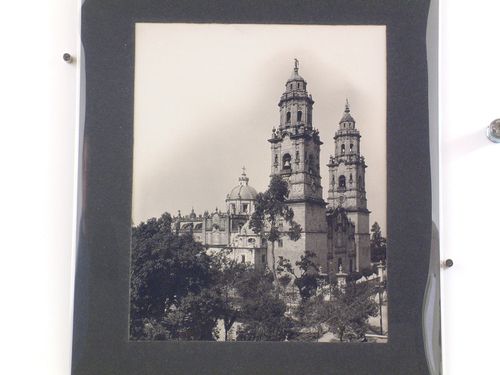
- The point of view of this photograph looks southwest (Perry). - The paper label attached to the verso of the secondary support incorrectly identifies the photograph PH1987:0452.02:124 as the "west side" of the Catedral de Morelia.
PH1987:0452.02:124
Description:
- The point of view of this photograph looks southwest (Perry). - The paper label attached to the verso of the secondary support incorrectly identifies the photograph PH1987:0452.02:124 as the "west side" of the Catedral de Morelia.
Personnes et institutions:
Sujet:
architecture
architecture
Date:
1901 or before
1901 or before
Titre:
View of the Catedral de Morelia, Mexico
Actions:
PH1987:0452.02:124
Description:
- The point of view of this photograph looks southwest (Perry). - The paper label attached to the verso of the secondary support incorrectly identifies the photograph PH1987:0452.02:124 as the "west side" of the Catedral de Morelia.
View of the Catedral de Morelia, Mexico
Actions:
PH1987:0452.02:124
Description:
- The point of view of this photograph looks southwest (Perry). - The paper label attached to the verso of the secondary support incorrectly identifies the photograph PH1987:0452.02:124 as the "west side" of the Catedral de Morelia.
Classification:
photographies
photographies
Date:
1901 or before
1901 or before
Personnes et institutions:
Sujet:
architecture
architecture
Niveau de description archivistique:
Projet
Projet
Actions:
Numéro de référence:
CI005.S1.1918.PR2
Description:
Emilie Knappert commissioned De Vonk Holiday Hostel as a home for working class girls – a project undertaken with the support of the charitable cooperation of the Vereeniging Buitenbedrijf foundation. Oud was recommended for the design by architect, H.P. Berlage, who was unable to undertake the commission. Oud worked with existing designs to systematize and streamline the existing plans and to create a highly symmetrical building. Contemporaries viewed the building as exemplifying the aesthetic of monumentality. The design was conceived of, collaboratively, with artists Van Doesburg and Harm Kamerlingh Onnes (Taverne et al. 2001, 139-143). The project series includes photographs of the window designed by Onnes and of the entrance with the tiled floor, designed by Van Doesburg.
CI005.S1.1918.PR2
Description:
Emilie Knappert commissioned De Vonk Holiday Hostel as a home for working class girls – a project undertaken with the support of the charitable cooperation of the Vereeniging Buitenbedrijf foundation. Oud was recommended for the design by architect, H.P. Berlage, who was unable to undertake the commission. Oud worked with existing designs to systematize and streamline the existing plans and to create a highly symmetrical building. Contemporaries viewed the building as exemplifying the aesthetic of monumentality. The design was conceived of, collaboratively, with artists Van Doesburg and Harm Kamerlingh Onnes (Taverne et al. 2001, 139-143). The project series includes photographs of the window designed by Onnes and of the entrance with the tiled floor, designed by Van Doesburg.
Personnes et institutions:
Date:
1918
1918
Titre:
De Vonk Holiday Hostel, Noordwijkerhout, Netherlands (1917-1919)
Actions:
CI005.S1.1918.PR2
Description:
Emilie Knappert commissioned De Vonk Holiday Hostel as a home for working class girls – a project undertaken with the support of the charitable cooperation of the Vereeniging Buitenbedrijf foundation. Oud was recommended for the design by architect, H.P. Berlage, who was unable to undertake the commission. Oud worked with existing designs to systematize and streamline the existing plans and to create a highly symmetrical building. Contemporaries viewed the building as exemplifying the aesthetic of monumentality. The design was conceived of, collaboratively, with artists Van Doesburg and Harm Kamerlingh Onnes (Taverne et al. 2001, 139-143). The project series includes photographs of the window designed by Onnes and of the entrance with the tiled floor, designed by Van Doesburg.
De Vonk Holiday Hostel, Noordwijkerhout, Netherlands (1917-1919)
Actions:
CI005.S1.1918.PR2
Description:
Emilie Knappert commissioned De Vonk Holiday Hostel as a home for working class girls – a project undertaken with the support of the charitable cooperation of the Vereeniging Buitenbedrijf foundation. Oud was recommended for the design by architect, H.P. Berlage, who was unable to undertake the commission. Oud worked with existing designs to systematize and streamline the existing plans and to create a highly symmetrical building. Contemporaries viewed the building as exemplifying the aesthetic of monumentality. The design was conceived of, collaboratively, with artists Van Doesburg and Harm Kamerlingh Onnes (Taverne et al. 2001, 139-143). The project series includes photographs of the window designed by Onnes and of the entrance with the tiled floor, designed by Van Doesburg.
Niveau de description archivistique:
project
project
Date:
1918
1918
Personnes et institutions:
Classification:
dessins
Quantité:
20 File
dessins
Quantité:
20 File
Numéro de référence:
ARCH36958
Description:
vestibule entrance and information booth, moulding doors, main entrance, board room furniture, glass display case, ceiling layouts, floor designs, screens, toilet, pipe trenches, stairs, wicket, beam alterations, drapery, ladder platform, flagpole support, cafeteria trim, washroom
ARCH36958
Description:
vestibule entrance and information booth, moulding doors, main entrance, board room furniture, glass display case, ceiling layouts, floor designs, screens, toilet, pipe trenches, stairs, wicket, beam alterations, drapery, ladder platform, flagpole support, cafeteria trim, washroom
Personnes et institutions:
Titre:
Vestibule entrance and information booth, moulding doors, main entrance, board room furniture
Actions:
ARCH36958
Description:
vestibule entrance and information booth, moulding doors, main entrance, board room furniture, glass display case, ceiling layouts, floor designs, screens, toilet, pipe trenches, stairs, wicket, beam alterations, drapery, ladder platform, flagpole support, cafeteria trim, washroom
Vestibule entrance and information booth, moulding doors, main entrance, board room furniture
Actions:
ARCH36958
Description:
vestibule entrance and information booth, moulding doors, main entrance, board room furniture, glass display case, ceiling layouts, floor designs, screens, toilet, pipe trenches, stairs, wicket, beam alterations, drapery, ladder platform, flagpole support, cafeteria trim, washroom
Classification:
dessins
Quantité:
20 File
dessins
Quantité:
20 File
Personnes et institutions:
Classification:
documents textuels
documents textuels
Numéro de référence:
PHCON2002:0016:004:095:002
Description:
Letter acknowledges receipt of Matta-Clark's letter from 30 March and is accompanied by memorandums relating to the work submitted in support of the application (signed by Stephen L. Schlesinger), Federal income tax provisions, and fellowship payment procedures.
PHCON2002:0016:004:095:002
Description:
Letter acknowledges receipt of Matta-Clark's letter from 30 March and is accompanied by memorandums relating to the work submitted in support of the application (signed by Stephen L. Schlesinger), Federal income tax provisions, and fellowship payment procedures.
Personnes et institutions:
Date:
1 April 1977
1 April 1977
Titre:
Letter from James F. Mathias to Gordon Matta-Clark
Actions:
PHCON2002:0016:004:095:002
Description:
Letter acknowledges receipt of Matta-Clark's letter from 30 March and is accompanied by memorandums relating to the work submitted in support of the application (signed by Stephen L. Schlesinger), Federal income tax provisions, and fellowship payment procedures.
Letter from James F. Mathias to Gordon Matta-Clark
Actions:
PHCON2002:0016:004:095:002
Description:
Letter acknowledges receipt of Matta-Clark's letter from 30 March and is accompanied by memorandums relating to the work submitted in support of the application (signed by Stephen L. Schlesinger), Federal income tax provisions, and fellowship payment procedures.
Classification:
documents textuels
documents textuels
Date:
1 April 1977
1 April 1977
Personnes et institutions:
Classification:
événements
événements
Titre:
À bas les parcs?
À bas les parcs?
Actions:
Description:
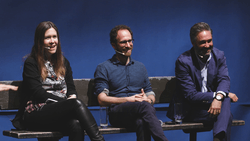
Les parcs sont-ils néfastes ? Ces bouts de terrain et maigres plans d’eau que nous séquestrons répondent à un besoin confus de « nature ». Ils contribuent sans doute à notre bonne santé, mais ne servent-ils pas aussi à excuser nos mauvaises habitudes? Les parcs ne sont pas anodins. Dans les villes, les parcs sont des actifs immobiliers et des « commodités » urbaines(...)
Les parcs sont-ils néfastes ? Ces bouts de terrain et maigres plans d’eau que nous séquestrons répondent à un besoin confus de « nature ». Ils contribuent sans doute à notre bonne santé, mais ne servent-ils pas aussi à excuser nos mauvaises habitudes? Les parcs ne sont pas anodins. Dans les villes, les parcs sont des actifs immobiliers et des « commodités » urbaines(...)
Date:
25 mai 2017
25 mai 2017
Titre:
À bas les parcs?
Actions:
Description:
Les parcs sont-ils néfastes ? Ces bouts de terrain et maigres plans d’eau que nous séquestrons répondent à un besoin confus de « nature ». Ils contribuent sans doute à notre bonne santé, mais ne servent-ils pas aussi à excuser nos mauvaises habitudes? Les parcs ne sont pas anodins. Dans les villes, les parcs sont des actifs immobiliers et des « commodités » urbaines(...)
À bas les parcs?
Actions:
Description:
Les parcs sont-ils néfastes ? Ces bouts de terrain et maigres plans d’eau que nous séquestrons répondent à un besoin confus de « nature ». Ils contribuent sans doute à notre bonne santé, mais ne servent-ils pas aussi à excuser nos mauvaises habitudes? Les parcs ne sont pas anodins. Dans les villes, les parcs sont des actifs immobiliers et des « commodités » urbaines(...)
Classification:
événements
événements
Date:
25 mai 2017
25 mai 2017
Niveau de description archivistique:
Projet
Projet
Numéro de référence:
AP027.S1.D12
Description:
Long-range plan to preserve and expand Mount Royal Park. Definition and recognition of the logical boundaries of the mountain park area are called for by the Save the Mountain Committee. The plan would establish the right of city to acquire all properties within the designated areas as they become available, and would restrict construction and control building heights in the park area. This project was initiated by H. P. Daniel van Ginkel and Blanche Lemco van Ginkel on their own account. The work was executed pro bono with Michel Chevalier, Harry Mayerovitch and Hazen Sise. It was effected with the support of the Montréal Parks and Playground Association. The recommendations were accepted and embodied in a private bill by the Québec Provincial Legislature and in the bylaws of the City of Montréal.
AP027.S1.D12
Description:
Long-range plan to preserve and expand Mount Royal Park. Definition and recognition of the logical boundaries of the mountain park area are called for by the Save the Mountain Committee. The plan would establish the right of city to acquire all properties within the designated areas as they become available, and would restrict construction and control building heights in the park area. This project was initiated by H. P. Daniel van Ginkel and Blanche Lemco van Ginkel on their own account. The work was executed pro bono with Michel Chevalier, Harry Mayerovitch and Hazen Sise. It was effected with the support of the Montréal Parks and Playground Association. The recommendations were accepted and embodied in a private bill by the Québec Provincial Legislature and in the bylaws of the City of Montréal.
Personnes et institutions:
Sujet:
urbanisme
urbanisme
Date:
1960
1960
Titre:
Save the Mountain
Actions:
AP027.S1.D12
Description:
Long-range plan to preserve and expand Mount Royal Park. Definition and recognition of the logical boundaries of the mountain park area are called for by the Save the Mountain Committee. The plan would establish the right of city to acquire all properties within the designated areas as they become available, and would restrict construction and control building heights in the park area. This project was initiated by H. P. Daniel van Ginkel and Blanche Lemco van Ginkel on their own account. The work was executed pro bono with Michel Chevalier, Harry Mayerovitch and Hazen Sise. It was effected with the support of the Montréal Parks and Playground Association. The recommendations were accepted and embodied in a private bill by the Québec Provincial Legislature and in the bylaws of the City of Montréal.
Save the Mountain
Actions:
AP027.S1.D12
Description:
Long-range plan to preserve and expand Mount Royal Park. Definition and recognition of the logical boundaries of the mountain park area are called for by the Save the Mountain Committee. The plan would establish the right of city to acquire all properties within the designated areas as they become available, and would restrict construction and control building heights in the park area. This project was initiated by H. P. Daniel van Ginkel and Blanche Lemco van Ginkel on their own account. The work was executed pro bono with Michel Chevalier, Harry Mayerovitch and Hazen Sise. It was effected with the support of the Montréal Parks and Playground Association. The recommendations were accepted and embodied in a private bill by the Québec Provincial Legislature and in the bylaws of the City of Montréal.
Niveau de description archivistique:
File 12
File 12
Date:
1960
1960
Personnes et institutions:
Sujet:
urbanisme
urbanisme


