


6038 Résultats
Classification:
archives
Niveau de description archivistique:
Fonds
archives
Niveau de description archivistique:
Fonds
Titre:
Fonds Hal Ingberg
Fonds Hal Ingberg
Numéro de référence:
AP120
Résumé:
Le fonds documente les activités professionnels de l'architecte Hal Ingberg (b. 1960). Il contient des dessins, des photographies, des esquisses, des panneaux de présentation, ainsi que des documents textuels qui comprend une sélection de projets développés ou réalisés entre 1991 et 2002.
AP120
Résumé:
Le fonds documente les activités professionnels de l'architecte Hal Ingberg (b. 1960). Il contient des dessins, des photographies, des esquisses, des panneaux de présentation, ainsi que des documents textuels qui comprend une sélection de projets développés ou réalisés entre 1991 et 2002.
Personnes et institutions:
Date:
1991-2002
1991-2002
Titre:
Fonds Hal Ingberg
Actions:
AP120
Résumé:
Le fonds documente les activités professionnels de l'architecte Hal Ingberg (b. 1960). Il contient des dessins, des photographies, des esquisses, des panneaux de présentation, ainsi que des documents textuels qui comprend une sélection de projets développés ou réalisés entre 1991 et 2002.
Fonds Hal Ingberg
Actions:
AP120
Résumé:
Le fonds documente les activités professionnels de l'architecte Hal Ingberg (b. 1960). Il contient des dessins, des photographies, des esquisses, des panneaux de présentation, ainsi que des documents textuels qui comprend une sélection de projets développés ou réalisés entre 1991 et 2002.
Classification:
archives
Niveau de description archivistique:
Fonds
archives
Niveau de description archivistique:
Fonds
Date:
1991-2002
1991-2002
Personnes et institutions:
Classification:
événements
événements
Actions:
Description:
La chercheure en résidence Aglaya Glebova présente sa recherche : Les Vkhutemas, ateliers supérieurs d’art et de technique, étaient financés par l’état afin de préparer une nouvelle génération d’artistes et d’architectes révolutionnaires à bâtir une modernité proprement soviétique. Dissoute par suite de pression politique en 1930, l’école n’a jamais disposé d’un(...)
La chercheure en résidence Aglaya Glebova présente sa recherche : Les Vkhutemas, ateliers supérieurs d’art et de technique, étaient financés par l’état afin de préparer une nouvelle génération d’artistes et d’architectes révolutionnaires à bâtir une modernité proprement soviétique. Dissoute par suite de pression politique en 1930, l’école n’a jamais disposé d’un(...)
Localisation:
Maison Shaughnessy
Maison Shaughnessy
Date:
29 juin 2017, 18h
29 juin 2017, 18h
Titre:
Séminaire de chercheur en résidence : Aglaya Glebova
Actions:
Description:
La chercheure en résidence Aglaya Glebova présente sa recherche : Les Vkhutemas, ateliers supérieurs d’art et de technique, étaient financés par l’état afin de préparer une nouvelle génération d’artistes et d’architectes révolutionnaires à bâtir une modernité proprement soviétique. Dissoute par suite de pression politique en 1930, l’école n’a jamais disposé d’un(...)
Séminaire de chercheur en résidence : Aglaya Glebova
Actions:
Description:
La chercheure en résidence Aglaya Glebova présente sa recherche : Les Vkhutemas, ateliers supérieurs d’art et de technique, étaient financés par l’état afin de préparer une nouvelle génération d’artistes et d’architectes révolutionnaires à bâtir une modernité proprement soviétique. Dissoute par suite de pression politique en 1930, l’école n’a jamais disposé d’un(...)
Classification:
événements
événements
Date:
29 juin 2017
18h
29 juin 2017
18h
Localisation:
Maison Shaughnessy
Maison Shaughnessy
Classification:
archives
Niveau de description archivistique:
Fonds
archives
Niveau de description archivistique:
Fonds
Numéro de référence:
AP075
Résumé:
The Cornelia Hahn Oberlander fonds documents Oberlander's professional activities as a landscape architect. It contains over 203 projects that span from 1950 to 2018 predominantly in Canada and in the United States, but also in Germany. The fonds is a complete record of Oberlander's work, and comprises her playground projects, roof gardens, and public space landscapes, as well as landscape designs for private residences, as well as administrative records from her practice, her professional engagements, and her research materials. The material in this fonds is dated from 1936 to 2021.
AP075
Résumé:
The Cornelia Hahn Oberlander fonds documents Oberlander's professional activities as a landscape architect. It contains over 203 projects that span from 1950 to 2018 predominantly in Canada and in the United States, but also in Germany. The fonds is a complete record of Oberlander's work, and comprises her playground projects, roof gardens, and public space landscapes, as well as landscape designs for private residences, as well as administrative records from her practice, her professional engagements, and her research materials. The material in this fonds is dated from 1936 to 2021.
Personnes et institutions:
Date:
1936-2021
1936-2021
Titre:
Fonds Cornelia Hahn Oberlander
Actions:
AP075
Résumé:
The Cornelia Hahn Oberlander fonds documents Oberlander's professional activities as a landscape architect. It contains over 203 projects that span from 1950 to 2018 predominantly in Canada and in the United States, but also in Germany. The fonds is a complete record of Oberlander's work, and comprises her playground projects, roof gardens, and public space landscapes, as well as landscape designs for private residences, as well as administrative records from her practice, her professional engagements, and her research materials. The material in this fonds is dated from 1936 to 2021.
Fonds Cornelia Hahn Oberlander
Actions:
AP075
Résumé:
The Cornelia Hahn Oberlander fonds documents Oberlander's professional activities as a landscape architect. It contains over 203 projects that span from 1950 to 2018 predominantly in Canada and in the United States, but also in Germany. The fonds is a complete record of Oberlander's work, and comprises her playground projects, roof gardens, and public space landscapes, as well as landscape designs for private residences, as well as administrative records from her practice, her professional engagements, and her research materials. The material in this fonds is dated from 1936 to 2021.
Classification:
archives
Niveau de description archivistique:
Fonds
archives
Niveau de description archivistique:
Fonds
Date:
1936-2021
1936-2021
Personnes et institutions:
Classification:
archives
Niveau de description archivistique:
Fonds
archives
Niveau de description archivistique:
Fonds
Numéro de référence:
AP056
Résumé:
The Kuwabara Payne McKenna Blumberg fonds documents the architectural projects of the firm from 1984-2003. 125 projects are recorded through drawings, photographs, models, textual records, periodicals and paintings. These projects include built work, proposals and competition entries.
AP056
Résumé:
The Kuwabara Payne McKenna Blumberg fonds documents the architectural projects of the firm from 1984-2003. 125 projects are recorded through drawings, photographs, models, textual records, periodicals and paintings. These projects include built work, proposals and competition entries.
Personnes et institutions:
Date:
1984-2003
1984-2003
Titre:
Fonds Kuwabara Payne Mckenna Blumberg
Actions:
AP056
Résumé:
The Kuwabara Payne McKenna Blumberg fonds documents the architectural projects of the firm from 1984-2003. 125 projects are recorded through drawings, photographs, models, textual records, periodicals and paintings. These projects include built work, proposals and competition entries.
Fonds Kuwabara Payne Mckenna Blumberg
Actions:
AP056
Résumé:
The Kuwabara Payne McKenna Blumberg fonds documents the architectural projects of the firm from 1984-2003. 125 projects are recorded through drawings, photographs, models, textual records, periodicals and paintings. These projects include built work, proposals and competition entries.
Classification:
archives
Niveau de description archivistique:
Fonds
archives
Niveau de description archivistique:
Fonds
Date:
1984-2003
1984-2003
Personnes et institutions:
Classification:
photographies
photographies
Titre:
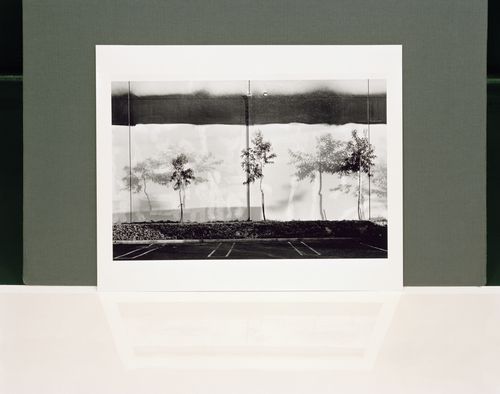
Questioning Pictures: Photograph of West Wall of Smicoa, Gelatin silver print by Lewis Baltz, 1974
Questioning Pictures: Photograph of West Wall of Smicoa, Gelatin silver print by Lewis Baltz, 1974
Actions:
Numéro de référence:
PH2018:0005:027
Description:
Photograph by Stefano Graziani of the following work: Lewis Baltz, West Wall, Semicoa, 333 McCormick, Cosa Mesa from The New Industrial Parks near Irving, California, 1974, gelatin silver print, 20.3 x 24.5 cm, PH2001:0177, Canadian Centre for Architecture, © Estate of Lewis Baltz Questioning Pictures is a 36 photograph project commissioned by Fondazione Prada, Milan. Artist Stefano Graziani investigates archival and conservation systems in a number of museums. Through photographing museum objects, Graziani, focusing on the relationship between photographs, the museum objects and the power structures at play within institutions. The museums include the Canadian Centre for Architecture (CCA) in Montréal, Canada; Sir John Soane’s Museum in London, UK; the Kunstmuseum Basel, Switzerland; Museum Insel Hombroich in Neuss, Germany; the Museo di Castelvecchio in Verona, Italy; and the Plaster Cast Gallery at Museo Canova in Possagno, Italy.
PH2018:0005:027
Description:
Photograph by Stefano Graziani of the following work: Lewis Baltz, West Wall, Semicoa, 333 McCormick, Cosa Mesa from The New Industrial Parks near Irving, California, 1974, gelatin silver print, 20.3 x 24.5 cm, PH2001:0177, Canadian Centre for Architecture, © Estate of Lewis Baltz Questioning Pictures is a 36 photograph project commissioned by Fondazione Prada, Milan. Artist Stefano Graziani investigates archival and conservation systems in a number of museums. Through photographing museum objects, Graziani, focusing on the relationship between photographs, the museum objects and the power structures at play within institutions. The museums include the Canadian Centre for Architecture (CCA) in Montréal, Canada; Sir John Soane’s Museum in London, UK; the Kunstmuseum Basel, Switzerland; Museum Insel Hombroich in Neuss, Germany; the Museo di Castelvecchio in Verona, Italy; and the Plaster Cast Gallery at Museo Canova in Possagno, Italy.
Personnes et institutions:
Date:
2017
2017
Titre:
Questioning Pictures: Photograph of West Wall of Smicoa, Gelatin silver print by Lewis Baltz, 1974
Actions:
PH2018:0005:027
Description:
Photograph by Stefano Graziani of the following work: Lewis Baltz, West Wall, Semicoa, 333 McCormick, Cosa Mesa from The New Industrial Parks near Irving, California, 1974, gelatin silver print, 20.3 x 24.5 cm, PH2001:0177, Canadian Centre for Architecture, © Estate of Lewis Baltz Questioning Pictures is a 36 photograph project commissioned by Fondazione Prada, Milan. Artist Stefano Graziani investigates archival and conservation systems in a number of museums. Through photographing museum objects, Graziani, focusing on the relationship between photographs, the museum objects and the power structures at play within institutions. The museums include the Canadian Centre for Architecture (CCA) in Montréal, Canada; Sir John Soane’s Museum in London, UK; the Kunstmuseum Basel, Switzerland; Museum Insel Hombroich in Neuss, Germany; the Museo di Castelvecchio in Verona, Italy; and the Plaster Cast Gallery at Museo Canova in Possagno, Italy.
Questioning Pictures: Photograph of West Wall of Smicoa, Gelatin silver print by Lewis Baltz, 1974
Actions:
PH2018:0005:027
Description:
Photograph by Stefano Graziani of the following work: Lewis Baltz, West Wall, Semicoa, 333 McCormick, Cosa Mesa from The New Industrial Parks near Irving, California, 1974, gelatin silver print, 20.3 x 24.5 cm, PH2001:0177, Canadian Centre for Architecture, © Estate of Lewis Baltz Questioning Pictures is a 36 photograph project commissioned by Fondazione Prada, Milan. Artist Stefano Graziani investigates archival and conservation systems in a number of museums. Through photographing museum objects, Graziani, focusing on the relationship between photographs, the museum objects and the power structures at play within institutions. The museums include the Canadian Centre for Architecture (CCA) in Montréal, Canada; Sir John Soane’s Museum in London, UK; the Kunstmuseum Basel, Switzerland; Museum Insel Hombroich in Neuss, Germany; the Museo di Castelvecchio in Verona, Italy; and the Plaster Cast Gallery at Museo Canova in Possagno, Italy.
Classification:
photographies
photographies
Date:
2017
2017
Personnes et institutions:
Niveau de description archivistique:
Série(s)
Série(s)
Titre:
Une architecture des humeurs
Une architecture des humeurs
Numéro de référence:
AP193.S4
Description:
Series 4, Une architecture des humeurs, 2008-2011, documents the conception and the presentation of exhibition and project Une architecture des humeurs. Presented at Le laboratoire art gallery in Paris between January and May 2010, Une architecture des humeurs is a conceptual, unbuilt, residential urban structure based on a potential future in which contemporary science reads human physiology and chemical balance. The idea is to acquire a chemistry of the “humors”, or the moods and temperament, of future purchasers. Taken as input, the information generates a diversity of habitable morphologies and relationships between them. With this process, the project attempts to make palpable and graspable, through technologies, the emotions of the participants captured via the chemistry of their body. The goal is to gather information on their capacity of adaptation, their level of sympathy and empathy while confronted to a situation or an environment. This information is then analyzed by computational, mathematical, and machinist procedures. This leads to the design and production of an urban structure submitted to the improbable and uncertain protocols produced by emotions, also creating aggregations and layouts that rearticulate the links between the individual and the collective. These structures are calculated following simultaneously incremental and recursive structural optimization protocols resulting in the physicality and morphology of architecture. The layout of the residential units and the structural trajectories are conceived and developed as posterior to the constructs supporting social life and not as an a priori. The structure of each components of the urban structure is generated by a secretion and weaving machine called Viab02. The machine is the second prototype of VIAB which was developed with Robotics Research Lab of the University of Southern California and takes its name from the terms viability and variability. With a process similar to contour crafting, the machine produces bio-cement, a mix between cement and bio-resin, giving form to the adapted residential structures. The records consist largely of images detailing the creative process of the firm, photographs of the exhibition, and 3D models. It also contains animated renderings representing the machine in action and sequences of the construction of the building or the structure. The records include a video orienting the project into François Roche theoretical stance, research as speculation, that can be summarize as the use of technological tools to take a critical and political position through esthetic in order to open new lines of thoughts. AP193.S2 contains updated previous version of the VIAB machine
AP193.S4
Description:
Series 4, Une architecture des humeurs, 2008-2011, documents the conception and the presentation of exhibition and project Une architecture des humeurs. Presented at Le laboratoire art gallery in Paris between January and May 2010, Une architecture des humeurs is a conceptual, unbuilt, residential urban structure based on a potential future in which contemporary science reads human physiology and chemical balance. The idea is to acquire a chemistry of the “humors”, or the moods and temperament, of future purchasers. Taken as input, the information generates a diversity of habitable morphologies and relationships between them. With this process, the project attempts to make palpable and graspable, through technologies, the emotions of the participants captured via the chemistry of their body. The goal is to gather information on their capacity of adaptation, their level of sympathy and empathy while confronted to a situation or an environment. This information is then analyzed by computational, mathematical, and machinist procedures. This leads to the design and production of an urban structure submitted to the improbable and uncertain protocols produced by emotions, also creating aggregations and layouts that rearticulate the links between the individual and the collective. These structures are calculated following simultaneously incremental and recursive structural optimization protocols resulting in the physicality and morphology of architecture. The layout of the residential units and the structural trajectories are conceived and developed as posterior to the constructs supporting social life and not as an a priori. The structure of each components of the urban structure is generated by a secretion and weaving machine called Viab02. The machine is the second prototype of VIAB which was developed with Robotics Research Lab of the University of Southern California and takes its name from the terms viability and variability. With a process similar to contour crafting, the machine produces bio-cement, a mix between cement and bio-resin, giving form to the adapted residential structures. The records consist largely of images detailing the creative process of the firm, photographs of the exhibition, and 3D models. It also contains animated renderings representing the machine in action and sequences of the construction of the building or the structure. The records include a video orienting the project into François Roche theoretical stance, research as speculation, that can be summarize as the use of technological tools to take a critical and political position through esthetic in order to open new lines of thoughts. AP193.S2 contains updated previous version of the VIAB machine
Personnes et institutions:
Date:
2008-2011
2008-2011
Titre:
Une architecture des humeurs
Actions:
AP193.S4
Description:
Series 4, Une architecture des humeurs, 2008-2011, documents the conception and the presentation of exhibition and project Une architecture des humeurs. Presented at Le laboratoire art gallery in Paris between January and May 2010, Une architecture des humeurs is a conceptual, unbuilt, residential urban structure based on a potential future in which contemporary science reads human physiology and chemical balance. The idea is to acquire a chemistry of the “humors”, or the moods and temperament, of future purchasers. Taken as input, the information generates a diversity of habitable morphologies and relationships between them. With this process, the project attempts to make palpable and graspable, through technologies, the emotions of the participants captured via the chemistry of their body. The goal is to gather information on their capacity of adaptation, their level of sympathy and empathy while confronted to a situation or an environment. This information is then analyzed by computational, mathematical, and machinist procedures. This leads to the design and production of an urban structure submitted to the improbable and uncertain protocols produced by emotions, also creating aggregations and layouts that rearticulate the links between the individual and the collective. These structures are calculated following simultaneously incremental and recursive structural optimization protocols resulting in the physicality and morphology of architecture. The layout of the residential units and the structural trajectories are conceived and developed as posterior to the constructs supporting social life and not as an a priori. The structure of each components of the urban structure is generated by a secretion and weaving machine called Viab02. The machine is the second prototype of VIAB which was developed with Robotics Research Lab of the University of Southern California and takes its name from the terms viability and variability. With a process similar to contour crafting, the machine produces bio-cement, a mix between cement and bio-resin, giving form to the adapted residential structures. The records consist largely of images detailing the creative process of the firm, photographs of the exhibition, and 3D models. It also contains animated renderings representing the machine in action and sequences of the construction of the building or the structure. The records include a video orienting the project into François Roche theoretical stance, research as speculation, that can be summarize as the use of technological tools to take a critical and political position through esthetic in order to open new lines of thoughts. AP193.S2 contains updated previous version of the VIAB machine
Une architecture des humeurs
Actions:
AP193.S4
Description:
Series 4, Une architecture des humeurs, 2008-2011, documents the conception and the presentation of exhibition and project Une architecture des humeurs. Presented at Le laboratoire art gallery in Paris between January and May 2010, Une architecture des humeurs is a conceptual, unbuilt, residential urban structure based on a potential future in which contemporary science reads human physiology and chemical balance. The idea is to acquire a chemistry of the “humors”, or the moods and temperament, of future purchasers. Taken as input, the information generates a diversity of habitable morphologies and relationships between them. With this process, the project attempts to make palpable and graspable, through technologies, the emotions of the participants captured via the chemistry of their body. The goal is to gather information on their capacity of adaptation, their level of sympathy and empathy while confronted to a situation or an environment. This information is then analyzed by computational, mathematical, and machinist procedures. This leads to the design and production of an urban structure submitted to the improbable and uncertain protocols produced by emotions, also creating aggregations and layouts that rearticulate the links between the individual and the collective. These structures are calculated following simultaneously incremental and recursive structural optimization protocols resulting in the physicality and morphology of architecture. The layout of the residential units and the structural trajectories are conceived and developed as posterior to the constructs supporting social life and not as an a priori. The structure of each components of the urban structure is generated by a secretion and weaving machine called Viab02. The machine is the second prototype of VIAB which was developed with Robotics Research Lab of the University of Southern California and takes its name from the terms viability and variability. With a process similar to contour crafting, the machine produces bio-cement, a mix between cement and bio-resin, giving form to the adapted residential structures. The records consist largely of images detailing the creative process of the firm, photographs of the exhibition, and 3D models. It also contains animated renderings representing the machine in action and sequences of the construction of the building or the structure. The records include a video orienting the project into François Roche theoretical stance, research as speculation, that can be summarize as the use of technological tools to take a critical and political position through esthetic in order to open new lines of thoughts. AP193.S2 contains updated previous version of the VIAB machine
Niveau de description archivistique:
Series
Series
Date:
2008-2011
2008-2011
Personnes et institutions:
Classification:
documents textuels
documents textuels
Actions:
Numéro de référence:
DR2001:0029
Description:
documents include correspondence to colleagues and universities for 1991-1992: Coop Himmelblau, UMRISS - Coop Himmelblauk Stephanie Dudek, Kurt Forster, Frank O. Gehry & Assoc., Fabio Ghersi (architect), David Goldblatt - Journal of Aesthetics and Art Criticism, Zaha Hadid, Philip Johnson, Philip Johnson 85th Birthday Invoices, Libeskind, Daniel and Nina, Macklowe - CMRI (drawings for exhibition), Rick Mandell, Edith Miller, David Neuman, Peter Noever - Architecture in Transition, John Rajchman, Renato Rizzi, Zoran Sladoljev, Antoine Predock, Antonia Soulez, Mark Taylor, Massimo Vignelli and Faruk Yorgancioglu. University Publications: University of California - Riverside, The Cooper Union, Cornell University, The Chicago Institute (for Architecture and Urbanism), Columbia High School, Columbia University, Universitat Hanover, Harvard Graduate school of Design, The University of Illinois at Chicago, Oberlin (College), Ohio State University, Pratt Institute, Princeton University, Rice School of Architecture, College of William and Mary and Richard Bland College.
DR2001:0029
Description:
documents include correspondence to colleagues and universities for 1991-1992: Coop Himmelblau, UMRISS - Coop Himmelblauk Stephanie Dudek, Kurt Forster, Frank O. Gehry & Assoc., Fabio Ghersi (architect), David Goldblatt - Journal of Aesthetics and Art Criticism, Zaha Hadid, Philip Johnson, Philip Johnson 85th Birthday Invoices, Libeskind, Daniel and Nina, Macklowe - CMRI (drawings for exhibition), Rick Mandell, Edith Miller, David Neuman, Peter Noever - Architecture in Transition, John Rajchman, Renato Rizzi, Zoran Sladoljev, Antoine Predock, Antonia Soulez, Mark Taylor, Massimo Vignelli and Faruk Yorgancioglu. University Publications: University of California - Riverside, The Cooper Union, Cornell University, The Chicago Institute (for Architecture and Urbanism), Columbia High School, Columbia University, Universitat Hanover, Harvard Graduate school of Design, The University of Illinois at Chicago, Oberlin (College), Ohio State University, Pratt Institute, Princeton University, Rice School of Architecture, College of William and Mary and Richard Bland College.
Personnes et institutions:
Titre:
Correspondence to colleagues and universities
Actions:
DR2001:0029
Description:
documents include correspondence to colleagues and universities for 1991-1992: Coop Himmelblau, UMRISS - Coop Himmelblauk Stephanie Dudek, Kurt Forster, Frank O. Gehry & Assoc., Fabio Ghersi (architect), David Goldblatt - Journal of Aesthetics and Art Criticism, Zaha Hadid, Philip Johnson, Philip Johnson 85th Birthday Invoices, Libeskind, Daniel and Nina, Macklowe - CMRI (drawings for exhibition), Rick Mandell, Edith Miller, David Neuman, Peter Noever - Architecture in Transition, John Rajchman, Renato Rizzi, Zoran Sladoljev, Antoine Predock, Antonia Soulez, Mark Taylor, Massimo Vignelli and Faruk Yorgancioglu. University Publications: University of California - Riverside, The Cooper Union, Cornell University, The Chicago Institute (for Architecture and Urbanism), Columbia High School, Columbia University, Universitat Hanover, Harvard Graduate school of Design, The University of Illinois at Chicago, Oberlin (College), Ohio State University, Pratt Institute, Princeton University, Rice School of Architecture, College of William and Mary and Richard Bland College.
Correspondence to colleagues and universities
Actions:
DR2001:0029
Description:
documents include correspondence to colleagues and universities for 1991-1992: Coop Himmelblau, UMRISS - Coop Himmelblauk Stephanie Dudek, Kurt Forster, Frank O. Gehry & Assoc., Fabio Ghersi (architect), David Goldblatt - Journal of Aesthetics and Art Criticism, Zaha Hadid, Philip Johnson, Philip Johnson 85th Birthday Invoices, Libeskind, Daniel and Nina, Macklowe - CMRI (drawings for exhibition), Rick Mandell, Edith Miller, David Neuman, Peter Noever - Architecture in Transition, John Rajchman, Renato Rizzi, Zoran Sladoljev, Antoine Predock, Antonia Soulez, Mark Taylor, Massimo Vignelli and Faruk Yorgancioglu. University Publications: University of California - Riverside, The Cooper Union, Cornell University, The Chicago Institute (for Architecture and Urbanism), Columbia High School, Columbia University, Universitat Hanover, Harvard Graduate school of Design, The University of Illinois at Chicago, Oberlin (College), Ohio State University, Pratt Institute, Princeton University, Rice School of Architecture, College of William and Mary and Richard Bland College.
Classification:
documents textuels
documents textuels
Personnes et institutions:
Titre:
Letters 1976-77
Letters 1976-77
Numéro de référence:
PHCON2002:0016:004
Description:
Binder documents Gordon Matta-Clark' personal and professional correspondence predominantly from 1976 and 1977, a period when he began to have professional success as an artist. It includes correspondence regarding the sale of works of art as well as the following projects: The Caribbean Orange (1978), Jacob's Ladder (1977), Meander (1976); Office Baroque (1977); and Substrait (1976). Correspondence related to unnamed and unrealized projects in California, Missouri, Texas, Massachusetts, and Paris, France are also included. The subject of the other correspondence includes letters to and from grant agencies, including the Guggenheim Foundation, letters inviting Matta-Clark to participate in exhibitions, as well as his research on helium balloons. Legal documents such as tax returns and a copy of the sales agreement for the purchase of a building on 20th St. in New York City, New York are also found in the binder. Binder contains drawings and textual records.
PHCON2002:0016:004
Description:
Binder documents Gordon Matta-Clark' personal and professional correspondence predominantly from 1976 and 1977, a period when he began to have professional success as an artist. It includes correspondence regarding the sale of works of art as well as the following projects: The Caribbean Orange (1978), Jacob's Ladder (1977), Meander (1976); Office Baroque (1977); and Substrait (1976). Correspondence related to unnamed and unrealized projects in California, Missouri, Texas, Massachusetts, and Paris, France are also included. The subject of the other correspondence includes letters to and from grant agencies, including the Guggenheim Foundation, letters inviting Matta-Clark to participate in exhibitions, as well as his research on helium balloons. Legal documents such as tax returns and a copy of the sales agreement for the purchase of a building on 20th St. in New York City, New York are also found in the binder. Binder contains drawings and textual records.
Personnes et institutions:
Date:
after 1974-1978
after 1974-1978
Titre:
Letters 1976-77
Actions:
PHCON2002:0016:004
Description:
Binder documents Gordon Matta-Clark' personal and professional correspondence predominantly from 1976 and 1977, a period when he began to have professional success as an artist. It includes correspondence regarding the sale of works of art as well as the following projects: The Caribbean Orange (1978), Jacob's Ladder (1977), Meander (1976); Office Baroque (1977); and Substrait (1976). Correspondence related to unnamed and unrealized projects in California, Missouri, Texas, Massachusetts, and Paris, France are also included. The subject of the other correspondence includes letters to and from grant agencies, including the Guggenheim Foundation, letters inviting Matta-Clark to participate in exhibitions, as well as his research on helium balloons. Legal documents such as tax returns and a copy of the sales agreement for the purchase of a building on 20th St. in New York City, New York are also found in the binder. Binder contains drawings and textual records.
Letters 1976-77
Actions:
PHCON2002:0016:004
Description:
Binder documents Gordon Matta-Clark' personal and professional correspondence predominantly from 1976 and 1977, a period when he began to have professional success as an artist. It includes correspondence regarding the sale of works of art as well as the following projects: The Caribbean Orange (1978), Jacob's Ladder (1977), Meander (1976); Office Baroque (1977); and Substrait (1976). Correspondence related to unnamed and unrealized projects in California, Missouri, Texas, Massachusetts, and Paris, France are also included. The subject of the other correspondence includes letters to and from grant agencies, including the Guggenheim Foundation, letters inviting Matta-Clark to participate in exhibitions, as well as his research on helium balloons. Legal documents such as tax returns and a copy of the sales agreement for the purchase of a building on 20th St. in New York City, New York are also found in the binder. Binder contains drawings and textual records.
Date:
after 1974-1978
after 1974-1978
Personnes et institutions:
Niveau de description archivistique:
Série(s)
Série(s)
Numéro de référence:
AP193.S2
Description:
Series 2, I’ve heard about and Hypnosis chamber, 2004-2006, relates to the conception of the urban structure “I’ve heard about”. The records contain algorithmically-generated images, renderings, pictures of models and exhibitions. There are also photographs of the contour crafting process, 3D models and animated renderings illustrating the construction process of the structure. The project is a conceptual, unbuilt project that is meant to be a habitable organism, an adaptive landscape in a constant state of evolution. By means of transitory scenarios in which the operational mode is entropy and uncertainty, it develops open algorithms based on growth scripts permeable not only to human expressions, but also to the most discrete data such as the chemical emissions (for example due to stress or anxiety) of those who inhabit it. The chemical information is harvested through nanoreceptors feeding the VIAB machine with information. This biostructure becomes the visible part of human contingencies and their negotiation in real time. The structure is conceptualized to be in constant construction through the VIAB machine which is also a constituent of the structure itself. It secretes fiber cement, shaping the landscape where it is located and through which it moves. It generates the reticular structure using a process modelled on contour crafting. The VIAB machine was developed with Robotics Research Lab of the University of Southern California and takes its name from the terms viability and variability. R&Sie(n) considers that due to its mode of emergence “I’ve heard about” fabrication is not subjugated to any political power. Hypnosis chamber is a component of “I’ve heard about”. It consists of an indoor chamber, which was realized as a full-scale sample constructed through automated machinery. The chamber is situated as a part of the whole urban structure presented by “I’ve heard about,” and its goal is to immerse the audience into the project, into a fictional environment only reachable by hypnosis. In this context, hypnosis is a way to help citizens escape from their social condition and experience the new condition of citizenship imagined in “I’ve heard about”, where democracy is re-evaluated as a process of self-determination. Both parts of the projects were shown in contemporary art museums. First at Musée d’art de la ville de Paris in Paris (2005), the Hypnotic chamber is permanently on view at Towada Art Center in Towanda, Japan. AP193.S4 contains a video orienting the project into François Roche theoretical stance, research as speculation, that can be summarize as the use of technological tools to take a critical and political position through esthetic in order to open new lines of thoughts. AP193.S4 contains an updated version of the VIAB machine
AP193.S2
Description:
Series 2, I’ve heard about and Hypnosis chamber, 2004-2006, relates to the conception of the urban structure “I’ve heard about”. The records contain algorithmically-generated images, renderings, pictures of models and exhibitions. There are also photographs of the contour crafting process, 3D models and animated renderings illustrating the construction process of the structure. The project is a conceptual, unbuilt project that is meant to be a habitable organism, an adaptive landscape in a constant state of evolution. By means of transitory scenarios in which the operational mode is entropy and uncertainty, it develops open algorithms based on growth scripts permeable not only to human expressions, but also to the most discrete data such as the chemical emissions (for example due to stress or anxiety) of those who inhabit it. The chemical information is harvested through nanoreceptors feeding the VIAB machine with information. This biostructure becomes the visible part of human contingencies and their negotiation in real time. The structure is conceptualized to be in constant construction through the VIAB machine which is also a constituent of the structure itself. It secretes fiber cement, shaping the landscape where it is located and through which it moves. It generates the reticular structure using a process modelled on contour crafting. The VIAB machine was developed with Robotics Research Lab of the University of Southern California and takes its name from the terms viability and variability. R&Sie(n) considers that due to its mode of emergence “I’ve heard about” fabrication is not subjugated to any political power. Hypnosis chamber is a component of “I’ve heard about”. It consists of an indoor chamber, which was realized as a full-scale sample constructed through automated machinery. The chamber is situated as a part of the whole urban structure presented by “I’ve heard about,” and its goal is to immerse the audience into the project, into a fictional environment only reachable by hypnosis. In this context, hypnosis is a way to help citizens escape from their social condition and experience the new condition of citizenship imagined in “I’ve heard about”, where democracy is re-evaluated as a process of self-determination. Both parts of the projects were shown in contemporary art museums. First at Musée d’art de la ville de Paris in Paris (2005), the Hypnotic chamber is permanently on view at Towada Art Center in Towanda, Japan. AP193.S4 contains a video orienting the project into François Roche theoretical stance, research as speculation, that can be summarize as the use of technological tools to take a critical and political position through esthetic in order to open new lines of thoughts. AP193.S4 contains an updated version of the VIAB machine
Personnes et institutions:
Date:
2004-2006
2004-2006
Titre:
I’ve heard about and Hypnosis chamber
Actions:
AP193.S2
Description:
Series 2, I’ve heard about and Hypnosis chamber, 2004-2006, relates to the conception of the urban structure “I’ve heard about”. The records contain algorithmically-generated images, renderings, pictures of models and exhibitions. There are also photographs of the contour crafting process, 3D models and animated renderings illustrating the construction process of the structure. The project is a conceptual, unbuilt project that is meant to be a habitable organism, an adaptive landscape in a constant state of evolution. By means of transitory scenarios in which the operational mode is entropy and uncertainty, it develops open algorithms based on growth scripts permeable not only to human expressions, but also to the most discrete data such as the chemical emissions (for example due to stress or anxiety) of those who inhabit it. The chemical information is harvested through nanoreceptors feeding the VIAB machine with information. This biostructure becomes the visible part of human contingencies and their negotiation in real time. The structure is conceptualized to be in constant construction through the VIAB machine which is also a constituent of the structure itself. It secretes fiber cement, shaping the landscape where it is located and through which it moves. It generates the reticular structure using a process modelled on contour crafting. The VIAB machine was developed with Robotics Research Lab of the University of Southern California and takes its name from the terms viability and variability. R&Sie(n) considers that due to its mode of emergence “I’ve heard about” fabrication is not subjugated to any political power. Hypnosis chamber is a component of “I’ve heard about”. It consists of an indoor chamber, which was realized as a full-scale sample constructed through automated machinery. The chamber is situated as a part of the whole urban structure presented by “I’ve heard about,” and its goal is to immerse the audience into the project, into a fictional environment only reachable by hypnosis. In this context, hypnosis is a way to help citizens escape from their social condition and experience the new condition of citizenship imagined in “I’ve heard about”, where democracy is re-evaluated as a process of self-determination. Both parts of the projects were shown in contemporary art museums. First at Musée d’art de la ville de Paris in Paris (2005), the Hypnotic chamber is permanently on view at Towada Art Center in Towanda, Japan. AP193.S4 contains a video orienting the project into François Roche theoretical stance, research as speculation, that can be summarize as the use of technological tools to take a critical and political position through esthetic in order to open new lines of thoughts. AP193.S4 contains an updated version of the VIAB machine
I’ve heard about and Hypnosis chamber
Actions:
AP193.S2
Description:
Series 2, I’ve heard about and Hypnosis chamber, 2004-2006, relates to the conception of the urban structure “I’ve heard about”. The records contain algorithmically-generated images, renderings, pictures of models and exhibitions. There are also photographs of the contour crafting process, 3D models and animated renderings illustrating the construction process of the structure. The project is a conceptual, unbuilt project that is meant to be a habitable organism, an adaptive landscape in a constant state of evolution. By means of transitory scenarios in which the operational mode is entropy and uncertainty, it develops open algorithms based on growth scripts permeable not only to human expressions, but also to the most discrete data such as the chemical emissions (for example due to stress or anxiety) of those who inhabit it. The chemical information is harvested through nanoreceptors feeding the VIAB machine with information. This biostructure becomes the visible part of human contingencies and their negotiation in real time. The structure is conceptualized to be in constant construction through the VIAB machine which is also a constituent of the structure itself. It secretes fiber cement, shaping the landscape where it is located and through which it moves. It generates the reticular structure using a process modelled on contour crafting. The VIAB machine was developed with Robotics Research Lab of the University of Southern California and takes its name from the terms viability and variability. R&Sie(n) considers that due to its mode of emergence “I’ve heard about” fabrication is not subjugated to any political power. Hypnosis chamber is a component of “I’ve heard about”. It consists of an indoor chamber, which was realized as a full-scale sample constructed through automated machinery. The chamber is situated as a part of the whole urban structure presented by “I’ve heard about,” and its goal is to immerse the audience into the project, into a fictional environment only reachable by hypnosis. In this context, hypnosis is a way to help citizens escape from their social condition and experience the new condition of citizenship imagined in “I’ve heard about”, where democracy is re-evaluated as a process of self-determination. Both parts of the projects were shown in contemporary art museums. First at Musée d’art de la ville de Paris in Paris (2005), the Hypnotic chamber is permanently on view at Towada Art Center in Towanda, Japan. AP193.S4 contains a video orienting the project into François Roche theoretical stance, research as speculation, that can be summarize as the use of technological tools to take a critical and political position through esthetic in order to open new lines of thoughts. AP193.S4 contains an updated version of the VIAB machine
Niveau de description archivistique:
Series
Series
Date:
2004-2006
2004-2006
Personnes et institutions:
Classification:
événements
événements

Titre:
L'enseignement de… São Paulo
L'enseignement de… São Paulo
Actions:
Description:
Angelo Bucci, architecte et professeur à l’Université de São Paulo au Brésil, aborde les questions de la violence et de l’environnement en évolution à São Paulo, en quête de nouvelles formes urbaines. À São Paulo, la violence peut être vue comme gâchant l’expérience de la ville et, par conséquent, sapant la raison d’être du travail de l’architecte. La conférence porte sur(...)
Angelo Bucci, architecte et professeur à l’Université de São Paulo au Brésil, aborde les questions de la violence et de l’environnement en évolution à São Paulo, en quête de nouvelles formes urbaines. À São Paulo, la violence peut être vue comme gâchant l’expérience de la ville et, par conséquent, sapant la raison d’être du travail de l’architecte. La conférence porte sur(...)
Date:
22 avril 2010
22 avril 2010
Titre:
L'enseignement de… São Paulo
Actions:
Description:
Angelo Bucci, architecte et professeur à l’Université de São Paulo au Brésil, aborde les questions de la violence et de l’environnement en évolution à São Paulo, en quête de nouvelles formes urbaines. À São Paulo, la violence peut être vue comme gâchant l’expérience de la ville et, par conséquent, sapant la raison d’être du travail de l’architecte. La conférence porte sur(...)
L'enseignement de… São Paulo
Actions:
Description:
Angelo Bucci, architecte et professeur à l’Université de São Paulo au Brésil, aborde les questions de la violence et de l’environnement en évolution à São Paulo, en quête de nouvelles formes urbaines. À São Paulo, la violence peut être vue comme gâchant l’expérience de la ville et, par conséquent, sapant la raison d’être du travail de l’architecte. La conférence porte sur(...)
Classification:
événements
événements
Date:
22 avril 2010
22 avril 2010


