


4702 Résultats
Classification:
articles
articles

Titre:
L'esprit de Cornelia
L'esprit de Cornelia
Actions:
Mot(s)-clé(s):
Cornelia Hahn Oberlander, Martien de Vletter, paysage, terrain de jeux, Robson Square, toits verts, jardin, environnement
Cornelia Hahn Oberlander, Martien de Vletter, paysage, terrain de jeux, Robson Square, toits verts, jardin, environnement
Publié:
25 mai 2021
25 mai 2021
Classification:
expositions
expositions

Actions:
Description:
Le bâtiment du Centre Canadien d’Architecture (CCA) fut conçu à la fois comme une extension de la maison Shaughnessy, une résidence construite au XIXe siècle, et comme un objet à part entière de la collection. Le CCA est inauguré en 1989 avec l’exposition Architecture et paysage qui présentait le nouvel édifice et ses jardins. En tant qu’acteur essentiel dans la recherche(...)
Le bâtiment du Centre Canadien d’Architecture (CCA) fut conçu à la fois comme une extension de la maison Shaughnessy, une résidence construite au XIXe siècle, et comme un objet à part entière de la collection. Le CCA est inauguré en 1989 avec l’exposition Architecture et paysage qui présentait le nouvel édifice et ses jardins. En tant qu’acteur essentiel dans la recherche(...)
Localisation:
Vitrines
Vitrines
Date:
22 avril 2015 au 30 novembre 2015
22 avril 2015 au 30 novembre 2015
Titre:
Photographies du CCA, 1987-2015
Actions:
Description:
Le bâtiment du Centre Canadien d’Architecture (CCA) fut conçu à la fois comme une extension de la maison Shaughnessy, une résidence construite au XIXe siècle, et comme un objet à part entière de la collection. Le CCA est inauguré en 1989 avec l’exposition Architecture et paysage qui présentait le nouvel édifice et ses jardins. En tant qu’acteur essentiel dans la recherche(...)
Photographies du CCA, 1987-2015
Actions:
Description:
Le bâtiment du Centre Canadien d’Architecture (CCA) fut conçu à la fois comme une extension de la maison Shaughnessy, une résidence construite au XIXe siècle, et comme un objet à part entière de la collection. Le CCA est inauguré en 1989 avec l’exposition Architecture et paysage qui présentait le nouvel édifice et ses jardins. En tant qu’acteur essentiel dans la recherche(...)
Classification:
expositions
expositions
Date:
22 avril 2015 au
30 novembre 2015
22 avril 2015 au
30 novembre 2015
Localisation:
Vitrines
Vitrines
Classification:
dessins
dessins
Actions:
Numéro de référence:
DR1979:0042
Description:
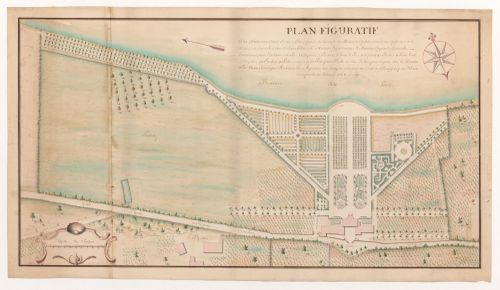
- Ce plan montre un relevé d'arpentage d'une propriété située sur les bords de la rivière du Loiret, paroisse de Saint-Hillaire-Saint-Mesmin (Saint-Hilaire-sur-Mesmin ?), comté de Beaugency, département du Loiret, France. Un relevé d'arpentage précis donne les dimensions de la propriété incluant bâtiments, cours, jardins, prés, vignes, et terrasses.
DR1979:0042
Description:
- Ce plan montre un relevé d'arpentage d'une propriété située sur les bords de la rivière du Loiret, paroisse de Saint-Hillaire-Saint-Mesmin (Saint-Hilaire-sur-Mesmin ?), comté de Beaugency, département du Loiret, France. Un relevé d'arpentage précis donne les dimensions de la propriété incluant bâtiments, cours, jardins, prés, vignes, et terrasses.
Personnes et institutions:
Sujet:
topographique
topographique
Date:
1768
1768
Titre:
Surveyor's plan of the grounds and buildings belonging to Monsieur Jogues de Guedreville, on the Loiret River, France
Actions:
DR1979:0042
Description:
- Ce plan montre un relevé d'arpentage d'une propriété située sur les bords de la rivière du Loiret, paroisse de Saint-Hillaire-Saint-Mesmin (Saint-Hilaire-sur-Mesmin ?), comté de Beaugency, département du Loiret, France. Un relevé d'arpentage précis donne les dimensions de la propriété incluant bâtiments, cours, jardins, prés, vignes, et terrasses.
Surveyor's plan of the grounds and buildings belonging to Monsieur Jogues de Guedreville, on the Loiret River, France
Actions:
DR1979:0042
Description:
- Ce plan montre un relevé d'arpentage d'une propriété située sur les bords de la rivière du Loiret, paroisse de Saint-Hillaire-Saint-Mesmin (Saint-Hilaire-sur-Mesmin ?), comté de Beaugency, département du Loiret, France. Un relevé d'arpentage précis donne les dimensions de la propriété incluant bâtiments, cours, jardins, prés, vignes, et terrasses.
Classification:
dessins
dessins
Date:
1768
1768
Personnes et institutions:
Sujet:
topographique
topographique
Classification:
expositions
expositions
Actions:
Description:
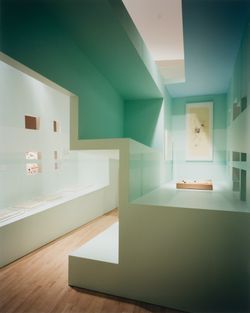
*Cités de l’archéologie fictive : oeuvres de Peter Eisenman, 1978-1988* examine la façon dont Eisenman a remis en question le concept de « site » et montre l’importance du dessin et de la fabrication de maquettes dans la genèse de ses idées. L’exposition révèle la richesse et la complexité des procédés de conception mis en œuvre par Einsenman en examinant attentivement(...)
*Cités de l’archéologie fictive : oeuvres de Peter Eisenman, 1978-1988* examine la façon dont Eisenman a remis en question le concept de « site » et montre l’importance du dessin et de la fabrication de maquettes dans la genèse de ses idées. L’exposition révèle la richesse et la complexité des procédés de conception mis en œuvre par Einsenman en examinant attentivement(...)
Localisation:
Salles principales
Salles principales
Date:
2 mars 1994 au 19 juin 1994
2 mars 1994 au 19 juin 1994
Titre:
Cités de l’archéologie fictive : oeuvres de Peter Eisenman, 1978-1988
Actions:
Description:
*Cités de l’archéologie fictive : oeuvres de Peter Eisenman, 1978-1988* examine la façon dont Eisenman a remis en question le concept de « site » et montre l’importance du dessin et de la fabrication de maquettes dans la genèse de ses idées. L’exposition révèle la richesse et la complexité des procédés de conception mis en œuvre par Einsenman en examinant attentivement(...)
Cités de l’archéologie fictive : oeuvres de Peter Eisenman, 1978-1988
Actions:
Description:
*Cités de l’archéologie fictive : oeuvres de Peter Eisenman, 1978-1988* examine la façon dont Eisenman a remis en question le concept de « site » et montre l’importance du dessin et de la fabrication de maquettes dans la genèse de ses idées. L’exposition révèle la richesse et la complexité des procédés de conception mis en œuvre par Einsenman en examinant attentivement(...)
Classification:
expositions
expositions
Date:
2 mars 1994 au
19 juin 1994
2 mars 1994 au
19 juin 1994
Localisation:
Salles principales
Salles principales
Classification:
articles
articles
Titre:
Liste des affaires
Liste des affaires
Actions:
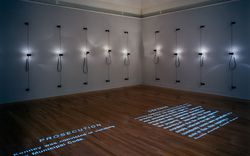
Un projet de Diller + Scofidio pour le livre The American Lawn avec des photos stéréoscopiques de Robert Sansone
Mot(s)-clé(s):
American Lawn, Elizabeth Diller, Ricardo Scofidio, Robert Sansone, disputes judiciaires, surface publique, pelouse
American Lawn, Elizabeth Diller, Ricardo Scofidio, Robert Sansone, disputes judiciaires, surface publique, pelouse
Publié:
10 mars 2025
10 mars 2025
Titre:
Liste des affaires
Un projet de Diller + Scofidio pour le livre The American Lawn avec des photos stéréoscopiques de Robert Sansone
Actions:
Liste des affaires
Un projet de Diller + Scofidio pour le livre The American Lawn avec des photos stéréoscopiques de Robert Sansone
Actions:
Classification:
événements
événements
Titre:
Gilles Clément
Gilles Clément
Actions:
Description:
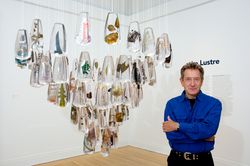
Dans le cadre de l’exposition Environnement : manières d’agir pour demain (2006), l’ingénieur horticole et paysagiste français Gilles Clément présente ses projets et ses théories. L’exposition propose un changement de perspective où l’environnement devient le point de départ d’une réflexion et non nos exigences d’humains envers ce dernier. Gilles Clément a réalisé de(...)
Dans le cadre de l’exposition Environnement : manières d’agir pour demain (2006), l’ingénieur horticole et paysagiste français Gilles Clément présente ses projets et ses théories. L’exposition propose un changement de perspective où l’environnement devient le point de départ d’une réflexion et non nos exigences d’humains envers ce dernier. Gilles Clément a réalisé de(...)
Localisation:
Théâtre Paul-Desmarais
Théâtre Paul-Desmarais
Date:
19 octobre 2006
19 octobre 2006
Titre:
Gilles Clément
Actions:
Description:
Dans le cadre de l’exposition Environnement : manières d’agir pour demain (2006), l’ingénieur horticole et paysagiste français Gilles Clément présente ses projets et ses théories. L’exposition propose un changement de perspective où l’environnement devient le point de départ d’une réflexion et non nos exigences d’humains envers ce dernier. Gilles Clément a réalisé de(...)
Gilles Clément
Actions:
Description:
Dans le cadre de l’exposition Environnement : manières d’agir pour demain (2006), l’ingénieur horticole et paysagiste français Gilles Clément présente ses projets et ses théories. L’exposition propose un changement de perspective où l’environnement devient le point de départ d’une réflexion et non nos exigences d’humains envers ce dernier. Gilles Clément a réalisé de(...)
Classification:
événements
événements
Date:
19 octobre 2006
19 octobre 2006
Localisation:
Théâtre Paul-Desmarais
Théâtre Paul-Desmarais
Classification:
expositions
expositions
Actions:
Description:
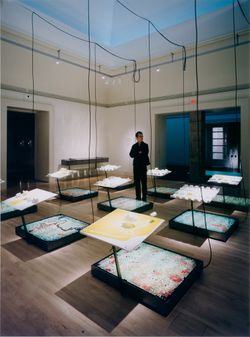
Surface du quotidien : La pelouse en Amérique montre la pelouse comme symbole de la vie domestique, espace public de représentation, agent économique et icône de l’Amérique. Les pavillons des lotissements de banlieue, les sièges d’entreprise établis en milieu suburbain et la Maison Blanche ont une chose en commun : tous ces bâtiments sont entourés d’une pelouse – une(...)
Surface du quotidien : La pelouse en Amérique montre la pelouse comme symbole de la vie domestique, espace public de représentation, agent économique et icône de l’Amérique. Les pavillons des lotissements de banlieue, les sièges d’entreprise établis en milieu suburbain et la Maison Blanche ont une chose en commun : tous ces bâtiments sont entourés d’une pelouse – une(...)
Localisation:
Salles principales, salle octogonale et vitrines
Salles principales, salle octogonale et vitrines
Date:
16 juin 1998 au 8 novembre 1998
16 juin 1998 au 8 novembre 1998
Titre:
Surface du quotidien : la pelouse en Amérique
Actions:
Description:
Surface du quotidien : La pelouse en Amérique montre la pelouse comme symbole de la vie domestique, espace public de représentation, agent économique et icône de l’Amérique. Les pavillons des lotissements de banlieue, les sièges d’entreprise établis en milieu suburbain et la Maison Blanche ont une chose en commun : tous ces bâtiments sont entourés d’une pelouse – une(...)
Surface du quotidien : la pelouse en Amérique
Actions:
Description:
Surface du quotidien : La pelouse en Amérique montre la pelouse comme symbole de la vie domestique, espace public de représentation, agent économique et icône de l’Amérique. Les pavillons des lotissements de banlieue, les sièges d’entreprise établis en milieu suburbain et la Maison Blanche ont une chose en commun : tous ces bâtiments sont entourés d’une pelouse – une(...)
Classification:
expositions
expositions
Date:
16 juin 1998 au
8 novembre 1998
16 juin 1998 au
8 novembre 1998
Localisation:
Salles principales, salle octogonale et vitrines
Salles principales, salle octogonale et vitrines
Classification:
articles
articles
Titre:
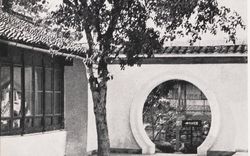
Murs blancs et tuiles noires
Murs blancs et tuiles noires
Actions:
Taro Cai et Peter Sealy sur la manière dont la photographie de voyage a recadré l'esthétique des jardins chinois
Titre:
Murs blancs et tuiles noires
Taro Cai et Peter Sealy sur la manière dont la photographie de voyage a recadré l'esthétique des jardins chinois
Actions:
Murs blancs et tuiles noires
Taro Cai et Peter Sealy sur la manière dont la photographie de voyage a recadré l'esthétique des jardins chinois
Actions:
Dossier:
Observations actives
Observations actives
Classification:
documents textuels
documents textuels
Titre:
Notes relatives au jardinage
Notes relatives au jardinage
Numéro de référence:
ARCH257513
Description:
Notes de Cormier écrites sur des fiches, coupures de presses, et imprimés au sujet de jardinage.
ARCH257513
Description:
Notes de Cormier écrites sur des fiches, coupures de presses, et imprimés au sujet de jardinage.
Personnes et institutions:
Date:
1946, 1974
1946, 1974
Titre:
Notes relatives au jardinage
Actions:
ARCH257513
Description:
Notes de Cormier écrites sur des fiches, coupures de presses, et imprimés au sujet de jardinage.
Notes relatives au jardinage
Actions:
ARCH257513
Description:
Notes de Cormier écrites sur des fiches, coupures de presses, et imprimés au sujet de jardinage.
Classification:
documents textuels
documents textuels
Date:
1946, 1974
1946, 1974
Personnes et institutions:
Classification:
événements
événements
Actions:
Description:
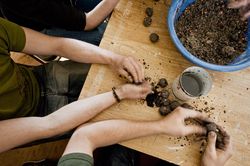
L’artiste montréalaise Gina Badger propose un atelier autour de la confection de véritables « bombes de semences », ces boules faites de compost, d’argile, d’eau et de graines que l’on peut lancer en ville pour créer des jardins. L’atelier est présenté en collaboration avec DARE-DARE (Centre de diffusion d’art multidisciplinaire de Montréal). En complément de l’exposition(...)
L’artiste montréalaise Gina Badger propose un atelier autour de la confection de véritables « bombes de semences », ces boules faites de compost, d’argile, d’eau et de graines que l’on peut lancer en ville pour créer des jardins. L’atelier est présenté en collaboration avec DARE-DARE (Centre de diffusion d’art multidisciplinaire de Montréal). En complément de l’exposition(...)
Date:
14 mars 2009
14 mars 2009
Titre:
Confectionner des bombes de semences
Actions:
Description:
L’artiste montréalaise Gina Badger propose un atelier autour de la confection de véritables « bombes de semences », ces boules faites de compost, d’argile, d’eau et de graines que l’on peut lancer en ville pour créer des jardins. L’atelier est présenté en collaboration avec DARE-DARE (Centre de diffusion d’art multidisciplinaire de Montréal). En complément de l’exposition(...)
Confectionner des bombes de semences
Actions:
Description:
L’artiste montréalaise Gina Badger propose un atelier autour de la confection de véritables « bombes de semences », ces boules faites de compost, d’argile, d’eau et de graines que l’on peut lancer en ville pour créer des jardins. L’atelier est présenté en collaboration avec DARE-DARE (Centre de diffusion d’art multidisciplinaire de Montréal). En complément de l’exposition(...)
Classification:
événements
événements
Date:
14 mars 2009
14 mars 2009


