


5165 Résultats
Classification:
événements
événements
Actions:
Description:
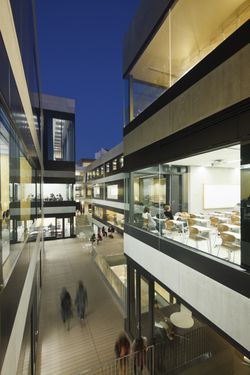
Dans cette causerie intitulée « Design the place for people to meet » (Concevoir le lieu pour que les gens se rencontrent), Manabu Chiba expliquera sa démarche de conception, soulignant la réalisation d’une architecture qui favorise les nouvelles interactions de lieu à lieu, de personne à personne et de personne à lieu. Son travail vise à révéler le contexte d’un(...)
Dans cette causerie intitulée « Design the place for people to meet » (Concevoir le lieu pour que les gens se rencontrent), Manabu Chiba expliquera sa démarche de conception, soulignant la réalisation d’une architecture qui favorise les nouvelles interactions de lieu à lieu, de personne à personne et de personne à lieu. Son travail vise à révéler le contexte d’un(...)
Date:
11 février 2016
11 février 2016
Titre:
Manabu Chiba veut vous parler
Actions:
Description:
Dans cette causerie intitulée « Design the place for people to meet » (Concevoir le lieu pour que les gens se rencontrent), Manabu Chiba expliquera sa démarche de conception, soulignant la réalisation d’une architecture qui favorise les nouvelles interactions de lieu à lieu, de personne à personne et de personne à lieu. Son travail vise à révéler le contexte d’un(...)
Manabu Chiba veut vous parler
Actions:
Description:
Dans cette causerie intitulée « Design the place for people to meet » (Concevoir le lieu pour que les gens se rencontrent), Manabu Chiba expliquera sa démarche de conception, soulignant la réalisation d’une architecture qui favorise les nouvelles interactions de lieu à lieu, de personne à personne et de personne à lieu. Son travail vise à révéler le contexte d’un(...)
Classification:
événements
événements
Date:
11 février 2016
11 février 2016
Classification:
documents textuels
documents textuels
Numéro de référence:
DR2012:0012:111:009
Description:
Assorted reference materials in French, including reports and proposals related to the following Montreal municipal projects: - Société d'habitation et de dévéloppement de Montréal, site Hotel-de-Ville, la Gauchetiere, étude de faisabilité; - Énoncé d'orientations sur l'aménagement de l'arrondissement centre; - Étude pre-faisabilité environmentale du projet Champs-de-Mars; - Centre-ville est: opération 20 000 logements. Items originally housed in a box labelled: VILLE DE MONTREAL / SHDU Faubourg St-Laurent 1990 (Box #2)
DR2012:0012:111:009
Description:
Assorted reference materials in French, including reports and proposals related to the following Montreal municipal projects: - Société d'habitation et de dévéloppement de Montréal, site Hotel-de-Ville, la Gauchetiere, étude de faisabilité; - Énoncé d'orientations sur l'aménagement de l'arrondissement centre; - Étude pre-faisabilité environmentale du projet Champs-de-Mars; - Centre-ville est: opération 20 000 logements. Items originally housed in a box labelled: VILLE DE MONTREAL / SHDU Faubourg St-Laurent 1990 (Box #2)
Personnes et institutions:
Date:
1985-1989
1985-1989
Titre:
Reference materials related to urban development in Montréal
Actions:
DR2012:0012:111:009
Description:
Assorted reference materials in French, including reports and proposals related to the following Montreal municipal projects: - Société d'habitation et de dévéloppement de Montréal, site Hotel-de-Ville, la Gauchetiere, étude de faisabilité; - Énoncé d'orientations sur l'aménagement de l'arrondissement centre; - Étude pre-faisabilité environmentale du projet Champs-de-Mars; - Centre-ville est: opération 20 000 logements. Items originally housed in a box labelled: VILLE DE MONTREAL / SHDU Faubourg St-Laurent 1990 (Box #2)
Reference materials related to urban development in Montréal
Actions:
DR2012:0012:111:009
Description:
Assorted reference materials in French, including reports and proposals related to the following Montreal municipal projects: - Société d'habitation et de dévéloppement de Montréal, site Hotel-de-Ville, la Gauchetiere, étude de faisabilité; - Énoncé d'orientations sur l'aménagement de l'arrondissement centre; - Étude pre-faisabilité environmentale du projet Champs-de-Mars; - Centre-ville est: opération 20 000 logements. Items originally housed in a box labelled: VILLE DE MONTREAL / SHDU Faubourg St-Laurent 1990 (Box #2)
Classification:
documents textuels
documents textuels
Date:
1985-1989
1985-1989
Personnes et institutions:
Classification:
documents textuels
documents textuels
Numéro de référence:
ARCH276679
Description:
8 files and spiral bound documents (oversize) - primarily contains presentation and working materials (plans, notes, sketches) for projects that Arthur Erickson collaborated on as a design consultant while at Nick Milkovich Architects. Includes Robson Square Revitalization (1999), Canadian Canoe Museum (2002), 1133 West Georgia Street (ca. 2006), Denali Point, International Glass Museum (1998), Laxton Residence Renovations (ca. 2003), Trump Hotel and Tower (ca. 2005), Evrensel Residence (2006), Museum of Anthropology Renewal (2004).
ARCH276679
Description:
8 files and spiral bound documents (oversize) - primarily contains presentation and working materials (plans, notes, sketches) for projects that Arthur Erickson collaborated on as a design consultant while at Nick Milkovich Architects. Includes Robson Square Revitalization (1999), Canadian Canoe Museum (2002), 1133 West Georgia Street (ca. 2006), Denali Point, International Glass Museum (1998), Laxton Residence Renovations (ca. 2003), Trump Hotel and Tower (ca. 2005), Evrensel Residence (2006), Museum of Anthropology Renewal (2004).
Personnes et institutions:
Date:
1998-2006
1998-2006
Titre:
Presentation material and working material from Erickson's office
Actions:
ARCH276679
Description:
8 files and spiral bound documents (oversize) - primarily contains presentation and working materials (plans, notes, sketches) for projects that Arthur Erickson collaborated on as a design consultant while at Nick Milkovich Architects. Includes Robson Square Revitalization (1999), Canadian Canoe Museum (2002), 1133 West Georgia Street (ca. 2006), Denali Point, International Glass Museum (1998), Laxton Residence Renovations (ca. 2003), Trump Hotel and Tower (ca. 2005), Evrensel Residence (2006), Museum of Anthropology Renewal (2004).
Presentation material and working material from Erickson's office
Actions:
ARCH276679
Description:
8 files and spiral bound documents (oversize) - primarily contains presentation and working materials (plans, notes, sketches) for projects that Arthur Erickson collaborated on as a design consultant while at Nick Milkovich Architects. Includes Robson Square Revitalization (1999), Canadian Canoe Museum (2002), 1133 West Georgia Street (ca. 2006), Denali Point, International Glass Museum (1998), Laxton Residence Renovations (ca. 2003), Trump Hotel and Tower (ca. 2005), Evrensel Residence (2006), Museum of Anthropology Renewal (2004).
Classification:
documents textuels
documents textuels
Date:
1998-2006
1998-2006
Personnes et institutions:
Classification:
archives
Niveau de description archivistique:
Fonds
archives
Niveau de description archivistique:
Fonds
Titre:
John C. Parkin fonds
John C. Parkin fonds
Numéro de référence:
AP018
Résumé:
The John C. Parkin fonds documents the professional career of Toronto-based architect John C. Parkin (1922-1988) at his firms John B. Parkin Associates and Parkin Architects Planners. Most materials in this fonds record 347 architectural projects covering the years 1947-1987. John C. Parkin’s professional involvement in the arts and architecture, his firms’ activities, and his professional achievements are also recorded.
AP018
Résumé:
The John C. Parkin fonds documents the professional career of Toronto-based architect John C. Parkin (1922-1988) at his firms John B. Parkin Associates and Parkin Architects Planners. Most materials in this fonds record 347 architectural projects covering the years 1947-1987. John C. Parkin’s professional involvement in the arts and architecture, his firms’ activities, and his professional achievements are also recorded.
Personnes et institutions:
Date:
1929-1987
1929-1987
Titre:
John C. Parkin fonds
Actions:
AP018
Résumé:
The John C. Parkin fonds documents the professional career of Toronto-based architect John C. Parkin (1922-1988) at his firms John B. Parkin Associates and Parkin Architects Planners. Most materials in this fonds record 347 architectural projects covering the years 1947-1987. John C. Parkin’s professional involvement in the arts and architecture, his firms’ activities, and his professional achievements are also recorded.
John C. Parkin fonds
Actions:
AP018
Résumé:
The John C. Parkin fonds documents the professional career of Toronto-based architect John C. Parkin (1922-1988) at his firms John B. Parkin Associates and Parkin Architects Planners. Most materials in this fonds record 347 architectural projects covering the years 1947-1987. John C. Parkin’s professional involvement in the arts and architecture, his firms’ activities, and his professional achievements are also recorded.
Classification:
archives
Niveau de description archivistique:
Fonds
archives
Niveau de description archivistique:
Fonds
Date:
1929-1987
1929-1987
Personnes et institutions:
Classification:
dessins
dessins
Numéro de référence:
ARCH277388
Description:
Bound sets of plans for 1133 West Georgia St., Vancouver, B.C. Includes levels 4, 25 and 32, lane level landscape plan, preliminary drawings (parking, levels, roof plan, mechanical sections, system schematics and details), 25% Progress Report sets (structural drawings of general notes and details, floor plans, wall elevations, site plan, parking level layouts, hotel level layouts, residential suite layouts, security layouts). Also includes the specifications for 1151 West Georgia St., Vancouver, B.C. Excavation and Shoring Tender.
ARCH277388
Description:
Bound sets of plans for 1133 West Georgia St., Vancouver, B.C. Includes levels 4, 25 and 32, lane level landscape plan, preliminary drawings (parking, levels, roof plan, mechanical sections, system schematics and details), 25% Progress Report sets (structural drawings of general notes and details, floor plans, wall elevations, site plan, parking level layouts, hotel level layouts, residential suite layouts, security layouts). Also includes the specifications for 1151 West Georgia St., Vancouver, B.C. Excavation and Shoring Tender.
Personnes et institutions:
Date:
2006-2008
2006-2008
Titre:
Sets of plans for various projects
Actions:
ARCH277388
Description:
Bound sets of plans for 1133 West Georgia St., Vancouver, B.C. Includes levels 4, 25 and 32, lane level landscape plan, preliminary drawings (parking, levels, roof plan, mechanical sections, system schematics and details), 25% Progress Report sets (structural drawings of general notes and details, floor plans, wall elevations, site plan, parking level layouts, hotel level layouts, residential suite layouts, security layouts). Also includes the specifications for 1151 West Georgia St., Vancouver, B.C. Excavation and Shoring Tender.
Sets of plans for various projects
Actions:
ARCH277388
Description:
Bound sets of plans for 1133 West Georgia St., Vancouver, B.C. Includes levels 4, 25 and 32, lane level landscape plan, preliminary drawings (parking, levels, roof plan, mechanical sections, system schematics and details), 25% Progress Report sets (structural drawings of general notes and details, floor plans, wall elevations, site plan, parking level layouts, hotel level layouts, residential suite layouts, security layouts). Also includes the specifications for 1151 West Georgia St., Vancouver, B.C. Excavation and Shoring Tender.
Classification:
dessins
dessins
Date:
2006-2008
2006-2008
Personnes et institutions:
Classification:
dessins
Quantité:
825 reprographic copy(ies)
dessins
Quantité:
825 reprographic copy(ies)
Numéro de référence:
ARCH286083
Description:
Plans, sections, schedules, axonometrics, elevations and details for the renovation of suites, public areas, staff areas, and for the design and construction of hotel furniture. The documents are stored in the original office folders, divided in the following categories: Communications room -- Conference rooms -- Employee cafeteria -- Chocolate shop -- Grand Avenue Bar -- Galeria Entries -- Public telephone room -- Pastry shop -- Public rest rooms -- Health Club -- American International Bank -- Schedule of drawings -- Kitchen details -- Reservation offices -- Biltmore Bowl -- Employee lockers -- Front desk -- Main lobby -- Bernard's -- Café.
ARCH286083
Description:
Plans, sections, schedules, axonometrics, elevations and details for the renovation of suites, public areas, staff areas, and for the design and construction of hotel furniture. The documents are stored in the original office folders, divided in the following categories: Communications room -- Conference rooms -- Employee cafeteria -- Chocolate shop -- Grand Avenue Bar -- Galeria Entries -- Public telephone room -- Pastry shop -- Public rest rooms -- Health Club -- American International Bank -- Schedule of drawings -- Kitchen details -- Reservation offices -- Biltmore Bowl -- Employee lockers -- Front desk -- Main lobby -- Bernard's -- Café.
Personnes et institutions:
Date:
1976 - 1983
1976 - 1983
Titre:
Plans, sections, schedules, axonometrics, elevations and details
Actions:
ARCH286083
Description:
Plans, sections, schedules, axonometrics, elevations and details for the renovation of suites, public areas, staff areas, and for the design and construction of hotel furniture. The documents are stored in the original office folders, divided in the following categories: Communications room -- Conference rooms -- Employee cafeteria -- Chocolate shop -- Grand Avenue Bar -- Galeria Entries -- Public telephone room -- Pastry shop -- Public rest rooms -- Health Club -- American International Bank -- Schedule of drawings -- Kitchen details -- Reservation offices -- Biltmore Bowl -- Employee lockers -- Front desk -- Main lobby -- Bernard's -- Café.
Plans, sections, schedules, axonometrics, elevations and details
Actions:
ARCH286083
Description:
Plans, sections, schedules, axonometrics, elevations and details for the renovation of suites, public areas, staff areas, and for the design and construction of hotel furniture. The documents are stored in the original office folders, divided in the following categories: Communications room -- Conference rooms -- Employee cafeteria -- Chocolate shop -- Grand Avenue Bar -- Galeria Entries -- Public telephone room -- Pastry shop -- Public rest rooms -- Health Club -- American International Bank -- Schedule of drawings -- Kitchen details -- Reservation offices -- Biltmore Bowl -- Employee lockers -- Front desk -- Main lobby -- Bernard's -- Café.
Classification:
dessins
Quantité:
825 reprographic copy(ies)
dessins
Quantité:
825 reprographic copy(ies)
Date:
1976 - 1983
1976 - 1983
Personnes et institutions:
Niveau de description archivistique:
Série(s)
Série(s)
Titre:
OCEAN North reference files
OCEAN North reference files
Numéro de référence:
AP198.S2
Description:
Series consists of reference documentation in the form of portfolios of selected materials from various OCEAN North projects. It is likely that Kivi Sotamaa did not contribute to all of the included projects. For the most part, records are images of work done with CAD software: preliminary drawings; fully developed plans and renderings of buildings; landscapes; and installations. Images also include digitized photographs of models and installations. Content from AP198.S2.001 – OCEAN North Portfolio 1999 consists primarily of this type of visual material and is organized per project. Additionally, a few textual records describe some of the projects. There are two versions of a general presentation document in Pagemaker. Content from AP198.S2.002 – OCEAN North Press CD 2000 is organized into three sections: “about'OCEANnorth”, “OCEANnorth_Essays”, and “OCEANnorth_Projects”. This last directory is further organized by year and by project, each project having a text and an image sub-directory. Overall, there are 48 textual records describing the network, its vision and its projects, alongside more than 200 raster images. The Jyväskylä Music and Arts Centre competition entry was not included in this project selection. The following projects are documented in this series: - Töölö Football Stadium, an international architectural competition entry. See also Series 1 for more records on this project. - Jyväskylä Music and Arts Centre, an international architectural competition entry. See also Series 1 for more records on this project. - Extraterrains, a furniture design project. - Finnish Embassy in Canberra, an international architectural competition entry. - Habitare Pavilion (1996 and 1997), exhibitions installations. - Chamberworks, an architectural installation for an exhibition. - a-drift NYT Time Capsule, a competition entry for a time capsule for the New York Times. - Synthetic Landscape Pavilion and Phases 1, 2 and 3, a landscape design. - Sandefjord Hotel, preliminary design. - Landscraper, design study for an exhibition. - IntenCities, multidisciplinary installation project. - Barbican’s Valo exhibition design. - Constantini (sic) Museum, a building design for a competition. - Kyoto, a study of urban design. - Jeil’s Hospital, a building design. - Urban Surfaces exhibition. Source: Ateljié Sotamaa. “Portfolio.” Accessed February 2018, http://portfolio.sotamaa.net/ FRAC, “Catalog, OCEAN.” Accessed February 2018, http://www.archilab.org/public/2000/catalog/ocean/oceanen.htm OCEAN CN Consultancy Network, “Projects.” Accessed February 2018, http://ocean-cn.org/projects/
AP198.S2
Description:
Series consists of reference documentation in the form of portfolios of selected materials from various OCEAN North projects. It is likely that Kivi Sotamaa did not contribute to all of the included projects. For the most part, records are images of work done with CAD software: preliminary drawings; fully developed plans and renderings of buildings; landscapes; and installations. Images also include digitized photographs of models and installations. Content from AP198.S2.001 – OCEAN North Portfolio 1999 consists primarily of this type of visual material and is organized per project. Additionally, a few textual records describe some of the projects. There are two versions of a general presentation document in Pagemaker. Content from AP198.S2.002 – OCEAN North Press CD 2000 is organized into three sections: “about'OCEANnorth”, “OCEANnorth_Essays”, and “OCEANnorth_Projects”. This last directory is further organized by year and by project, each project having a text and an image sub-directory. Overall, there are 48 textual records describing the network, its vision and its projects, alongside more than 200 raster images. The Jyväskylä Music and Arts Centre competition entry was not included in this project selection. The following projects are documented in this series: - Töölö Football Stadium, an international architectural competition entry. See also Series 1 for more records on this project. - Jyväskylä Music and Arts Centre, an international architectural competition entry. See also Series 1 for more records on this project. - Extraterrains, a furniture design project. - Finnish Embassy in Canberra, an international architectural competition entry. - Habitare Pavilion (1996 and 1997), exhibitions installations. - Chamberworks, an architectural installation for an exhibition. - a-drift NYT Time Capsule, a competition entry for a time capsule for the New York Times. - Synthetic Landscape Pavilion and Phases 1, 2 and 3, a landscape design. - Sandefjord Hotel, preliminary design. - Landscraper, design study for an exhibition. - IntenCities, multidisciplinary installation project. - Barbican’s Valo exhibition design. - Constantini (sic) Museum, a building design for a competition. - Kyoto, a study of urban design. - Jeil’s Hospital, a building design. - Urban Surfaces exhibition. Source: Ateljié Sotamaa. “Portfolio.” Accessed February 2018, http://portfolio.sotamaa.net/ FRAC, “Catalog, OCEAN.” Accessed February 2018, http://www.archilab.org/public/2000/catalog/ocean/oceanen.htm OCEAN CN Consultancy Network, “Projects.” Accessed February 2018, http://ocean-cn.org/projects/
Personnes et institutions:
Date:
1997-2000
1997-2000
Titre:
OCEAN North reference files
Actions:
AP198.S2
Description:
Series consists of reference documentation in the form of portfolios of selected materials from various OCEAN North projects. It is likely that Kivi Sotamaa did not contribute to all of the included projects. For the most part, records are images of work done with CAD software: preliminary drawings; fully developed plans and renderings of buildings; landscapes; and installations. Images also include digitized photographs of models and installations. Content from AP198.S2.001 – OCEAN North Portfolio 1999 consists primarily of this type of visual material and is organized per project. Additionally, a few textual records describe some of the projects. There are two versions of a general presentation document in Pagemaker. Content from AP198.S2.002 – OCEAN North Press CD 2000 is organized into three sections: “about'OCEANnorth”, “OCEANnorth_Essays”, and “OCEANnorth_Projects”. This last directory is further organized by year and by project, each project having a text and an image sub-directory. Overall, there are 48 textual records describing the network, its vision and its projects, alongside more than 200 raster images. The Jyväskylä Music and Arts Centre competition entry was not included in this project selection. The following projects are documented in this series: - Töölö Football Stadium, an international architectural competition entry. See also Series 1 for more records on this project. - Jyväskylä Music and Arts Centre, an international architectural competition entry. See also Series 1 for more records on this project. - Extraterrains, a furniture design project. - Finnish Embassy in Canberra, an international architectural competition entry. - Habitare Pavilion (1996 and 1997), exhibitions installations. - Chamberworks, an architectural installation for an exhibition. - a-drift NYT Time Capsule, a competition entry for a time capsule for the New York Times. - Synthetic Landscape Pavilion and Phases 1, 2 and 3, a landscape design. - Sandefjord Hotel, preliminary design. - Landscraper, design study for an exhibition. - IntenCities, multidisciplinary installation project. - Barbican’s Valo exhibition design. - Constantini (sic) Museum, a building design for a competition. - Kyoto, a study of urban design. - Jeil’s Hospital, a building design. - Urban Surfaces exhibition. Source: Ateljié Sotamaa. “Portfolio.” Accessed February 2018, http://portfolio.sotamaa.net/ FRAC, “Catalog, OCEAN.” Accessed February 2018, http://www.archilab.org/public/2000/catalog/ocean/oceanen.htm OCEAN CN Consultancy Network, “Projects.” Accessed February 2018, http://ocean-cn.org/projects/
OCEAN North reference files
Actions:
AP198.S2
Description:
Series consists of reference documentation in the form of portfolios of selected materials from various OCEAN North projects. It is likely that Kivi Sotamaa did not contribute to all of the included projects. For the most part, records are images of work done with CAD software: preliminary drawings; fully developed plans and renderings of buildings; landscapes; and installations. Images also include digitized photographs of models and installations. Content from AP198.S2.001 – OCEAN North Portfolio 1999 consists primarily of this type of visual material and is organized per project. Additionally, a few textual records describe some of the projects. There are two versions of a general presentation document in Pagemaker. Content from AP198.S2.002 – OCEAN North Press CD 2000 is organized into three sections: “about'OCEANnorth”, “OCEANnorth_Essays”, and “OCEANnorth_Projects”. This last directory is further organized by year and by project, each project having a text and an image sub-directory. Overall, there are 48 textual records describing the network, its vision and its projects, alongside more than 200 raster images. The Jyväskylä Music and Arts Centre competition entry was not included in this project selection. The following projects are documented in this series: - Töölö Football Stadium, an international architectural competition entry. See also Series 1 for more records on this project. - Jyväskylä Music and Arts Centre, an international architectural competition entry. See also Series 1 for more records on this project. - Extraterrains, a furniture design project. - Finnish Embassy in Canberra, an international architectural competition entry. - Habitare Pavilion (1996 and 1997), exhibitions installations. - Chamberworks, an architectural installation for an exhibition. - a-drift NYT Time Capsule, a competition entry for a time capsule for the New York Times. - Synthetic Landscape Pavilion and Phases 1, 2 and 3, a landscape design. - Sandefjord Hotel, preliminary design. - Landscraper, design study for an exhibition. - IntenCities, multidisciplinary installation project. - Barbican’s Valo exhibition design. - Constantini (sic) Museum, a building design for a competition. - Kyoto, a study of urban design. - Jeil’s Hospital, a building design. - Urban Surfaces exhibition. Source: Ateljié Sotamaa. “Portfolio.” Accessed February 2018, http://portfolio.sotamaa.net/ FRAC, “Catalog, OCEAN.” Accessed February 2018, http://www.archilab.org/public/2000/catalog/ocean/oceanen.htm OCEAN CN Consultancy Network, “Projects.” Accessed February 2018, http://ocean-cn.org/projects/
Niveau de description archivistique:
Series
Series
Date:
1997-2000
1997-2000
Personnes et institutions:
Classification:
dessins
dessins

Numéro de référence:
ARCH263648
Description:
élévations de l'Hôtel de ville
ARCH263648
Description:
élévations de l'Hôtel de ville
Personnes et institutions:
Date:
23 November 1962
23 November 1962
Titre:
Centre Civique de Chomedey, Laval, Québec: elevations of the city hall
Actions:
ARCH263648
Description:
élévations de l'Hôtel de ville
Centre Civique de Chomedey, Laval, Québec: elevations of the city hall
Actions:
ARCH263648
Description:
élévations de l'Hôtel de ville
Classification:
dessins
dessins
Date:
23 November 1962
23 November 1962
Personnes et institutions:
Classification:
documents textuels
documents textuels
Numéro de référence:
ARCH257070
Description:
1 box of proposals / offer of services - Fintas, Kuwait; CP Hotel, Vancouver; Shara Dakhlia Shopping Centre, Jeddah; University of Lethbridge; Mada Air Defence Headquarters, Saudi Arabia; Bus Parcel Express, Vancouver; Vancouver Waterfront Terminals and transit functions; London Park; B.C. Medical Centre; Abu Nuwas; Robson Square Law Courts; Bahrain Gulf International Bank; East End Lake; Pacific Rin Design Quarter, Vancouver; Granville Waterfront Interchange; Vancouver City Square Traffic study; Government of Canada Building, Vancour; Courthouse Renovation (3 block project); Maryland Science Centre
ARCH257070
Description:
1 box of proposals / offer of services - Fintas, Kuwait; CP Hotel, Vancouver; Shara Dakhlia Shopping Centre, Jeddah; University of Lethbridge; Mada Air Defence Headquarters, Saudi Arabia; Bus Parcel Express, Vancouver; Vancouver Waterfront Terminals and transit functions; London Park; B.C. Medical Centre; Abu Nuwas; Robson Square Law Courts; Bahrain Gulf International Bank; East End Lake; Pacific Rin Design Quarter, Vancouver; Granville Waterfront Interchange; Vancouver City Square Traffic study; Government of Canada Building, Vancour; Courthouse Renovation (3 block project); Maryland Science Centre
Personnes et institutions:
Date:
1969
1969
Titre:
Offer of services and proposals for various projects
Actions:
ARCH257070
Description:
1 box of proposals / offer of services - Fintas, Kuwait; CP Hotel, Vancouver; Shara Dakhlia Shopping Centre, Jeddah; University of Lethbridge; Mada Air Defence Headquarters, Saudi Arabia; Bus Parcel Express, Vancouver; Vancouver Waterfront Terminals and transit functions; London Park; B.C. Medical Centre; Abu Nuwas; Robson Square Law Courts; Bahrain Gulf International Bank; East End Lake; Pacific Rin Design Quarter, Vancouver; Granville Waterfront Interchange; Vancouver City Square Traffic study; Government of Canada Building, Vancour; Courthouse Renovation (3 block project); Maryland Science Centre
Offer of services and proposals for various projects
Actions:
ARCH257070
Description:
1 box of proposals / offer of services - Fintas, Kuwait; CP Hotel, Vancouver; Shara Dakhlia Shopping Centre, Jeddah; University of Lethbridge; Mada Air Defence Headquarters, Saudi Arabia; Bus Parcel Express, Vancouver; Vancouver Waterfront Terminals and transit functions; London Park; B.C. Medical Centre; Abu Nuwas; Robson Square Law Courts; Bahrain Gulf International Bank; East End Lake; Pacific Rin Design Quarter, Vancouver; Granville Waterfront Interchange; Vancouver City Square Traffic study; Government of Canada Building, Vancour; Courthouse Renovation (3 block project); Maryland Science Centre
Classification:
documents textuels
documents textuels
Date:
1969
1969
Personnes et institutions:
Niveau de description archivistique:
Sous-série
Sous-série
Numéro de référence:
CI001.S1.D3
Description:
The urban and public architecture of Hubert Rohault de Fleury is insightful concerning both the stylistic directions of utilitarian architecture in France and the structure and role of the government architectural services (1) in the Empire and the Restoration. The drawings in the CCA collection depict built and unbuilt projects undertaken in the context of Hubert's positions in the government architectural services as well as private commissions. Hubert's principal official positions related to three branches of the French government: the Préfecture de la police, the Conseil général des hospices and the Conseil des Bâtiments Civils, a "division" of the Ministère de l'interieur. Hubert's work for the Préfecture de la police (which was also responsible for the gendarmerie and the sapeurs-pompiers barracks) is represented in the CCA collection by projects for four gendarmerie barracks (1821-1830) and alterations to the Préfecture de la Police (1833 ?) and nearby prison in Paris (1819)(DR1974:0002:016:001-070 / DR1974:0002:011:001-089 and DR1974:0002: 015:001-070). The drawings in these albums emphasize the planning (or re-arrangement) of the interior spaces. The album for the Préfecture de la police also includes record drawings for prisons in England and France as background material for Hubert's work and/or related to reports for the Conseil des Bâtiments Civils, which had an active role in the design of prisons throughout France during the early years of the nineteenth century (2). Although the CCA collection has no drawings directly related to Hubert's position as the architecte des hospices (3), drawings and prints are included for his earlier ideal hospitals (ca. 1810) (DR1974:0002:008:001-077). These projects continue the late 17th and 18th century tradition of monumental geometrically laid-out ideal hospitals. This album also contains prints and drawings of medical buildings by other architects (probably reference material), and drawings of Hubert's unexecuted proposal for the re-development of the École de médecine (Paris) and the surrounding buildings and urban spaces. Hubert was the architecte de l'École de medicine (4); a position that probably related to his work for the Ministère d'Interieur, which would have been responsible for this building. In general, Hubert's role and responsibilities within the Ministère de l'interieur and the associated Conseil de Bâtiment Civils (especially prior to his appointment to the position of inspecteur gènèral in 1830) are the least clear of his government positions. In addition to the École de medicine album, two other albums contain projects relating to the Ministère de l'Interieur: two proposals for Place Louis XV commissioned by the Ministre de l'interieur, Duc Decazes in 1821 (DR1974:0002:037:001-031), and drawings for the conversion or renovation of several Parisian hôtel particuliers (probably between 1810 and ca. 1820) including those used by the Ministère de l'interieur, Ministère de la Guerre and the Ministère des affaires étrangères (DR1974:0002;011:001-089). On other government commission of significance is represented in the CCA collection. In 1819, Hubert Rohault de Fleury in collaboration with Etienne Hyppolite Godde was commissioned to direct the restoration of the Thermes de Julien located under the Hôtel de Cluny. The CCA collection includes several letters and drawings, and a report related to this commission (DR1974:0002 :037:001-031). Hubert's private urban projects, mostly commissioned by private entrepreneurs or societies, were concerned with the expansion of the infrastructure of Paris and the surrounding communities as well as, to some extent, larger issues of urban development. One album contains projects dating from between 1819 and 1836 related horses - an essential part of 19th century urban life (5): a stud-farm (Haras de Madrid, Bois de Boulogne), an auction house and an infirmary (Clos St. Charles, Clos d'équarrissage, fôret de Bondy) and three slaughterhouses (Plaine de Grenelle, an unnamed project and La Villete (6))(DR1974:0002:014:001-104). These album also includes developmental studies for a new quartier of Paris - Nouveau Quartier Poissonière (the site of today's 10e arrondissement). A second album (ca. 1825) includes designs for a "maison de blanchisseur", an "entrepot de vins" with adjacent "guingette" and designs for structures at Parc de Clichy - a reservoir, a washhouse and a manège (DR1974:0002:009:001-079) (7). The drawings in these albums are particularly informative regarding the materials, structures and mechanical systems utilized. As with most of his government commissions, for these buildings, Hubert adopted a sparse architectural syntax of pared-down classical motifs and regimented plans grounded in the ideas of Durand and commonly used in utilitarian buildings during the 19th century. (1) These are discussed in some detail in Chapter 2 of David Van Zanten, 'Building Paris' (Cambridge: Cambridge University Press, 1994). (2) Van Zanten, 'Building Paris', 51-52. (3) The Cabinet des Estampes at the Musée Carnavalet in Paris has drawings related to Hubert's work for the Conseil général des hospices. (4) Evidence of this position is based on inscriptions on drawings in album, DR1974:0002:008:001-77. (5) Bergdoll, 4. (6) The La Villete slaughterhouse was designed by Charles Rohault de Fleury. (7) The source(s) of these commissions is unknown.
CI001.S1.D3
Description:
The urban and public architecture of Hubert Rohault de Fleury is insightful concerning both the stylistic directions of utilitarian architecture in France and the structure and role of the government architectural services (1) in the Empire and the Restoration. The drawings in the CCA collection depict built and unbuilt projects undertaken in the context of Hubert's positions in the government architectural services as well as private commissions. Hubert's principal official positions related to three branches of the French government: the Préfecture de la police, the Conseil général des hospices and the Conseil des Bâtiments Civils, a "division" of the Ministère de l'interieur. Hubert's work for the Préfecture de la police (which was also responsible for the gendarmerie and the sapeurs-pompiers barracks) is represented in the CCA collection by projects for four gendarmerie barracks (1821-1830) and alterations to the Préfecture de la Police (1833 ?) and nearby prison in Paris (1819)(DR1974:0002:016:001-070 / DR1974:0002:011:001-089 and DR1974:0002: 015:001-070). The drawings in these albums emphasize the planning (or re-arrangement) of the interior spaces. The album for the Préfecture de la police also includes record drawings for prisons in England and France as background material for Hubert's work and/or related to reports for the Conseil des Bâtiments Civils, which had an active role in the design of prisons throughout France during the early years of the nineteenth century (2). Although the CCA collection has no drawings directly related to Hubert's position as the architecte des hospices (3), drawings and prints are included for his earlier ideal hospitals (ca. 1810) (DR1974:0002:008:001-077). These projects continue the late 17th and 18th century tradition of monumental geometrically laid-out ideal hospitals. This album also contains prints and drawings of medical buildings by other architects (probably reference material), and drawings of Hubert's unexecuted proposal for the re-development of the École de médecine (Paris) and the surrounding buildings and urban spaces. Hubert was the architecte de l'École de medicine (4); a position that probably related to his work for the Ministère d'Interieur, which would have been responsible for this building. In general, Hubert's role and responsibilities within the Ministère de l'interieur and the associated Conseil de Bâtiment Civils (especially prior to his appointment to the position of inspecteur gènèral in 1830) are the least clear of his government positions. In addition to the École de medicine album, two other albums contain projects relating to the Ministère de l'Interieur: two proposals for Place Louis XV commissioned by the Ministre de l'interieur, Duc Decazes in 1821 (DR1974:0002:037:001-031), and drawings for the conversion or renovation of several Parisian hôtel particuliers (probably between 1810 and ca. 1820) including those used by the Ministère de l'interieur, Ministère de la Guerre and the Ministère des affaires étrangères (DR1974:0002;011:001-089). On other government commission of significance is represented in the CCA collection. In 1819, Hubert Rohault de Fleury in collaboration with Etienne Hyppolite Godde was commissioned to direct the restoration of the Thermes de Julien located under the Hôtel de Cluny. The CCA collection includes several letters and drawings, and a report related to this commission (DR1974:0002 :037:001-031). Hubert's private urban projects, mostly commissioned by private entrepreneurs or societies, were concerned with the expansion of the infrastructure of Paris and the surrounding communities as well as, to some extent, larger issues of urban development. One album contains projects dating from between 1819 and 1836 related horses - an essential part of 19th century urban life (5): a stud-farm (Haras de Madrid, Bois de Boulogne), an auction house and an infirmary (Clos St. Charles, Clos d'équarrissage, fôret de Bondy) and three slaughterhouses (Plaine de Grenelle, an unnamed project and La Villete (6))(DR1974:0002:014:001-104). These album also includes developmental studies for a new quartier of Paris - Nouveau Quartier Poissonière (the site of today's 10e arrondissement). A second album (ca. 1825) includes designs for a "maison de blanchisseur", an "entrepot de vins" with adjacent "guingette" and designs for structures at Parc de Clichy - a reservoir, a washhouse and a manège (DR1974:0002:009:001-079) (7). The drawings in these albums are particularly informative regarding the materials, structures and mechanical systems utilized. As with most of his government commissions, for these buildings, Hubert adopted a sparse architectural syntax of pared-down classical motifs and regimented plans grounded in the ideas of Durand and commonly used in utilitarian buildings during the 19th century. (1) These are discussed in some detail in Chapter 2 of David Van Zanten, 'Building Paris' (Cambridge: Cambridge University Press, 1994). (2) Van Zanten, 'Building Paris', 51-52. (3) The Cabinet des Estampes at the Musée Carnavalet in Paris has drawings related to Hubert's work for the Conseil général des hospices. (4) Evidence of this position is based on inscriptions on drawings in album, DR1974:0002:008:001-77. (5) Bergdoll, 4. (6) The La Villete slaughterhouse was designed by Charles Rohault de Fleury. (7) The source(s) of these commissions is unknown.
Personnes et institutions:
Date:
1754-1875
1754-1875
Titre:
Public and Urban architecture
CI001.S1.D3
Description:
The urban and public architecture of Hubert Rohault de Fleury is insightful concerning both the stylistic directions of utilitarian architecture in France and the structure and role of the government architectural services (1) in the Empire and the Restoration. The drawings in the CCA collection depict built and unbuilt projects undertaken in the context of Hubert's positions in the government architectural services as well as private commissions. Hubert's principal official positions related to three branches of the French government: the Préfecture de la police, the Conseil général des hospices and the Conseil des Bâtiments Civils, a "division" of the Ministère de l'interieur. Hubert's work for the Préfecture de la police (which was also responsible for the gendarmerie and the sapeurs-pompiers barracks) is represented in the CCA collection by projects for four gendarmerie barracks (1821-1830) and alterations to the Préfecture de la Police (1833 ?) and nearby prison in Paris (1819)(DR1974:0002:016:001-070 / DR1974:0002:011:001-089 and DR1974:0002: 015:001-070). The drawings in these albums emphasize the planning (or re-arrangement) of the interior spaces. The album for the Préfecture de la police also includes record drawings for prisons in England and France as background material for Hubert's work and/or related to reports for the Conseil des Bâtiments Civils, which had an active role in the design of prisons throughout France during the early years of the nineteenth century (2). Although the CCA collection has no drawings directly related to Hubert's position as the architecte des hospices (3), drawings and prints are included for his earlier ideal hospitals (ca. 1810) (DR1974:0002:008:001-077). These projects continue the late 17th and 18th century tradition of monumental geometrically laid-out ideal hospitals. This album also contains prints and drawings of medical buildings by other architects (probably reference material), and drawings of Hubert's unexecuted proposal for the re-development of the École de médecine (Paris) and the surrounding buildings and urban spaces. Hubert was the architecte de l'École de medicine (4); a position that probably related to his work for the Ministère d'Interieur, which would have been responsible for this building. In general, Hubert's role and responsibilities within the Ministère de l'interieur and the associated Conseil de Bâtiment Civils (especially prior to his appointment to the position of inspecteur gènèral in 1830) are the least clear of his government positions. In addition to the École de medicine album, two other albums contain projects relating to the Ministère de l'Interieur: two proposals for Place Louis XV commissioned by the Ministre de l'interieur, Duc Decazes in 1821 (DR1974:0002:037:001-031), and drawings for the conversion or renovation of several Parisian hôtel particuliers (probably between 1810 and ca. 1820) including those used by the Ministère de l'interieur, Ministère de la Guerre and the Ministère des affaires étrangères (DR1974:0002;011:001-089). On other government commission of significance is represented in the CCA collection. In 1819, Hubert Rohault de Fleury in collaboration with Etienne Hyppolite Godde was commissioned to direct the restoration of the Thermes de Julien located under the Hôtel de Cluny. The CCA collection includes several letters and drawings, and a report related to this commission (DR1974:0002 :037:001-031). Hubert's private urban projects, mostly commissioned by private entrepreneurs or societies, were concerned with the expansion of the infrastructure of Paris and the surrounding communities as well as, to some extent, larger issues of urban development. One album contains projects dating from between 1819 and 1836 related horses - an essential part of 19th century urban life (5): a stud-farm (Haras de Madrid, Bois de Boulogne), an auction house and an infirmary (Clos St. Charles, Clos d'équarrissage, fôret de Bondy) and three slaughterhouses (Plaine de Grenelle, an unnamed project and La Villete (6))(DR1974:0002:014:001-104). These album also includes developmental studies for a new quartier of Paris - Nouveau Quartier Poissonière (the site of today's 10e arrondissement). A second album (ca. 1825) includes designs for a "maison de blanchisseur", an "entrepot de vins" with adjacent "guingette" and designs for structures at Parc de Clichy - a reservoir, a washhouse and a manège (DR1974:0002:009:001-079) (7). The drawings in these albums are particularly informative regarding the materials, structures and mechanical systems utilized. As with most of his government commissions, for these buildings, Hubert adopted a sparse architectural syntax of pared-down classical motifs and regimented plans grounded in the ideas of Durand and commonly used in utilitarian buildings during the 19th century. (1) These are discussed in some detail in Chapter 2 of David Van Zanten, 'Building Paris' (Cambridge: Cambridge University Press, 1994). (2) Van Zanten, 'Building Paris', 51-52. (3) The Cabinet des Estampes at the Musée Carnavalet in Paris has drawings related to Hubert's work for the Conseil général des hospices. (4) Evidence of this position is based on inscriptions on drawings in album, DR1974:0002:008:001-77. (5) Bergdoll, 4. (6) The La Villete slaughterhouse was designed by Charles Rohault de Fleury. (7) The source(s) of these commissions is unknown.
Public and Urban architecture
CI001.S1.D3
Description:
The urban and public architecture of Hubert Rohault de Fleury is insightful concerning both the stylistic directions of utilitarian architecture in France and the structure and role of the government architectural services (1) in the Empire and the Restoration. The drawings in the CCA collection depict built and unbuilt projects undertaken in the context of Hubert's positions in the government architectural services as well as private commissions. Hubert's principal official positions related to three branches of the French government: the Préfecture de la police, the Conseil général des hospices and the Conseil des Bâtiments Civils, a "division" of the Ministère de l'interieur. Hubert's work for the Préfecture de la police (which was also responsible for the gendarmerie and the sapeurs-pompiers barracks) is represented in the CCA collection by projects for four gendarmerie barracks (1821-1830) and alterations to the Préfecture de la Police (1833 ?) and nearby prison in Paris (1819)(DR1974:0002:016:001-070 / DR1974:0002:011:001-089 and DR1974:0002: 015:001-070). The drawings in these albums emphasize the planning (or re-arrangement) of the interior spaces. The album for the Préfecture de la police also includes record drawings for prisons in England and France as background material for Hubert's work and/or related to reports for the Conseil des Bâtiments Civils, which had an active role in the design of prisons throughout France during the early years of the nineteenth century (2). Although the CCA collection has no drawings directly related to Hubert's position as the architecte des hospices (3), drawings and prints are included for his earlier ideal hospitals (ca. 1810) (DR1974:0002:008:001-077). These projects continue the late 17th and 18th century tradition of monumental geometrically laid-out ideal hospitals. This album also contains prints and drawings of medical buildings by other architects (probably reference material), and drawings of Hubert's unexecuted proposal for the re-development of the École de médecine (Paris) and the surrounding buildings and urban spaces. Hubert was the architecte de l'École de medicine (4); a position that probably related to his work for the Ministère d'Interieur, which would have been responsible for this building. In general, Hubert's role and responsibilities within the Ministère de l'interieur and the associated Conseil de Bâtiment Civils (especially prior to his appointment to the position of inspecteur gènèral in 1830) are the least clear of his government positions. In addition to the École de medicine album, two other albums contain projects relating to the Ministère de l'Interieur: two proposals for Place Louis XV commissioned by the Ministre de l'interieur, Duc Decazes in 1821 (DR1974:0002:037:001-031), and drawings for the conversion or renovation of several Parisian hôtel particuliers (probably between 1810 and ca. 1820) including those used by the Ministère de l'interieur, Ministère de la Guerre and the Ministère des affaires étrangères (DR1974:0002;011:001-089). On other government commission of significance is represented in the CCA collection. In 1819, Hubert Rohault de Fleury in collaboration with Etienne Hyppolite Godde was commissioned to direct the restoration of the Thermes de Julien located under the Hôtel de Cluny. The CCA collection includes several letters and drawings, and a report related to this commission (DR1974:0002 :037:001-031). Hubert's private urban projects, mostly commissioned by private entrepreneurs or societies, were concerned with the expansion of the infrastructure of Paris and the surrounding communities as well as, to some extent, larger issues of urban development. One album contains projects dating from between 1819 and 1836 related horses - an essential part of 19th century urban life (5): a stud-farm (Haras de Madrid, Bois de Boulogne), an auction house and an infirmary (Clos St. Charles, Clos d'équarrissage, fôret de Bondy) and three slaughterhouses (Plaine de Grenelle, an unnamed project and La Villete (6))(DR1974:0002:014:001-104). These album also includes developmental studies for a new quartier of Paris - Nouveau Quartier Poissonière (the site of today's 10e arrondissement). A second album (ca. 1825) includes designs for a "maison de blanchisseur", an "entrepot de vins" with adjacent "guingette" and designs for structures at Parc de Clichy - a reservoir, a washhouse and a manège (DR1974:0002:009:001-079) (7). The drawings in these albums are particularly informative regarding the materials, structures and mechanical systems utilized. As with most of his government commissions, for these buildings, Hubert adopted a sparse architectural syntax of pared-down classical motifs and regimented plans grounded in the ideas of Durand and commonly used in utilitarian buildings during the 19th century. (1) These are discussed in some detail in Chapter 2 of David Van Zanten, 'Building Paris' (Cambridge: Cambridge University Press, 1994). (2) Van Zanten, 'Building Paris', 51-52. (3) The Cabinet des Estampes at the Musée Carnavalet in Paris has drawings related to Hubert's work for the Conseil général des hospices. (4) Evidence of this position is based on inscriptions on drawings in album, DR1974:0002:008:001-77. (5) Bergdoll, 4. (6) The La Villete slaughterhouse was designed by Charles Rohault de Fleury. (7) The source(s) of these commissions is unknown.
Niveau de description archivistique:
File 3
File 3
Date:
1754-1875
1754-1875
Personnes et institutions:


