


2392 Résultats
Classification:
livres
livres
Prix:
$23.95
(disponible sur commande)
Résumé:
This book makes available for the first time in English an important interview on the topic of photography that Jacques Derrida granted in 1992 to the German theorist of photography Hubertus von Amelunxen and the German literary and media theorist Michael Wetzel. Their conversation addresses questions of presence and its manufacture, the technicity of presentation, the(...)
$23.95
(disponible sur commande)
Résumé:
This book makes available for the first time in English an important interview on the topic of photography that Jacques Derrida granted in 1992 to the German theorist of photography Hubertus von Amelunxen and the German literary and media theorist Michael Wetzel. Their conversation addresses questions of presence and its manufacture, the technicity of presentation, the(...)
Publication:
août 2010
août 2010
Titre:
Copy, archive, signature: A conversation on photography
Actions:
Prix:
$23.95
(disponible sur commande)
Résumé:
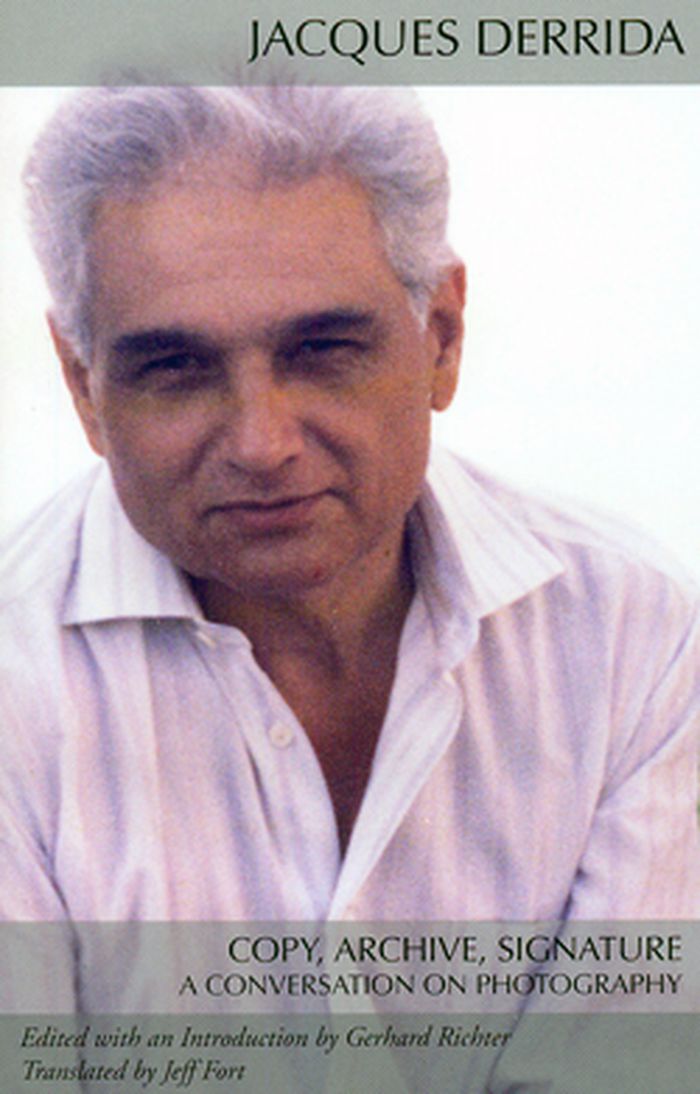
This book makes available for the first time in English an important interview on the topic of photography that Jacques Derrida granted in 1992 to the German theorist of photography Hubertus von Amelunxen and the German literary and media theorist Michael Wetzel. Their conversation addresses questions of presence and its manufacture, the technicity of presentation, the volatility of the authorial subject, and the concept of memory. Derrida offers a penetrating intervention with regard to the distinctive nature of photography vis-à-vis related technologies such as cinema, television, and video. Questioning the divides between so-called old and new media, original and reproduction, analog and digital modes of recording and presenting, he provides stimulating insights into the ways in which we think and speak about the photographic image today.
Copy, archive, signature: A conversation on photography
Actions:
Prix:
$23.95
(disponible sur commande)
Résumé:
This book makes available for the first time in English an important interview on the topic of photography that Jacques Derrida granted in 1992 to the German theorist of photography Hubertus von Amelunxen and the German literary and media theorist Michael Wetzel. Their conversation addresses questions of presence and its manufacture, the technicity of presentation, the volatility of the authorial subject, and the concept of memory. Derrida offers a penetrating intervention with regard to the distinctive nature of photography vis-à-vis related technologies such as cinema, television, and video. Questioning the divides between so-called old and new media, original and reproduction, analog and digital modes of recording and presenting, he provides stimulating insights into the ways in which we think and speak about the photographic image today.
Classification:
livres
livres
Publication:
août 2010
août 2010
Classification:
livres
livres

Prix:
$49.95
(disponible en magasin)
Résumé:
This collection of essays places travel at the center of Sebald's poetics and shows how his appropriation of travel in its myriad historical and cultural forms -- tourism, the pilgrimage, the walking vacation, travel as escape -- works to craft intertextual narratives in which the pursuit of individual life stories is mapped onto a wider European cultural history of loss(...)
$49.95
(disponible en magasin)
Résumé:
This collection of essays places travel at the center of Sebald's poetics and shows how his appropriation of travel in its myriad historical and cultural forms -- tourism, the pilgrimage, the walking vacation, travel as escape -- works to craft intertextual narratives in which the pursuit of individual life stories is mapped onto a wider European cultural history of loss(...)
Titre:
The undiscover'd country: W.G. Sebald and the poetics of travel
Actions:
Prix:
$49.95
(disponible en magasin)
Résumé:
This collection of essays places travel at the center of Sebald's poetics and shows how his appropriation of travel in its myriad historical and cultural forms -- tourism, the pilgrimage, the walking vacation, travel as escape -- works to craft intertextual narratives in which the pursuit of individual life stories is mapped onto a wider European cultural history of loss and destruction. Following these cues, the contributors wander the various modalities of travel in Sebald's writing in order to discover how walking, flying, sojourning, and other kinds of peregrination inform the relationship between writing, reading, memory, and place in Sebald's work. At the same time, the essays uncover in innovative ways the affinities between Sebald and literary travelers like Bruce Chatwin, Franz Kafka, Adalbert Stifter, Christoph Ransmayr, and Joseph Conrad.
The undiscover'd country: W.G. Sebald and the poetics of travel
Actions:
Prix:
$49.95
(disponible en magasin)
Résumé:
This collection of essays places travel at the center of Sebald's poetics and shows how his appropriation of travel in its myriad historical and cultural forms -- tourism, the pilgrimage, the walking vacation, travel as escape -- works to craft intertextual narratives in which the pursuit of individual life stories is mapped onto a wider European cultural history of loss and destruction. Following these cues, the contributors wander the various modalities of travel in Sebald's writing in order to discover how walking, flying, sojourning, and other kinds of peregrination inform the relationship between writing, reading, memory, and place in Sebald's work. At the same time, the essays uncover in innovative ways the affinities between Sebald and literary travelers like Bruce Chatwin, Franz Kafka, Adalbert Stifter, Christoph Ransmayr, and Joseph Conrad.
Classification:
livres
livres
Publication:
mai 2013
mai 2013
Sujet:
Théorie de la photographie
Théorie de la photographie
Classification:
livres
livres
Actions:
Prix:
$46.95
(disponible sur commande)
Résumé:
At its root, modernism is that fundamental. It is a question of having something to represent that is of the moment. In the most radical interpretation, modernism always comes too late. The modern is that which is always new, which is to say, always changing and already old by the time it has appeared. Modernism is always a retrospective act, one of documenting or trying(...)
$46.95
(disponible sur commande)
Résumé:
At its root, modernism is that fundamental. It is a question of having something to represent that is of the moment. In the most radical interpretation, modernism always comes too late. The modern is that which is always new, which is to say, always changing and already old by the time it has appeared. Modernism is always a retrospective act, one of documenting or trying(...)
Titre:
Making it modern: the history of modernism in architecture and design
Actions:
Prix:
$46.95
(disponible sur commande)
Résumé:
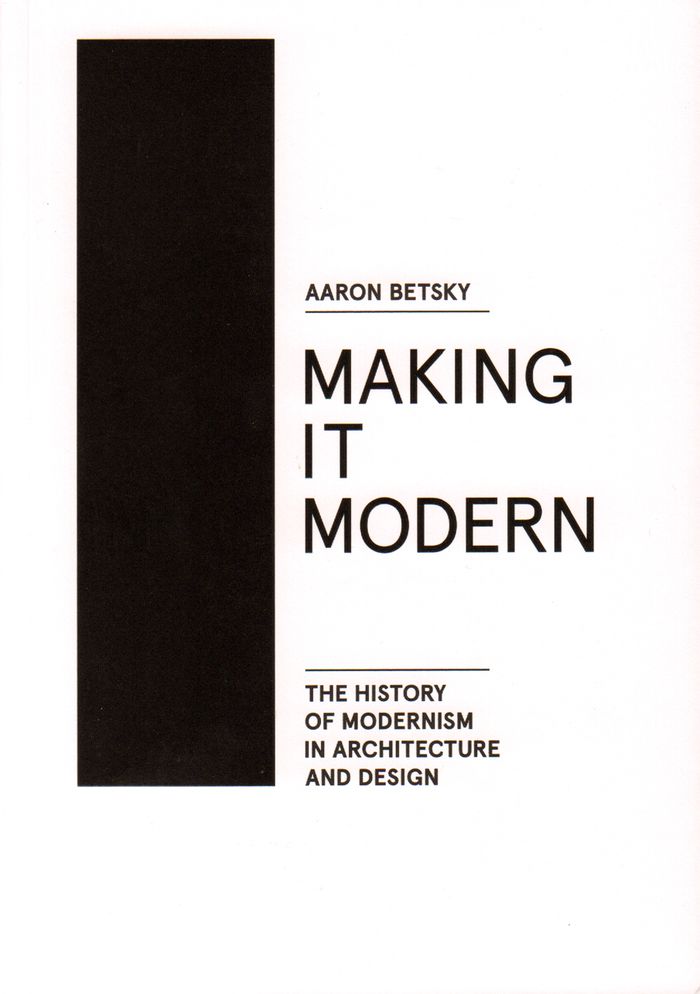
At its root, modernism is that fundamental. It is a question of having something to represent that is of the moment. In the most radical interpretation, modernism always comes too late. The modern is that which is always new, which is to say, always changing and already old by the time it has appeared. Modernism is always a retrospective act, one of documenting or trying to catch what has already appeared - an attempt to fix life as it is being lived. Modernity is just the very fact that we as human beings are continually remaking the world around us through our actions, and are doing so consciously. Modernism is a monument to or memory of that act, which in its own making tries to remake the world it is pretending to represent.
Making it modern: the history of modernism in architecture and design
Actions:
Prix:
$46.95
(disponible sur commande)
Résumé:
At its root, modernism is that fundamental. It is a question of having something to represent that is of the moment. In the most radical interpretation, modernism always comes too late. The modern is that which is always new, which is to say, always changing and already old by the time it has appeared. Modernism is always a retrospective act, one of documenting or trying to catch what has already appeared - an attempt to fix life as it is being lived. Modernity is just the very fact that we as human beings are continually remaking the world around us through our actions, and are doing so consciously. Modernism is a monument to or memory of that act, which in its own making tries to remake the world it is pretending to represent.
Classification:
livres
livres
Publication:
septembre 2016
septembre 2016
Sujet:
Modernisme
Modernisme
Classification:
livres
livres
Actions:
Prix:
$70.00
(disponible sur commande)
Résumé:
The catastrophic events of March 11, 2011—the earthquake, tsunami and ensuing nuclear meltdown of the Fukushima Daiichi Nuclear Power Plant—have been called "the triple disaster" in Japan. Among the first artists to respond to these experiences were photographers. Some attempted to document the devastation, while others ruminated on the meaning and use of photography in(...)
$70.00
(disponible sur commande)
Résumé:
The catastrophic events of March 11, 2011—the earthquake, tsunami and ensuing nuclear meltdown of the Fukushima Daiichi Nuclear Power Plant—have been called "the triple disaster" in Japan. Among the first artists to respond to these experiences were photographers. Some attempted to document the devastation, while others ruminated on the meaning and use of photography in(...)
Publication:
février 2015
février 2015
Titre:
In the wake: japanese photographers respond to 3/11
Actions:
Prix:
$70.00
(disponible sur commande)
Résumé:
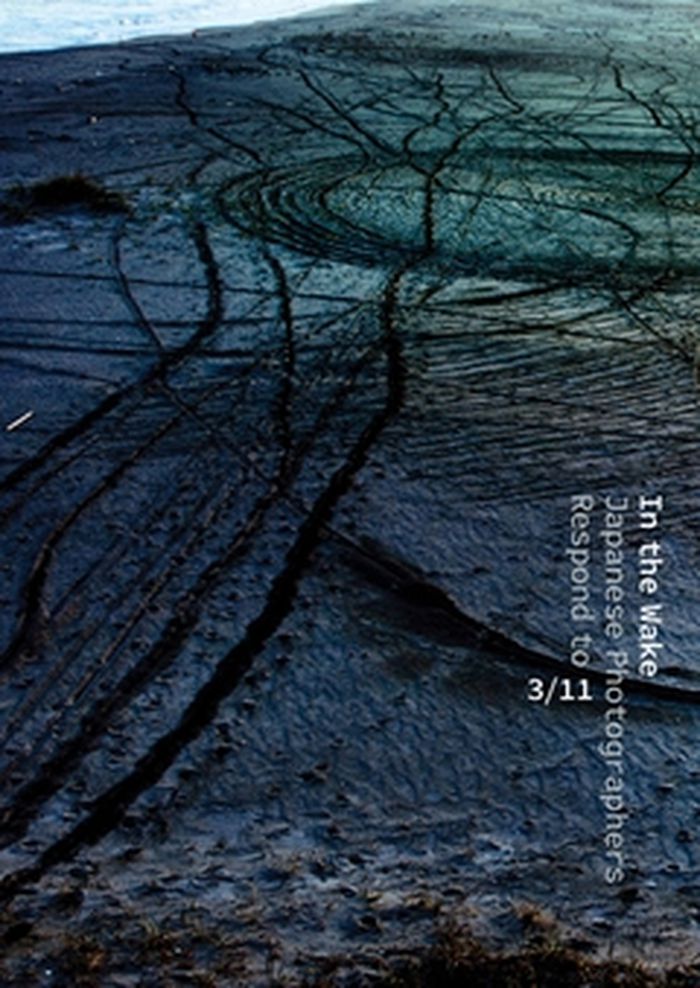
The catastrophic events of March 11, 2011—the earthquake, tsunami and ensuing nuclear meltdown of the Fukushima Daiichi Nuclear Power Plant—have been called "the triple disaster" in Japan. Among the first artists to respond to these experiences were photographers. Some attempted to document the devastation, while others ruminated on the meaning and use of photography in the wake of tragedy. As the immediate effects of the earthquake and tsunami gave way to nuclear disaster, artists began to respond to the challenges of depicting an invisible threat that calls up the collective memory of Hiroshima and Nagasaki. Artists include Takashi Arai, Nobuyoshi Araki, Ishu Han, Naoya Hatakeyama, Takashi Homma, Kikuji Kawada, Rinko Kawauchi, Keizo Kitajima, Kozo Miyoshi, Masato Seto, Lieko Shiga, Shimpei Takada, Masaru Tatsuki, Daisuke Yokota and Tomoko Yoneda.
In the wake: japanese photographers respond to 3/11
Actions:
Prix:
$70.00
(disponible sur commande)
Résumé:
The catastrophic events of March 11, 2011—the earthquake, tsunami and ensuing nuclear meltdown of the Fukushima Daiichi Nuclear Power Plant—have been called "the triple disaster" in Japan. Among the first artists to respond to these experiences were photographers. Some attempted to document the devastation, while others ruminated on the meaning and use of photography in the wake of tragedy. As the immediate effects of the earthquake and tsunami gave way to nuclear disaster, artists began to respond to the challenges of depicting an invisible threat that calls up the collective memory of Hiroshima and Nagasaki. Artists include Takashi Arai, Nobuyoshi Araki, Ishu Han, Naoya Hatakeyama, Takashi Homma, Kikuji Kawada, Rinko Kawauchi, Keizo Kitajima, Kozo Miyoshi, Masato Seto, Lieko Shiga, Shimpei Takada, Masaru Tatsuki, Daisuke Yokota and Tomoko Yoneda.
Classification:
livres
livres
Publication:
février 2015
février 2015
Classification:
livres
livres
Titre:
Sundogz
Sundogz
Actions:
Prix:
$24.95
(disponible sur commande)
Résumé:
Beginning with Venusia (2005) and continuing with Mercury Station (2009), Mark von Schlegell's System Series has moved backward in time, investigating the contours of time, memory, perception, and control in the inter-planetary system that emerge off-world in the twenty-second and twenty-third centuries during Earth's full collapse. In the latest installment, Sundogz,(...)
$24.95
(disponible sur commande)
Résumé:
Beginning with Venusia (2005) and continuing with Mercury Station (2009), Mark von Schlegell's System Series has moved backward in time, investigating the contours of time, memory, perception, and control in the inter-planetary system that emerge off-world in the twenty-second and twenty-third centuries during Earth's full collapse. In the latest installment, Sundogz,(...)
Titre:
Sundogz
Actions:
Prix:
$24.95
(disponible sur commande)
Résumé:
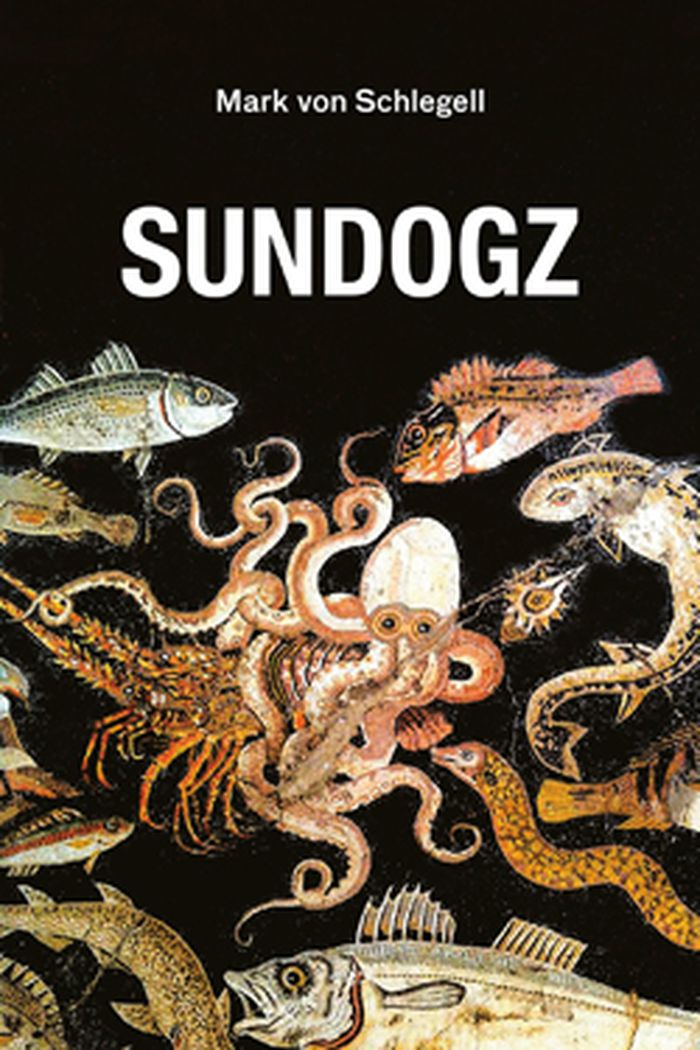
Beginning with Venusia (2005) and continuing with Mercury Station (2009), Mark von Schlegell's System Series has moved backward in time, investigating the contours of time, memory, perception, and control in the inter-planetary system that emerge off-world in the twenty-second and twenty-third centuries during Earth's full collapse. In the latest installment, Sundogz, set among the water-rich moons of planet Uranus, extremist astro-marine "spacers" have constructed an aquatic world of extraordinary scope and ambition, entirely invisible to the System at large. The Good Fortune, a spaceship en route to Moon Miranda, the most beautiful and troublesome of Uranus's satellites, sends out a party to explore rumors of a secret fish farm in the ring. Now the "Oan Bubble" must attempt to survive its discovery.
Sundogz
Actions:
Prix:
$24.95
(disponible sur commande)
Résumé:
Beginning with Venusia (2005) and continuing with Mercury Station (2009), Mark von Schlegell's System Series has moved backward in time, investigating the contours of time, memory, perception, and control in the inter-planetary system that emerge off-world in the twenty-second and twenty-third centuries during Earth's full collapse. In the latest installment, Sundogz, set among the water-rich moons of planet Uranus, extremist astro-marine "spacers" have constructed an aquatic world of extraordinary scope and ambition, entirely invisible to the System at large. The Good Fortune, a spaceship en route to Moon Miranda, the most beautiful and troublesome of Uranus's satellites, sends out a party to explore rumors of a secret fish farm in the ring. Now the "Oan Bubble" must attempt to survive its discovery.
Classification:
livres
livres
Publication:
avril 2015
avril 2015
Sujet:
Architecture et l'imaginaire
Architecture et l'imaginaire
Classification:
vidéo
vidéo
Description:
1 online resource (1 video file (29 minutes)) : sound, color
Auteur:
Sujet:
Publication:
London, England : Pidgeon Digital, 1984.
London, England : Pidgeon Digital, 1984.
Titre:
A sensorial technology / [presented by] Ettore Sottsass.
Actions:
Description:
1 online resource (1 video file (29 minutes)) : sound, color
A sensorial technology / [presented by] Ettore Sottsass.
Actions:
Description:
1 online resource (1 video file (29 minutes)) : sound, color
Classification:
vidéo
vidéo
Publication:
London, England : Pidgeon Digital, 1984.
London, England : Pidgeon Digital, 1984.
Auteur:
Sujet:
Classification:
livres
livres
Actions:
Exemplaires:
Description:
59 pages : illustrations ; 31 cm.
Description:
59 pages : illustrations ; 31 cm.
Auteur:
Sujet:
Publication:
Stuttgart : Axel Menges, ©2004.
Stuttgart : Axel Menges, ©2004.
Titre:
Egon Eiermann : German embassy, Washington / Text, Immo Boyken ; Photographien, J. Alexander, Jerry Hecht.
Actions:
Exemplaires:
Description:
59 pages : illustrations ; 31 cm.
Egon Eiermann : German embassy, Washington / Text, Immo Boyken ; Photographien, J. Alexander, Jerry Hecht.
Actions:
Exemplaires:
Description:
59 pages : illustrations ; 31 cm.
Classification:
livres
livres
Publication:
Stuttgart : Axel Menges, ©2004.
Stuttgart : Axel Menges, ©2004.
Auteur:
Sujet:
Classification:
livres
livres
Actions:
Exemplaires:
Description:
224 pages : illustrations ; 26 cm
Description:
224 pages : illustrations ; 26 cm
Auteur:
Sujet:
Publication:
New York : Princeton Architectural Press, ©2006.
New York : Princeton Architectural Press, ©2006.
Titre:
Ghostly ruins : America's forgotten architecture / Harry Skrdla.
Actions:
Exemplaires:
Description:
224 pages : illustrations ; 26 cm
Ghostly ruins : America's forgotten architecture / Harry Skrdla.
Actions:
Exemplaires:
Description:
224 pages : illustrations ; 26 cm
Classification:
livres
livres
Publication:
New York : Princeton Architectural Press, ©2006.
New York : Princeton Architectural Press, ©2006.
Auteur:
Sujet:
Classification:
livres
livres
Actions:
Prix:
$45.00
(disponible en magasin)
Résumé:
Modern architecture is inseparably linked with the Industrial Revolution. Industrially manufactured materials such as iron, steel, reinforced concrete, glass, asbestos, and later also plastics, have helped to make architecture modern. The Industrial Revolution also set planetary warming in motion. Thus, it is not far-fetched to claim that there are also correlations(...)
$45.00
(disponible en magasin)
Résumé:
Modern architecture is inseparably linked with the Industrial Revolution. Industrially manufactured materials such as iron, steel, reinforced concrete, glass, asbestos, and later also plastics, have helped to make architecture modern. The Industrial Revolution also set planetary warming in motion. Thus, it is not far-fetched to claim that there are also correlations(...)
Titre:
Modern architecture: A planetary warming history
Actions:
Prix:
$45.00
(disponible en magasin)
Résumé:
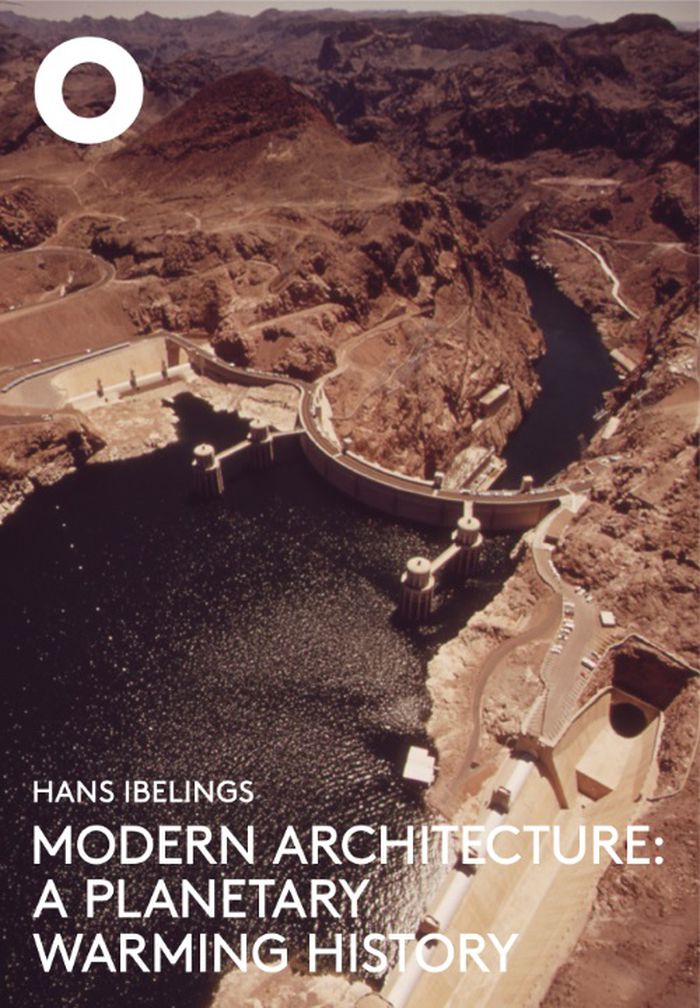
Modern architecture is inseparably linked with the Industrial Revolution. Industrially manufactured materials such as iron, steel, reinforced concrete, glass, asbestos, and later also plastics, have helped to make architecture modern. The Industrial Revolution also set planetary warming in motion. Thus, it is not far-fetched to claim that there are also correlations between modern architecture and planetary warming. This book is a rough sketch of a proposed history of modern architecture since the beginning of the Industrial Revolution. It aims to break away from the established neural networks of the profession’s collective memory of how modern architecture’s history has unfolded, and offers the beginning of a rewiring: by introducing new actors, and highlighting ideas and projects that deal with climate and environment, while relegating some of the usual stars of modernism and postmodernism to the background.
Modern architecture: A planetary warming history
Actions:
Prix:
$45.00
(disponible en magasin)
Résumé:
Modern architecture is inseparably linked with the Industrial Revolution. Industrially manufactured materials such as iron, steel, reinforced concrete, glass, asbestos, and later also plastics, have helped to make architecture modern. The Industrial Revolution also set planetary warming in motion. Thus, it is not far-fetched to claim that there are also correlations between modern architecture and planetary warming. This book is a rough sketch of a proposed history of modern architecture since the beginning of the Industrial Revolution. It aims to break away from the established neural networks of the profession’s collective memory of how modern architecture’s history has unfolded, and offers the beginning of a rewiring: by introducing new actors, and highlighting ideas and projects that deal with climate and environment, while relegating some of the usual stars of modernism and postmodernism to the background.
Classification:
livres
livres
Publication:
mars 2023
mars 2023
Sujet:
Modernisme
Modernisme
Classification:
livres
livres
Actions:
Prix:
$62.00
(disponible sur commande)
Résumé:
Carol Mavor’s first "happy accident" occurred in 1980 when visiting New York’s Serendipity 3, a dessert café favored by Andy Warhol. Mavor’s memory of eating a frozen hot chocolate became food for thought, nurturing accidental discoveries about art and literature. This book’s happy, yet dark, accidents include Anne Frank’s journal, discovered in the Secret Annex after the(...)
$62.00
(disponible sur commande)
Résumé:
Carol Mavor’s first "happy accident" occurred in 1980 when visiting New York’s Serendipity 3, a dessert café favored by Andy Warhol. Mavor’s memory of eating a frozen hot chocolate became food for thought, nurturing accidental discoveries about art and literature. This book’s happy, yet dark, accidents include Anne Frank’s journal, discovered in the Secret Annex after the(...)
Titre:
Serendipity: The afterlife of the object
Actions:
Prix:
$62.00
(disponible sur commande)
Résumé:
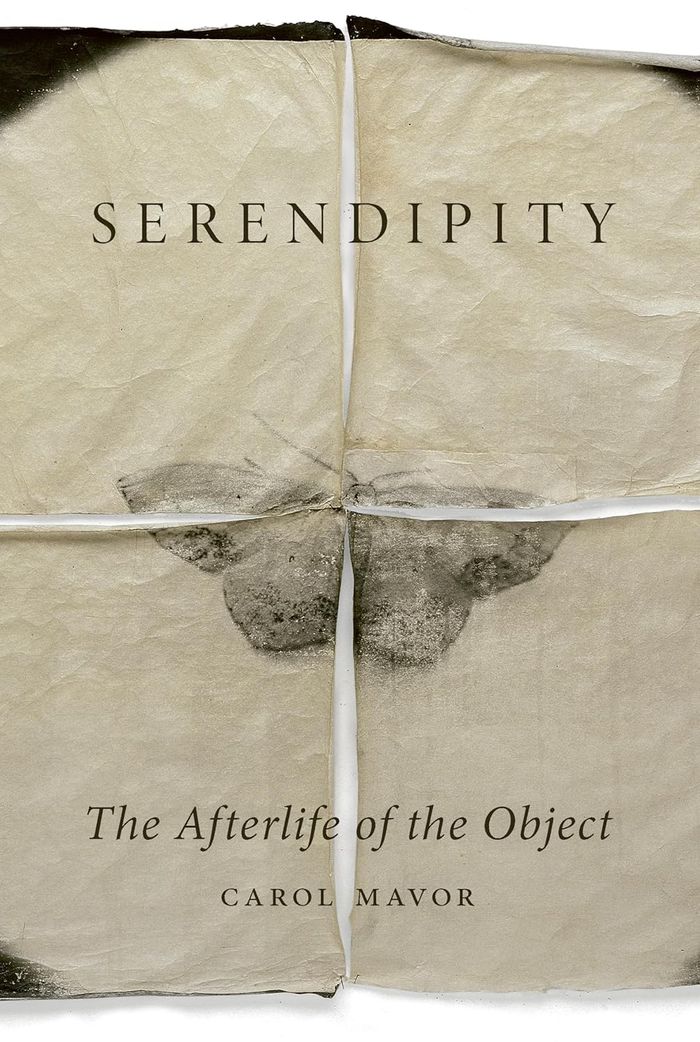
Carol Mavor’s first "happy accident" occurred in 1980 when visiting New York’s Serendipity 3, a dessert café favored by Andy Warhol. Mavor’s memory of eating a frozen hot chocolate became food for thought, nurturing accidental discoveries about art and literature. This book’s happy, yet dark, accidents include Anne Frank’s journal, discovered in the Secret Annex after the Second World War; Emily Dickinson’s poems, scribbled on salvaged envelopes, hidden in a drawer; and "Lolita", rescued from incineration by Nabokov’s wife Véra. Mavor’s writing is dependent on serendipity’s layers of happenstance, rousing feelings of something that she did not exactly know she was looking for until she found it. All history is about loss, and in the case of this book, much of it is tragic—but "Serendipity" also offers the happiness that can be found in unexpected discoveries.
Serendipity: The afterlife of the object
Actions:
Prix:
$62.00
(disponible sur commande)
Résumé:
Carol Mavor’s first "happy accident" occurred in 1980 when visiting New York’s Serendipity 3, a dessert café favored by Andy Warhol. Mavor’s memory of eating a frozen hot chocolate became food for thought, nurturing accidental discoveries about art and literature. This book’s happy, yet dark, accidents include Anne Frank’s journal, discovered in the Secret Annex after the Second World War; Emily Dickinson’s poems, scribbled on salvaged envelopes, hidden in a drawer; and "Lolita", rescued from incineration by Nabokov’s wife Véra. Mavor’s writing is dependent on serendipity’s layers of happenstance, rousing feelings of something that she did not exactly know she was looking for until she found it. All history is about loss, and in the case of this book, much of it is tragic—but "Serendipity" also offers the happiness that can be found in unexpected discoveries.
Classification:
livres
livres
Publication:
janvier 2025
janvier 2025
Sujet:
Théorie de l’art
Théorie de l’art


