


6925 Résultats
Classification:
événements
événements

Titre:
L'enseignement de… São Paulo
L'enseignement de… São Paulo
Actions:
Description:
Angelo Bucci, architecte et professeur à l’Université de São Paulo au Brésil, aborde les questions de la violence et de l’environnement en évolution à São Paulo, en quête de nouvelles formes urbaines. À São Paulo, la violence peut être vue comme gâchant l’expérience de la ville et, par conséquent, sapant la raison d’être du travail de l’architecte. La conférence porte sur(...)
Angelo Bucci, architecte et professeur à l’Université de São Paulo au Brésil, aborde les questions de la violence et de l’environnement en évolution à São Paulo, en quête de nouvelles formes urbaines. À São Paulo, la violence peut être vue comme gâchant l’expérience de la ville et, par conséquent, sapant la raison d’être du travail de l’architecte. La conférence porte sur(...)
Date:
22 avril 2010
22 avril 2010
Titre:
L'enseignement de… São Paulo
Actions:
Description:
Angelo Bucci, architecte et professeur à l’Université de São Paulo au Brésil, aborde les questions de la violence et de l’environnement en évolution à São Paulo, en quête de nouvelles formes urbaines. À São Paulo, la violence peut être vue comme gâchant l’expérience de la ville et, par conséquent, sapant la raison d’être du travail de l’architecte. La conférence porte sur(...)
L'enseignement de… São Paulo
Actions:
Description:
Angelo Bucci, architecte et professeur à l’Université de São Paulo au Brésil, aborde les questions de la violence et de l’environnement en évolution à São Paulo, en quête de nouvelles formes urbaines. À São Paulo, la violence peut être vue comme gâchant l’expérience de la ville et, par conséquent, sapant la raison d’être du travail de l’architecte. La conférence porte sur(...)
Classification:
événements
événements
Date:
22 avril 2010
22 avril 2010
Classification:
articles
articles
Titre:
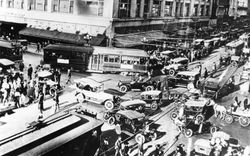
Escalade d’engagement
Escalade d’engagement
Actions:
Shane Reiner-Roth retrace le développement de l'infrastructure autoroutière de Los Angeles
Dossier:
Pour votre sécurité
Pour votre sécurité
Publié:
25 mars 2024
25 mars 2024
Titre:
Escalade d’engagement
Shane Reiner-Roth retrace le développement de l'infrastructure autoroutière de Los Angeles
Actions:
Escalade d’engagement
Shane Reiner-Roth retrace le développement de l'infrastructure autoroutière de Los Angeles
Actions:
Dossier:
Pour votre sécurité
Pour votre sécurité
Classification:
archives
Niveau de description archivistique:
Collection
archives
Niveau de description archivistique:
Collection
Numéro de référence:
CD033
Résumé:
The Aldo Cibic Microrealities project collection primarily consists of presentation materials, publications and born digital materials, like videos and photographs, by Aldo Cibic produced between 2003 and 2008 for the project “Microrealities”.
CD033
Résumé:
The Aldo Cibic Microrealities project collection primarily consists of presentation materials, publications and born digital materials, like videos and photographs, by Aldo Cibic produced between 2003 and 2008 for the project “Microrealities”.
Personnes et institutions:
Date:
2003-2008
2003-2008
Titre:
Collection d’Aldo Cibic pour le projet Microrealities
Actions:
CD033
Résumé:
The Aldo Cibic Microrealities project collection primarily consists of presentation materials, publications and born digital materials, like videos and photographs, by Aldo Cibic produced between 2003 and 2008 for the project “Microrealities”.
Collection d’Aldo Cibic pour le projet Microrealities
Actions:
CD033
Résumé:
The Aldo Cibic Microrealities project collection primarily consists of presentation materials, publications and born digital materials, like videos and photographs, by Aldo Cibic produced between 2003 and 2008 for the project “Microrealities”.
Classification:
archives
Niveau de description archivistique:
collection
archives
Niveau de description archivistique:
collection
Date:
2003-2008
2003-2008
Personnes et institutions:
Niveau de description archivistique:
Série(s)
Série(s)
Numéro de référence:
AP181.S1
Description:
Series 1, BMW Welt development and construction records, 1994-2015, documents the design development and construction phases of COOP HIMMELB(L)AU BMW Welt building, located nearby the BMW headquarters in Munich. This series also contains some materials from the competition phase, corresponding to less than 2000 digital files, and models from the third phase of the competition. More than half of the records were created from 2003 to 2006. Records show how COOP HIMMELB(L)AU, and the numerous consultants on the project, materialized the original concept, from Wolf Prix sketch, of this cloud-like roof emerging from a double cone suggesting an hurricane eye. To achieve this, extensive digital structural testing was done with engineers Bollinger + Grohmann. Consultants list also include: - Hans Lechner ZT GmbH for in-house project management; - Schmitt, Stumpf, Frühauf + Partner for construction documents of concrete works, interior fittings, tender and construction administration; - Emmer Pfenninger + Partner AG for the facade; - Transsolar, Klima Engineering for the photovoltaic plant on the roof; - PRO, Elektroplan for electrical systems and lifts; - AG-Licht for lighting; - Büro Dr. Pfeiler for structural physics or building physics; - Theater Projekte Daberto+Kollegen for the stage and auditorium; - PBB Planungsbüro Balke for kitchen technology - realgruen Landschaftsarchitekten for lansdcape design; - Kersken & Kirchner for fire protection; - TAW Weisse for height accessibility planning, in consideration for maintenance access; - Lang & Brukhardt for traffic engineering; - Ingenieurbüro Schoenenberg for civil engineering and road construction; - Büro für Gestaltung / Wangler & Abele for signage; - And Zilch, Müller, Henneke as inspection engineers. The approximately 52,400 digital files include raster images, CAD drawings and 3D digital models, plotter files, standard office documents, databases, and scripts. Design files are predominantly in AutoCAD, but the archive also includes over 1,100 Rhinoceros files (primarily in Rhino version 2, with some files in versions 3 and 4) and a smaller number of files in Maya, 3D Studio, Microstation, form*Z, and Revit formats. Because the firm’s computing environment included Macs, the archive also includes a few AppleDouble resource forks. Often, CAD drawings were also saved as PDF files. Photographs and screen captures were most times saved as JPEG files. Finally, design files also include wireframes and renderings. Most often, design files are plans of a designated area, a complete level of the building for example, but they also often show very specific and technical details, such as a few millimetres to be corrected on a panel or a structural element. These types of corrections are frequently shown in PDF files where annotations were either made digitally, or they were handwritten on a printed version which would then be digitized. Design files document all parts of the building including the facade, the roof, the double cone (Doppelkegel), the restaurants, the shops, the exhibition areas, the auditorium, etc. Accompanying textual records are at times quite technical in their content, such as lists of construction elements required in a given room, or analysis reports from consulting engineers. They also take into account the organization and planning of the work, for example including documentation’s exchange or meeting agendas. Finally, they show the design development through presentations, either PDF or Powerpoint files, and through a portfolio of the project and the preparation of the book Dynamic Forces. The archive’s physical component includes 52 physical study models, which were used in combination with digital modeling tools to iteratively refine the building’s design. These are a selection made by the firm of study models from the later stages of the competition and the early stages of the design development. Source: Feireiss, Kristin, editor. “Dynamic Forces, BMW WELT Munich”. Munich: Prestel Verlag, 2007.
AP181.S1
Description:
Series 1, BMW Welt development and construction records, 1994-2015, documents the design development and construction phases of COOP HIMMELB(L)AU BMW Welt building, located nearby the BMW headquarters in Munich. This series also contains some materials from the competition phase, corresponding to less than 2000 digital files, and models from the third phase of the competition. More than half of the records were created from 2003 to 2006. Records show how COOP HIMMELB(L)AU, and the numerous consultants on the project, materialized the original concept, from Wolf Prix sketch, of this cloud-like roof emerging from a double cone suggesting an hurricane eye. To achieve this, extensive digital structural testing was done with engineers Bollinger + Grohmann. Consultants list also include: - Hans Lechner ZT GmbH for in-house project management; - Schmitt, Stumpf, Frühauf + Partner for construction documents of concrete works, interior fittings, tender and construction administration; - Emmer Pfenninger + Partner AG for the facade; - Transsolar, Klima Engineering for the photovoltaic plant on the roof; - PRO, Elektroplan for electrical systems and lifts; - AG-Licht for lighting; - Büro Dr. Pfeiler for structural physics or building physics; - Theater Projekte Daberto+Kollegen for the stage and auditorium; - PBB Planungsbüro Balke for kitchen technology - realgruen Landschaftsarchitekten for lansdcape design; - Kersken & Kirchner for fire protection; - TAW Weisse for height accessibility planning, in consideration for maintenance access; - Lang & Brukhardt for traffic engineering; - Ingenieurbüro Schoenenberg for civil engineering and road construction; - Büro für Gestaltung / Wangler & Abele for signage; - And Zilch, Müller, Henneke as inspection engineers. The approximately 52,400 digital files include raster images, CAD drawings and 3D digital models, plotter files, standard office documents, databases, and scripts. Design files are predominantly in AutoCAD, but the archive also includes over 1,100 Rhinoceros files (primarily in Rhino version 2, with some files in versions 3 and 4) and a smaller number of files in Maya, 3D Studio, Microstation, form*Z, and Revit formats. Because the firm’s computing environment included Macs, the archive also includes a few AppleDouble resource forks. Often, CAD drawings were also saved as PDF files. Photographs and screen captures were most times saved as JPEG files. Finally, design files also include wireframes and renderings. Most often, design files are plans of a designated area, a complete level of the building for example, but they also often show very specific and technical details, such as a few millimetres to be corrected on a panel or a structural element. These types of corrections are frequently shown in PDF files where annotations were either made digitally, or they were handwritten on a printed version which would then be digitized. Design files document all parts of the building including the facade, the roof, the double cone (Doppelkegel), the restaurants, the shops, the exhibition areas, the auditorium, etc. Accompanying textual records are at times quite technical in their content, such as lists of construction elements required in a given room, or analysis reports from consulting engineers. They also take into account the organization and planning of the work, for example including documentation’s exchange or meeting agendas. Finally, they show the design development through presentations, either PDF or Powerpoint files, and through a portfolio of the project and the preparation of the book Dynamic Forces. The archive’s physical component includes 52 physical study models, which were used in combination with digital modeling tools to iteratively refine the building’s design. These are a selection made by the firm of study models from the later stages of the competition and the early stages of the design development. Source: Feireiss, Kristin, editor. “Dynamic Forces, BMW WELT Munich”. Munich: Prestel Verlag, 2007.
Personnes et institutions:
Date:
1994-2015
1994-2015
Titre:
BMW Welt development and construction records
Actions:
AP181.S1
Description:
Series 1, BMW Welt development and construction records, 1994-2015, documents the design development and construction phases of COOP HIMMELB(L)AU BMW Welt building, located nearby the BMW headquarters in Munich. This series also contains some materials from the competition phase, corresponding to less than 2000 digital files, and models from the third phase of the competition. More than half of the records were created from 2003 to 2006. Records show how COOP HIMMELB(L)AU, and the numerous consultants on the project, materialized the original concept, from Wolf Prix sketch, of this cloud-like roof emerging from a double cone suggesting an hurricane eye. To achieve this, extensive digital structural testing was done with engineers Bollinger + Grohmann. Consultants list also include: - Hans Lechner ZT GmbH for in-house project management; - Schmitt, Stumpf, Frühauf + Partner for construction documents of concrete works, interior fittings, tender and construction administration; - Emmer Pfenninger + Partner AG for the facade; - Transsolar, Klima Engineering for the photovoltaic plant on the roof; - PRO, Elektroplan for electrical systems and lifts; - AG-Licht for lighting; - Büro Dr. Pfeiler for structural physics or building physics; - Theater Projekte Daberto+Kollegen for the stage and auditorium; - PBB Planungsbüro Balke for kitchen technology - realgruen Landschaftsarchitekten for lansdcape design; - Kersken & Kirchner for fire protection; - TAW Weisse for height accessibility planning, in consideration for maintenance access; - Lang & Brukhardt for traffic engineering; - Ingenieurbüro Schoenenberg for civil engineering and road construction; - Büro für Gestaltung / Wangler & Abele for signage; - And Zilch, Müller, Henneke as inspection engineers. The approximately 52,400 digital files include raster images, CAD drawings and 3D digital models, plotter files, standard office documents, databases, and scripts. Design files are predominantly in AutoCAD, but the archive also includes over 1,100 Rhinoceros files (primarily in Rhino version 2, with some files in versions 3 and 4) and a smaller number of files in Maya, 3D Studio, Microstation, form*Z, and Revit formats. Because the firm’s computing environment included Macs, the archive also includes a few AppleDouble resource forks. Often, CAD drawings were also saved as PDF files. Photographs and screen captures were most times saved as JPEG files. Finally, design files also include wireframes and renderings. Most often, design files are plans of a designated area, a complete level of the building for example, but they also often show very specific and technical details, such as a few millimetres to be corrected on a panel or a structural element. These types of corrections are frequently shown in PDF files where annotations were either made digitally, or they were handwritten on a printed version which would then be digitized. Design files document all parts of the building including the facade, the roof, the double cone (Doppelkegel), the restaurants, the shops, the exhibition areas, the auditorium, etc. Accompanying textual records are at times quite technical in their content, such as lists of construction elements required in a given room, or analysis reports from consulting engineers. They also take into account the organization and planning of the work, for example including documentation’s exchange or meeting agendas. Finally, they show the design development through presentations, either PDF or Powerpoint files, and through a portfolio of the project and the preparation of the book Dynamic Forces. The archive’s physical component includes 52 physical study models, which were used in combination with digital modeling tools to iteratively refine the building’s design. These are a selection made by the firm of study models from the later stages of the competition and the early stages of the design development. Source: Feireiss, Kristin, editor. “Dynamic Forces, BMW WELT Munich”. Munich: Prestel Verlag, 2007.
BMW Welt development and construction records
Actions:
AP181.S1
Description:
Series 1, BMW Welt development and construction records, 1994-2015, documents the design development and construction phases of COOP HIMMELB(L)AU BMW Welt building, located nearby the BMW headquarters in Munich. This series also contains some materials from the competition phase, corresponding to less than 2000 digital files, and models from the third phase of the competition. More than half of the records were created from 2003 to 2006. Records show how COOP HIMMELB(L)AU, and the numerous consultants on the project, materialized the original concept, from Wolf Prix sketch, of this cloud-like roof emerging from a double cone suggesting an hurricane eye. To achieve this, extensive digital structural testing was done with engineers Bollinger + Grohmann. Consultants list also include: - Hans Lechner ZT GmbH for in-house project management; - Schmitt, Stumpf, Frühauf + Partner for construction documents of concrete works, interior fittings, tender and construction administration; - Emmer Pfenninger + Partner AG for the facade; - Transsolar, Klima Engineering for the photovoltaic plant on the roof; - PRO, Elektroplan for electrical systems and lifts; - AG-Licht for lighting; - Büro Dr. Pfeiler for structural physics or building physics; - Theater Projekte Daberto+Kollegen for the stage and auditorium; - PBB Planungsbüro Balke for kitchen technology - realgruen Landschaftsarchitekten for lansdcape design; - Kersken & Kirchner for fire protection; - TAW Weisse for height accessibility planning, in consideration for maintenance access; - Lang & Brukhardt for traffic engineering; - Ingenieurbüro Schoenenberg for civil engineering and road construction; - Büro für Gestaltung / Wangler & Abele for signage; - And Zilch, Müller, Henneke as inspection engineers. The approximately 52,400 digital files include raster images, CAD drawings and 3D digital models, plotter files, standard office documents, databases, and scripts. Design files are predominantly in AutoCAD, but the archive also includes over 1,100 Rhinoceros files (primarily in Rhino version 2, with some files in versions 3 and 4) and a smaller number of files in Maya, 3D Studio, Microstation, form*Z, and Revit formats. Because the firm’s computing environment included Macs, the archive also includes a few AppleDouble resource forks. Often, CAD drawings were also saved as PDF files. Photographs and screen captures were most times saved as JPEG files. Finally, design files also include wireframes and renderings. Most often, design files are plans of a designated area, a complete level of the building for example, but they also often show very specific and technical details, such as a few millimetres to be corrected on a panel or a structural element. These types of corrections are frequently shown in PDF files where annotations were either made digitally, or they were handwritten on a printed version which would then be digitized. Design files document all parts of the building including the facade, the roof, the double cone (Doppelkegel), the restaurants, the shops, the exhibition areas, the auditorium, etc. Accompanying textual records are at times quite technical in their content, such as lists of construction elements required in a given room, or analysis reports from consulting engineers. They also take into account the organization and planning of the work, for example including documentation’s exchange or meeting agendas. Finally, they show the design development through presentations, either PDF or Powerpoint files, and through a portfolio of the project and the preparation of the book Dynamic Forces. The archive’s physical component includes 52 physical study models, which were used in combination with digital modeling tools to iteratively refine the building’s design. These are a selection made by the firm of study models from the later stages of the competition and the early stages of the design development. Source: Feireiss, Kristin, editor. “Dynamic Forces, BMW WELT Munich”. Munich: Prestel Verlag, 2007.
Niveau de description archivistique:
Series
Series
Date:
1994-2015
1994-2015
Personnes et institutions:
Classification:
événements
événements
Actions:
Description:
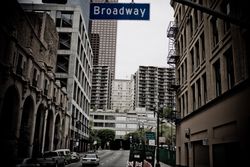
Richard Schave, un historien et guide de Los Angeles, analyse le développement de la ville depuis le tournage du documentaire urbain Reyner Banham Loves Los Angeles (R.-U.,1972), il y a 35 ans. Schave, un ancien étudiant de Banham, présente les recherches de son professeur en confrontant ses propres photographies documentaires à des extraits du film. Il analyse plus(...)
Richard Schave, un historien et guide de Los Angeles, analyse le développement de la ville depuis le tournage du documentaire urbain Reyner Banham Loves Los Angeles (R.-U.,1972), il y a 35 ans. Schave, un ancien étudiant de Banham, présente les recherches de son professeur en confrontant ses propres photographies documentaires à des extraits du film. Il analyse plus(...)
Localisation:
Théâtre Paul-Desmarais
Théâtre Paul-Desmarais
Date:
28 mai 2009
28 mai 2009
Titre:
L'enseignement de... Los Angeles
Actions:
Description:
Richard Schave, un historien et guide de Los Angeles, analyse le développement de la ville depuis le tournage du documentaire urbain Reyner Banham Loves Los Angeles (R.-U.,1972), il y a 35 ans. Schave, un ancien étudiant de Banham, présente les recherches de son professeur en confrontant ses propres photographies documentaires à des extraits du film. Il analyse plus(...)
L'enseignement de... Los Angeles
Actions:
Description:
Richard Schave, un historien et guide de Los Angeles, analyse le développement de la ville depuis le tournage du documentaire urbain Reyner Banham Loves Los Angeles (R.-U.,1972), il y a 35 ans. Schave, un ancien étudiant de Banham, présente les recherches de son professeur en confrontant ses propres photographies documentaires à des extraits du film. Il analyse plus(...)
Classification:
événements
événements
Date:
28 mai 2009
28 mai 2009
Localisation:
Théâtre Paul-Desmarais
Théâtre Paul-Desmarais
Classification:
expositions
expositions
Actions:
Description:
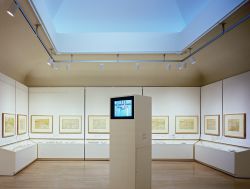
*Montréal, ville fortifiée du XVIIIe siècle* explore l’évolution de la ville au XVIIIe siècle, alors qu’elle était une ville fortifiée. Cet événement offre une occasion unique de se renseigner sur l’essor de la ville commerciale et militaire à l’origine de la métropole actuelle. Couronnant presque quinze années de recherche et la création d’une(...)
*Montréal, ville fortifiée du XVIIIe siècle* explore l’évolution de la ville au XVIIIe siècle, alors qu’elle était une ville fortifiée. Cet événement offre une occasion unique de se renseigner sur l’essor de la ville commerciale et militaire à l’origine de la métropole actuelle. Couronnant presque quinze années de recherche et la création d’une(...)
Localisation:
Salles principales
Salles principales
Date:
8 septembre 1992 au 28 février 1993
8 septembre 1992 au 28 février 1993
Titre:
Montréal, ville fortifiée au XVIIIe siècle
Actions:
Description:
*Montréal, ville fortifiée du XVIIIe siècle* explore l’évolution de la ville au XVIIIe siècle, alors qu’elle était une ville fortifiée. Cet événement offre une occasion unique de se renseigner sur l’essor de la ville commerciale et militaire à l’origine de la métropole actuelle. Couronnant presque quinze années de recherche et la création d’une(...)
Montréal, ville fortifiée au XVIIIe siècle
Actions:
Description:
*Montréal, ville fortifiée du XVIIIe siècle* explore l’évolution de la ville au XVIIIe siècle, alors qu’elle était une ville fortifiée. Cet événement offre une occasion unique de se renseigner sur l’essor de la ville commerciale et militaire à l’origine de la métropole actuelle. Couronnant presque quinze années de recherche et la création d’une(...)
Classification:
expositions
expositions
Date:
8 septembre 1992 au
28 février 1993
8 septembre 1992 au
28 février 1993
Localisation:
Salles principales
Salles principales
Classification:
expositions
expositions
Titre:
Apprendre l'architecture
Apprendre l'architecture
Actions:
Description:
Tandis que l’architecture acquiert une identité moderne en tant qu’art libéral et profession réglementée, et que les théories et les formes architecturales subissent de profondes transformations, la formation des architectes n’est jamais modifiée fondamentalement. Les principales activités des étudiants en architecture demeurent l’étude des textes de référence, des(...)
Tandis que l’architecture acquiert une identité moderne en tant qu’art libéral et profession réglementée, et que les théories et les formes architecturales subissent de profondes transformations, la formation des architectes n’est jamais modifiée fondamentalement. Les principales activités des étudiants en architecture demeurent l’étude des textes de référence, des(...)
Localisation:
Vitrines
Vitrines
Date:
5 juillet 1994 au 2 octobre 1994
5 juillet 1994 au 2 octobre 1994
Titre:
Apprendre l'architecture
Actions:
Description:
Tandis que l’architecture acquiert une identité moderne en tant qu’art libéral et profession réglementée, et que les théories et les formes architecturales subissent de profondes transformations, la formation des architectes n’est jamais modifiée fondamentalement. Les principales activités des étudiants en architecture demeurent l’étude des textes de référence, des(...)
Apprendre l'architecture
Actions:
Description:
Tandis que l’architecture acquiert une identité moderne en tant qu’art libéral et profession réglementée, et que les théories et les formes architecturales subissent de profondes transformations, la formation des architectes n’est jamais modifiée fondamentalement. Les principales activités des étudiants en architecture demeurent l’étude des textes de référence, des(...)
Classification:
expositions
expositions
Date:
5 juillet 1994 au
2 octobre 1994
5 juillet 1994 au
2 octobre 1994
Localisation:
Vitrines
Vitrines
Classification:
événements
événements
Actions:
Description:
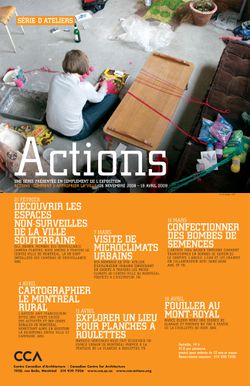
Les membres du collectif montréalais SYN- atelier d’exploration urbaine dirigent cet atelier explorant les microclimats urbains du centre-ville de Montréal. En raison de facteurs propres à la construction urbaine, les microclimats engendrent des variations de température surprenantes – par exemple, la cour d’un bâtiment peut être plus chaude que la rue de plusieurs(...)
Les membres du collectif montréalais SYN- atelier d’exploration urbaine dirigent cet atelier explorant les microclimats urbains du centre-ville de Montréal. En raison de facteurs propres à la construction urbaine, les microclimats engendrent des variations de température surprenantes – par exemple, la cour d’un bâtiment peut être plus chaude que la rue de plusieurs(...)
Date:
7 mars 2009
7 mars 2009
Titre:
Explorer les microclimats urbains
Actions:
Description:
Les membres du collectif montréalais SYN- atelier d’exploration urbaine dirigent cet atelier explorant les microclimats urbains du centre-ville de Montréal. En raison de facteurs propres à la construction urbaine, les microclimats engendrent des variations de température surprenantes – par exemple, la cour d’un bâtiment peut être plus chaude que la rue de plusieurs(...)
Explorer les microclimats urbains
Actions:
Description:
Les membres du collectif montréalais SYN- atelier d’exploration urbaine dirigent cet atelier explorant les microclimats urbains du centre-ville de Montréal. En raison de facteurs propres à la construction urbaine, les microclimats engendrent des variations de température surprenantes – par exemple, la cour d’un bâtiment peut être plus chaude que la rue de plusieurs(...)
Classification:
événements
événements
Date:
7 mars 2009
7 mars 2009
Classification:
événements
événements

Actions:
Description:
Lance Blomgren se sert de son court roman intitulé Walkups – paru en 2009, le récit se passe entièrement à Montréal, dans des habitations en rangée – comme tremplin pour analyser le plan discursif de l’architecture de fiction. Examinant divers travaux dont ceux de John Hejduk, d’Ilya Kabakov et d’Alice Aycock, Blomgren affirme que les modes contemporains d’architecture(...)
Lance Blomgren se sert de son court roman intitulé Walkups – paru en 2009, le récit se passe entièrement à Montréal, dans des habitations en rangée – comme tremplin pour analyser le plan discursif de l’architecture de fiction. Examinant divers travaux dont ceux de John Hejduk, d’Ilya Kabakov et d’Alice Aycock, Blomgren affirme que les modes contemporains d’architecture(...)
Localisation:
Théâtre Paul-Desmarais
Théâtre Paul-Desmarais
Date:
2 mai 2013 , 19h
2 mai 2013 , 19h
Titre:
L'enseignement de... Montréal
Actions:
Description:
Lance Blomgren se sert de son court roman intitulé Walkups – paru en 2009, le récit se passe entièrement à Montréal, dans des habitations en rangée – comme tremplin pour analyser le plan discursif de l’architecture de fiction. Examinant divers travaux dont ceux de John Hejduk, d’Ilya Kabakov et d’Alice Aycock, Blomgren affirme que les modes contemporains d’architecture(...)
L'enseignement de... Montréal
Actions:
Description:
Lance Blomgren se sert de son court roman intitulé Walkups – paru en 2009, le récit se passe entièrement à Montréal, dans des habitations en rangée – comme tremplin pour analyser le plan discursif de l’architecture de fiction. Examinant divers travaux dont ceux de John Hejduk, d’Ilya Kabakov et d’Alice Aycock, Blomgren affirme que les modes contemporains d’architecture(...)
Classification:
événements
événements
Date:
2 mai 2013
19h
2 mai 2013
19h
Localisation:
Théâtre Paul-Desmarais
Théâtre Paul-Desmarais
Classification:
expositions
expositions
Titre:
Seagram Plaza
Seagram Plaza
Actions:
Description:
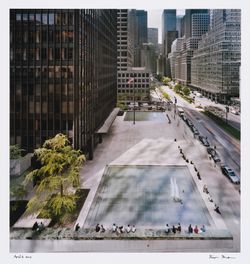
La conception de la place de l’édifice Seagram à New York par Ludwig Mies van der Rohe, terminée en 1958, a amené un questionnement sur ce que pouvait être cet espace ouvert dans la ville. Surélevée de trois marches par rapport au trottoir de Park Avenue, la place représente une oasis de calme, à l’écart du vacarme et de l’agitation de la rue. L’utilisation de la place(...)
La conception de la place de l’édifice Seagram à New York par Ludwig Mies van der Rohe, terminée en 1958, a amené un questionnement sur ce que pouvait être cet espace ouvert dans la ville. Surélevée de trois marches par rapport au trottoir de Park Avenue, la place représente une oasis de calme, à l’écart du vacarme et de l’agitation de la rue. L’utilisation de la place(...)
Localisation:
Vitrines
Vitrines
Date:
1 mai 2013 au 18 août 2013
1 mai 2013 au 18 août 2013
Titre:
Seagram Plaza
Actions:
Description:
La conception de la place de l’édifice Seagram à New York par Ludwig Mies van der Rohe, terminée en 1958, a amené un questionnement sur ce que pouvait être cet espace ouvert dans la ville. Surélevée de trois marches par rapport au trottoir de Park Avenue, la place représente une oasis de calme, à l’écart du vacarme et de l’agitation de la rue. L’utilisation de la place(...)
Seagram Plaza
Actions:
Description:
La conception de la place de l’édifice Seagram à New York par Ludwig Mies van der Rohe, terminée en 1958, a amené un questionnement sur ce que pouvait être cet espace ouvert dans la ville. Surélevée de trois marches par rapport au trottoir de Park Avenue, la place représente une oasis de calme, à l’écart du vacarme et de l’agitation de la rue. L’utilisation de la place(...)
Classification:
expositions
expositions
Date:
1 mai 2013 au
18 août 2013
1 mai 2013 au
18 août 2013
Localisation:
Vitrines
Vitrines


