


364 Résultats
Classification:
livres
livres
Titre:
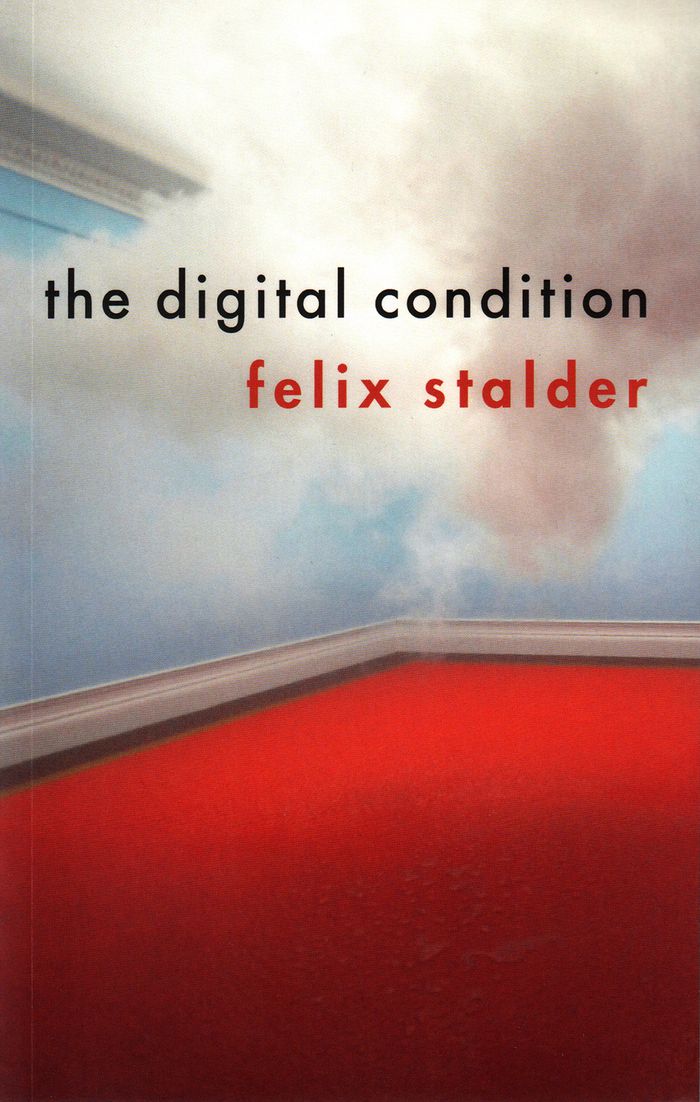
The digital condition
The digital condition
Actions:
Prix:
$27.95
(disponible sur commande)
Résumé:
Our daily lives, our culture, and our politics are now shaped by the digital condition, in which greater numbers of people are engaged in negotiating meaning in ever more dimensions of life, from the trivial to the profound. They are making use of a complex communication infrastructure, currently dominated by social mass media such as Twitter and Facebook, on which they(...)
$27.95
(disponible sur commande)
Résumé:
Our daily lives, our culture, and our politics are now shaped by the digital condition, in which greater numbers of people are engaged in negotiating meaning in ever more dimensions of life, from the trivial to the profound. They are making use of a complex communication infrastructure, currently dominated by social mass media such as Twitter and Facebook, on which they(...)
Titre:
The digital condition
Actions:
Prix:
$27.95
(disponible sur commande)
Résumé:
Our daily lives, our culture, and our politics are now shaped by the digital condition, in which greater numbers of people are engaged in negotiating meaning in ever more dimensions of life, from the trivial to the profound. They are making use of a complex communication infrastructure, currently dominated by social mass media such as Twitter and Facebook, on which they have come to depend.Amidst a confusing plurality, Felix Stalder argues that there are three key constituents of this condition: the use of existing cultural materials for one’s own production, the way in which new meaning is established as a collective endeavor, and the underlying role of algorithms and automated decision-making processes that give shape to massive volumes of data. These three characteristics define what Stalder calls “the digital condition.”
The digital condition
Actions:
Prix:
$27.95
(disponible sur commande)
Résumé:
Our daily lives, our culture, and our politics are now shaped by the digital condition, in which greater numbers of people are engaged in negotiating meaning in ever more dimensions of life, from the trivial to the profound. They are making use of a complex communication infrastructure, currently dominated by social mass media such as Twitter and Facebook, on which they have come to depend.Amidst a confusing plurality, Felix Stalder argues that there are three key constituents of this condition: the use of existing cultural materials for one’s own production, the way in which new meaning is established as a collective endeavor, and the underlying role of algorithms and automated decision-making processes that give shape to massive volumes of data. These three characteristics define what Stalder calls “the digital condition.”
Classification:
livres
livres
Publication:
décembre 2017
décembre 2017
Classification:
vidéo
vidéo
Actions:
Description:
1 online resource (1 video file (28 minutes)) : sound, color
Auteur:
Sujet:
Publication:
London, England : Pidgeon Digital, 1989.
London, England : Pidgeon Digital, 1989.
Titre:
Symbolic Statements / [presented by] Jean Nouvel.
Actions:
Description:
1 online resource (1 video file (28 minutes)) : sound, color
Symbolic Statements / [presented by] Jean Nouvel.
Actions:
Description:
1 online resource (1 video file (28 minutes)) : sound, color
Classification:
vidéo
vidéo
Publication:
London, England : Pidgeon Digital, 1989.
London, England : Pidgeon Digital, 1989.
Auteur:
Sujet:
Classification:
livres
livres

Titre:
The second digital turn
The second digital turn
Actions:
Prix:
$33.95
(disponible sur commande)
Résumé:
Almost a generation ago, the early software for computer aided design and manufacturing (CAD/CAM) spawned a style of smooth and curving lines and surfaces that gave visible form to the first digital age, and left an indelible mark on contemporary architecture. But today's digitally intelligent architecture no longer looks that way. In The Second Digital Turn, Mario Carpo(...)
$33.95
(disponible sur commande)
Résumé:
Almost a generation ago, the early software for computer aided design and manufacturing (CAD/CAM) spawned a style of smooth and curving lines and surfaces that gave visible form to the first digital age, and left an indelible mark on contemporary architecture. But today's digitally intelligent architecture no longer looks that way. In The Second Digital Turn, Mario Carpo(...)
Titre:
The second digital turn
Actions:
Prix:
$33.95
(disponible sur commande)
Résumé:
Almost a generation ago, the early software for computer aided design and manufacturing (CAD/CAM) spawned a style of smooth and curving lines and surfaces that gave visible form to the first digital age, and left an indelible mark on contemporary architecture. But today's digitally intelligent architecture no longer looks that way. In The Second Digital Turn, Mario Carpo explains that this is because the design professions are now coming to terms with a new kind of digital tools they have adopted—no longer tools for making but tools for thinking. In the early 1990s the design professions were the first to intuit and interpret the new technical logic of the digital age: digital mass-customization (the use of digital tools to mass-produce variations at no extra cost) has already changed the way we produce and consume almost everything, and the same technology applied to commerce at large is now heralding a new society without scale—a flat marginal cost society where bigger markets will not make anything cheaper. But today, the unprecedented power of computation also favors a new kind of science where prediction can be based on sheer information retrieval, and form finding by simulation and optimization can replace deduction from mathematical formulas. Designers have been toying with machine thinking and machine learning for some time, and the apparently unfathomable complexity of the physical shapes they are now creating already expresses a new form of artificial intelligence, outside the tradition of modern science and alien to the organic logic of our mind.
The second digital turn
Actions:
Prix:
$33.95
(disponible sur commande)
Résumé:
Almost a generation ago, the early software for computer aided design and manufacturing (CAD/CAM) spawned a style of smooth and curving lines and surfaces that gave visible form to the first digital age, and left an indelible mark on contemporary architecture. But today's digitally intelligent architecture no longer looks that way. In The Second Digital Turn, Mario Carpo explains that this is because the design professions are now coming to terms with a new kind of digital tools they have adopted—no longer tools for making but tools for thinking. In the early 1990s the design professions were the first to intuit and interpret the new technical logic of the digital age: digital mass-customization (the use of digital tools to mass-produce variations at no extra cost) has already changed the way we produce and consume almost everything, and the same technology applied to commerce at large is now heralding a new society without scale—a flat marginal cost society where bigger markets will not make anything cheaper. But today, the unprecedented power of computation also favors a new kind of science where prediction can be based on sheer information retrieval, and form finding by simulation and optimization can replace deduction from mathematical formulas. Designers have been toying with machine thinking and machine learning for some time, and the apparently unfathomable complexity of the physical shapes they are now creating already expresses a new form of artificial intelligence, outside the tradition of modern science and alien to the organic logic of our mind.
Classification:
livres
livres
Publication:
octobre 2017
octobre 2017
Sujet:
Architecture numérique
Architecture numérique
Classification:
livres
livres
Titre:
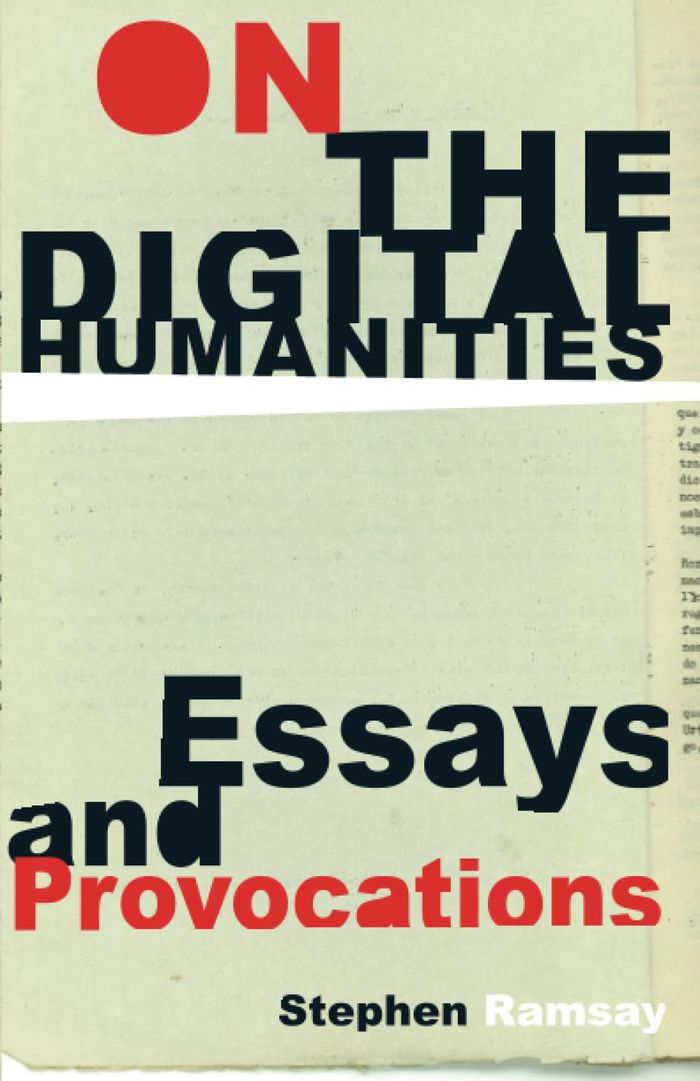
On the digital humanities
On the digital humanities
Actions:
Prix:
$35.99
(disponible sur commande)
Résumé:
Since its inception, the digital humanities has been repeatedly attacked as a threat to the humanities: warnings from literary and cultural theorists of technology overtaking English departments and the mechanization of teaching have peppered popular media. Stephen Ramsay’s ''On the digital humanities'', a collection of essays spanning the personal to the polemic, is a(...)
$35.99
(disponible sur commande)
Résumé:
Since its inception, the digital humanities has been repeatedly attacked as a threat to the humanities: warnings from literary and cultural theorists of technology overtaking English departments and the mechanization of teaching have peppered popular media. Stephen Ramsay’s ''On the digital humanities'', a collection of essays spanning the personal to the polemic, is a(...)
Titre:
On the digital humanities
Actions:
Prix:
$35.99
(disponible sur commande)
Résumé:
Since its inception, the digital humanities has been repeatedly attacked as a threat to the humanities: warnings from literary and cultural theorists of technology overtaking English departments and the mechanization of teaching have peppered popular media. Stephen Ramsay’s ''On the digital humanities'', a collection of essays spanning the personal to the polemic, is a spirited defense of the field of digital humanities. A founding figure in what was once known as 'humanities computing,' Ramsay has a well-known and contentious relationship with what is now called the digital humanities (DH). Here Ramsay collects and updates his most influential and notorious essays and speeches from the past fifteen years, considering DH from an array of practical and theoretical perspectives. The essays pursue a broad variety of themes, including the nature of data and its place in more conventional notions of text and interpretation, the relationship between the constraints of computation and the more open-ended nature of the humanities, the positioning of practical skills and infrastructures in both research and pedagogical contexts, the status of DH as a program for political and social action, and personal reflections on the author’s journey into the field as both a theorist and a technologist. These wide-ranging essays all center around one idea: that DH not forsake its connection to the humanities. While 'digital humanities' may sound like an entirely new form of engagement with the artifacts of human culture, Ramsay argues that the field well reveals what is most essential to humanistic inquiry.
On the digital humanities
Actions:
Prix:
$35.99
(disponible sur commande)
Résumé:
Since its inception, the digital humanities has been repeatedly attacked as a threat to the humanities: warnings from literary and cultural theorists of technology overtaking English departments and the mechanization of teaching have peppered popular media. Stephen Ramsay’s ''On the digital humanities'', a collection of essays spanning the personal to the polemic, is a spirited defense of the field of digital humanities. A founding figure in what was once known as 'humanities computing,' Ramsay has a well-known and contentious relationship with what is now called the digital humanities (DH). Here Ramsay collects and updates his most influential and notorious essays and speeches from the past fifteen years, considering DH from an array of practical and theoretical perspectives. The essays pursue a broad variety of themes, including the nature of data and its place in more conventional notions of text and interpretation, the relationship between the constraints of computation and the more open-ended nature of the humanities, the positioning of practical skills and infrastructures in both research and pedagogical contexts, the status of DH as a program for political and social action, and personal reflections on the author’s journey into the field as both a theorist and a technologist. These wide-ranging essays all center around one idea: that DH not forsake its connection to the humanities. While 'digital humanities' may sound like an entirely new form of engagement with the artifacts of human culture, Ramsay argues that the field well reveals what is most essential to humanistic inquiry.
Classification:
livres
livres
Publication:
août 2023
août 2023
Classification:
vidéo
vidéo
Description:
1 online resource (1 video file (28 minutes)) : sound, color
Auteur:
Sujet:
Publication:
London, England : Pidgeon Digital, 1985.
London, England : Pidgeon Digital, 1985.
Titre:
Art, Technology & Nature / [presnted by] Gyorgy Kepes.
Actions:
Description:
1 online resource (1 video file (28 minutes)) : sound, color
Art, Technology & Nature / [presnted by] Gyorgy Kepes.
Actions:
Description:
1 online resource (1 video file (28 minutes)) : sound, color
Classification:
vidéo
vidéo
Publication:
London, England : Pidgeon Digital, 1985.
London, England : Pidgeon Digital, 1985.
Auteur:
Sujet:
Classification:
livres
livres
Actions:
Exemplaires:
Description:
ix, 447 pages : illustrations (some color), maps, plan, portraits ; 23 cm
Description:
ix, 447 pages : illustrations (some color), maps, plan, portraits ; 23 cm
Auteur:
Sujet:
Publication:
Calgary : University of Calgary Press, ©2011.
Calgary : University of Calgary Press, ©2011.
Titre:
A century of Parks Canada, 1911-2011 / edited by Claire Elizabeth Campbell.
Actions:
Exemplaires:
Description:
ix, 447 pages : illustrations (some color), maps, plan, portraits ; 23 cm
A century of Parks Canada, 1911-2011 / edited by Claire Elizabeth Campbell.
Actions:
Exemplaires:
Description:
ix, 447 pages : illustrations (some color), maps, plan, portraits ; 23 cm
Classification:
livres
livres
Publication:
Calgary : University of Calgary Press, ©2011.
Calgary : University of Calgary Press, ©2011.
Auteur:
Sujet:
Classification:
vidéo
vidéo
Actions:
Description:
1 online resource (1 video file (39 minutes)) : sound, color
Auteur:
Sujet:
Publication:
London, England : Pidgeon Digital, 1992.
London, England : Pidgeon Digital, 1992.
Titre:
A poetics of place / [presented by] Eric Parry.
Actions:
Description:
1 online resource (1 video file (39 minutes)) : sound, color
A poetics of place / [presented by] Eric Parry.
Actions:
Description:
1 online resource (1 video file (39 minutes)) : sound, color
Classification:
vidéo
vidéo
Publication:
London, England : Pidgeon Digital, 1992.
London, England : Pidgeon Digital, 1992.
Auteur:
Sujet:
Classification:
livres
livres
Actions:
Exemplaires:
Description:
xxiv, 297 pages ; 22 cm
Description:
xxiv, 297 pages ; 22 cm
Auteur:
Sujet:
Publication:
Minneapolis, MN : The University of Minnesota Press, [2020]
Minneapolis, MN : The University of Minnesota Press, [2020]
Titre:
Curating as ethics / Jean-Paul Martinon.
Actions:
Exemplaires:
Description:
xxiv, 297 pages ; 22 cm
Curating as ethics / Jean-Paul Martinon.
Actions:
Exemplaires:
Description:
xxiv, 297 pages ; 22 cm
Classification:
livres
livres
Publication:
Minneapolis, MN : The University of Minnesota Press, [2020]
Minneapolis, MN : The University of Minnesota Press, [2020]
Auteur:
Sujet:
Classification:
livres
livres
Prix:
$72.00
(disponible sur commande)
Résumé:
Presenting the hottest architectural visionaries from around the world, Digital Architecture Now celebrates the conceptual architects who are pushing digital design and software to their limits. In his introduction and concluding essay, Neil Spiller places this contemporary work in the context of recent developments and considers the future direction of digital(...)
$72.00
(disponible sur commande)
Résumé:
Presenting the hottest architectural visionaries from around the world, Digital Architecture Now celebrates the conceptual architects who are pushing digital design and software to their limits. In his introduction and concluding essay, Neil Spiller places this contemporary work in the context of recent developments and considers the future direction of digital(...)
Titre:
Digital architecture now: a global survey of emerging talent
Actions:
Prix:
$72.00
(disponible sur commande)
Résumé:
Presenting the hottest architectural visionaries from around the world, Digital Architecture Now celebrates the conceptual architects who are pushing digital design and software to their limits. In his introduction and concluding essay, Neil Spiller places this contemporary work in the context of recent developments and considers the future direction of digital architecture. The heart of the book features architectsâ best projects, presented in vivid, colourful and breathtaking detail through texts, plans and renderings that challenge our assumptions about 3-D space and redefine the future of architecture.
Digital architecture now: a global survey of emerging talent
Actions:
Prix:
$72.00
(disponible sur commande)
Résumé:
Presenting the hottest architectural visionaries from around the world, Digital Architecture Now celebrates the conceptual architects who are pushing digital design and software to their limits. In his introduction and concluding essay, Neil Spiller places this contemporary work in the context of recent developments and considers the future direction of digital architecture. The heart of the book features architectsâ best projects, presented in vivid, colourful and breathtaking detail through texts, plans and renderings that challenge our assumptions about 3-D space and redefine the future of architecture.
Classification:
livres
livres
Publication:
janvier 2009, New York
janvier 2009, New York
Classification:
livres
livres
Actions:
Exemplaires:
Description:
383 pages : illustrations (chiefly color), color charts, color maps, portrait ; 24 cm
Description:
383 pages : illustrations (chiefly color), color charts, color maps, portrait ; 24 cm
Auteur:
Sujet:
Publication:
New York, NY : Actar Publishers, 2021., New York : Distributed by Actar D, Inc.
New York, NY : Actar Publishers, 2021., New York : Distributed by Actar D, Inc.
Titre:
Green obsession : trees towards cities, humans towards forests / Stefano Boeri Architetti.
Actions:
Exemplaires:
Description:
383 pages : illustrations (chiefly color), color charts, color maps, portrait ; 24 cm
Green obsession : trees towards cities, humans towards forests / Stefano Boeri Architetti.
Actions:
Exemplaires:
Description:
383 pages : illustrations (chiefly color), color charts, color maps, portrait ; 24 cm
Classification:
livres
livres
Publication:
New York, NY : Actar Publishers, 2021., New York : Distributed by Actar D, Inc.
New York, NY : Actar Publishers, 2021., New York : Distributed by Actar D, Inc.
Auteur:
Sujet:


