


2576 Résultats
Classification:
livres
livres
Prix:
$41.95
(disponible sur commande)
Résumé:
Although 3D printing promises a revolution in many industries, primarily industrial manufacturing, nowhere are the possibilities greater than in the field of product design and modular architecture. Ronald Rael and Virginia San Fratello, of the cutting-edge San Francisco Bay Area-based design firm Emerging Objects, have developed remarkable techniques for "printing" from(...)
$41.95
(disponible sur commande)
Résumé:
Although 3D printing promises a revolution in many industries, primarily industrial manufacturing, nowhere are the possibilities greater than in the field of product design and modular architecture. Ronald Rael and Virginia San Fratello, of the cutting-edge San Francisco Bay Area-based design firm Emerging Objects, have developed remarkable techniques for "printing" from(...)
Titre:
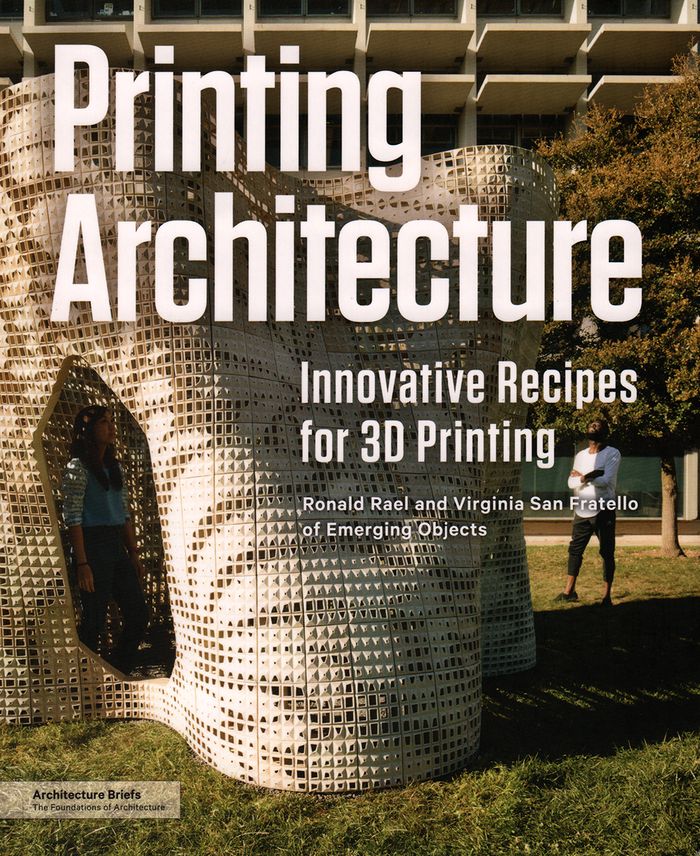
Printing architecture: innovative recipes for 3D printing
Actions:
Prix:
$41.95
(disponible sur commande)
Résumé:
Although 3D printing promises a revolution in many industries, primarily industrial manufacturing, nowhere are the possibilities greater than in the field of product design and modular architecture. Ronald Rael and Virginia San Fratello, of the cutting-edge San Francisco Bay Area-based design firm Emerging Objects, have developed remarkable techniques for "printing" from a wide variety of powders, including sawdust, clay, cement, rubber, concrete, salt, and even coffee grounds, opening an entire realm of material, phenomenological, and ecological possibilities to designers. In addition to case studies and illustrations of their own work, Rael and San Fratello offer guidance for sourcing alternative materials, specific recipes for mixing compounds, and step-by-step instructions for conducting bench tests and setting parameters for material testing, to help readers understand the process of developing powder-based materials and their unique qualities.
Printing architecture: innovative recipes for 3D printing
Actions:
Prix:
$41.95
(disponible sur commande)
Résumé:
Although 3D printing promises a revolution in many industries, primarily industrial manufacturing, nowhere are the possibilities greater than in the field of product design and modular architecture. Ronald Rael and Virginia San Fratello, of the cutting-edge San Francisco Bay Area-based design firm Emerging Objects, have developed remarkable techniques for "printing" from a wide variety of powders, including sawdust, clay, cement, rubber, concrete, salt, and even coffee grounds, opening an entire realm of material, phenomenological, and ecological possibilities to designers. In addition to case studies and illustrations of their own work, Rael and San Fratello offer guidance for sourcing alternative materials, specific recipes for mixing compounds, and step-by-step instructions for conducting bench tests and setting parameters for material testing, to help readers understand the process of developing powder-based materials and their unique qualities.
Classification:
livres
livres
Publication:
mai 2018
mai 2018
Sujet:
Architecture numérique
Architecture numérique
Classification:
livres
livres
Actions:
Prix:
$27.95
(disponible sur commande)
Résumé:
Social theories of modernity focus on the nineteenth century as the period when Western Europe was transformed by urbanization. Cities became thriving metropolitan centers as a result of economic, political, and social changes wrought by the industrial revolution. In Cultural Capitals, Karen Newman demonstrates that speculation and capital, the commodity, the crowd,(...)
$27.95
(disponible sur commande)
Résumé:
Social theories of modernity focus on the nineteenth century as the period when Western Europe was transformed by urbanization. Cities became thriving metropolitan centers as a result of economic, political, and social changes wrought by the industrial revolution. In Cultural Capitals, Karen Newman demonstrates that speculation and capital, the commodity, the crowd,(...)
Titre:
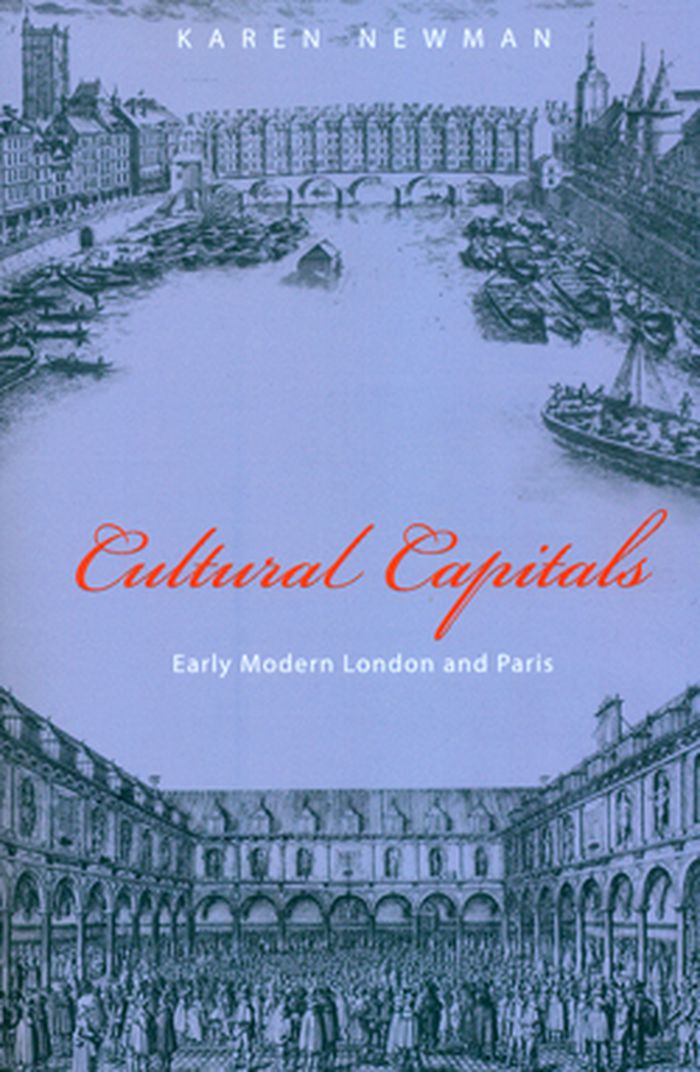
Cultural capitals, early modern London and Paris
Actions:
Prix:
$27.95
(disponible sur commande)
Résumé:
Social theories of modernity focus on the nineteenth century as the period when Western Europe was transformed by urbanization. Cities became thriving metropolitan centers as a result of economic, political, and social changes wrought by the industrial revolution. In Cultural Capitals, Karen Newman demonstrates that speculation and capital, the commodity, the crowd, traffic, and the street, often thought to be historically specific to nineteenth-century urban culture, were in fact already at work in early modern London and Paris. The author challenges the notion of a rupture between premodern and modern societies and shows how London and Paris became cultural capitals. Drawing upon poetry, plays, and prose by writers such as Shakespeare, Scudéry, Boileau, and Donne, as well as popular materials including pamphlets, ballads, and broadsides, she examines the impact of rapid urbanization on cultural production.
Cultural capitals, early modern London and Paris
Actions:
Prix:
$27.95
(disponible sur commande)
Résumé:
Social theories of modernity focus on the nineteenth century as the period when Western Europe was transformed by urbanization. Cities became thriving metropolitan centers as a result of economic, political, and social changes wrought by the industrial revolution. In Cultural Capitals, Karen Newman demonstrates that speculation and capital, the commodity, the crowd, traffic, and the street, often thought to be historically specific to nineteenth-century urban culture, were in fact already at work in early modern London and Paris. The author challenges the notion of a rupture between premodern and modern societies and shows how London and Paris became cultural capitals. Drawing upon poetry, plays, and prose by writers such as Shakespeare, Scudéry, Boileau, and Donne, as well as popular materials including pamphlets, ballads, and broadsides, she examines the impact of rapid urbanization on cultural production.
Classification:
livres
livres
Publication:
mai 2009
mai 2009
Sujet:
Théorie de l’urbanisme
Théorie de l’urbanisme
Classification:
livres
livres

Prix:
$19.95
(disponible sur commande)
Résumé:
The Posthuman Dada Guide is an impractical handbook for practical living in our posthuman world - all by way of examining the imagined 1916 chess game between Tristan Tzara, the daddy of Dada, and V. I. Lenin, the daddy of communism. This epic game at Zurich's Café de la Terrasse - a battle between radical visions of art and ideological revolution - lasted for a century(...)
$19.95
(disponible sur commande)
Résumé:
The Posthuman Dada Guide is an impractical handbook for practical living in our posthuman world - all by way of examining the imagined 1916 chess game between Tristan Tzara, the daddy of Dada, and V. I. Lenin, the daddy of communism. This epic game at Zurich's Café de la Terrasse - a battle between radical visions of art and ideological revolution - lasted for a century(...)
Titre:
The posthuman Dada guide : Tzara and Lenin play chess
Actions:
Prix:
$19.95
(disponible sur commande)
Résumé:
The Posthuman Dada Guide is an impractical handbook for practical living in our posthuman world - all by way of examining the imagined 1916 chess game between Tristan Tzara, the daddy of Dada, and V. I. Lenin, the daddy of communism. This epic game at Zurich's Café de la Terrasse - a battle between radical visions of art and ideological revolution - lasted for a century and may still be going on, although communism appears dead and Dada stronger than ever. As the poet faces the future mass murderer over the chessboard, neither realizes that they are playing for the world. Taking the match as metaphor for two poles of twentieth and twenty-first century thought, politics, and life, Andrei Codrescu has created his own Dadaesque guide to Dada - and to what it can teach us about surviving our ultraconnected present and future.
The posthuman Dada guide : Tzara and Lenin play chess
Actions:
Prix:
$19.95
(disponible sur commande)
Résumé:
The Posthuman Dada Guide is an impractical handbook for practical living in our posthuman world - all by way of examining the imagined 1916 chess game between Tristan Tzara, the daddy of Dada, and V. I. Lenin, the daddy of communism. This epic game at Zurich's Café de la Terrasse - a battle between radical visions of art and ideological revolution - lasted for a century and may still be going on, although communism appears dead and Dada stronger than ever. As the poet faces the future mass murderer over the chessboard, neither realizes that they are playing for the world. Taking the match as metaphor for two poles of twentieth and twenty-first century thought, politics, and life, Andrei Codrescu has created his own Dadaesque guide to Dada - and to what it can teach us about surviving our ultraconnected present and future.
Classification:
livres
livres
Publication:
avril 2009, Princeton, Oxford
avril 2009, Princeton, Oxford
Sujet:
Théorie de l’art
Théorie de l’art
Classification:
livres
livres

Prix:
$85.00
(disponible en magasin)
Résumé:
''Peter Shire’s Grand Tour: A Snapshot of Design History, 1980–1989'', edited by Christoph Radl, is a deeply personal photo diary chronicling the decade of Memphis—‘the last design revolution’, headed by maestro Ettore Sottsass, the leaning tower of Italian design. Peter didn’t know it at the time, but his snapshots of Italy in the ‘80s (with a sidequest to Vienna) were(...)
$85.00
(disponible en magasin)
Résumé:
''Peter Shire’s Grand Tour: A Snapshot of Design History, 1980–1989'', edited by Christoph Radl, is a deeply personal photo diary chronicling the decade of Memphis—‘the last design revolution’, headed by maestro Ettore Sottsass, the leaning tower of Italian design. Peter didn’t know it at the time, but his snapshots of Italy in the ‘80s (with a sidequest to Vienna) were(...)
Titre:
Peter Shire's Grand Tour: A snapshot of design history 1980-1989
Actions:
Prix:
$85.00
(disponible en magasin)
Résumé:
''Peter Shire’s Grand Tour: A Snapshot of Design History, 1980–1989'', edited by Christoph Radl, is a deeply personal photo diary chronicling the decade of Memphis—‘the last design revolution’, headed by maestro Ettore Sottsass, the leaning tower of Italian design. Peter didn’t know it at the time, but his snapshots of Italy in the ‘80s (with a sidequest to Vienna) were the serendipitous beginning, middle, and end of something big. ''Peter Shire’s Grand Tour'' pairs candid pictures with personal interludes to trace the heady, unpolished brilliance of a movement before it knew what it was. With the unwitting eye of a tourist-turned-historian, Peter’s camera captured it all—from Caravaggio at the Uffizi to storefronts of women’s lingerie shops and beautiful sunsets, alongside rogue selfies and a cast of Memphis Group legends including Ettore Sottsass, Alessandro Mendini, and Matteo Thun.
Peter Shire's Grand Tour: A snapshot of design history 1980-1989
Actions:
Prix:
$85.00
(disponible en magasin)
Résumé:
''Peter Shire’s Grand Tour: A Snapshot of Design History, 1980–1989'', edited by Christoph Radl, is a deeply personal photo diary chronicling the decade of Memphis—‘the last design revolution’, headed by maestro Ettore Sottsass, the leaning tower of Italian design. Peter didn’t know it at the time, but his snapshots of Italy in the ‘80s (with a sidequest to Vienna) were the serendipitous beginning, middle, and end of something big. ''Peter Shire’s Grand Tour'' pairs candid pictures with personal interludes to trace the heady, unpolished brilliance of a movement before it knew what it was. With the unwitting eye of a tourist-turned-historian, Peter’s camera captured it all—from Caravaggio at the Uffizi to storefronts of women’s lingerie shops and beautiful sunsets, alongside rogue selfies and a cast of Memphis Group legends including Ettore Sottsass, Alessandro Mendini, and Matteo Thun.
Classification:
livres
livres
Publication:
avril 2025
avril 2025
Sujet:
Design, monographies
Design, monographies
Classification:
livres
livres
Actions:
Prix:
$75.00
(disponible en magasin)
Résumé:
Museums are flourishing across the globe: in recent decades, no other architectural form has witnessed such remarkable growth and diversification. In an era when the digital revolution enables us to preserve our shared memory and artistic heritage without the constraints of physical space, this phenomenon might seem like an unnecessary indulgence. Yet, by examining new(...)
$75.00
(disponible en magasin)
Résumé:
Museums are flourishing across the globe: in recent decades, no other architectural form has witnessed such remarkable growth and diversification. In an era when the digital revolution enables us to preserve our shared memory and artistic heritage without the constraints of physical space, this phenomenon might seem like an unnecessary indulgence. Yet, by examining new(...)
Titre:
Architecture for Culture: Rethinking Museums
Actions:
Prix:
$75.00
(disponible en magasin)
Résumé:
Museums are flourishing across the globe: in recent decades, no other architectural form has witnessed such remarkable growth and diversification. In an era when the digital revolution enables us to preserve our shared memory and artistic heritage without the constraints of physical space, this phenomenon might seem like an unnecessary indulgence. Yet, by examining new icons and rereading historical examples"Architecture for Culture" shows why museums remain essential. They serve as the repositories for the encyclopedia of 21st-century knowledge, help make our cities legible and ensure that art remains a vibrant presence in the spaces where we live. The museum is revealed as a venue where architecture refines its discourse on method, identity, and urban context; it is also a dynamic laboratory for the continuous development of a new cultural policy—one that must address itself to a planetary audience.
Architecture for Culture: Rethinking Museums
Actions:
Prix:
$75.00
(disponible en magasin)
Résumé:
Museums are flourishing across the globe: in recent decades, no other architectural form has witnessed such remarkable growth and diversification. In an era when the digital revolution enables us to preserve our shared memory and artistic heritage without the constraints of physical space, this phenomenon might seem like an unnecessary indulgence. Yet, by examining new icons and rereading historical examples"Architecture for Culture" shows why museums remain essential. They serve as the repositories for the encyclopedia of 21st-century knowledge, help make our cities legible and ensure that art remains a vibrant presence in the spaces where we live. The museum is revealed as a venue where architecture refines its discourse on method, identity, and urban context; it is also a dynamic laboratory for the continuous development of a new cultural policy—one that must address itself to a planetary audience.
Classification:
livres
livres
Publication:
septembre 2025
septembre 2025
Sujet:
Muséologie
Muséologie
Classification:
livres
livres
Titre:
Agitate! Agitate! Agitate!
Agitate! Agitate! Agitate!
Actions:
Prix:
$12.00
(disponible en magasin)
Résumé:
In "AGITATE! AGITATE! AGITATE!" Cj Reay of Black Lodge Press reflects upon their relationship to DIY print culture, zines, and the politics of art production. Reay lays out a history of DIY print and the people's press: from chapbooks produced during the French revolution to the zines made in response to the HIV/AIDS epidemic, while outlining their own personal engagement(...)
$12.00
(disponible en magasin)
Résumé:
In "AGITATE! AGITATE! AGITATE!" Cj Reay of Black Lodge Press reflects upon their relationship to DIY print culture, zines, and the politics of art production. Reay lays out a history of DIY print and the people's press: from chapbooks produced during the French revolution to the zines made in response to the HIV/AIDS epidemic, while outlining their own personal engagement(...)
Titre:
Agitate! Agitate! Agitate!
Actions:
Prix:
$12.00
(disponible en magasin)
Résumé:
In "AGITATE! AGITATE! AGITATE!" Cj Reay of Black Lodge Press reflects upon their relationship to DIY print culture, zines, and the politics of art production. Reay lays out a history of DIY print and the people's press: from chapbooks produced during the French revolution to the zines made in response to the HIV/AIDS epidemic, while outlining their own personal engagement with reading, music, and art that agitates, angers, and incites action. For Cj Reay, growing up in rural Northern England, the inherently anti-capitalist nature of DIY culture provided a connection to radical working class movements and the politics of anarchy: "living breathing movements of resistance and joy and complexity and disappointment and boundless optimism.'" Co-published with Black Lodge Press, "AGITATE! AGITATE! AGITATE!" is a zine about the beauty and radical power of creating art without permission.
Agitate! Agitate! Agitate!
Actions:
Prix:
$12.00
(disponible en magasin)
Résumé:
In "AGITATE! AGITATE! AGITATE!" Cj Reay of Black Lodge Press reflects upon their relationship to DIY print culture, zines, and the politics of art production. Reay lays out a history of DIY print and the people's press: from chapbooks produced during the French revolution to the zines made in response to the HIV/AIDS epidemic, while outlining their own personal engagement with reading, music, and art that agitates, angers, and incites action. For Cj Reay, growing up in rural Northern England, the inherently anti-capitalist nature of DIY culture provided a connection to radical working class movements and the politics of anarchy: "living breathing movements of resistance and joy and complexity and disappointment and boundless optimism.'" Co-published with Black Lodge Press, "AGITATE! AGITATE! AGITATE!" is a zine about the beauty and radical power of creating art without permission.
Classification:
livres
livres
Publication:
janvier 2024
janvier 2024
Sujet:
Zines
Zines
Classification:
livres
livres

Actions:
Prix:
$38.00
(disponible sur commande)
Résumé:
Alexandra Kollontai was a prominent Russian revolutionary, a commissar of Social Welfare after the October revolution in 1917, and a long-term Soviet ambassador to Sweden. As a cofounder of the Zhenotdel, the "Women's Department" in the communist party, she introduced abortion rights, secularized marriage, and provided paid maternity leave. Kollontai considered "comradely(...)
$38.00
(disponible sur commande)
Résumé:
Alexandra Kollontai was a prominent Russian revolutionary, a commissar of Social Welfare after the October revolution in 1917, and a long-term Soviet ambassador to Sweden. As a cofounder of the Zhenotdel, the "Women's Department" in the communist party, she introduced abortion rights, secularized marriage, and provided paid maternity leave. Kollontai considered "comradely(...)
Titre:
Red love: a reader on Alexandra Kollontai
Actions:
Prix:
$38.00
(disponible sur commande)
Résumé:
Alexandra Kollontai was a prominent Russian revolutionary, a commissar of Social Welfare after the October revolution in 1917, and a long-term Soviet ambassador to Sweden. As a cofounder of the Zhenotdel, the "Women's Department" in the communist party, she introduced abortion rights, secularized marriage, and provided paid maternity leave. Kollontai considered "comradely love" to be an important political force, elemental in shaping social bonds beyond the limitations of property relations. 'Red Love' stems from a yearlong research by CuratorLab at Konstfack University together with Tensta konsthall, that led up to Dora García's exhibition Red Love and its related public programing. A number of artists and thinkers revisit Kollontai's ideas on the politics of love and their relation to current political, social, and feminist struggles. The publication also includes the biographical play Kollontai from 1977 by distinguished Swedish writer Agneta Pleijel.
Red love: a reader on Alexandra Kollontai
Actions:
Prix:
$38.00
(disponible sur commande)
Résumé:
Alexandra Kollontai was a prominent Russian revolutionary, a commissar of Social Welfare after the October revolution in 1917, and a long-term Soviet ambassador to Sweden. As a cofounder of the Zhenotdel, the "Women's Department" in the communist party, she introduced abortion rights, secularized marriage, and provided paid maternity leave. Kollontai considered "comradely love" to be an important political force, elemental in shaping social bonds beyond the limitations of property relations. 'Red Love' stems from a yearlong research by CuratorLab at Konstfack University together with Tensta konsthall, that led up to Dora García's exhibition Red Love and its related public programing. A number of artists and thinkers revisit Kollontai's ideas on the politics of love and their relation to current political, social, and feminist struggles. The publication also includes the biographical play Kollontai from 1977 by distinguished Swedish writer Agneta Pleijel.
Classification:
livres
livres
Publication:
avril 2020
avril 2020
Sujet:
Théorie de l’art
Théorie de l’art
Classification:
livres
livres

Actions:
Prix:
$46.95
(disponible sur commande)
Résumé:
In 'The Topography of Wellness', Sara Jensen Carr offers a chronological narrative of how six epidemics transformed the American urban landscape, reflecting changing views of the power of design, pathology of disease, and the epidemiology of the environment. From the infectious diseases of cholera and tuberculosis, to so-called social diseases of idleness and crime, to(...)
$46.95
(disponible sur commande)
Résumé:
In 'The Topography of Wellness', Sara Jensen Carr offers a chronological narrative of how six epidemics transformed the American urban landscape, reflecting changing views of the power of design, pathology of disease, and the epidemiology of the environment. From the infectious diseases of cholera and tuberculosis, to so-called social diseases of idleness and crime, to(...)
Titre:
The topography of wellness: how health and disease shaped the American landscape
Actions:
Prix:
$46.95
(disponible sur commande)
Résumé:
In 'The Topography of Wellness', Sara Jensen Carr offers a chronological narrative of how six epidemics transformed the American urban landscape, reflecting changing views of the power of design, pathology of disease, and the epidemiology of the environment. From the infectious diseases of cholera and tuberculosis, to so-called social diseases of idleness and crime, to the more complicated origins of today’s chronic diseases, each illness and its associated combat strategies has left its mark on our surroundings. While each solution succeeded in eliminating the disease on some level, sweeping environmental changes often came with significant social and physical consequences. Even more unexpectedly, some adaptations inadvertently incubated future epidemics. From the Industrial Revolution to present day, this book illuminates the constant evolution of our relationship to wellness and the environment by documenting the shifting grounds of illness and the urban landscape.
The topography of wellness: how health and disease shaped the American landscape
Actions:
Prix:
$46.95
(disponible sur commande)
Résumé:
In 'The Topography of Wellness', Sara Jensen Carr offers a chronological narrative of how six epidemics transformed the American urban landscape, reflecting changing views of the power of design, pathology of disease, and the epidemiology of the environment. From the infectious diseases of cholera and tuberculosis, to so-called social diseases of idleness and crime, to the more complicated origins of today’s chronic diseases, each illness and its associated combat strategies has left its mark on our surroundings. While each solution succeeded in eliminating the disease on some level, sweeping environmental changes often came with significant social and physical consequences. Even more unexpectedly, some adaptations inadvertently incubated future epidemics. From the Industrial Revolution to present day, this book illuminates the constant evolution of our relationship to wellness and the environment by documenting the shifting grounds of illness and the urban landscape.
Classification:
livres
livres
Publication:
octobre 2021
octobre 2021
Sujet:
Théorie de l’urbanisme
Théorie de l’urbanisme
Classification:
livres
livres

Actions:
Prix:
$19.99
(disponible sur commande)
Résumé:
Whether you simply want to challenge your local shop to reduce their plastic or go big and demand a new law to be passed, this book is the place to start. Full of lessons from the real world, this book contains practical steps and a blueprint anyone can follow - from helping you to pinpoint the fundamentals of what you want to achieve to mobilising supporters and(...)
$19.99
(disponible sur commande)
Résumé:
Whether you simply want to challenge your local shop to reduce their plastic or go big and demand a new law to be passed, this book is the place to start. Full of lessons from the real world, this book contains practical steps and a blueprint anyone can follow - from helping you to pinpoint the fundamentals of what you want to achieve to mobilising supporters and(...)
Titre:
Do something: activism for everyone
Actions:
Prix:
$19.99
(disponible sur commande)
Résumé:
Whether you simply want to challenge your local shop to reduce their plastic or go big and demand a new law to be passed, this book is the place to start. Full of lessons from the real world, this book contains practical steps and a blueprint anyone can follow - from helping you to pinpoint the fundamentals of what you want to achieve to mobilising supporters and harnessing traditional and social media. Having worked as a campaigner for over a decade Kajal Odedra knows the tricks that have typically been held by people in circles of power and believes that everyone should know how to speak up and be heard. Revolution on every scale is happening all around the world - but rather than being led by governments, policy makers or political leaders, it is individuals, communities and collectives who are calling for action.
Do something: activism for everyone
Actions:
Prix:
$19.99
(disponible sur commande)
Résumé:
Whether you simply want to challenge your local shop to reduce their plastic or go big and demand a new law to be passed, this book is the place to start. Full of lessons from the real world, this book contains practical steps and a blueprint anyone can follow - from helping you to pinpoint the fundamentals of what you want to achieve to mobilising supporters and harnessing traditional and social media. Having worked as a campaigner for over a decade Kajal Odedra knows the tricks that have typically been held by people in circles of power and believes that everyone should know how to speak up and be heard. Revolution on every scale is happening all around the world - but rather than being led by governments, policy makers or political leaders, it is individuals, communities and collectives who are calling for action.
Classification:
livres
livres
Publication:
décembre 2021
décembre 2021
Sujet:
Social
Social
Classification:
livres
livres

Actions:
Prix:
$24.95
(disponible sur commande)
Résumé:
The emergence of electronic music with its new generation of artists and digital technologies has disturbed the world music landscape. From the musicians’ angle, since the end of the eighties, techno, house, and their multiple subgenres, have brought in a new breath, sometimes sweeping aside the order established by rock and pop, and imposing new game rules: ephemeral and(...)
$24.95
(disponible sur commande)
Résumé:
The emergence of electronic music with its new generation of artists and digital technologies has disturbed the world music landscape. From the musicians’ angle, since the end of the eighties, techno, house, and their multiple subgenres, have brought in a new breath, sometimes sweeping aside the order established by rock and pop, and imposing new game rules: ephemeral and(...)
Titre:
Jean-Yves Leloup: Digital magma
Actions:
Prix:
$24.95
(disponible sur commande)
Résumé:
The emergence of electronic music with its new generation of artists and digital technologies has disturbed the world music landscape. From the musicians’ angle, since the end of the eighties, techno, house, and their multiple subgenres, have brought in a new breath, sometimes sweeping aside the order established by rock and pop, and imposing new game rules: ephemeral and shared creations, widespread sampling, DJ rule, the practice of mix and remix, new and micro-economy. But that aesthetic revolution, which ended up contaminating most music during the nineties, is not only limited to artists. The democratization of the digital, of the means of diffusion, and of exchange and listening, transforms the relationship between the audience and music. Today the MP3 generation, beyond the simple question of piracy, invents new codes and practices which have shaken our way of “consuming” culture.
Jean-Yves Leloup: Digital magma
Actions:
Prix:
$24.95
(disponible sur commande)
Résumé:
The emergence of electronic music with its new generation of artists and digital technologies has disturbed the world music landscape. From the musicians’ angle, since the end of the eighties, techno, house, and their multiple subgenres, have brought in a new breath, sometimes sweeping aside the order established by rock and pop, and imposing new game rules: ephemeral and shared creations, widespread sampling, DJ rule, the practice of mix and remix, new and micro-economy. But that aesthetic revolution, which ended up contaminating most music during the nineties, is not only limited to artists. The democratization of the digital, of the means of diffusion, and of exchange and listening, transforms the relationship between the audience and music. Today the MP3 generation, beyond the simple question of piracy, invents new codes and practices which have shaken our way of “consuming” culture.
Classification:
livres
livres
Publication:
décembre 2009
décembre 2009
Sujet:
Acoustique
Acoustique


