


2577 Résultats
Classification:
livres
livres
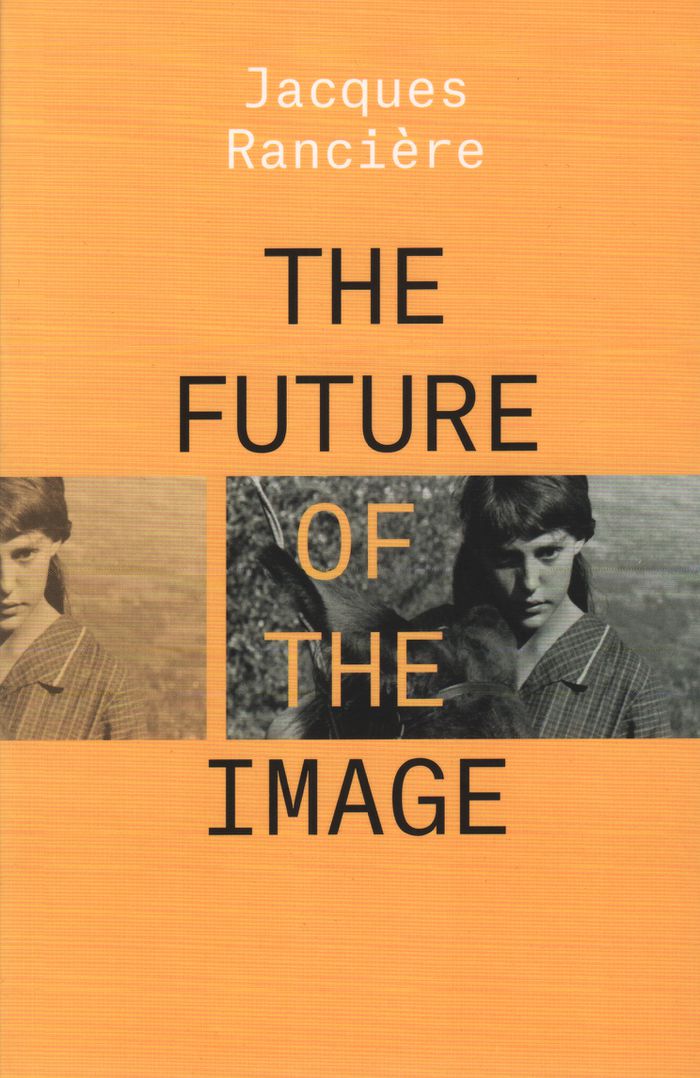
Titre:
The future of the image
The future of the image
Actions:
Prix:
$25.95
(disponible sur commande)
Résumé:
In ''The Future of the Image,'' Jacques Rancière develops a fascinating new concept of the image in contemporary art, showing how art and politics have always been intrinsically intertwined. He argues that there is a stark political choice in art: it can either reinforce a radical democracy or create a new reactionary mysticism. For Rancière there is never a pure art: the(...)
Titre:
The future of the image
Actions:
Prix:
$25.95
(disponible sur commande)
Résumé:
In ''The Future of the Image,'' Jacques Rancière develops a fascinating new concept of the image in contemporary art, showing how art and politics have always been intrinsically intertwined. He argues that there is a stark political choice in art: it can either reinforce a radical democracy or create a new reactionary mysticism. For Rancière there is never a pure art: the aesthetic revolution must always embrace egalitarian ideals.
Classification:
livres
livres
Publication:
septembre 2019
septembre 2019
Sujet:
Théorie de l’art
Théorie de l’art
Classification:
livres
livres
Actions:
Prix:
$49.95
(disponible en magasin)
Résumé:
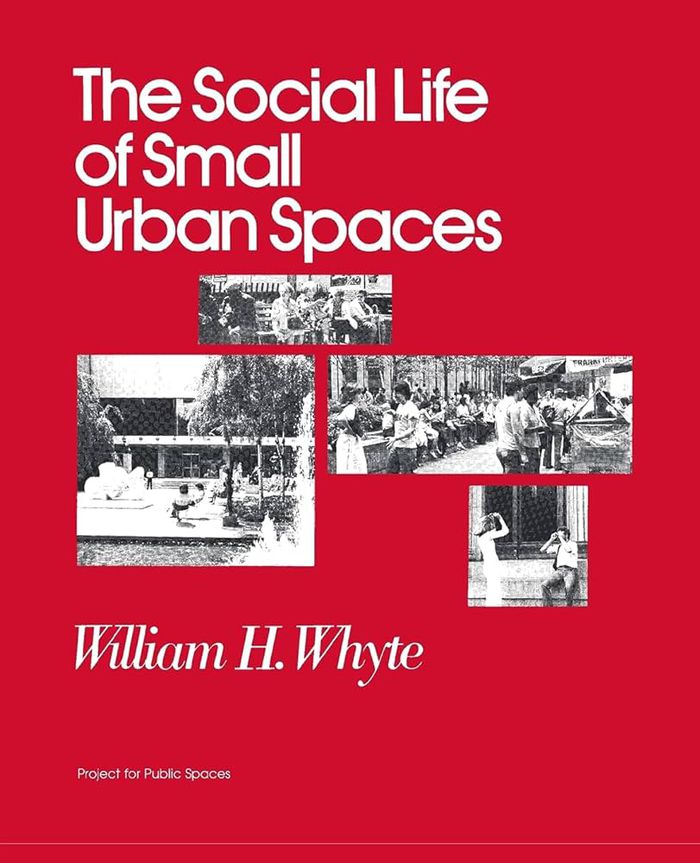
In 1980, William H. Whyte published the findings from his revolutionary Street Life Project in The Social Life of Small Urban Spaces. Both the book and the accompanying film were instantly labeled classics, and launched a mini-revolution in the planning and study of public spaces. They have since become standard texts, and appear on syllabi and reading lists in urban(...)
Titre:
The social life of small urban spaces
Actions:
Prix:
$49.95
(disponible en magasin)
Résumé:
In 1980, William H. Whyte published the findings from his revolutionary Street Life Project in The Social Life of Small Urban Spaces. Both the book and the accompanying film were instantly labeled classics, and launched a mini-revolution in the planning and study of public spaces. They have since become standard texts, and appear on syllabi and reading lists in urban planning, sociology, environmental design, and architecture departments around the world.
Classification:
livres
livres
Publication:
mai 2001
mai 2001
Sujet:
Espaces Public
Espaces Public
Classification:
livres
livres

Prix:
$24.95
(disponible sur commande)
Résumé:
Fighting Traffic offers a new look at both the origins of the automotive city in America and how social groups shape technological change. To accommodate automobiles, the American city required not only a physical change but also a social one: before the city could be reconstructed for the sake of motorists, its streets had to be socially reconstructed as places where(...)
Publication:
mars 2011
mars 2011
Titre:
Fighting traffic : the dawn of the motor age in the American city
Actions:
Prix:
$24.95
(disponible sur commande)
Résumé:
Fighting Traffic offers a new look at both the origins of the automotive city in America and how social groups shape technological change. To accommodate automobiles, the American city required not only a physical change but also a social one: before the city could be reconstructed for the sake of motorists, its streets had to be socially reconstructed as places where motorists belonged. It was not an evolution but a bloody and sometimes violent revolution.
Classification:
livres
livres
Publication:
mars 2011
mars 2011
Classification:
livres
livres

Actions:
Prix:
$32.00
(disponible sur commande)
Résumé:
Edited by a pioneer of the digital revolution, this new book takes its cue from the practice of mass-customization, one of the most important design and retail trends of recent years, to consider how variations on the same design idea can be applied to a broad spectrum of architectural, engineering, and construction solutions. The book has three parts: a group of essays(...)
Titre:
The architecture of variation
Actions:
Prix:
$32.00
(disponible sur commande)
Résumé:
Edited by a pioneer of the digital revolution, this new book takes its cue from the practice of mass-customization, one of the most important design and retail trends of recent years, to consider how variations on the same design idea can be applied to a broad spectrum of architectural, engineering, and construction solutions. The book has three parts: a group of essays by leading thinkers on design; comparative studies on variation; and case studies.
Classification:
livres
livres
Publication:
août 2009
août 2009
Sujet:
Architecture numérique
Architecture numérique
Classification:
livres
livres

Titre:
The grammar of architecture
The grammar of architecture
Actions:
Prix:
$42.95
(disponible sur commande)
Résumé:
The "Grammar of Architecture" uses engraved plates from the great works of architectural history to illustrate a show-and-tell journey around the architecture of civilizations east and west, from Ancient Egypt to the Industrial Revolution. Extended captions and annotations supply the reader with a complete naming of parts and an explanation of how architects have planned(...)
Titre:
The grammar of architecture
Actions:
Prix:
$42.95
(disponible sur commande)
Résumé:
The "Grammar of Architecture" uses engraved plates from the great works of architectural history to illustrate a show-and-tell journey around the architecture of civilizations east and west, from Ancient Egypt to the Industrial Revolution. Extended captions and annotations supply the reader with a complete naming of parts and an explanation of how architects have planned and made the buildings of the past, from Amhotep to the Palladio, and Vitruvius to Wren.
Classification:
livres
livres
Publication:
mai 2002, Boston
mai 2002, Boston
Sujet:
Dictionnaires
Dictionnaires
Classification:
livres
livres
Actions:
Prix:
$75.00
(disponible sur commande)
Résumé:
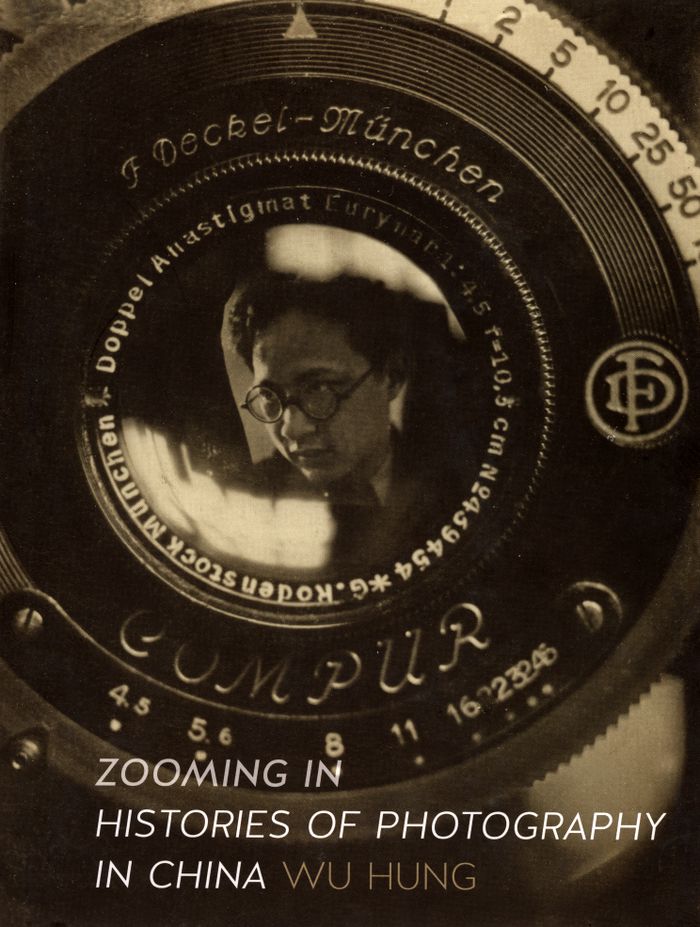
From the first sets of photographic records made by Western travelers to doctored portraits of Chairman Mao and the avant-garde photographic performances of the post–Cultural Revolution era, photography in China has followed divergent paths. In this book, Wu Hung explores the multiple histories of photographic production in China, using them to tell a larger story about(...)
Titre:
Zooming in: histories of photography in China
Actions:
Prix:
$75.00
(disponible sur commande)
Résumé:
From the first sets of photographic records made by Western travelers to doctored portraits of Chairman Mao and the avant-garde photographic performances of the post–Cultural Revolution era, photography in China has followed divergent paths. In this book, Wu Hung explores the multiple histories of photographic production in China, using them to tell a larger story about China’s shifting sociopolitical contexts and the different agendas, technologies, and aesthetics that have helped define its arts.
Classification:
livres
livres
Publication:
juin 2016
juin 2016
Sujet:
Théorie de la photographie
Théorie de la photographie
Classification:
livres
livres
Actions:
Prix:
$32.95
(disponible sur commande)
Résumé:
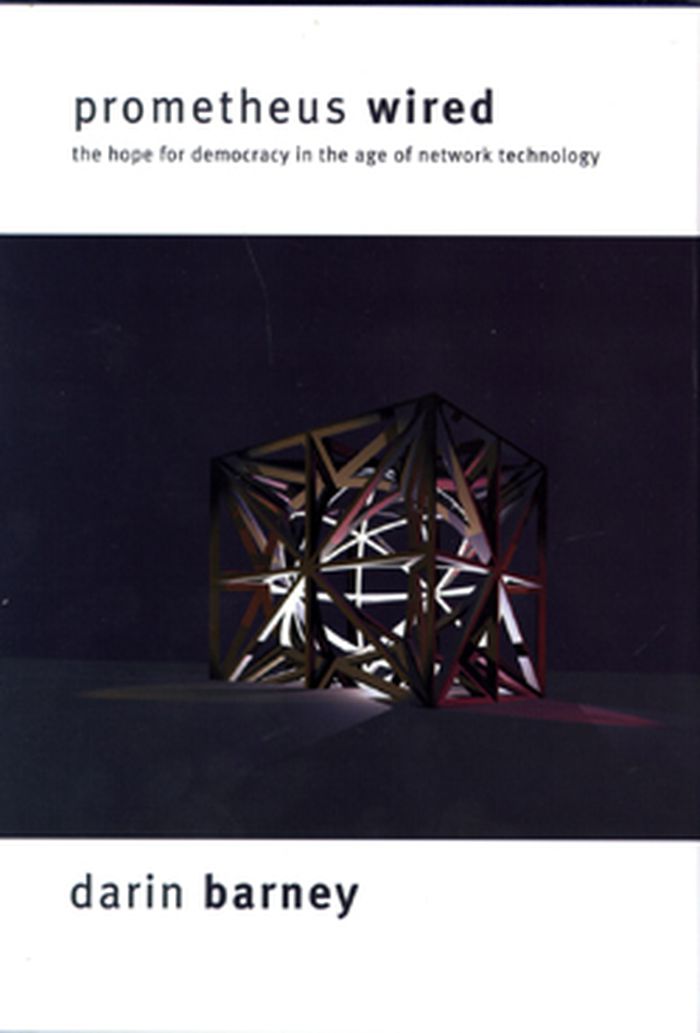
In Prometheus Wired, Darin Barney debunks claims that a networked society will provide the infrastructure for a political revolution and shows that the resources we need for understanding and making sound judgments about this new technology are surprisingly close at hand. By looking to thinkers who grappled with the relationship of society and technology, such as Plato,(...)
Titre:
Prometheus wired: the hope for democraty in the age of network technology
Actions:
Prix:
$32.95
(disponible sur commande)
Résumé:
In Prometheus Wired, Darin Barney debunks claims that a networked society will provide the infrastructure for a political revolution and shows that the resources we need for understanding and making sound judgments about this new technology are surprisingly close at hand. By looking to thinkers who grappled with the relationship of society and technology, such as Plato, Aristotle, Marx, and Heidegger, Barney critically examines such assertions about the character of digital networks.
Classification:
livres
livres
Publication:
octobre 2001, Vancouver, Toronto
octobre 2001, Vancouver, Toronto
Sujet:
Épistémologie et réseau
Épistémologie et réseau
Classification:
livres
livres
Titre:
Villa de Rome
Villa de Rome
Actions:
Prix:
$94.00
(disponible sur commande)
Résumé:
Publié à Paris à partir de 1809, le recueil de plans et de vues des villas de la Renaissance et de l'âge baroque de Percier et Fontaine a été soigneusement élaboré à partir des dessins réalisés avant la Révolution, alors qu'ils étaient pensionnaires à l'Académie de France à Rome. Bien que ses auteurs avaient déjà connu le succès avec leurs précédents ouvrages consacrés(...)
Sujet:
Histoire jusqu’à 1900
Histoire jusqu’à 1900
Publication:
juillet 2007, Wavre
juillet 2007, Wavre
Titre:
Villa de Rome
Actions:
Prix:
$94.00
(disponible sur commande)
Résumé:
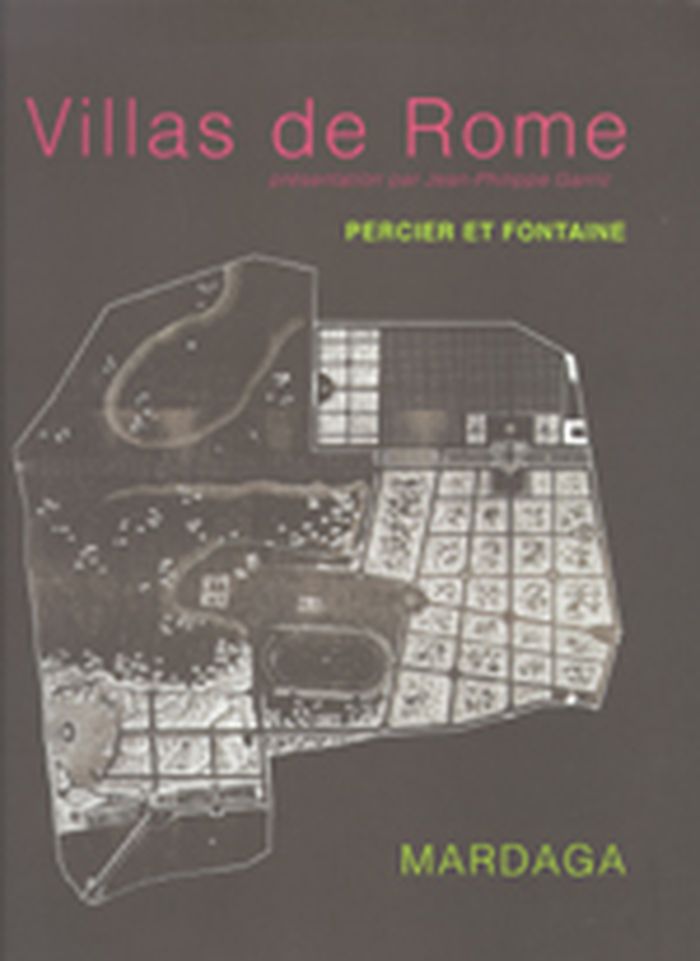
Publié à Paris à partir de 1809, le recueil de plans et de vues des villas de la Renaissance et de l'âge baroque de Percier et Fontaine a été soigneusement élaboré à partir des dessins réalisés avant la Révolution, alors qu'ils étaient pensionnaires à l'Académie de France à Rome. Bien que ses auteurs avaient déjà connu le succès avec leurs précédents ouvrages consacrés aux palais et aux maisons de Rome (1798) et aux décorations intérieures (1802), c'est dans cette nouvelle publication qu'ils plaçaient le plus d'ambitions. Car cette suite de gravures exécutées avec le plus grand soin ne vise pas seulement à garder la mémoire de l'émerveillement éprouvé dans les jardins romains, voire de la douceur du séjour ultramontain. L'information qu'elle propose, sur des édifices de tout premier plan, est là pour soutenir la position des deux architectes dans les débats contemporains et pour étayer leur dispositif théorique. II s'agit d'abord de répondre, par de nouvelles références, au développement dans les campagnes de l'empire d'un nouveau type de demeure aristocratique, tout en offrant un antidote au goût alors en plein essor pour les jardins anglais. C'est un choix esthétique et un engagement. Cette leçon d'Italie, cette alliance de vues et de plans, est là pour démontrer que les grandes ordonnances ne s'opposent pas, bien au contraire, au pittoresque, ce qui revient à soutenir les prétentions des architectes dans le domaine de l'art des jardins, face aux succès des jardiniers et des paysagistes. Après un premier livre, qui abordait l'échelle des édifices, puis un second qui traitait de celle du détail, le troisième grand recueil de Percier et Fontaine se focalise sur les grandes compositions, qui étaient alors une des bases du savoir-faire de l'architecte et le fondement du concours du Prix de Rome. Le Choix des plus célèbres maisons de plaisance de Rome et de ses environs, qui compte parmis les plus luxueux et les plus beaux livres d'architecture français, est depuis longtemps introuvable. Cette réédition intégrale de l'édition de 1809 est la première qui rende accessible cette référence majeure pour l'histoire de l'architecture du XIXe siècle, pour l'histoire de l'art des jardins et pour l'histoire de l'enseignement à l'École des beaux-Arts.
Classification:
livres
livres
Publication:
juillet 2007, Wavre
juillet 2007, Wavre
Sujet:
Histoire jusqu’à 1900
Histoire jusqu’à 1900
Classification:
périodiques
périodiques
Prix:
$49.65
(disponible sur commande)
Résumé:
The Industrial Revolution caused a paradigm shift from an agrarian economy to a manufacturing economy, giving birth to the industrial city. ‘City’ became synonymous with a concentration of factories causing unfiltered scenes between centres of production and urban dwellings. The corrupted image of the city ultimately led to the displacement and separation of production(...)
Titre:
AD 91:5 Production urbanism: The meta industrial city
Actions:
Prix:
$49.65
(disponible sur commande)
Résumé:
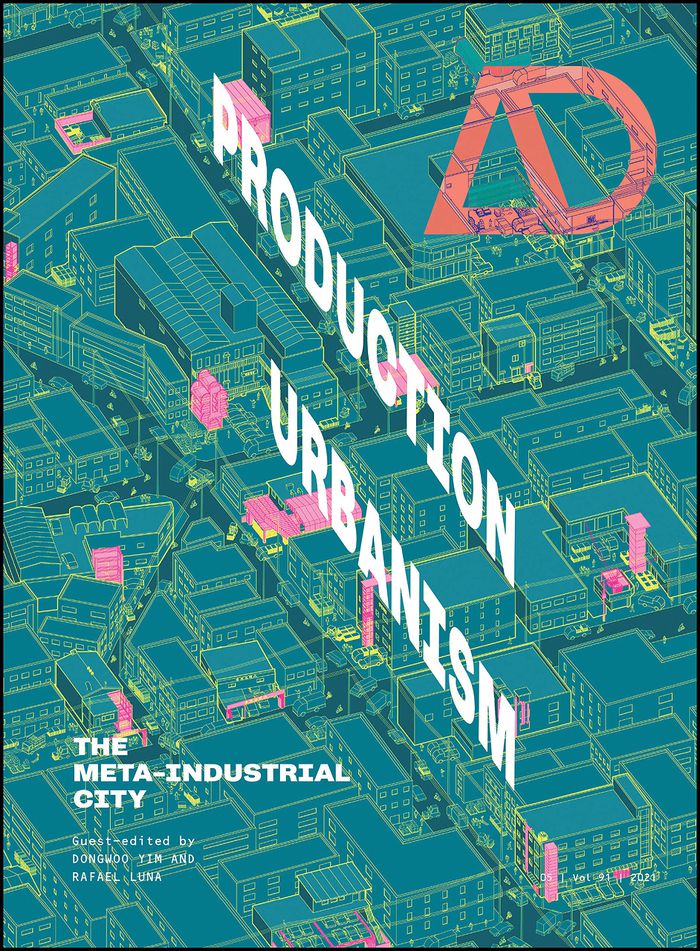
The Industrial Revolution caused a paradigm shift from an agrarian economy to a manufacturing economy, giving birth to the industrial city. ‘City’ became synonymous with a concentration of factories causing unfiltered scenes between centres of production and urban dwellings. The corrupted image of the city ultimately led to the displacement and separation of production away from residential zones in the 20th century. However, new innovative manufacturing technologies are allowing a coexistence between factories and dwellings through hybrid typologies that blend production back into the urban fabric. This AD issue discusses the implications of the re-emergence of production as an architectural and urban agenda through hybrid models that engage a new socioeconomic shift. Given the contemporary circumstances of a global pandemic affecting global supply chains, it is necessary to deliver a vision for a new productive urbanism that allows autonomous circular economies to flourish. Our 21st-century cities have an obligation to explore a new industrial revolution of shared economies that optimise the use of the legacy systems, infrastructure and building stock. Yet it is ultimately up to architecture to take arms in delivering new typologies.
Classification:
périodiques
périodiques
Publication:
octobre 2021
octobre 2021
Sujet:
Revues
Revues
Classification:
livres
livres

Actions:
Prix:
$64.95
(disponible sur commande)
Résumé:
Álvaro’s Siza’s public housing projects, designed at great scale and complexity against the backdrop of the Portuguese Revolution, obliged him to articulate a position that was nuanced and ideologically forceful. Such projects developed over long periods, in response to shifts in policy, funding and political climate. For an architect whose work develops always through(...)
Titre:
Seven early sketchbooks: Álvaro Siza Vieira
Actions:
Prix:
$64.95
(disponible sur commande)
Résumé:
Álvaro’s Siza’s public housing projects, designed at great scale and complexity against the backdrop of the Portuguese Revolution, obliged him to articulate a position that was nuanced and ideologically forceful. Such projects developed over long periods, in response to shifts in policy, funding and political climate. For an architect whose work develops always through the iterative sketch, this challenging process, combined with the scale and cultural ambition of the projects themselves, produced the densest imaginable mass of drawings.
Classification:
livres
livres
Publication:
juillet 2018
juillet 2018
Sujet:
Architecture, monographies
Architecture, monographies


