


2576 Résultats
Classification:
livres
livres
Exemplaires:
Description:
157 pages : illustrations ; 17 cm
Description:
157 pages : illustrations ; 17 cm
Auteur:
Sujet:
Publication:
Paris : La Fabrique éditions, [2018], ©2018
Paris : La Fabrique éditions, [2018], ©2018
Titre:
Les temps modernes : art, temps, politique / Jacques Rancière.
Actions:
Exemplaires:
Description:
157 pages : illustrations ; 17 cm
Les temps modernes : art, temps, politique / Jacques Rancière.
Actions:
Exemplaires:
Description:
157 pages : illustrations ; 17 cm
Classification:
livres
livres
Publication:
Paris : La Fabrique éditions, [2018], ©2018
Paris : La Fabrique éditions, [2018], ©2018
Auteur:
Sujet:
Classification:
périodiques
périodiques
Actions:
Prix:
$54.00
(disponible en magasin)
Résumé:
The intersection of architecture and the machine has a history that stretches back to the Industrial Revolution, however the machine has recently begun to appear in new ways in speculative architectural drawing and modelling. This issue of AD considers the influence of the machine as an allegorical device for exploring alternative architectural practices, and includes a(...)
$54.00
(disponible en magasin)
Résumé:
The intersection of architecture and the machine has a history that stretches back to the Industrial Revolution, however the machine has recently begun to appear in new ways in speculative architectural drawing and modelling. This issue of AD considers the influence of the machine as an allegorical device for exploring alternative architectural practices, and includes a(...)
Titre:
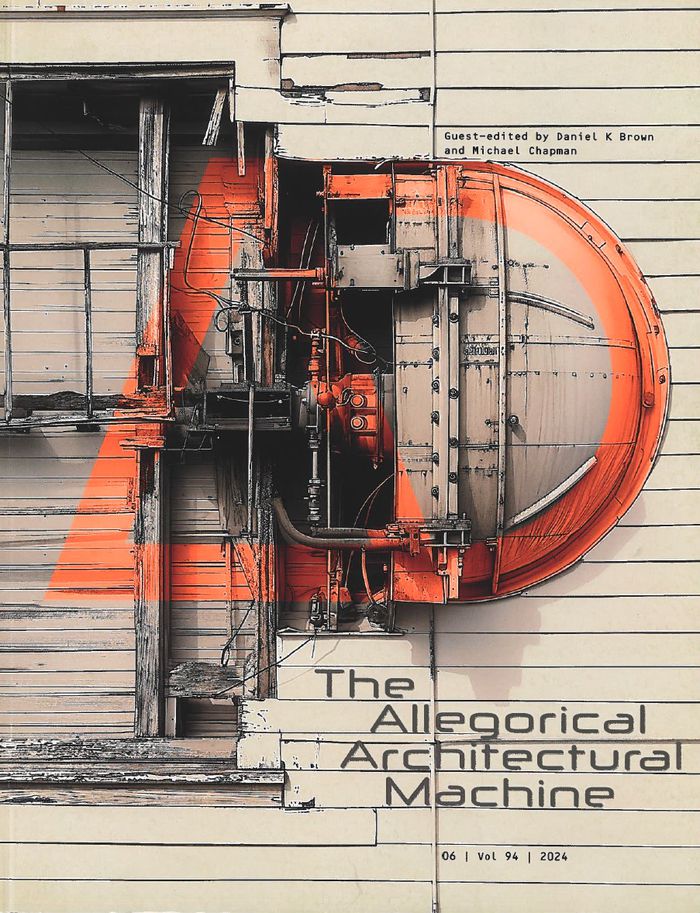
The allegorical architectural machine
Actions:
Prix:
$54.00
(disponible en magasin)
Résumé:
The intersection of architecture and the machine has a history that stretches back to the Industrial Revolution, however the machine has recently begun to appear in new ways in speculative architectural drawing and modelling. This issue of AD considers the influence of the machine as an allegorical device for exploring alternative architectural practices, and includes a cross-section of viewpoints from emerging and established international practitioners and academics. Allegory, a technique native to literature, provides a critical method through which machine typologies can contribute to deeper architectural narratives, offering new lenses for challenging or reassembling conventional modes of thought. An allegorical architectural project can unveil a story that enhances our awareness of something important. This AD reveals how engagement with the machine as an allegorical device in architectural discourse provides an avenue for architecture to provoke new ideas in response to current environmental, political, economic, cultural and social issues. At the forefront of this discussion, it extends the criticality of the topic within the broader spectrum of history, theory, philosophy, allegory and new technologies.
The allegorical architectural machine
Actions:
Prix:
$54.00
(disponible en magasin)
Résumé:
The intersection of architecture and the machine has a history that stretches back to the Industrial Revolution, however the machine has recently begun to appear in new ways in speculative architectural drawing and modelling. This issue of AD considers the influence of the machine as an allegorical device for exploring alternative architectural practices, and includes a cross-section of viewpoints from emerging and established international practitioners and academics. Allegory, a technique native to literature, provides a critical method through which machine typologies can contribute to deeper architectural narratives, offering new lenses for challenging or reassembling conventional modes of thought. An allegorical architectural project can unveil a story that enhances our awareness of something important. This AD reveals how engagement with the machine as an allegorical device in architectural discourse provides an avenue for architecture to provoke new ideas in response to current environmental, political, economic, cultural and social issues. At the forefront of this discussion, it extends the criticality of the topic within the broader spectrum of history, theory, philosophy, allegory and new technologies.
Classification:
périodiques
périodiques
Publication:
décembre 2024
décembre 2024
Sujet:
Revues
Revues
Classification:
livres
livres

Titre:
Stickers
Stickers
Actions:
Prix:
$43.95
(disponible sur commande)
Résumé:
Stickers have become an essential element of contemporary street art used by the most underground of artists. With stickers, anyone can plant their flag, gain notoriety, recognition and attain instant coverage while the action itself is inconspicuous. This book documents the best submissions from the first international sticker awards which have been established to record(...)
$43.95
(disponible sur commande)
Résumé:
Stickers have become an essential element of contemporary street art used by the most underground of artists. With stickers, anyone can plant their flag, gain notoriety, recognition and attain instant coverage while the action itself is inconspicuous. This book documents the best submissions from the first international sticker awards which have been established to record(...)
Titre:
Stickers
Actions:
Prix:
$43.95
(disponible sur commande)
Résumé:
Stickers have become an essential element of contemporary street art used by the most underground of artists. With stickers, anyone can plant their flag, gain notoriety, recognition and attain instant coverage while the action itself is inconspicuous. This book documents the best submissions from the first international sticker awards which have been established to record this constantly evolving movement. Low-tech and prepared in advance, stickers are made from a multitude of materials and techniques from hand, photocopies, posters and wheat pastes to walls. From drainpipes and crosswalk boxes to street signs and walls, stickers can be found almost anywhere at eye level on public surfaces blending into and becoming part of the streets. Motifs vary from scribbles and characters to intricate figurative images, often personal logos or tags functioning as trademarks. Stickers have created a revolution in communication – proving to be effective tools in establishing dialog, inspiring reaction and feature messages that are subversive, fun and often cryptic. This extensive volume presents over 800 examples from around the world and includes 2 pages of award winning real stickers for the reader’s enjoyment.
Stickers
Actions:
Prix:
$43.95
(disponible sur commande)
Résumé:
Stickers have become an essential element of contemporary street art used by the most underground of artists. With stickers, anyone can plant their flag, gain notoriety, recognition and attain instant coverage while the action itself is inconspicuous. This book documents the best submissions from the first international sticker awards which have been established to record this constantly evolving movement. Low-tech and prepared in advance, stickers are made from a multitude of materials and techniques from hand, photocopies, posters and wheat pastes to walls. From drainpipes and crosswalk boxes to street signs and walls, stickers can be found almost anywhere at eye level on public surfaces blending into and becoming part of the streets. Motifs vary from scribbles and characters to intricate figurative images, often personal logos or tags functioning as trademarks. Stickers have created a revolution in communication – proving to be effective tools in establishing dialog, inspiring reaction and feature messages that are subversive, fun and often cryptic. This extensive volume presents over 800 examples from around the world and includes 2 pages of award winning real stickers for the reader’s enjoyment.
Classification:
livres
livres
Publication:
octobre 2007, Berlin
octobre 2007, Berlin
Sujet:
Design d’intérieur
Design d’intérieur
Classification:
livres
livres
Titre:
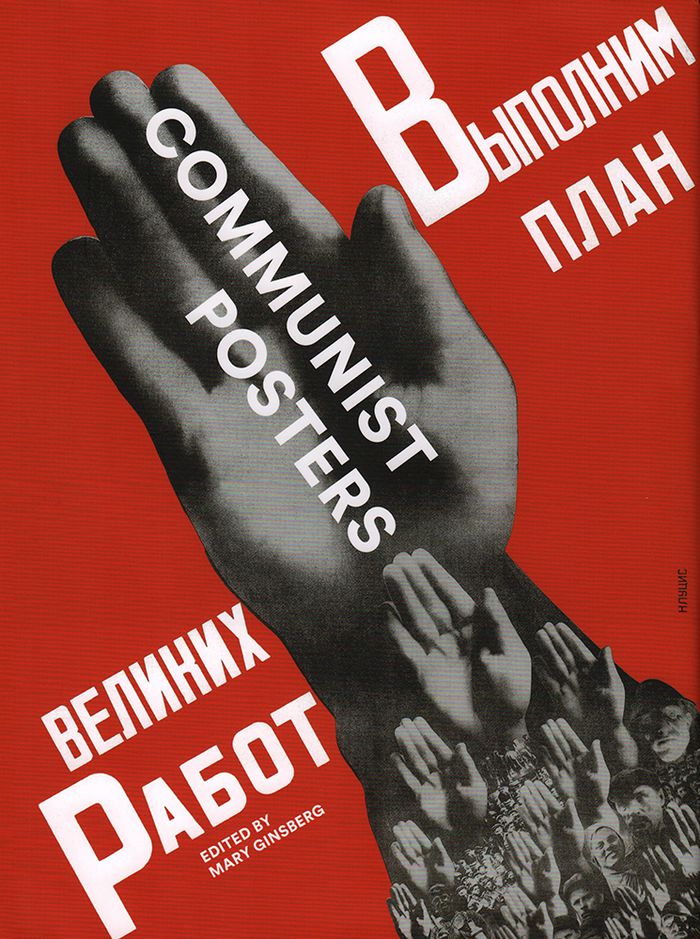
Communist posters
Communist posters
Actions:
Prix:
$79.95
(disponible sur commande)
Résumé:
One of the common features of communist regimes is the use of art for revolutionary means. Posters in particular have served as beacons of propaganda – vehicles of coercion, instruction, censure and debate – in every communist nation. They have promoted the authority of state and revolution, but have also been used as an effective means of protest. By their nature posters(...)
$79.95
(disponible sur commande)
Résumé:
One of the common features of communist regimes is the use of art for revolutionary means. Posters in particular have served as beacons of propaganda – vehicles of coercion, instruction, censure and debate – in every communist nation. They have promoted the authority of state and revolution, but have also been used as an effective means of protest. By their nature posters(...)
Titre:
Communist posters
Actions:
Prix:
$79.95
(disponible sur commande)
Résumé:
One of the common features of communist regimes is the use of art for revolutionary means. Posters in particular have served as beacons of propaganda – vehicles of coercion, instruction, censure and debate – in every communist nation. They have promoted the authority of state and revolution, but have also been used as an effective means of protest. By their nature posters are ephemeral, tied to time and place, but many have had far-reaching, long-lasting impact. They are imbued with both artistic integrity and personal conviction – Bolshevik posters, for example, are among the most vibrant, passionate graphics in art history. This is the first truly global survey of the history and variety of communist poster art. Each chapter is written by an expert in the field, and examines a different region of the world: Russia, China, Mongolia, Eastern Europe, North Korea, Vietnam and Cuba. This beautifully illustrated, comprehensive survey examines the broad range of political and visual cultures of communist posters, and will appeal to a wide audience interested in art, history and politics.
Communist posters
Actions:
Prix:
$79.95
(disponible sur commande)
Résumé:
One of the common features of communist regimes is the use of art for revolutionary means. Posters in particular have served as beacons of propaganda – vehicles of coercion, instruction, censure and debate – in every communist nation. They have promoted the authority of state and revolution, but have also been used as an effective means of protest. By their nature posters are ephemeral, tied to time and place, but many have had far-reaching, long-lasting impact. They are imbued with both artistic integrity and personal conviction – Bolshevik posters, for example, are among the most vibrant, passionate graphics in art history. This is the first truly global survey of the history and variety of communist poster art. Each chapter is written by an expert in the field, and examines a different region of the world: Russia, China, Mongolia, Eastern Europe, North Korea, Vietnam and Cuba. This beautifully illustrated, comprehensive survey examines the broad range of political and visual cultures of communist posters, and will appeal to a wide audience interested in art, history and politics.
Classification:
livres
livres
Publication:
mai 2017
mai 2017
Sujet:
Arts graphiques imprimés
Arts graphiques imprimés
Classification:
livres
livres
Actions:
Prix:
$25.00
(disponible sur commande)
Résumé:
Translates by Thomas Goddard Bergin and Max Harold Fisch. A bold new translation of a masterpiece of early social science that has found enthusiasts among such artists and scholars as James Joyce and Harold Bloom. Although Vico lived his whole life as an obscure academic in Naples, his New Science is an astonishingly ambitious attempt to provide a comprehensive(...)
$25.00
(disponible sur commande)
Résumé:
Translates by Thomas Goddard Bergin and Max Harold Fisch. A bold new translation of a masterpiece of early social science that has found enthusiasts among such artists and scholars as James Joyce and Harold Bloom. Although Vico lived his whole life as an obscure academic in Naples, his New Science is an astonishingly ambitious attempt to provide a comprehensive(...)
Titre:
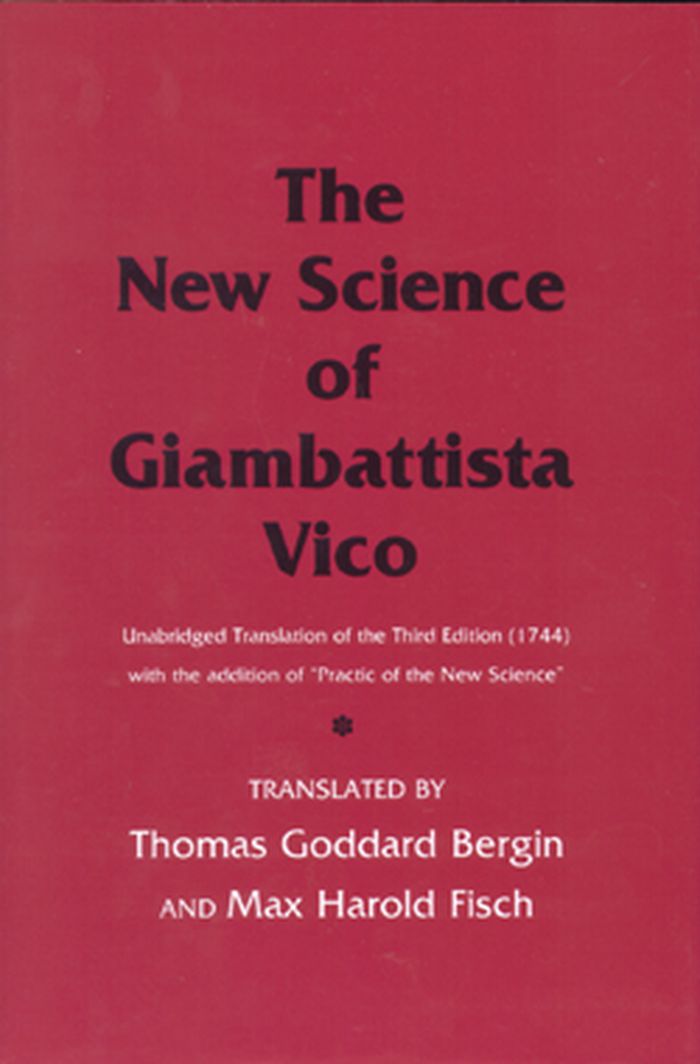
The new science of Giambattista Vico
Actions:
Prix:
$25.00
(disponible sur commande)
Résumé:
Translates by Thomas Goddard Bergin and Max Harold Fisch. A bold new translation of a masterpiece of early social science that has found enthusiasts among such artists and scholars as James Joyce and Harold Bloom. Although Vico lived his whole life as an obscure academic in Naples, his New Science is an astonishingly ambitious attempt to provide a comprehensive science of all human society by decoding the history, mythology, and law of the ancient world. It argues that the key to true understanding lies in accepting that the customs and emotional lives of the Greeks and Romans, Egyptians, Jews, and Babylonians were utterly different from our own. In examining these huge themes, Vico offers countless fresh insights into topics ranging from physics to politics, money to monsters, and family structures to the Flood. Deeply influential since the dawn of Romanticism, the New Science even inspired the framework for Joyce's Finnegans Wake. This powerful new translation makes it clear why this work marked a turning-point in humanist thinking as significant as Newton's contemporary revolution in physics.
The new science of Giambattista Vico
Actions:
Prix:
$25.00
(disponible sur commande)
Résumé:
Translates by Thomas Goddard Bergin and Max Harold Fisch. A bold new translation of a masterpiece of early social science that has found enthusiasts among such artists and scholars as James Joyce and Harold Bloom. Although Vico lived his whole life as an obscure academic in Naples, his New Science is an astonishingly ambitious attempt to provide a comprehensive science of all human society by decoding the history, mythology, and law of the ancient world. It argues that the key to true understanding lies in accepting that the customs and emotional lives of the Greeks and Romans, Egyptians, Jews, and Babylonians were utterly different from our own. In examining these huge themes, Vico offers countless fresh insights into topics ranging from physics to politics, money to monsters, and family structures to the Flood. Deeply influential since the dawn of Romanticism, the New Science even inspired the framework for Joyce's Finnegans Wake. This powerful new translation makes it clear why this work marked a turning-point in humanist thinking as significant as Newton's contemporary revolution in physics.
Classification:
livres
livres
Publication:
janvier 1984, Ithaca, London
janvier 1984, Ithaca, London
Sujet:
Théorie/ philosophie
Théorie/ philosophie
Classification:
livres
livres
Actions:
Prix:
$35.95
(disponible en magasin)
Résumé:
No other art movement has so profoundly influenced radical politics as the Situationist International. But beyond the clichés about its purported leader Guy Debord, the "society of the spectacle," détournement and dérive, lies a more complex story about key historical shifts in the composition of capital, work, labor, art, and revolutionary theory during the 1950s and(...)
$35.95
(disponible en magasin)
Résumé:
No other art movement has so profoundly influenced radical politics as the Situationist International. But beyond the clichés about its purported leader Guy Debord, the "society of the spectacle," détournement and dérive, lies a more complex story about key historical shifts in the composition of capital, work, labor, art, and revolutionary theory during the 1950s and(...)
Titre:
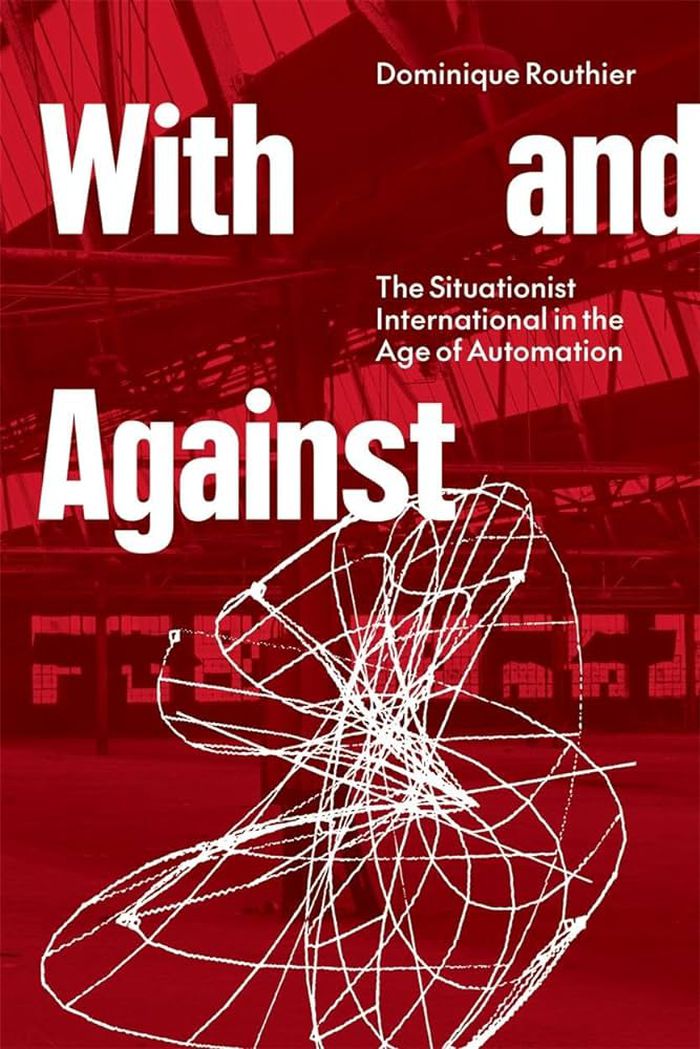
With and against: TheSituationist International in the age of automation
Actions:
Prix:
$35.95
(disponible en magasin)
Résumé:
No other art movement has so profoundly influenced radical politics as the Situationist International. But beyond the clichés about its purported leader Guy Debord, the "society of the spectacle," détournement and dérive, lies a more complex story about key historical shifts in the composition of capital, work, labor, art, and revolutionary theory during the 1950s and 60s. ''With and Against'' reframes the history of the Situationist International as a struggle to come to terms with the then-emerging ideologies of cybernetics and automation. Through each of the book's four chapters, Dominique Routhier dissects Situationist pamphlets, documents, artworks, and objects that refract elements of a "cybernetic hypothesis": the theoretically hyperbolic belief that technological progress, computers and automation make class struggle and the idea of revolution obsolete. With equal attention to aesthetic detail and to the broader contours of political economy, this book serves as a critical intervention in art history as well a call to reconsider, more broadly, the contemporary lessons of the most political of all artistic avantgardes.
With and against: TheSituationist International in the age of automation
Actions:
Prix:
$35.95
(disponible en magasin)
Résumé:
No other art movement has so profoundly influenced radical politics as the Situationist International. But beyond the clichés about its purported leader Guy Debord, the "society of the spectacle," détournement and dérive, lies a more complex story about key historical shifts in the composition of capital, work, labor, art, and revolutionary theory during the 1950s and 60s. ''With and Against'' reframes the history of the Situationist International as a struggle to come to terms with the then-emerging ideologies of cybernetics and automation. Through each of the book's four chapters, Dominique Routhier dissects Situationist pamphlets, documents, artworks, and objects that refract elements of a "cybernetic hypothesis": the theoretically hyperbolic belief that technological progress, computers and automation make class struggle and the idea of revolution obsolete. With equal attention to aesthetic detail and to the broader contours of political economy, this book serves as a critical intervention in art history as well a call to reconsider, more broadly, the contemporary lessons of the most political of all artistic avantgardes.
Classification:
livres
livres
Publication:
octobre 2023
octobre 2023
Sujet:
Théorie/ philosophie
Théorie/ philosophie
Classification:
livres
livres
Actions:
Prix:
$42.00
(disponible sur commande)
Résumé:
In ''The Terrible Children of Modernity'', Sloterdijk offers a magisterial and profound investigation into the vicissitudes of historical change and the nature of modernity. For Sloterdijk, modernity is defined by its need to break with the past. Moderns are perpetual rebels who seek to sever the ties of tradition and forms of inheritance that bind generations and eras(...)
$42.00
(disponible sur commande)
Résumé:
In ''The Terrible Children of Modernity'', Sloterdijk offers a magisterial and profound investigation into the vicissitudes of historical change and the nature of modernity. For Sloterdijk, modernity is defined by its need to break with the past. Moderns are perpetual rebels who seek to sever the ties of tradition and forms of inheritance that bind generations and eras(...)
Titre:
The terrible children of modernity
Actions:
Prix:
$42.00
(disponible sur commande)
Résumé:
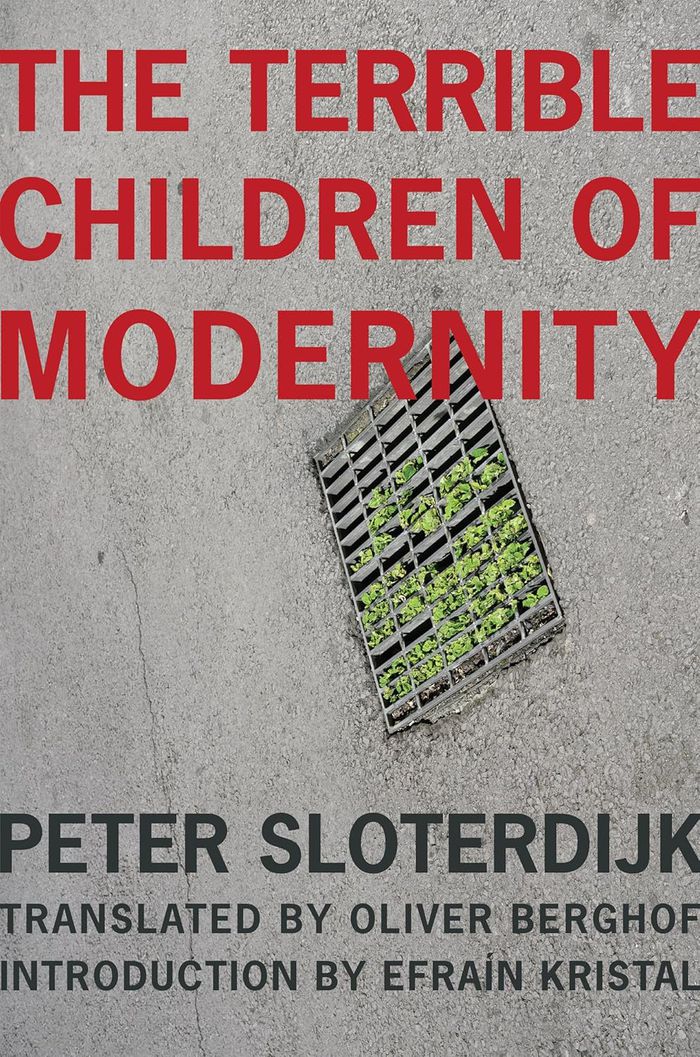
In ''The Terrible Children of Modernity'', Sloterdijk offers a magisterial and profound investigation into the vicissitudes of historical change and the nature of modernity. For Sloterdijk, modernity is defined by its need to break with the past. Moderns are perpetual rebels who seek to sever the ties of tradition and forms of inheritance that bind generations and eras together. With deep philosophical, historical, and literary range, he traces this antigenealogical experiment from the French Revolution onward, from Madame de Pompadour and Napoleon through Nietzsche, Marx, Wagner, the Dadaists, and Deleuze. Acutely aware of the destructive potential of cultural discontinuities, Sloterdijk is no less critical of the “fathers” who condemn change than the “terrible children” who seek a drastic rupture with their predecessors. Equally concerned with the grand sweep of history and our current predicaments, he instead calls for new ways to live together in the intersubjectivity of the human condition. Incisive and daring, breathtaking in its scope, this account of youthful rebellion against tradition asks us to reimagine the ethics of genealogy.
The terrible children of modernity
Actions:
Prix:
$42.00
(disponible sur commande)
Résumé:
In ''The Terrible Children of Modernity'', Sloterdijk offers a magisterial and profound investigation into the vicissitudes of historical change and the nature of modernity. For Sloterdijk, modernity is defined by its need to break with the past. Moderns are perpetual rebels who seek to sever the ties of tradition and forms of inheritance that bind generations and eras together. With deep philosophical, historical, and literary range, he traces this antigenealogical experiment from the French Revolution onward, from Madame de Pompadour and Napoleon through Nietzsche, Marx, Wagner, the Dadaists, and Deleuze. Acutely aware of the destructive potential of cultural discontinuities, Sloterdijk is no less critical of the “fathers” who condemn change than the “terrible children” who seek a drastic rupture with their predecessors. Equally concerned with the grand sweep of history and our current predicaments, he instead calls for new ways to live together in the intersubjectivity of the human condition. Incisive and daring, breathtaking in its scope, this account of youthful rebellion against tradition asks us to reimagine the ethics of genealogy.
Classification:
livres
livres
Publication:
octobre 2023
octobre 2023
Sujet:
Théorie/ philosophie
Théorie/ philosophie
Classification:
livres
livres
Titre:
Modernism in late-Mao China
Modernism in late-Mao China
Actions:
Prix:
$81.50
(disponible en magasin)
Résumé:
This book investigates the architectural history of China in the Mao era (1949–1976), focusing on the rise of modernism in the last seven years of the Cultural Revolution from 1969 to 1976. It highlights the new architecture of this period, exemplified by three clusters of buildings for foreign affairs, namely buildings for foreign diplomacy in Beijing, buildings for(...)
$81.50
(disponible en magasin)
Résumé:
This book investigates the architectural history of China in the Mao era (1949–1976), focusing on the rise of modernism in the last seven years of the Cultural Revolution from 1969 to 1976. It highlights the new architecture of this period, exemplified by three clusters of buildings for foreign affairs, namely buildings for foreign diplomacy in Beijing, buildings for(...)
Titre:
Modernism in late-Mao China
Actions:
Prix:
$81.50
(disponible en magasin)
Résumé:
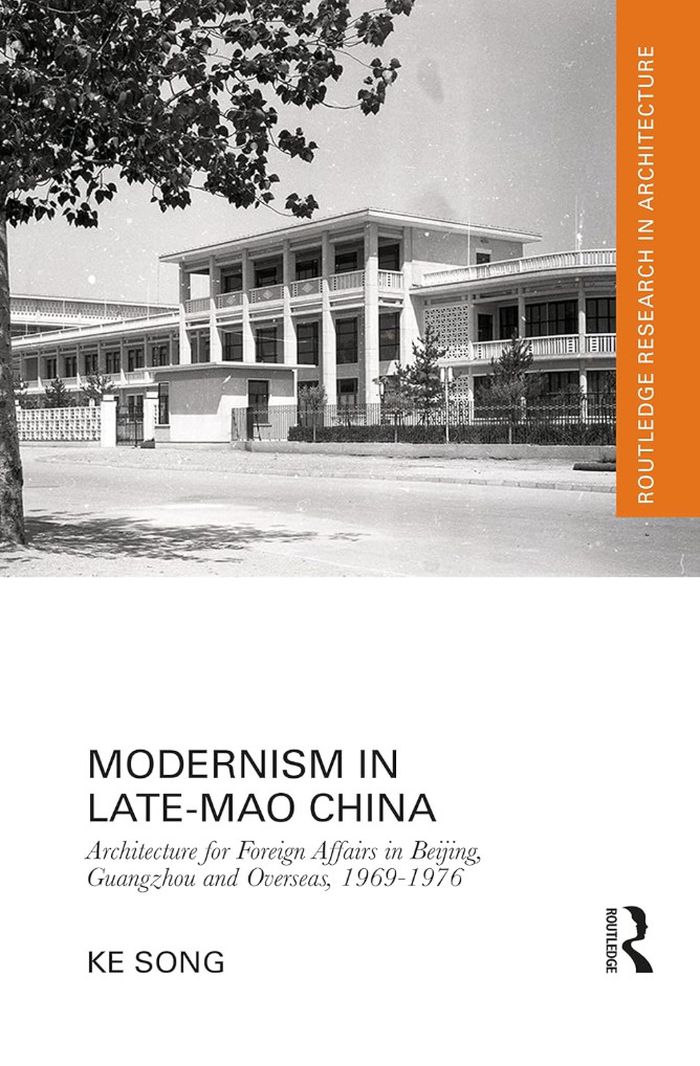
This book investigates the architectural history of China in the Mao era (1949–1976), focusing on the rise of modernism in the last seven years of the Cultural Revolution from 1969 to 1976. It highlights the new architecture of this period, exemplified by three clusters of buildings for foreign affairs, namely buildings for foreign diplomacy in Beijing, buildings for foreign trade in Guangzhou and China’s foreign aid projects overseas. The emergence of new architecture in the early 1970s is closely associated with China’s political and diplomatic shift of the time, from a radical emphasis on ideological struggle to a dynamic balance between leftist ideology and pragmatic concerns. In this context, China’s relations with the West quickly improved, culminating with American president Richard Nixon’s visit to China in 1972. The increasing foreign affairs brought new opportunities to Chinese architects who referenced both Western modernism and Chinese architectural traditions to create a new version of Chinese modernism. The book brings dimensions of form, politics and knowledge to the analysis of architecture, to construct an understanding of architectural design as an aesthetic, political and intellectual practice.
Modernism in late-Mao China
Actions:
Prix:
$81.50
(disponible en magasin)
Résumé:
This book investigates the architectural history of China in the Mao era (1949–1976), focusing on the rise of modernism in the last seven years of the Cultural Revolution from 1969 to 1976. It highlights the new architecture of this period, exemplified by three clusters of buildings for foreign affairs, namely buildings for foreign diplomacy in Beijing, buildings for foreign trade in Guangzhou and China’s foreign aid projects overseas. The emergence of new architecture in the early 1970s is closely associated with China’s political and diplomatic shift of the time, from a radical emphasis on ideological struggle to a dynamic balance between leftist ideology and pragmatic concerns. In this context, China’s relations with the West quickly improved, culminating with American president Richard Nixon’s visit to China in 1972. The increasing foreign affairs brought new opportunities to Chinese architects who referenced both Western modernism and Chinese architectural traditions to create a new version of Chinese modernism. The book brings dimensions of form, politics and knowledge to the analysis of architecture, to construct an understanding of architectural design as an aesthetic, political and intellectual practice.
Classification:
livres
livres
Publication:
décembre 2025
décembre 2025
Classification:
périodiques
périodiques
Titre:
Al Hayya issue 4
Al Hayya issue 4
Actions:
Prix:
$32.00
(disponible sur commande)
Résumé:
The free people of the world are organizing, moving toward what many refer to today as the global revolution. In Gaza, the genocide pins the infinity of time, trapping it within the loneliness of each minute. This fight, and how we wage it, will determine whether we are worthy of the land’s forgiveness, and whether she will grant us passage into the future or consume us(...)
$32.00
(disponible sur commande)
Résumé:
The free people of the world are organizing, moving toward what many refer to today as the global revolution. In Gaza, the genocide pins the infinity of time, trapping it within the loneliness of each minute. This fight, and how we wage it, will determine whether we are worthy of the land’s forgiveness, and whether she will grant us passage into the future or consume us(...)
Titre:
Al Hayya issue 4
Actions:
Prix:
$32.00
(disponible sur commande)
Résumé:
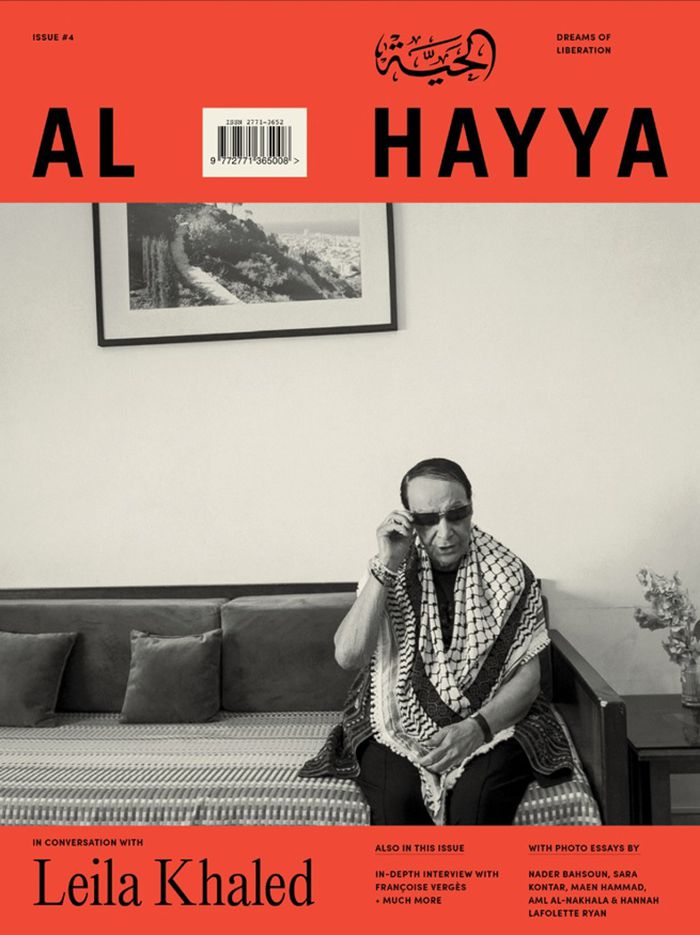
The free people of the world are organizing, moving toward what many refer to today as the global revolution. In Gaza, the genocide pins the infinity of time, trapping it within the loneliness of each minute. This fight, and how we wage it, will determine whether we are worthy of the land’s forgiveness, and whether she will grant us passage into the future or consume us all, once and forever. The fourth issue of Al Hayya focuses on Dreams of Liberation. It traces resistance as it takes shape inside the home, in the streets, across borders, and within the self. It examines how art, memory, and the rituals of everyday life carry defiance. It documents the weight and texture of struggle as both personal and collective. This issue features a rare interview with Palestinian revolutionary and PFLP member Leila Khaled. It also includes an in-depth conversation with Françoise Vergès on decolonial feminism and cultural resistance. Photo essays by Maen Hammad, Amal Al-Nakhala, Nader Bahsoun, Sarah Kontar, and Hannah La Follette Ryan document life under pressure, grief, exile, and survival.
Al Hayya issue 4
Actions:
Prix:
$32.00
(disponible sur commande)
Résumé:
The free people of the world are organizing, moving toward what many refer to today as the global revolution. In Gaza, the genocide pins the infinity of time, trapping it within the loneliness of each minute. This fight, and how we wage it, will determine whether we are worthy of the land’s forgiveness, and whether she will grant us passage into the future or consume us all, once and forever. The fourth issue of Al Hayya focuses on Dreams of Liberation. It traces resistance as it takes shape inside the home, in the streets, across borders, and within the self. It examines how art, memory, and the rituals of everyday life carry defiance. It documents the weight and texture of struggle as both personal and collective. This issue features a rare interview with Palestinian revolutionary and PFLP member Leila Khaled. It also includes an in-depth conversation with Françoise Vergès on decolonial feminism and cultural resistance. Photo essays by Maen Hammad, Amal Al-Nakhala, Nader Bahsoun, Sarah Kontar, and Hannah La Follette Ryan document life under pressure, grief, exile, and survival.
Classification:
périodiques
périodiques
Publication:
novembre 2025
novembre 2025
Sujet:
Revues
Revues
Classification:
livres
livres
Actions:
Prix:
$30.00
(disponible en magasin)
Résumé:
Rome is not only enriched by the works that have led it to be known as the "eternal city", or with those monuments that still preserve the stories of a strong people, such as the Colosseum, the Roman Forum or Castel Sant'Angelo. It is not only the symbolic center of Christianity thanks to St. Peter's Basilica, or the central and figurative hub of the Italian Republic(...)
$30.00
(disponible en magasin)
Résumé:
Rome is not only enriched by the works that have led it to be known as the "eternal city", or with those monuments that still preserve the stories of a strong people, such as the Colosseum, the Roman Forum or Castel Sant'Angelo. It is not only the symbolic center of Christianity thanks to St. Peter's Basilica, or the central and figurative hub of the Italian Republic(...)
Titre:
Rome: on the road architecture guide
Actions:
Prix:
$30.00
(disponible en magasin)
Résumé:
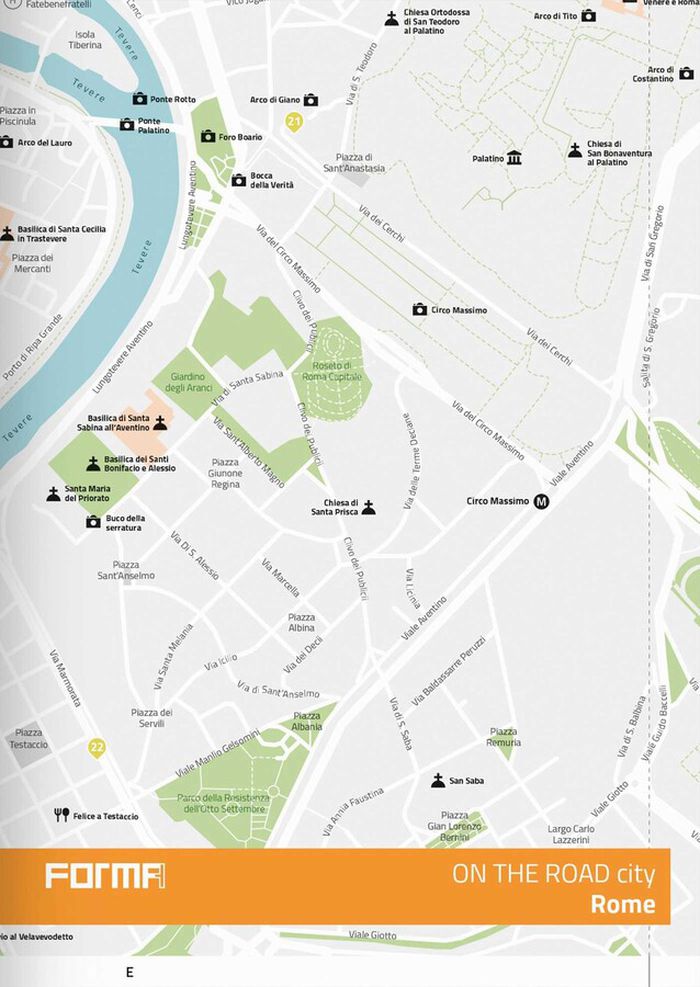
Rome is not only enriched by the works that have led it to be known as the "eternal city", or with those monuments that still preserve the stories of a strong people, such as the Colosseum, the Roman Forum or Castel Sant'Angelo. It is not only the symbolic center of Christianity thanks to St. Peter's Basilica, or the central and figurative hub of the Italian Republic because of the Palazzo del Quirinale. The history, art, and culture of Rome tell the story of a process of restoration and innovation that sees the participation of some timeless places and the birth of other contemporary community services that join those already known to the public. During 1930s, the social and cultural revolution and call for functionality and practicality are represented by impressive modern public and residential works, as well as by major operations from architectural protagonists in the urban change of the capital. Works such as the university city of Sapienza and its institutes, or the EUR district tell the story of the formal transition between modernity and contemporaneity.
Rome: on the road architecture guide
Actions:
Prix:
$30.00
(disponible en magasin)
Résumé:
Rome is not only enriched by the works that have led it to be known as the "eternal city", or with those monuments that still preserve the stories of a strong people, such as the Colosseum, the Roman Forum or Castel Sant'Angelo. It is not only the symbolic center of Christianity thanks to St. Peter's Basilica, or the central and figurative hub of the Italian Republic because of the Palazzo del Quirinale. The history, art, and culture of Rome tell the story of a process of restoration and innovation that sees the participation of some timeless places and the birth of other contemporary community services that join those already known to the public. During 1930s, the social and cultural revolution and call for functionality and practicality are represented by impressive modern public and residential works, as well as by major operations from architectural protagonists in the urban change of the capital. Works such as the university city of Sapienza and its institutes, or the EUR district tell the story of the formal transition between modernity and contemporaneity.
Classification:
livres
livres
Publication:
novembre 2025
novembre 2025
Sujet:
Guides des villes
Guides des villes


